Ezekiel Saw the Heavens Tear Open at the Chebar Canal
In Babylonian exile, Ezekiel watches the sky tear open. Fire, wheels full of eyes, and four impossible creatures arrive bearing the throne of God.
Table of Contents
 Click for full size
A Priest Without a Temple
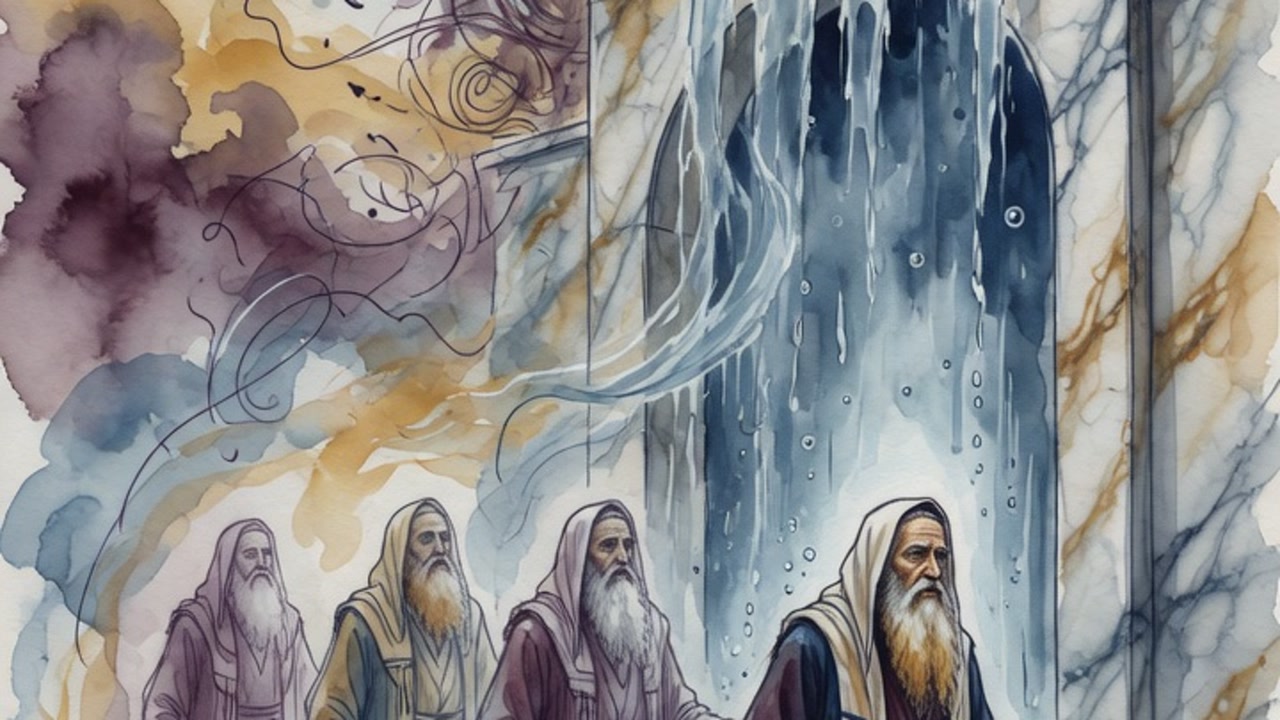
He was thirty years old in Babylonia when the sky broke open. The age at which a priest enters the full weight of his service, and Ezekiel ben Buzi was a priest with nowhere to serve. The Temple still stood in Jerusalem, but he had been carried off with the first wave of exiles by Nebuchadnezzar, and here he sat on the bank of the Chebar Canal, a flat and featureless country, the sky enormous above him, God impossibly far away.
It was the fifth year of King Jehoiachin's exile. The fourth month, the fifth day. Ezekiel would remember those numbers the rest of his life, because on that day the heavens opened and the priest without a Temple received something no Temple had ever contained.
The Storm From the North
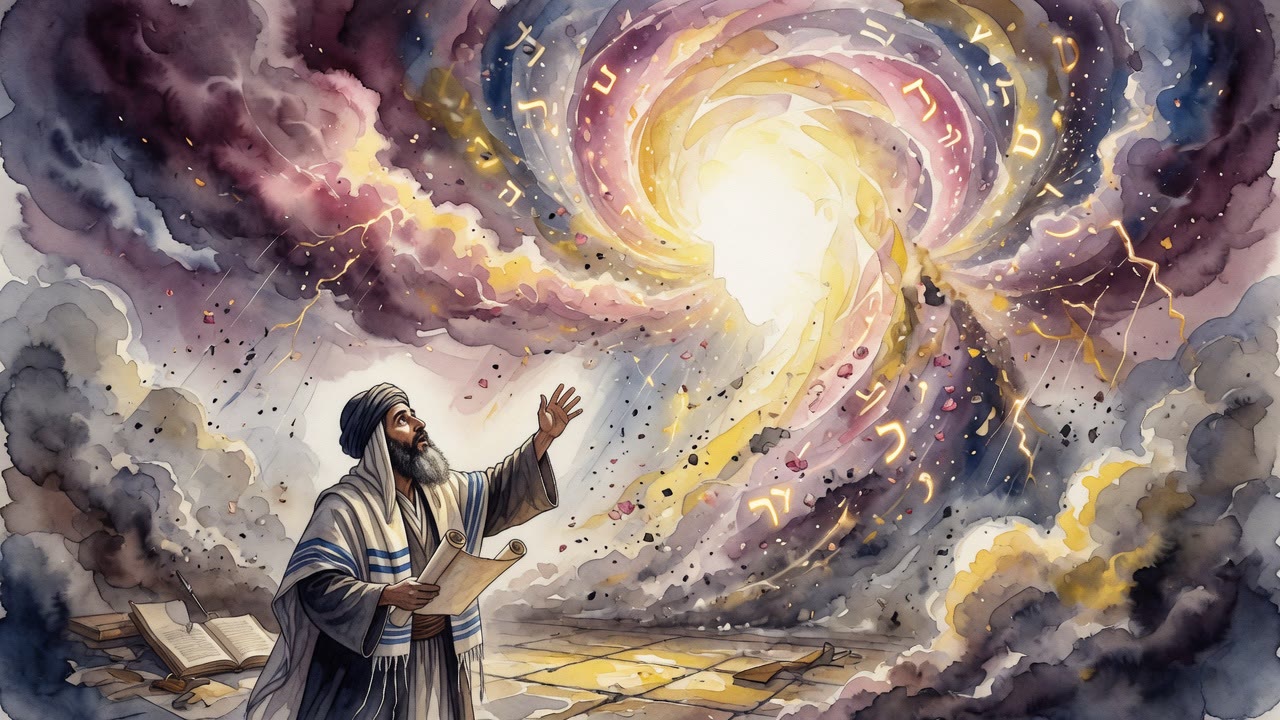
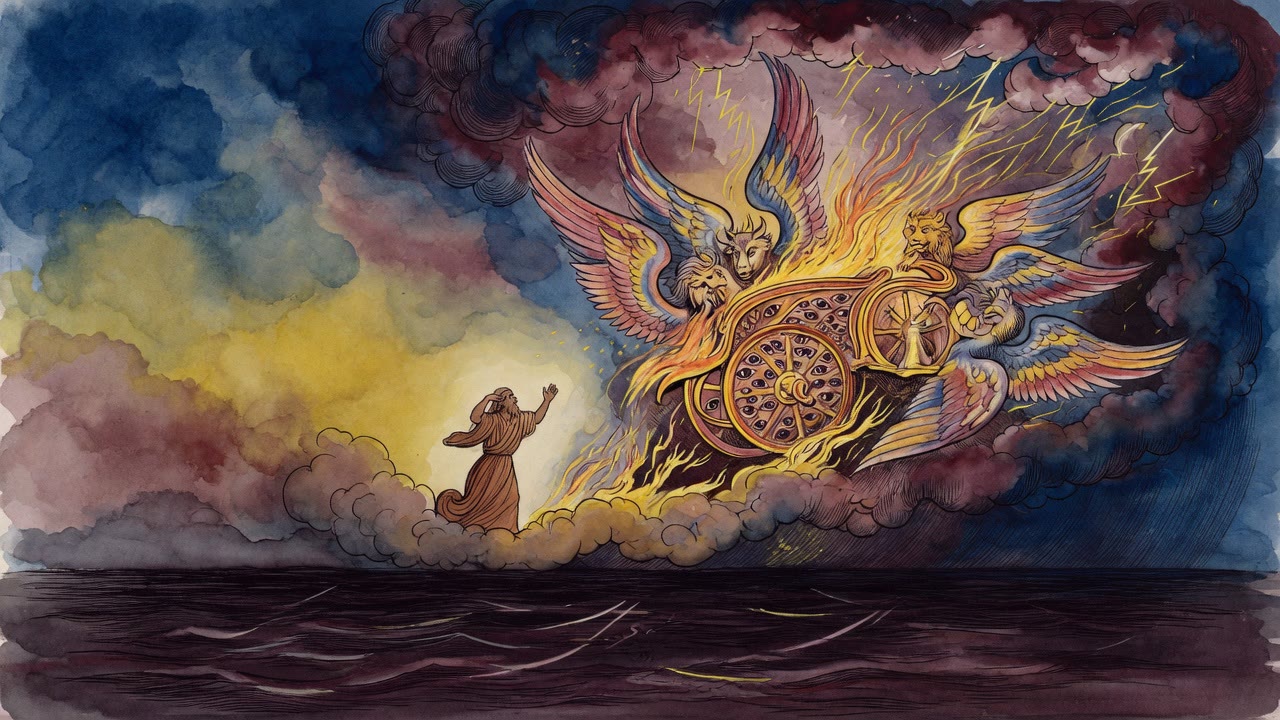
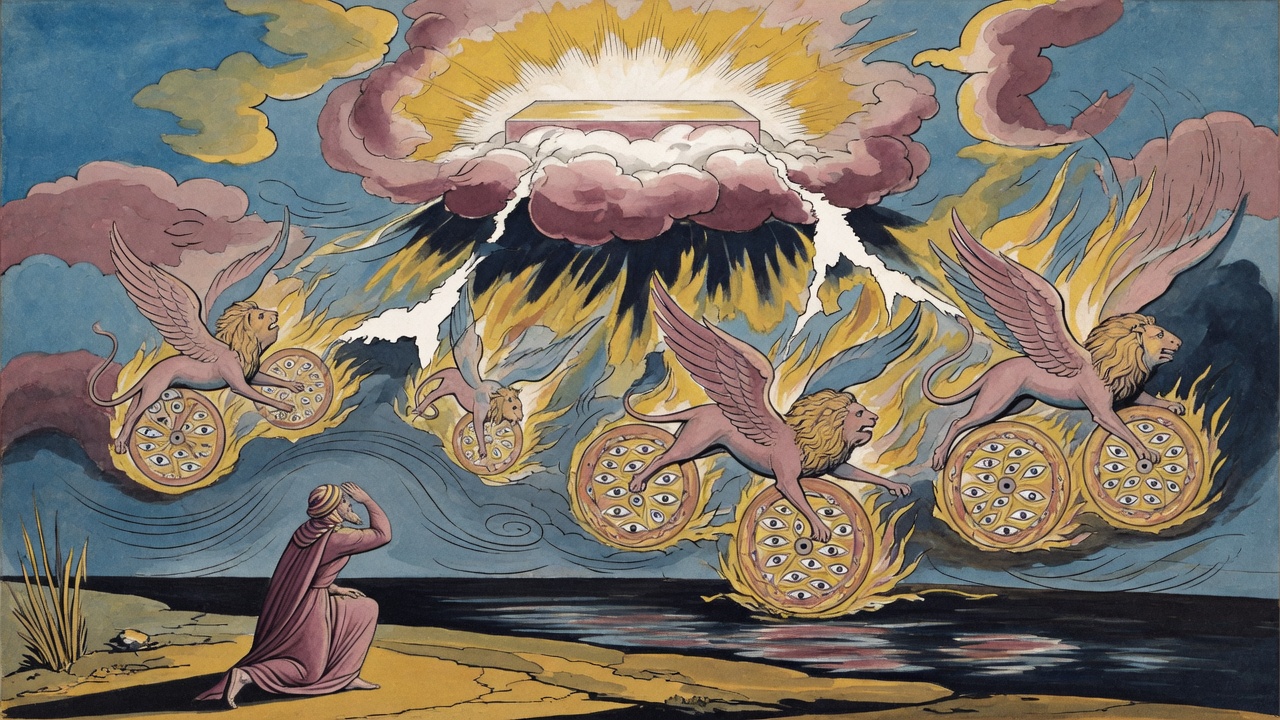
A wind came first, from the north, and within the wind a vast cloud flickering with fire, surrounded by radiance, and at its center something that looked like gleaming amber. Four creatures emerged from the fire. Each had four faces: one a human face, one a lion's face, one an ox's face, one an eagle's face. Each had four wings. Their legs were straight, their feet like the soles of a calf, flashing like burnished bronze. Human hands lay beneath their wings.
They did not turn when they moved. They went straight in whatever direction the spirit intended, without pivoting, without hesitation. Wherever they moved, they moved as one body. Fire ran between them like torches. Lightning flashed from the fire.
Wheels Covered in Eyes
Beside each creature was a wheel. The wheels were tall and frightening, their rims full of eyes all the way around, watching in every direction at once. The wheels moved with the creatures and lifted with the creatures. When the creatures rose from the ground, the wheels rose. When the creatures stopped, the wheels stopped. Whatever the spirit willed, that is where everything went, together.
Above the creatures was a vault, spread out and gleaming like ice. Under the vault the sound of their wings was like the sound of a great rushing of waters, like the voice of the Almighty when he speaks, like the noise of a vast encampment. When they moved, the roar filled the air. When they stopped, they lowered their wings.
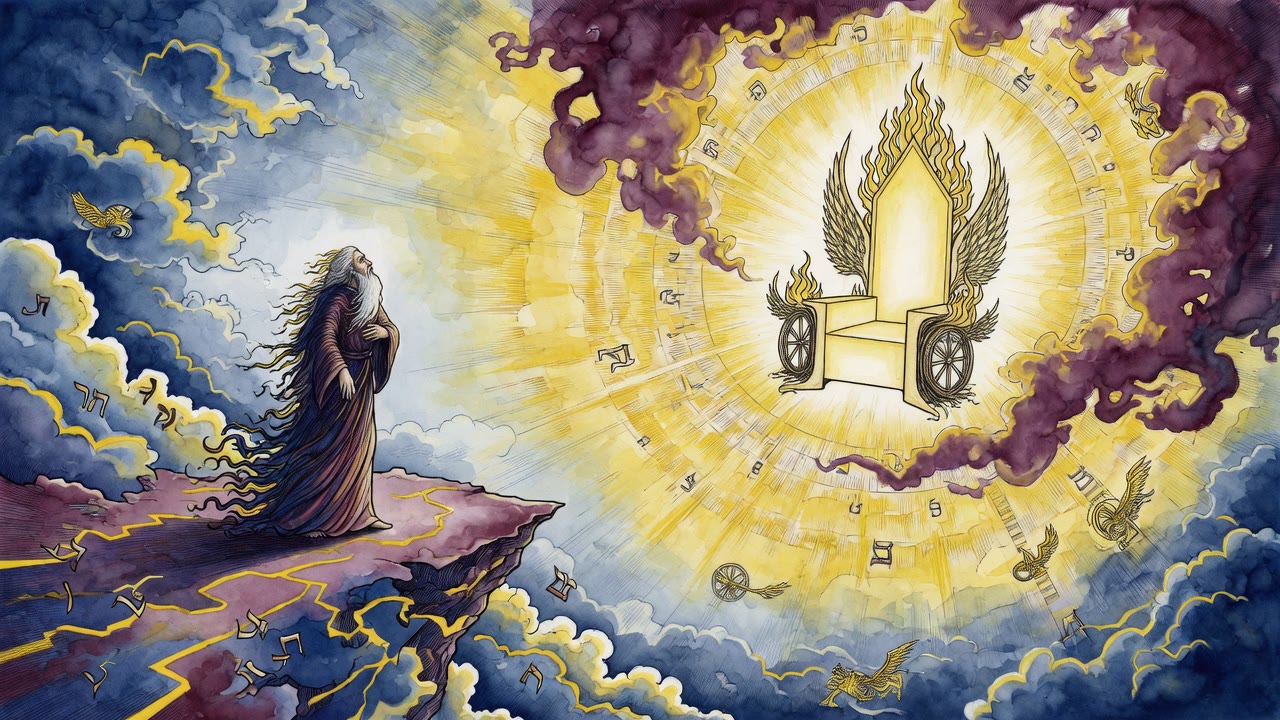
Above the vault was a throne that looked like sapphire. On the throne was a form that looked like the appearance of a human being, shining like fire above and below the waist, surrounded by a brightness like the bow that appears in the clouds on a rainy day. Ezekiel saw it and fell on his face.
What the Mystics Made of It
That prostration began a tradition. Every detail of the vision became a field of study. The four faces, the eyes in the wheels, the gleaming vault, the throne above it all became the core of Merkavah mysticism (merkavah is Hebrew for chariot), the sustained attempt to understand what the prophet had glimpsed. Later mystics studied Ezekiel's words the way other scholars studied law, approaching each phrase with the conviction that more was hidden inside it than any single reading could recover.
The chariot was alive. Its structure praised. The wheels were not mechanical objects but beings. The throne above all the wheels and creatures and fire was not sitting still but moving, carried across the heavens by forces that were themselves acts of worship. What Ezekiel had seen by the Chebar Canal was not a static arrangement but a world in constant motion, everything in it directed toward the one enthroned at its center.
← All myths