The Desert Lottery That Kept Israel from Tearing Itself Apart
Two hundred seventy-three firstborn sons had no Levite to stand for them. Moses put slips in an urn so no father could cry that the count was fixed.
Table of Contents
 Click for full size
Moses Ran With the Urn
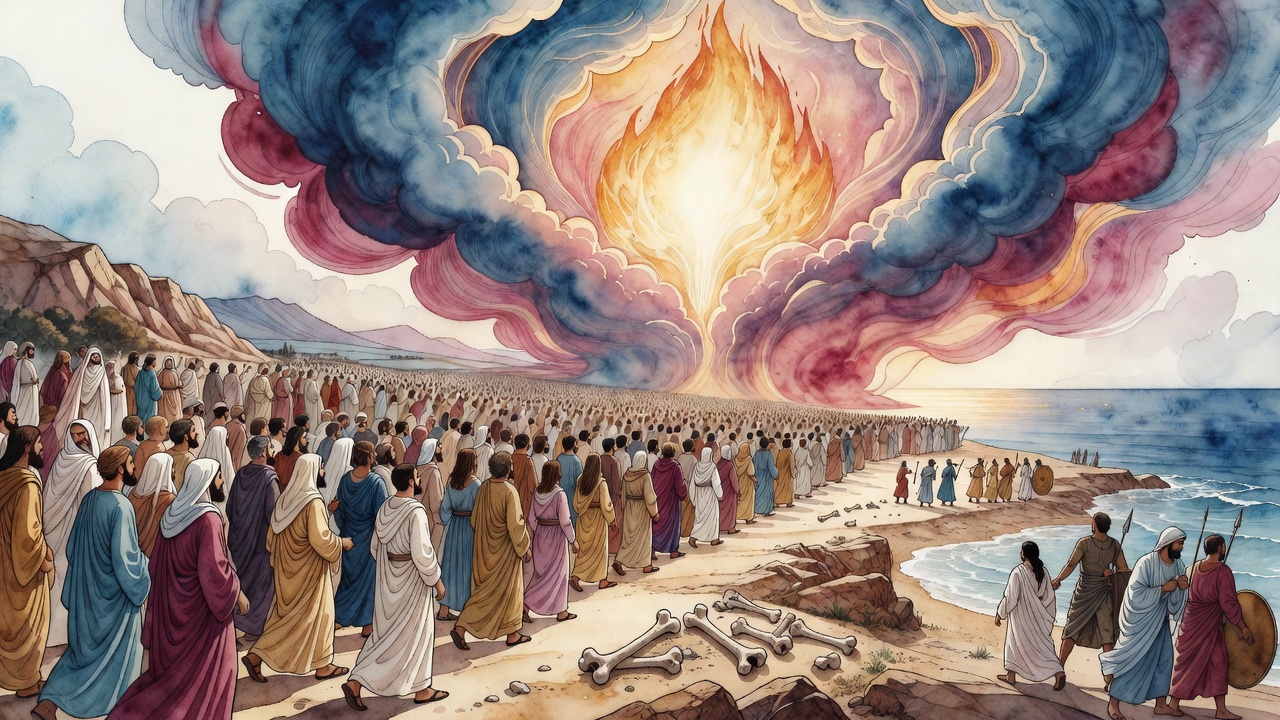
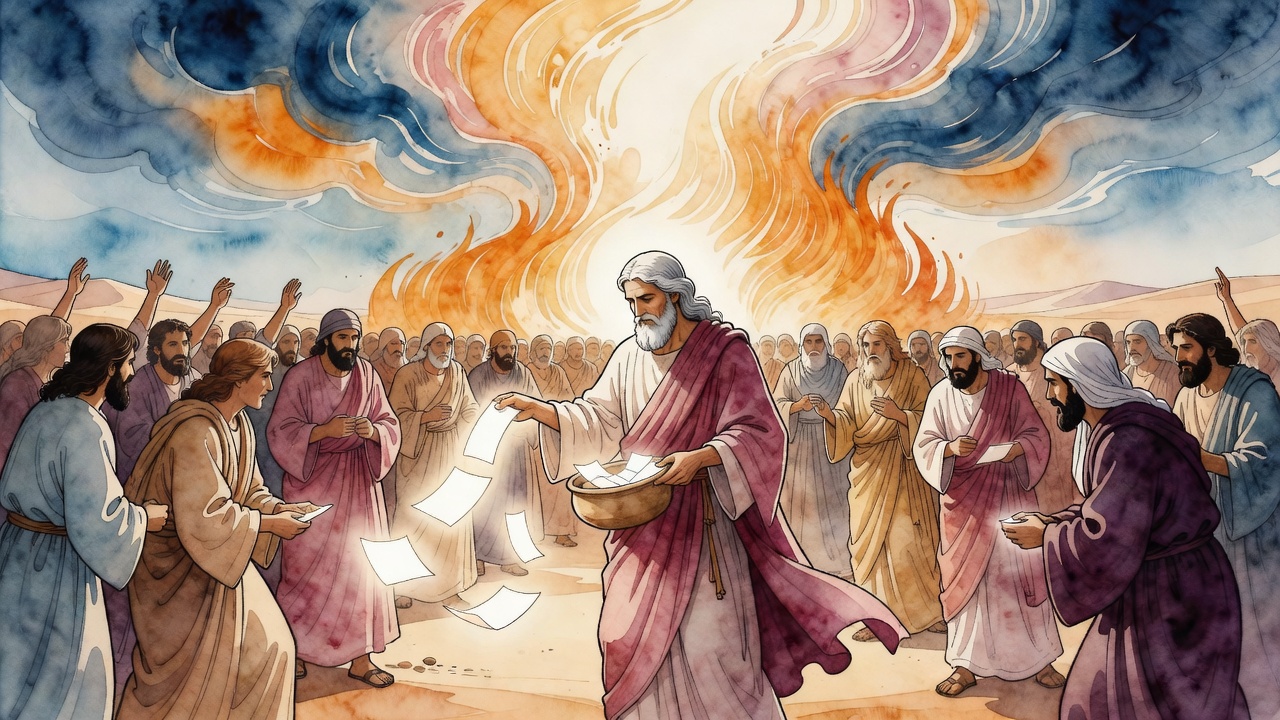
Moses ran through the desert camp with an urn against his hip and a sheaf of parchment in his fist. Fathers of firstborn sons were already gathering, and a grievance that felt unfair could move faster than a decree. He needed the slips in the vessel before the first man in line could say the count had been aimed at his child.
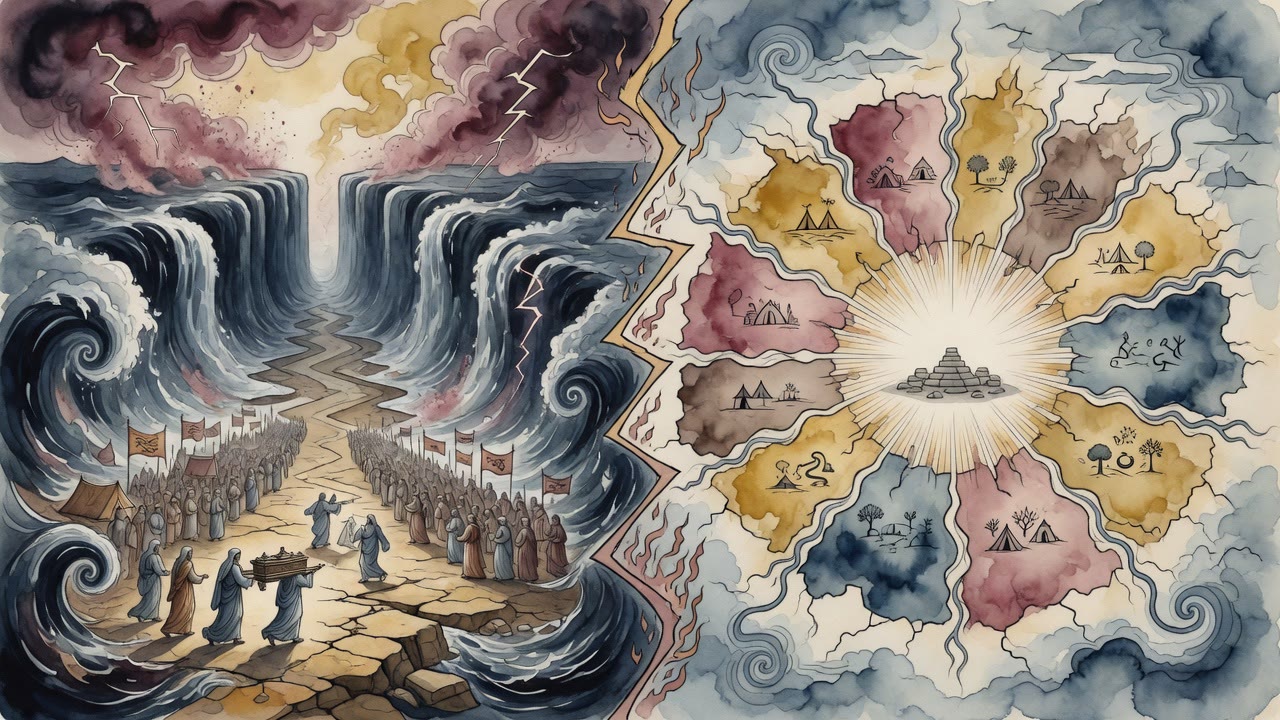
After Egypt, after the tenth plague, God had claimed every firstborn son of Israel. Not as a figure of speech. The boys death had passed over were consecrated, set apart for service. Then the golden calf rose in the camp, and the tribe of Levi stood with Moses when the rest did not. Levi would take the work in the sanctuary in place of all those firstborn. One tribe for twelve.
Arrangements need numbers. The numbers did not match.
Two Hundred Seventy-Three Too Many
The Levites numbered 22,000 males, the same as the angels who had stood around Sinai when God came down. The firstborn males of the other tribes numbered 22,273. The substitution covered most of the obligation. Two hundred seventy-three firstborn sons had no Levite to stand in for them. Each of those 273 still owed the sanctuary five shekels of silver.
If Moses simply pointed at 273 families, those tents would have a case. Why this son and not the cousin in the next row? The camp was tight. People had been walking a long time. A charge of favoritism could split tribe from tribe before night.
Among the Levites themselves were some three hundred firstborn. They could not cover anyone. They were in the same position as the boys they might have replaced. The arithmetic had a hole in it, and the hole had fathers attached.
He Filled the Urn Twice
Moses wrote "Levi" on slips and "five sela'im" (סלעים), five shekels of silver, on other slips. A father might draw a five-shekel slip and then say, looking at what was left in the vessel, that the Levite lots were already gone, and that was why his hand had come up paying. Moses heard that sentence before anyone spoke it.
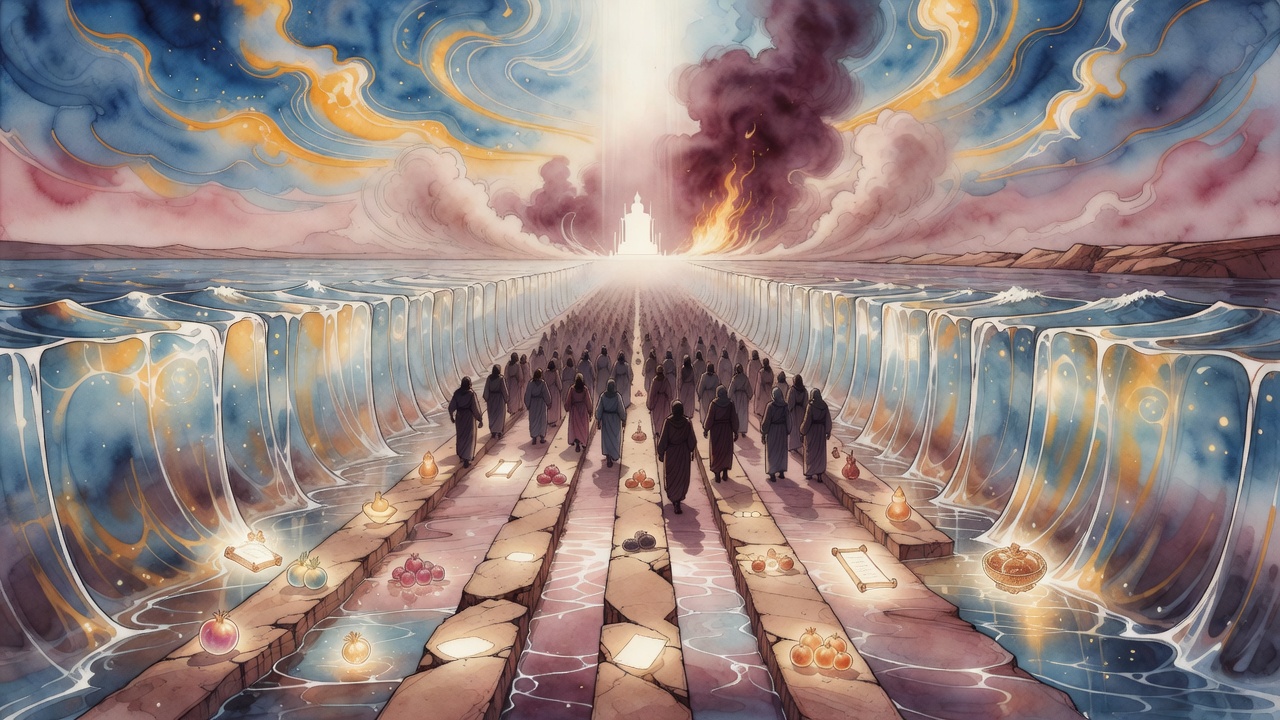
So he did not fill the urn with 22,000 of one kind and 273 of the other. He took lots according to the number of all the firstborn and wrote "Levi" on them. Then he took another full set and wrote "five sela'im" on them. He mixed them and put them in. Every hand reached into a vessel that still held both answers.
A father put his hand in. If "Levi" came up, a Levite had covered his son. If "five sela'im" came up, he paid. The officer could say to him, "Was there not another lot in there on which Levi was written? So you were not worthy of being redeemed by a Levite." The man could not point at Moses. He could not point at an empty side of the urn. Both lots had been in there when he drew. Moses had run the mixing himself, in front of the line, to keep the peace.
A Field Would Not Pay
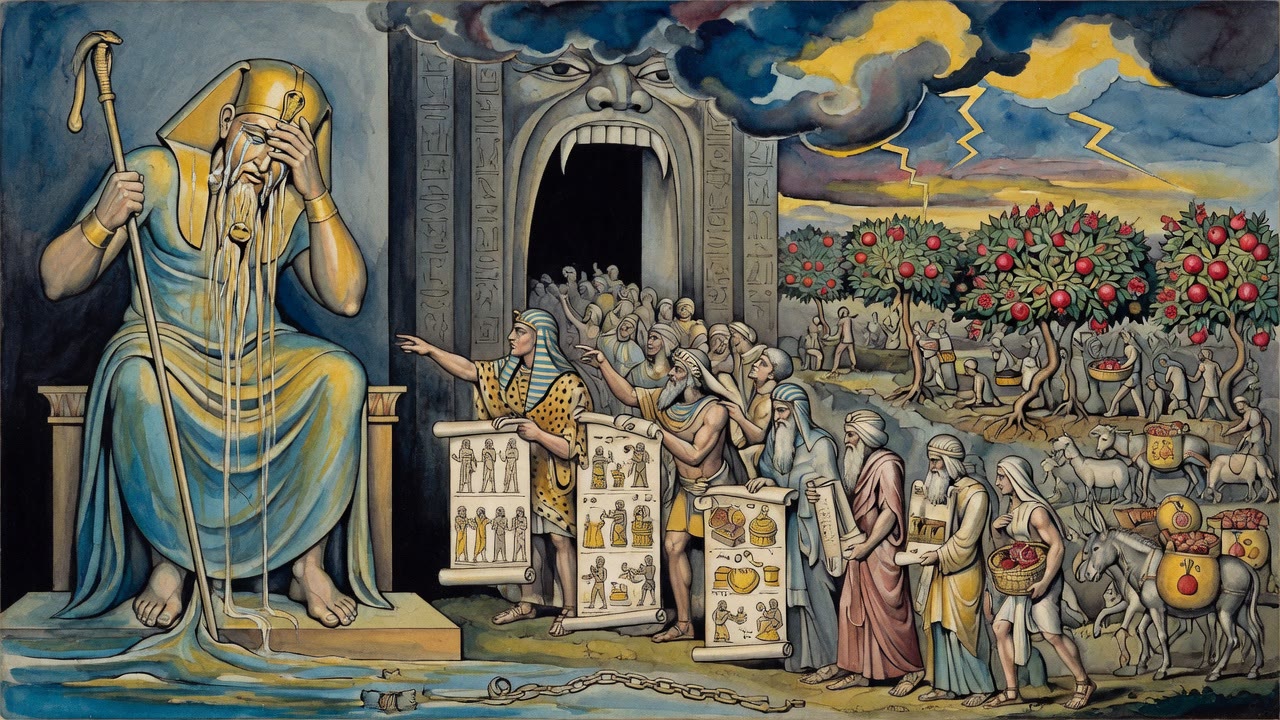
One father came back with a deed to a field. Land was wealth. It looked like enough. The priest would not take it. The price was silver, five shekels of silver, wealth a man can carry, wealth with no lien against a tribal plot. Movable property of that kind would do. A field would not. Slaves would not. A promissory note would not. Property already given to the sanctuary would not.
The man went and came back with silver in his hand. He paid. The boy went home with his father, not into the Tent. Twenty-two thousand others had drawn the other slip and owed nothing that day, because Levi had already stood up at the calf.
No human finger had sorted which tents paid. The lottery sat in the desert between 22,273 families, and the camp did not tear. Moses set the urn down. The parchment was done. The peace held because no father could say the remaining lots had been stacked against him, and because the ones who paid paid in something they could actually hand over.
← All myths