The Twelve Tribal Banners That Extended the Sanctuary Outward
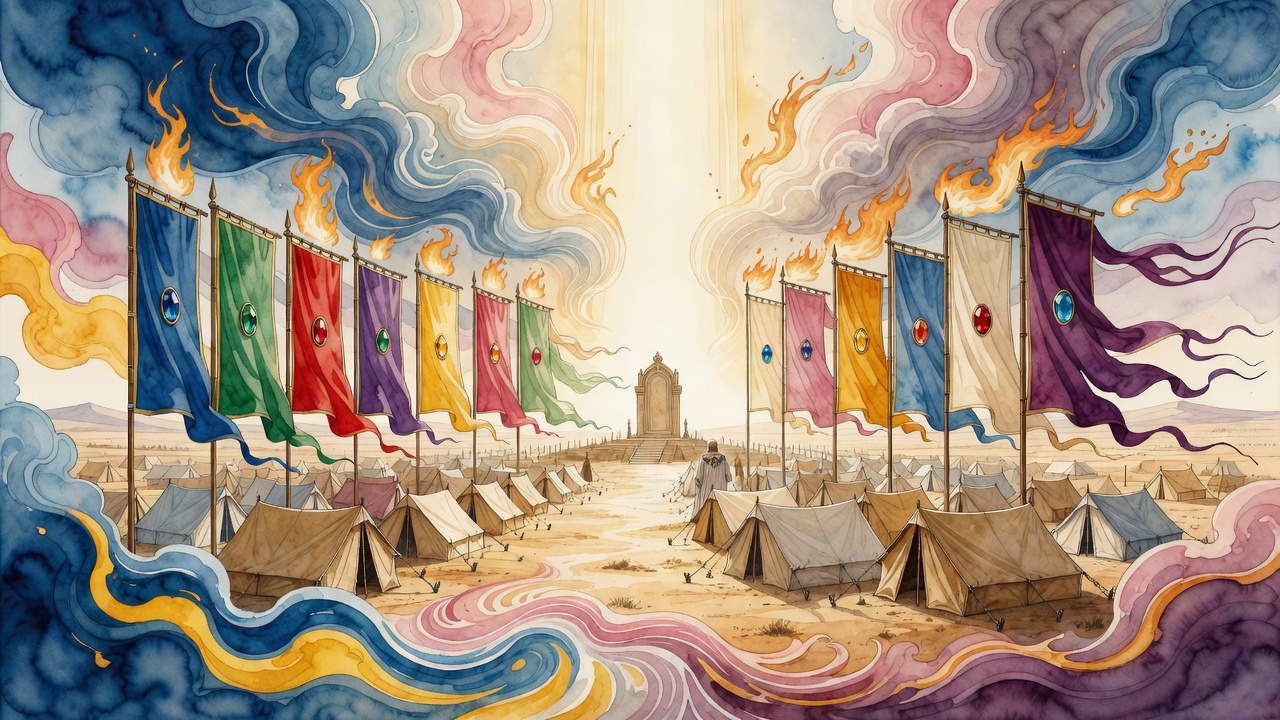
Each of the twelve standards flew colors matching the High Priest's breastplate. The camp was arranged as a portable extension of the Tabernacle itself.
Table of Contents
 Click for full size
The Camp as Sacred Architecture
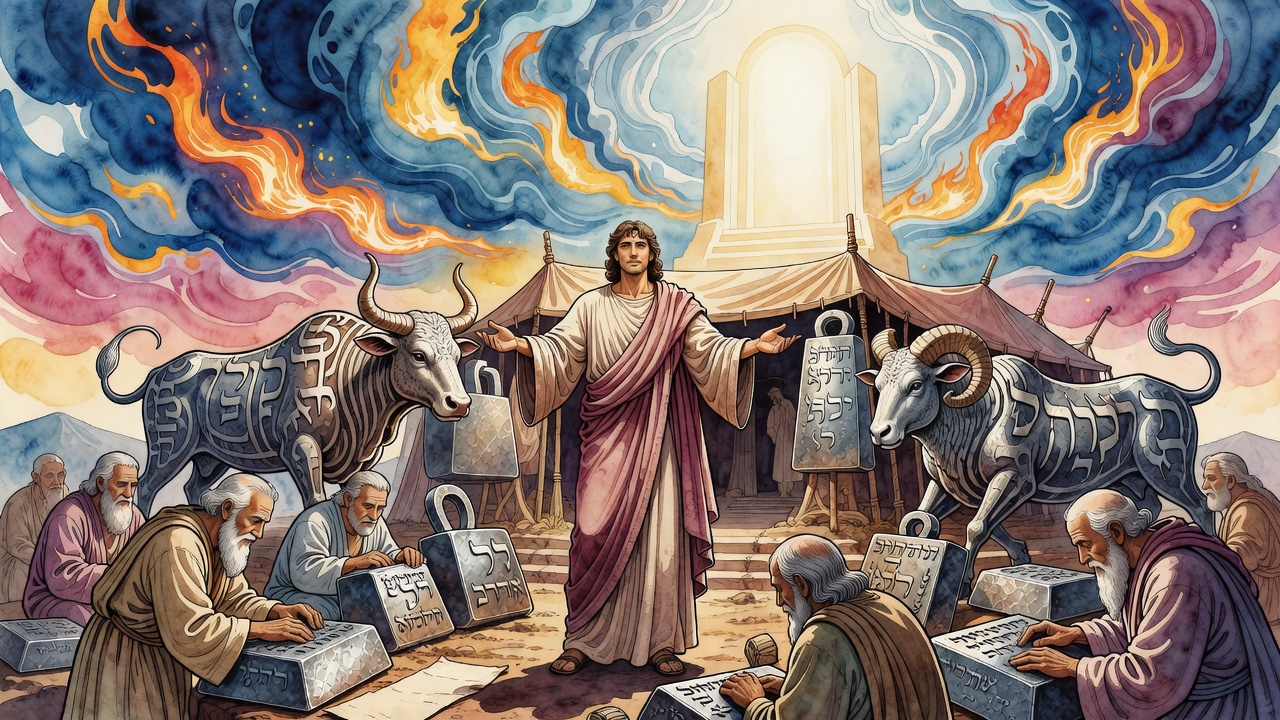
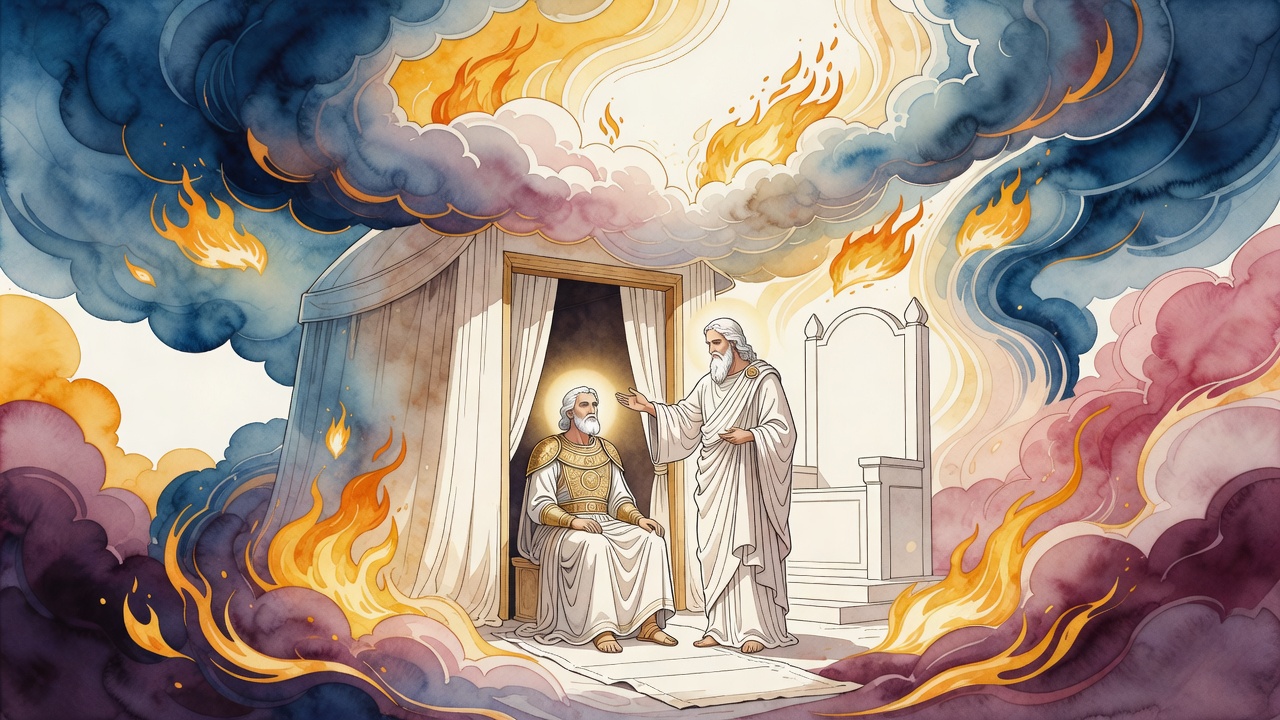
The Israelites in the wilderness were not a mob moving by instinct. They were a nation in formation, organized around a center, each tribe knowing its position relative to the Tabernacle and to every other tribe. The Ark and the priests occupied the middle. The Levites surrounded them. The twelve tribes were arranged around the Levites on four sides, three tribes to each cardinal direction.
At the head of each tribal grouping flew a standard. Not a plain marker. Not a military flag. A theological document, woven in specific colors, inscribed with specific words, carrying imagery that connected the tribe beneath it to the particular blessing that had been spoken over its forefather's head on the day Jacob lay dying in Egypt.
What Made Judah's Standard Legible From a Distance
Judah's standard flew over the eastern formation, three tribes beneath it. Its colors were red, green, and fiery red, the same colors as the ruby, the emerald, and the carbuncle on the High Priest's breastplate. Anyone who could see the standard and knew the breastplate could trace the line between them: this banner was the banner of the tribe whose stone came first on the priest's chest, the tribe whose color was pressed against the priest's heart each time he entered the sanctuary.
On the standard hung a lion, not a young lion at rest but a lion equipped, a lion whose gold hooks were shaped like blades. Above it, a sliver of the seventh cloud of glory rested over the banner and illuminated the initials of the three patriarchs. Abraham, Isaac, and Jacob: three letters carried through the desert air on Judah's standard, lit from above by the glory that had come down at Sinai and had not entirely departed from the camp.
The inscription on the standard read from Numbers: Rise up, O Lord, and let your enemies be scattered. The banner of the tribe of kings quoted the verse about the Ark's movement. When the Ark traveled, these were the words that were spoken. Judah's standard carried them on its face because Judah preceded the Ark, clearing the path, announcing the approach.
Reuben's Standard and the Mandrakes
Reuben's standard flew over the southern formation. Its color was red, for the rubies of his tribe's stone. On the banner: the figure of a man. This connected to the dudaim, the mandrakes Reuben had found in the fields and brought to his mother Leah. The tradition read the mandrakes as a statement of Reuben's attachment to earthly things, to the generative and concrete, and the man on his standard carried that reading forward across forty years of desert.
Reuben had been the firstborn who lost his birthright. The standard did not hide this. It did not substitute a more flattering image. The man on the banner was the man Reuben was: someone whose gift and whose failure were inseparable from each other.
What the Colors Said About the Whole
The genius of the arrangement was in its coherence. The breastplate the High Priest wore contained all twelve tribes in gemstone form, pressed against his chest as he approached God. The standards the tribes carried contained all twelve tribes in color and image, spread across the desert camp. The sanctuary was at the center. The standards were at the perimeter. The same symbolic system ran from the innermost point of the holy of holies outward to the farthest edge of the camp.
A person standing at the edge of the camp under any banner could look at the colors of the standard above them and know they were looking at a version of the breastplate the High Priest was wearing at the center. The distance between the outermost tribe and the innermost sanctuary was real, but the visual and symbolic system made it traversable. The whole camp was a single sacred space.
← All myths