Jethro Refused to Stay Though Manna Fell Over His Head
Moses called him the apple of Israel's eye and offered him a share in the land. Jethro tied his bags for Midian while manna still stuck to his sleeves.
Table of Contents
 Click for full size
Manna Fell Straight Onto His Shoulders
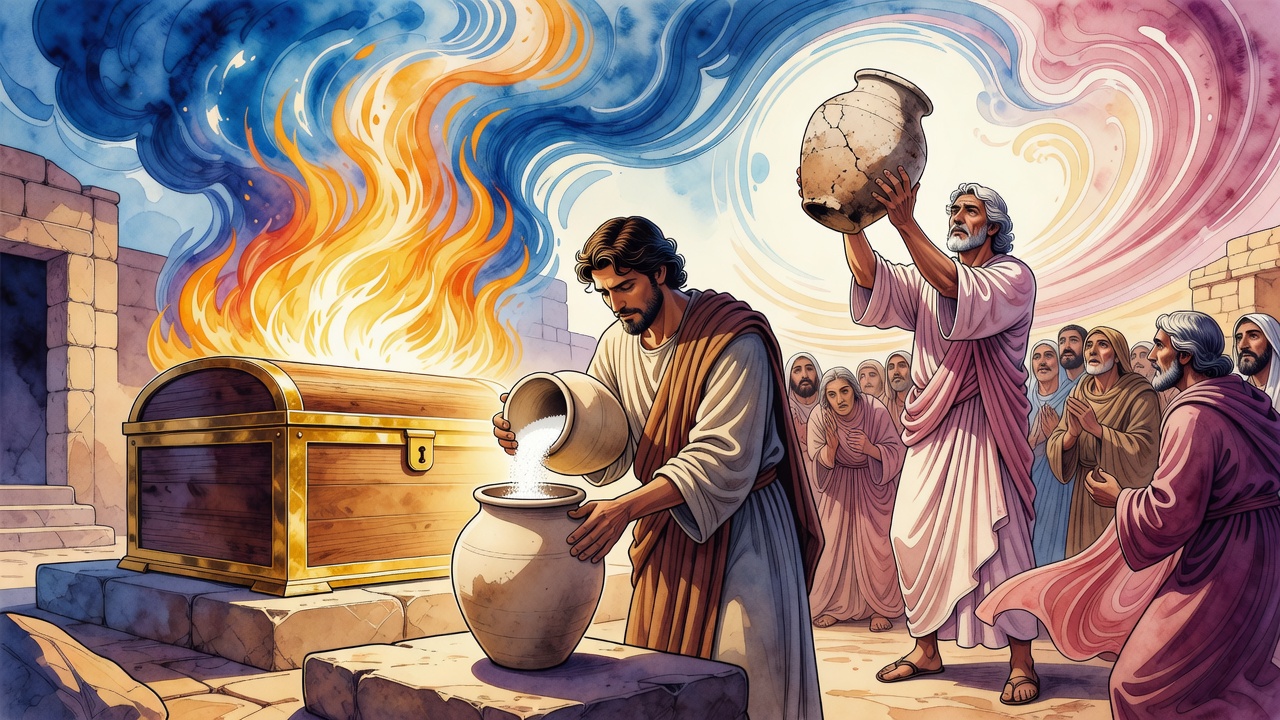
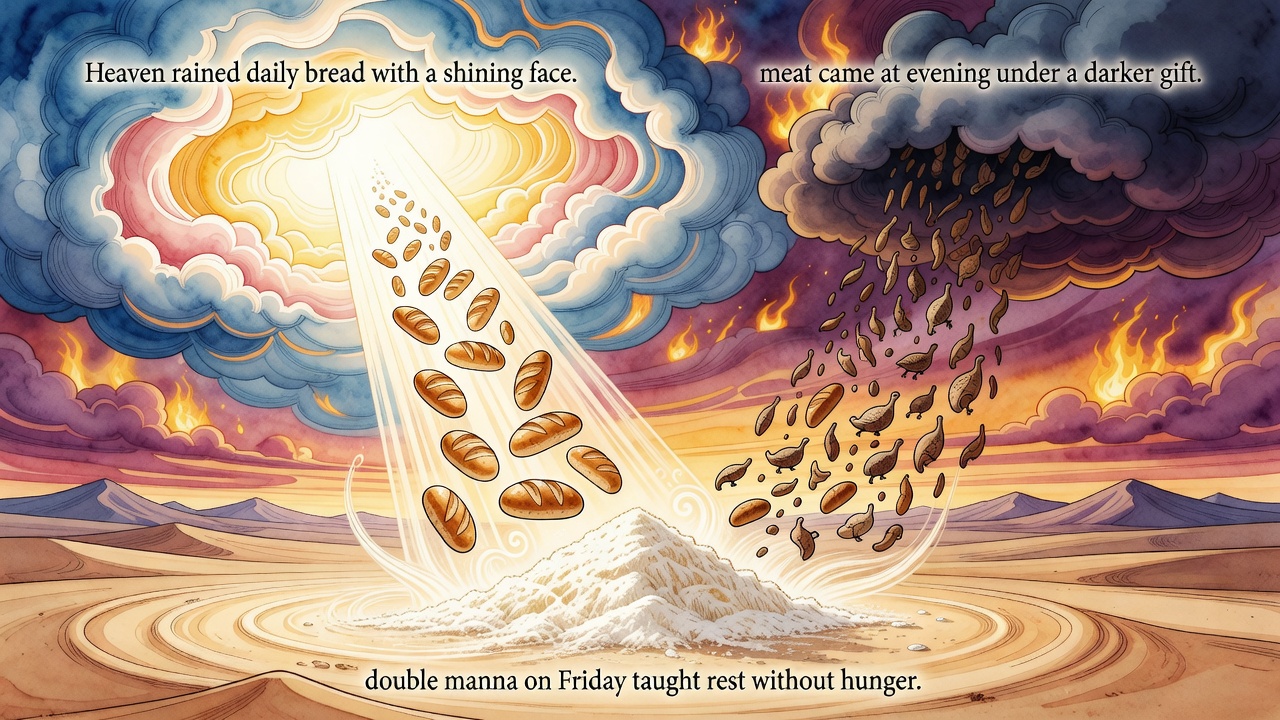
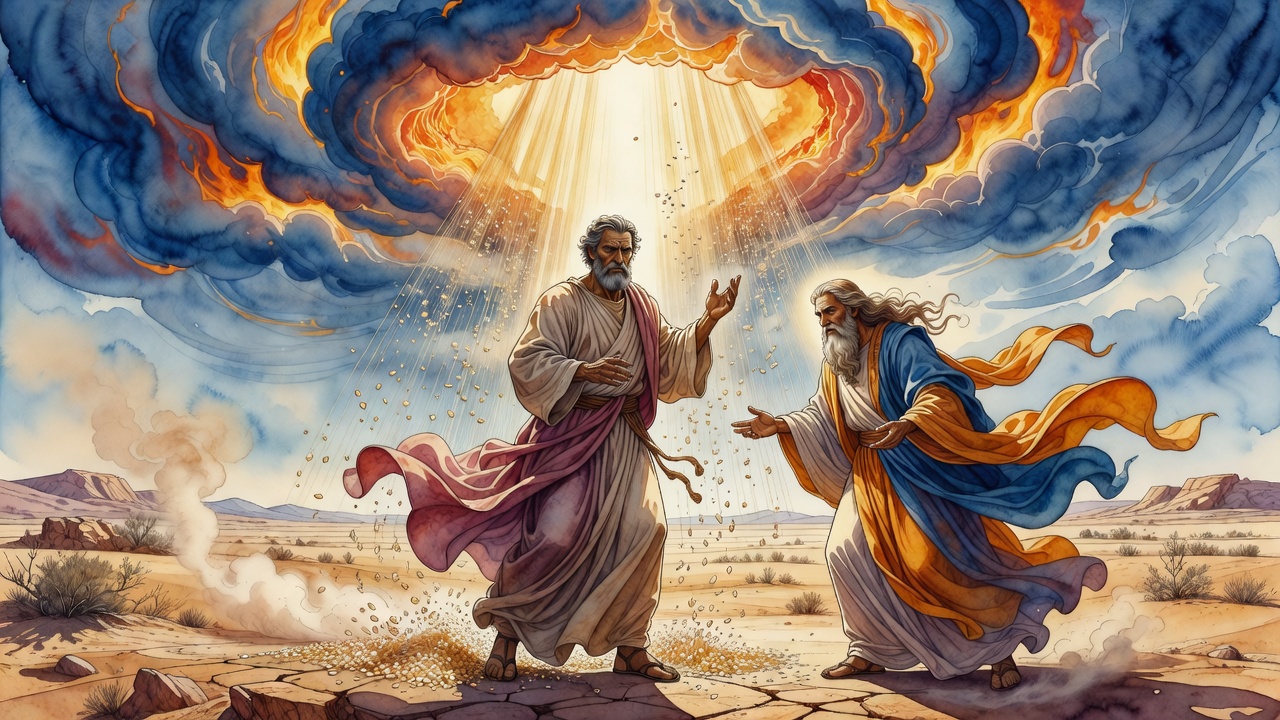
The flakes hit Jethro's cloak before anyone in the camp had named him guest. Not the day's ordinary portion. Bread enough for sixty myriads of Israelites came down at the hour his sandals touched the sand, and it piled at his feet so he did not have to bend.
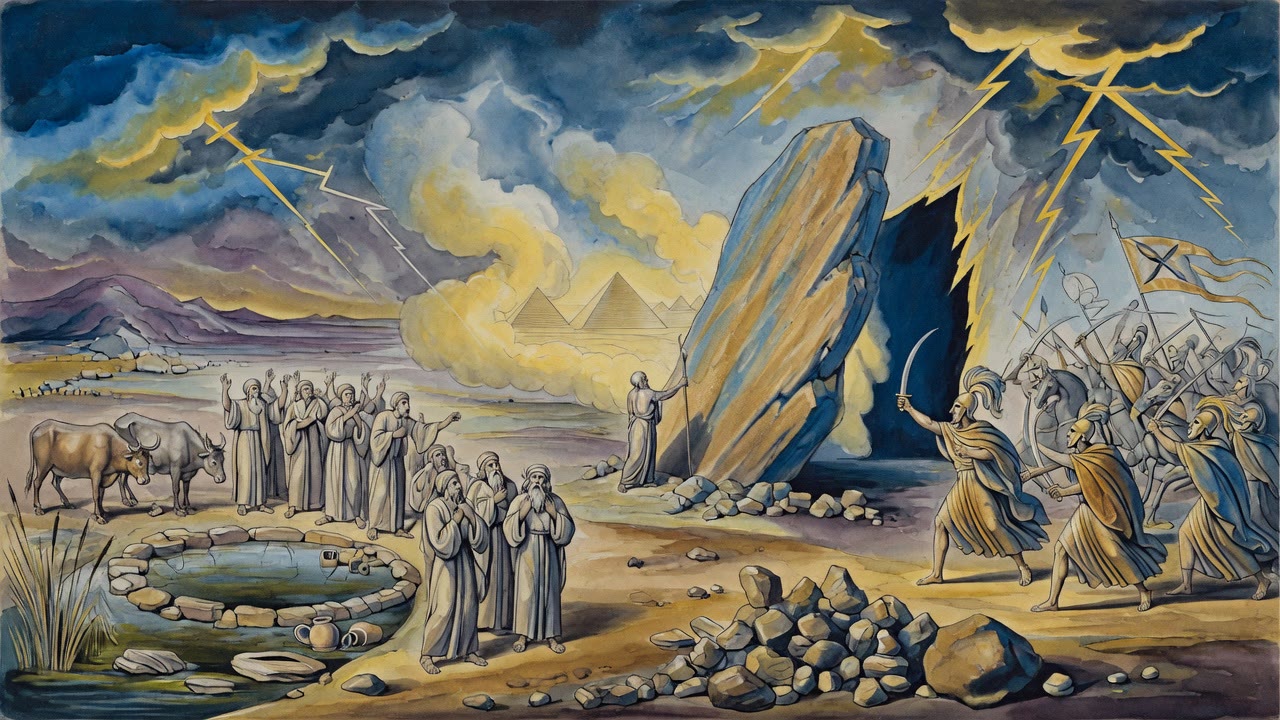
He had come out of Midian with Zipporah and the boys. He had heard the sea split. He had heard water come out of a rock. He wanted to stand in the place where those things had happened. The sky answered him with food.
Moses Offered Him Land and a Seat
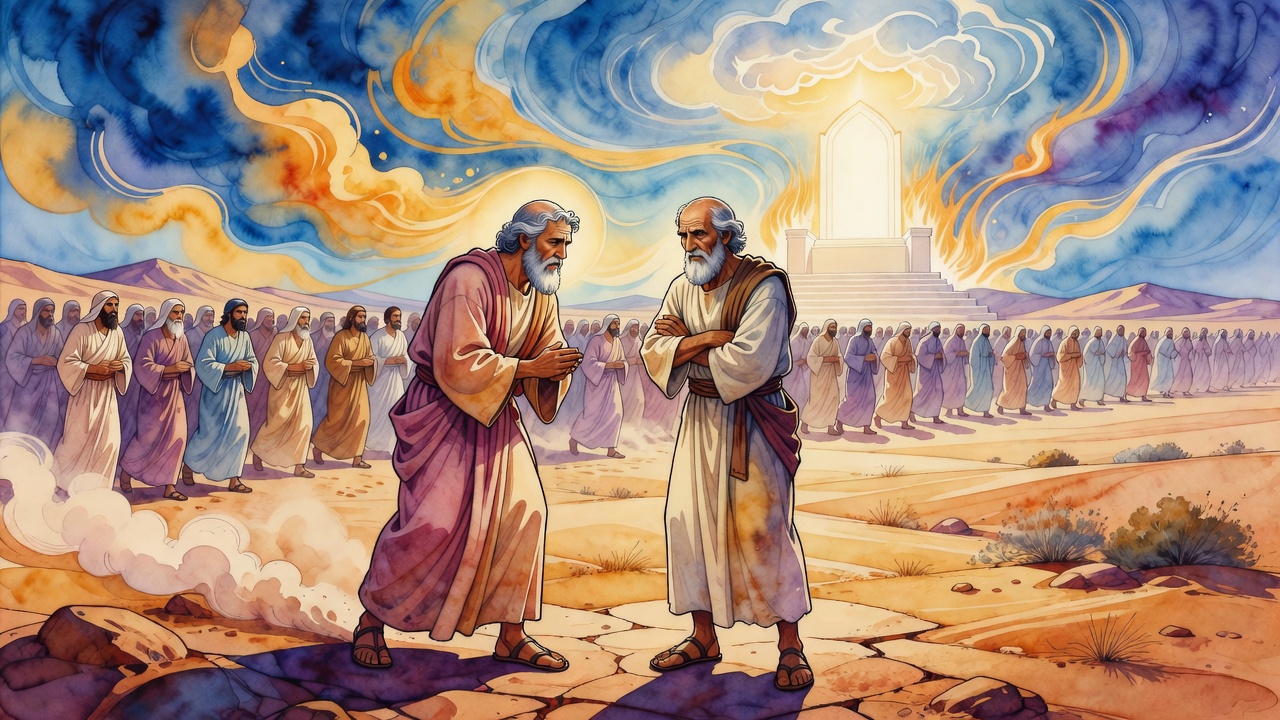
Moses did not let the welcome stay a meal. He took his father-in-law by the sleeve and talked while the camp still smelled of the new bread.
"The wandering is almost over," Moses said. "Stay, and you will enter the land with us. We will be kinder to you than to any other convert. There is a seat waiting among the judges. Your grandchildren will grow up under the cloud."
Jethro chewed. The manna was still warm. He did not say yes.
Jethro Named What He Would Not Abandon
"There are people who have a fatherland and no property there," Jethro said. "There are property-holders with no family. I have a fatherland, and property there, and a family. I am going back to all three."
He had more than houses on his mind. In Midian, people had put their valuables in his care. If he stayed too long under Israel's cloud, they would say he had run off with what they trusted him with. Moses' name would be dirtied with his. He had also taken on debts in a famine year, feeding the poor out of his own store. To vanish now would look like a man fleeing his creditors. That would be a hillul Hashem (חילול השם), a desecration of the Name, and he would not buy himself a quieter life at that price.
Moses tried another angle. If Jethro left, the nations would say Israel only took converts in the hope of land. The door would shut. Jethro shook his head. The people who had not stood at Sinai were still his people. The teaching he had learned here was not a private treasure. He would carry it home. He called that the right choice while the manna still stuck to his sleeves.
Moses Called Him the Apple of Israel's Eye
The camp was already breaking. The Ark had gone ahead thirty-six miles, a full day's march, to pick a place to rest. Two silver trumpets waited in a craftsman's hands. When they sounded for war they were meant to trouble the Accuser. Moses needed a judge who knew the method, and he said so without shame.
"When we were encamped in the wilderness, you knew how to judge, and you taught us the method of judgment, and you are dear to us as the apple of our eyes."
Jethro had been the one who told Moses to stop sitting from morning until night with every quarrel in Israel on his knees. God had let that idea come from the Midianite. Moses had said so in public, so the camp would hear whose it was. None of that untied the bags.
Jethro blessed the God who had delivered Israel from Pharaoh. Then he turned his donkey's head east.
The Cloud Stayed and He Did Not
Moses stood in the lane of packed sand and watched him go. The cloud did not follow Jethro. The manna did not fall on the Midian road. Jethro walked anyway, with the account of the sea and the rock and the mountain in his mouth, toward people who had never heard any of it.
In the days of the Judges his descendants, the Kenites, showed up in the land near Judah, occupying the honor he would not take while his old neighbors still had a claim on him. The seat among the judges was filled by sons and grandsons. He had given up the immediate inheritance so Midian would hear, and the inheritance found his house after the hearing was done.
On the morning he left, none of that had happened yet. There was only a man shaking crumbs off a cloak, refusing a land, and taking the road that did not glitter.
← All myths