Moses Raised His Staff But the Sea Remembered
Before Moses lifts his staff at the sea, the sea already knows. God built a condition into creation the day the waters were gathered, and this is the day.
Table of Contents
 Click for full size
The Sea Kept a Promise Made at Creation
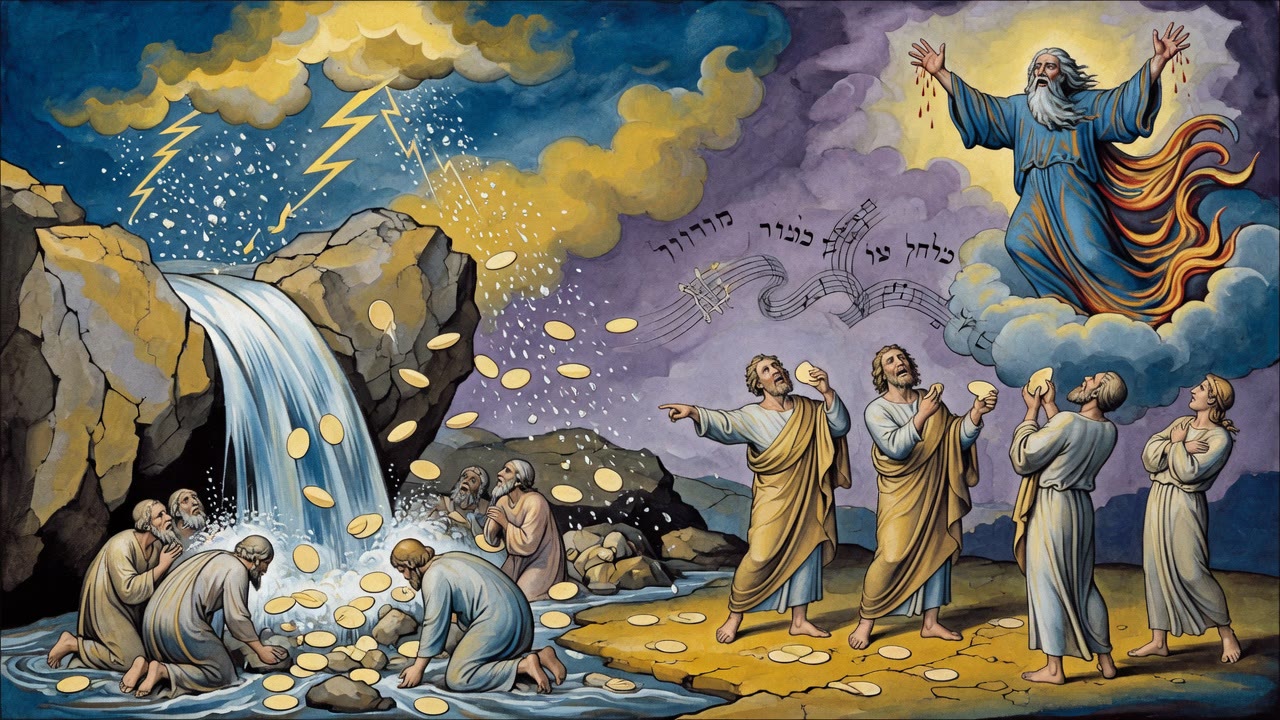
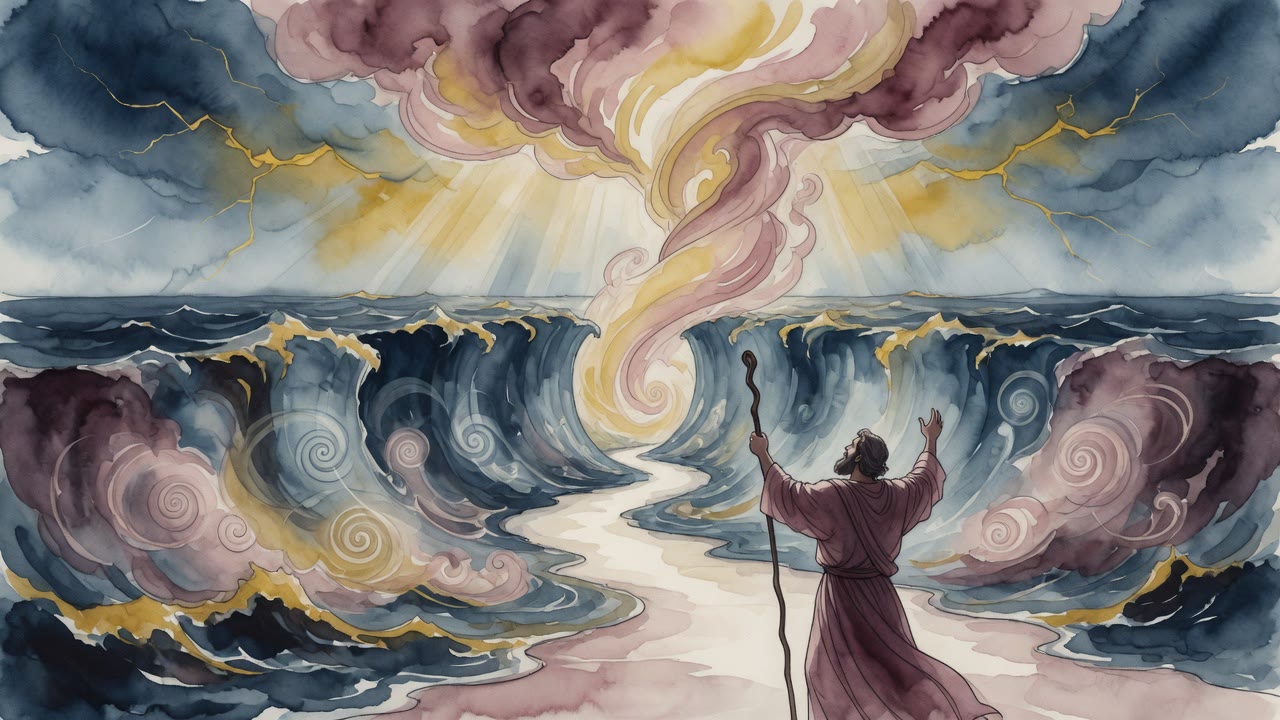
Moses stood at the shore with the sea ahead and Pharaoh's army behind. God told him to lift the staff and split the water. Moses raised an objection: the sea had been given its boundary. Sand was set as its limit. Doors were shut over it. The waters were commanded to remain gathered. God answered that Moses had not read the verse far enough back. When the waters were gathered at creation, God did not simply command them to stay. He made a condition with the sea. The sea would return to its strength, le'eitano, but that word also contained tena'o, condition. The sea was returning to the terms agreed at creation, not breaking them. Dry land appeared not by violation of nature but by nature honoring its oldest appointment. The sea had been waiting for this moment since the third day of the world. Moses thought he was forcing the water to move. The water had already been told it would move, and the only question was when Israel would be ready to walk through.
God Gives Like a Sponge That Has Been Opened
Shemot Rabbah reaches for an image to describe how God provides: like a sponge held in a fist, which releases everything the moment the hand opens. Nothing is withheld while the hand is open. The image is not about abundance in the abstract. It is about the difference between a closed hand and an open one, and about who controls the gesture. God holds the fullness of provision, and when the hand opens, when the moment is right, when the covenant condition is met, when Israel is ready to receive, it pours out completely. The sea obeyed this logic. It did not give a little and see how Israel responded. It divided entirely, stood up as walls on both sides, made dry ground through the middle, and Israel crossed on land that had been sea floor. When God opens, He opens completely.
David's Ordinances Remembered the Sea
The tradition connects the sea song, the great song Moses and Israel sang after crossing, to David's court ordinances about the proper conduct of singers and musicians in the Temple service. The connection seems like a long leap, but the Midrash holds it together: the song at the sea was the first great communal song in Israel's history, the moment when an entire nation sang together in one voice. When David organized the Levitical singers and established the patterns of Temple praise, he was building an institution designed to keep that voice alive. Every psalm sung in the Temple was a descendant of the sea song. Every antiphonal chorus between priests and people repeated the structure of Moses and Miriam leading Israel in response after the crossing. The sea's opening did not merely save Israel's bodies. It taught Israel's mouth.
Moses and David Held the Same Office
The Midrash places Moses and David in correspondence. Both were shepherds before they became leaders. Both encountered God in unexpected outdoor moments, Moses at the thornbush, David through the psalms of the fields and the caves. Both were accused by their own people during periods of crisis. Both produced successors who struggled to carry what they had been given. Shemot Rabbah draws the parallel to argue that the office of leading Israel requires a specific kind of person: someone who has stood outside the structures of power, watched animals, felt small, and encountered the divine without institutional support. The sea split for Moses because he had first stood alone before a thornbush. The psalms David wrote became the liturgy of Solomon's Temple because David had first written them while running from Saul.
The Golden Calf Came From Aaron's Hands
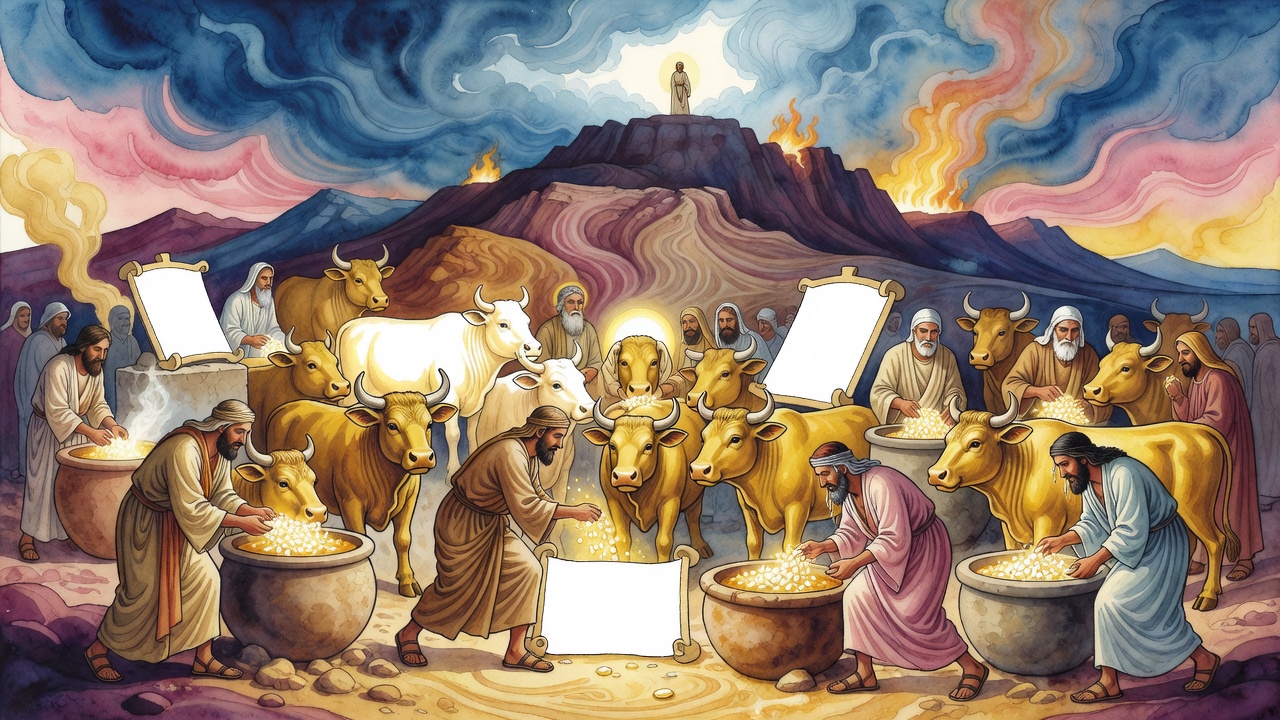
The question the Midrash cannot let rest: who made the Golden Calf? Aaron threw the gold into the fire, he said, and the calf came out. Shemot Rabbah does not accept that answer at face value. A mixed multitude had gone up with Israel from Egypt, and among them were those who remembered Egyptian worship and who wanted a leader when Moses did not return from the mountain on the fortieth day. They pressed Aaron. He could have refused more firmly. He did not. The calf came from his hands even if he was not the one who most wanted it. The tradition adds a detail about what drove the people: they had counted wrong. Moses had said forty days and they understood forty days excluding the day he left. He meant forty complete days including that day. On the fortieth day by their counting, when Moses had not returned, the despair cracked open and the gold went into the fire. An arithmetic error and a moment of weakness collapsed the covenant almost immediately after the sea had stood up for Israel. The water had remembered its creation condition. The people had forgotten theirs.
← All myths