Moses Learned That Holiness Still Needs a Boundary
A man was caught gathering wood on the Sabbath. They held him in custody because Moses, who had received the law at Sinai, did not know the ruling.
Table of Contents
 Click for full size
Manna Fed the Body and Exposed the Desire
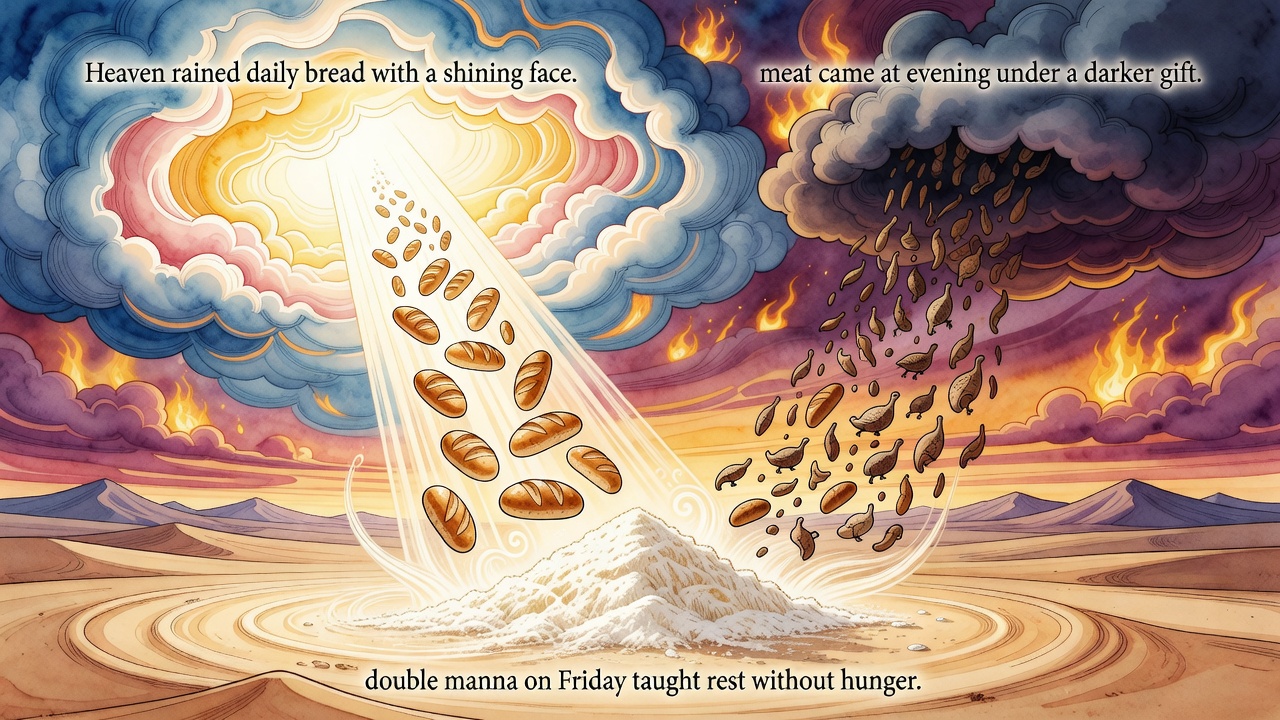
Bread came from the sky and Israel held it in their hands and complained that they wanted meat. The manna was real. It was enough to keep the people alive. It could be ground and baked, boiled and tasted. But it was not what they wanted, and what they wanted accumulated into a roar that Moses could not contain. He came to God at the edge of his own exhaustion. "The burden of this people is too heavy for me," he said. "I did not conceive them or give birth to them. Why lay this on me?" Legends of the Jews hears in Moses's outcry a man who had spent his strength on a people who could not be satisfied even by miracle. God's answer was measured. He gathered seventy elders to carry the burden. He sent quail until Israel was sick of quail. The manna continued, and the desert continued, and the desire continued. The wilderness did not prove that miracles satisfy. It showed what desire looks like when it has been freed from starvation without being freed from itself.
Moses Stood Before the Sabbath Violator and Did Not Know
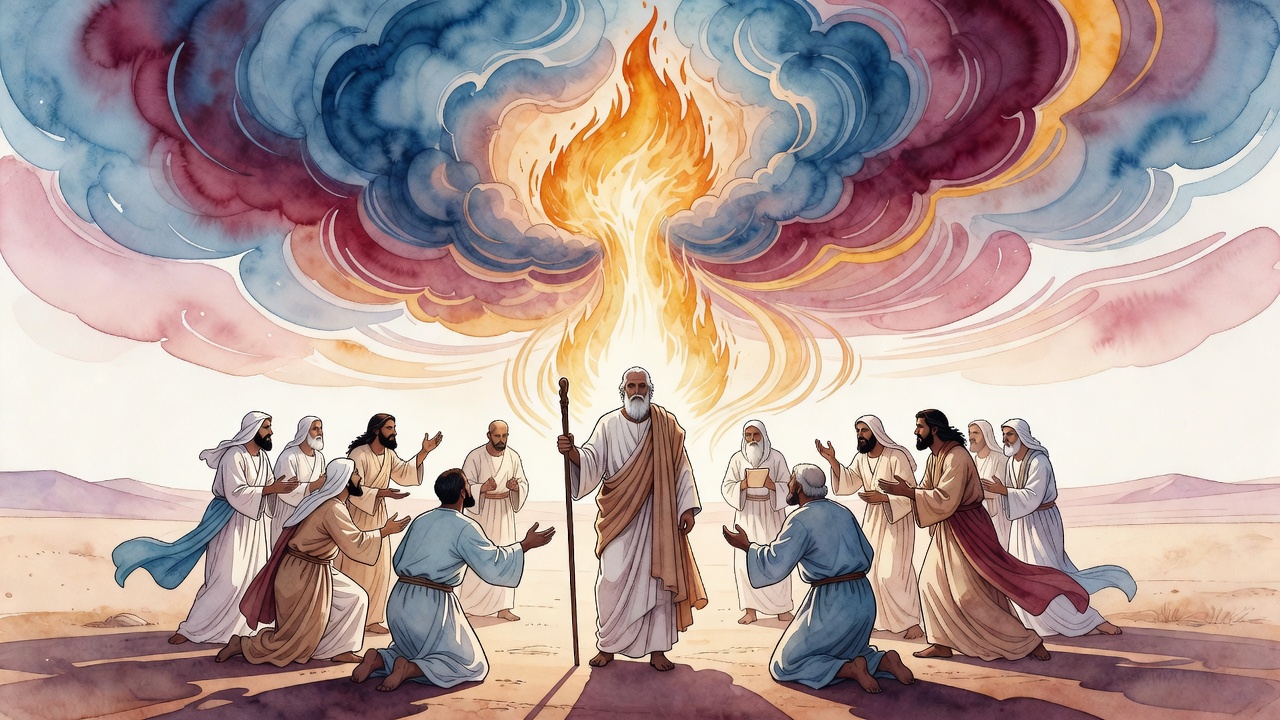
A man was found gathering wood on the Sabbath. He was brought to Moses and Aaron and the whole assembly. They placed him in custody because it had not been clarified what should be done to him. Moses, who had received the law at Sinai, who had stood before God for forty days, who could interpret every other question the wilderness produced, did not know what to do. He had to ask. God answered: "the man shall surely be put to death; all the congregation shall stone him." The execution was carried out. The Midrash does not explain why Moses did not know. It preserves the gap without filling it. The man who had received the most complete transmission of divine instruction in human history encountered a case he could not rule on without explicit guidance. Even Moses had limits. The law was the boundary, and the boundary had to be asked for, not assumed.
Water Waited to Punish Moses
At Meribah, Israel argued with Moses and God over water. Moses struck the rock twice instead of speaking to it. Water came. The people drank. And Moses was told that he would not enter the Promised Land. Legends of the Jews reads the connection between water and Moses's punishment as something deeper than a single incident. From the second day of creation, when God separated the waters above from the waters below, water had been nursing a grievance. Creation called each day good, except the second day. The waters were split and the day was not called good, because division is not inherently good and the incomplete thing does not receive that blessing. Water remembered that omission. Water was the element that had judged the Flood generation, had been parted for Israel at the sea, and had arrived from the rock for Israel in the desert. At Meribah, water finally got its accounting with Moses. He struck instead of spoke. The boundary was crossed. The punishment was clean.
Moses Never Begged to Enter the Land
Moses prayed to enter the Promised Land. He used the word va'etchanan, the root of grace, of unearned favor. He appealed to God's compassion rather than his own merit. God answered no and told him to stop asking. Climb to the top of the mountain, look across at the land, and that is all. The Midrash notes what Moses did not do: he did not beg. He did not make his prayer a performance for Israel's benefit. He did not try to overturn the judgment by exhausting heaven with repetition. He accepted the boundary. He climbed. He looked. He died with his eyes open on the landscape he would not enter. The tradition holds that Moses himself accepted the logic of the punishment, not with resignation but with the same clarity he had brought to every other case where the law was plain and the ruling could not be softened.
The Sons of Moses Lived Hidden Beyond the River
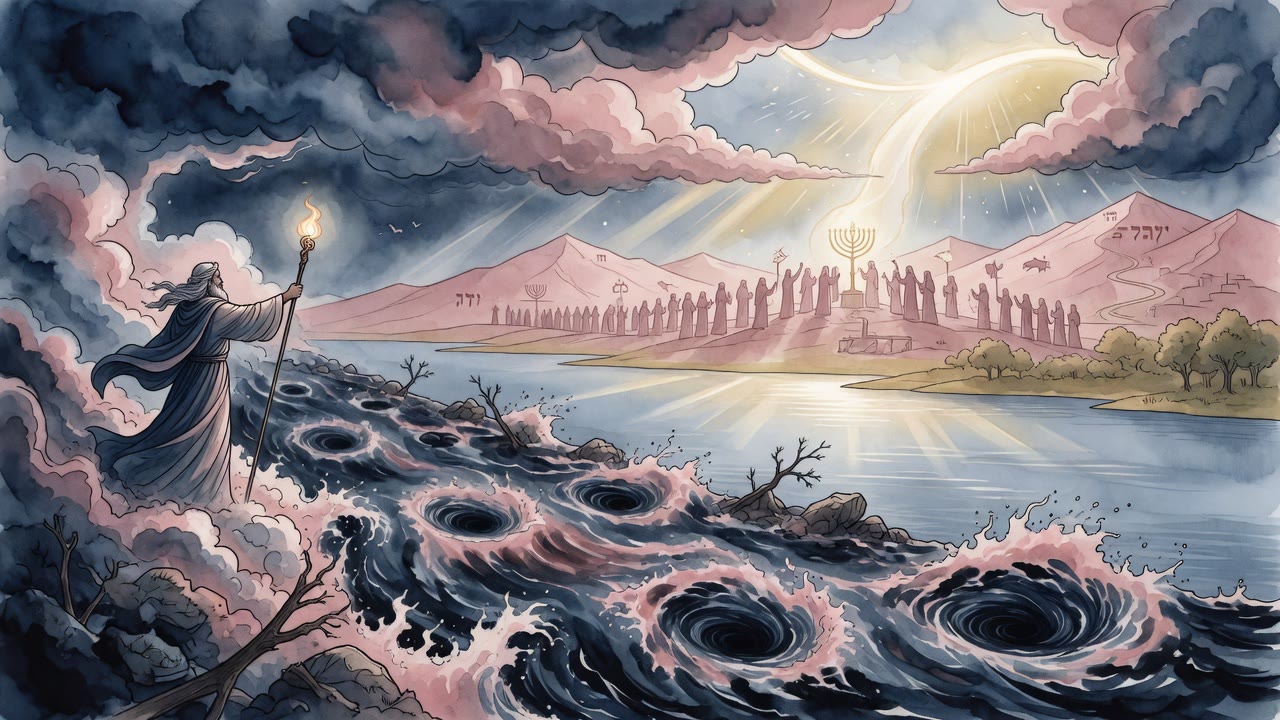
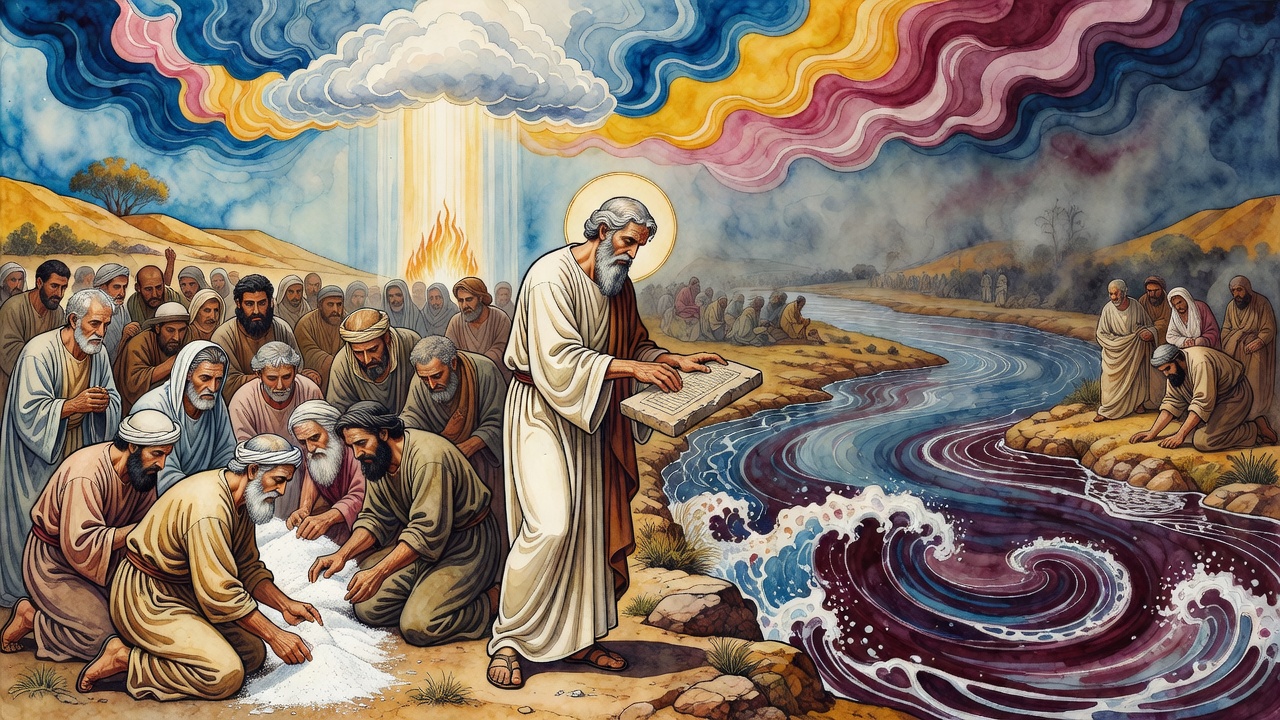
There is a land beyond the Sambatyon River, a river that runs with stones and sand six days of the week and rests on the Sabbath, when it cannot be crossed. The sons of Moses live there. They did not enter Canaan. They did not become part of the tribes that divided the land. They live in a place too pure for ordinary history, protected by a river that observes the Sabbath more faithfully than any human community. Legends of the Jews preserves this tradition as a kind of consolation. Moses lost the Promised Land, but his descendants inhabit a more austere and more protected country. His line did not vanish. It was hidden, preserved beyond the flowing stones, in a place the ordinary world cannot reach on its own terms. The boundary that kept Moses out of Canaan eventually produced a people who live inside a stricter boundary than Canaan ever was.
← All myths