Israel Sang at the Sea Then Looked for Manna on Sabbath
The song rose before they had bread or a plan. Six weeks later some of them walked out at dawn with empty vessels.
Table of Contents
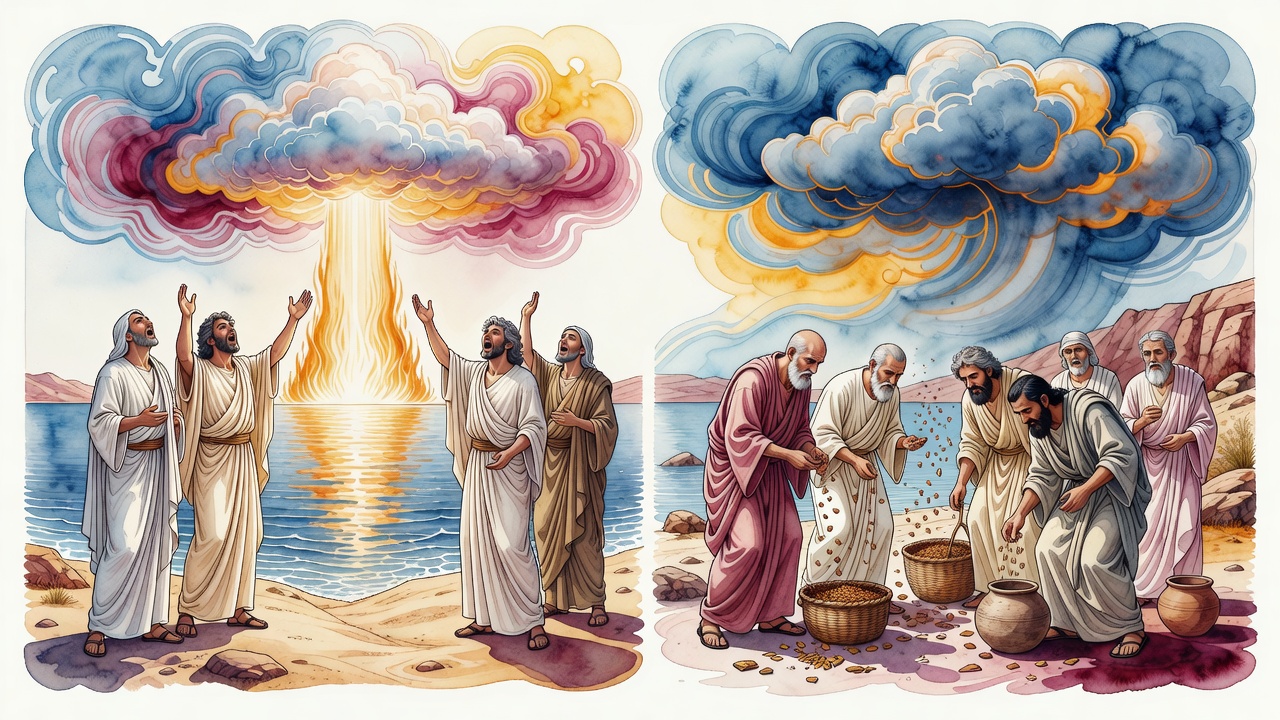
They stood on the far shore with the water still turning behind them. Wreckage of chariots lay on the sandbars. They had not eaten. They had no map. They sang anyway.
 Click for full size
They Sang Before They Had Bread
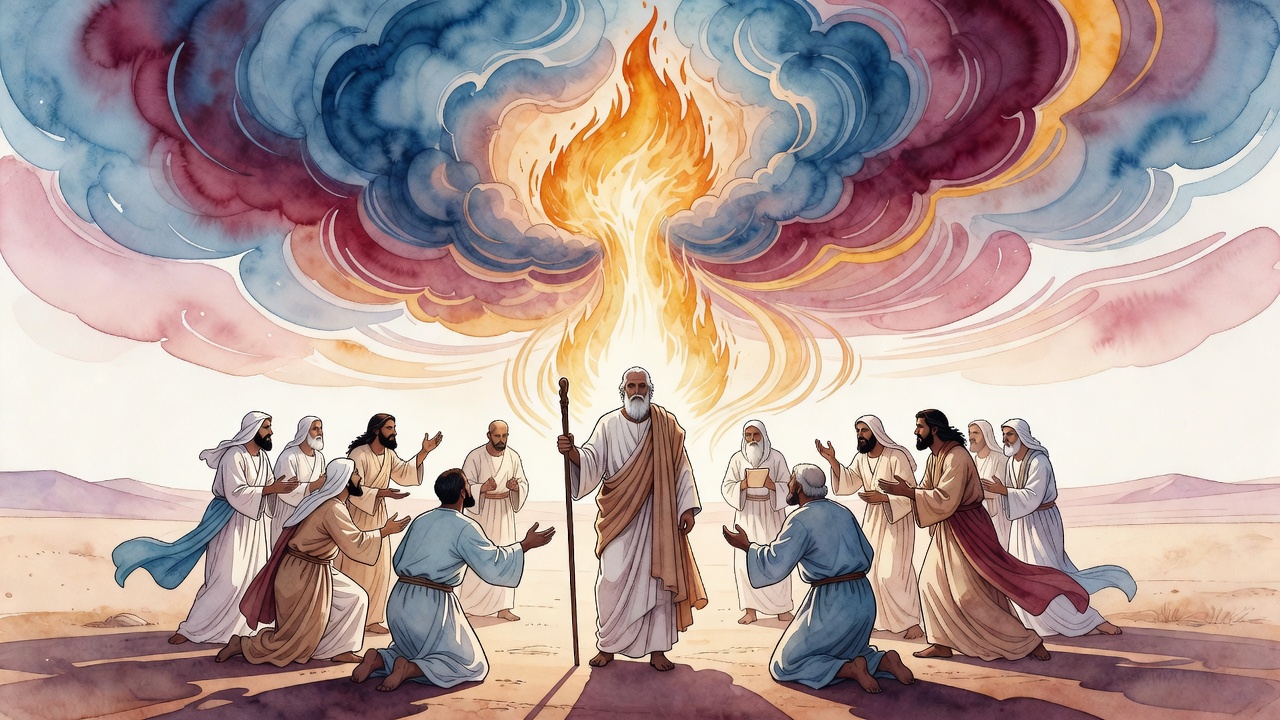
The Song of the Sea rose out of a nation of former slaves, and it was a song about God, not about them. They did not sing their own survival. They sang the One who had made survival possible. Trust came first. They trusted God, then they trusted Moses, His servant. Because of that double trust, the spirit rested on them. Because the spirit rested, the song came.
The song was the second of nine. They had assembled the first in Egypt on the night they left. This one they sang with salt still on their skin. Later there would be a well, a dying Moses, Joshua over five kings, Deborah over Sisera, David out of the hand of enemies, Solomon at the Temple, Jehoshaphat walking into battle on trust. A last song still waited, the one at the final release. On this morning they had only the second, and it was enough for heaven to forgive what they had carried out of Egypt. Every idol. Every bend toward Pharaoh's world. Forgiven at the water, on the strength of a song they sang because they believed it.
A Double Portion Fell on the Sixth Day
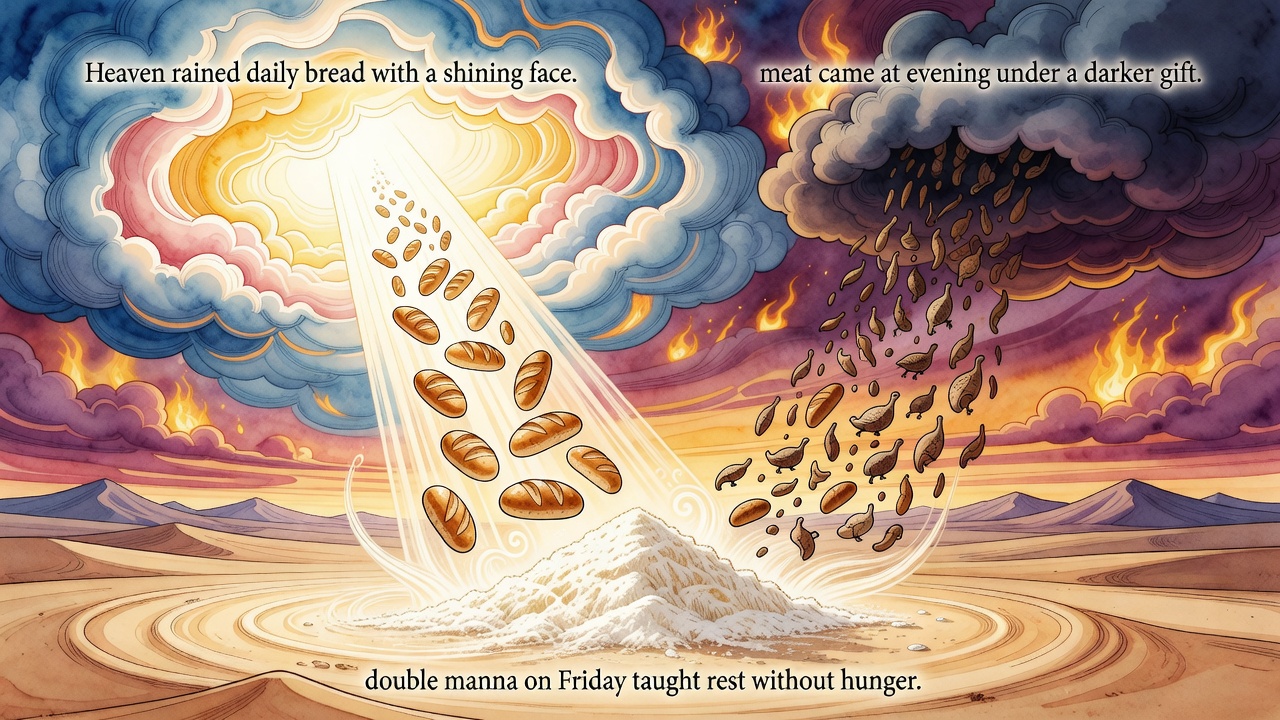
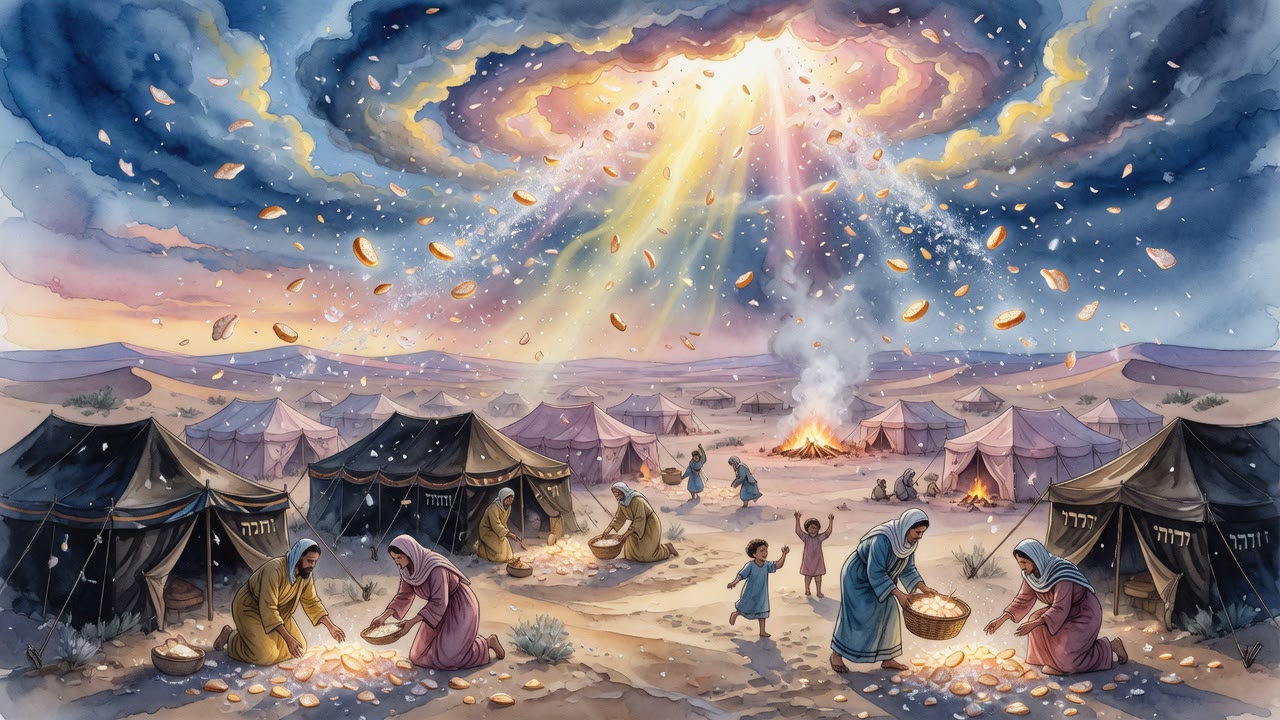
Six weeks later, in the wilderness of Sin, they were hungry. God sent manna. Bread fell every morning except the Sabbath, and on the sixth day a double portion came down so no one would need to go out on the day of rest. Gather twice on the sixth. Do not go out on the seventh. What you keep overnight this once will not rot.
Every other day, leftover manna turned to worms and stank. They had learned that with their noses. On the sixth day they were told the same bread would last. Keep it. Rest. God would send nothing on the Sabbath, but the extra omer would be sitting there in the pot, sparkling more than usual, tasting better than usual, a food that knew the day it was for.
Moses announced it. The ground kept the schedule. Friday's portion came heavy. The camp should have slept.
They Went Out at Dawn Anyway
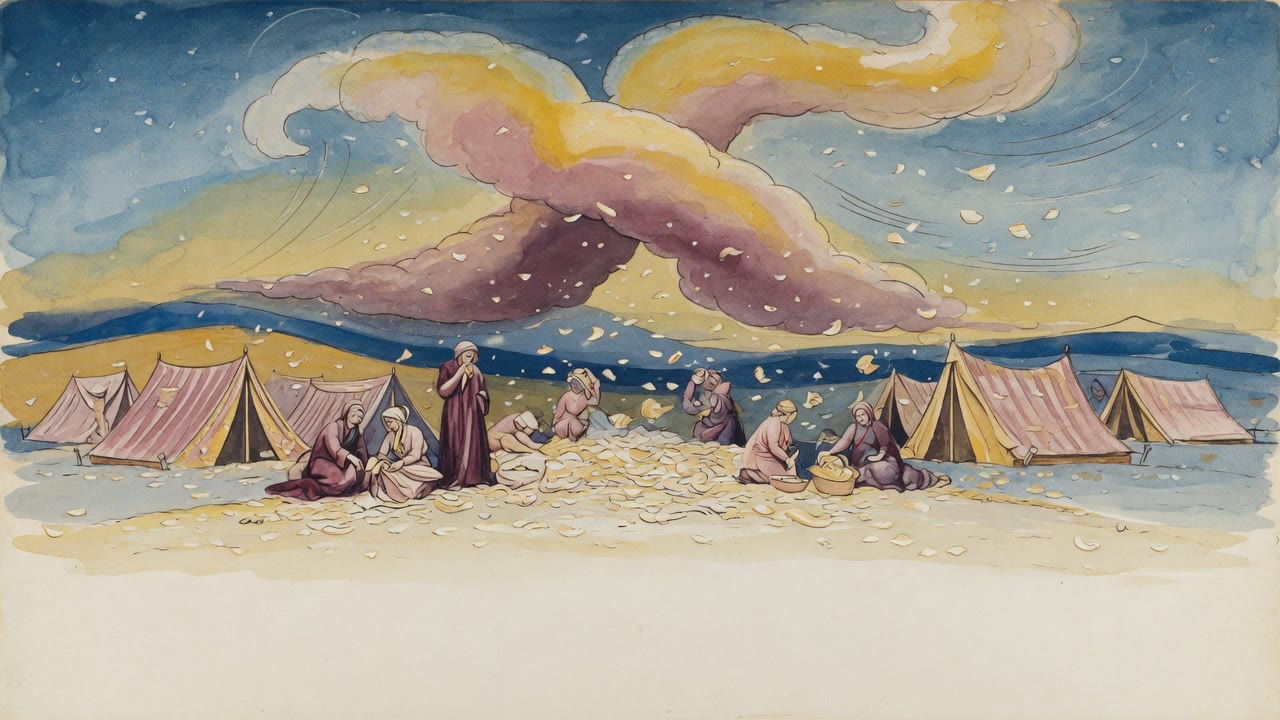
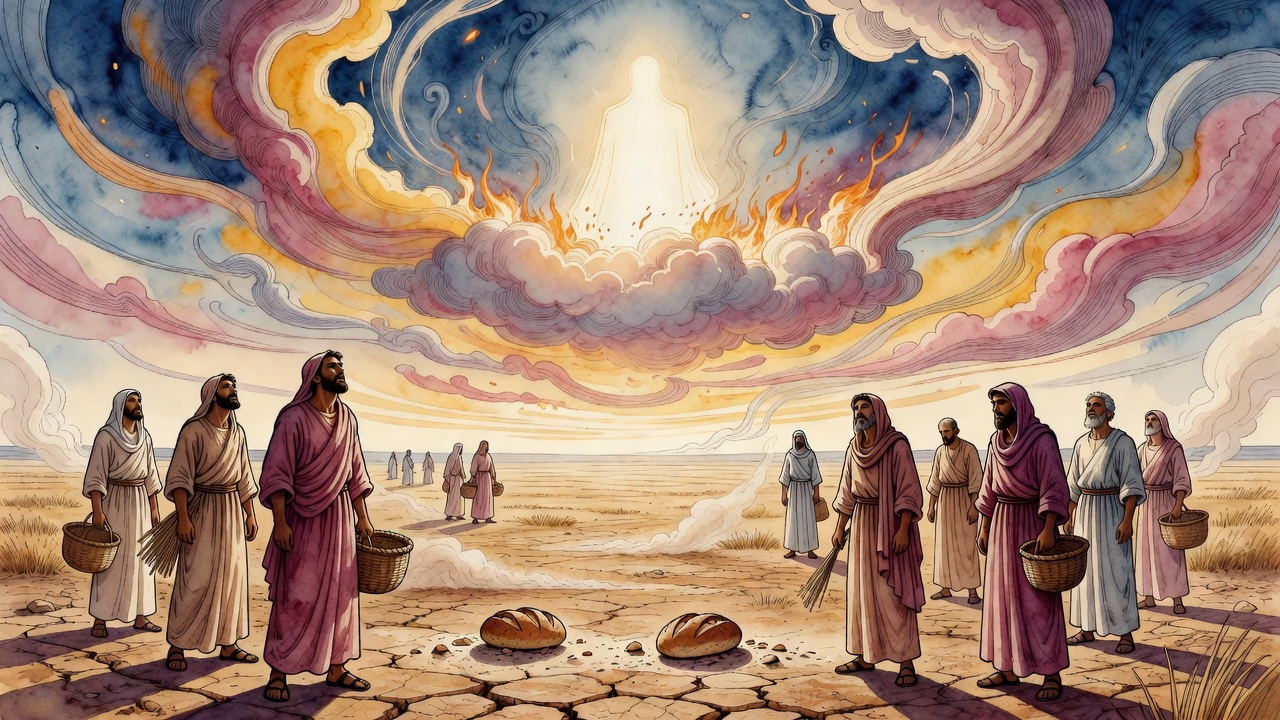
Some of them went out anyway. On the seventh morning, when the ground should have been clean, they picked up their vessels and walked into the desert looking for manna that was not there. The sand was empty. The sky sent nothing.
These were not strangers to miracle. They had seen the plagues. They had watched the sea split. They had eaten bread from heaven six days in a row. They had heard the rule. Fear of the next shortage still got them up before light. No miracle was quite enough to override the habit of checking.
Moses met them on the path and turned them back. The field stayed empty. Their pots stayed empty. The song at the sea had been trust before evidence. This was evidence that still could not sit still.
Moses Stopped Them Again at Evening
Toward evening they tried it again. The same feet, the same vessels, a second inspection of a field God had already closed. Moses stopped them with a line that frightened them more than hunger. "Today you shall not find it in the field."
They heard today and thought never. If the bread was gone today, maybe it was gone. Moses had to quiet them twice. Today you shall not find it. Tomorrow you will. In this world you will not receive manna on the Sabbath. In the world to come, you will.
The unbelieving among them did not hearken. They went out on the Sabbath to find manna anyway, after the morning attempt, after the evening warning, after the double portion already sitting in their tents. The ground gave them nothing a third time.
Heaven Listed What They Already Had
God said to Moses, "Announce this to Israel. I led you out of Egypt. I split the sea. I sent manna. I made a well spring. I sent quail. I battled Amalek for you. And still you do not keep My commandments. You do not even have the excuse of a long list. At Marah I asked you for the Sabbath. You have violated it."
The singers at the sea had walked into water that was still water. The hoarders in the desert had six days of visible bread and could not extend that trust across one day of rest. Moses held out what rest would buy if they could keep it: three festivals, the land, a future world, David's house, priests and Levites, and a shield against later terrors. None of that moved the ones who needed to see the ground with their own eyes every morning.
The field stayed empty. The pots came home empty. The double portion waited in the tents they had refused to trust. On the far shore they had sung without bread. In Sin they could not stop hunting it on the one morning it was meant to be gone.
← All myths