Sixty Cubits of Manna and the Groan of Rabbi Tarfon
Tarfon groaned loud enough for the row to hear. Elazar of Modiim did not smile. He asked which of God's two measures was larger. Then he counted doors.
Table of Contents
They were sitting in the shade, the elders in their row and Rabbi Tarfon among them, when the old man seated before them lifted his head and said it plainly, the way a merchant states a price.
 Click for full size
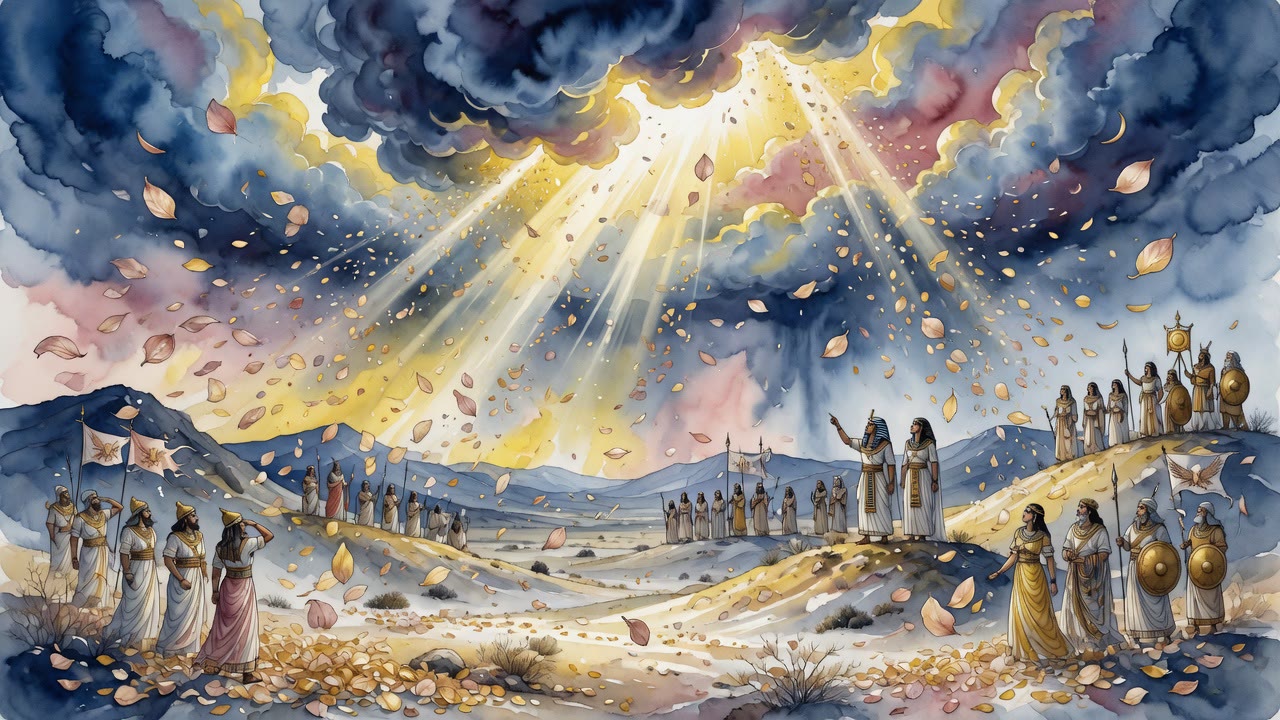
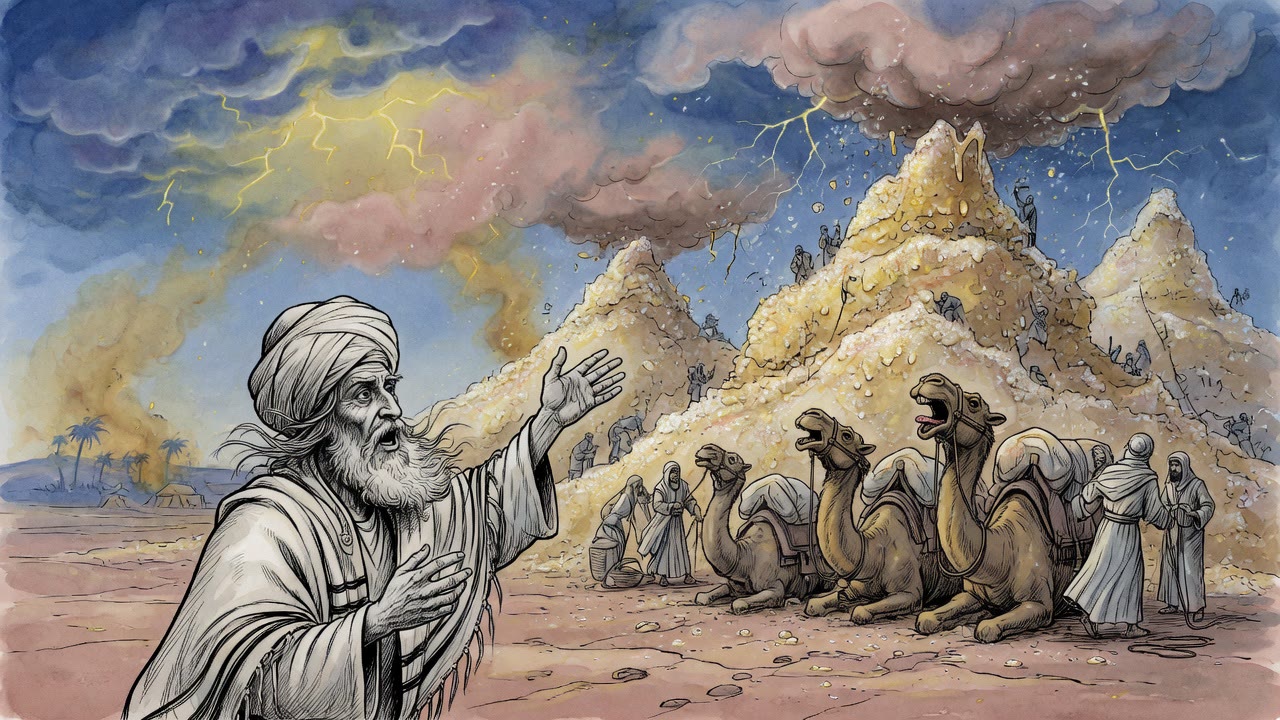
The manna that fell in the wilderness stood sixty cubits high.
Sixty cubits. The height of a tower. A wall of bread taller than the Temple gates, coming down out of the morning onto a camp of former slaves, white as coriander seed, sweet as wafers in honey (Exodus 16:31), stacking itself, by this man's count, into a column that would have hidden the tents.
The man who said it was Rabbi Elazar Hamodai, Elazar of Modiim, and he did not smile. He folded his hands and waited.
A Groan Among the Elders
Rabbi Tarfon let out a groan that everyone heard.
"Modai," he said, "how long will you go on heaping your wonders upon us?"
It was the protest of a tired colleague, not an enemy. Tarfon knew this man. Wherever Scripture left a miracle standing at a modest height, Elazar found the verse that made it tower. The other elders had learned to brace when he opened his mouth. A miracle in Elazar's hands never shrank. It grew until the mind ached trying to hold it.
Elazar did not retreat. He leaned forward.
"It is a verse in the Torah," he said.
Which Measure Is Greater
He began where he always began, with a question he considered finished.
Which of God's measures is greater, the measure He pours out in punishment, or the measure He pours out in reward?
The elders knew the answer. The middah (מדה), the measure, of good outweighs the measure of wrath. God is stingy with judgment and lavish with blessing. He punishes by the cup and rewards by the river. No one in the row raised a hand, because no one could.
"The measure of good," Elazar said. "Now watch what Scripture does with the measure of punishment."
Windows Over the Mountains
He took them back to the generation of the flood, when the world drowned.
The waters of that judgment did not seep up from the ground alone. The windows of the heavens were opened (Genesis 7:11), and through those opened windows the rain came down for forty days, and the waters climbed the mountains and kept climbing until they stood fifteen cubits above the highest peaks (Genesis 7:20).
Fifteen cubits of water over the mountains of the earth. That was what came through windows. Small openings. The sky unlatched just enough to end a world.
"That," said Elazar, "is the measure of punishment. Windows, and fifteen cubits."
Then he turned to the manna.
Doors, Not Windows
For the bread of the wilderness, Scripture uses a different word.
"He commanded the skies above, and He opened the doors of heaven, and He rained upon them manna for food, and gave them the grain of heaven" (Psalms 78:23-24).
Doors. Not windows. When God punished, He cracked the windows of the sky. When God fed His children in a wasteland, He flung the doors wide.
Elazar counted the way a man counts lumber. A door holds four windows in its frame. The verse says doors, so count two. Two doors hold eight windows. If two windows of heaven poured out fifteen cubits of floodwater, eight windows pour out four times as much. Four times fifteen is sixty.
Sixty cubits of manna. At the least. The measure of good is always the greater measure, and the count of the windows was only where the generosity began. The flood ran forty days over the whole earth. The manna fell in an hour for Israel alone. By rights the pile should have stood even higher. Elazar stopped at sixty because sixty already made Tarfon groan.
A Table the Nations Could See
Another teacher, Issi ben Yehudah, added the detail that finishes the picture.
A thing that tall cannot be hidden. When the manna came down for Israel, the nations of the earth saw it fall. The Egyptians who had owned them, the peoples whose lands they skirted, all of them could look toward the wilderness and watch bread rain out of heaven onto a camp of wanderers who owned no fields, no granaries, no country. Every morning the table was laid in the open, as the psalm sings, "You spread a table before me in full view of my foes" (Psalms 23:5).
That was the manna of Elazar Hamodai. Not a thin frost on the ground for Israel to scrape up quietly before the sun grew hot, but a public act of heaven, sixty cubits of white bread standing in the desert light, visible from every border.
Tarfon had asked how long Elazar would confound them with his wonders. The answer was as long as the verses held. And the verses held.
← All myths