The Manna Fell in Full View of Every Watching Nation
Scouts on the ridges waited for the camp to starve. Dawn lifted the dew, and they counted baskets no desert nation had come to see.
Table of Contents
 Click for full size
The Dew Lifted Off the Camp
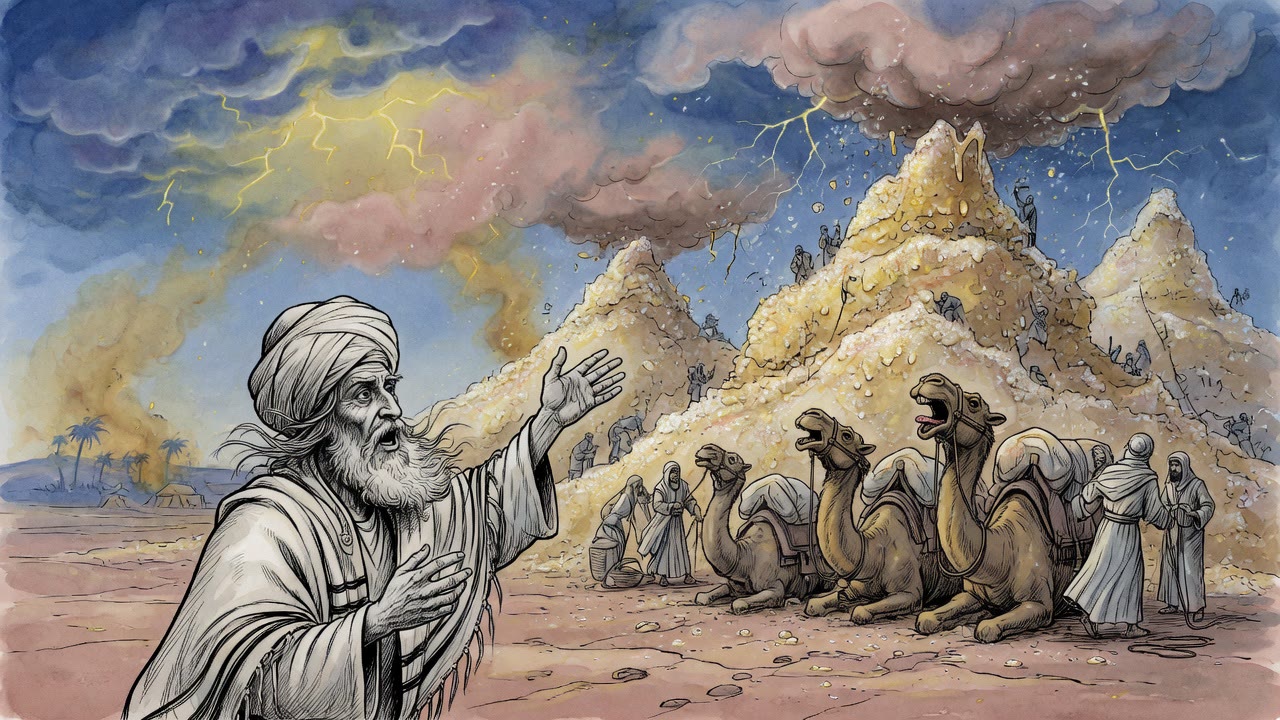
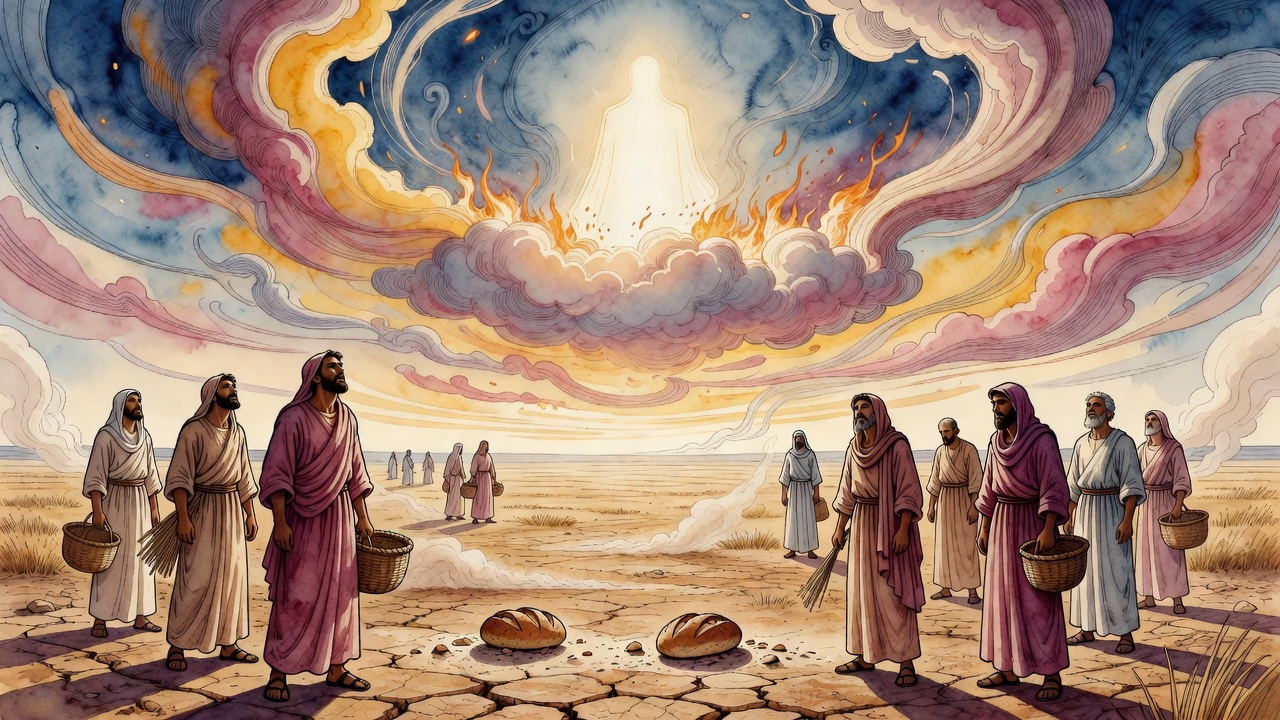
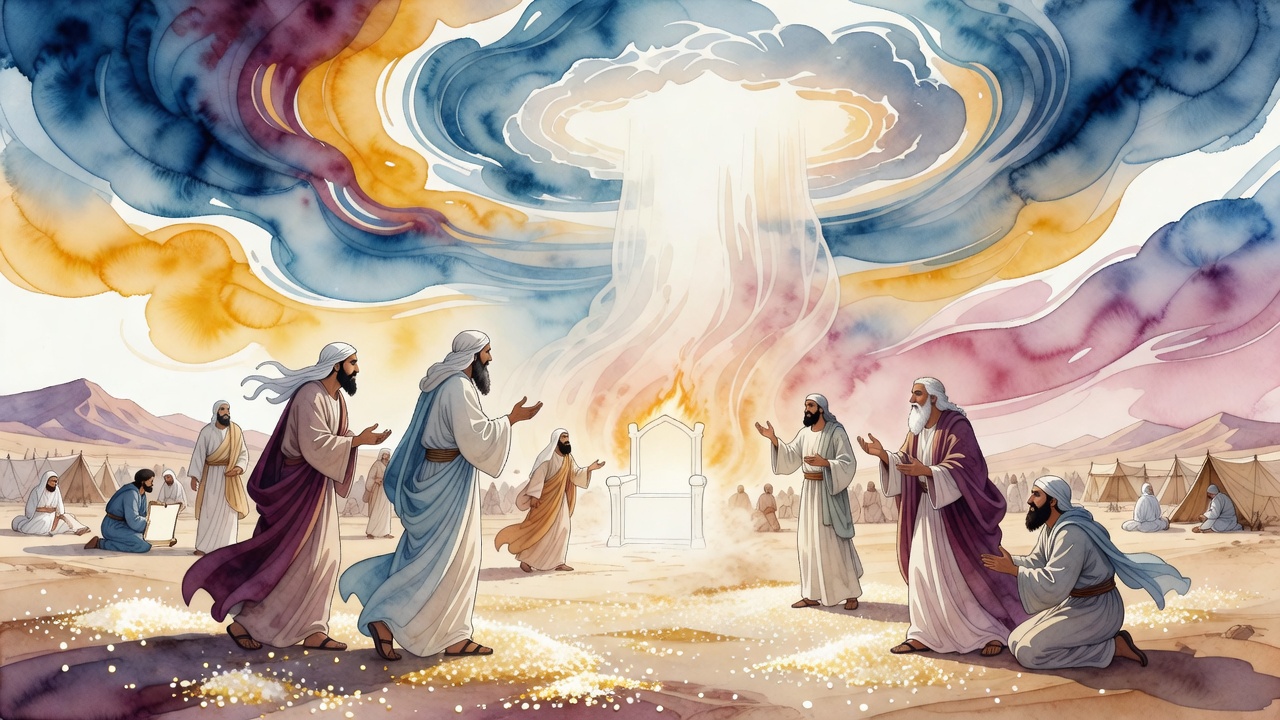
Before the sun cleared the eastern hills, a layer of dew settled over the camp of Israel, miles of tents pitched on ground that grew nothing. The dew lifted with the first heat. Underneath it lay fine, flaky grains, white like coriander seed, spread farther than a person could walk before noon.
The children reached it first. They scooped it up, put it on their tongues, and found it tasted like wafers made with honey (Exodus 16:31). The grown ones came out of the tents more slowly, holding empty baskets. They still asked the question from the first morning, man hu (מן הוא), what is it (Exodus 16:15). They filled the baskets anyway. Slaves learn not to leave food on the ground.
Watchers on the Ridges
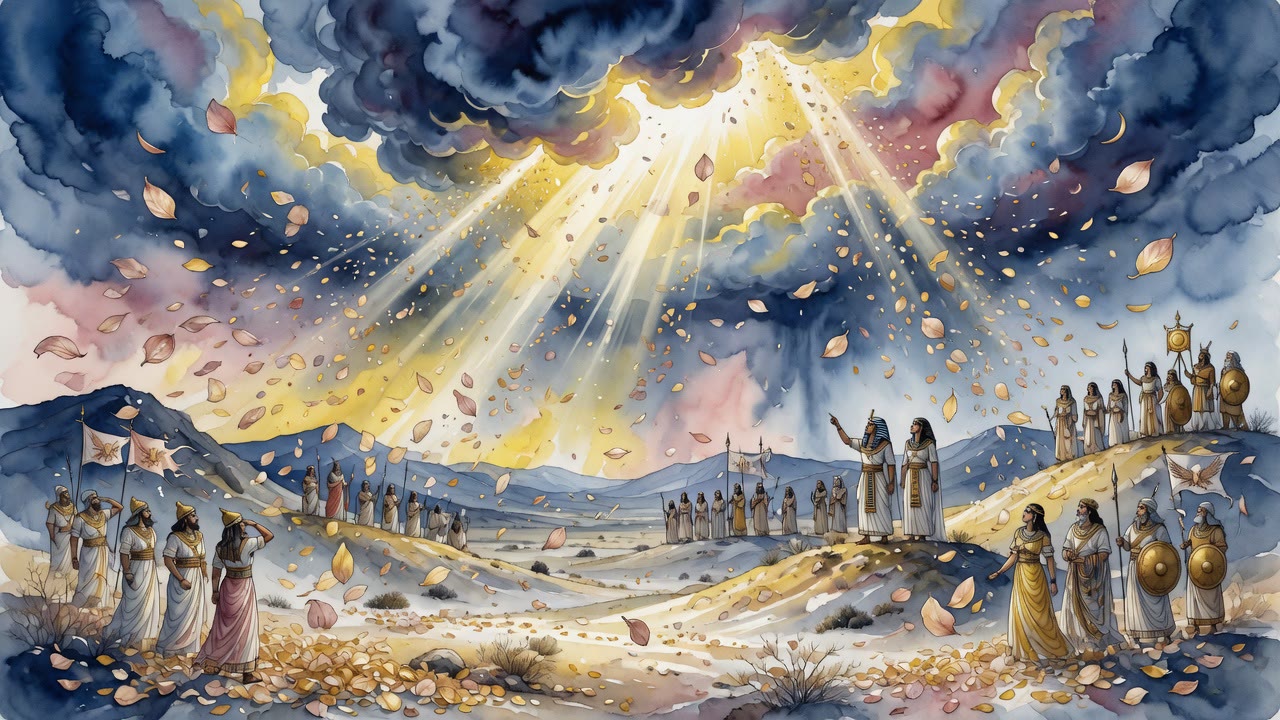
The camp was not alone in that wilderness. Behind them, Egypt nursed the wound of a drowned army and an emptied land. To the east, Moab and Edom kept watch from their high country. Ahead, the cities of Canaan sat behind walls and waited.
Every one of those nations looked at the column of freed slaves and reached the same conclusion. These people had no fields, no granaries, no wells, no king with a treasury. They had walked out of the only country that had ever fed them, into terrain that fed no one. The watchers on the ridges did not need to attack. They only needed to wait for the desert to finish what Egypt had started.
The bread kept falling. Morning after morning, in the open, food came down onto the camp. No cloud wrapped it. No mountain hid it. Shepherds on the far slopes saw it. Scouts sent out by nervous kings saw it. The contempt on the ridges had to make room for a colder thought. This people was not going to starve.
Quail Two Cubits Deep
The bread was the morning course. In the evening came meat. Quail blew in from the sea and dropped onto the camp. Those who later measured that fall refused to think small. A full day's walking on one side of the camp, and a full day's walking on the other, some thirty miles each way. Sixty miles of desert floor, carpeted in birds piled two cubits deep, high enough to reach a standing man's thigh.
A person did not hunt that meal. A person waded into it.
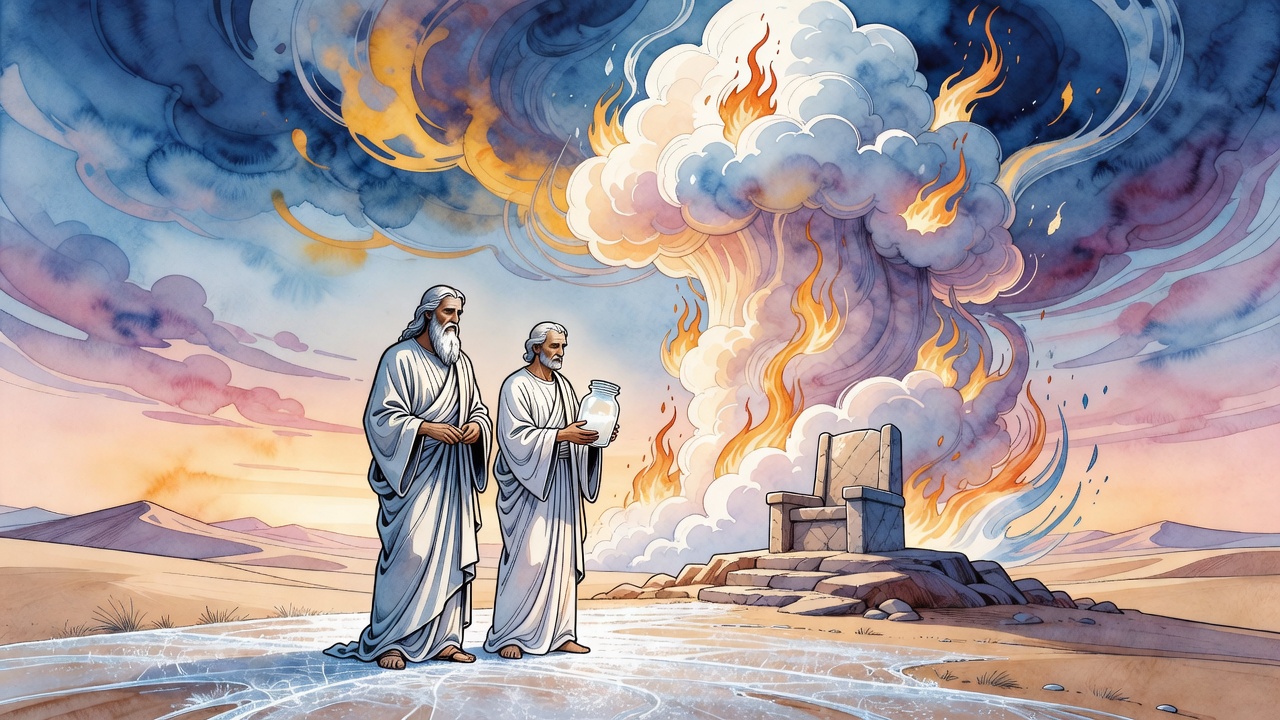
Generations later David put words to a meal like that, sung while enemies still had him in view. "Thou preparest a table before me in the presence of mine enemies" (Psalms 23:5). Not after the foes had gone home. Not in a back room with the doors barred. The table went down in front of their faces.
Sixty miles of meat is not a ration. It is a banquet thrown by a host who wants the neighbors to see the lights.
Modai and the Doors of Heaven
Long after the desert generation was buried, Rabbi Tarfon sat with the elders, and Rabbi Elazar of Modiim sat before them.
Elazar said it plainly. The manna that fell for Israel stood sixty cubits high.
Tarfon turned on him. "Modai, how long will you go on confounding us with your wonders?"
Elazar did not retreat. "It is a verse in the Torah," he said. Then he laid out the measure. Which of God's measures is greater, the measure of punishment or the measure of good? The measure of good. Look at the flood. There the windows of heaven were opened, and the waters rose fifteen cubits above the mountains (Genesis 7:20). Windows only, and fifteen cubits. Of the manna it is written that God opened the doors of heaven and rained down manna for them to eat, giving them the grain of heaven (Psalms 78:23-24). A door holds the space of four windows, so two doors make eight. Two windows of wrath brought fifteen cubits of water. Eight doors of generosity brought bread piled sixty cubits high, a white tower of food standing over the camp every morning.
Tarfon had asked for a wonder to stop. Elazar had given him a tower.
The Table Stayed in the Open
A floor of white grain stretching to the horizon, or a tower of bread sixty cubits tall. Either way the watchers could not miss it. They had come to count a famine. They counted baskets instead, morning after morning for forty years. The people they had written off as dead refugees sat down and ate (Psalms 23:5).
The slaves ate with the ridges in view. The foes kept their posts. The table stayed.
← All myths