God Set the Sea's Conditions at the Moment of Creation
Rabbi Yochanan read one word in Exodus and found a secret deal: the sea was told to split for Israel before the world was three days old.
Table of Contents
 Click for full size
A Deal Made on the Third Day
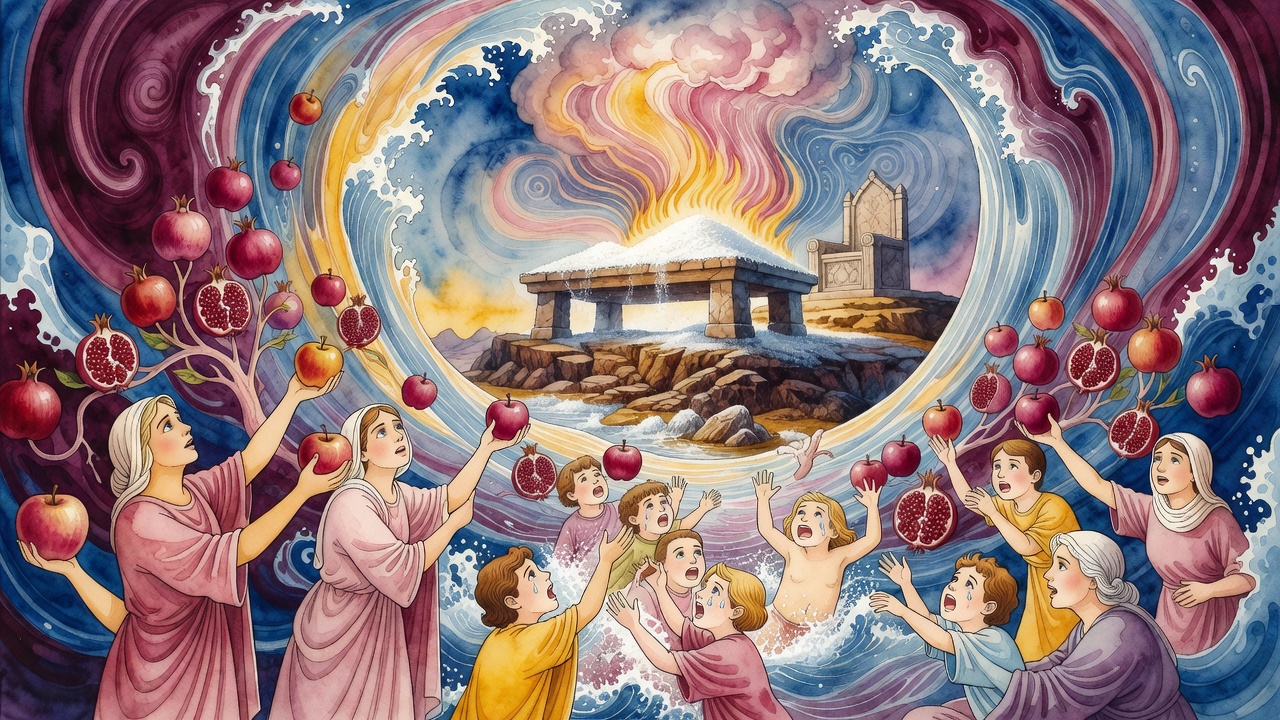
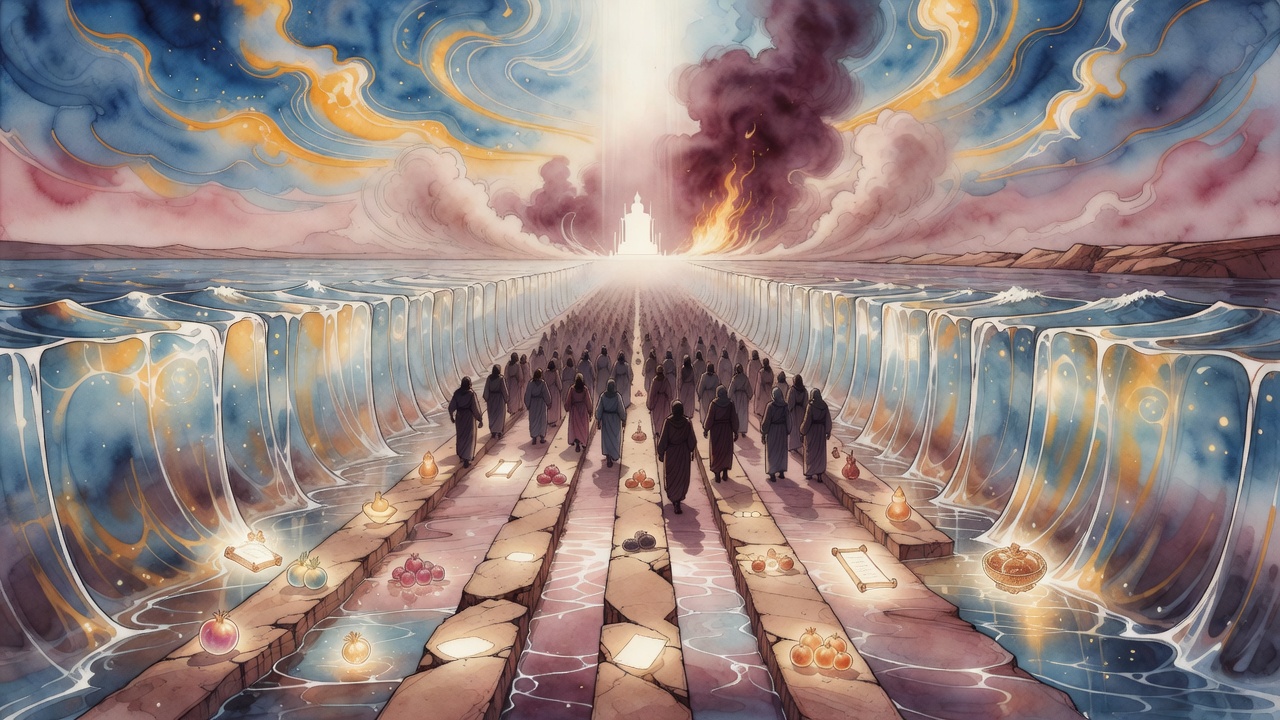
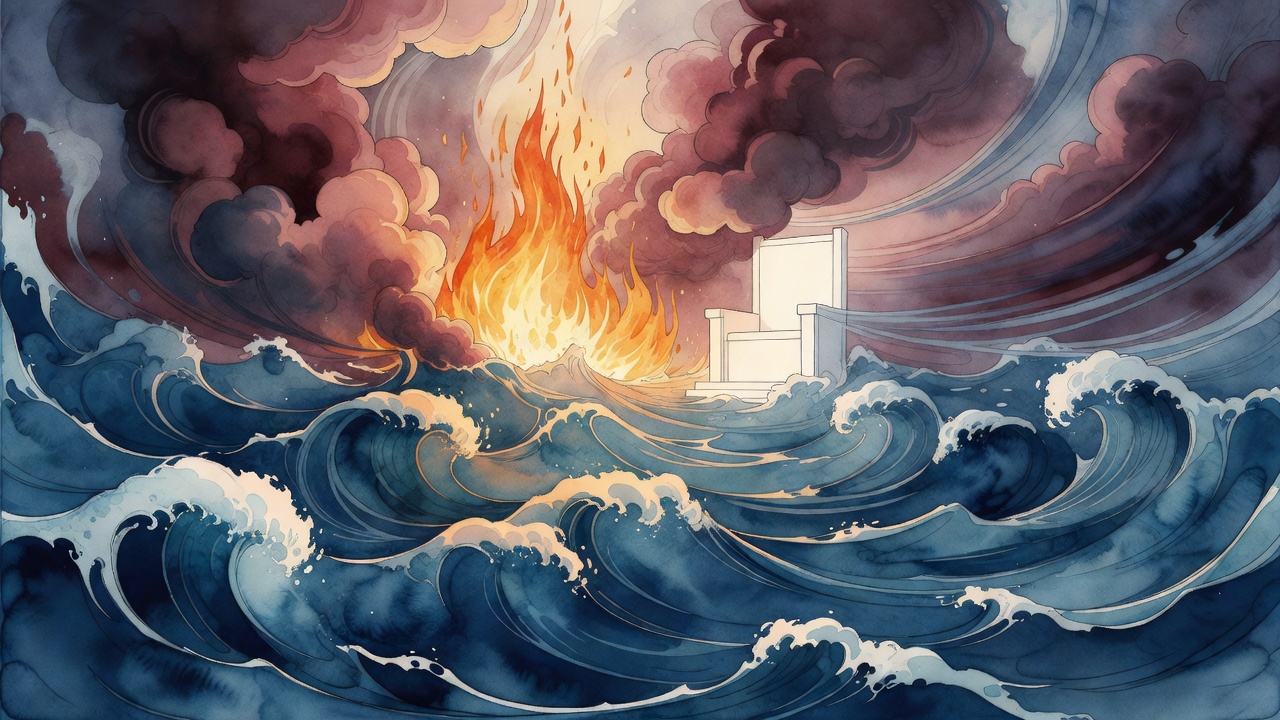
The sea did not split because Moses held out his staff. That is what it looks like from inside the story. But Rabbi Yochanan, one of the towering figures of the Talmudic era, read Exodus 14:27 and heard something hidden in a single word. The verse says the sea returned to its eitano, its original strength. Rabbi Yochanan heard the letters differently: not eitano, its strength, but tna'o, its condition. The sea returned to the condition set for it. God had made a deal with the sea at the moment of creation: when Israel walks to the water's edge, split.
This teaching is preserved in Bereshit Rabbah, the great Palestinian midrash on Genesis compiled in the fifth century CE. It rewrites the architecture of creation itself. The world was not made, allowed to run, and then interrupted when God decided to help Israel. The world was made with the help already built in. The sea knew what it was supposed to do. It had been waiting since the third day of creation to do it. What looked from the outside like a crisis resolved at the last moment was, from the inside of the system, simply the condition activating on schedule.
Rabbi Yirmeya Takes It Further
Rabbi Yirmeya ben Elazar did not stop at the sea. If God had stipulated a condition with the waters of creation, why not with everything else? He argued that God had placed prior conditions on all six days of creation's work. Every creature, every element, every natural force had been given its instructions in advance. The ravens that would feed Elijah by the brook. The fire that would not burn in the furnace. The whale that would swallow Jonah and release him. None of these were emergency measures. They were scheduled appointments, woven into the world before the world needed them.
Manna and the Well That Was Always There
The manna follows the same logic. Shemot Rabbah, the midrash on Exodus, cites Reish Lakish drawing a precise distinction. A human craftsman pours only what the vessel can hold at the moment he pours it. God works differently. God prepared provisions that could adapt to every need, in every quantity, for every person across forty years. The manna was not improvised daily. The instructions for it existed from before Israel left Egypt. The question was never whether it would come. Only when the people would finally understand that it would.
The miraculous well that traveled with Israel through the wilderness presents the same structure. Bamidbar Rabbah, the midrash on Numbers, locates the gift of the well at the beginning of the forty years, not the moment of thirst. The people would need water. God had already arranged where it would come from. The singing over the well in Numbers 21 puzzled the rabbis because it came at the end, not at the beginning. Their answer: the song was delayed. The gift was not.
What God Saw and What God Knew
Shemot Rabbah returns to the verse in Exodus 2:25: "God saw the children of Israel, and God knew." The rabbis would not let this stand as a simple statement. What exactly did God see? What exactly did God know? The midrash reaches a startling conclusion. God saw that Israel did not yet have sufficient merit to justify redemption on conventional grounds. And God knew this was irrelevant. The redemption was already scheduled. The question of merit was real, but it was not the deciding variable. The condition for the exodus had been set into creation just as surely as the condition for the sea.
This is why the image of a wall built by sin appears alongside the image of a sea split by faith. Vayikra Rabbah reads the wall in Amos as Israel's own transgressions forming a barrier between themselves and God. The wall is real. The barrier is real. But the prior conditions remain in force on the other side of it, waiting. The deal God made with the sea was not contingent on Israel's behavior. It was contingent only on the moment arriving.
← All myths