God Sent Snakes Because Israel Complained About the Manna
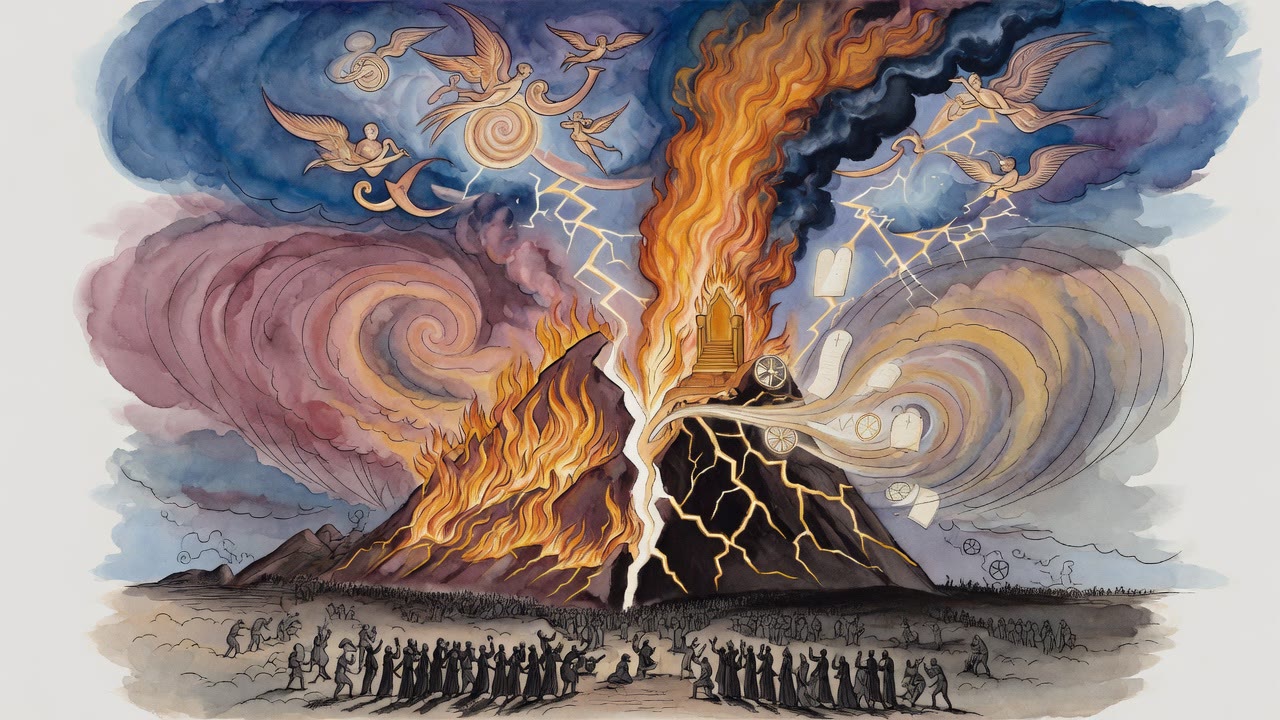
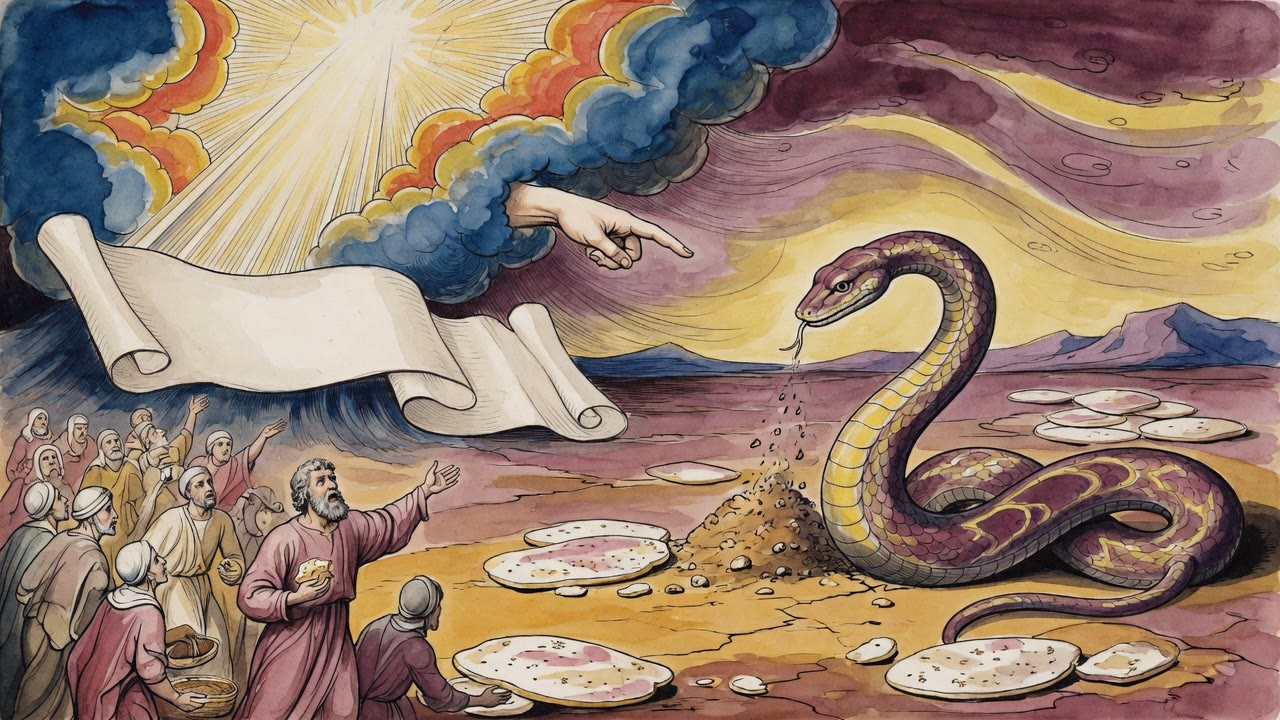
Israel called the manna disgusting after forty years. A heavenly voice answered by pointing to the serpent, who eats dust without complaint.
Table of Contents
 Click for full size
Forty Years of Perfect Bread
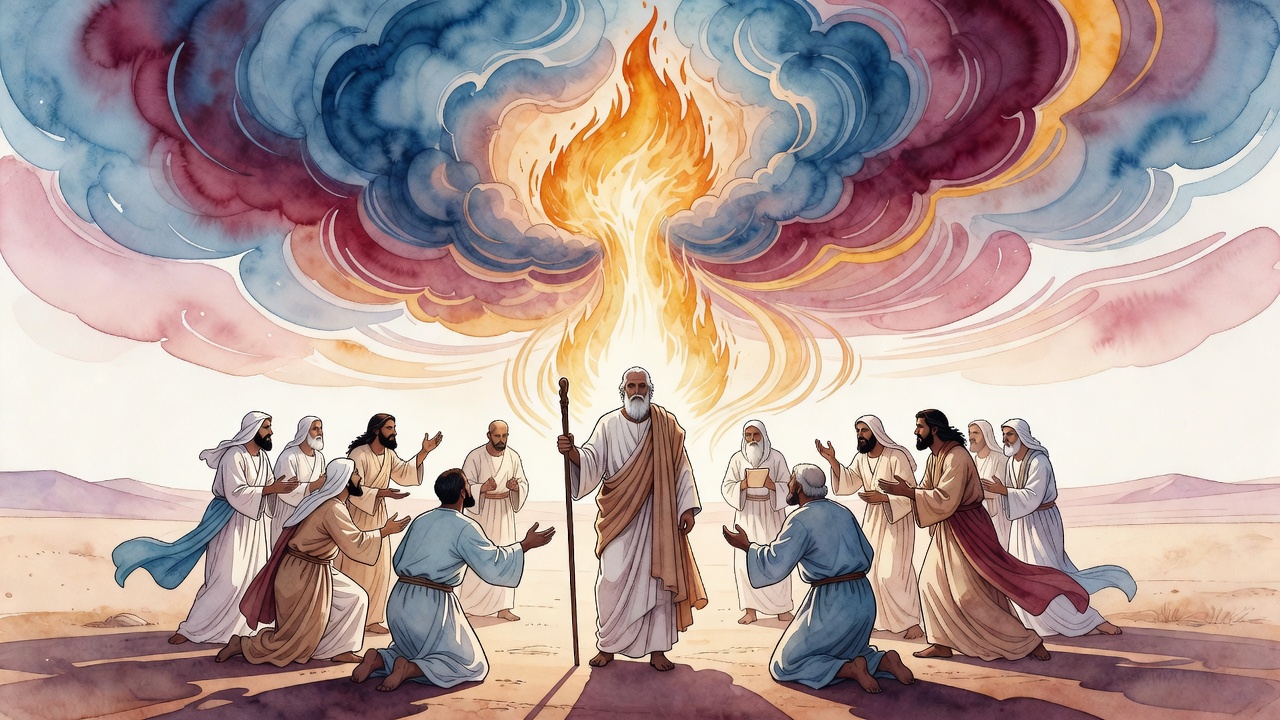
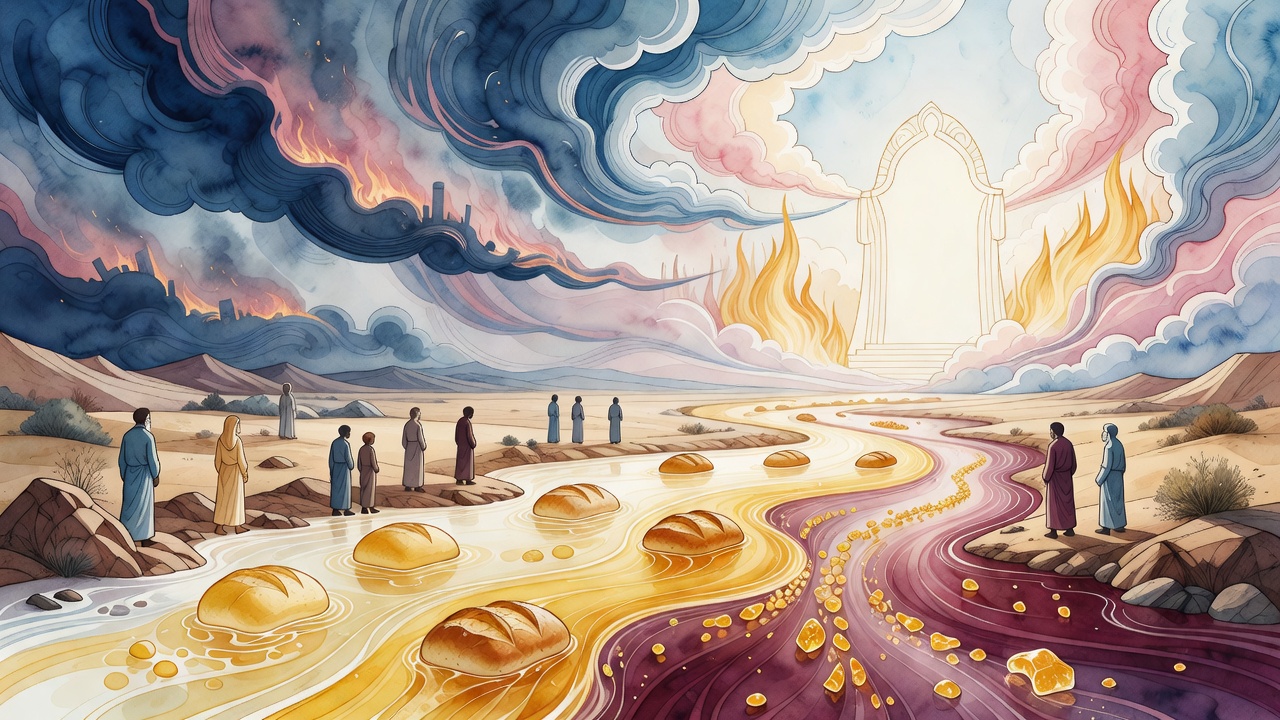
It had tasted like whatever the eater desired. Dew fell first, then the manna descended on top of the dew, then more dew covered it from above, arriving delivered like food between two layers of packaging. It came every morning except the seventh day. Before the Sabbath it came double. In forty years of wilderness travel it had never missed its appointed time.
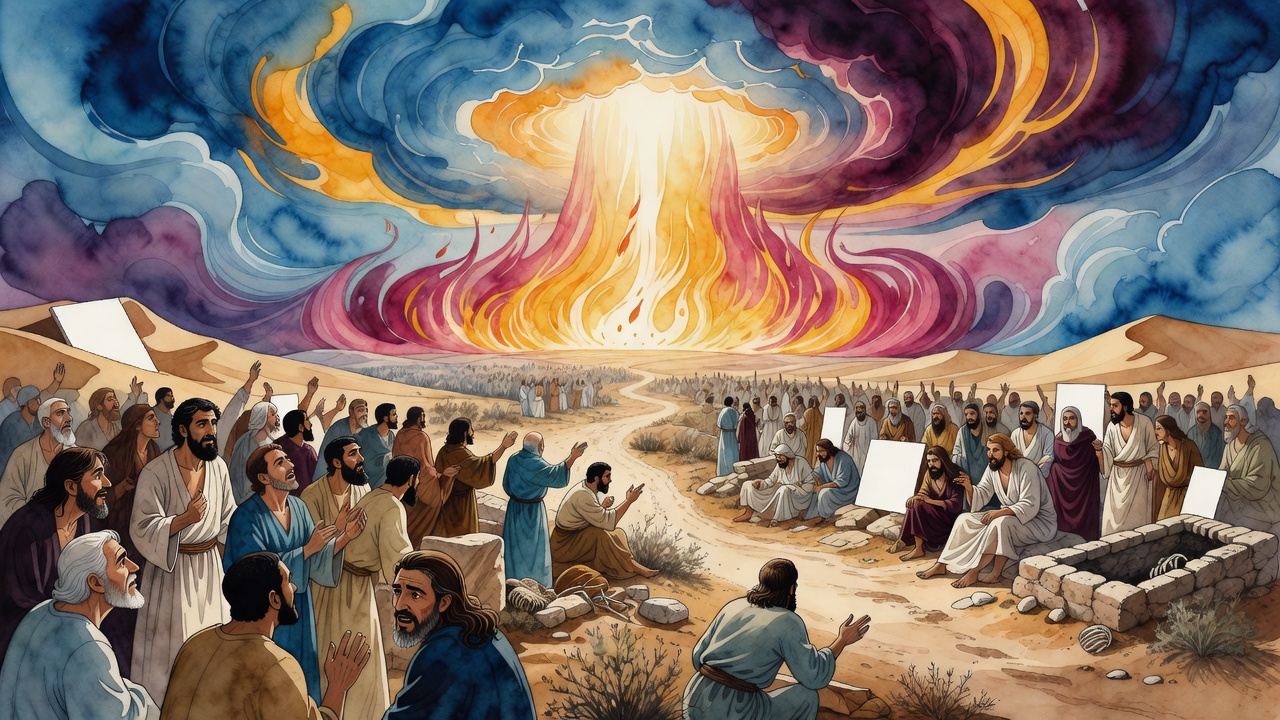
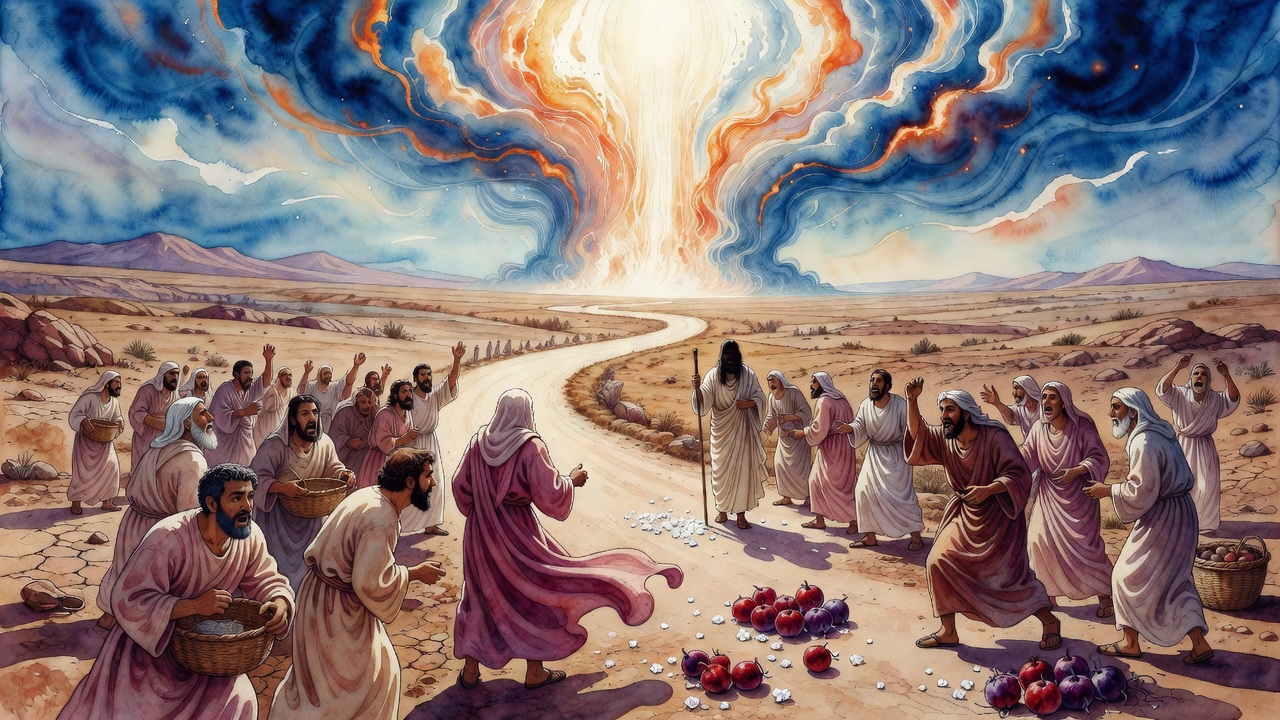
In Numbers 21, Israel looked at this food and called it disgusting. Their exact words, as the Hebrew has them, are that their soul had become sick with this miserable bread. The description of what they were eating as bread was already contemptuous. The word for miserable in the Torah is the word for lightweight, thin, trivial. They were dismissing the food God had stored for them since creation as not worth their continuing attention.
The Heavenly Voice and the Serpent
Targum Jonathan on Numbers 21, the Aramaic Torah paraphrase shaped in Palestine between the second and seventh centuries CE, inserts a bat kol, a heavenly voice, between the complaint and the punishment. This voice says something remarkable before the snakes arrive. It compares Israel to the serpent.
God cursed the serpent in Eden to eat dust all the days of its life (Genesis 3:14). Dust is the serpent's permanent diet, imposed as punishment after the garden, and the serpent does not complain. It does not speak against God. It does not describe its food as miserable or trivial. The serpent eats what it was given and goes about its existence. Israel, by contrast, received bread from heaven, food no empire could grow, food made for them personally before the world was fully assembled, and called it contemptible.
The comparison works because the serpent is not innocent in Jewish memory. It is the creature of Eden who drew humanity toward the first transgression. It is the lowest of animals, cursed above all cattle. And here, in the Targum's reading, the cursed serpent stands as the witness against Israel. Even the creature that lost everything in the garden accepts its portion without complaint. Israel, given the portion of angels, refuses to.
The Road That Went Backward
The Targum adds geography to the situation. Before the snake complaint, Israel had been wandering a circuit between Rekem and Motseroth for decades. After Aaron died and the protective Cloud of Glory vanished, Amalek disguised himself by taking the throne of Arad and attacked. When Israel tried to take a different route, they returned to a path they had taken before, and the Targum names where that path led: to the place where they had rebelled against the Lord of the world. Their route was not random. It was a decades-long circle back to the site of their original failure. The snakes were not the first punishment. They were the completion of a pattern that had been building since the people first turned against God in the wilderness.
The Manna That Was Prepared at Creation
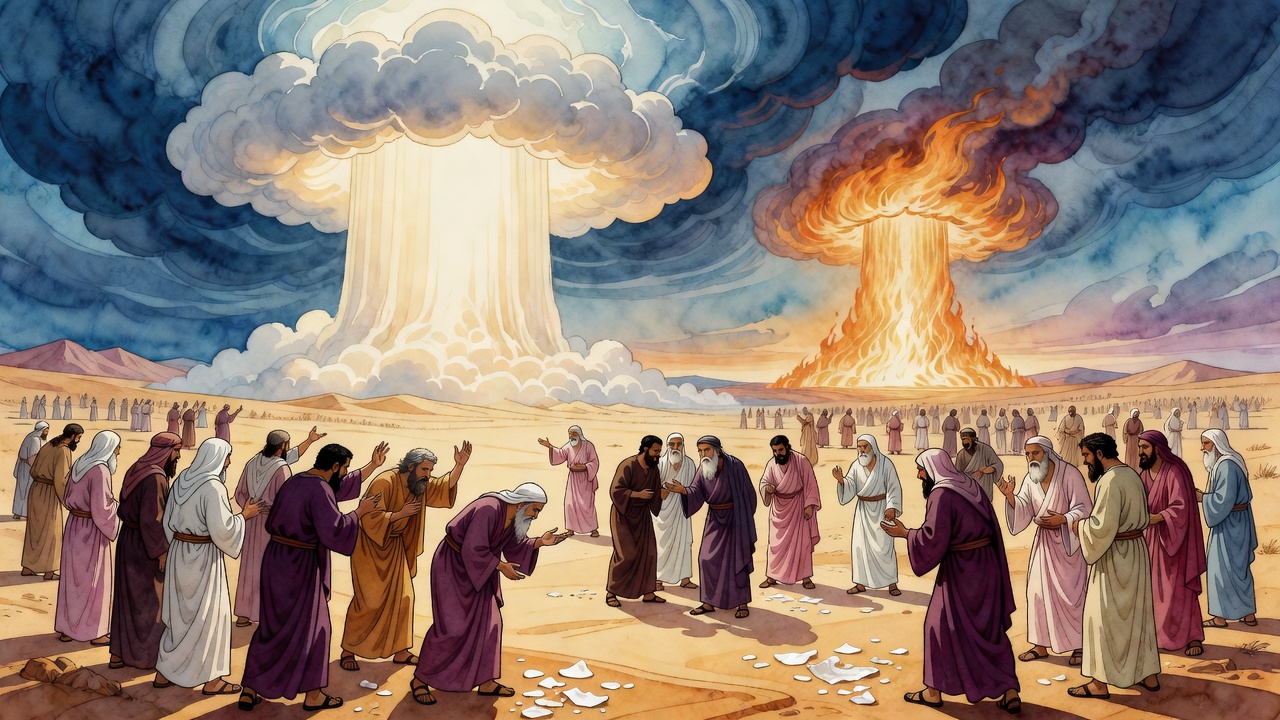
The manna had not been improvised when the people needed food in the wilderness. Targum Jonathan on Exodus 16 specifies what the plain Hebrew does not: the manna was bread laid up from the beginning, prepared at creation and stored in the heavens, waiting for the exact moment it would be needed. The logistics the Targum provides are precise: holy dew fell and prepared a surface around the camp, then the clouds rose and caused the manna to descend on the dew, and the dew then fell again on top of it. The manna was sandwiched between two layers of dew so that it would arrive clean and intact.
For Israel to look at food that had been prepared before Adam named the animals and call it miserable was a specific kind of ingratitude, the kind that comes from having been protected so thoroughly for so long that protection begins to feel like its own kind of imprisonment.
The Bronze Serpent and What It Required
God told Moses to make a serpent of bronze and lift it on a pole. Anyone bitten who looked at it would live. The midrash asks the obvious question: did the bronze serpent kill or heal? Of course not. Bronze has no power over venom. What the action required was the upward look. The same Israel that had complained about its food from heaven now had to look up at a made thing and trust that the One who commanded it to be made would send the healing.
The midrash in Mishnah Rosh Hashanah 3:8 makes the logic plain: when Israel looked up at the bronze serpent and directed their hearts toward God, they were healed. The same logic runs through the night of the first Passover. The blood on the doorposts did nothing magical. It was not a barrier to the Angel of Death. As long as Israel marked their doors in trust, God revealed Himself and had compassion. Objects do not save. The direction of the heart that uses them does.
← All myths