74 myths · Page 2 of 3
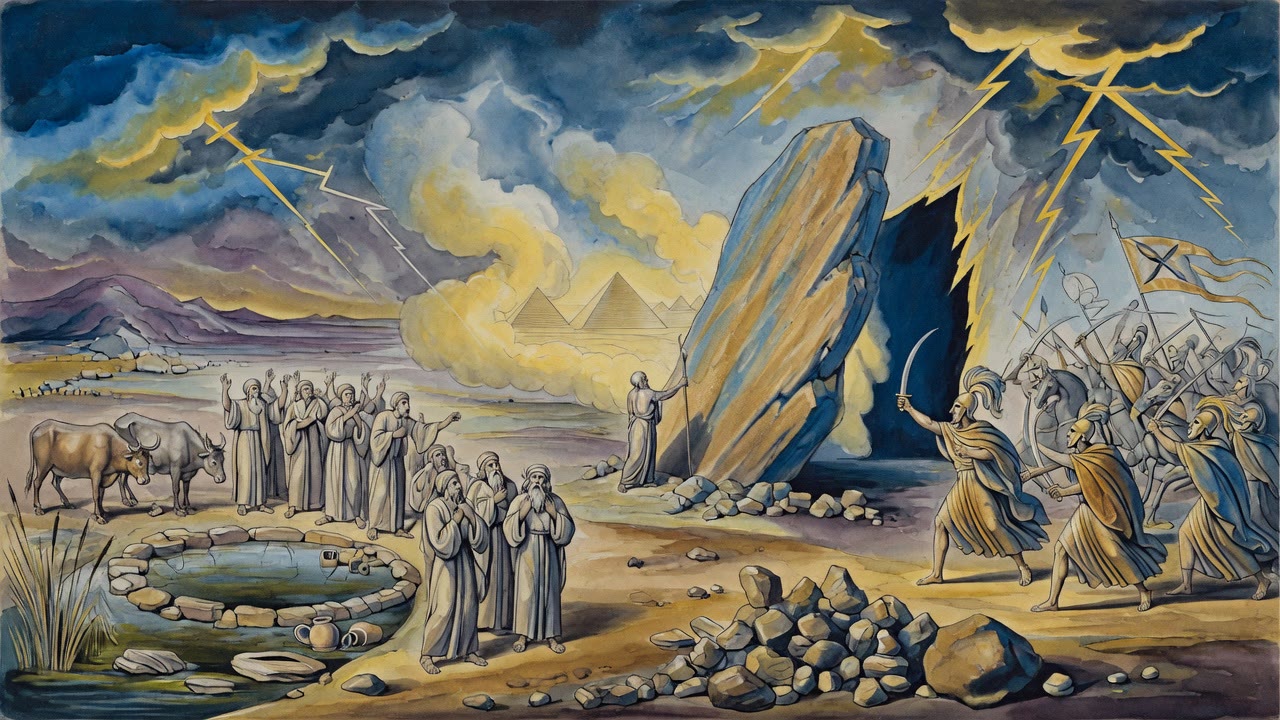
Three months out of Egypt, Israel found water the cattle refused. Doubt opened the door, and Amalek walked through it with swords.
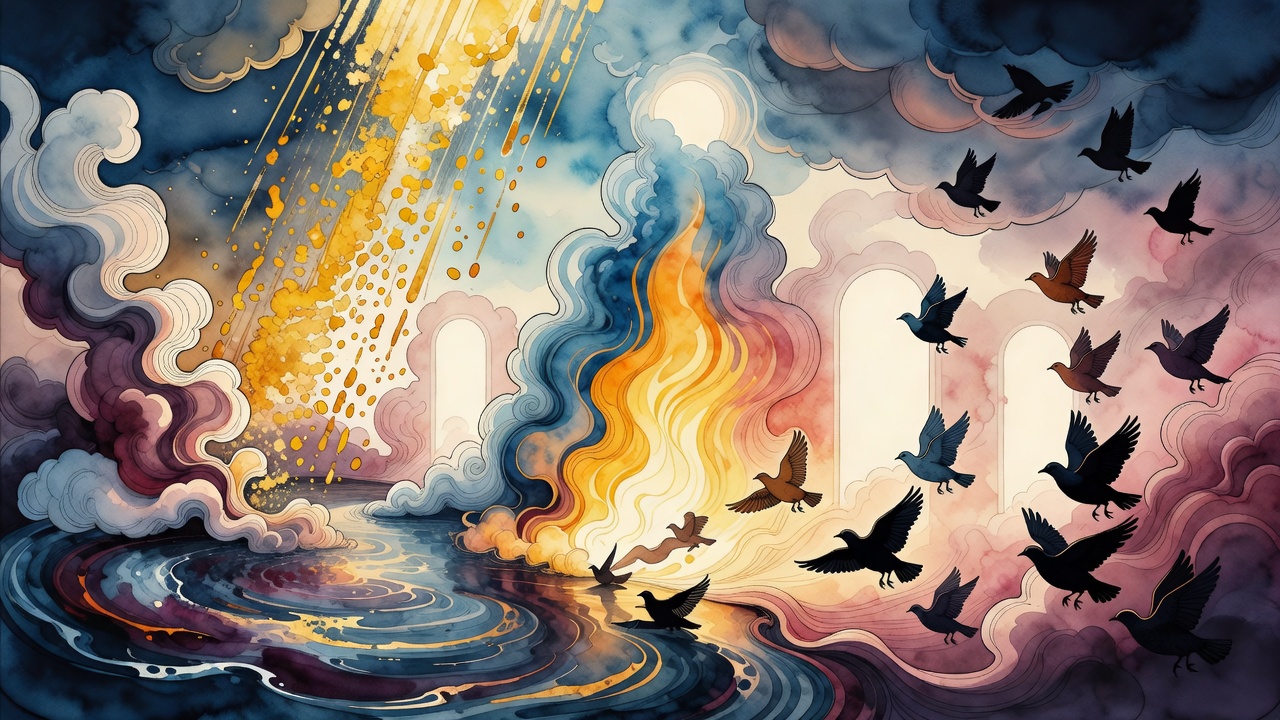
Three days without Torah turned water bitter at Marah, manna fell hot each morning, and quail arrived at night under a darkened face of heaven.
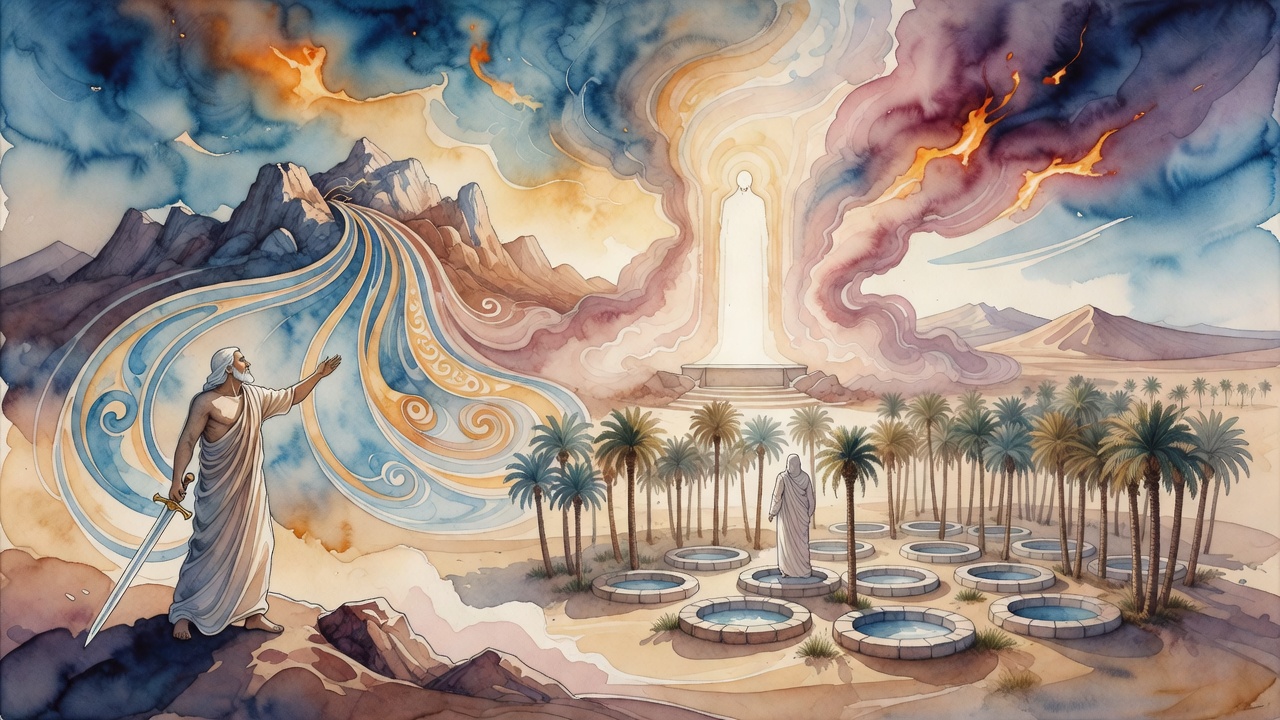
Horeb holds six names from mountain of God to sword. Elim held twelve wells and seventy palms, while God logged every desert station like a father.
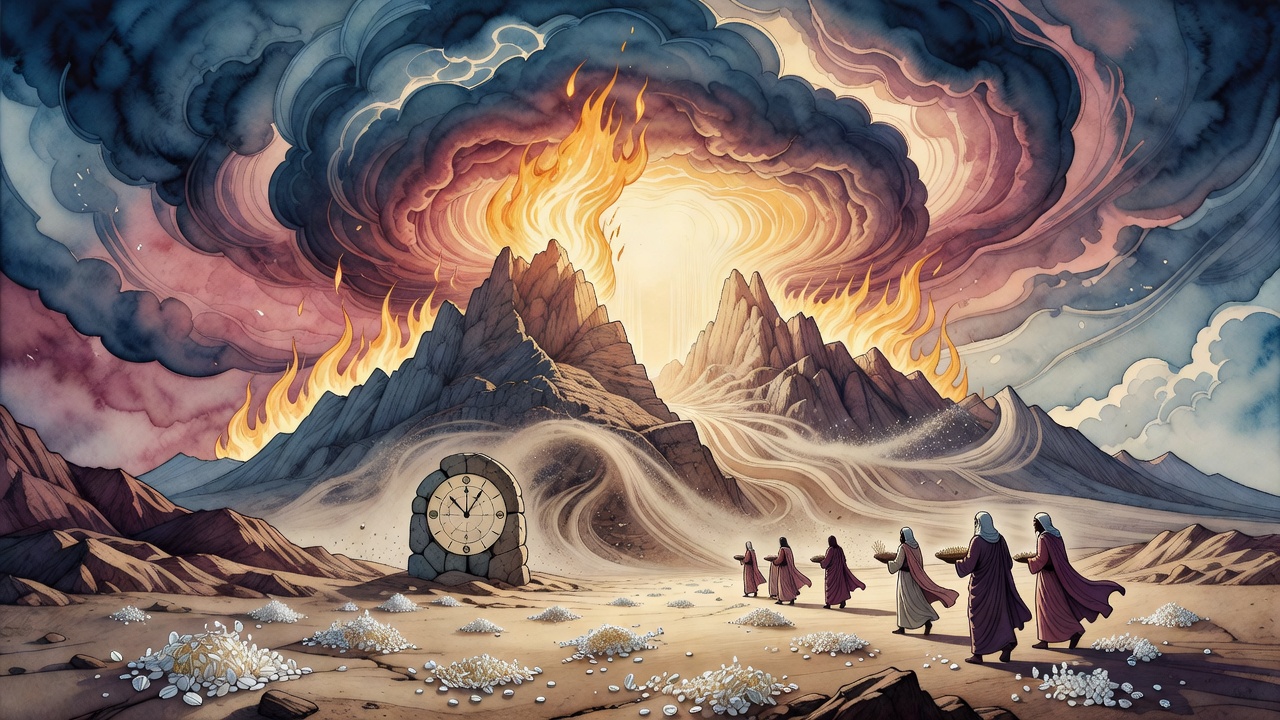
By the ninth hour the people were back in their tents. A double portion of manna was prepared for the next day. Moses stayed on the mountain.
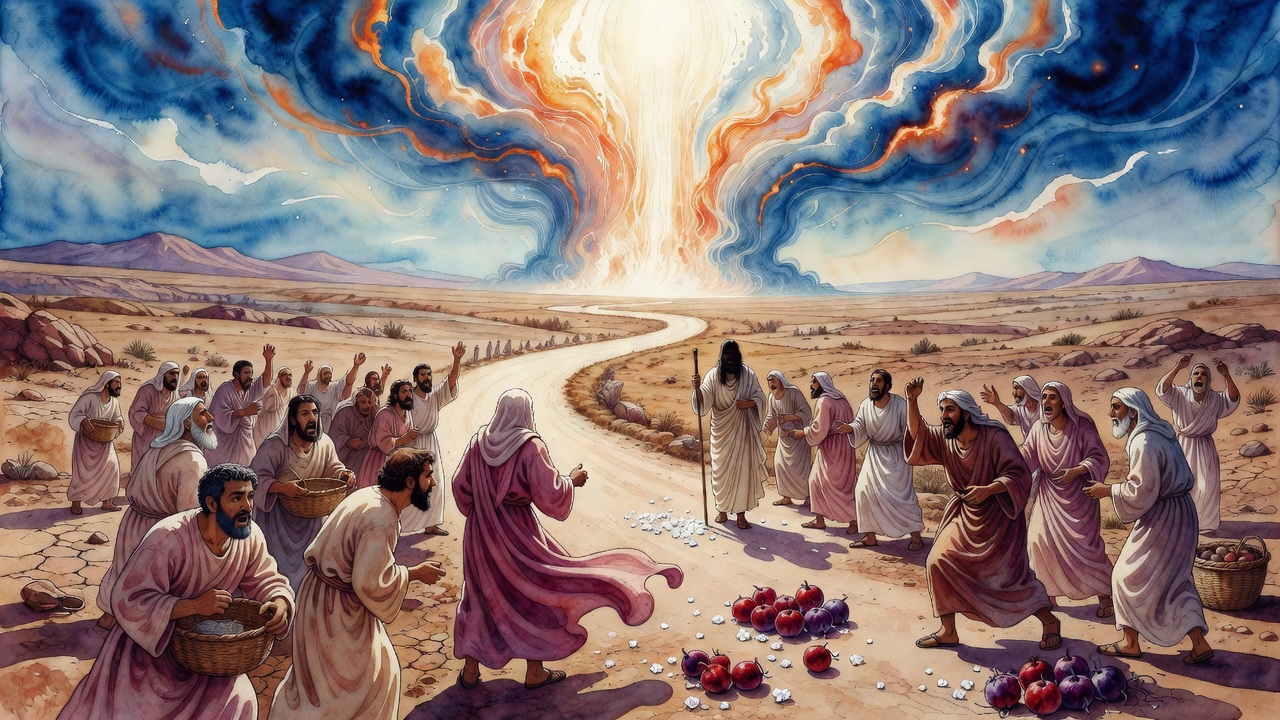
Merchants opened baskets of fruit from the Land in front of that generation and men died looking at it. The fruit was not poison. The sentence was.
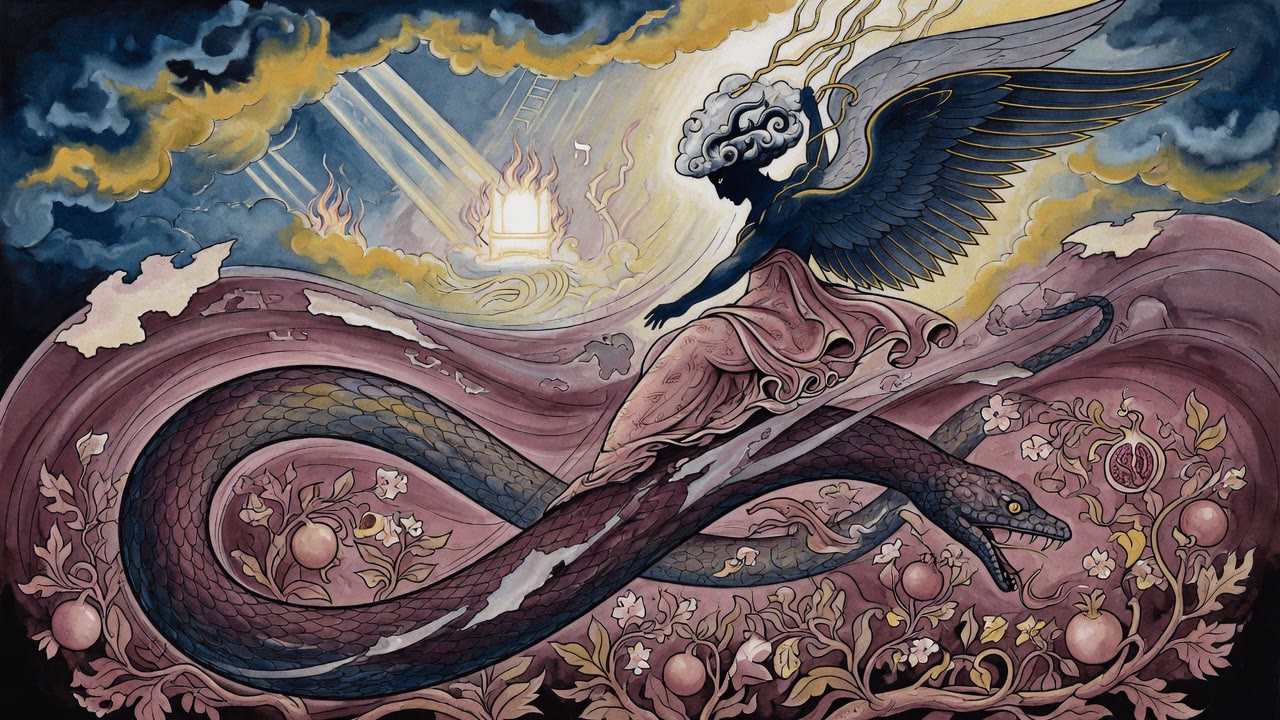
A king stood by a baker's oven. For a friend he drew out warm bread. For an enemy he raked up coals from the same fire.
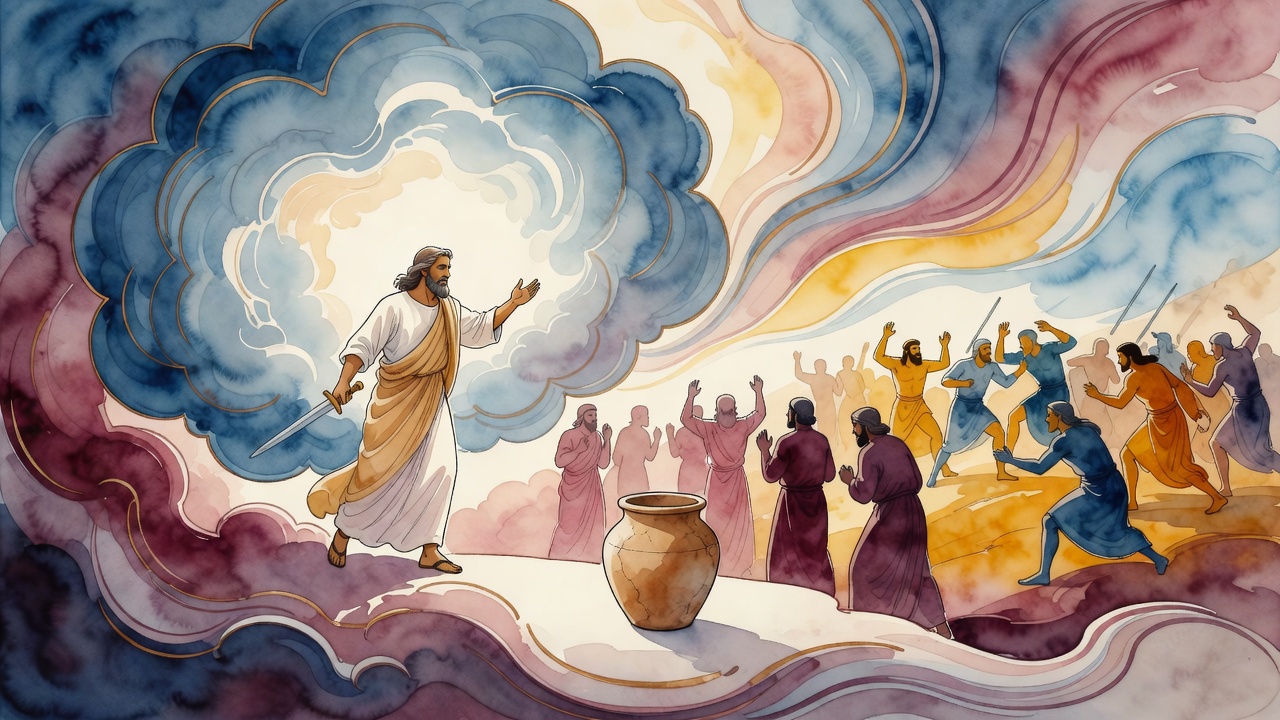
Pharaoh's officers would not chase runaway brickmakers for nothing. He threw open the treasure houses and promised every man an equal share.
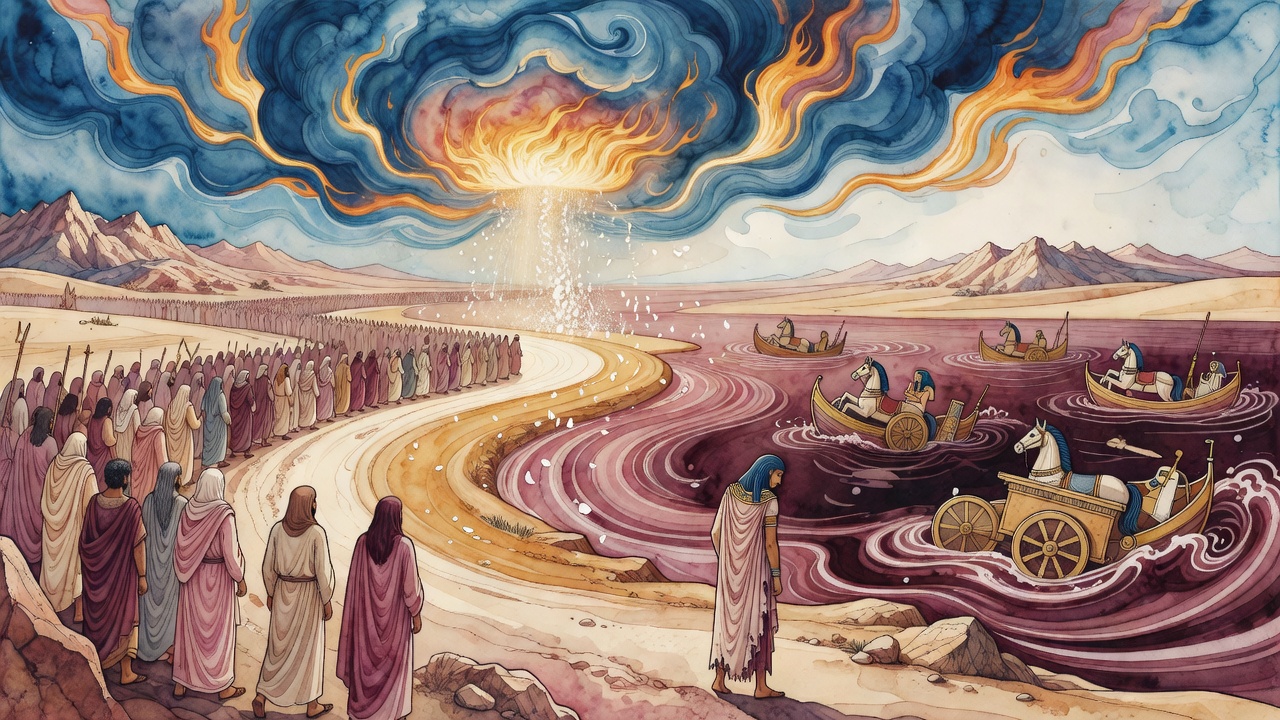
Pharaoh's horse ran at the water it had refused the day before. Down in the waves it saw the height of the world. The rider could not turn its head.
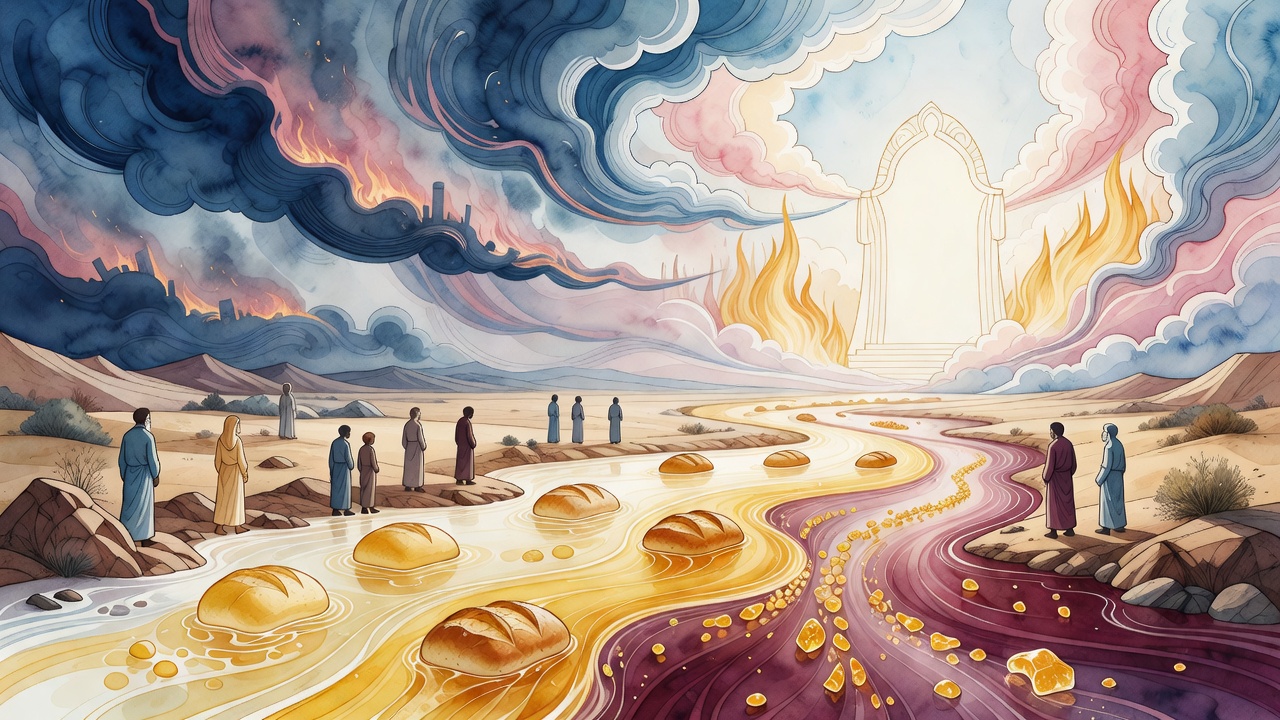
Heaven's bread shifts by the eater's years. It melts into rivers for the righteous, while the same sky that burned Sodom rains mercy on Israel.
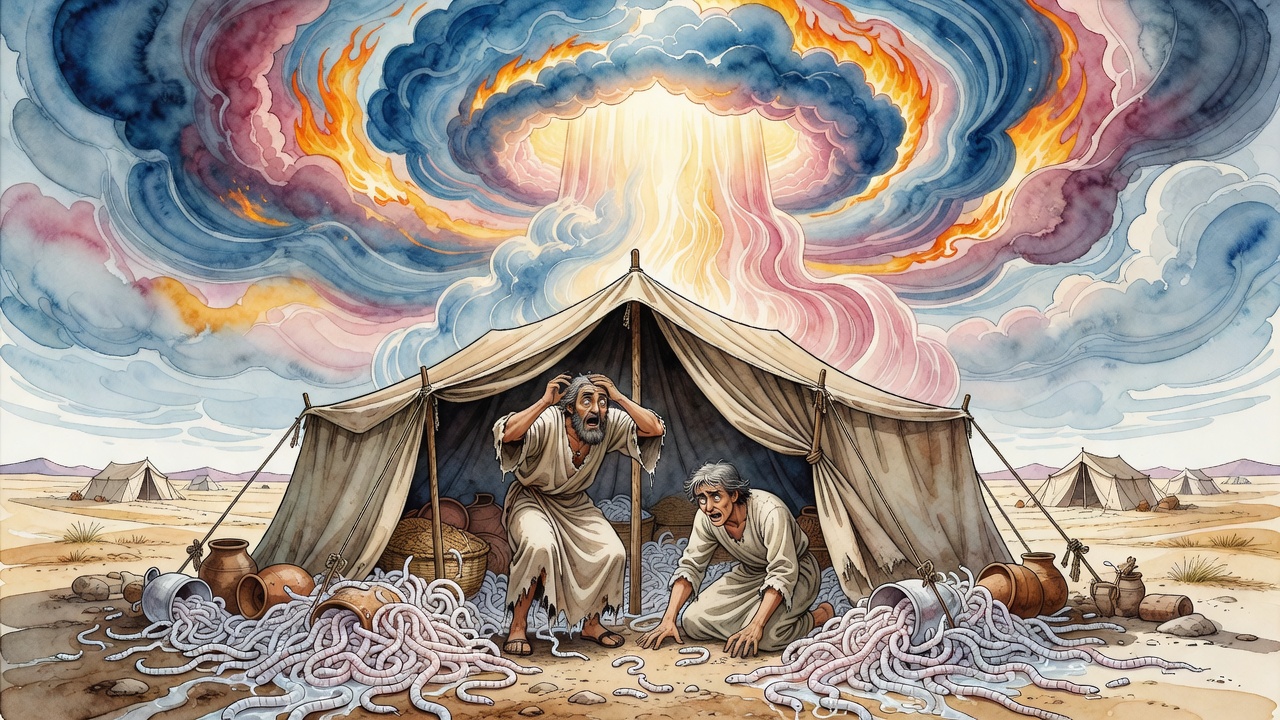
A child tasted milk in the flake. Two brothers hid tomorrow's bread, and worms marched out of their tents at dawn.
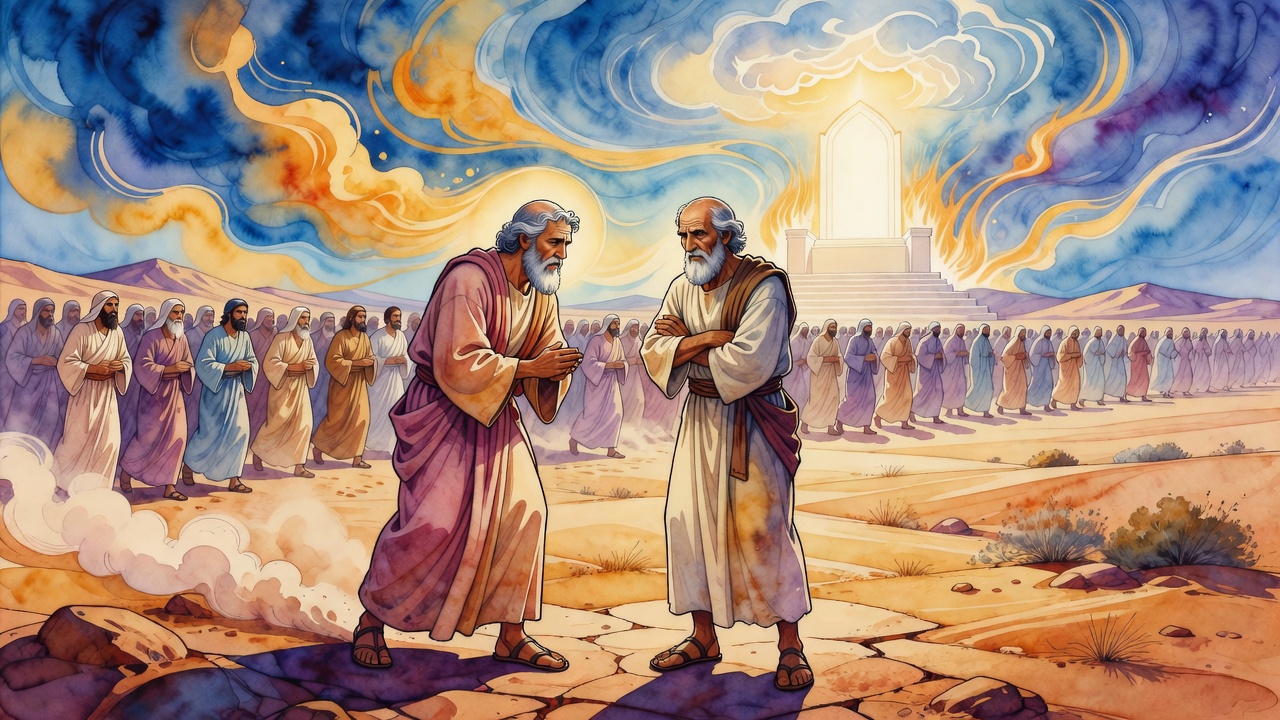
Moses asked his father-in-law to march. Chovav named his land, his kin, and his altar in Midian, and turned the camels toward home.
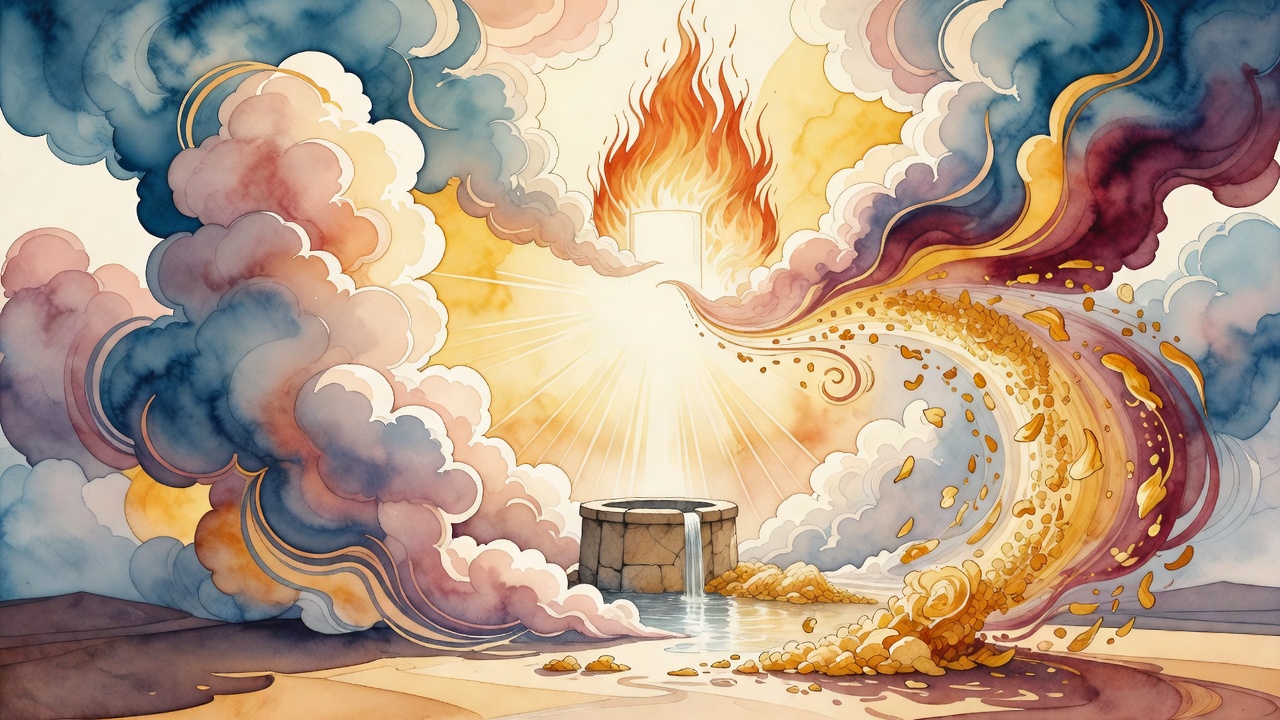
Israel called the wilderness a death trap. God answered with beds of cloud, manna, and a well that walked with Miriam.
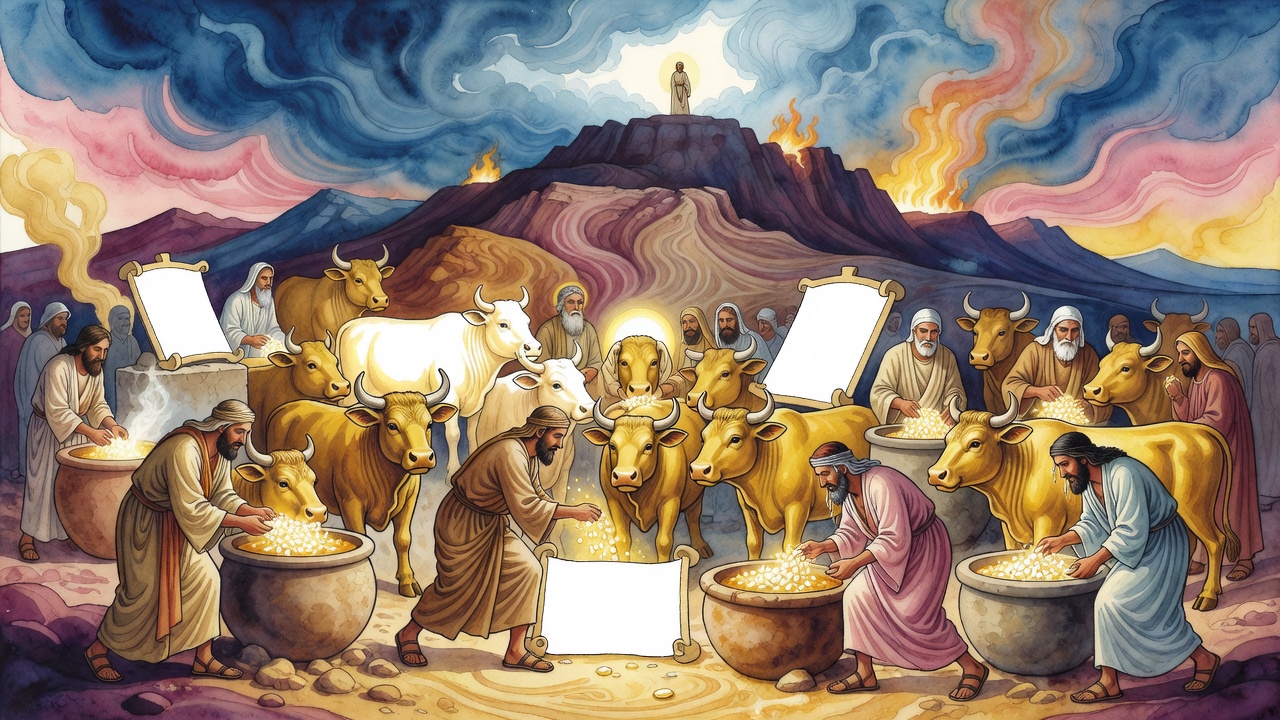
The mountain smoked. Moses was gone too long. Gold left their ears as thirteen calves, and they laid the morning's manna at the horns.
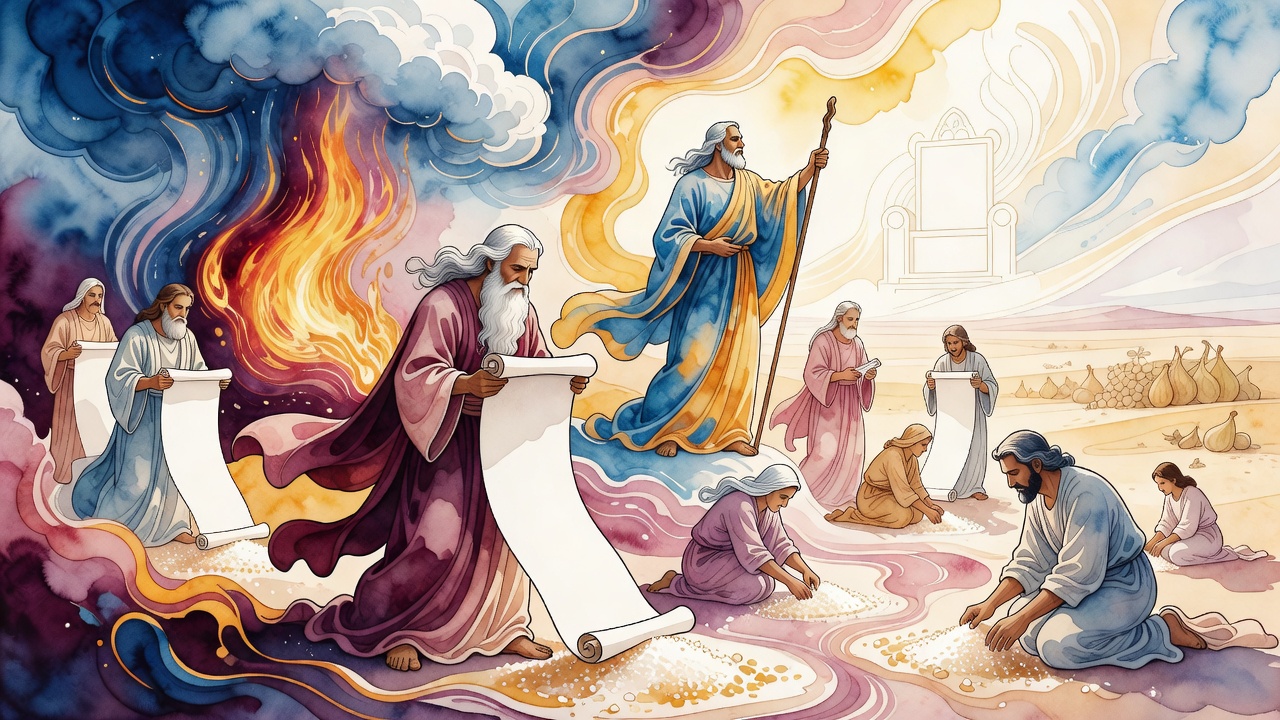
R. Yossi counts forty years of manna under Moses and fourteen more after his death, until Canaan's produce fully replaced heaven's bread.
Joshua cuts Amalek's ranks below while Moses' arms fail on the hill, and Aaron and Hur hold them skyward until the enemy breaks at dusk.
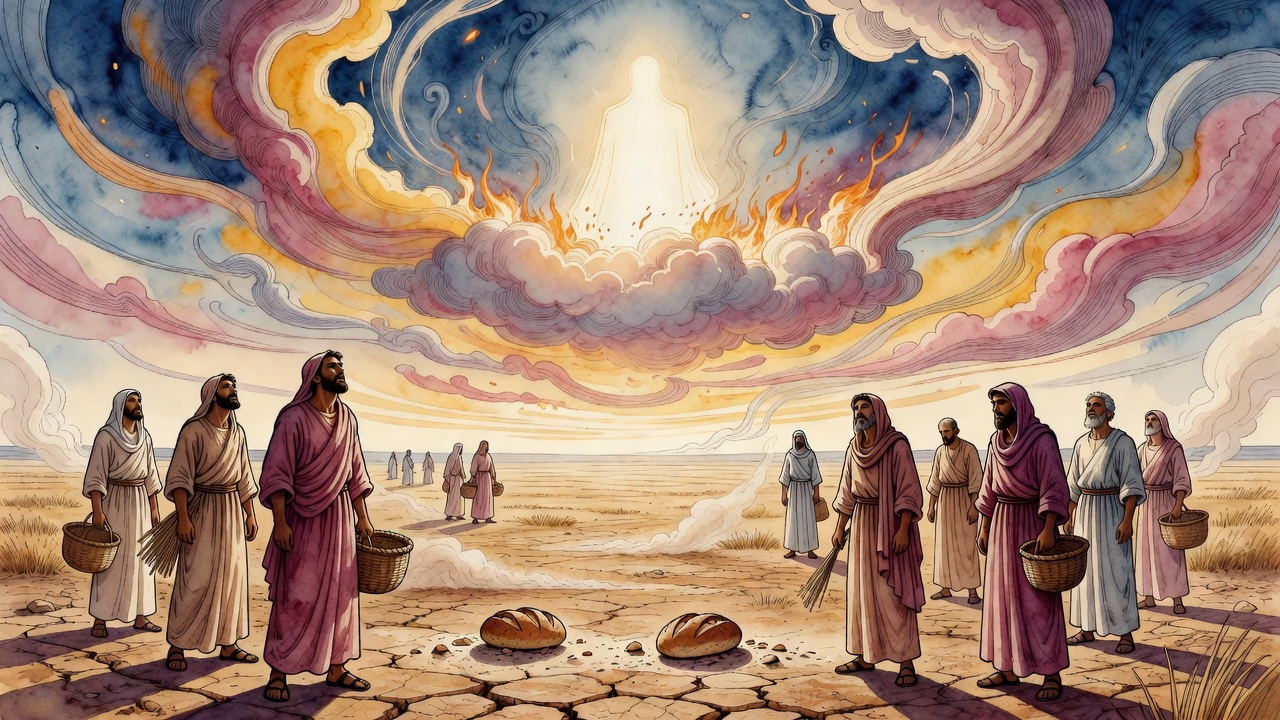
The sixth morning filled every jar twice. A few men still walked out on the seventh with baskets. The field had nothing left to give.
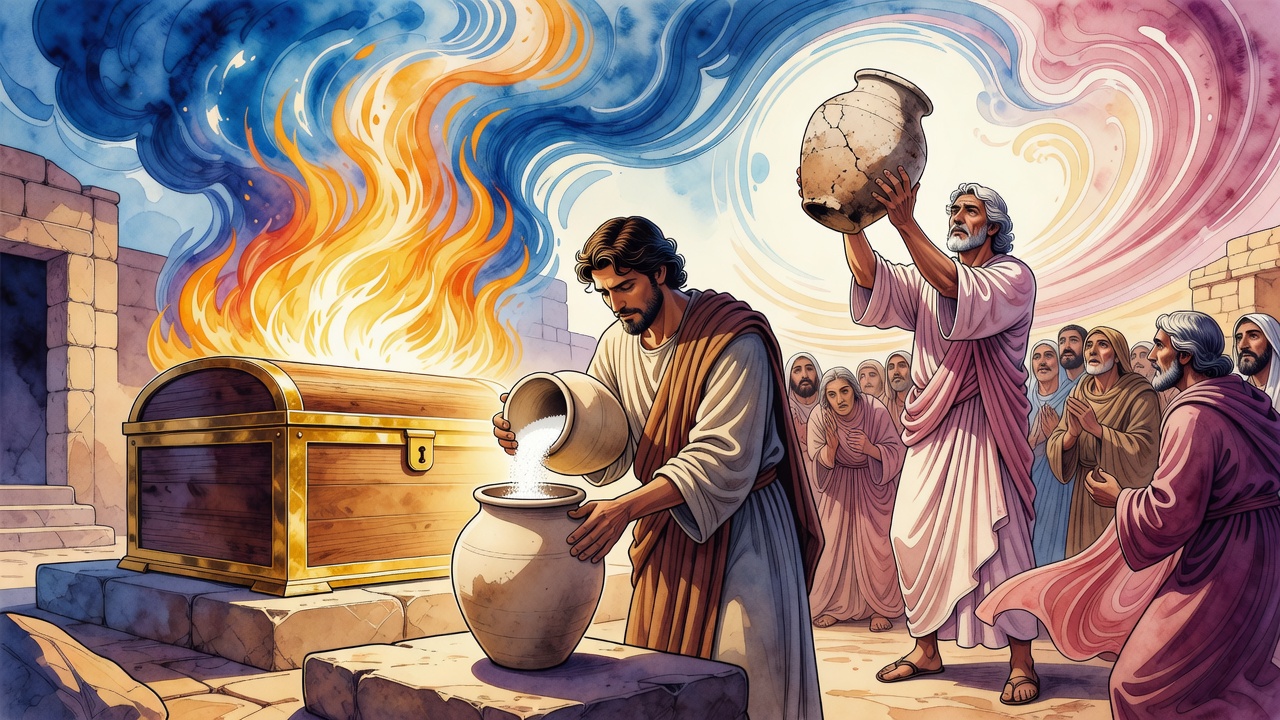
Aaron fills a plain clay jar with an omer of manna and sets it by the ark. Centuries later Jeremiah lifts the same jar to feed a doubting people.
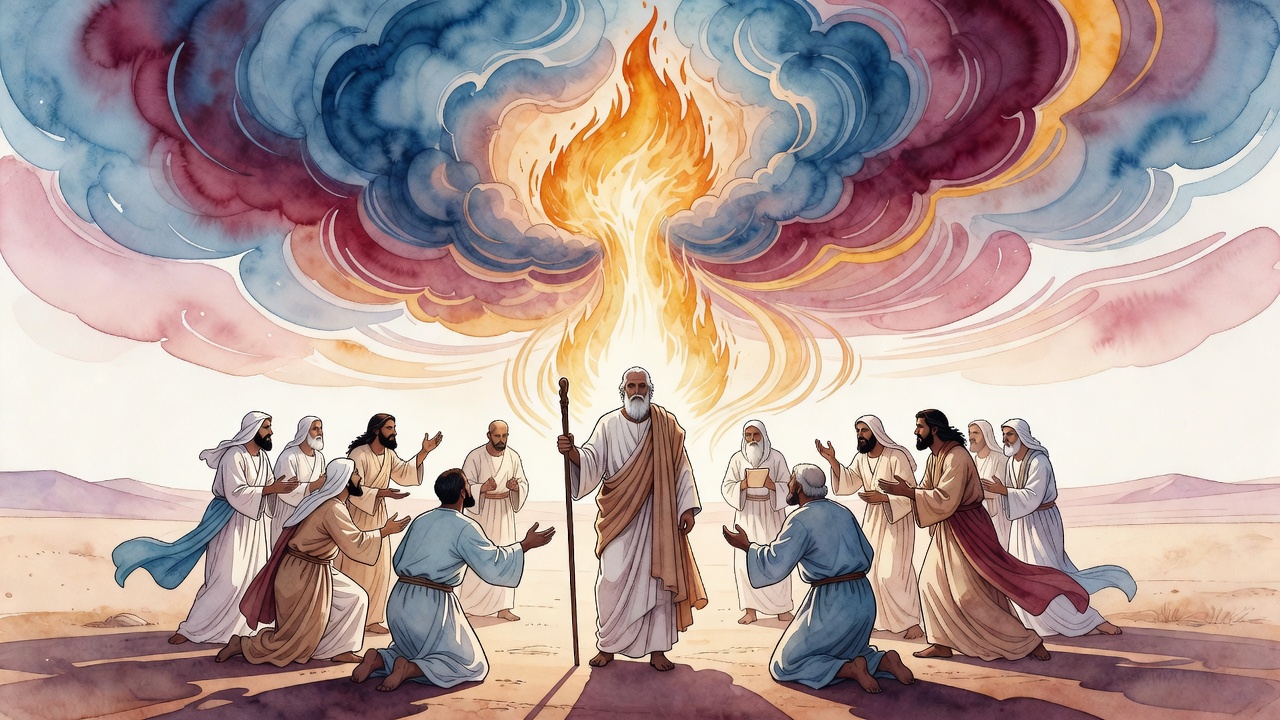
Just the morning, they asked. Then just the evening. Moses kept them in the tents, and the seventh-day field stayed empty on purpose.
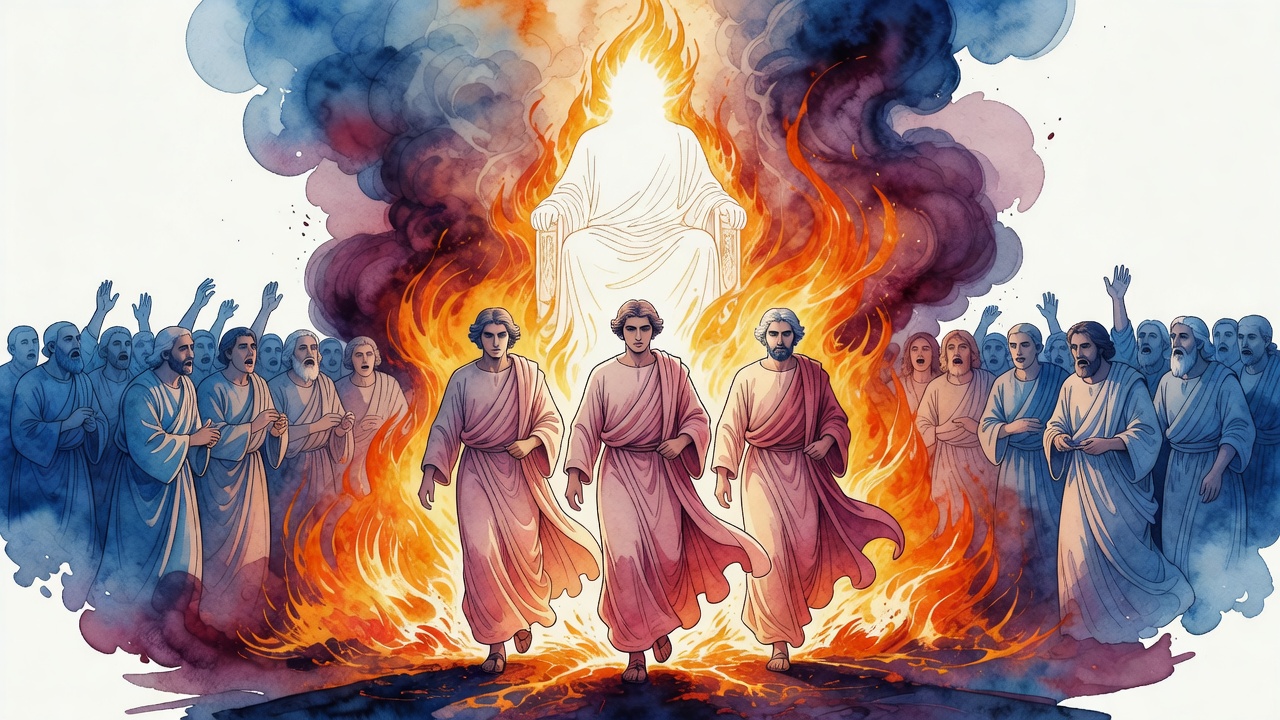
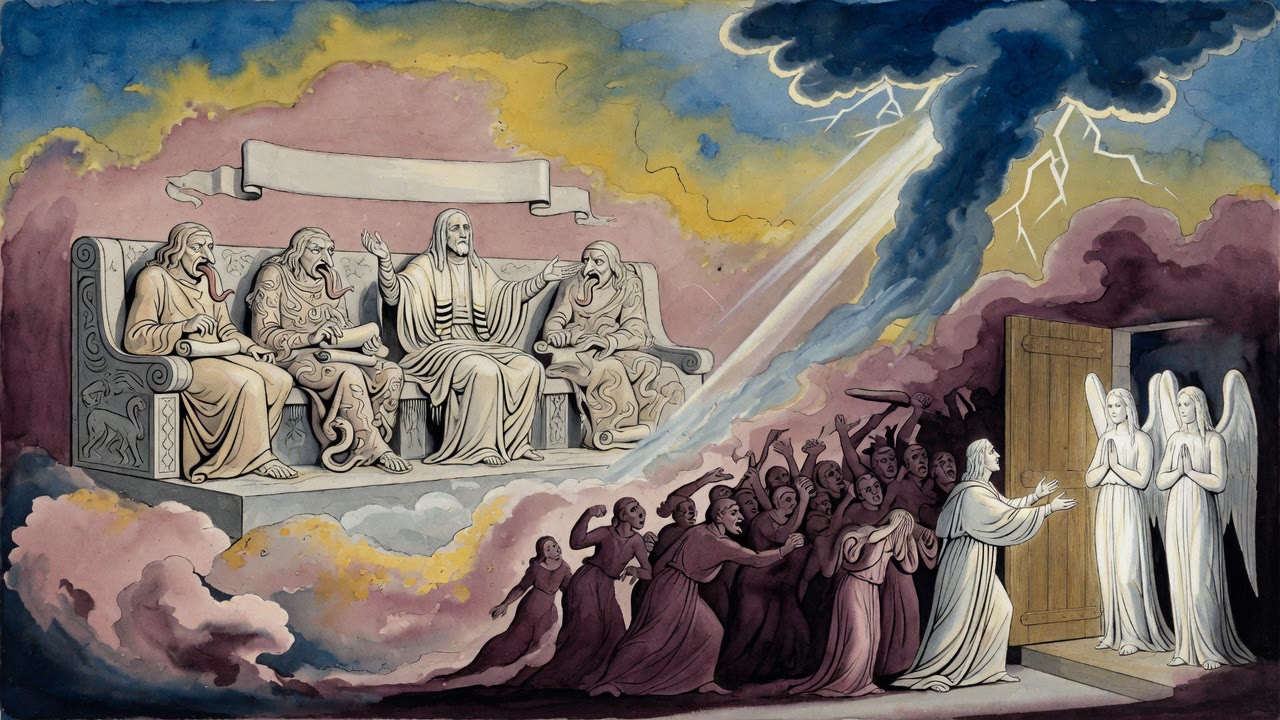
Kings crowded in and spat until the three looked like a clod. The men who had walked out of the fire lifted their faces and claimed shame.
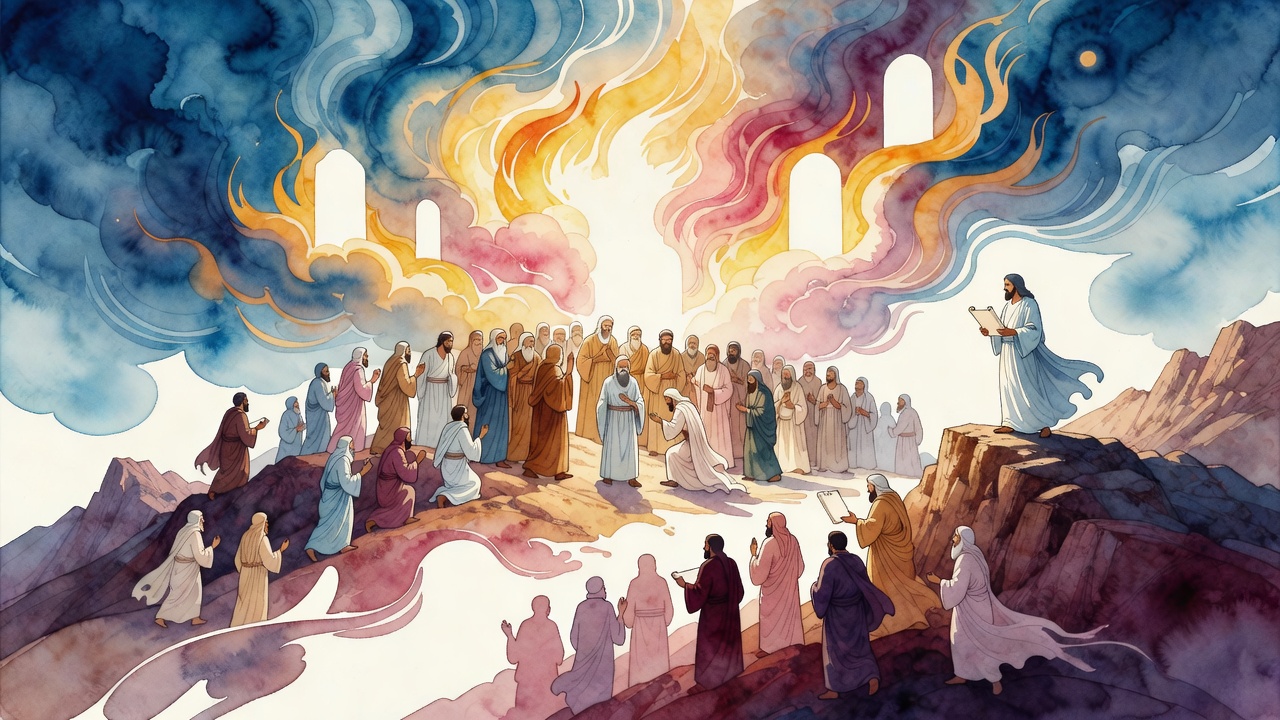
Seventy men climbed with bread in their fists. Heaven owed them fire that morning. It waited, and Moses counted empty seats.
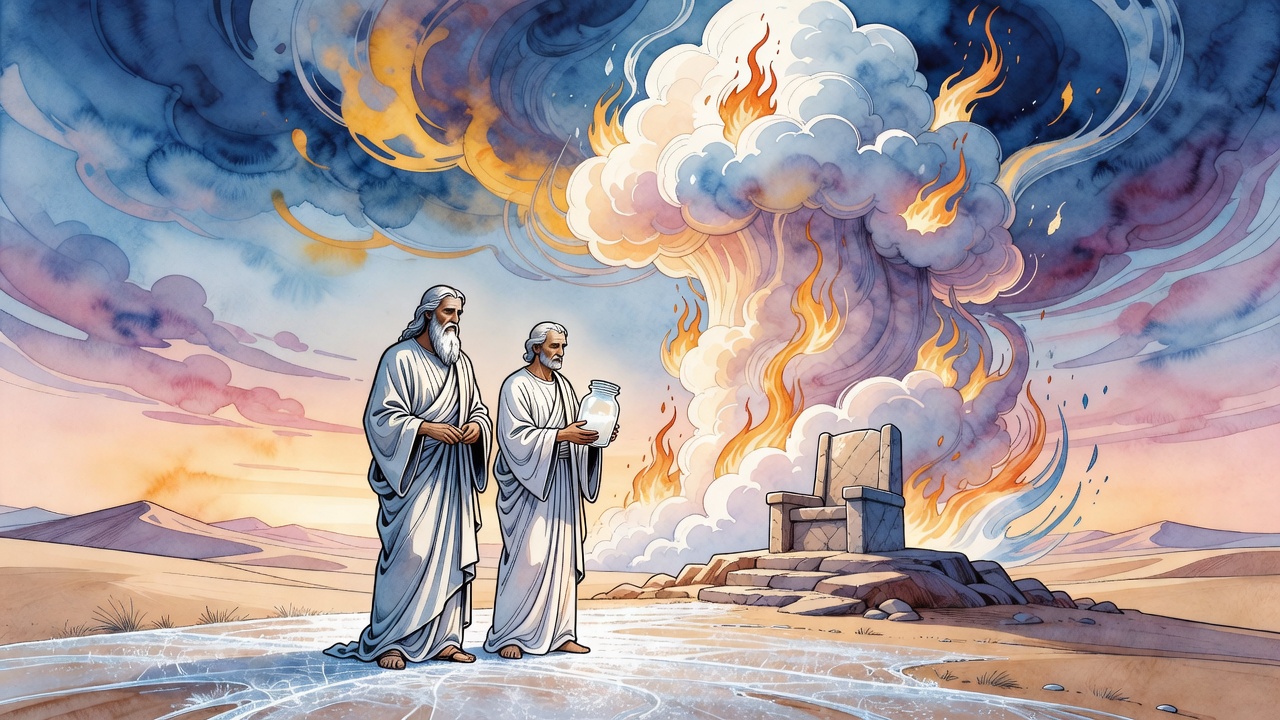
Each dawn a thin ice-like crust covered part of the desert. Moses and Aaron promised morning glory, and Aaron sealed a clear jar for later eyes.
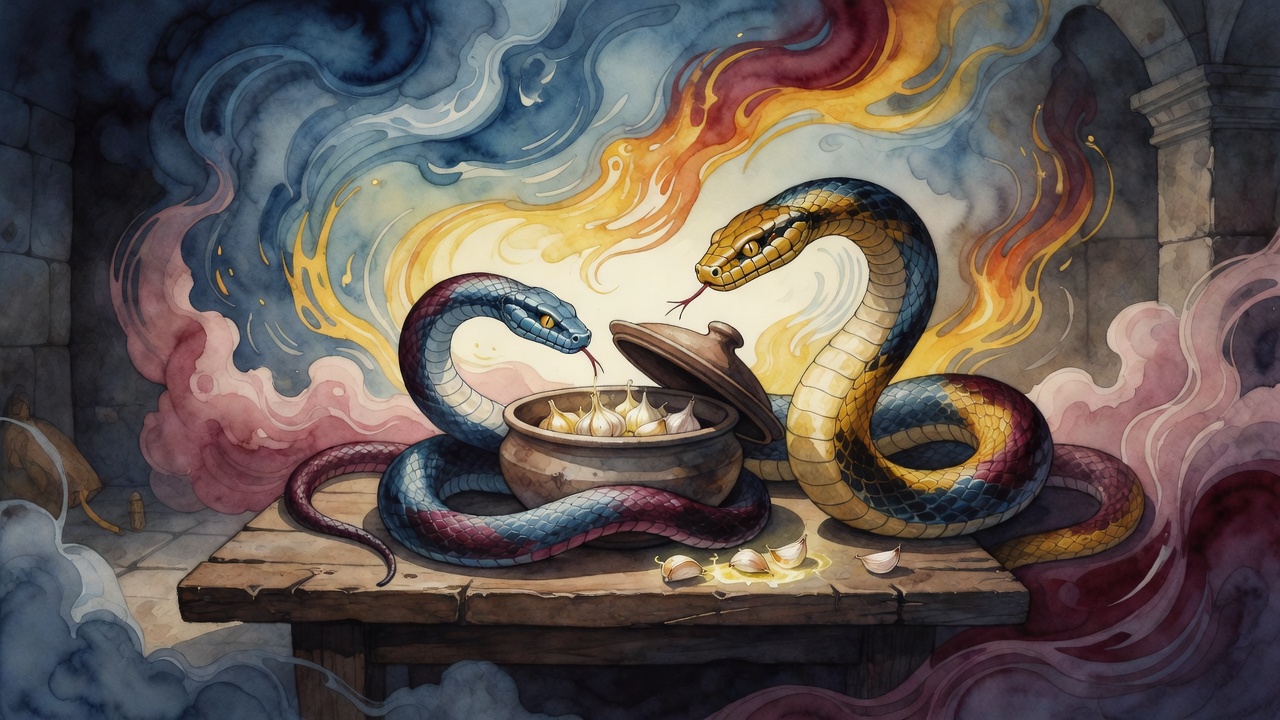
On Sabbath eve a field serpent poisoned a covered garlic bowl. The house serpent uncovered it so the family would pour the death out and live.
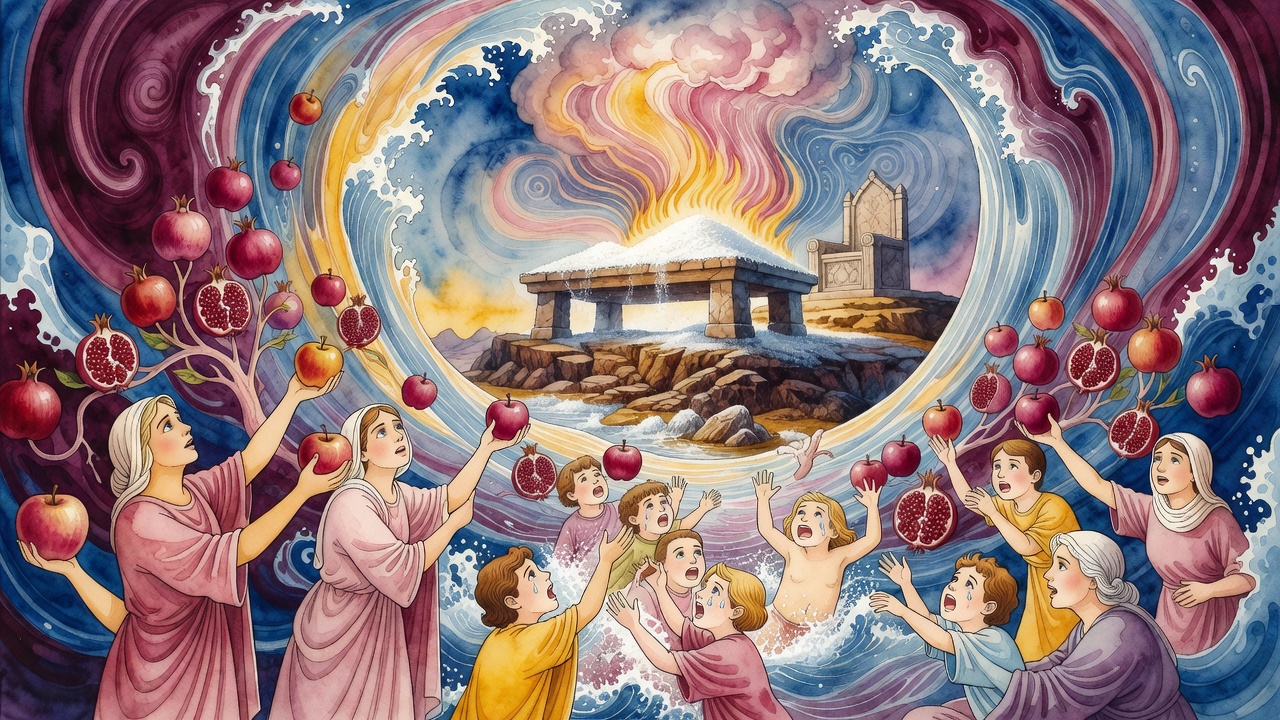
A baby cried on the seabed, so his mother reached into the standing water and pulled out an apple. Another woman found a pomegranate in the wall.
Dew covered the camp at dawn. When it lifted, a fine white flake lay underneath that nobody had a name for. Some kept it overnight, and worms got in.
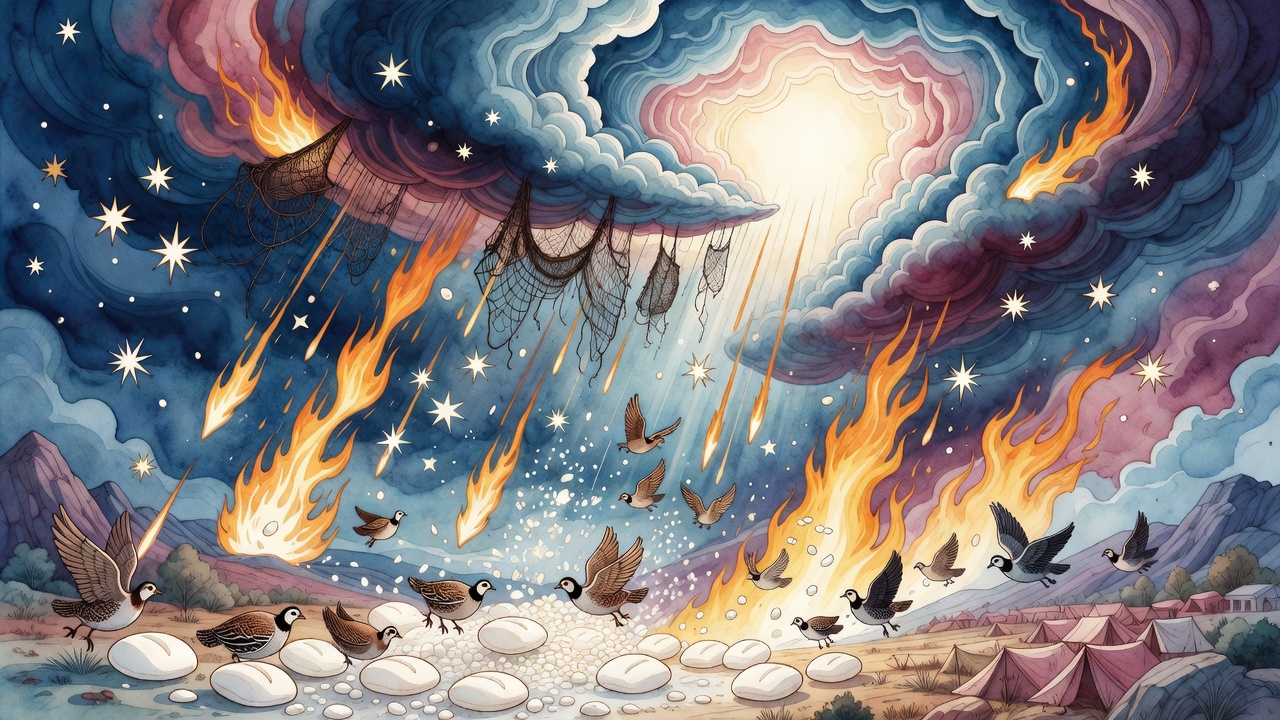
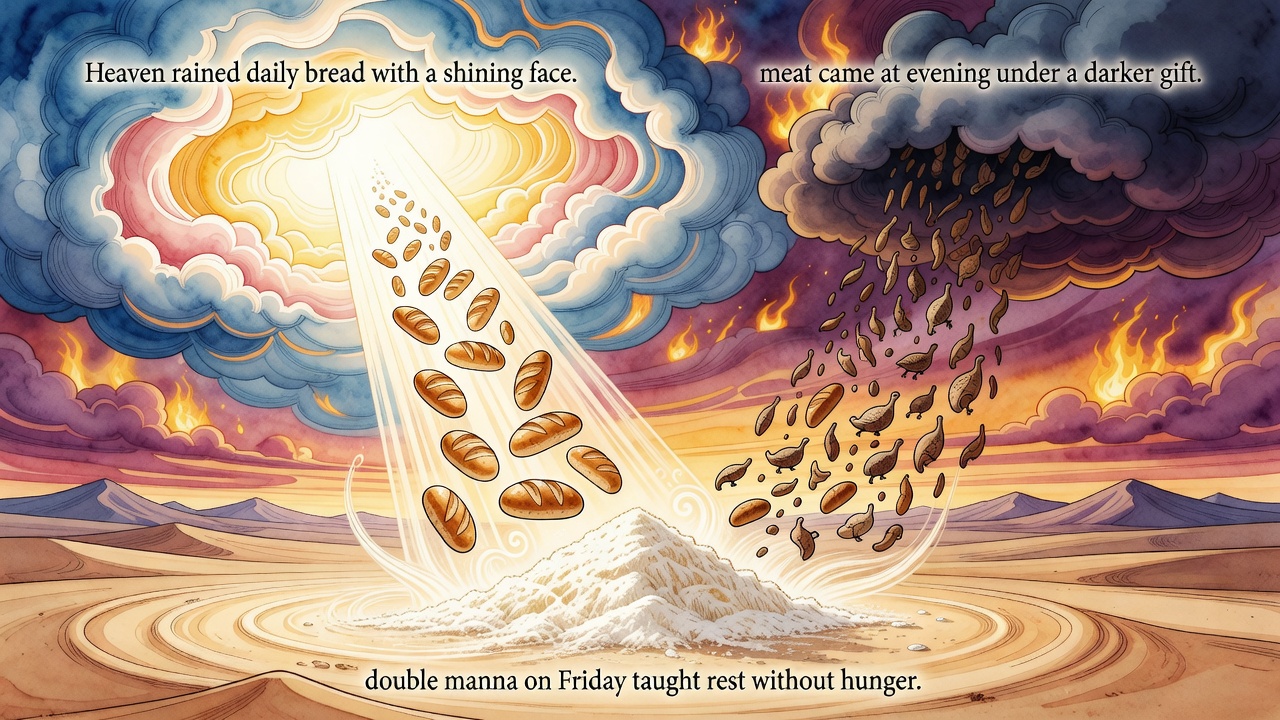
From one heaven God rained snares, fire, and stars of war, then soft manna for Israel, while quail fell with a darkened face beside the white bread of the camp.
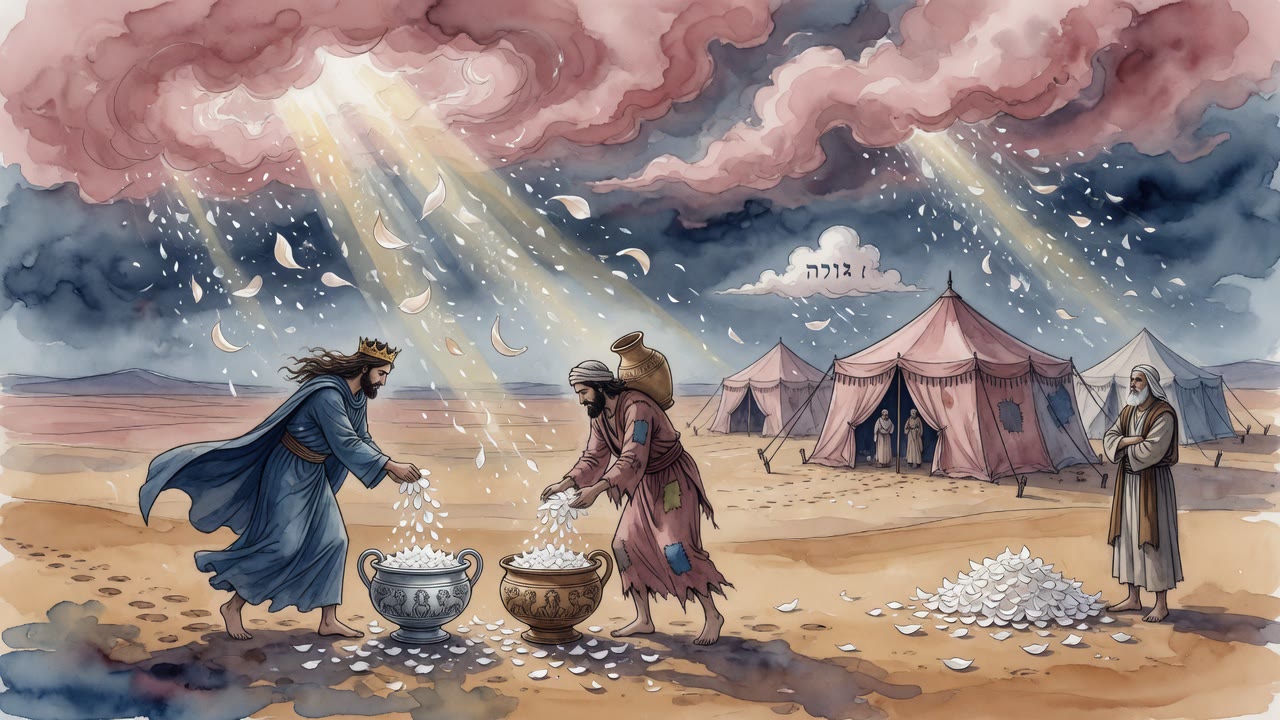
A poor man scooped a thin handful of manna while Nachshon heaped his jar full. When they measured, both had exactly the same amount.
Abraham ran with curds, milk, and a calf for three travelers, and every kindness returned as wells, manna, quail, and walking clouds.
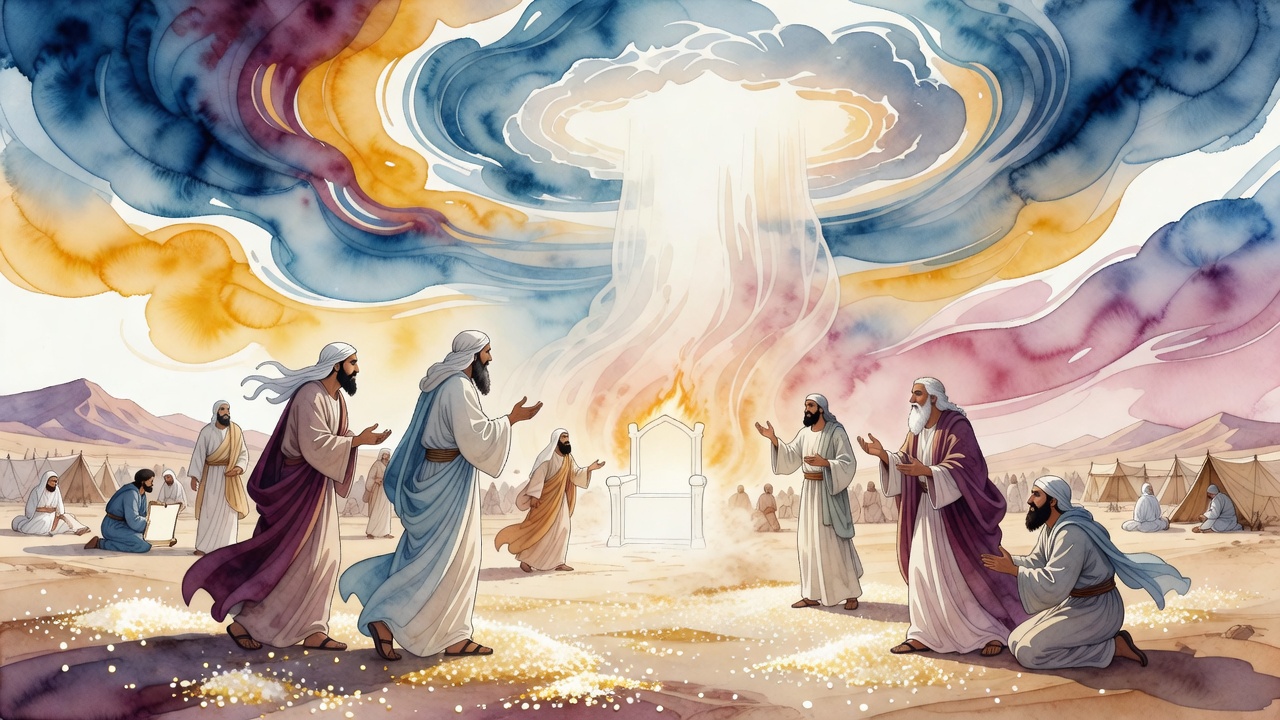
The sixth morning the baskets were too heavy. A prince counted twice, then a third time. He took the question to Moses before the camp invented an answer.
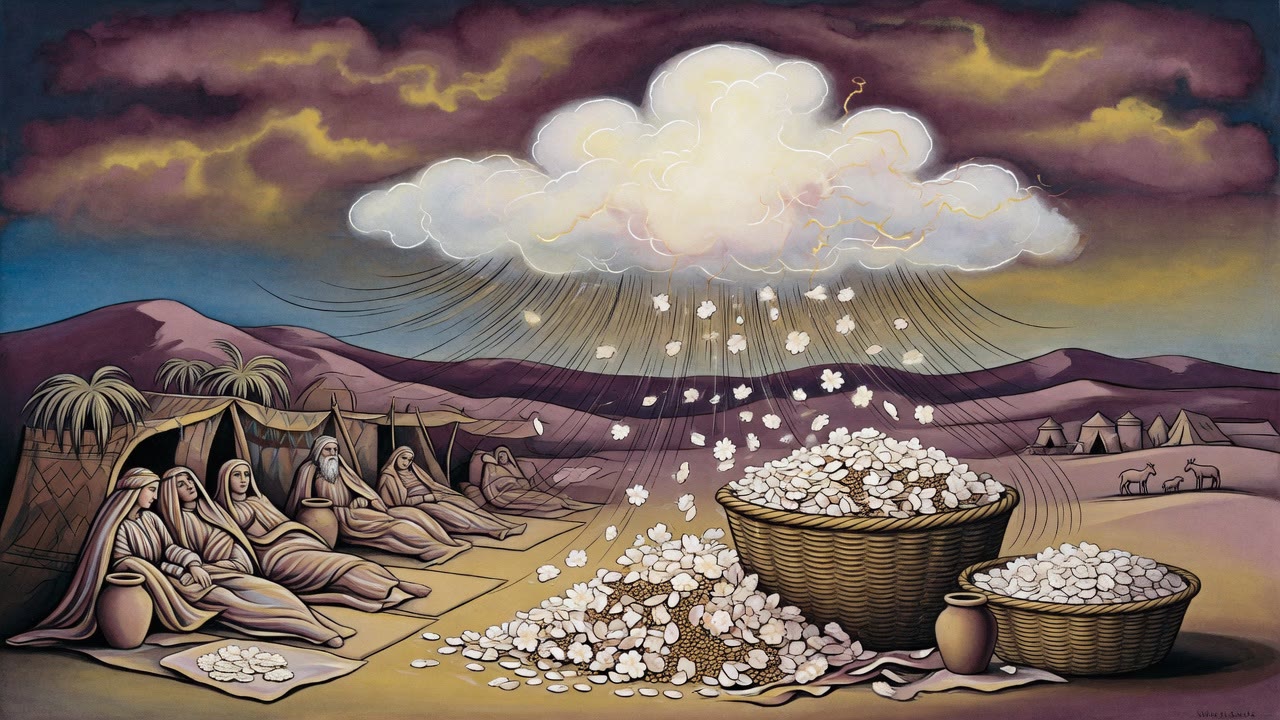
Earthly kings give a gift or give rest, never both. God gave Israel the Sabbath and a double portion of manna in one breath, rest and bread together.
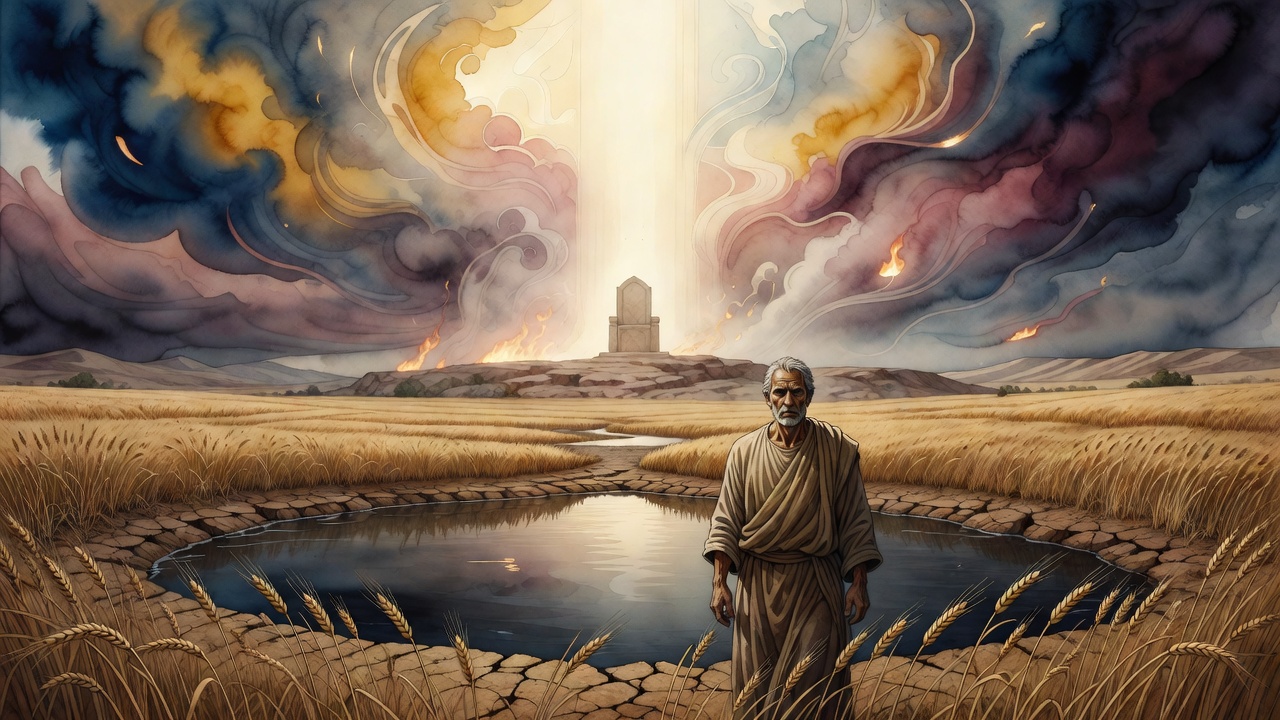
A man who tithed without shaving a grain split his field for a reservoir. In the drought his water sold for three times the price of wheat.
