5 min read

Horeb Wore Six Names While Elim Waited With Wells

Horeb holds six names from mountain of God to sword. Elim held twelve wells and seventy palms, while God logged every desert station like a father.

Curated by Arthur · Told by Maggid ·
Table of Contents
  1. Six Names for One Mountain
  2. Elim's Twelve Wells and Seventy Palms
  3. Why Every Station Was Written Down
  4. From Wells to Sword-Mountain
  5. What the Names Still Demand
Horeb Wore Six Names While Elim Waited With Wells Click for full size

Six Names for One Mountain

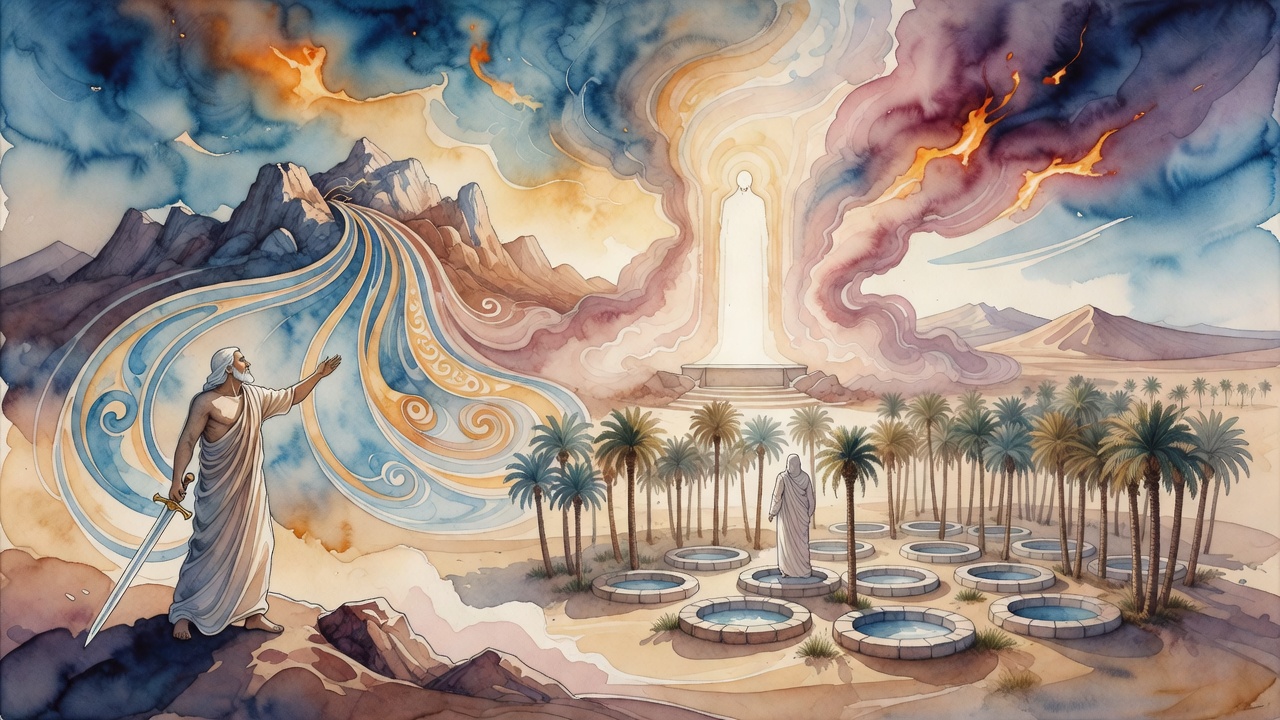
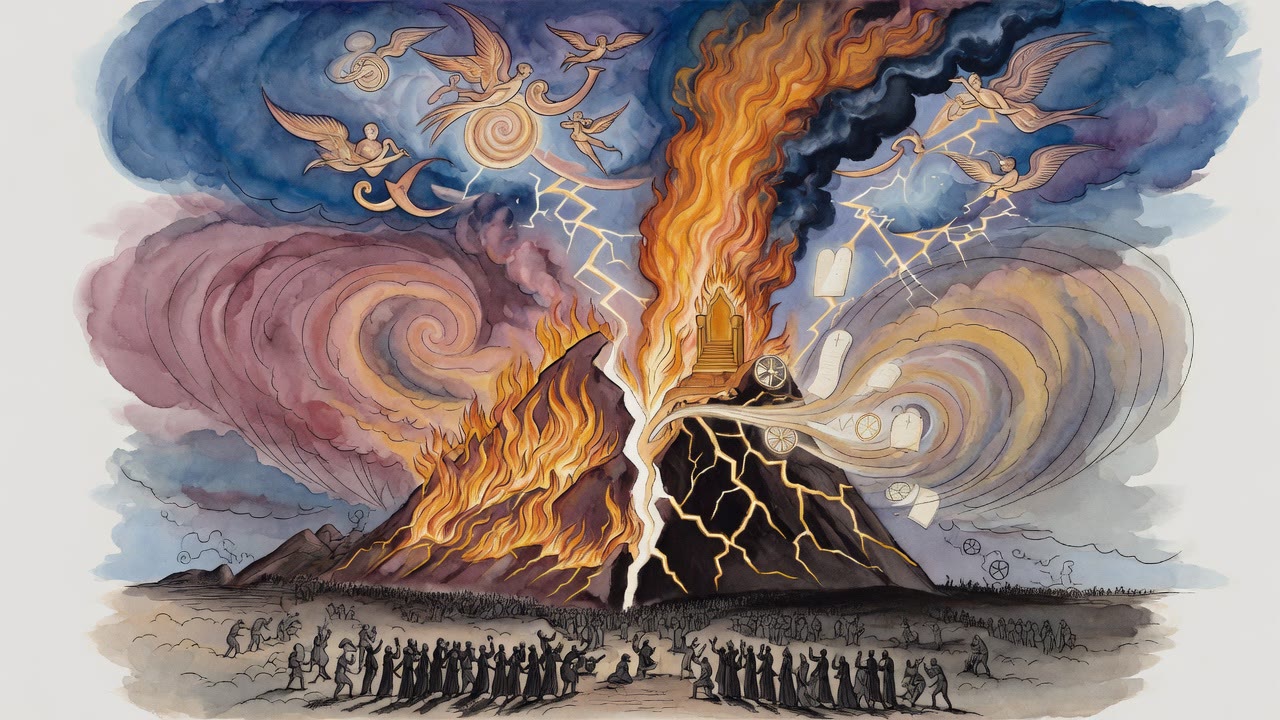
The peak where law fell is not content with one label. Tradition loads Horeb with six names, each a facet of the same rock. It is the mountain of God, where heaven touched earth with command. It is Basban, "God came there," a plain report of arrival. It is a mountain of humps, because other peaks were judged unfit, "crookbackt" like animals rejected for the altar.

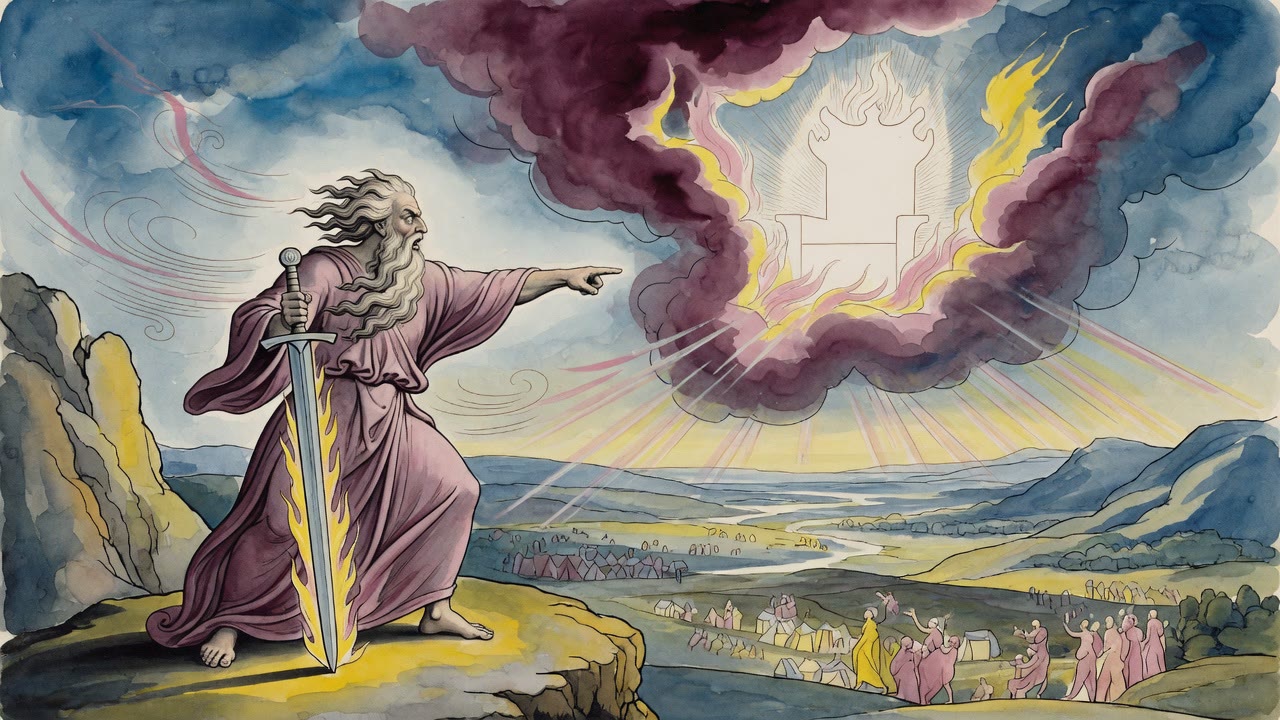
It is the mountain of abode, desired as a dwelling for the Divine Presence. It is Sinai, name of hatred against the heathen that began when Israel received the law there. It is Horeb, "sword," because there the sword of the law was drawn upon sinners. One ridge. Six verdicts. Revelation is beauty and blade in the same wind.

Elim's Twelve Wells and Seventy Palms

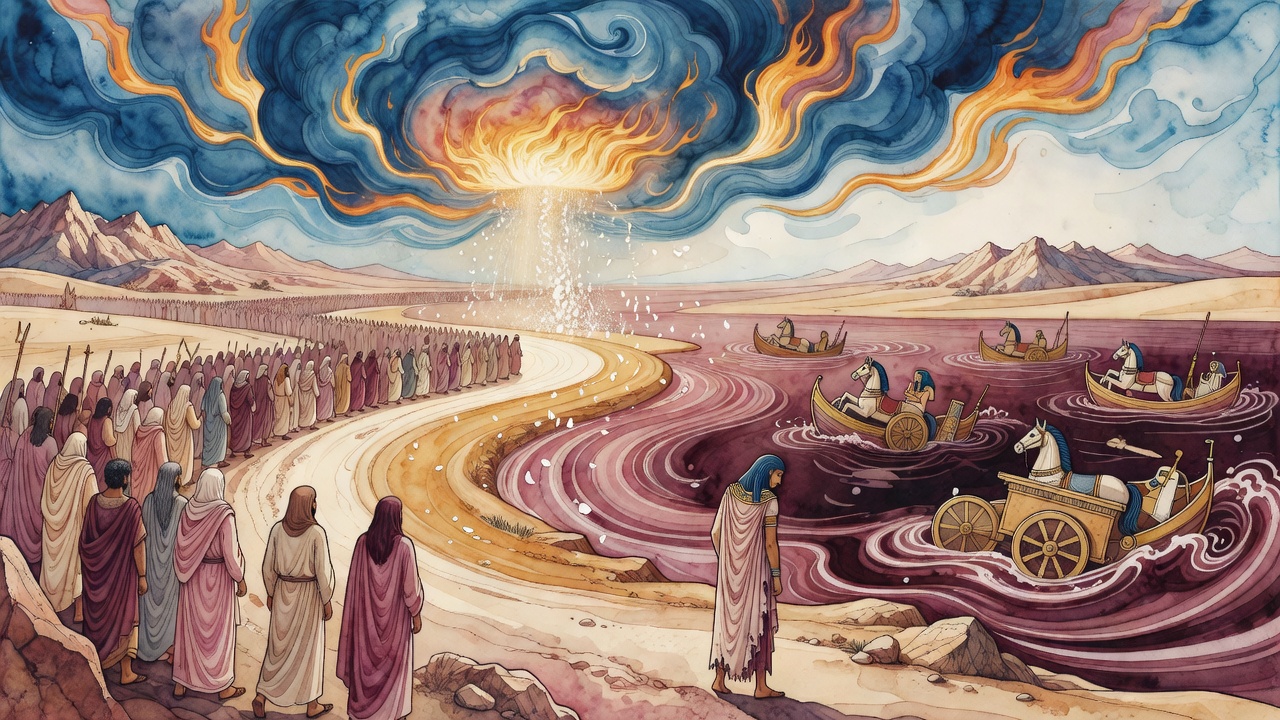
Before the mountain's thunder, the road offered a softer map. At Elim, from the world's forming, the Almighty had set twelve wells and seventy palm trees, matching the twelve tribes and the seventy elders. There Israel began to deepen study of laws first tasted at Marah. Shade and water became a classroom.

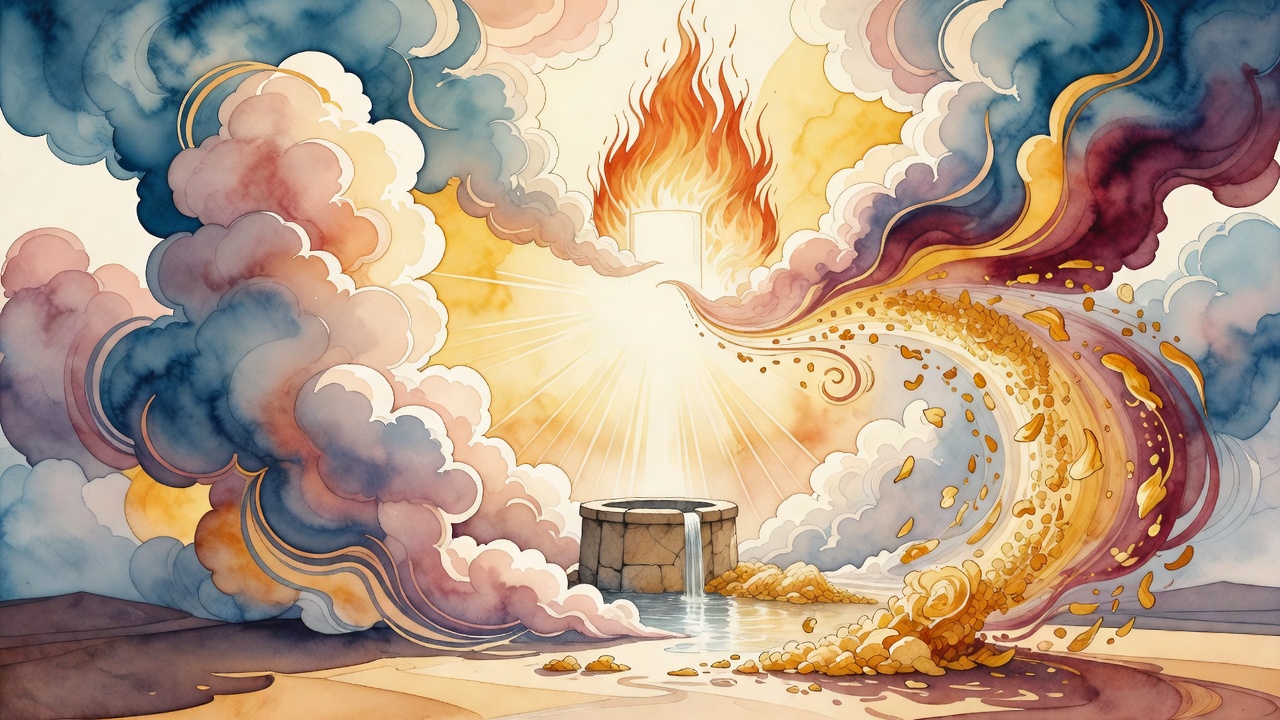
Bread brought from Egypt lasted thirty-one days. Then the store ended. The wilderness opened its empty mouth. The whole kahal turned on Moses. Freedom without flour felt like fraud. "We left expecting freedom, but now we are not free from the worry of food!" They rewrote Egypt in memory as pots of meat and full bread, even wishing they had died in the three days of darkness rather than starve under open sky.

Elim's palms stood as proof that heaven can plant a station before a people arrives. Hunger stood as proof that a station of water is not yet a finished faith.

Why Every Station Was Written Down

Yalkut Shimoni hears a father in the itinerary of Numbers. A king whose son falls ill travels far for healing. When the boy recovers, the father recounts the road: here we slept, here we were honored, here you had a headache. The list is love with a map.

So God tells Moses to record Israel's journeys, not as dry geography alone, but as a memory of miracles and of places where the people angered Him. The full relationship needs both. "You led Your people like a flock by the hand of Moses and Aaron" (Psalms 77:21). Shepherding includes the stubborn miles.

From Wells to Sword-Mountain

Read the desert as a rising argument. Elim teaches provision and study under palms. The empty stretch after bread fails teaches panic and complaint. Horeb-Sinai teaches law sharp enough to be called a sword and near enough to be called an abode. The written stations teach that none of it was forgotten in heaven's ledger.

A people that only remembers wells will faint at commandments. A people that only remembers the sword will forget the palms planted in advance. The itinerary binds them.

What the Names Still Demand

Call the mountain by all six names and you refuse a tame Sinai. Sit under Elim's number-matched trees and you refuse a God who improvises care. Read every desert stop and you refuse amnesia about both miracle and mutiny.

The drama of the road is not scenery. It is the making of a nation that can hold fire on a humped mountain because it first learned to drink from twelve wells without owning the desert that held them.

Horeb's many names refuse tourists of revelation. You may not take the fire and leave the sword. You may not claim abode and ignore the rejection of crooked mountains unfit for the moment. Sinai as "hatred" toward idolatrous nations is the midrash's hard edge: receiving Torah differentiates. The mountain is not a scenic overlook. It is a courtroom that reordered the world.

Elim's matched numbers, twelve and seventy, show providence planning community structure before the people could vote on it. Wells and palms are policy written in landscape. When bread ends thirty-one days out, the revolt reveals how quickly policy is forgotten under stomach pressure. Moses becomes the target because leaders always do when miracles pause between stations.

Yalkut's father-king midrash turns the travel log into tenderness without erasing anger. God remembers headaches and rebellions together. A flock led by Moses and Aaron still needs its path written, because memory is part of guidance. Future Israel reading Numbers is the healed son hearing his father retell the road. That is why Horeb's names and Elim's wells share one myth: both are how heaven teaches a nation to read its own map.

Carry the six names into prayer and the twelve wells into hope. The desert becomes readable. That is the gift these sources still press into a tired traveler's hand.


← All myths
From the tradition

Sources

3 sources

The texts behind this telling. Some cards carry a translation of the source; others are our own retelling of it, and each card says which. Every card links out to the original.

Legends of the Jews 4:156Legends of the Jews

Retold in our words. Read the original at the link below.The Legends of the Jews by Louis Ginzberg (1909) · Public Domain

The sun beats down, and the horizon shimmers with heat. But our journey isn't just a physical one; it's a journey into the heart of Jewish tradition.

This isn't just any mountain. It's Mount Horeb.

Here's the interesting thing: Horeb isn't just Horeb. According to tradition, it carries six different names, each one a little window into its significance. Each name, as

First, it's known as "the mountain of God." Obvious. But think about it: this is where God revealed His law. This is where the Divine touched the earthly in a way that changed everything.

Then there's "Basban." The simple meaning? "God came there." It's a reminder, a statement of fact, about a pivotal moment.

Now, this next one gets a little more colorful: "a mountain of humps." Why "humps"? Well, the explanation given is that God declared all the other mountains unfit for the revelation. The analogy used is that they are "crookbackt," and like deformed animals, unsuitable for sacrifice. It's a rather vivid way of saying, "Nope, this mountain and only this mountain will do!"

It's also called "mountain of abode," because it’s the mountain that God desired for His "abode." That is, His dwelling place. A place where the Divine Presence could truly reside.

And then we have Sinai. This name is particularly interesting. It represents the "hatred" of God against the heathen, which began at the time when Israel received the law there. It marks a turning point, a differentiation.

Finally, and perhaps most dramatically, it's called Horeb, "sword." Because, the tradition tells us, there the sword of the law was drawn upon the sinners. It's a stark reminder of the responsibility that comes with divine law, a covenant with consequences.

So, six names, six facets of a single, sacred place. Mount Horeb, Basban, the mountain of humps, the mountain of abode, Sinai, and the sword. Each name layers meaning upon meaning, drawing us deeper into the heart of this mountain's story.

The places that might have multiple meanings, multiple stories, waiting to be uncovered? What are the "mountains" in your life, and what names do they carry?

Full source
Legends of the Jews 1:85Legends of the Jews

Retold in our words. Read the original at the link below.The Legends of the Jews by Louis Ginzberg (1909) · Public Domain

It all started in a place called Elim. when the world was first formed, the Almighty set up twelve wells of water and seventy palm trees there. Why those numbers? Well, they correspond to the twelve tribes of Israel and the seventy elders. A beautiful symmetry. And it was right there, in Elim, that the Israelites truly began to explore the study of Torah, of God's law. They revisited the laws given to them earlier at Marah, deepening their understanding.

The journey wasn't all spiritual enlightenment, was it? After leaving Egypt, the Israelites had brought bread with them. It lasted them thirty-one days. Then… nothing. Picture this: thousands of people, fresh from slavery, now staring at an endless, desolate wilderness. Can you imagine the panic?

The entire community, the whole kahal, turned on Moses. It wasn’t just the immediate hunger gnawing at their bellies. It was the terrifying uncertainty about the future. The wilderness stretched before them, vast and unforgiving. Their courage faltered.

"We left, expecting freedom!" they cried. "But now we're not even free from the worry of finding food! We're not the happiest people, like our leader promised, but the most miserable!" According to Ginzberg's retelling in Legends of the Jews, they felt utterly deceived.

They continued: "His words raised our hopes so high, filled our ears with empty promises, and now he torments us with famine, unable to provide even the simplest meal! He tricked this great multitude with talk of a new home. After leading us from a familiar land to this wasteland, he plans to send us to the underworld – the final path of life!"

Ouch. Harsh words. They even went so far as to say, "Oh, that we had died by the hand of the Lord during those three days of darkness in Egypt! At least then we sat by pots of meat and ate our fill of bread!"

But here's the thing: in their despair, they were rewriting history. They were speaking untruths. As we find in Midrash Rabbah, the reality was that they had suffered from hunger in Egypt too. The Egyptians certainly weren't overfeeding their slaves!

So, what does this tell us? Maybe that even in the face of incredible miracles and the promise of freedom, human nature remains… human. We forget the bad times, exaggerate the present hardships, and let fear cloud our judgment.

Full source
Yalkut Shimoni on Torah 786:16Yalkut Shimoni on Torah

Translation of the source text.Torat Emet (Yalkut Shimoni) + Sefaria Community Translation · CC-BY-NC

These are the journeys of the children of Israel. The Lord said to Moses, "Write down the journeys that the Israelites have taken in the wilderness, so that they may know how many miracles I performed for them in each journey." It is similar to a king whose son fell ill, so he took him to another place for his healing. When they returned, the father began to mention the journeys, saying, "Here we slept, here we were honored, here you had a headache."

Similarly, the Lord said to Moses, "Count for them all the places [where they angered Me]." This is why it is said, "These are the journeys of the children of Israel." This is what Scripture says: "You led Your people like a flock by the hand of Moses and Aaron" (Psalms 77:21).

Just as one does not bring the flock into the cool shade, so too, the Israelites did not enter the cool shade for forty years.

Full source