Parshat Bamidbar5 min read

God Asked Whether the Desert Was a Wasteland

Israel called the wilderness a death trap. God answered with beds of cloud, manna, and a well that walked with Miriam.

Curated by Arthur · Told by Maggid ·
Table of Contents
  1. The Complaint That Named the Map
  2. A King Who Turns Waste into Beds
  3. Forty Years That Did Not Have to Happen
  4. Learn It Again Before I Go
  5. What the Map Really Was
God Asked Whether the Desert Was a Wasteland Click for full size

The Complaint That Named the Map

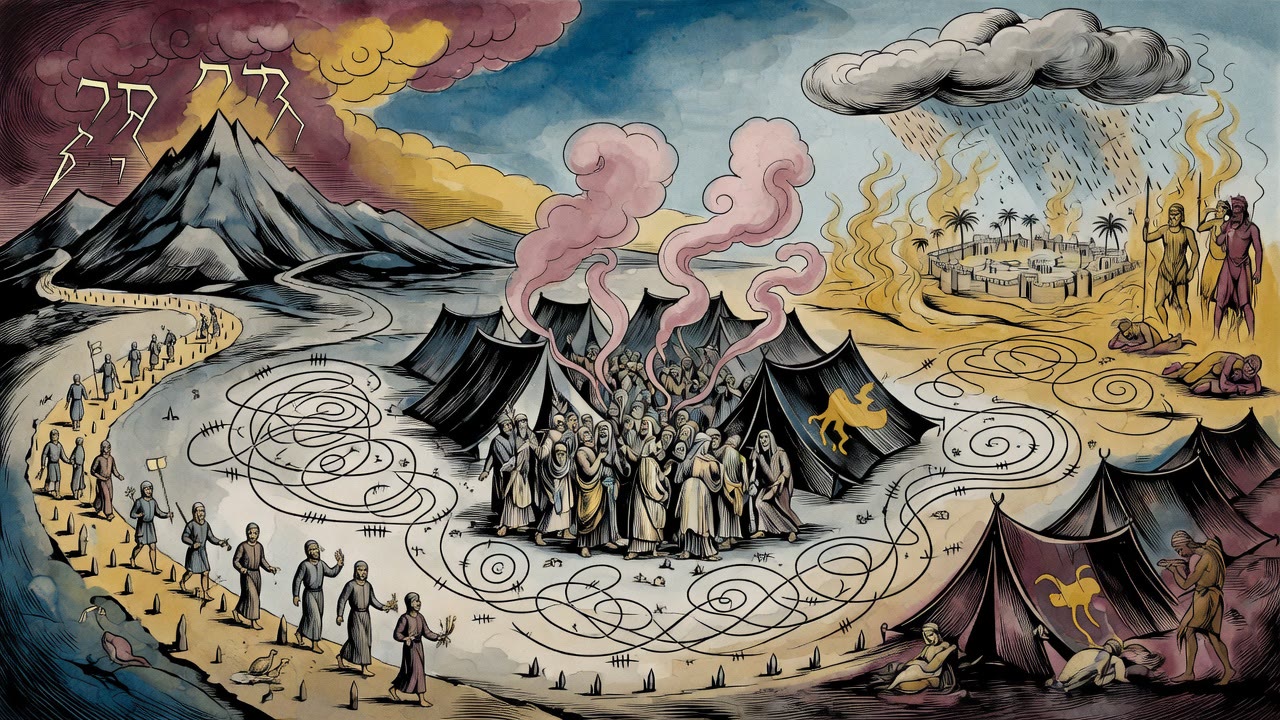
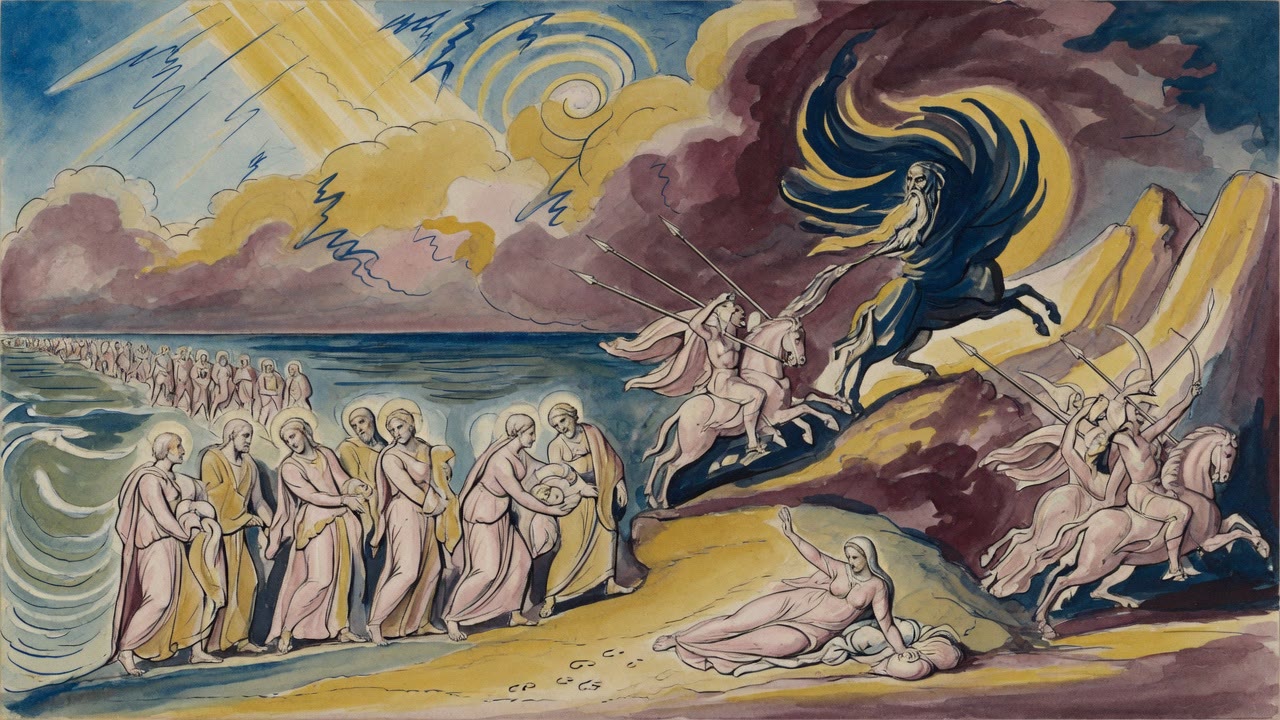
"Why did you take us up from Egypt to die in the wilderness?" The words rose from the camp like dust (Numbers 21:5). Throats dry. Feet blistered. Memory short. Egypt's bricks suddenly felt safer than God's open road. People who had seen the sea stand like walls now spoke as if the Holy One had led them into a blank death.

The Holy One answered with a question that still stings. "Have I been a wilderness for Israel, or a land of deep darkness?" (Jeremiah 2:31). After the army drowned, after the first manna fell like a second dawn, after water came from rock and bitter pools turned sweet, did they really see Him as barren ground?

Moses heard both voices, the people's and Heaven's, and carried them in the same body across sand that never agreed to be easy.

A King Who Turns Waste into Beds

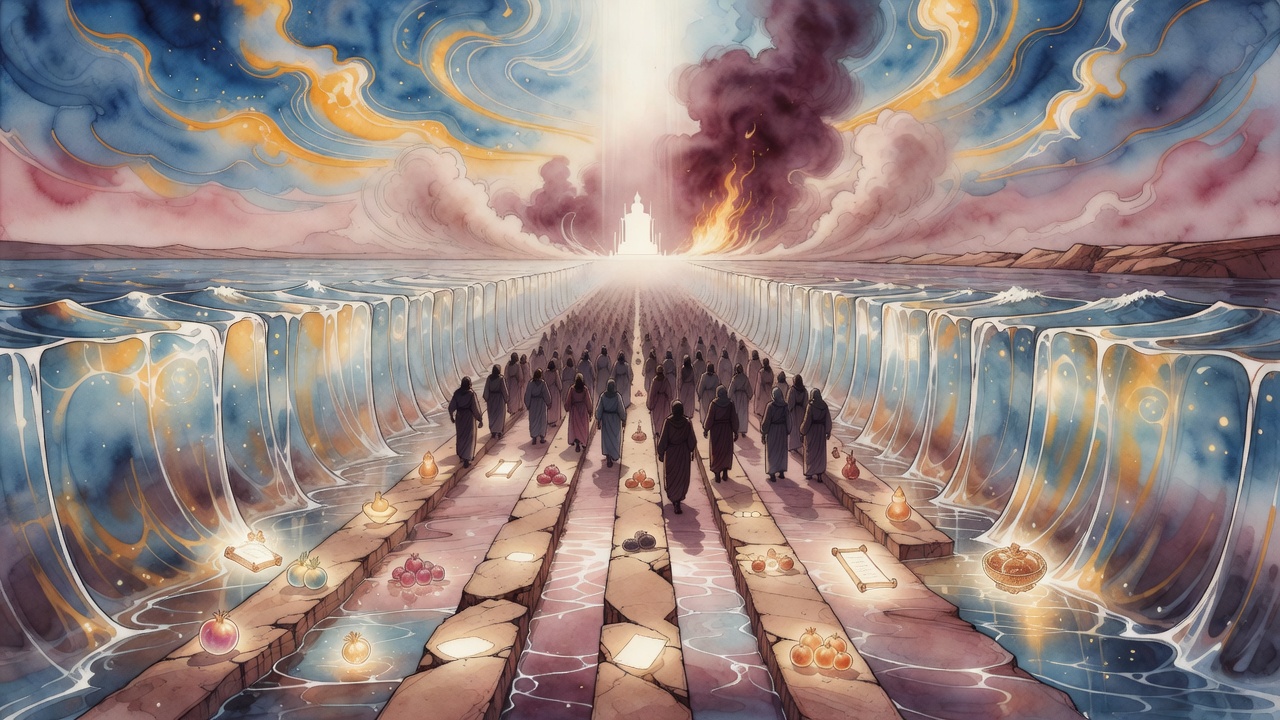
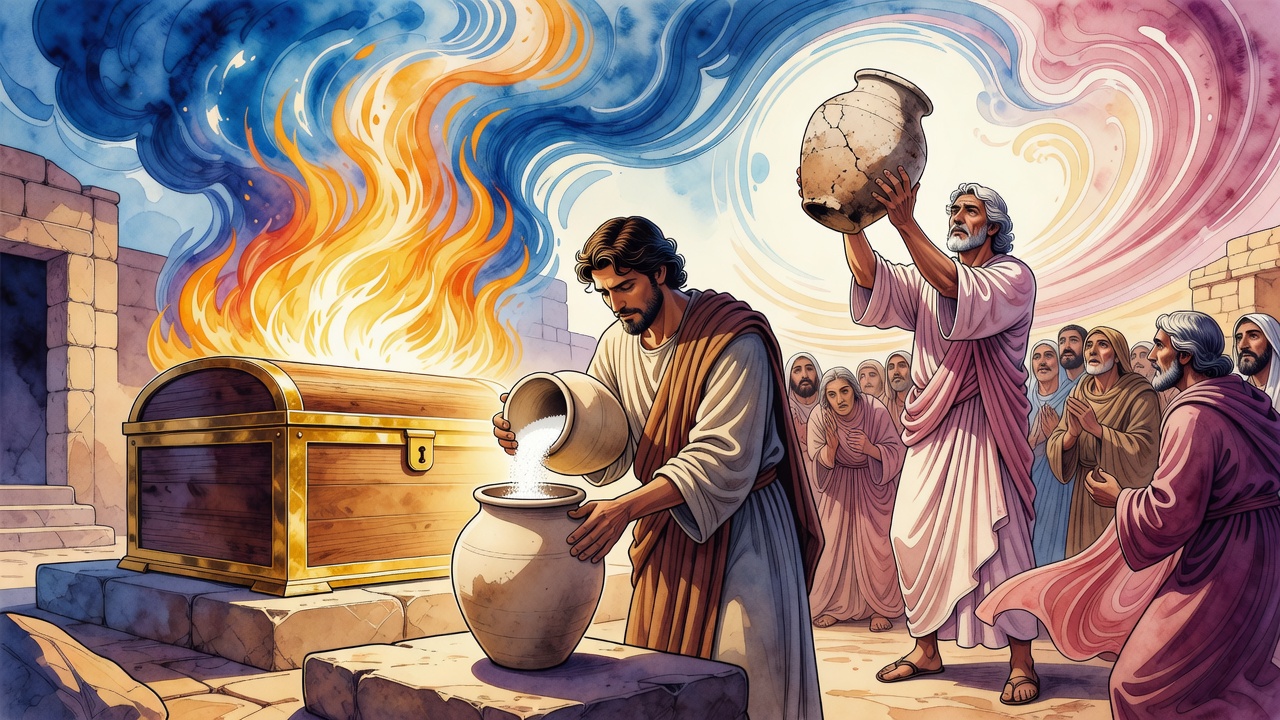
An earthly king who rides into wasteland finds no palace there. He sleeps hard. He eats what the pack animals can bear. His servants envy the capital they left behind. God did the opposite. He took slaves out of Egypt and, the midrash says, laid them down as if on fine beds. The verse "God led the people roundabout via the wilderness" (Exodus 13:18) is heard as more than a detour. The Hebrew can lean toward reclining. The camp was made to rest like royalty in a place that should have killed them.

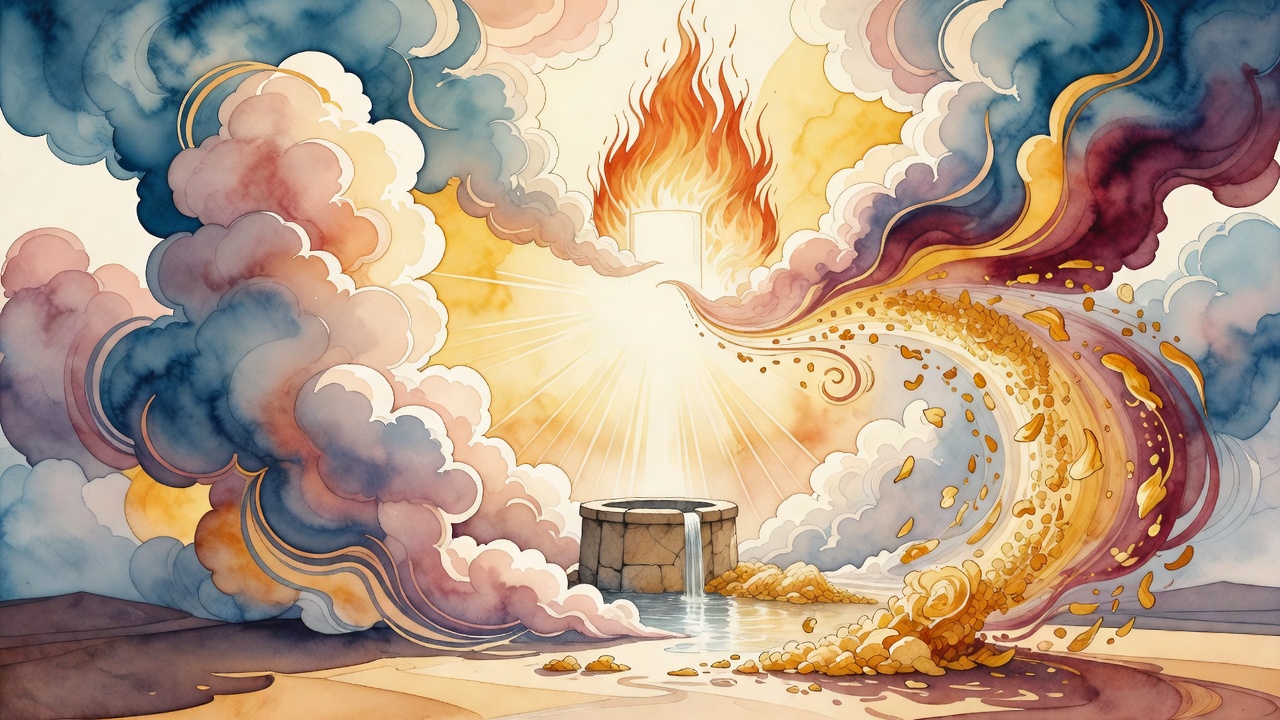
Three caretakers walked with that resting people. Moses brought the manna, food "that you did not know, and your fathers did not know" (Deuteronomy 8:3), a bread with no field behind it. Aaron brought the Clouds of Glory. Some counted seven clouds, guarding sides, above, below, and the path ahead. Others counted five. Either count is already more shelter than Egypt ever gave. Miriam brought the well that followed them, water with a woman's name on it, a mobile spring in a land of dry throats.

The wilderness was never empty. It was furnished against their accusations.

Forty Years That Did Not Have to Happen

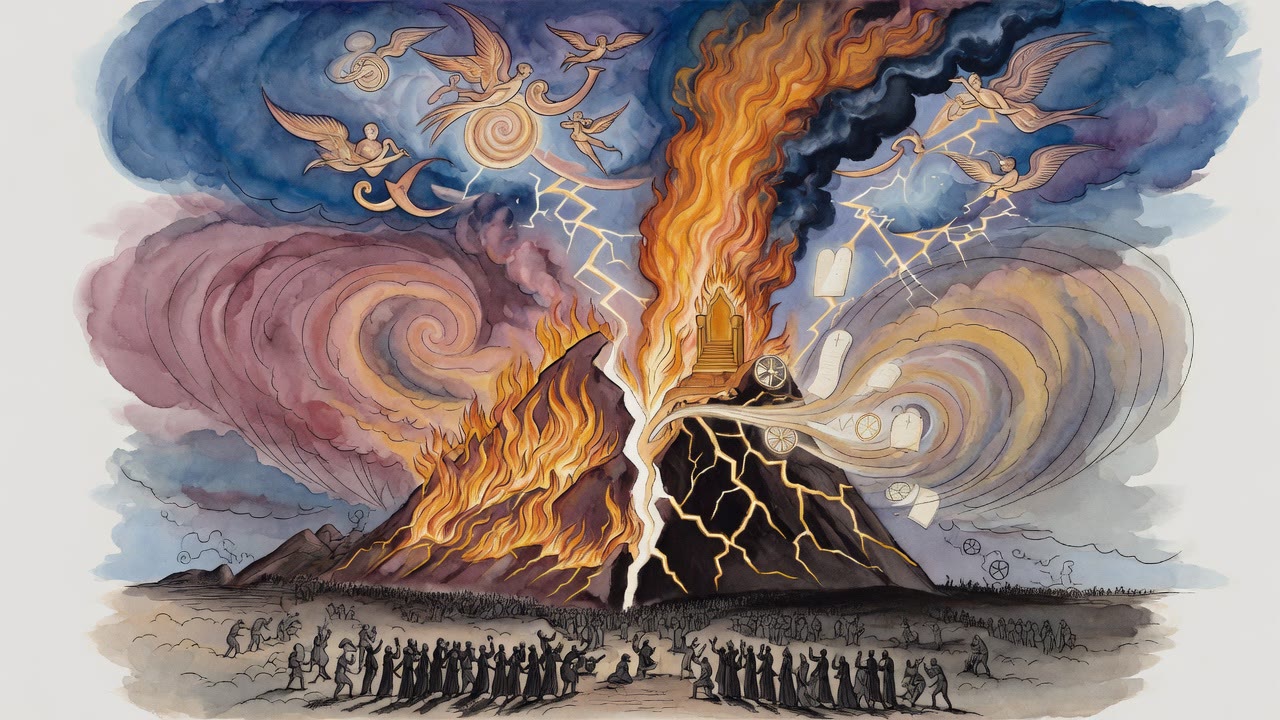
At the edge of the land, near the end of his life, Moses told them the truth without softness. Had the people been righteous, God would have led them into the land on the very day they left Egypt. Forty years were not a scenic route. They were a sentence written in their own hand, a calendar of complaint stretched until the complainers fell and their children stood ready.

He listed the sins against God and against himself. He remembered infants thrown into his lap by desperate parents: "What food hast thou for these?" The demand had been a weapon dressed as need. The memory still cut. He had carried their panic as if panic were a second Torah, heavy and loud.

The children of the sinners stood listening. Their parents were already buried in the sand between Egypt and the border. They offered no defense. Silence, this time, was not the dogs of Egypt. It was a generation absorbing a debt it did not personally sign and still had to carry into orchards it had not yet seen.

Learn It Again Before I Go

Moses was near death and still teaching. "Whosoever hath learned from me a verse, a chapter, or a law, let him come to me and learn it anew." He was not collecting compliments. He was sealing the transmission before the grave closed. Students who thought they already knew returned to hear the same words with a dying teacher's breath in them.

Tradition says he repeated the Torah in seventy languages so the nations could hear what Israel had almost wasted in complaint. The man who had been accused of dragging them into a wasteland spent his last strength proving the road had always been full of speech, law, and gift. If the desert had been deep darkness, he would not have had seventy tongues worth of light to pour into it.

What the Map Really Was

Call a place a wasteland long enough and you go blind to the clouds over your head. The people had manna in their mouths while they accused Heaven of starvation. They had a well at their heels while they named the land deep darkness. They had leaders whose very presence rearranged the climate of survival, and still the old Egyptian fear found words.

God's question remains the hinge of the journey. Was I a wilderness to you? The honest answer, spoken late and low at the border, is no. They were a wilderness to themselves, and the road stretched until they could walk it without calling gift by the name of grave. Moses dies with that answer almost in their mouths. The land waits for people who can finally say it without sand in the way.


← All myths
From the tradition

Sources

2 sources

The texts behind this telling. Some cards carry a translation of the source; others are our own retelling of it, and each card says which. Every card links out to the original.

Bamidbar Rabbah 1:2Bamidbar Rabbah

Retold in our words. Read the original at the link below.The Sefaria Midrash Rabbah, 2022 · CC-BY

This week, It all starts with a verse: “The Lord spoke to Moses in the wilderness of Sinai."

The core of this teaching is a rebuke, almost a lament, from God to the Israelites. He says, "You, the generation, see the word of the Lord: Have I been a wilderness for Israel, or a land of deep darkness?" (Jeremiah 2:31). It's a rhetorical question, dripping with disappointment. God is essentially saying, "After all I've done, do you really see me as a barren wasteland?" The Israelites were constantly complaining in the desert. Remember the story? “Why did you take us up from Egypt to die in the wilderness?” (Numbers 21:5). God's response, according to the Midrash (rabbinic interpretive commentary), is essentially: "Was I really like a wilderness to you? Did I treat you as if you were in some desolate, uncaring place?"

The Midrash then beautifully contrasts God’s care with the actions of an earthly king. A human king who ventures into the wilderness certainly wouldn't find the comforts of his palace there. But God? He transformed the wilderness for the Israelites.

He says, "You were slaves in Egypt, and I took you out of there; I laid you down on fine beds." This is a fascinating interpretation of (Exodus 13:18), "God led the people roundabout [vayasev] via the wilderness." The Midrash cleverly interprets vayasev not just as "led around," but as "caused them to recline," picturing God laying them down like kings, resting comfortably.

And it didn't stop there. Didn’t God provide them with three incredible caretakers: Moses, Aaron, and Miriam?

Each one brought a unique blessing. The Midrash emphasizes the merits of each leader. Thanks to Moses, they ate the manna, a miraculous food "that you did not know, and your fathers did not know" (Deuteronomy 8:3). Thanks to Aaron, they were surrounded by the Clouds of Glory. How many clouds? Well, Rabbi Hoshaya said seven – protecting them from all sides, above, and below, and even clearing the path ahead. Rabbi Yoshiya, on the other hand, said five.

And Miriam? She brought the well, a source of life-giving water that followed them throughout their journey. As it says, "Miriam called to them: Sing to the Lord" (Exodus 15:21), and regarding the water of the well: "Then Israel sang this song” (Numbers 21:17).

Rabbi Berekhya HaKohen (a priest), quoting Rabbi Levi, offers a powerful analogy. If a king sends officials to a province, the locals are expected to provide for them. But God flipped the script. He sent Moses, Aaron, and Miriam – "I sent before you Moses, Aaron, and Miriam" (Micah 6:4) – and it was through their merit that the people were sustained.

The Midrash then connects the dots. When Moses died, the manna ceased (Joshua 5:12). When Aaron died, "the spirit of the people became restive on the way" (Numbers 21:4), as the protective clouds vanished. And when Miriam died, "There was no water for the congregation" (Numbers 20:2). The well, the Midrash elaborates, was no ordinary well. It was a miraculous boulder that traveled with them, settling in the courtyard of the Tent of Meeting.

And let's not forget the quails! God asks, "Have I been a wilderness for Israel?" (Jeremiah 2:31). Did I act with you like a wilderness? Or was I "a land of deep darkness?" (Jeremiah 2:31). No! God illuminated their path, literally, as it is stated: "The Lord was going before them by day…[to illuminate for them]" (Exodus 13:21).

The Midrash even tackles the idea of delay. God asks, using a play on words with the Hebrew word mapelya, “Did I, perhaps, say to you that I am bringing good for you and I delayed it?” Mapelya suggests delay, connecting it to the verse in (Exodus 9:32) about crops that ripen late. The point is, God delivered on His promises. As Joshua later declared, "Nothing of all the good things that the Lord spoke to the house of Israel was lacking; everything came about" (Joshua 21:43).

But the Israelites persisted in their complaints. "Why did My people say: We separated from You [radnu]; [we will not come to You any longer]?" (Jeremiah 2:31). The Midrash offers several interpretations of radnu. One likens it to removing hot bread from an oven – once it's out, it can't be put back in. The Israelites felt exiled, disconnected from God. Another interpretation connects radnu to the idea of dominion, as in "For he ruled [rodeh] the entire region beyond the river" (I Kings 5:4). They accused God of smashing the Temple and removing His Divine Presence.

God's response is heartbreaking. "Would that I would be in the wilderness, in a wayfarers’ lodge, and I would leave my people…" (Jeremiah 9:11). He longs for the simple gratitude of the wilderness, where He was lauded.

The Midrash concludes with a powerful parable: A prince enters a province, and the residents flee. He enters another, and they flee again. Finally, he enters a city in ruins, and the people greet him with praise. The prince declares, "This city is better than all the provinces. Here I will build a fine throne; here I will reside."

So too, when God came to the sea, it fled. But the desolate wilderness welcomed Him. "Let the wilderness and its cities raise their voice," as it is stated in (Isaiah 42:11). God says, "This city is better for Me than all the provinces. In it, I will build an inn and reside within it."

The wilderness, despite its barrenness, offered something the settled lands did not: unadulterated gratitude.

What does this all mean for us today? Are we, like the Israelites, focusing on what we lack, or are we recognizing the "manna," the "clouds of glory," and the "well" that sustain us? Are we offering gratitude, or are we pushing away the very source of our blessings? It's a question worth pondering.

Full source
Legends of the Jews 5:115Legends of the Jews

Retold in our words. Read the original at the link below.The Legends of the Jews by Louis Ginzberg (1909) · Public Domain

Forty years wandering the desert. Forty years! And according to tradition, it was all their own fault. Moses, their leader, didn’t hold back as they stood on the cusp of finally entering the Promised Land.

Ginzberg, in his masterful Legends of the Jews, paints a vivid picture of this pivotal moment. Moses, nearing the end of his life, reminds the people why their journey took so long. He points out that had they been righteous, God would have led them to Palestine on the very day they left Egypt!

Moses doesn't stop there. He confronts them with their past transgressions, the sins they committed not just against God, but against him personally. He even recounts how they threw their infants into his lap, demanding, "What food hast thou for these?" Can you imagine the pressure, the sheer desperation in that moment?

What's truly remarkable, though, is the people's reaction. Or rather, their lack of reaction. Ginzberg highlights their silence. They stood and listened as Moses recounted their misdeeds, sins actually committed by their parents' generation – who had since passed on. Yet, they offered no defense, no excuses. What does that say about them? About their piety? About their understanding of collective responsibility?

But it’s not all rebuke and regret.

Moses wasn’t just interested in dwelling on the past. He was looking to the future. He knew his time was short. And so, in a final act of leadership, he calls out to the people. "I am near to death," he declares. "Whosoever hath learned from me a verse, a chapter, or a law, let him come to me and learn it anew." for a second. He's not just reminding them of what they already know. He's offering them a chance to solidify their understanding, to internalize the teachings one last time before he's gone.

And then, the legend takes an even more incredible turn. Moses, according to the tradition, proceeds to repeat the entire Torah – the first five books of the Bible – in seventy languages! Why? So that not only the Israelites, but all the nations of the world could hear God's teachings.

It's a powerful image: Moses, the shepherd of his people, becoming a universal teacher in his final moments. What a message of inclusion and universalism! It suggests that God's wisdom isn't just for one chosen people, but for all of humanity.

Is it a cautionary tale about the consequences of sin? A reminder of the importance of learning from the past? Or is it something more? Perhaps it's an invitation to embrace our own responsibility, to learn from the wisdom of those who came before us, and to share that wisdom with the world. Perhaps, just perhaps, it's a reminder that even in our imperfections, we can still strive to be better, to do better, and to leave a lasting legacy of goodness and understanding.

Full source