Amalek Wore Canaanite Clothes After Aaron Died
After Aaron died, Amalek dressed as Canaanites to dodge Israel's prayer. Israel named no foe. God still knew. The camp also learned thirst again.
Table of Contents
 Click for full size
The Scout Is Dead
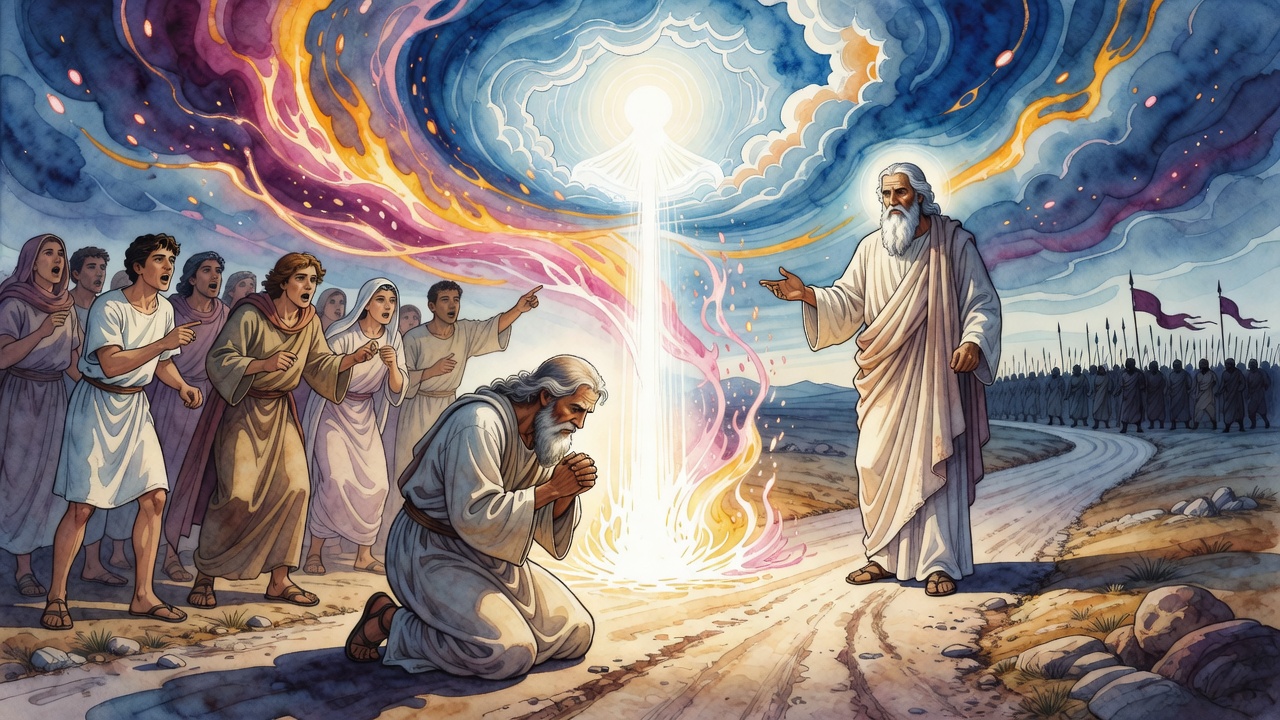
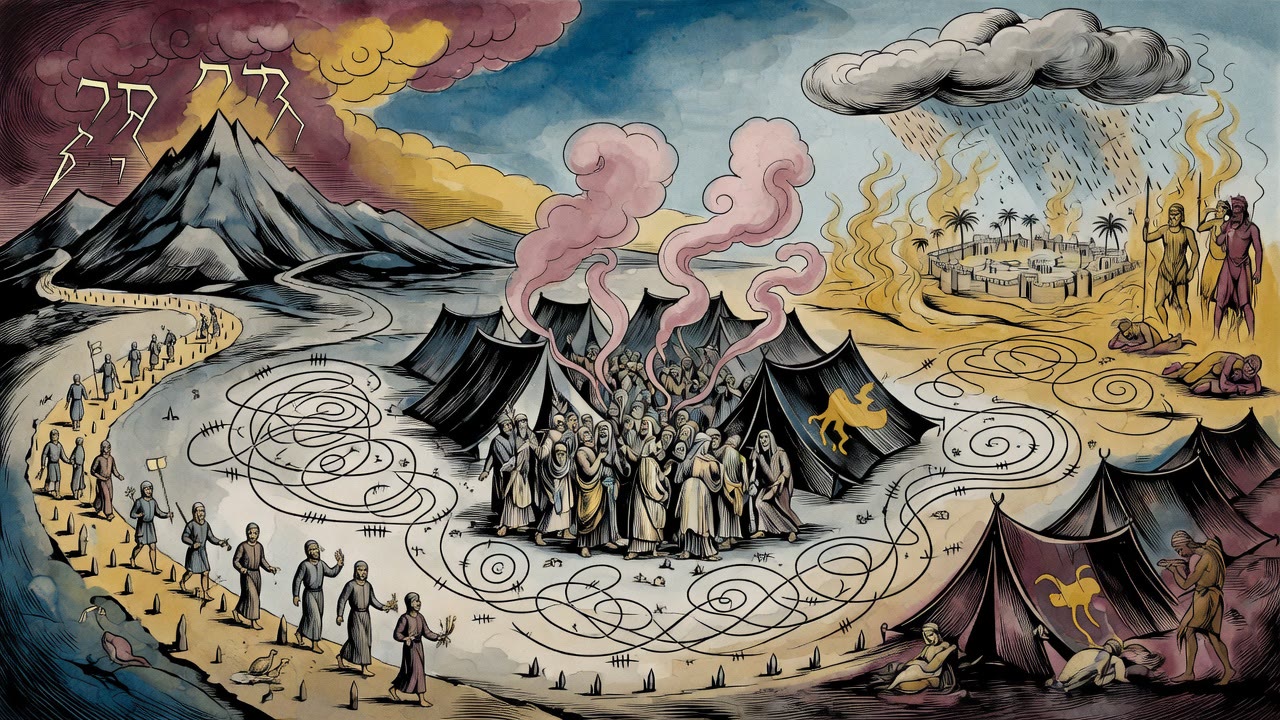
When word reached the south country that Aaron had died, the enemy smelled opportunity. "Their scout is dead," they said, "and the pillar of cloud that fought their wars has lifted. Now is the hour." Rabbi Shimon ben Yochai teaches that the word Atharim means the scouts, the tarim who had once mapped the land. The camp of Israel felt thinner without the High Priest and without the cloud that had gone before them like a weapon.
Dust on the Negev road. A people still burying a brother of Moses. War does not wait for the end of mourning.
Robes and a False Tongue
Who was this "Canaanite" striking from the Negev? Scripture had already placed the Canaanite in the hill country and only Amalek in the south. So this was no Canaanite at all. This was Amalek in disguise.
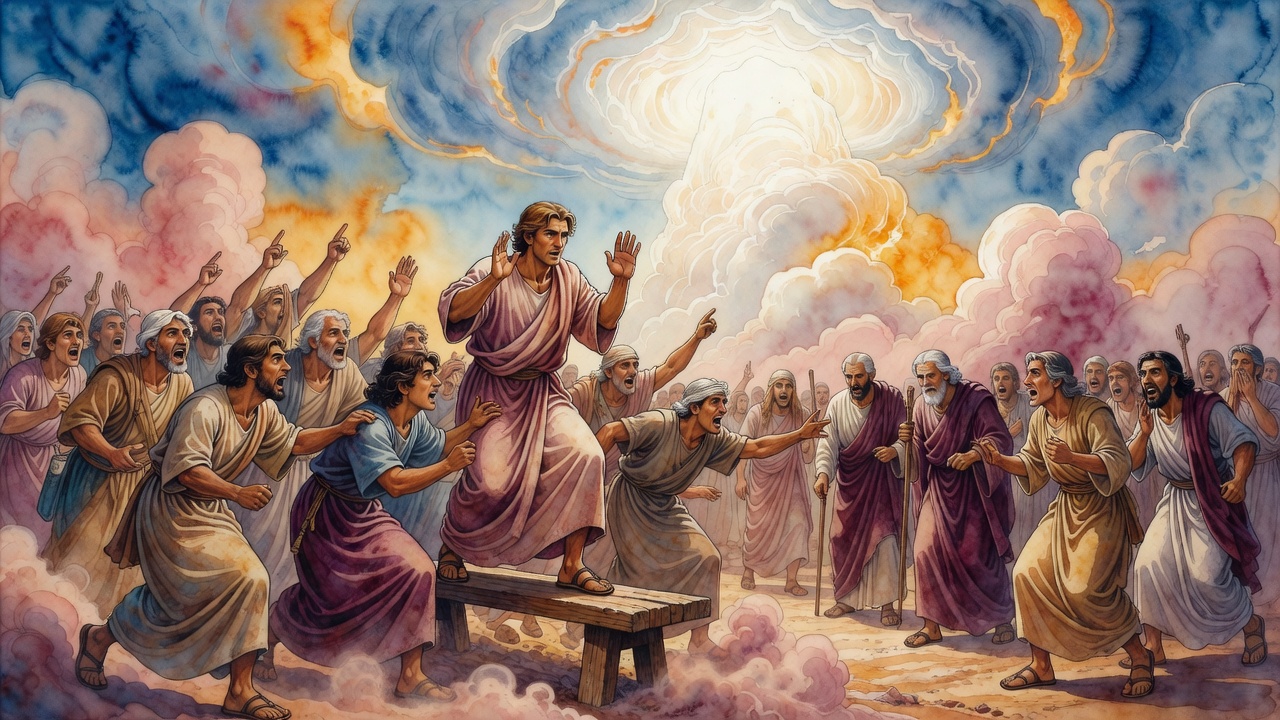
The Amalekites remembered their old defeat: Israel had cried out, and the voice of Jacob had toppled them. So they schemed. They went down into the land of Canaan, learned the Canaanite tongue, and their king, the king of Arad, dressed himself in Canaanite robes. "When they pray for the Canaanites to fall," the Amalekites reasoned, "we, who are truly Amalek, will slaughter them."
Clothes can lie. Language can lie. A prayer aimed at the wrong name can miss a throat that still drinks blood.
A Prayer Without a Name
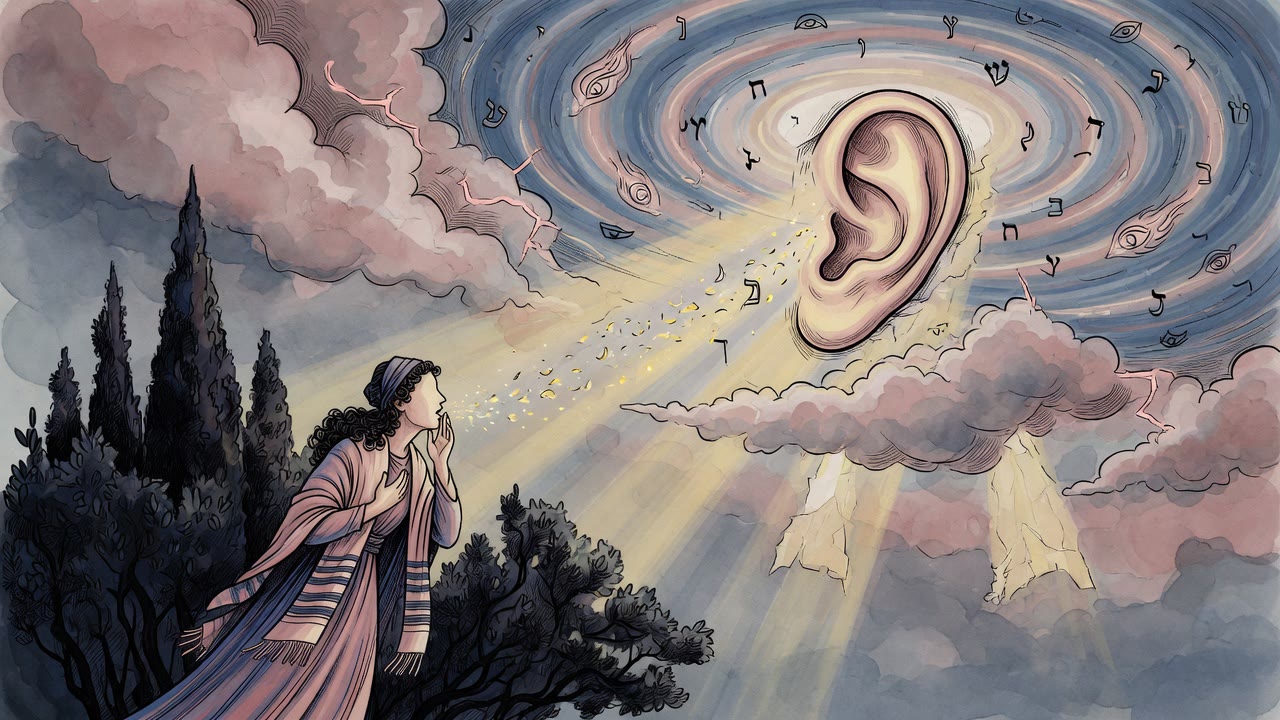
Israel saw the trap. The speech was Canaanite. The garments whispered Amalek. Pray against Amalek, and perhaps these are Canaanites. Pray against Canaan, and perhaps these are Amalek. So Israel prayed without naming the foe at all: "If You will in truth deliver this people into our hand."
And the Lord, who needs no name to know an enemy, hearkened to the voice of Israel and gave them the victory. Heaven does not require a correct ethnic label to recognize a hunter of the weak. The ambiguous prayer was not weakness. It was precision of a different kind: we do not know the costume, but we know the danger. Deliver this people. The "this" was enough.
Bodies fell in the south. The disguise did not save Amalek from a God who reads under robes.
When the Well Fell Silent
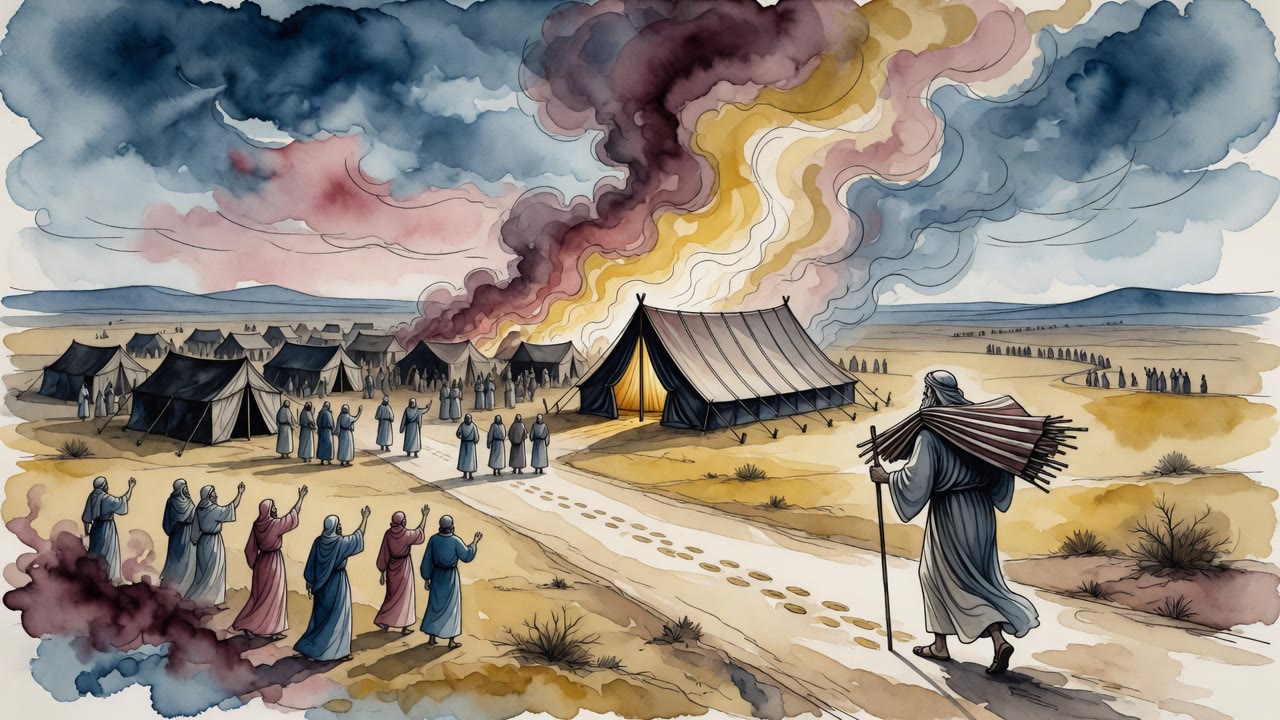
Another loss had already taught the camp how quickly gift can vanish. When Miriam died, her well fell silent. It was then that the Holy One said, "Take the staff and assemble the congregation." When the Torah later sings of the well, "which the nobles of the people dug, with the lawgiver, with their staves," the sages hear names hidden inside the praise.
"The nobles of the people" are Moses and Aaron. "With the lawgiver," that too is Moses, for through his hand the commandments passed. "With their staves," that single rod belonged to both brothers. Lest you doubt it was Aaron's, recall the word at the dawn of the plagues: "Say to Aaron, take your staff," and again, "Stretch out your staff and strike the dust of the earth."
Then the verse turns: "and from the wilderness, Mattanah," a gift. In a land of desert and pit, a place of thirst where there was no water, the Holy One drew water for His people out of the flinty rock. The barren place itself became the site of the gift.
After Leaders Fall
So the wilderness after Aaron's death holds two pressures at once. An enemy changes clothes to dodge a prayer. A people that once drank from Miriam's following well must learn gift again through the staves of Moses and Aaron, even when one of those brothers is already gone. Disguise fails. Thirst yields. The camp that lost its scout and its cloud still has a God who answers "this people" and a rock that remembers how to split.
Amalek counted on a missing name in Israel's mouth. Israel counted on a God who does not need the name. Moses struck, and water came where the map showed only dust. Between a false Canaanite robe and a true staff, the generation learned again that survival after great deaths is not automatic. It is prayed for without flattery and dug for with the tools of the brothers who led them out.
The scouts of Israel were only a memory, and Amalek counted on that thinning. Costume shops of war are older than kingdoms. Change the dialect, change the trim of the robe, and a prayer might land on the wrong head while the right head swings a sword. Israel refused the trap by refusing the false choice. Deliver this people. Point at the threat without flattering its disguise.
Thirst after Miriam had already taught them that gifts can die with the gifted. Moses and Aaron's staff, praised later as the nobles' digging, was not poetry first. It was emergency. Flint, rod, assembly, water. The camp that could be fooled by Canaanite speech could not be fooled by a dry throat. They knew what they needed even when they did not know whom they fought.
After Aaron's death the cloud's military edge lifted and the disguise came. After Miriam's death the well stopped and the staff had to work again. Leadership gaps invite hunters and drought. The answer in both cases was not a perfect label. It was a straight appeal to the God who sees under cloth and a willingness to strike the rock of the moment until gift returns. Victory and water arrived without Israel needing to win a debate about names first.
← All myths