Miriam Spoke in Private and Heaven Alone Heard
Miriam and Aaron spoke of Moses where no human ear could reach. Heaven heard. White skin, seven days outside, and six short words of healing followed.
Table of Contents
 Click for full size
Words No Neighbor Caught
Miriam and Aaron spoke about their brother where no camp gossip could lean in. The tent flap was down. The path outside was empty. Their complaint felt reasonable to them, almost righteous, the kind of concern a sister and brother allow themselves when the family prophet has gone too far into holiness.
"Has the LORD spoken only through Moses?" They meant the separation from his wife. "Has He not spoken also through us? And I did not separate from my husband," Miriam reasoned. "And I too," said Aaron, "did not separate from my wife."
In their eyes Moses had gone too far. Prophecy, they thought, did not demand such a withdrawal. They had heard the voice. They had been used by Heaven. Why should their brother alone live as if marriage itself were a distraction from God? Brother and sister settled the matter between themselves. No human being stood near them. No ear in all the world caught the syllables. The conversation ended the way private conversations do: with a nod, a shared certainty, a sense that love had spoken and justice had been done inside the family.
Then the next words of the Torah land hard: "And the LORD heard."
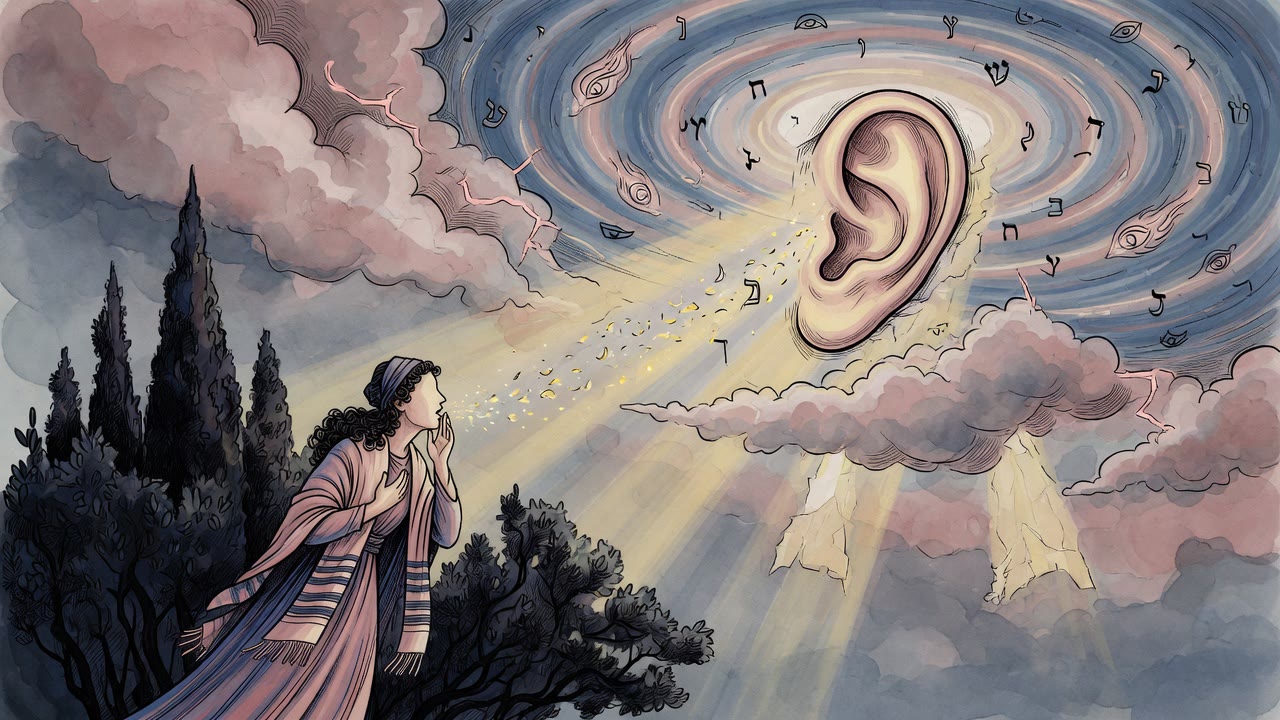
Heaven alone took the private speech and held it. The tongue that wounds a neighbor does not need a public audience. The hearing is already complete. What felt like family counsel registered above as a case file. Miriam walked out of the tent still a prophetess. She did not yet know that her skin would soon preach the sentence her mouth had signed.
White Skin and a Father's Spit
When Miriam was struck with leprosy for speaking against her brother, the change was sudden enough to stop breath. Skin that had been familiar turned white as shame. The camp would see what the tent had hidden. Aaron looked at his sister and saw the cost of a conversation no neighbor had overheard. His own share in the words did not mark him the same way. The visible wound chose her.
The LORD answered Moses with a question that carries the weight of law: "If her father had but spit in her face, should she not be ashamed seven days?"
If a daughter shamed by a mortal father would hide herself for seven days, then how much more one who had offended the Shechinah (the Divine Presence)? The logic of kal va-chomer could have doubled the sentence to fourteen. The rule of dayyo, "it is enough," restrained the inference. The conclusion drawn by argument may not exceed the case it learned from. So seven days, not fourteen: "Let her be shut up seven days, and afterward she shall be brought in again."
Mercy lived inside the restraint of the measure. Strict logic wanted more. The law said enough. Even punishment kept a fence around itself.
Who Shut Her Out
Of the leper Scripture says the priest shall confine him. Aaron was himself a priest, and he was Miriam's brother. He could not pronounce sentence upon his own sister. His hands knew the rites. His heart could not hold the gavel. So the Holy One, blessed be He, shut her up Himself, and Himself appointed the day she would return.
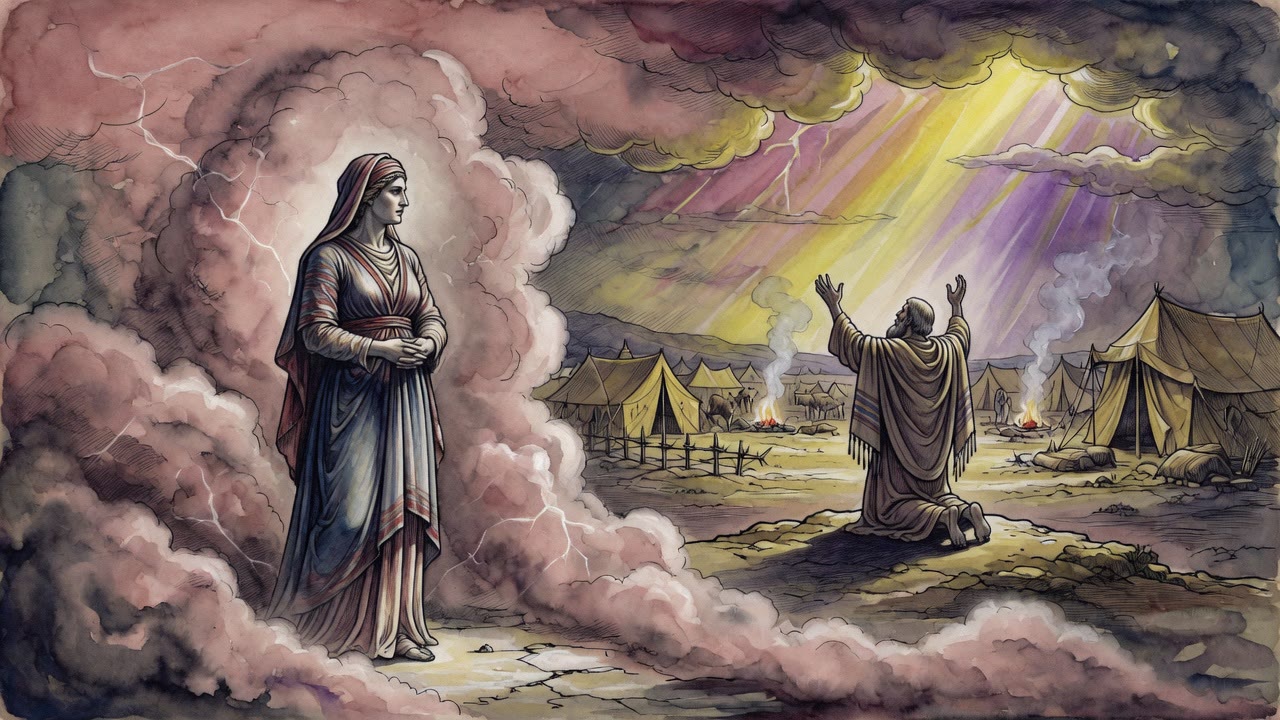
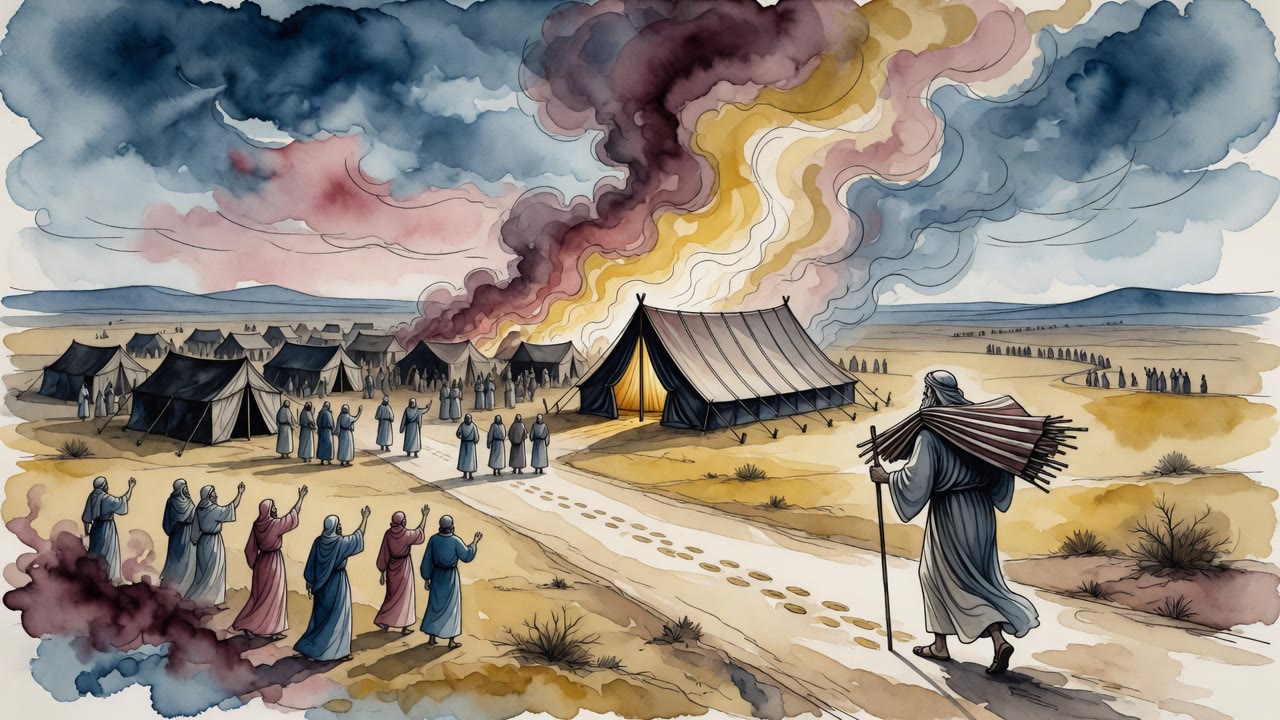
The camp watched a prophetess stand outside the rows of tents with skin that preached what private speech had cost. Aaron had shared the complaint. Miriam carried the visible wound. The silence around her tent-line was thicker than any courtroom. Children were pulled back by their sleeves. Elders lowered their eyes. The woman who had watched over Moses in the reeds now waited outside the camp for a week measured by Heaven's own calendar. Dust, distance, and seven dawns: that was the courtroom she entered without a human judge.
Six Words Only
Moses did not weigh the wound she had dealt him. The slander stung. He knew what sister-love twisted into critique can sound like. In that moment he forgave the insult and turned to plead for her. He cried out only six small words: "Please, God, heal her, please."
Why so brief a prayer from the man who could intercede for a nation? Had he lingered, pouring long entreaties at his sister's side, all Israel would have watched and murmured: see how he labors when it is his own flesh and blood; for her he stretches the prayer, but for us he could not be bothered. The people already lived on his intercession. They would count the minutes of this one and store the count as a grievance.
So Moses measured his words. He would not let devotion to Miriam become a reproach to the people. In five Hebrew words he asked, and was answered. The shortest prayer in the Torah holds a hard love: mercy for one that does not humiliate the many, and a private sin that still found a public hearing in Heaven. When Miriam walked back in after seven days, the camp learned two things at once. Heaven hears the tent. And a brother's brief prayer can still be a full one.
← All myths