6 min read

Moses Five Word Prayer That Silenced Mockers

Students mock a short prayer until a master answers with Moses begging five Hebrew words for Miriam while Amalek waits on the road.

Curated by Arthur · Told by Maggid ·
Table of Contents
  1. Five Words at a Sister's Door
  2. Heavy Hands on a Hill
  3. Two Enemies, One Support
  4. The Spacious Place After
  5. What Shortness Carries

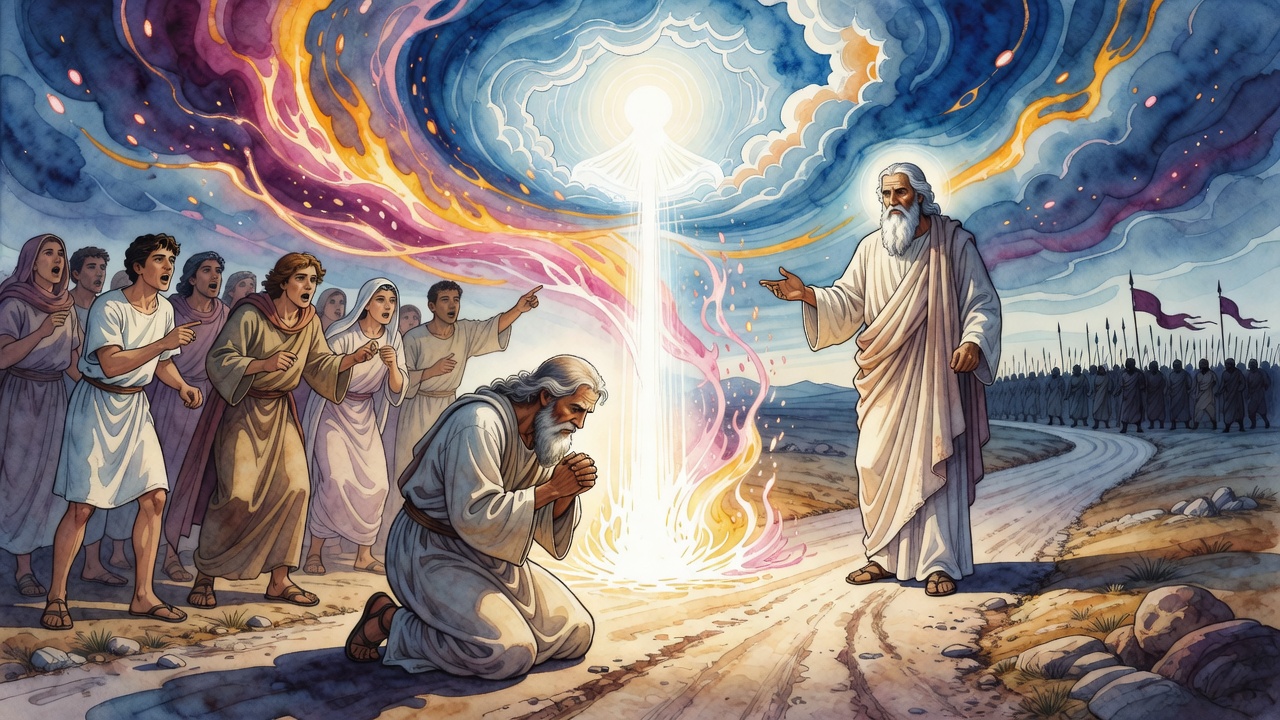
The study hall had already decided he was a fool. A disciple led the blessings in short form, and the other students found a nickname ready-made. They called him the shortening one, as if brevity were a stain.
Moses Five Word Prayer That Silenced Mockers Click for full size

Their master did not laugh. He looked at the mocked man the way a person looks at a tool that still works when fashion has moved on. "He is not shorter than Moses," the master said, and the room changed temperature.

Five Words at a Sister's Door

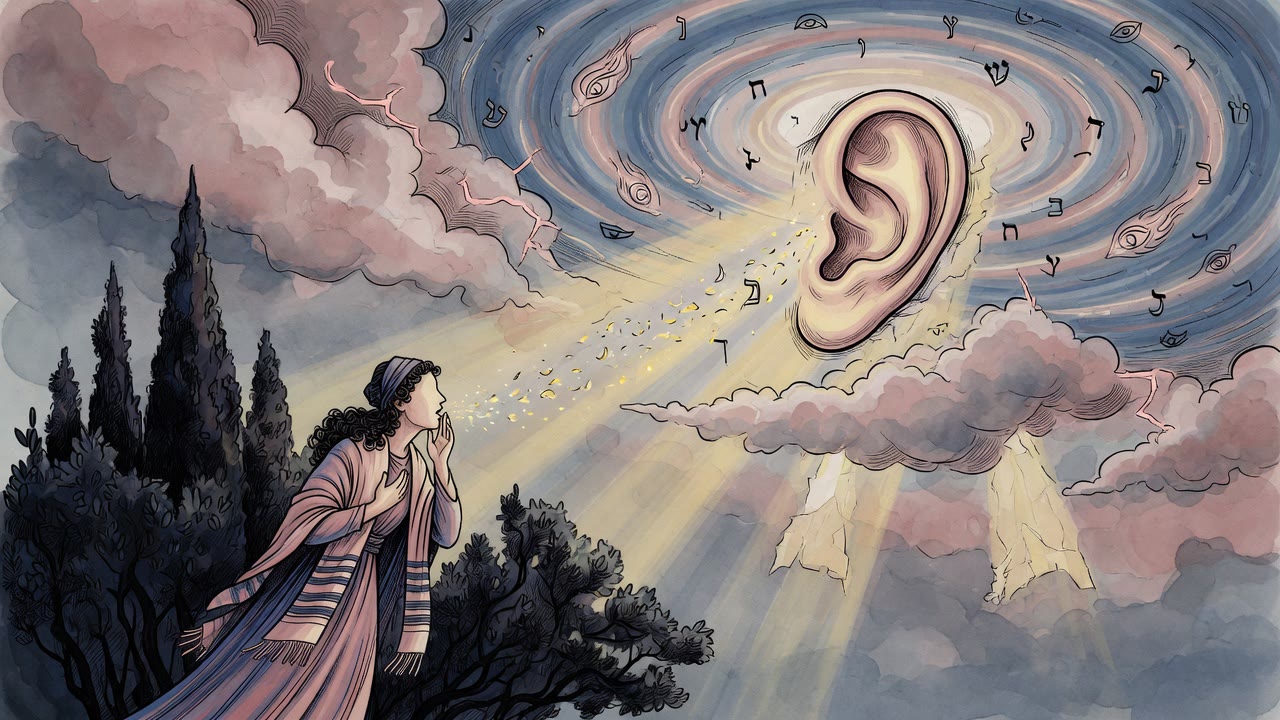
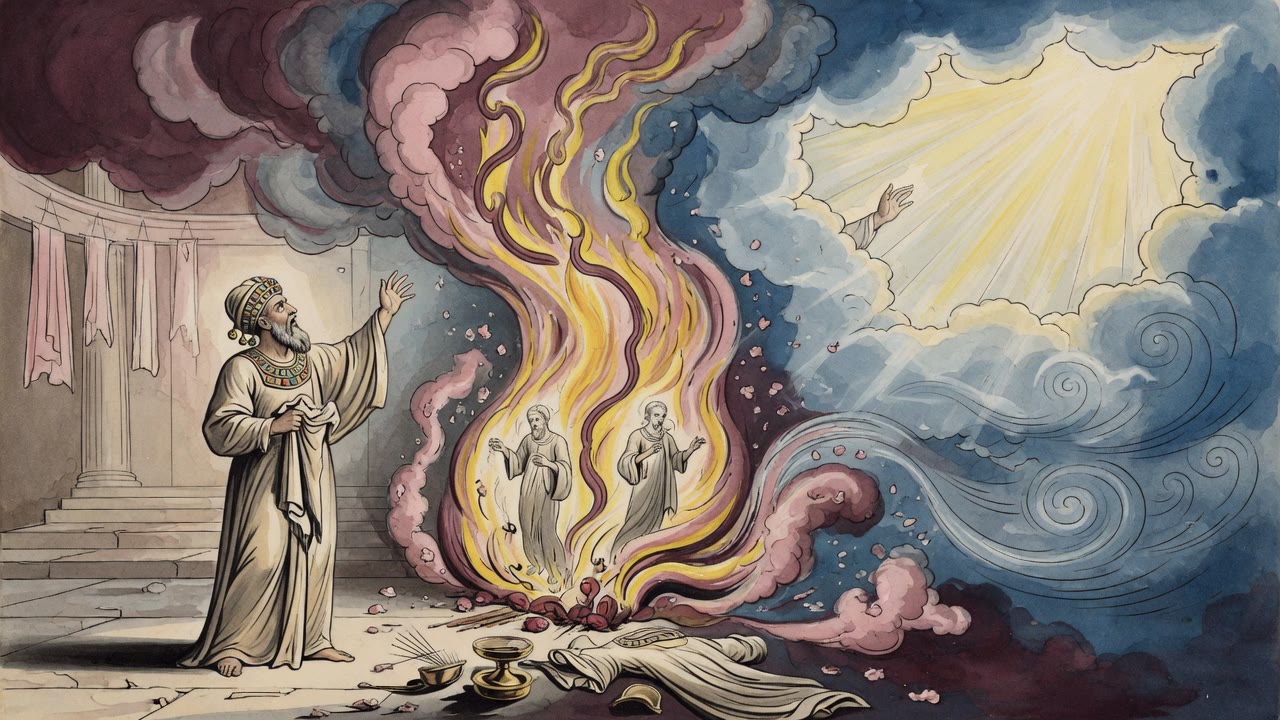
When Miriam was struck with tzaraat, white as winter on living skin, Moses did not assemble a choir. He did not stack petitions like bricks. He spoke five Hebrew words: "El na refa na lah" (Numbers 12:13). God, please, heal her, please.

The man who had argued with heaven for a nation used almost nothing for his sister. The words are urgent and bare. They do not perform. They do not decorate. They ask. The midrash that preserves the scene does not waste time explaining why short prayer is better. It points at Moses and stops. If face-to-face speech with God did not need a parade of syllables, then the short form is not laziness. It is the style of the righteous under pressure.

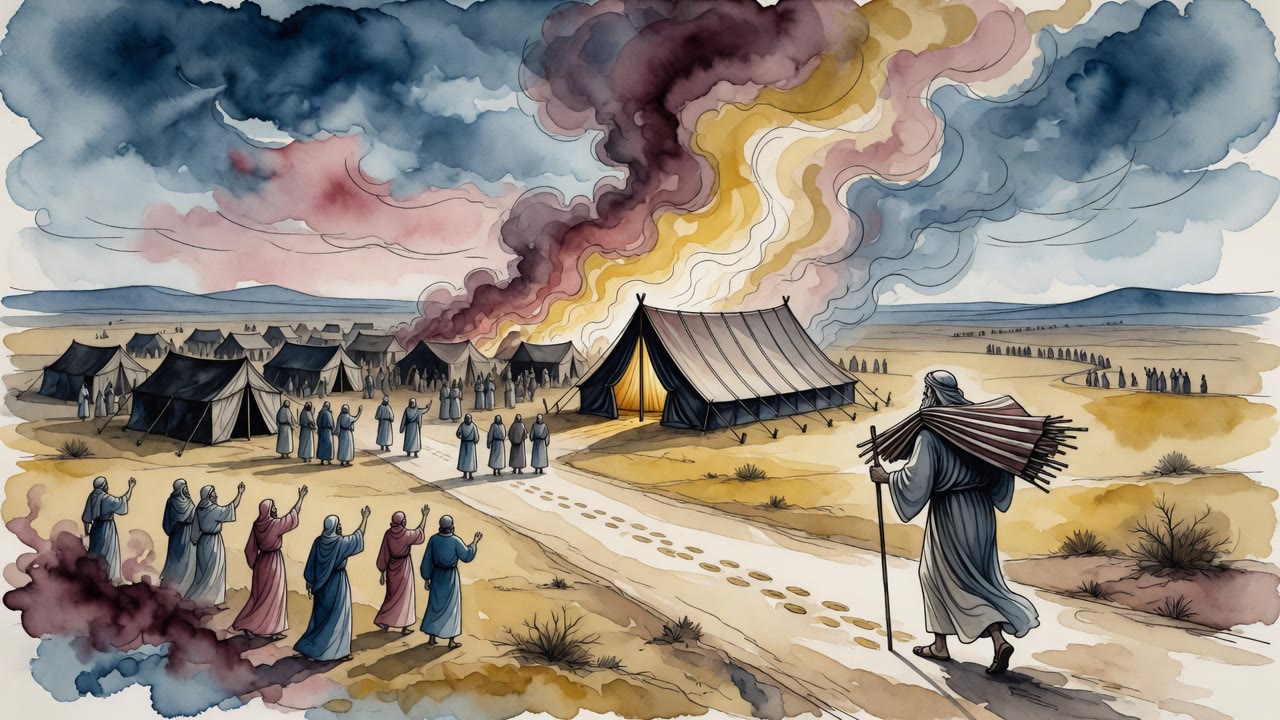
Miriam waited outside the camp. The people waited for her. Moses waited on five words. Heaven answered the short prayer the way it answers anything that is true.

Heavy Hands on a Hill

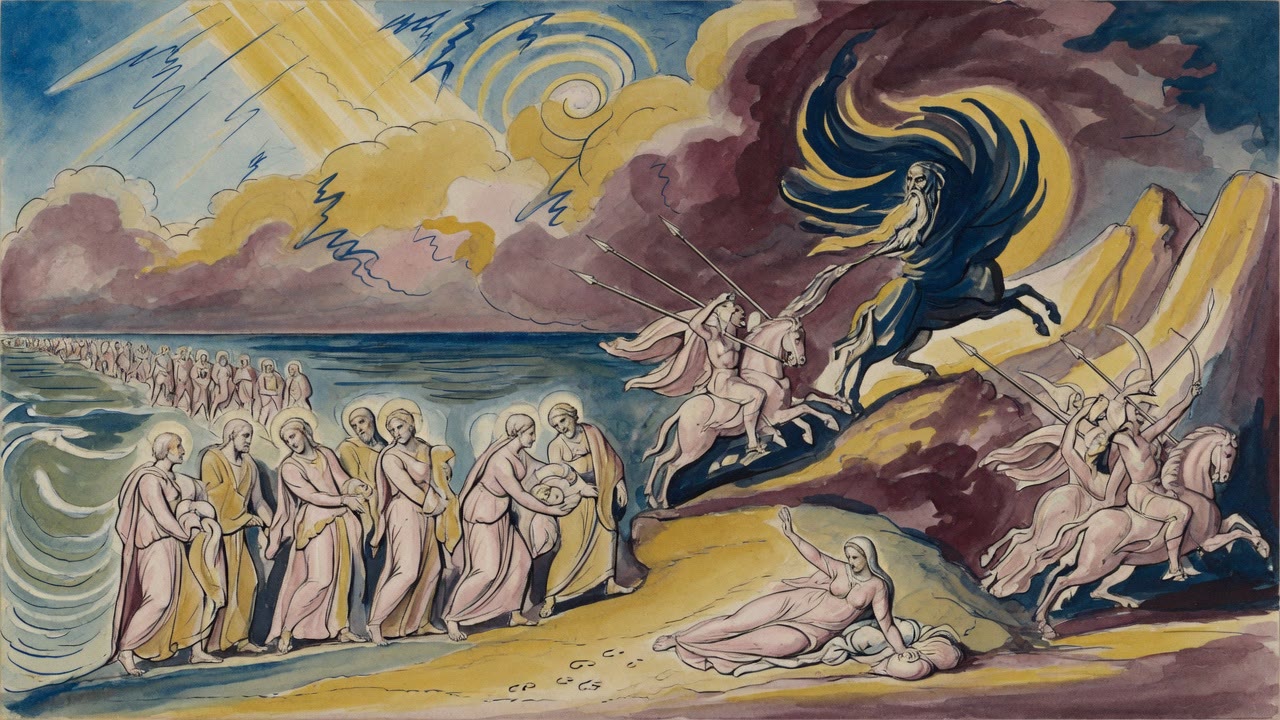
The same body that could pray small could also fail to hold itself up. After the sea, another enemy came that did not ride in chariots. Amalek met Israel on the way and struck the rear, the tired, the stragglers (Deuteronomy 25:18). Pharaoh had been the loud enemy, the one who said he would pursue and overtake (Exodus 15:9). Amalek was the one that arrived on a day of calamity from behind.

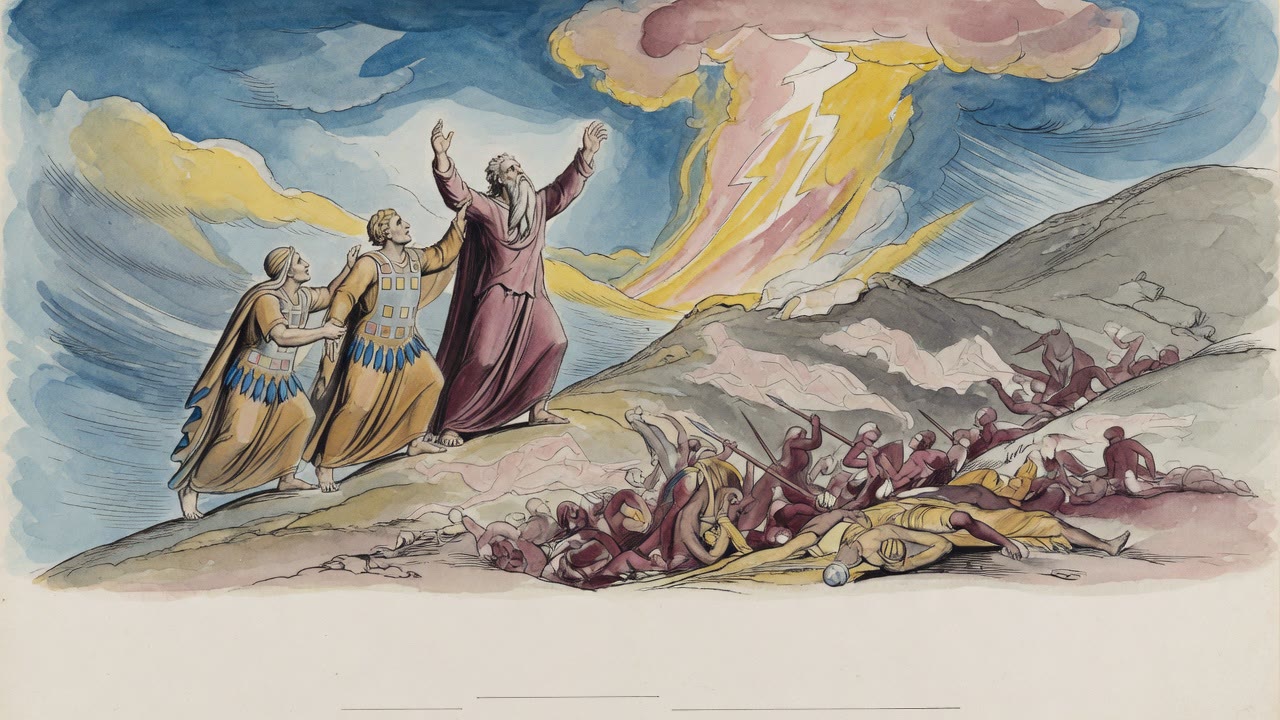
Moses climbed a height and raised his hands. When the hands stayed high, Israel prevailed. When they dropped, Amalek pressed in. "And Moses' hands were heavy" (Exodus 17:12). The verse does not flatter. The prophet's arms shook like any man's. Aaron and Hur set a stone under him and held his hands steady until the sun bent low.

Prayer here was not eloquence. It was endurance. A body kept open toward heaven while other bodies bled below.

Two Enemies, One Support

"Save me from my powerful enemies," a later psalm would cry, and the midrash hears both faces of danger in that line. Pharaoh is strength in front. Amalek is cruelty at the weak point. Against both, the claim is the same: "And the Lord was my support." Support is not a metaphor when Aaron's shoulder is under a brother's elbow.

The students who mocked short prayer had wanted performance. The battlefield and the sick tent wanted presence. Moses could fill a mountain with law and still empty a sentence until only need remained. That is not a contradiction. That is a man who knows when words are tools and when they are noise.

The Spacious Place After

The psalm promises a spacious place, longer than earth and wider than sea. Freedom after Amalek is not only the silence of a routed band. It is room to breathe after fear has been chewing the edges of the camp. Levi's loyalty after the calf would later be remembered as clean hands, clarity that did not join the gold fever. Moses' call at the gate, "Whoever is for the Lord, come to me" (Exodus 32:26), gathered those who had not traded glory for a statue.

In the study hall, after the master's rebuke, no one clapped. The shortening disciple finished the service without adding flourishes to prove a point. The mockers looked at their own mouths as if they had grown too large overnight.

What Shortness Carries

Short prayer is not a trick to win approval. It is what is left when a sister's skin is wrong and a nation's rear is bleeding and the arms that hold heaven open are already shaking. Five words for Miriam. Two brothers holding a third man's hands against gravity. A master refusing to let students confuse length with holiness.

The camp moves on. The study hall returns to arguments. Somewhere a person who needs healing will still be better served by a bare plea than by a speech that impresses the room and never reaches the sick.

Aaron felt the tremor in his brother's arm as if it were his own tendon failing. Hur braced the other side. Below them the rear of the camp still screamed in the thin places where Amalek liked to hunt. A mother counted children and came up short by one name, then found the child under a cart and wept without dignity. Moses did not look down long. Looking down made the hands drop. Looking up made the shoulders burn. Between burn and drop lay the whole war.

In the study hall years later, the shortening disciple would remember that story when someone sneered at a brief Amidah (the central standing prayer of the daily service). He would not sneer back. He would think of five words over white skin and of two men holding a third man upright against the weight of an afternoon. Brevity, he would learn, is sometimes the only form honesty can take when the mouth is full of fear.

Pharaoh had wanted Israel back in a net of brick. Amalek wanted Israel thinned until the promise looked ridiculous. Short prayer and held hands answered both without needing a speech long enough to impress a court. The spacious place arrived as quiet: no chariot rattle, no rear-guard cry, only the sound of people walking forward with water still far away and trust a little less broken than the day before.


← All myths

From the tradition

Sources

2 sources

The texts behind this telling. Some cards carry a translation of the source; others are our own retelling of it, and each card says which. Every card links out to the original.

Mekhilta Tractate Vayassa 1:14Mekhilta DeRabbi Yishmael

Retold in our words. Read the original at the link below.Mechilta, translated by Rabbi Shraga Silverstein · CC-BY

The Mekhilta takes a detour from the Exodus narrative to establish a principle about prayer: the prayers of the righteous are short. Not flowery. Not elaborate. Short.

The proof comes from a story. A certain disciple once led the prayer service before his master and recited the blessings in abbreviated form. The other students mocked him, calling him "the shortening disciple", a nickname that treated brevity as incompetence. Surely a proper prayer leader should be expansive, eloquent, thorough in his blessings.

The master shut them down with a single example: "He is not shorter than Moses." When Moses' sister Miriam was struck with tzaraat (a skin affliction), Moses prayed for her healing with just five Hebrew words (Numbers 12:13): "El na refa na lah", "God, I pray You, heal her, I pray You." Five words. The greatest prophet in Israel's history, interceding for his own sister's life, and he used five words.

The midrash (rabbinic interpretive commentary) makes no attempt to explain why short prayers are preferable. It simply establishes the precedent through Moses' example and lets the implication speak for itself. If the man who spoke face-to-face with God saw no need for lengthy supplication, then brevity in prayer is not laziness or disrespect. It is the style of the righteous, direct, urgent, and stripped of everything unnecessary. The "shortening disciple" was not failing at prayer. He was following the example of the greatest prophet who ever lived.

Full source
Midrash Tehillim 18:19Midrash Tehillim

Retold in our words. Read the original at the link below.Rabbi Mike Feuer, Jerusalem Anthology · CC-BY

It's one the ancient rabbis explored deeply through their interpretations of the Book of Psalms, or Tehillim. to a fascinating passage from Midrash Tehillim, specifically on Psalm 18, where we find layers of meaning about enemies, divine support, and the power of righteousness.

"Save me from my powerful enemies," the psalm cries out. Rabbi Simon, in the Midrash (rabbinic interpretive commentary), interprets this on the "third day" – perhaps alluding to the third day of creation, or another significant "third day" in Jewish history. But who are these enemies? Well, the most obvious one, according to Rabbi Simon, is Pharaoh. The verse "The enemy said" (Exodus 15:9) is brought as evidence. Pharaoh, with all his might, represents the immediate, oppressive enemy.

The Midrash doesn't stop there. It layers on another, more insidious enemy: Amalek. "They will precede me on my day of calamity," the psalm continues, and this is linked to Amalek, "who met you on the way" (Deuteronomy 25:18). Amalek represents the enemy that attacks from behind, the one that preys on weakness and vulnerability, a constant threat on our journey.

So, how do we face such overwhelming opposition? The psalm offers an answer: "And the Lord was my support." The Midrash connects this to the story of Moses holding up his hands during the battle with Amalek, "And Moses' hands were heavy" (Exodus 17:12). God's support, like the support Aaron and Hur provided to Moses, is crucial in overcoming adversity.

And what's the reward for remaining steadfast? "He brought me out to a spacious place," the psalm proclaims, which is then expanded upon with a quote from Job (11:9), "Its measure is longer than the earth and wider than the sea." This "spacious place" isn’t just physical; it’s a state of being, a sense of liberation and possibility that comes from overcoming challenges with divine assistance. Freedom, in other words.

Now, here's where it gets really interesting. "He will rescue me because He delights in me, and He will repay me according to my righteousness." The Midrash connects this to the tribe of Levi, specifically, who were not involved in the sin of the Golden Calf. "And what is the strength of my hands that I should return to it?" is interpreted by Rabbi Pinchas as evidence of the "clarity of my hands," meaning purity and innocence. They remained loyal to God, even when others faltered.

Rabbi Berechiah, quoting Rabbi Shimon ben Lakish, explains Moses' call at the gate of the camp ("Whoever is for the Lord, come to me!") not as the King needing servants nearby, but as an invitation: "whoever did not contribute to the calf should come to me." And who answered the call? "And all the Levites gathered to him" (Exodus 32:26).

This act of devotion, this unwavering commitment to God, is what earns them favor. "For all his judgments are before me," the Midrash continues, referencing Deuteronomy (33:10), "and they teach your judgments to Jacob." The Levites, through their righteousness, become teachers and guides for the entire community. "And I will be complete with Him, and He will be my light and support for the righteous."

So, what does all this mean for us today? But by staying true to our values, by seeking divine support, and by striving for righteousness, we too can find our way to that "spacious place," that state of freedom and fulfillment. The story of the Levites reminds us that sometimes, choosing the harder, more righteous path, even when others are faltering, is precisely what allows us to become beacons of light for others. Isn't that a beautiful and inspiring thought?

Full source