Why Aaron and Chur Stood at Moses' Sides at Rephidim
At the Golden Calf the Levites would come forward with swords. Judah's banner would lead every march. Neither had happened yet when Moses' arms went up.
Table of Contents
 Click for full size
The Arms That Could Not Stay Raised
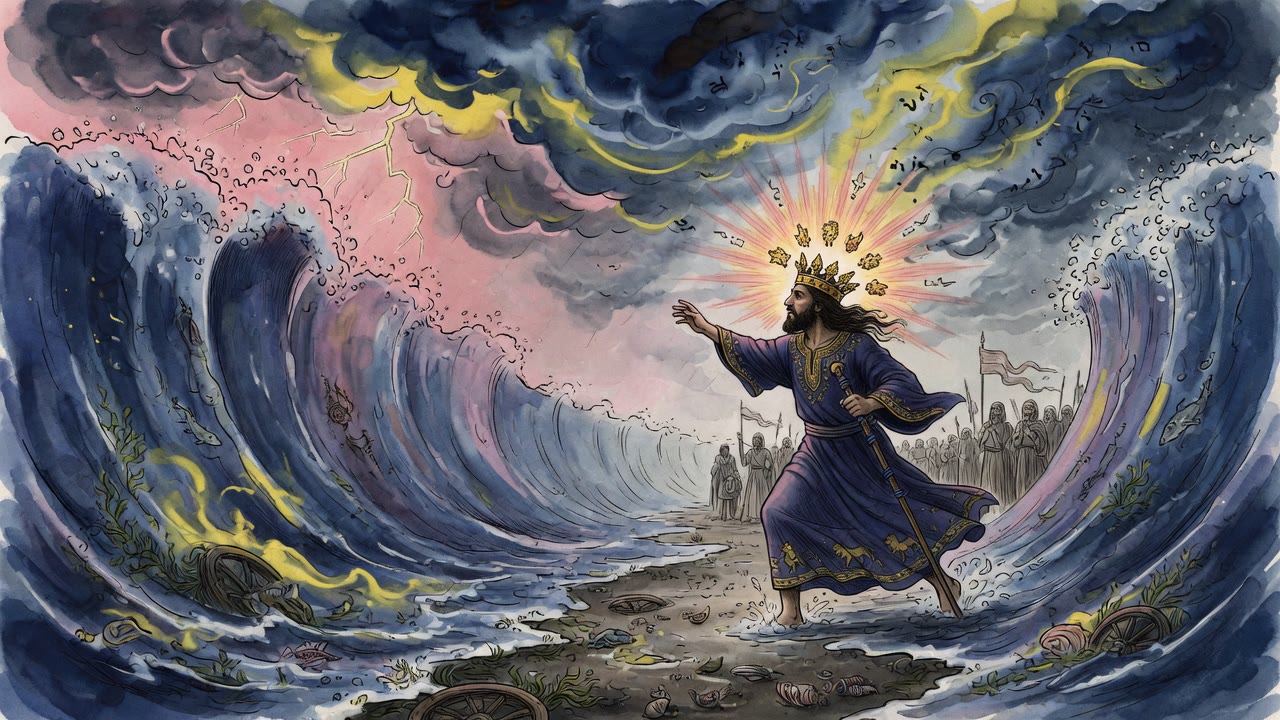
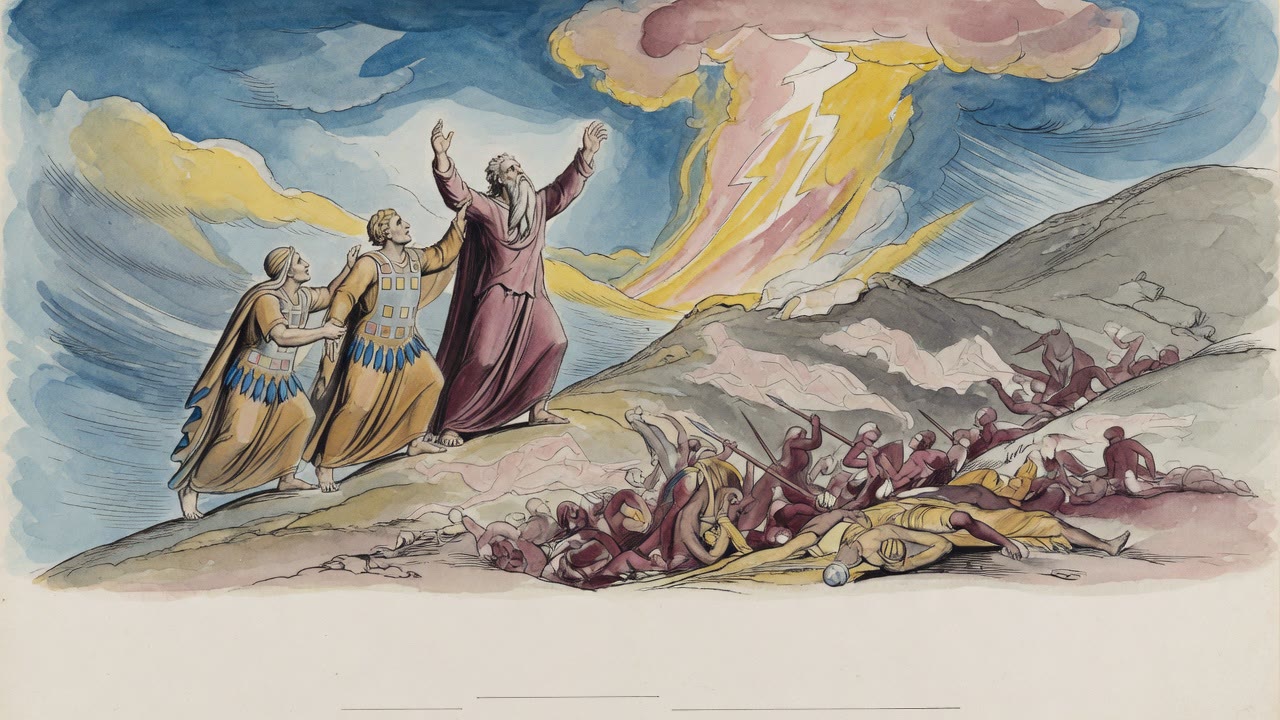
Moses stood on the hill above Rephidim with his arms lifted toward heaven while Joshua commanded the army below. When his arms were raised, Israel prevailed. When they fell, Amalek gained ground. The Torah makes the mechanism explicit and leaves the solution practical: find someone to hold the arms up. Aaron took one side, Chur took the other, and the battle was won.
The Mekhilta DeRabbi Yishmael refused to read this as a practical solution to a physical problem. Nothing in the divine arrangement of Rephidim was accidental. The placement of Aaron on one side and Chur on the other was not determined by who was standing nearby. It was a reward paid in advance to two tribes for what their descendants had not yet done.
What Levi Had Not Yet Done
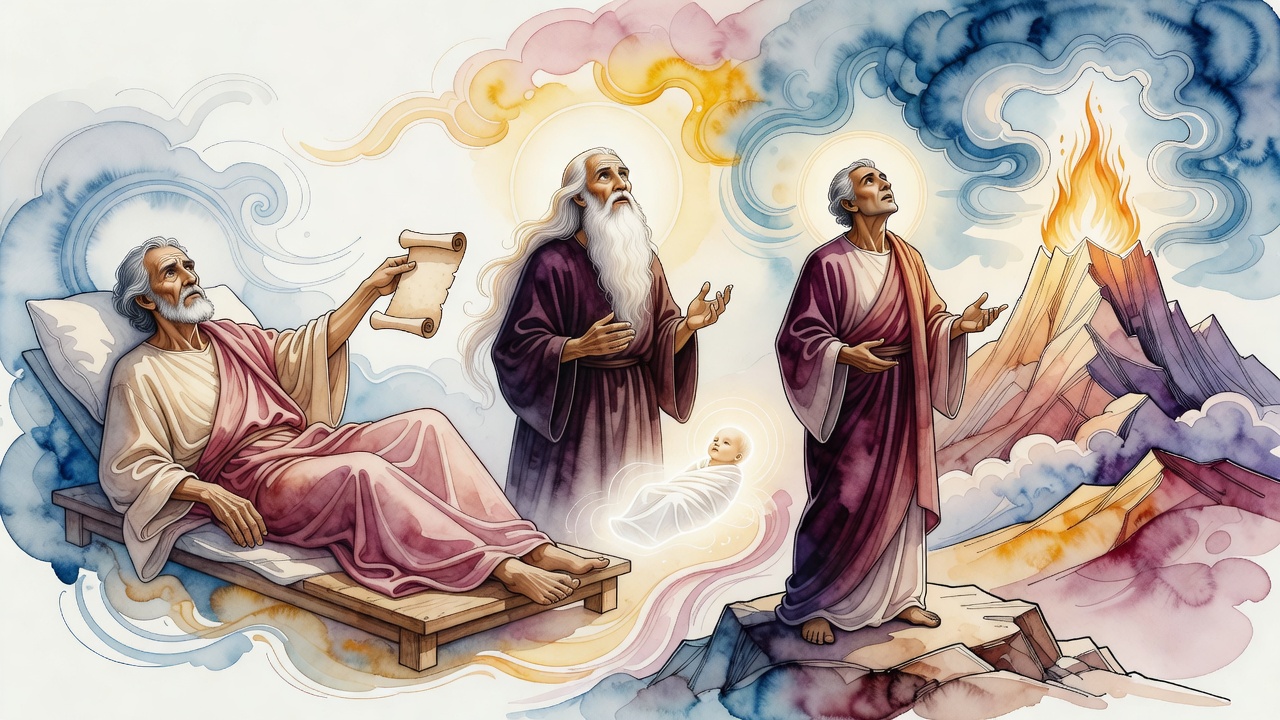
Aaron stood on Moses' right side because Aaron was a Levite, and the tribe of Levi had been assigned the position of honor on the basis of what would happen at the Golden Calf. After the catastrophe with the calf, when Moses stood at the gate of the camp and called for whoever was on God's side, it was the Levites who answered, every one of them. They came forward when the rest of the nation stood paralyzed between regret and fear. And then they carried out what was demanded of them, moving through the camp with swords, willing to pass judgment even on their own kin for the sake of the covenant.
At Rephidim, that moment was in the future. The Golden Calf had not yet been made. But the divine structure of the battle was already honoring the choice the Levites would make. Aaron held Moses' arm because his tribe had already been credited, in the eternal accounting, with a loyalty they had not yet demonstrated.
What Judah Had Not Yet Done
Chur stood on Moses' left side because Chur, by the tradition, was a prince of the tribe of Judah, and Judah had been designated for a different honor: the tribe that would lead the camp in march and in battle throughout the wilderness years. Numbers 10:14 records that the banner of the camp of Judah set out first. In every movement of the Israelite nation, Judah went at the front.
But more than march order, Judah's honor at Rephidim anticipated the kingship. The Davidic line would come from Judah. The messianic future, the Mekhilta's chain of reasoning implies, was already shaping the battle arrangements at Rephidim. Chur held Moses' arm not just because Judah led the marches but because Judah would in the end give Israel its kings, and the founding battle of the nation deserved to be framed by that future dignity.
Moses Chose Joshua for the Same Reason
The Mekhilta does not stop with Aaron and Chur. It asks why Moses chose Joshua to command the army at all. There were other capable leaders. Joshua was young. The answer the tradition preserves is that Joshua was of the tribe of Ephraim, a descendant of Joseph. Moses chose him because Ephraim would eventually inherit the bones of Joseph and bring them to burial in the land. The man who would lead the first Israelite army was chosen because his tribe would complete the oldest promise: Joseph's insistence that when God remembered Israel and brought them out of Egypt, they would carry his bones with them.
The battle at Rephidim, on this reading, is held together by anticipation. Every figure in the scene carries the weight of what their descendants will do. Aaron and Chur are not selected for their physical presence. They are selected because their tribes have already earned the right to stand there.
← All myths