Parshat Metzora5 min read

Miriam Whitened Outside the Camp for Seven Days

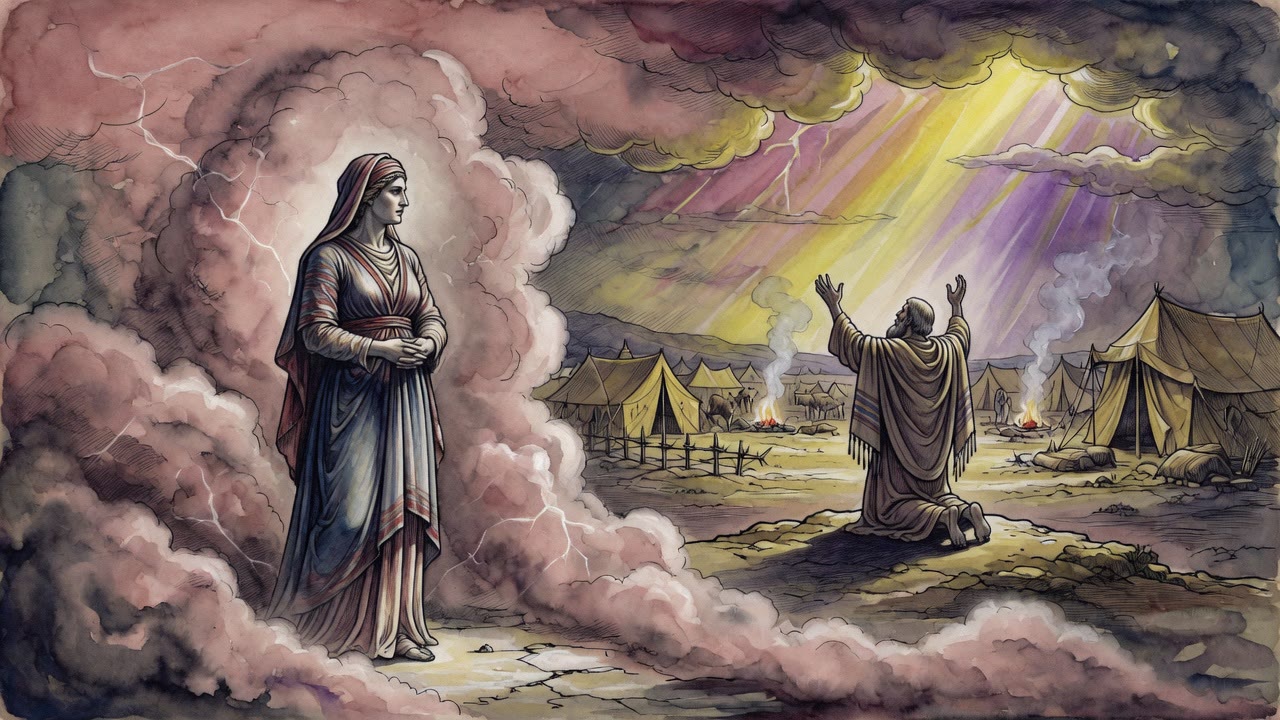
Miriam noticed her brother had withdrawn from his wife and said so quietly, never to his face. Aaron was healed at once. The cloud did not move for a week.

Curated by Arthur · Told by Maggid ·
Table of Contents
  1. A Private Word About a Brother
  2. From Light to Heavy
  3. Doeg and the Arrow That Flies
  4. Eleven Doorways to One Disease
  5. Seven Days Outside
Miriam Whitened Outside the Camp for Seven Days Click for full size

A Private Word About a Brother

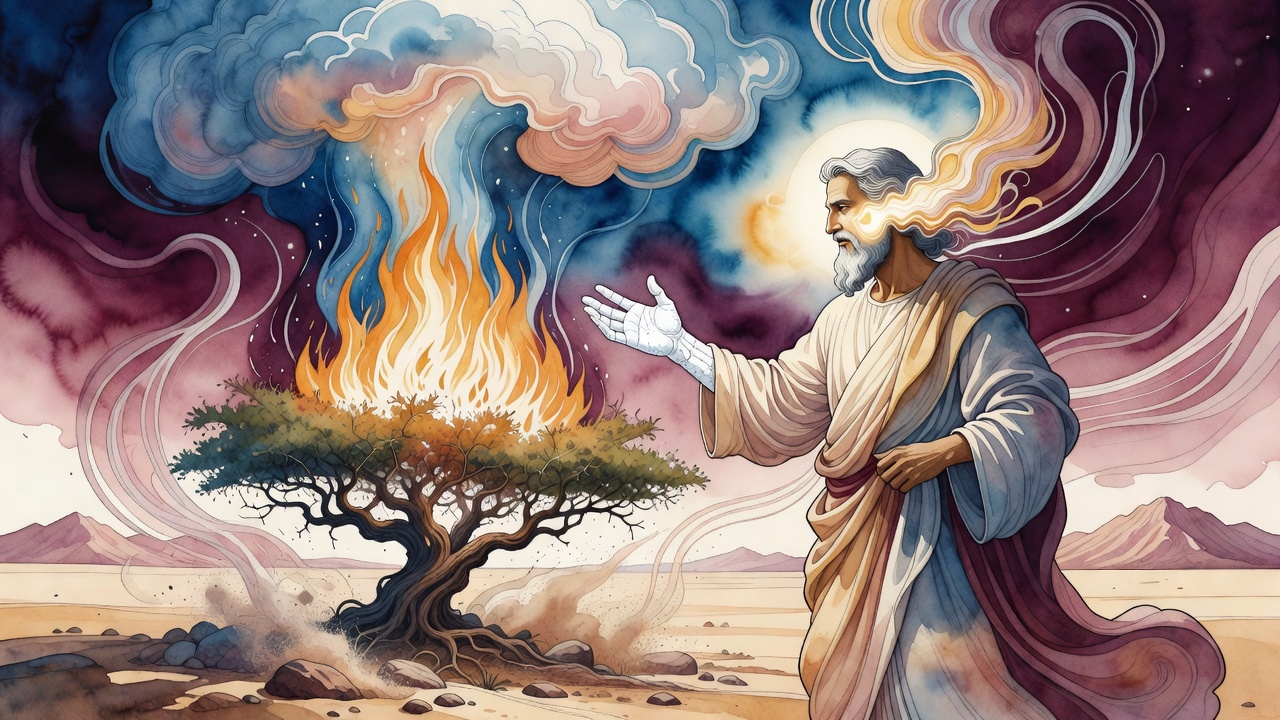
Miriam spoke against Moses, gently, privately, out of love. She had noticed that her brother withdrew from his wife, and she meant only to draw him back. The words never reached his face. They still reached Heaven. The three of them stood when the Presence arrived without warning. Caught unprepared, they needed water for immersion that very moment. "See," He said, "even you require purification before you can stand before Me, and yet I am speaking with you." In that instant Miriam was struck white as snow.

Aaron felt the anger too, for the verse says it burned "against them." Aaron was healed at once. Miriam was shut outside the camp seven days. The secret of the word metzora is laid bare: motzi ra, the one who brings forth evil, becomes the one who finds evil upon his own flesh. Love had not canceled the speech. Privacy had not canceled the speech. The prophetess who once watched a basket on the Nile now watched her own skin change color under a cloud that would not move until she returned.

She did not argue her intention. Intention had already been heard and weighed. Outside the ropes of the camp the white skin taught louder than any sermon on speech.

From Light to Heavy

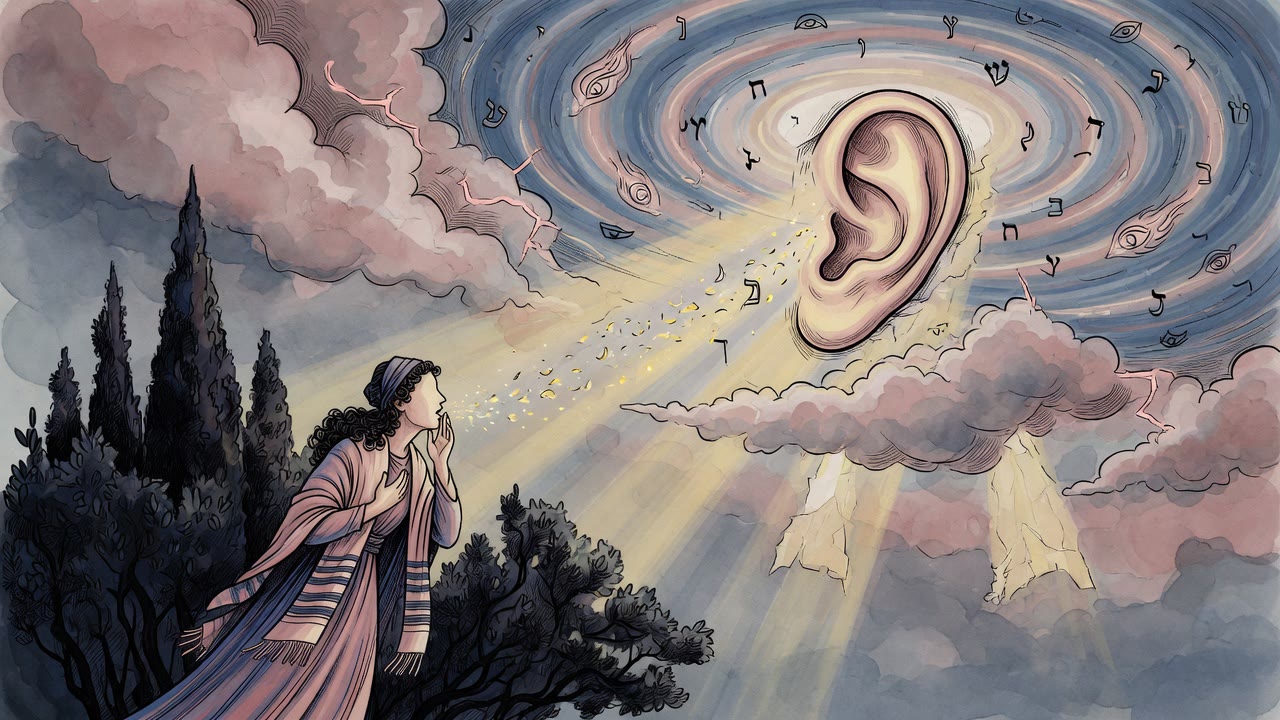
If Miriam, who spoke only of a beloved brother, not to his face, intending only his good, was punished so severely, how much heavier the judgment upon one who slanders a neighbor out of malice? The law of the leper opens onto Miriam because leprosy is the wage of the slanderous tongue, and she is the witness who proves it. The body turns white so the camp can see what the mouth has done. No court needed to convene. The skin convened first.

Solomon taught: "Death and life are in the power of the tongue" (Proverbs 18:21). Wield it for Torah and you grasp the tree of life. Wield it for slander and your own soul is forfeit. The murderer takes one life. The slanderer takes three: the one who speaks, the one who listens, and the one whose name is poisoned. Miriam's case is the light end of the scale. The heavy end waits for mouths that mean harm.

Doeg and the Arrow That Flies

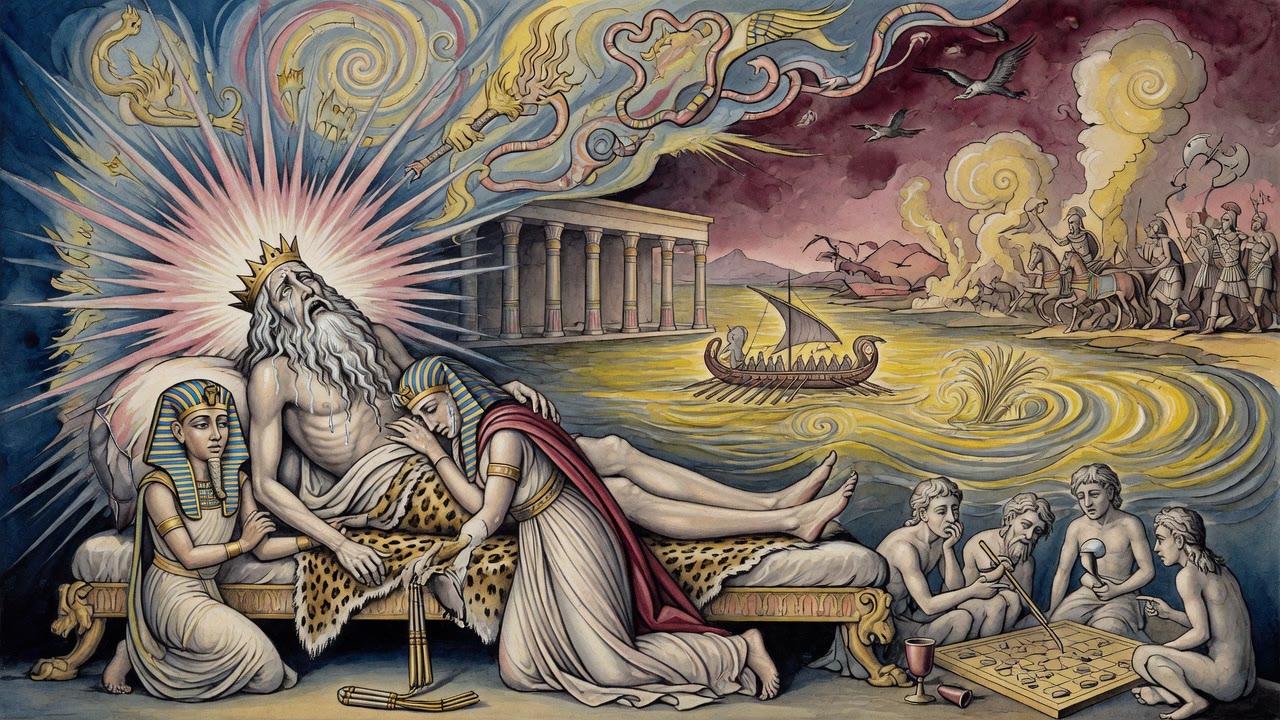
So it was with Doeg, who whispered against Ahimelech the priest. Ahimelech fell beneath Saul's decree: "You shall surely die." Saul himself was struck down for the slaughter at Nob, the city of priests. As for Doeg, God uprooted him from this world and the next. Three deaths from one whisper: speaker, listener, victim. The arithmetic is older than any later manual on speech.

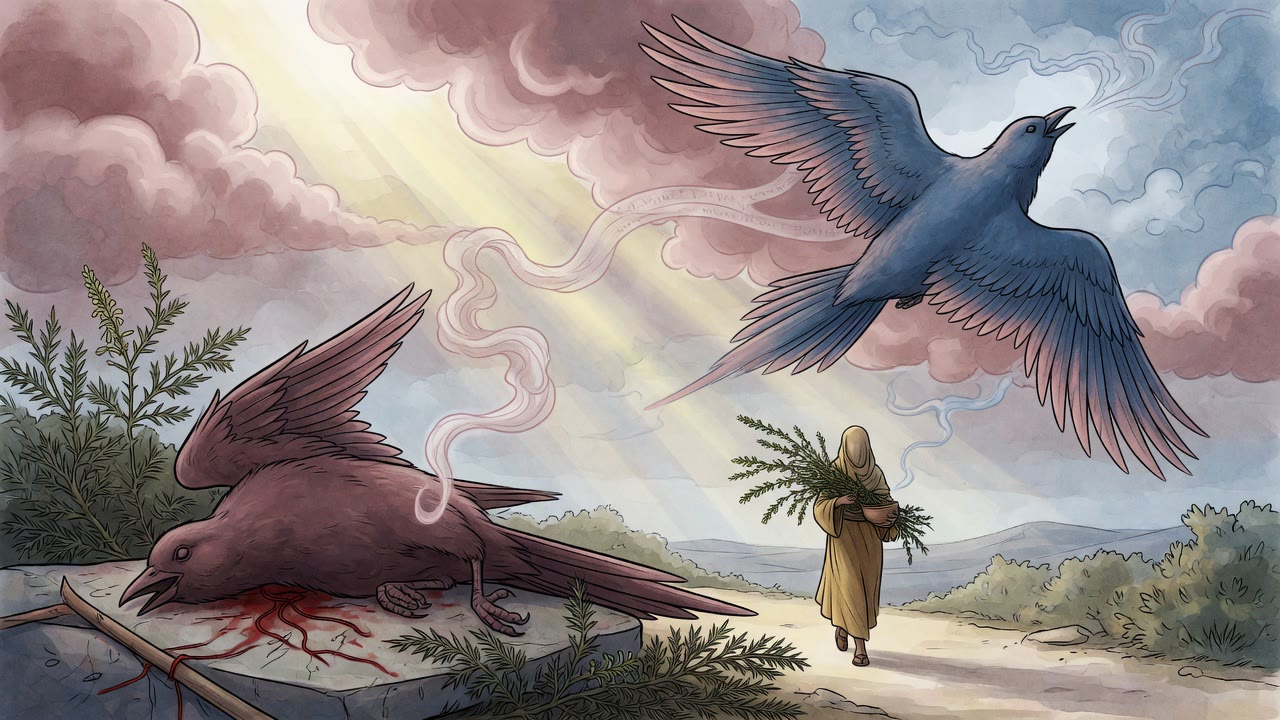
Why is the tongue worse than the sword? The swordsman must come close. The archer strikes from afar, wherever his eye can reach. Slander flies like an arrow. Of incest, bloodshed, and idolatry Scripture says "a great sin." Of the evil tongue it says "great things," plural, without measure. Miriam's snow-white skin is the arrow that turned back on the archer. Doeg's end is the same law without mercy's seven-day pause.

Eleven Doorways to One Disease

Tzara'at is no random blemish. It is a verdict. Idolatry first: when Israel built the calf, Moses saw them "broken loose," parua, the very word used for the leper whose head is let loose. Goliath blasphemed the Name and was promised he would be "shut up," the priest's word for the quarantined leper. The thief and the false-swearer earn the plague that consumes timbers and stones. Slander writes Miriam white. The corrupt judge withers. Uzziah seized the priest's incense altar and leprosy flared on his forehead. Pharaoh, who tore Sarah from Abraham, was plagued for strife. Eleven doorways. One disease. The body's white scale is the soul's hidden ledger made visible on cloth, wall, and flesh.

Miriam's door was the door of the tongue. She did not need all eleven. One was enough to teach the camp forever.

Seven Days Outside

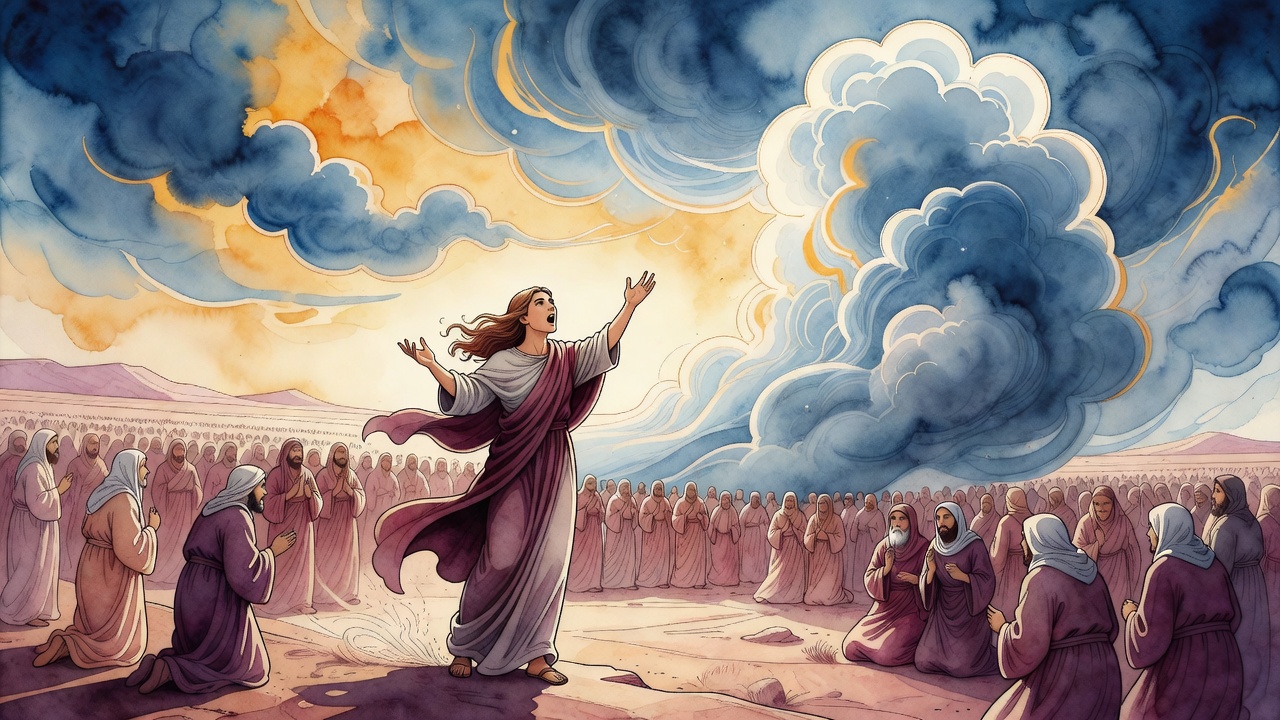
Miriam waited outside the camp while Israel did not travel. Children asked why the cloud held still. Elders knew. The woman who had led song at the sea now stood apart so that song and speech would never be confused. When she returned, the law of the leper had a human face, and the face was a sister's. Moses had cried out for her healing. The people had waited. The seven days taught what a private word costs when it targets the one who speaks with God's face to face.

She came back in, and the camp moved again. The white had done its work. The tongue would be watched in Israel with a fear that began, for many, with a prophetess standing outside the tents she loved.


← All myths
From the tradition

Sources

3 sources

The texts behind this telling. Some cards carry a translation of the source; others are our own retelling of it, and each card says which. Every card links out to the original.

Midrash Tanchuma Buber, Metzora 6:1Midrash Tanchuma Buber, Metzora

Translation of the source text.Midrash Tanchuma (Buber), Public Domain, on Sefaria · CC-BY-SA

[(Leviticus 14:2:) "This shall be the law of the leper." Whoever speaks slander against his fellow, leprosy comes upon him. From where do you learn it? From Miriam.] See what is written concerning Miriam (Numbers 12:1): "And Miriam and Aaron spoke against Moses." Therefore (ibid. 12:10): "And Aaron turned toward Miriam, and behold, [Miriam] was leprous as snow." What is written there (Deuteronomy 24:9)? "Remember what the Lord your God did to Miriam." And what did she speak against Moses? She said: Moses took a wife, and he has ceased from being fruitful and multiplying. What did the Holy One, blessed be He, do to them? He revealed Himself to them, and they required immersion, as it is said (Numbers 12:4): "And the Lord spoke suddenly to Moses and to Aaron and to Miriam." What is "suddenly"? That He revealed Himself to them and they required water suddenly. He said to them: And thus you required water, and yet I am speaking with you. Immediately Miriam was stricken with leprosy, as it is said (ibid. 12:10): "And behold, Miriam was leprous as snow." And are these things not a matter of light-and-heavy (kal vahomer)? For if Miriam, who spoke only concerning her brother, who was beloved to her, not in his presence, and intended only to restore him to his wife, [if she was punished] thus, then the one who speaks slander about his fellow, how much more so! What is written above on the matter (Deuteronomy 24:8)? "Take heed in the plague of leprosy." And even Aaron, who was High Priest, the hand of the Holy One, blessed be He, touched him, as it is said (Numbers 12:9): "And the anger of the Lord was kindled against them", against Aaron and against Miriam. But Aaron was healed immediately, and Miriam after [seven] days, [as it is said] (Numbers 12:15): "And Miriam was shut out [outside the camp] seven days." Thus: "This shall be the law of the leper (metzora)", the one who brings forth evil (motzi ra) is the one who has found evil (motze ra).

Full source
Midrash Tanchuma Buber, Metzora 4:1Midrash Tanchuma Buber, Metzora

Translation of the source text.Midrash Tanchuma (Buber), Public Domain, on Sefaria · CC-BY-SA

[This shall be the law of the leper (Lev. 14:2).] This is what Scripture says (Prov. 18:21): "Death and life are in the power of the tongue." Everything depends on the tongue. If one is worthy, he merits life; if one is not worthy, he is condemned to death. If a person occupies himself with Torah by his tongue, he merits life, for the Torah [is called life, as it is said:] "It is a tree of life to those who hold fast to it" (Prov. 3:18). And it is his remedy against the evil tongue, as it is said: "A healing tongue is a tree of life" (Prov. 15:4). But if he occupies himself with the evil tongue, his soul becomes liable to death, for the evil tongue is more severe than the shedding of blood. For everyone who kills, kills only a single soul, but the one who speaks the evil tongue kills three: the one who says it, the one who receives it, and the one of whom it is said.

Doeg spoke the evil tongue against Ahimelech, and he was killed, [as it is said:] "And [the king] said: You shall surely die, Ahimelech" (I Sam. 22:16). And Saul was killed, [as it is said:] "For the treachery which he committed against the LORD" (I Chron. 10:13). And likewise Saul said: "Stand, I pray you, over me and slay me, for the death-throes (shabatz) have seized me" (II Sam. 1:9), the accusation of Nob, the city of priests. And "shabatz" denotes nothing but the priestly garments, as it is said: "And you shall make settings (mishbetzot) of gold" (Ex. 28:13). And Doeg was uprooted from the life of this world and from all the life of the world to come, as it is said: "God shall likewise tear you down forever; He shall snatch you up and uproot you from your tent, and root you (sheresh) out of the land of the living, Selah" (Ps. 52:7), from the life of the world to come.

Who is more severe, the one who smites with a sword or the one who smites with an arrow? [You must say: the one who smites with an arrow.] The one who smites with a sword cannot kill his fellow unless he draws near to him and touches him; but the one who smites with an arrow is not so, rather he casts the arrow and strikes him in any place where he sees him. Therefore the speaker of the evil tongue is likened to an arrow, as it is said: "Their tongue is a slaughtering arrow, it speaks deceit" (Jer. 9:7). And it says: "The sons of men whose teeth are spears and arrows, [and their tongue a sharp sword]" (Ps. 57:5).

See how severe the evil tongue is, for it is more severe than incest, than the shedding of blood, and than idolatry. Than incest, as it is written: "And how can I do this great evil and sin against God?" (Gen. 39:9). Than the shedding of blood, as it is written: "And Cain said to the LORD: My iniquity is greater than I can bear" (Gen. 4:13). Than idolatry, as it is written: "Alas, this people has sinned a great sin" (Ex. 32:31). But when it mentions the evil tongue, it does not say "great" (masculine) nor "great" (feminine singular), but "great things" (plural), as it is said: "May the LORD cut off all flattering lips, the tongue that speaks great things" (Ps. 12:4). Therefore it is said: "Death and life are in the power of the tongue" (Prov. 18:21).

Full source
Midrash Tanchuma Buber, Metzora 10:2Midrash Tanchuma Buber, Metzora

Translation of the source text.Midrash Tanchuma (Buber), Public Domain, on Sefaria · CC-BY-SA

For idolatry, how do we know it? That at the moment they made the calf, they were stricken with leprosy, as it is said, "And Moses saw the people, that it was broken loose (parua)" (Exodus 32:25); and it is written concerning the leper, "his head shall be let loose (parua)" (Leviticus 13:45).

And for blaspheming the Name, how do we know it? From Goliath, as it is said, "Choose for yourselves a man (ish)" (I Samuel 17:8) - and "man" (ish) is none other than the Holy One, blessed be He, as it is said, "The LORD is a man (ish) of war" (Exodus 15:3); and it is written, "This day He will shut you up (yasgircha)" - and "shutting up" (segirah) is none other than leprosy, as it is said, "And the priest shall shut him up (ve-hisgiro)" (Leviticus 13:5).

And for forbidden relations, as it is written, "And the LORD will smite with a scab (ve-sipach) the crown" (Isaiah 3:17); and it is written, "and for the rising, and for the scab (la-sapachat), and for the bright spot" (Leviticus 14:56).

For thefts and for a false oath, as it is said, "I have brought it forth, says the LORD [of hosts], and it shall enter into the house of the thief and into the house of him who swears falsely by My name; and it shall lodge in the midst of his house and consume it, both its timbers and its stones" (Zechariah 5:4). And what is the thing that consumes timbers and stones? You must say this is leprosy, as it is written, "And he shall break down the house, [its stones and its timbers]" (Leviticus 14:45).

And for slander (lashon ha-ra), from Miriam, [as it is written, "and behold, Miriam was leprous, like snow; and Aaron turned toward Miriam, and behold, she was leprous"] (Numbers 12:10); and it says, "This shall be the law of the leper (ha-metzora)" - the one who brings forth evil (ha-motzi ra).

And for those who give false testimony - for Israel testified concerning the Holy One, blessed be He, and said, "These are your gods, O Israel" (Exodus 32:4), and they were stricken with leprosy, as it is written, "And Moses saw the people, that it was broken loose (parua)" (ibid. ibid. 25).

And for the judge who corrupts judgment, as it is said, "And it shall be, as a tongue of fire devours stubble, and as the chaff sinks down in the flame, their [root] shall be as rottenness, and their [blossom] shall go up as dust; because they have rejected the law of the LORD of hosts, and spurned the word of the Holy One of Israel" (Isaiah 5:24) - and "their blossom" (parcham) is none other than leprosy, as it is said, "If the leprosy breaks out (paroach tifrach)" (Leviticus 13:12).

And for one who enters a domain that is not his, from Uzziah, who entered the domain of the priesthood, as it is said, "and the leprosy broke out (zarcha) on his forehead" (II Chronicles 26:19).

And for one who sows strife between brothers, as it is said, "And the LORD plagued Pharaoh" (Genesis 12:17) - because he took Sarah from Abraham.

Full source