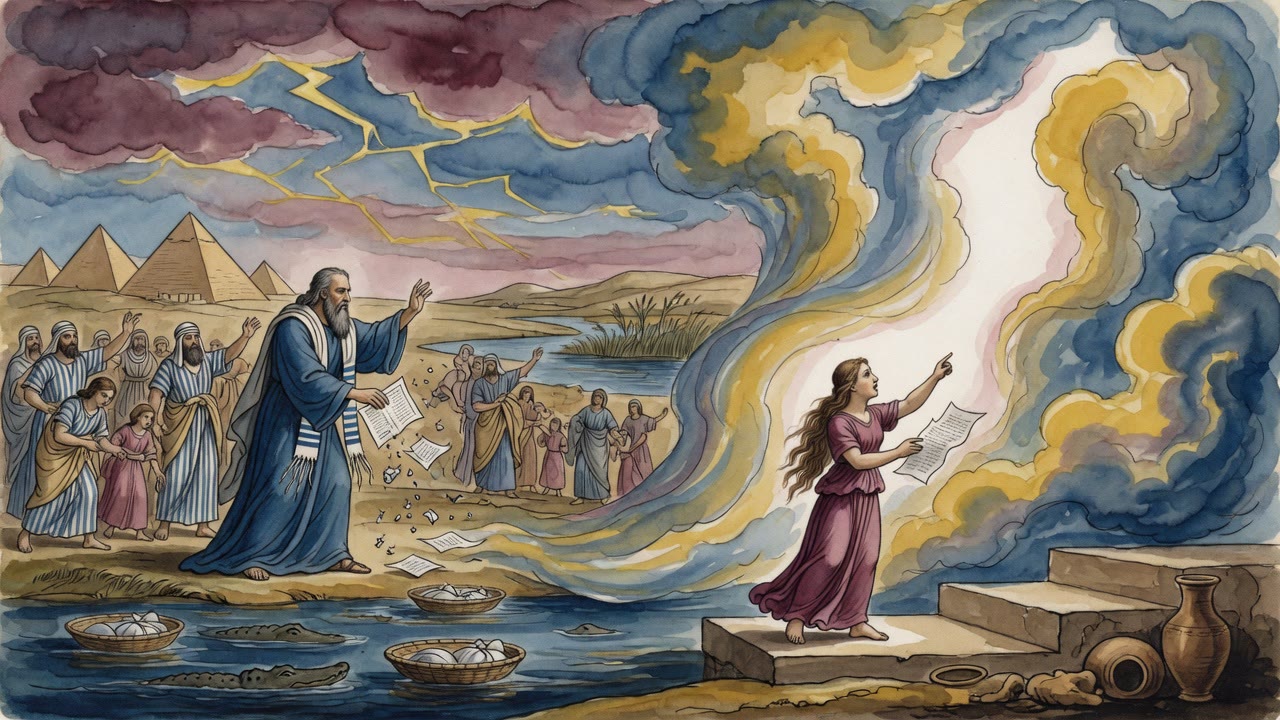
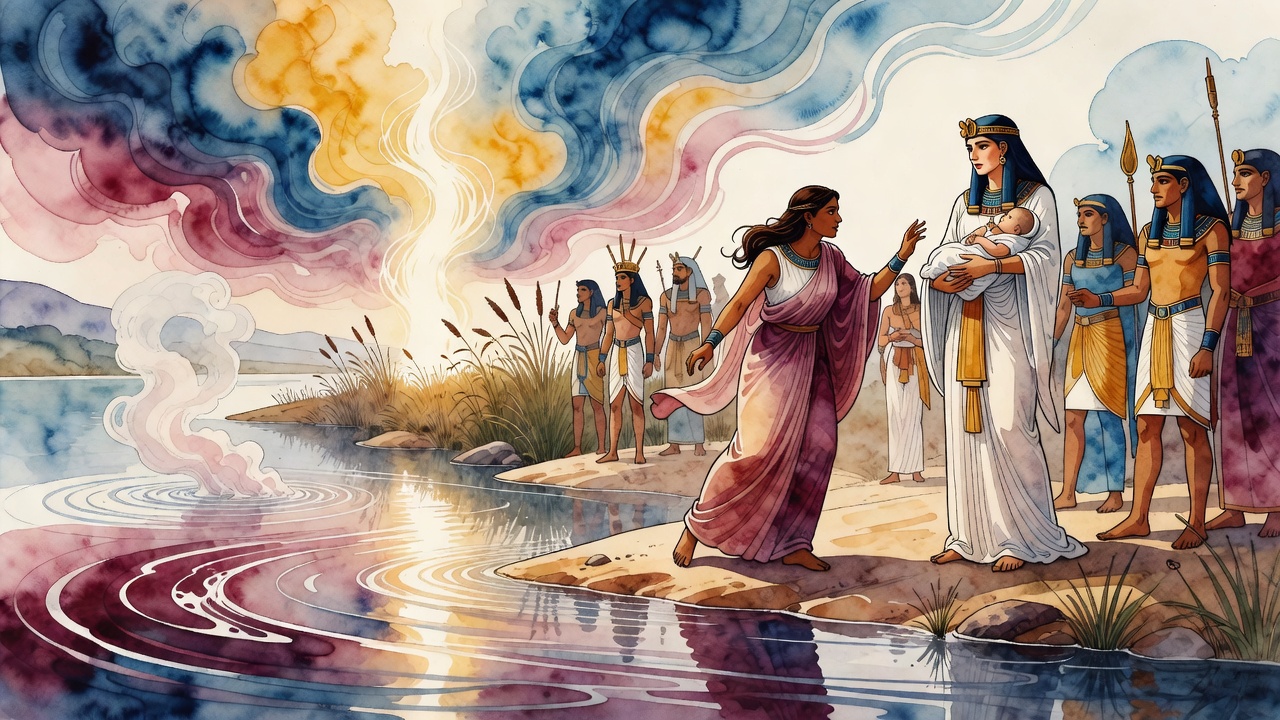
Miriam Watched the Basket an Hour and Israel Waited a Week
She sang the women through the morning on the shore. Later she opened her mouth about the Cushite, and her skin went white to the wrist.
Table of Contents
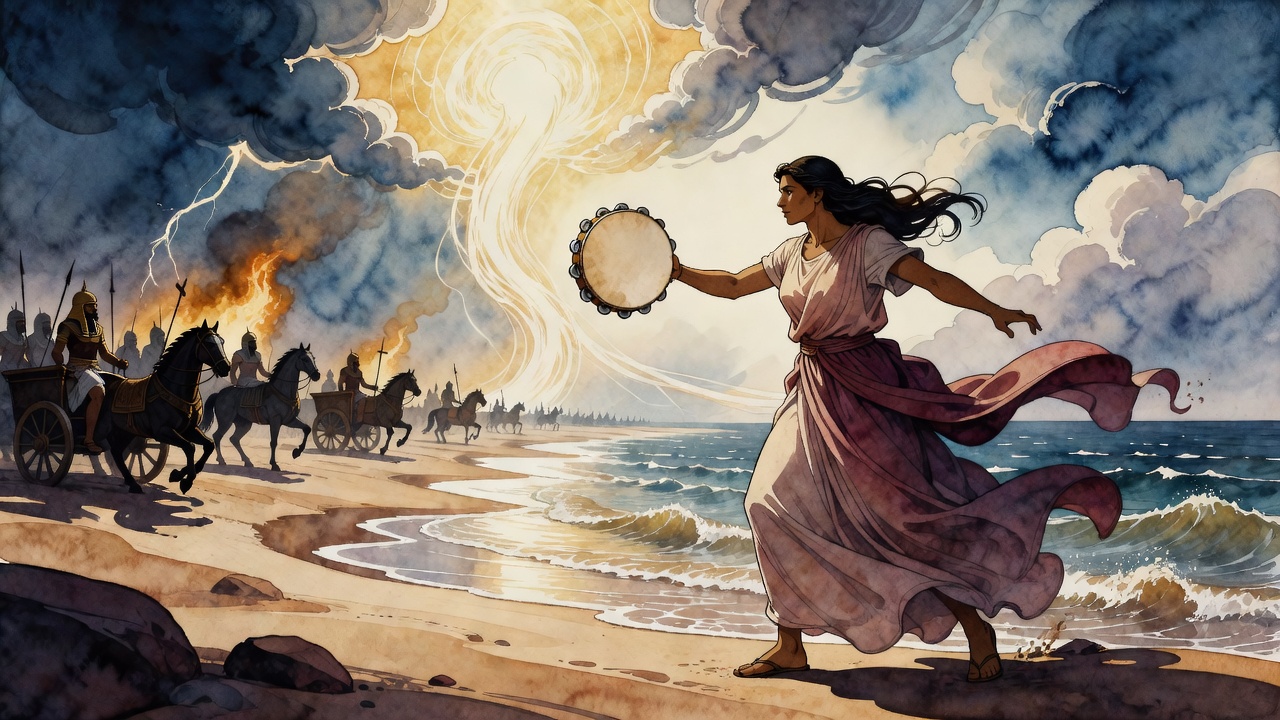
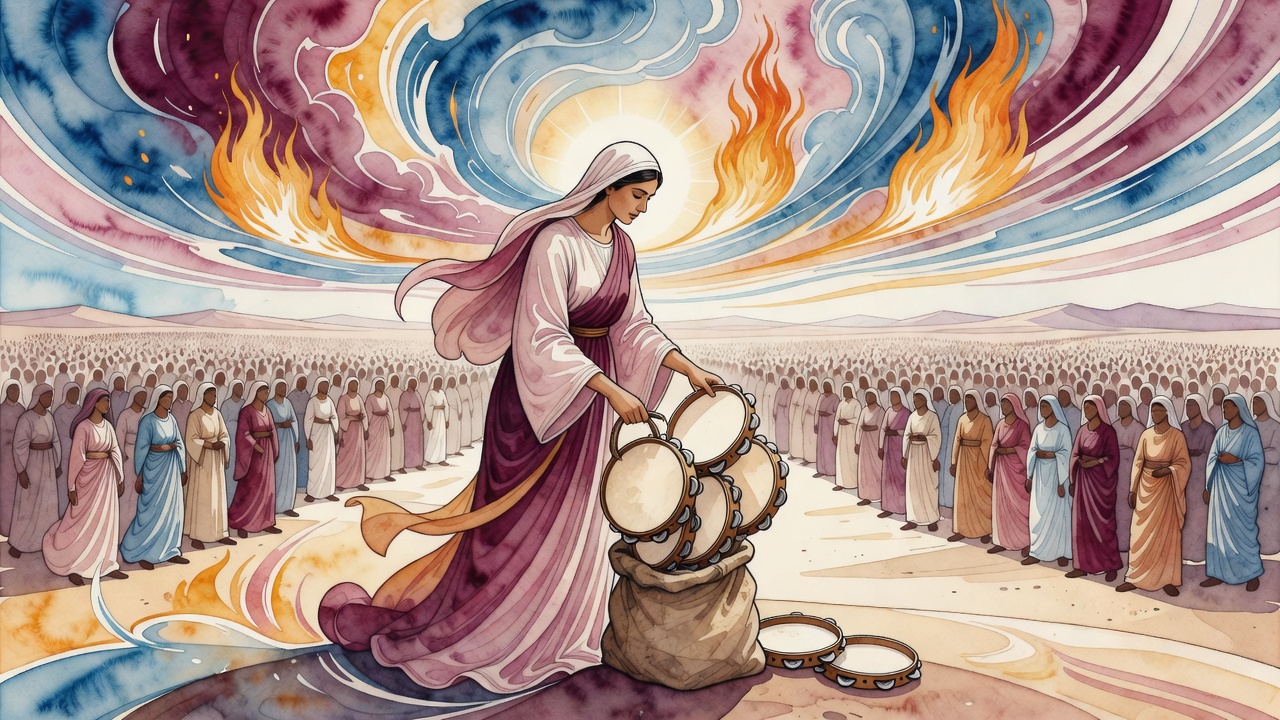
The sea came back down on the chariots. The shore went quiet, except for the water still dragging bodies onto the sand. Miriam picked up a tambourine.
 Click for full size
She Turned and Faced the Women
Moses had the men. She did not slide into the back of that crowd. The camp already called her prophetess, sister of Aaron, and she turned and faced the women as if the morning had been waiting for her voice. They came out behind her with drums and instruments, every one of them, dancing where the foam still ran.
She sang them the morning in her own mouth. "Sing to the Lord, for He is high over everything high. Horse and rider He threw in the sea."
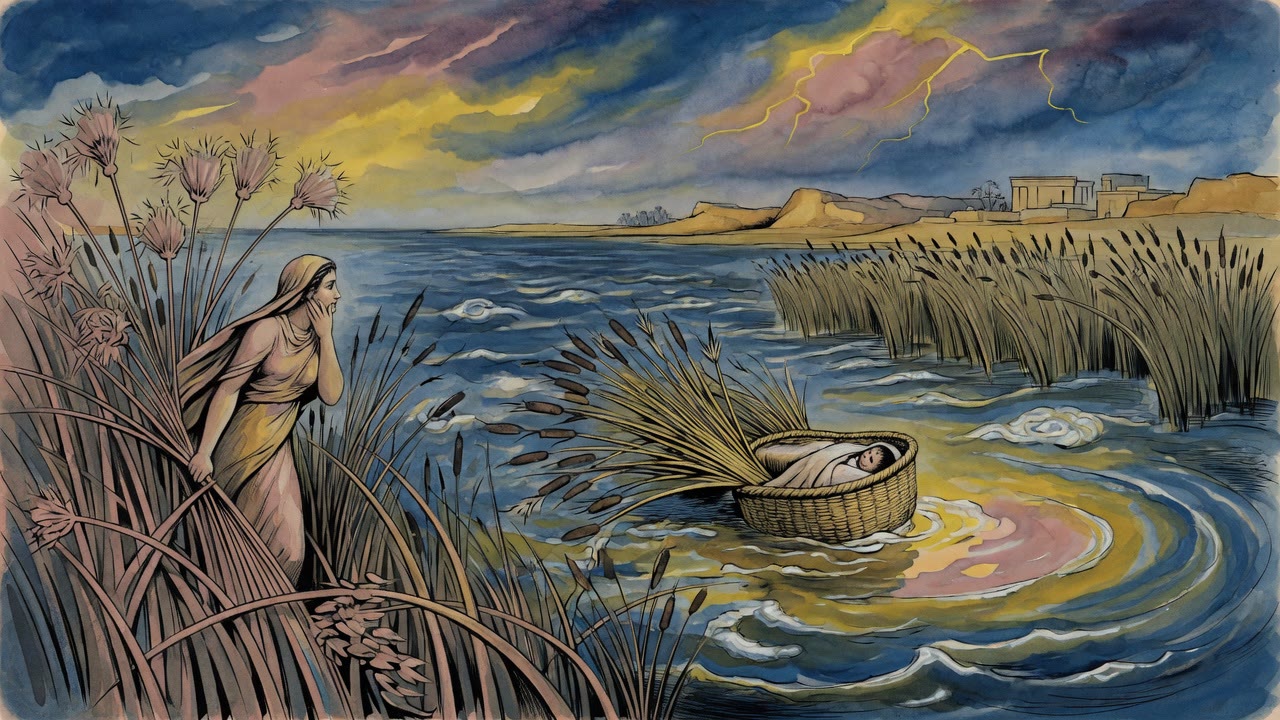
The women had carried those drums out of Egypt when the bricks were still being counted. They had packed them on the chance there would be a morning worth the weight. Miriam had watched the basket an hour from the reeds, to see if her word would hold.
Two gatherings stood on one beach. He led one. She led the other. The song was not done until both had sung it.
The Wife He Had Sent Away
Years later, in the wilderness, she opened her mouth about a marriage.
The camp called the woman the Cushite. Some meant it as praise. A Cushite is unmistakable among other men, they said, and Zipporah was unmistakable among women for the way she spoke and the things she did. Others meant it flatly. When Moses had fled from Pharaoh as a young man, the people of Kush had taken him in and married him to their queen. When the call came, he put her out of his tent.
That was the part Miriam would not leave. Not the woman. The sending away.
"Has the Lord spoken only with Moses?" she said, with Aaron beside her agreeing. "Has He not spoken with us as well? We did not separate ourselves from our marriages."
It was heard above. Moses said nothing. He was lower in his own mind than any man on the face of the earth, and their words did not touch him.
Come Out, the Three of You
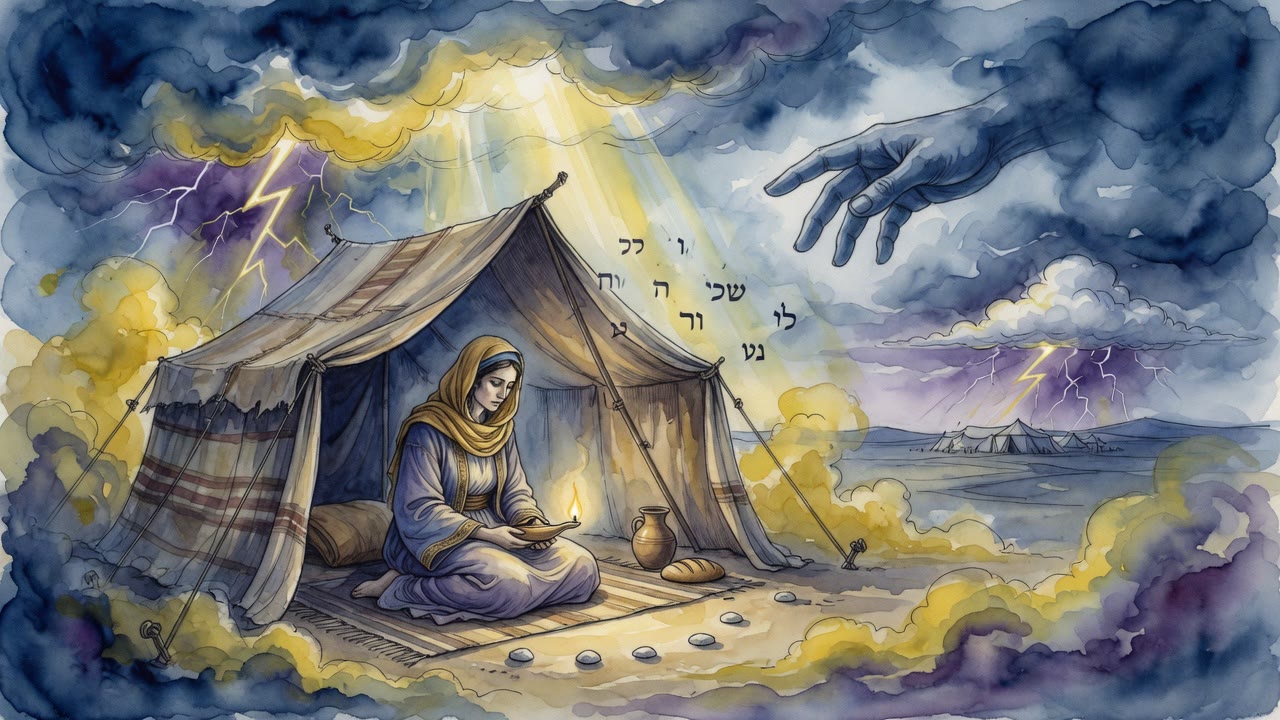
The order came to all three at once. Come out to the tent.
They came. The cloud came down and stood in the doorway. Out of it two names were called, Aaron and Miriam, and the two of them stepped forward without their brother.
"Hear what I am saying. Every prophet who has stood up in this world got what he got in a vision, asleep, in riddles. Not this one. With him I speak the way one speaker speaks to another. He has separated himself from married life because of it. At the bush I showed him the likeness of My Presence with nothing between us. And you were not afraid to open your mouths about him."
The glory went up off the tent and left.
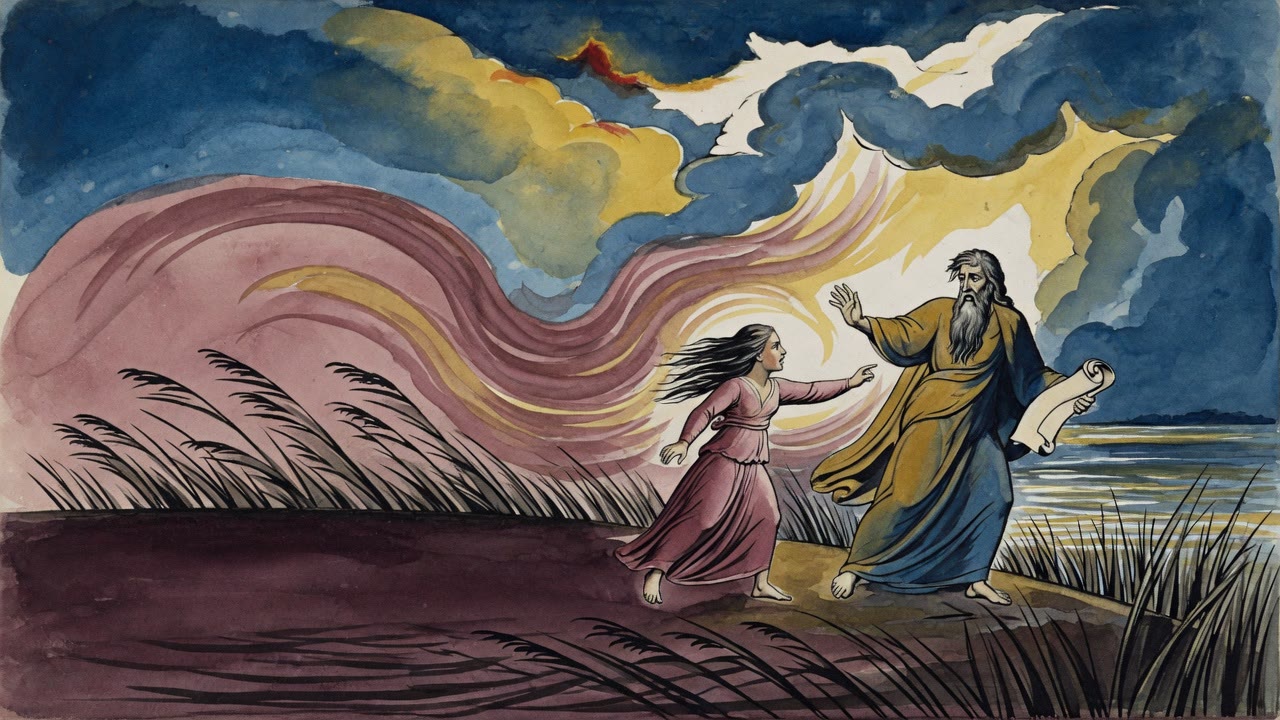
Aaron turned to look at his sister. Her skin had gone white to the wrist.
Do Not Let Her Be Like the Dead
Aaron went straight at Moses. What came out of him was not an argument.
"I beg you, my lord, do not put this on us. We were fools and we sinned. Do not let Miriam stay in that tent defiled like a corpse, like a baby that has gone the full time in the womb and dies coming out of it. She was with us in Egypt. She saw the slavery, the scattering, the years of it. Now that we are going up to take the land, she is the one held back. Pray for her. Do not let her righteousness be worth nothing in front of this congregation."
Moses prayed with four words in his mouth. God, please, heal her, please.
The Camp Would Not Move Without Her
The answer that came back did the arithmetic out loud.
"If her father had corrected her to her face, would she not sit in shame seven days? I have corrected her. By rights it should be fourteen. Seven will do. Shut her outside the camp for seven days, and because of your righteousness I will hold the Cloud of My Glory and the tabernacle and the ark and all Israel here until she is healed and brought back in."
So they held. Sixty myriads of Israel, eighty legions of them, with the cloud overhead and the well beside them and the tents pitched, sat down at Hazeroth and did not move. The scouts did not go out. The ark did not go forward. Nobody struck a tent for a week, because a woman was sitting on the wrong side of the boundary line with her face covered.
She had once watched the basket an hour from the reeds of the Nile, to see what would be done with her baby brother. That hour was on the books. Israel waited a week at Hazeroth: six hundred thousand people, the cloud, the tabernacle, and the well, all of them sitting still for her.
On the eighth day she came back through the line. The camp got up and went out into the wilderness of Paran.
← All myths