Parshat Metzora5 min read

Two Birds That Carry the Voice of Slander

A metzora walks back from isolation with cedar, hyssop, and birds. One bird dies for the tongue. One flies free if the mouth has changed.

Curated by Arthur · Told by Maggid ·
Table of Contents
  1. Outside the Camp
  2. Cedar High, Hyssop Low
  3. Three Killed by One Mouth
  4. Eleven Gates of the Plague
  5. The Tongue After the Birds
Two Birds That Carry the Voice of Slander Click for full size

Outside the Camp

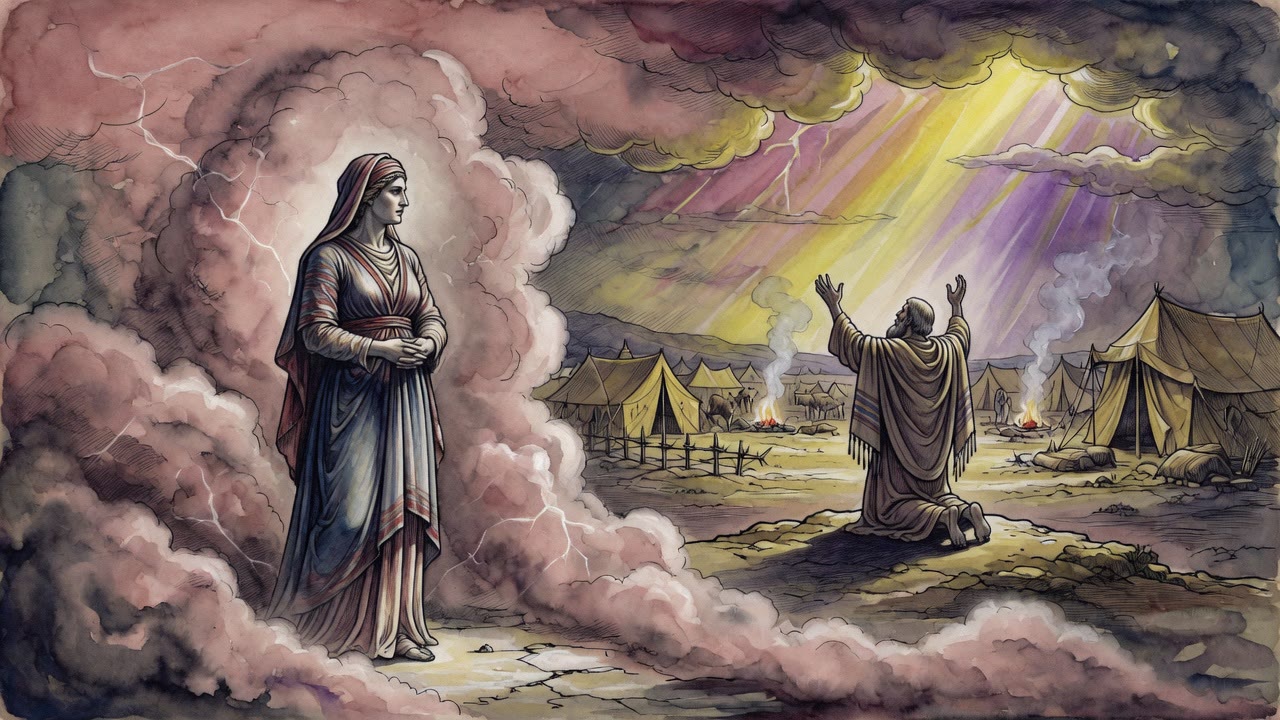
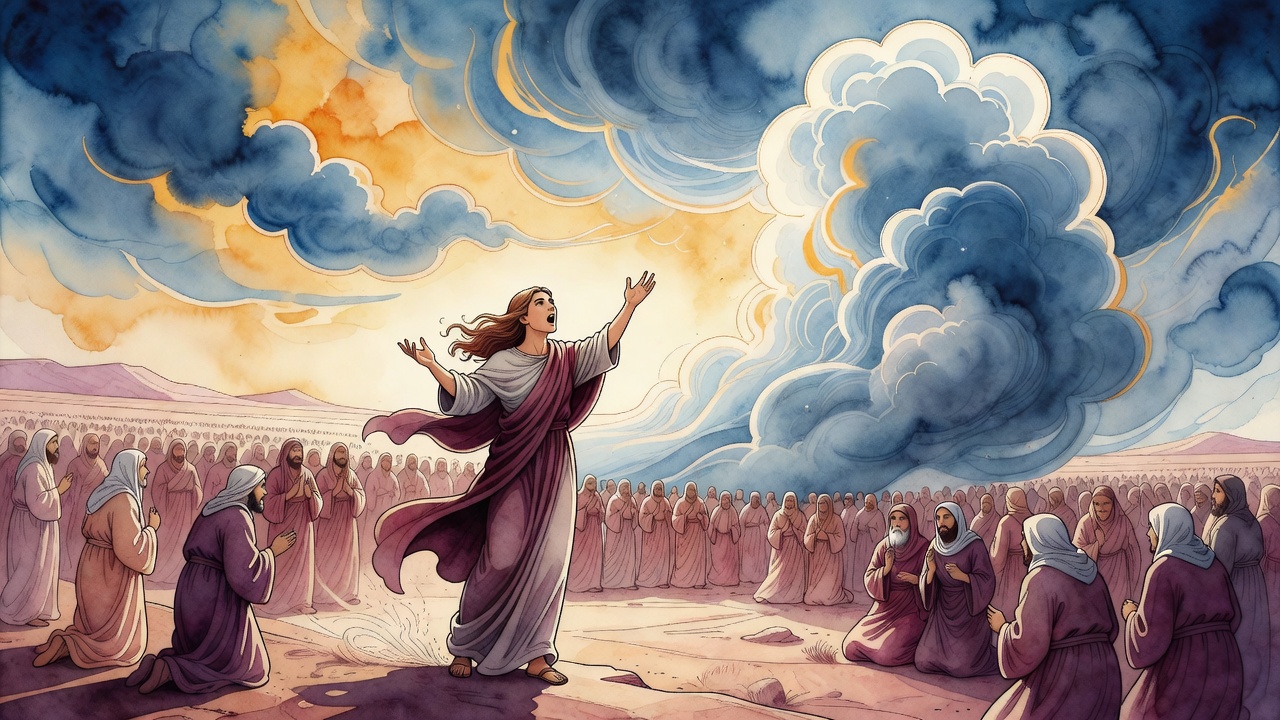
He dwells alone. Friends stand far off. Kin keep their distance from the affliction on his skin. Death and life, says the proverb the midrash glues to his law, are in the power of the tongue. He has been living inside that proverb. The marks on flesh followed the marks on speech.

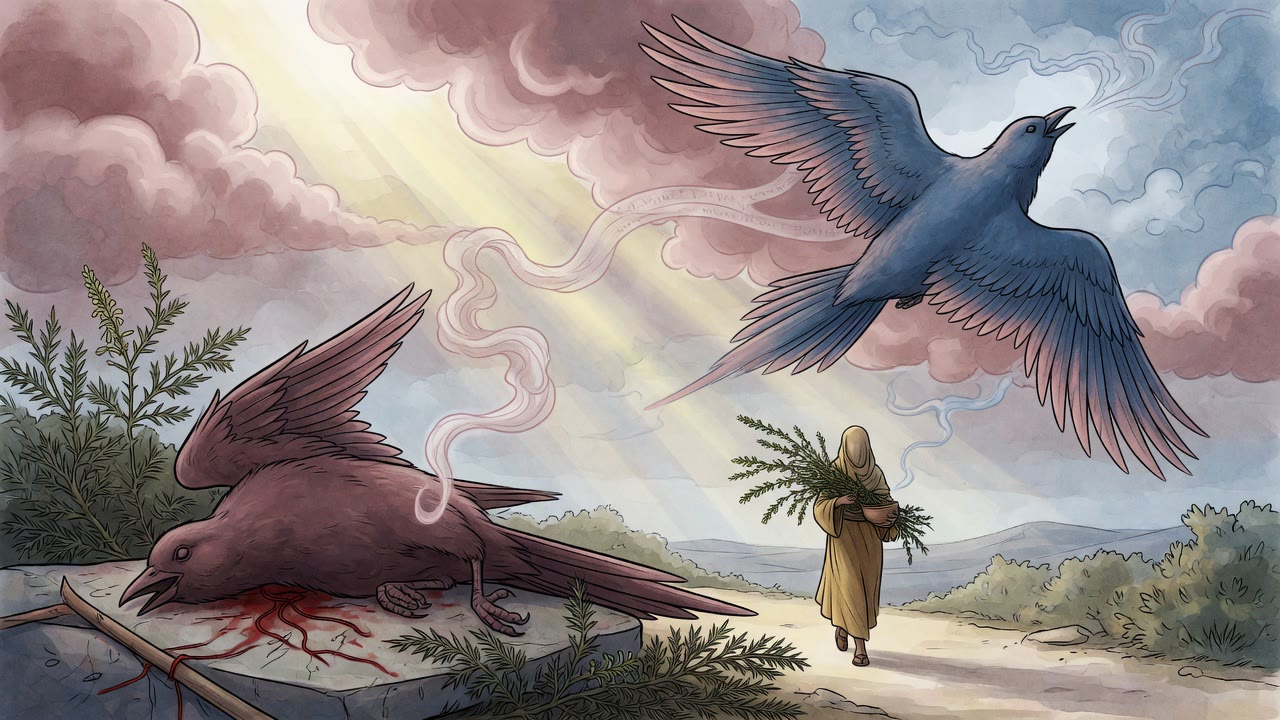
When the day of cleansing comes, they do not bring him a bull first. They bring two live clean birds. Why birds? Because slanderers carry their voices the way birds carry sound from branch to branch. The offering must look like the sin.

Cedar High, Hyssop Low

Cedar wood goes into the rite because no tree stands taller, and he exalted himself like a cedar. Uzziah grew strong, grew arrogant, forced the incense, and leprosy flowered on his forehead in anger. Hyssop goes in because no shrub sits lower, and lowering is the cure for the height that sickened him.

One bird is killed. One is set free over the field. If he has turned, the affliction will not nest on him again. The freed bird is a flying if: if the mouth stays soft, the skin may stay clear.

Three Killed by One Mouth

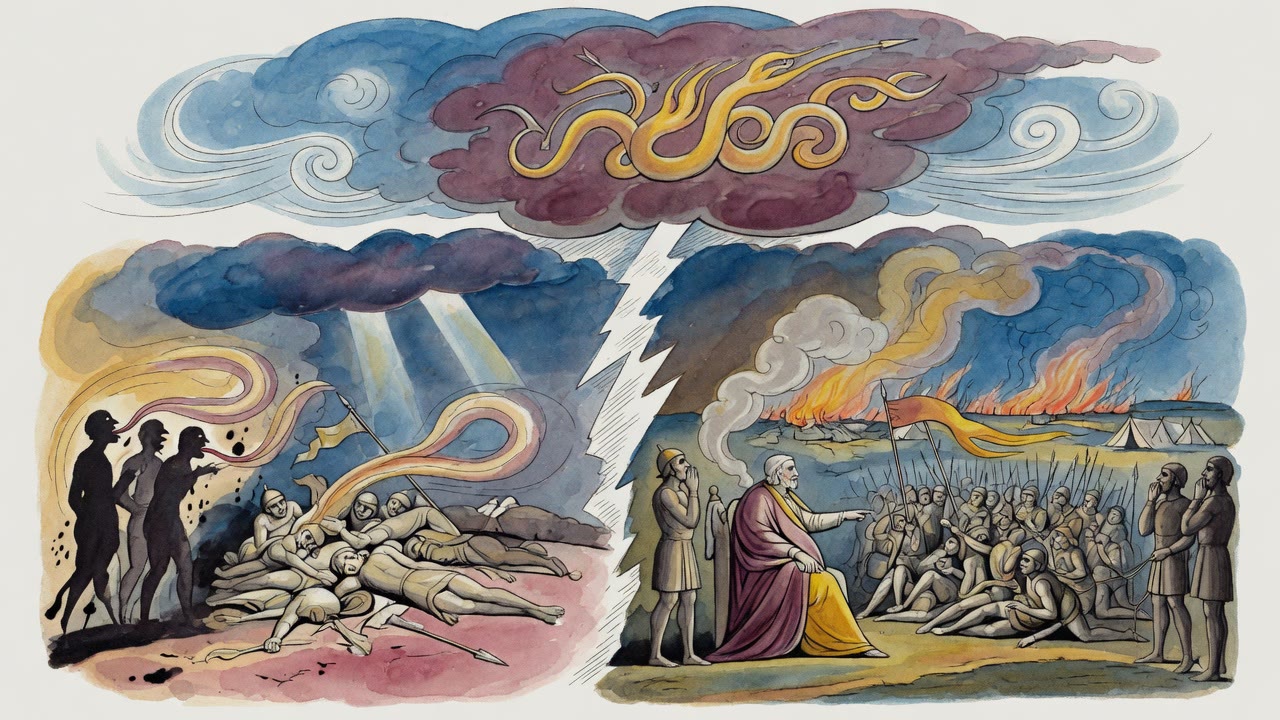
Slander is worse than a single sword stroke, the Tanchuma says, because it kills three: the speaker, the listener who accepts it, and the one spoken about. Doeg opened his mouth against Ahimelech. The priestly city of Nob fell. Saul later dies for treachery, and Doeg is torn from life in this world and the next in the psalm's hard language.

Balaam, Ahithophel, Gehazi join the list of mouths that bought Geihinnom with words. The metzora's isolation is not random medicine. It is a social quarantine for a social weapon, and the birds at his cleansing keep replaying the sound he once loosed.

Eleven Gates of the Plague

The masters count reasons the affliction comes: idolatry, desecration of the Name, unchastity, theft, slander, false witness, a judge who twists judgment, vain oaths, invading another's domain, false thoughts, stirring strife between brothers, and some add the miserly eye. The calf left the people parua, wild-haired, and the metzora's head is worn parua. Goliath's mouth against heaven draws isolation language from the leprosy laws. The pattern is one fabric.

He is brought to the priest because everything else has stepped back. Brought, the midrash hears, means he comes from far. The camp that expelled him must now pull him in by the hand of law, not by casual welcome.

The Tongue After the Birds

Torah on the tongue is a tree of life. Slander on the tongue is a death that multiplies. Between those two mouths the birds work: one bloodied, one free. He walks back toward tents with cedar pride broken and hyssop humility wet on the rite. The skin may clear. The harder healing is what he does with the next rumor offered at his ear, when no priest is watching and only the freed bird's path is left as a model.

Weeks outside the camp change a man's walk. He has shouted unclean when others came near, as the law requires, and watched children pull their mothers away. The tongue that once sent a name through the market like a barbed bird now sits quiet because no one stays to hear him. Isolation is a mirror held up to speech.

On the day he is allowed to approach, the priest does not first ask for gold. Cedar, hyssop, scarlet, birds: a kit that tells the truth about height and smallness and voice. The cedar remembers Uzziah's forehead, white with the flower of arrogance in the Temple he tried to seize. The hyssop remembers every person who finally bent. The birds remember every rumor that flew farther than the facts.

Doeg's mouth still hangs over the rite like weather. One report, and a city of priests falls. Saul's end and Doeg's erasure from both worlds are braided into the same warning: words kill in threes. Balaam sold speech. Ahithophel advised with a tongue that split a kingdom. Gehazi lied and took. The metzora is not compared to them for flattery. He is compared so he will fear his own next sentence.

When one bird dies and one flies, he watches the free one until it is a speck. That flight is conditional mercy. If the mouth returns to its old work, the midrash implies, the skin has ways of answering again. He steps toward the camp with damp hyssop on the memory of the rite and a head that may still be worn wild until the full process ends. The law of the tongue has become a law of feathers and blood.

Night outside the camp is long. Jackals call from the wadis. He wraps himself against wind and feels the cloth scrape the marks on his skin. Once he used words to move other people's standing up or down a ladder. Now he cannot move his own tent one cubit closer to the fires of Israel. The birds will have to speak for him, one in blood and one in flight, because his mouth has already spent too much of its credit.


← All myths

From the tradition

Sources

4 sources

The texts behind this telling. Some cards carry a translation of the source; others are our own retelling of it, and each card says which. Every card links out to the original.

Midrash Tanchuma, Metzora 2Midrash Tanchuma

Retold in our words. Read the original at the link below.Townsend 1989 translation of Midrash Tanhuma, S. Buber Recension · CC-BY

(Lev. 14:2:) “This shall be the law of the leper.” This text is related (to Prov. 18:21), “Death and life are in the power of the tongue.” Everything depends on the tongue. [If] one is acquitted, he is acquitted for life; [if] one is not acquitted, he is condemned to death. [If] one is engaged in Torah with his tongue, he is acquitted for life, inasmuch as the Torah is a tree of life, as stated (in Prov. 3:18), “[Wisdom] is a tree of life to those who take hold of it.” It (i.e., the Torah) is also one's healing for the evil tongue (i.e., slander), as stated (in Prov. 15:4), “A healing tongue is a tree of life.” But if one is occupied with slander, his soul is condemned to death, since slander is more harmful than the shedding of blood. Thus whoever kills takes only one life, but the one who speaks slander kills three people: the one who tells it, the one who accepts it, and the one about whom it is told. Doeg spoke slander against Ahimelech; and he (i.e., Ahimelech) was killed, as stated (in I Sam. 22:16), “But the king said, ‘You shall surely die, Ahimelech.’” Saul also was killed, [as stated] (in I Chron. 10:13), “So Saul died for the treachery which he had committed against the Lord.” And thus did Saul say (in II Sam. 1:9, to a young man), “Please stand over me and slay me, for death throes have seized me.” [The young man was] the accuser of Nob, the city of priests [against Saul]. Now death throes (shbts) can only denote priesthood, since it is stated (in Exod. 28:13 with reference to high-priestly dress), “And you shall make gold brocade (rt. shbts).” Doeg also was uprooted (shrsh) from the life of this world and from all life in the world to come. Thus it is stated (in Ps. 52:7), “God will also tear you down for ever; He will seize you, tear you away from your tent, and uproot (shrsh) you from the land of the living. Selah,” [i.e., He will uproot you] from life in the world to come. Who is more severe? One who smites with the sword or [one who] smites with the dart? Say the one who smites with the dart. The one who smites with the sword is only able to kill his companion if he draws near to him and touches him; but in the case of one who smites with the dart, it is not so. Rather one throws the dart wherever he sees him. Therefore, one who speaks slander is comparable to the dart, as stated (in Jer. 9:7), “Their tongue is a sharpened dart; it speaks deceit.” It also says (in Ps. 57:5), “people, whose teeth are spears and darts, and whose tongue a sharp sword.” See how harmful slander is, in that it is more harmful than adultery, shedding blood and idolatry. Of adultery it is written (in Gen. 39:9, where Joseph is addressing Potiphar's wife), “then how shall I do this great evil and sin against God?” Of shedding blood it is written (in Gen. 4:13), “My sin is greater than I can bear.” Of idolatry it is written (in Exod. 32:31, with reference to the golden calf), “Alas, this people has sinned a great sin.” But when it (i.e., Scripture) mentions slander, it does not say "great" (in the masculine singular, as in Gen. 4:13), or "great" (in the feminine singular, as in Gen. 39:9 and Exod. 32:31), but "great" (in the feminine plural). Thus it is written (in Ps. 12:4), “The Lord shall cut off all flattering lips, [every] tongue speaking great things (in the feminine plural).” It is therefore stated (in Prov. 18:21), “Death and life are in the power of the tongue.” [Another interpretation (of Prov. 18:21), “Death and life are in the power of the tongue”: Do not say, “Since I have license to speak, I am therefore speaking whatever I want.” See, the Torah has already warned you (in Ps. 34:14), “Keep your tongue from evil [and your lips from speaking deceit].” Perhaps you will say that you are suffering a loss. Are you not profiting instead? So the holy spirit proclaims (in Prov. 21:23), “The one who guards his mouth and his tongue guards his soul from trouble (tsarot).” Do not read this as “from trouble.” Instead [read it as], "from leprosy (tsar'at).” Another interpretation (of Prov. 18:21), “Death and life are in the power of the tongue”: Slander is so harmful that one does not produce it from his mouth without denying the Holy One, blessed be He. Thus it is stated (in Ps. 12:5), “Those who say, ‘By our tongues we shall prevail; our lips are with us, who is to be our Lord?’” The Holy One, blessed be He, as it were, cried out against those who speak slander (in Ps. 94:16), “Who will stand for Me against evildoers…?” Who can stand against them? And who will stand against them? Geihinnom? But Geihinnom also cries out, “I am unable to stand against them.” [Then] the Holy One, blessed be He, said, “I [will come at them] from above and you (Geihinnom), from below. I will hurl darts from above; and you will turn on them with burning coals from below.” Thus it is stated (in Ps. 120:4), “Sharp darts of the warrior along with burning coals of broom wood.” The Holy One, blessed be He, said to Israel, “Do you want to be delivered from Geihinnom? Keep yourselves far away from the deceitful tongue. Then you will be acquitted in this world and in the world to come.” Thus it is stated (in Ps. 34:13), “Who is the one who desires life….” And it is [then] written (in vs. 14), “Keep your tongue from evil and your lips from speaking deceit […].” Thus it is stated (in Lev. 14:2), “This shall be the law of the leper,” to teach you that one who speaks slander will have blemishes come to him, as it is stated, “This shall be the law of the leper (metsora'),” [i.e.] the one who proclaims evil (motsi' ra') will find evil, in that he will have leprosy come upon him. See what is written about Miriam (in Numb. 12:1), “Then Miriam and Aaron spoke against Moses.” Therefore (in vs. 10), “then Aaron turned unto Miriam, and there was [Miriam] with leprosy like the snow.” What is written elsewhere (in Deut. 24:9)? “Remember what the Lord your God did to Miriam […].” And is it not all the more so? For if Miriam had this happen, when she only spoke against her beloved brother when he was absent and was only intending to return him to his wife, how much the more so in the case of one who utters slander against his colleague? What is written above on the matter (in Deut. 24:8)? “Take care with the plague of leprosy [to watch diligently and do according to all that the priests and Levites shall teach…].” So the hand of the Holy One, blessed be He, also afflicted with it Aaron, who was high priest. Thus it is stated (in Numb. 12:9), “And the anger of the Lord was kindled against them, [i.e.] against Aaron and against Miriam.” Aaron, however, was healed immediately; but Miriam, after seven days, as stated (in Numb. 12:15), “So Miriam was shut up [outside of the camp] for seven days.” Ergo (in Lev. 14:2), “This shall be the law of the leper (metsora').” The one who proclaims evil (motsi' ra') is the one who finds evil (motse' ra'). And thus you find with the primeval serpent, because he spoke slander [to Eve] against his Creator, for that reason he became leprous. What did he say? R. Joshua ben Levi said (citing Gen. 3:5), “’For God knows that on the day that you eat from it, your eyes shall be opened and you will be like God, knowing good and evil.’ He said to her, ‘Every artisan hates his fellow [artisan]. Now when [the Holy One, blessed be He,] wanted to create His world, He ate from this tree. So he created His world. You [two] also eat from it. Then you will be able to create like Him.’ The Holy One, blessed be He, said to [the serpent], ‘You have spoken slander. Your end is to be stricken with leprosy.’” It is so stated (in Gen. 3:14), “So the Lord God said unto the serpent, “Because you have done this, more cursed shall you be than all the beasts of the field.” With what did he curse ('araroh) him? With leprosy. Now a curse can only be leprosy, since it is stated (in Lev. 13:52), “for it is a malignant (mam'eret) leprosy.” R. Huna said in the name of R. Joshua ben Levi, “The scales which are on the snake are his leprosy.” And not only that, but when all the deformed are cured in the world to come, the snake shall not be cured. Thus it is stated (in Gen. 3:14), “more cursed shall you be than all the beasts.” From here [we learn] that they all shall be healed, but [the serpent] shall not be healed. People shall be healed, as stated (in Is. 35:5), “Then the eyes of the blind shall be opened….” It is also [written about] the wild beasts and the cattle (in Is. 65:25), “The wolf and the lamb shall feed together, and the lion like the ox shall eat straw, but the serpent's food shall be dust”; as he will never be healed, because he [was the one who] brought all mortals down to the dust. And what caused him to have [this punishment]? [It happened] because he had spoken slander.

Full source
Midrash Tanchuma, Metzora 3Midrash Tanchuma

Retold in our words. Read the original at the link below.Townsend 1989 translation of Midrash Tanhuma, S. Buber Recension · CC-BY

(Lev. 14:2:) “In the day of his cleansing.” [With what?] With (according to vs. 4) “two live clean birds.” How is his offering different from all [other] offerings? It is simply that he has spoken slander. Therefore, the text says that his sacrifice is two birds, because they (like slanderers) carry their voices. (Lev. 14:4, cont.) “And cedar wood.” In the case of the cedar, no tree is taller (gevoha) than that one; so because [the leper] has exalted (gevoha) himself like a cedar, [he has had] the leprosy come upon him. Thus Simeon ben Eleazar has said, “Leprosy comes on account of haughtiness, for so you find in the case of Uzziah (in II Chron. 26:16), ‘But when he was strong, he grew so arrogant that he acted corruptly,’ and it is written (in II Chron. 26:19), ‘but during his anger with the priests, leprosy appeared on his forehead.’” (Lev. 14:4, cont.) “And with hyssop.” Among the trees there is none [as short] as the hyssop. Because [the leper] has lowered himself, [leprosy] is therefore cured through the hyssop. (Lev. 14:5:) “[Then the priest shall give a command] to kill one bird.” Why kill one and release one? It is simply that, if he has repented, the leprosy shall not return upon him. (Lev. 14:2:) “[This shall be the law of the leper in the day of his cleansing:] He shall be brought unto the priest.” What is the meaning of “He shall be brought (rt. bw')?” He comes (rt. bw'). Why? Because everything is far off and separated from him, for so David says (in Ps. 38:12), “My friends and companions stand aloof from my affliction, and my kinfolk stand far off.” So also it says (in Lev. 13:46), “he shall dwell alone; his dwelling shall be outside the camp,” outside the camp of Israel. It is therefore stated (in Lev. 14:2), “he shall be brought (rt. bw'),” [meaning] he comes (rt. bw').

Full source
Midrash Tanchuma, Metzora 4Midrash Tanchuma

Retold in our words. Read the original at the link below.Townsend 1989 translation of Midrash Tanhuma, S. Buber Recension · CC-BY

(Lev. 14:2:) “This shall be the law of the leper.” Let our master instruct us: For how many things does leprosy come? Thus have our masters taught: The affliction comes [upon one] for eleven things: (1) For idolatry, (2) for desecration of the name [of God], (3) for unchastity, (4) for theft, (5) for slander, (6) for false witness, (7) upon the judge who perverts justice, (8) for swearing in vain, (9) upon one who enters a domain which is not his, (10) upon one who thinks false thoughts, and (11) upon one who instigates quarrels among brothers. And some also say, “for the evil eye (i.e., for being miserly).” How is it shown [that leprosy comes] for idolatry? In that, when they made the calf, they were afflicted with leprosy. Thus it is stated (in Exod. 32:25), “Now Moses saw that the people were riotous (parua')”; and it is written concerning the leper (in Lev. 13:45), “his head shall be unkempt (parua').” And how is it shown [that leprosy comes] for cursing the name? From Goliath, of whom it is stated that he said in (I Sam. 17:8), “Choose a man ('ish) for yourselves.” Now man ('ish) can only be the Holy One, blessed be He, since it is stated (in Exod. 15:3), “The Lord is a man ('ish) of war.” It is also written (in I Sam. 17:46) “This day [the Lord] will deliver (rt. sgr) you.” Now deliverance can only imply leprosy, since it is stated (in Lev. 13:5), “the priest shall isolate (rt. sgr) him.” And how is it shown for unchastity? Where it is written (in Is. 3:[16-]17), “[Because the daughters of Zion are haughty, and walk with extended neck and roving eyes…]. Therefore the Lord will smite with sores (sph) the scalps [of the daughters of Zion].” Now sores (sph) can only be leprosy, as stated (in Lev. 14:56), “For a swelling and for a sore (rt. sph) and for a bright spot.” How is it shown for theft? Where it is stated (in Zech. 5:4), “I have sent it (i.e., the curse of the flying scroll in vs. 1) forth, says the Lord of hosts; and it shall come unto the house of the thief.” Hence, for theft. How is it shown for swearing falsely? Where it is stated (in Zech. 5:4, cont.), “and unto the house of the one who swears falsely in My name; and it shall lodge within his house; and it shall consume it, [even] with its timbers and stones.” What is a thing which consumes timbers and stones? Rabbi says, “This is leprosy, since it is written (concerning a house infested with leprosy (in Lev. 14:45), ‘And he shall break down the house with its timbers and stones.’” And how is it shown for slander? From Miriam [of whom] it is written (in Numb. 12:10), “so when Aaron turned unto Miriam, there she was, stricken with leprosy.” It is written (in Lev. 14:1), “This shall be the law of the leper (hametsora'),” [i.e.] the one who puts forth evil (hamotsi ra'). And how is it shown for those who bear false witness? Where Israel testified falsely and said (in Exod. 32:4), “These are your gods, O Israel,” they were struck with leprosy, as stated, “Instruct the Israelites to remove from the camp….” It also states (Exodus 32:25), “Now Moses saw that the people were riotous (parua').” And [how is it shown] for the judge who perverts justice? Where it is stated (of unjust judges in Is. 5:24), “And it shall be that as a tongue of fire consumes straw, and as chaff sinks down in a flame, their root shall be like the rot, and their blossom shall rise up like the dust; for they have rejected the law of the Lord of hosts.” Their blossom (prh) can only refer to leprosy, since it is stated (in Lev. 13:12), “If the leprosy should blossom out widely (rt. prh).” And how is it shown for one who enters a domain which is not his? From Uzziah, who entered the domain of the priesthood. It is so stated (of him in II Chron. 26:19), “then leprosy appeared on his forehead.” And how is it shown for one who instigates quarrels among brothers? From Pharaoh, as stated (in Gen. 12:17), “Then the Lord afflicted Pharaoh,” because he had taken Sarah from Abraham. And [how is it shown] for the evil eye (i.e., for being miserly)? R. Isaac said, “When someone's eye is too evil (i.e., when someone is too miserly) to lend out his possessions. When someone comes and says to him, ‘Lend me your scythe, lend me your ax, or any object,’ he says to him, ‘Cursed is the one who has a scythe, cursed is the one has an axe’ (meaning, ‘I do not have one’). What does the Holy One, blessed be He, do? He afflicts [his house] with leprosy. When he comes to the priest and says to him, ‘Something like a plague has appeared in the house belonging to me,’ he commands (according to Lev. 14:45), ‘Let him break down the house with its timbers and stones.’ Then everybody will see his implements, when they lug them and bring them outside. So they publicize his implements, and they all say, ‘Did he not say, “I do not have a scythe; I do not have an ax?” See, he does have such and such an object, but he did not want to lend it.’ So his eye is evil (i.e., he is miserly), to lend.” (Leviticus 14:37:) “And [the priest] says, ‘[The walls are] deeply colored (shkarurot).’” Do not read it [such], but rather read it as he brought down curses (shaka arurot). As he said, “Cursed,” and he brought down his house. And everyone saw his curses, as stated (in (Job 20:2)8), “The produce of his house shall depart, poured out in the day of His wrath.” [Moreover,] there are also some who say, [leprosy] also [comes] for haughtiness. How is it shown? From Naaman, as stated (in II Kings 5:1), “Now Naaman, the commander of the army of the king of Aram […] a valiant warrior, was a leper,” because he was haughty. [Leprosy] also [comes] upon the one who says something against his colleague that is not true about him. Thus you find it so in the case of Moses our master, when he said (in Exod. 4:1), “But [surely] they shall not believe me.” The Holy One, blessed be He, said to him, “They are believers [and] children of believers”: [Believers] (in Exod. 4:31), “And the people believed”; the children of believers, as stated (in Gen. 15:6), “And he (Abram) believed in the Lord.” However, it is necessary [for you] to be afflicted, since the one who suspects the innocent is afflicted in his body. It is so stated (in Exod. 4:6), “Then [the Lord…] said, ‘Please put your hand in your bosom’; so he put his hand in his bosom, and when he withdrew it, behold, it was leprous as snow.” The Holy One, blessed be He, said to Israel, “Look at the difference between you and the peoples of the world. When they sin, I afflict them first in their bodies and after that in their houses, as stated (in Gen. 12:17), ‘Then the Lord afflicted Pharaoh with great plagues,’ and afterwards, ‘and his house.’ But if you sin, I afflict your houses first.” Where is it shown? From what they read on the matter (in Lev. 14:34), “and I put a plague of leprosy in a house of the land you possess.” (Lev. 14:34:) “And I put a plague of leprosy in a house of the land you possess.” How has the land sinned, that it should be afflicted? It is simply that the land is afflicted for human sin, as stated (in Ps. 107:[32-]34), “[He turns….] A fruitful land into a salt marsh because of the evil [of those who dwell in it].” Why? Because of the evil [of the people]. And so does it state (Isaiah 26:9), “with Your judgements upon the earth, so will those that dwell in the inhabitation learn justice.” Why do punishments come upon the world? For the creatures, so that they would look, consider, and say, “Whoever sins is afflicted, and whoever does not sin is not afflicted.” So why are the trees, the stones and the walls afflicted? So that their owners will look [at them] and repent. And so you find that when Israel sinned, the Holy One, blessed be He, intended to exile them at once before the [other] nations. But He said, “If I exile them at the start, they will become a shame and a disgrace to all the nations.” What did he do? He brought Sennacherib the wicked upon all the [other] nations and exiled them. Thus it is stated (in Is. 10:14), “My hand (the hand of Sennacherib) has found the wealth of the peoples like a nest.” It is also written (in vs. 13), “and I (Sennacherib) have removed the borders of peoples.” The Holy One, blessed be He, said, “When Israel sees that I have exiled the nations of the world, they will repent and fear My judgment.” It is so stated (in Zeph. 3:6), “I have rooted out the nations; their corner towers are desolate.” And after it is written (in vs. 7), “I said, ‘Surely you will fear Me, they will learn rebuke!’” When they did not repent, they immediately went into exile. Therefore the Holy One, blessed be He, warns them and [first] afflicts their houses, so that they will repent. Thus it is stated (in Lev. 14:34), “and I put a plague of leprosy in a house of the land you possess.” For him to repent is preferable; but if not, he is afflicted in his body, as stated (in Lev. 15:2), “When any man has a discharge issuing from his flesh….” Hence, the stones are struck first. For him to repent is preferable; but if not, his clothes are afflicted, as stated (in Lev. 13:47), “When the plague of leprosy is in a garment.” Then if he does not repent, he is afflicted in his body. Thus it is stated (in Lev. 13:40), “When someone's head becomes hairless [so that he is bald, he is clean]”; but still with a balding of the head there is a substantial doubt whether he is unclean or clean. For him to repent is preferable, but if not, he is afflicted with boils, as stated (in Lev. 13:18), “And when one has boils on the skin of his flesh and is healed.” Boils is [worse] than balding of the head. For him to repent is preferable, but if not, he is afflicted with five scourges: swelling, sore, bright spot, scab, and plague spot. And why all this? Because he did not repent. Scripture has said (in Prov. 19:29), “Judgments are ready for scoffers; and stripes for the back of fools.” The Holy One, blessed be He, said, “Before I created the human, I prepared all these for him.” [The situation] is comparable to an evil slave who was about to be sold. When his master went to buy him, he knew that he was a bad salve. [So] he took along chains and whips so that if he rebelled, he might subdue him with them. When he did rebel, he brought out the chains and chained him. He brought out the whips and beat him. The slave said to him, “Did you not know that I was a bad slave? Why did you buy me?” He said to him, “Because I knew that you are difficult, I prepared chains and whips for you, so that if you rebelled, I might subdue you with them.” So too the Holy One, blessed be He [and] blessed be His name forever, before He created the human one, He prepared afflictions for him, because (according to Gen. 8:21) He knows that “the instinct of one's heart is evil from his youth.” He therefore prepared all these for him, so that if he rebelled, He would subdue him, as stated (in Prov. 19:29), “Judgments are ready for scoffers; and stripes (mahalumot) for the back of fools.” What are mahalumot? Mahah lamoot (strike to death). Warn him first; it is preferable if he repents. But if not, strike his body. How is it shown? From that which we read about the matter (in Lev. 14:34), “and I put a plague of leprosy in a house of the land you possess.”

Full source
Midrash Tanchuma, Metzora 1Midrash Tanchuma

Retold in our words. Read the original at the link below.Townsend 1989 translation of Midrash Tanhuma, S. Buber Recension · CC-BY

(Lev. 14:2:) “This shall be the law of the leper.” Let our master instruct us: How many people have no share in the world to come? Thus have our masters taught (in Sanh. 10:1-2): These are they who have no share in the world to come…. Three kings and four commoners have no share in the world to come. The three kings are Jeroboam, Ahab, and Manasseh. R. Judah ben Shallum said, “The sages of the Mishnah (the earliest code of rabbinic law) wanted to teach that there were four kings and reckon Solomon with them; however, a heavenly voice (bat qol) came forth and said (in the words of Ps. 105:15), ‘Touch not my anointed.’ Nevertheless they returned one day to teaching [as before]. Fire from the heavens came and destroyed their benches. [The heavenly voice] returned and said (according to (Job 34:3)3), ‘Should He repay as you would, when you have refused?’” All the same, why did they so teach? Because it is written (in I (Kings 11:1), 6), “Now King Solomon loved many foreign wives […]. And Solomon did what was evil in the eyes of the Lord.” (Sanh. 10:2, at the end:) The four commoners are Balaam, Doeg, Ahithophel and Gehazi. You find that these were condemned to Geihinnom on account of the words of their mouths. In the case of Balaam, he was driven into Geihinnom because of his speech, as stated (in Numb. 23:7), “From Aram has Balak brought me, the king of Moab,” [meaning] I was one of the exalted ones; I was one of the division of the patriarchs, [but] Balak brought me (yanheni) and cast me into Geihinnom.” Now brought me (yanheni, rt. nhh) can only imply Geihinnom, since it is stated (in Ezek. 32:18), “Son of man, lament over (rt. nhh) [the masses of Egypt and cast them down… unto the lowest part of the nether world].” So also was Doeg banished because of his speech. When? When David fled to Nob, the city of priests where Ahimelech received him, Saul noticed and gathered all his servants. He said to them, “A fine way you are treating me! For David does whatever he wishes, and not one of you has put a word in my ear.” It is so stated (in I Sam. 22:8), “Is that why all of you have conspired against me? For no one is putting a word in my ear when my son is making a deal with the son of Jesse….” Doeg began to utter evil speech, as stated (in vs. 9), “Then Doeg the Edomite, who was standing among the servants of Saul, answered and said, ‘I saw the son of Jesse come to Nob….’” It was also by his hand that eighty-five priests who wear the ephod and Ahimelech the High Priest were slain. “And he smote Nob the city of priests with the edge of the sword” (I (Samuel 22:1)9). R. Eleazar said, “Anyone who becomes merciful upon the cruel one will end by being cruel to the merciful: It is written (I Samuel 15:9), ‘But Saul had pity upon Agag and upon the best of the sheep and the cattle’; and it is [also] written (I (Samuel 22:1)9) about Nob the city of priest, ‘And he smote Nob the city of priests with the edge of the sword.’“ So also was Ahithophel banished because of his speech. Thus it is stated (in II Sam. 17:23), “So when Ahithophel saw that his counsel was not heeded… and he set his house in order and hanged himself.” Gehazi also was banished on account of his speech. When Naaman became leprous and was healed at the hands of Elisha, Naaman began to give silver, gold and gifts to Elisha, but he did not want to accept them. Now Gehazi was ministering to Elisha. He saw the silver, the gold, and the clothes; so he said (in II (Kings 5:2)0), “My Lord has spared that Aramean Naaman without accepting what he brought; as the Lord lives, I will run after him and get something from him.” Certainly he took [something; he took] his deformity. Thus it is stated (in vs. 27), “And the leprosy of Naaman shall cleave to you and to your seed forever.” Why [did Elisha not want anything]? Because it is stated (in Deut. 13:18), “And let nothing cleave to your hand of that which is devoted.” Now Naaman and the king of Aram served idols; and it is written (in Deut. 7:26), “Do not bring an abomination unto your house.” R. Pedat said, “The Holy One, blessed be He, has made a covenant with the world that anyone who utters evil speech receives leprosy.” Where is it shown? From what is written on the matter (in Lev. 14:2), “This shall be the law of the leper (hametsora'),” [ i.e. ] the one who proclaims evil (hamotsi' ra'). Our masters have said, “Plagues only affect a person on account of the evil speech which comes out of his mouth.” So the holy spirit cries out (in Eccl. 5:5), “Do not let your mouth cause your flesh to sin,” [ i.e. ] to afflict your body; (ibid. cont.) “and do not say before the angel that it was a mistake,” [ i.e. ] and do not say before the angel who is appointed over you, “By mistake I brought forth the word from my mouth.” For every word which issues from your mouth, whether good, evil, by mistake, or on purpose, is written in a book. Where is it shown that it is so? Where it is stated (in Mal. 3:16), “Then those who feared the Lord spoke with one another; the Lord has hearkened and listened, and a book of remembrance has been written before Him […].” And so with the trait of calamity, David said (in Ps. 139:2), “You know when I sit down and when I stand up, You discern my thoughts from afar.” Job also said (in (Job 14:1)6), “For You count my footsteps,” and (Job 13:27) “You look closely over the treading of my feet.” (Eccl. 5:5, cont.) “Why should God be angry over your voice and destroy the work of your hands?” These are the hands and the body when they are afflicted by leprosy. Another interpretation (of Eccl. 5:5), “Do not let your mouth cause your flesh to sin”: The Torah has spoken to you euphemistically. If your wife has told you that she is menstruating (niddah), do not cause your body to sin by touching her. Do not say before the angel who is appointed over the formation of the fetus, “’I made a mistake and did not know.” (Ibid. cont.) “Why should God be angry over your voice and destroy the work of your hands?” This refers to the children who are afflicted with leprosy. R. Aha said, “If a man has intercourse with his wife when she is menstruating, the children will be afflicted with leprosy. How? [If] he has intercourse on the first day of her menstruating, the child which is born shall be afflicted after ten years. [If] he has intercourse with her on the second day, it shall be afflicted after twenty years. On the third day it shall be afflicted after thirty years. On the fourth day it shall be afflicted after forty years. On the fifth day it shall be afflicted after fifty years. On the sixth day it shall be afflicted after sixty years. On the seventh day it shall be afflicted after seventy years, corresponding to the seven days of her menstruation. He shall not depart from the world before he has seen his fruit spoiled. Now the days of a person's life are only seventy years, for so David says (in Ps. 90:10), ‘The days of our life comprise seventy years, and’ [only if] one merited, ‘eighty.’ Therefore if a man has intercourse with a menstruating woman on the seventh day, the fetus is afflicted at seventy years of age, so that he does not depart from the world until he has seen his fruit spoiled. This punishment, as it were, does not come from Me. I have already testified to you and told you (in Lev. 14:2,) ‘This shall be the law of the leper.’” Another interpretation (of Eccl. 5:5), “Do not let your mouth [cause your flesh to sin, and do not say before the angel (mal'akh) that it was a mistake]”: If you have acted with malice aforethought and led astray a high priest, who is called an angel (mal'akh), as stated (in Mal. 2:7), “For the lips of a priest preserve knowledge, and they should seek Torah from his mouth; for he is the messenger (mal'akh) of the Lord of hosts”; then do not say, “I sinned by mistake,” [ i.e. ] (in Eccl. 5:5), “ do not say before the angel (i.e. before the high priest) that it was a mistake.” Why? You are leading yourself astray. You are afflicting yourself. The voice which you send forth from your mouth will destroy the work of your hands. (Eccl. 5:5) “Why should God be angry over your voice [and destroy the work of your hands]?” This refers to the children who are afflicted with leprosy.

Full source