5 min read

The Tongue That Kills Three While Ahab Won

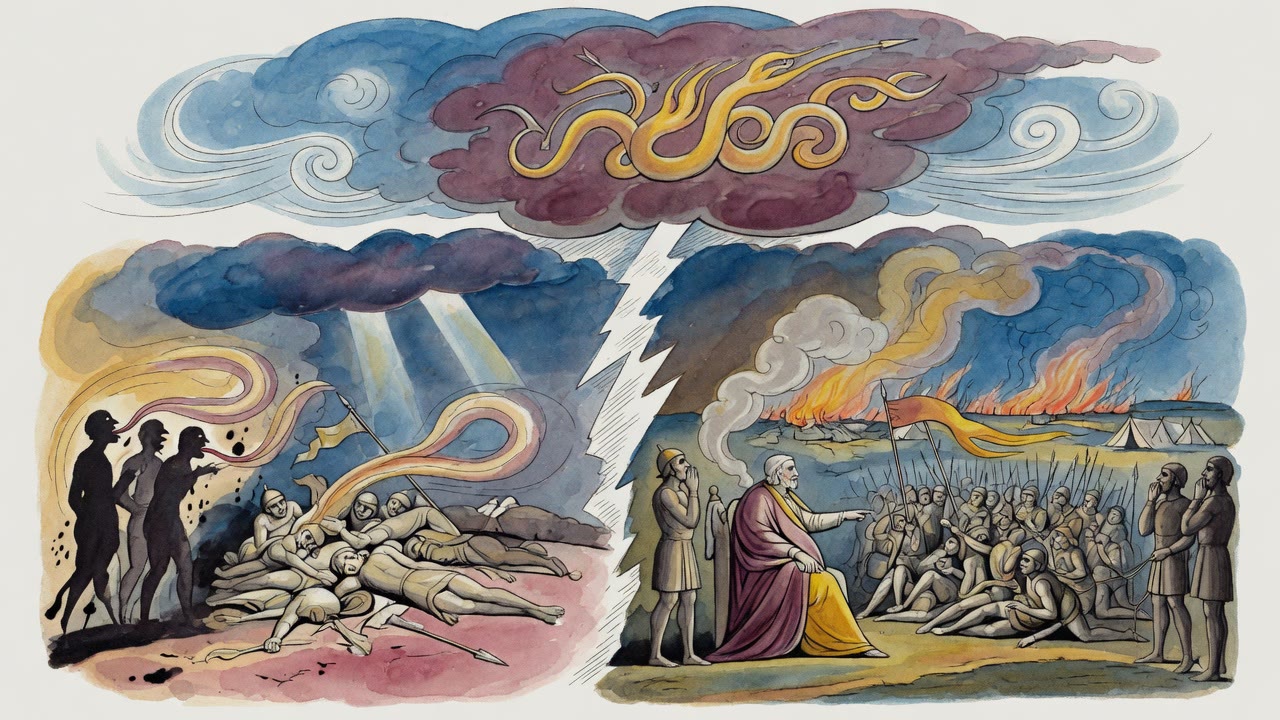
David's pure generation fell in battle because slanderers walked among them, while Ahab's wicked troops won wars in a camp that kept no informers.

Curated by Arthur · Told by Maggid ·
Table of Contents
  1. Silver Refined Seven Times
  2. The Army That Knew Torah and Still Fell
  3. Three Dead From One Mouth
  4. Enemies Made to Confess
  5. What a Camp Must Refuse
The Tongue That Kills Three While Ahab Won Click for full size

Silver Refined Seven Times

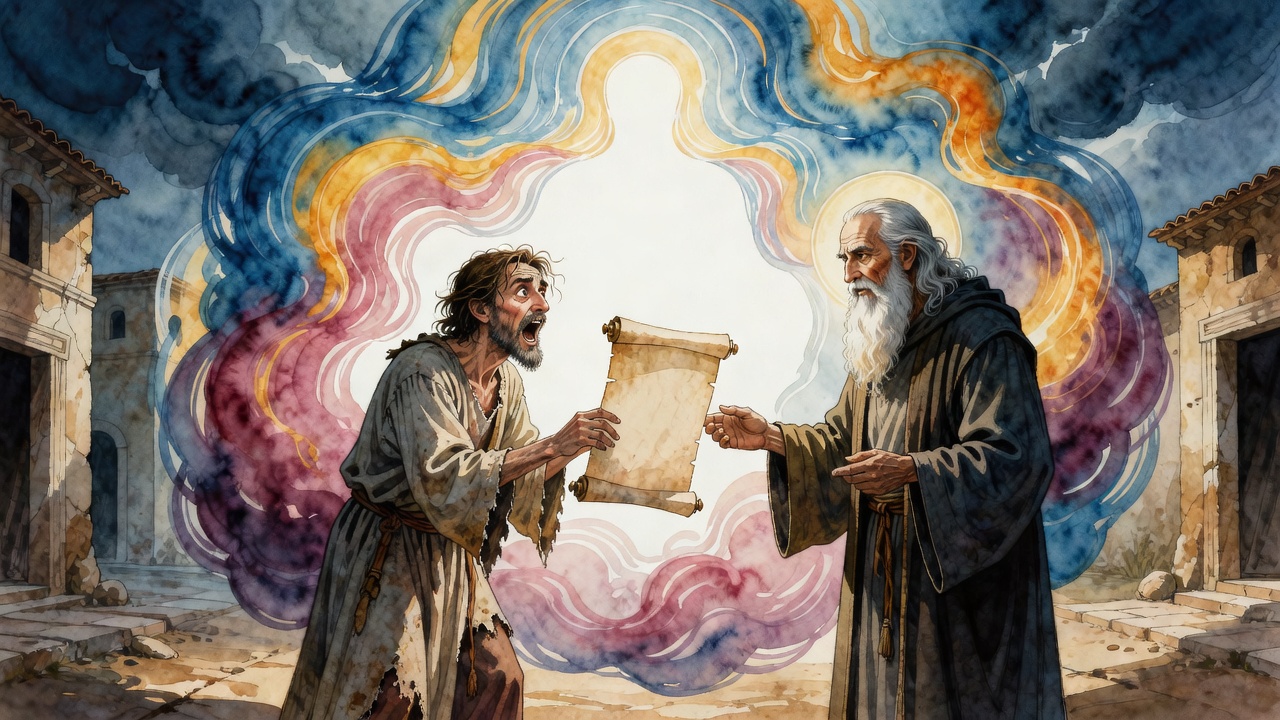
"The words of the Lord are pure words, silver refined sevenfold" (Psalm 12:7). Rabbi Tanhum begins with the gap between Divine speech and royal speech. A mortal king tours a town, basks in cheering, promises bathhouses and water channels, then dies in his sleep with every pledge unkept. The Holy One is different. "The Lord God is truth." His word stands after the speaker's glory has gone quiet.

How careful is that speech? The Torah bends its own grammar rather than utter an ugly term. In Noah's flood the unclean animals are called "not clean," and even forbidden creatures are introduced first by their kosher signs. If Scripture guards its tongue against a harsh word, how much more should a human mouth that claims to teach or to lead an army.

The Army That Knew Torah and Still Fell

In David's day, children could expound pure and impure in dozens of faces. Study halls hummed. And still the army fell in battle, because informers and slanderers walked among them. The generation of wicked King Ahab, by contrast, kept no informers and won their wars. The sages set the contrast without softening either side. Learning without clean speech does not save a camp. Wickedness without talebearing can still march home with victory flags, at least for a season.

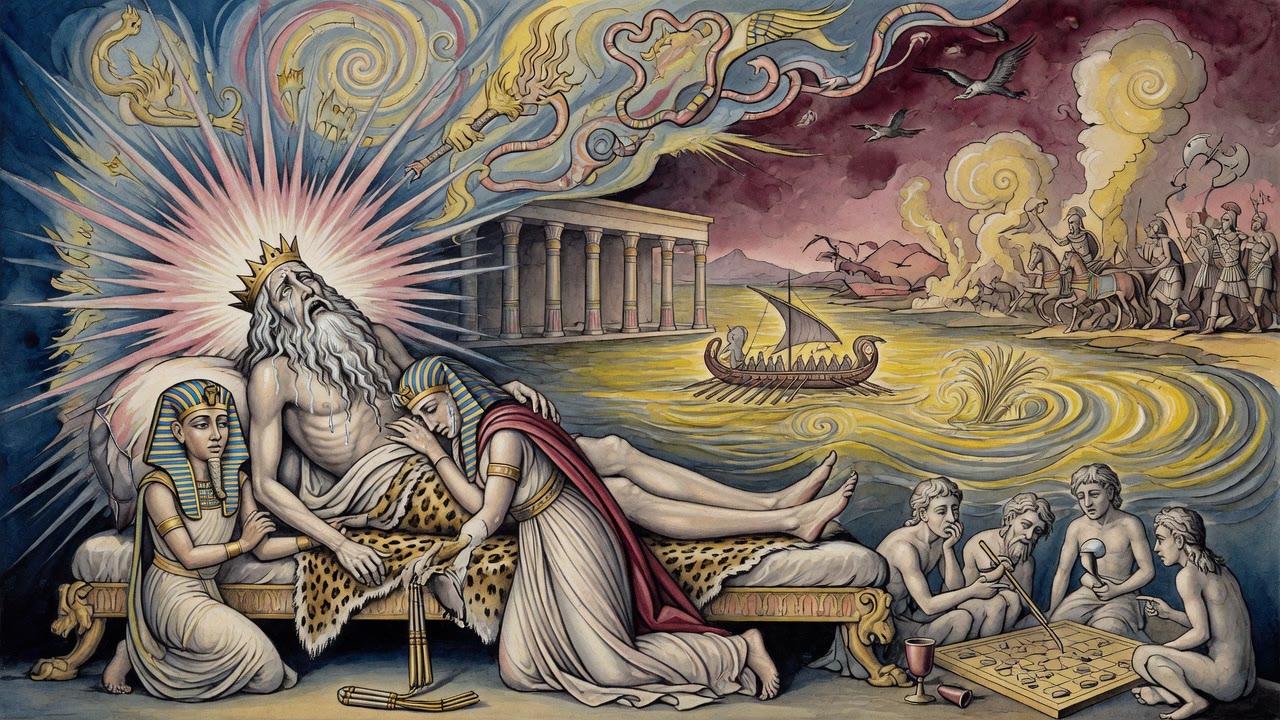
Ahab's reach, in Pirkei DeRabbi Eliezer, stretches from one end of the world to the other in the hyperbolic language of empire. He sends for Elijah through every nation. Princes of the provinces send tribute. Two hundred thirty-two rulers are counted among the young men he musters. Power sat thick in his hand. The midrash is less interested in flattering that power than in noting what his camp refused to host. The whispering that guts an army from inside. The soft knife of a report carried to the wrong ear.

Three Dead From One Mouth

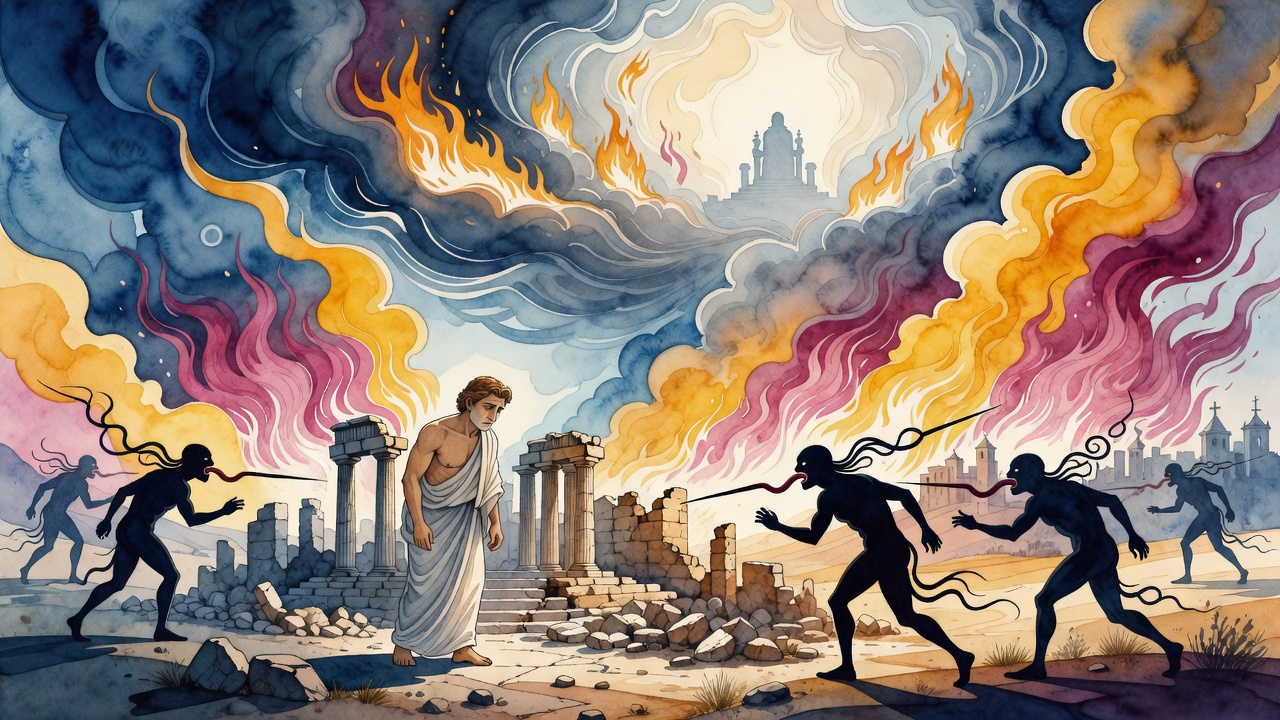
They call it the tongue that kills three. The speaker. The listener. The one spoken about. The serpent was the first slanderer, twisting a command into a suspicion in Eden. Doeg, Abner, Ahimelech, and Saul all fell into the orbit of words that travel farther than knives. A man can speak in one city and kill in another. Gossip needs no border pass. It arrives already armed.

Pure words refine like silver heated seven times. A poisoned tongue destroys at a distance and still calls itself only talk, only concern, only what I heard. The camp that hosts it will count its dead later and wonder why the Torah in its children's mouths did not save them. The answer is older than any battlefield. Three deaths from one mouth leave no room for the claim that speech is light.

Enemies Made to Confess

There is another pressure on speech. God's justice, the sages say, is so finely made that the wicked are punished with the tools they used. The slayers are slain by those they slew. The hangers hang on their own gallows. Those who drowned others are pulled under the sea. And His fiercest enemies are forced at last to confess Him with their own mouths.

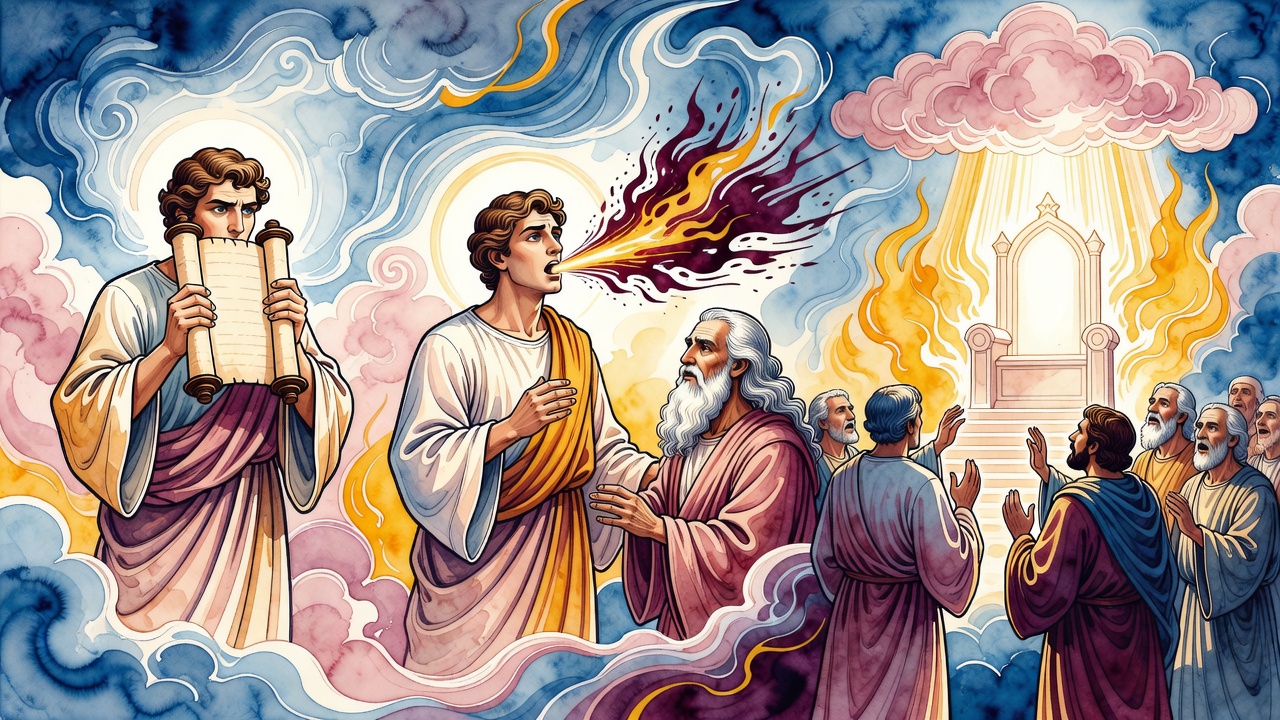
Nebuchadnezzar, who threw three Jews into the furnace, ends by blessing the God of Shadrach, Meshach, and Abed-nego. Sennacherib mocks the God of Israel and leaves the field in shame, made to swallow his boast. Pharaoh, who said he did not know the Lord, is reduced by plagues to admitting that the Lord is the righteous one, and sends Israel out with his own command. The proverb holds. When God favors a man's ways, even his enemies make peace with him. False speech collapses. Forced truth comes out of the mouths that fought it.

What a Camp Must Refuse

David's scholars die with slander in the ranks. Ahab's idolaters win with sealed lips toward one another. Wickedness is not safe. Ahab's end is written elsewhere in blood, prophecy, and a random arrow finding a joint in the armor. What the contrast forces open is simpler and harder. The tongue can undo a righteous generation faster than a foreign spear, and even a corrupt court can stumble into the military advantage of not eating its own.

Guard the silver of speech. Refuse the third death. Let enemies, if they must speak, be driven to truth by Heaven rather than hired as informers by their neighbors. A child who can parse purity laws is not yet a wall around a camp. A mouth that will not sell a brother is. When the drums beat and the banners lift, count first who is whispering behind the lines, and only then who stands across the field with iron.


← All myths

From the tradition

Sources

3 sources

The texts behind this telling. Some cards carry a translation of the source; others are our own retelling of it, and each card says which. Every card links out to the original.

Pesikta DeRav Kahana 4:2Pesikta de-Rav Kahana

Translation of the source text.Pesikta de Rav Kahana according to an Oxford manuscript, Dov Mandelbaum ed., N.Y. 1987 · CC-BY

Rabbi Tanhum son of Hanilai opened: "The words of the LORD are pure words, silver refined in a crucible on the earth, purified sevenfold" (Psalms 12:7). Rabbi Tanhum son of Hanilai said: The words of the LORD are pure words; the words of the Holy One, blessed be He, are [true] words, but the words of flesh and blood are not [reliable] words. In the way of the world, a mortal king enters a province, and the people of the province praise him, and their praise is pleasing to him, and he says to them: Tomorrow I will build you bathhouses, tomorrow I will bring you a water channel; then he goes to sleep and never rises again. Where is he, and where are his promises? But the Holy One, blessed be He, is not so; rather, "the LORD God is truth" (Jeremiah 10:10). What is "truth"? Rabbi Abun said: that He is the living God and eternal King (Jeremiah 10:10).

"Pure": Rabbi Judah in the name of Rabbi Yohanan, and Rabbi Berekhiah in the name of Rabbi Eleazar, and Rabbi Jacob of Kefar Hanin, and some say it in the name of Rabbi Joshua ben Levi: We find that the Holy One, blessed be He, bent two or three words in the Torah so as not to bring forth an impure expression from His mouth, as it is written, "Of every clean animal take to yourself seven" (Genesis 7:2), but of the animal that is impure it is not written here "impure," rather "that is not clean, two, a male and its mate" (Genesis 7:2). Rabbi Judah son of Rabbi Menasheh said: And when He came to set out for them the signs of the impure animal, He opened only with the signs of the clean animal: "the camel, because it does not part the hoof" is not written thus, but rather "because it brings up the cud" (Leviticus 11:4); "the rock-badger, because it does not part the hoof" is not written thus, but rather "because it brings up the cud" (Leviticus 11:5); "the hare, because it does not part the hoof" is not written thus, but rather "because it brings up the cud" (Leviticus 11:6); "the pig, because it does not bring up the cud" is not written thus, but rather "because it parts the hoof" (Leviticus 11:7).

Rabbi Yose of Maliha, Rabbi Joshua of Sikhnin in the name of Rabbi Levi: Little children in the days of David, before they had tasted the taste of sin, knew how to expound the Torah in forty-nine faces of impurity and forty-nine faces of purity. And David would pray over them and say, "You, O LORD, will guard them" (Psalms 12:8): guard their Torah within their hearts; "You will preserve him from this generation forever" (Psalms 12:8): from that generation that is liable to destruction. And after all this praise, they would go out to war and fall, because there were informers among them; therefore they went out to war and fell. This is what David said: "My soul is among lions; I lie among those who blaze" and so on (Psalms 57:5). "My soul is among lions": these are Abner and Amasa, who were lions in Torah. "I lie among those who blaze": these are Doeg and Ahithophel, who blazed after slander. "Men whose teeth are spears and arrows" (Psalms 57:5): these are the men of Keilah, as it is written, "Will the masters of Keilah hand me over, me and my men?" and so on (1 Samuel 23:12). "And their tongue a sharp sword" (Psalms 57:5): these are the Ziphites, as it is written, "When the Ziphites came and said to Saul" and so on (Psalms 54:2). At that hour David said before the Holy One, blessed be He: Master of the worlds, what is the Divine Presence doing on earth? "Be exalted above the heavens, O God" (Psalms 57:6); remove Your Presence from among them. But the generation of Ahab were all idol-worshippers, and because there were no informers among them, they would go out to war and conquer. This is what Obadiah said to Elijah: "Was it not told to my lord what I did when Jezebel killed the prophets of the LORD?" and so on (1 Kings 18:13); if bread, why water? Rather, this teaches that the water was harder for him to bring than the bread. And Elijah proclaimed at the head of Carmel and said, "I alone am left a prophet to the LORD" (1 Kings 18:22), and all the people knew it and did not make it known to the king.

Rabbi Samuel son of Nahman said: They say to the serpent: Why are you found among the fences? It said to them: Because I am the one who breached the fence of the world. Why do you go along with your tongue darting? It said to them: Because it caused me [my downfall]. Why do all beasts and animals bite without killing, while you bite and kill? It said to them: "If the serpent bites without a whisper" (Ecclesiastes 10:11); is it possible that I do anything unless I am told from on high? And why do you bite one limb and all the limbs feel it? It said to them: To me you say this? Say it to the master of the tongue, who speaks here and kills in Rome. And why is its name called "the third one"? Because it kills three: the one who speaks it, the one who receives it, and the one of whom it is spoken. And in the days of Saul it killed four: Doeg who spoke it, Saul who received it, Ahimelech of whom it was spoken, and Abner.

Why was Abner killed? Rabbi Joshua ben Levi, Rabbi Shimon ben Lakish, and the rabbis. Rabbi Joshua ben Levi said: because he put his own name before David's name, as it is written, "And Abner sent messengers to David on his behalf, saying: Whose is the land?" (2 Samuel 3:12); he wrote "From Abner to David." And Rabbi Shimon ben Lakish said: because he made the blood of young men into sport, as it is written, "And Abner said to Joab: Let the young men arise and make sport before us" (2 Samuel 2:14). And the rabbis said: because he did not wait for Saul to be reconciled with David, when he said, "And my father, see, yes see, the corner of your robe" and so on (1 Samuel 24:11); Abner said to him: What do you want from this fellow? You caught it on a thorn. And when they came near to the encampment, David said, "Will you not answer, Abner?" (1 Samuel 26:14): you said about the corner that it caught on a thorn; how then did the spear and the water-jug catch on a thorn? And some say: because it was within his power to protest against the slaughter of Nob, the city of priests, and he did not protest.

Rabbi Hanan son of Pazi expounded the verse with regard to the portion of the heifer, which has in it sets of seven and seven: seven heifers, seven burnings, seven sprinklings, seven washings, seven impure, seven pure, seven priests. If a person says to you they are fewer, say to him: Moses and Aaron too were included, "And the LORD spoke to Moses and to Aaron, saying: This is the statute of the Torah" (Numbers 19:1, 2).

Full source
Pirkei DeRabbi Eliezer 11:15Pirkei DeRabbi Eliezer

Retold in our words. Read the original at the link below.Pirke de Rabbi Eliezer, trans. Rabbi Gerald Friedlander, London (1916) · CC-BY

Pirkei DeRabbi Eliezer turns to Death of Ahab.

The text emphasizes the sheer scope of Ahab's dominion. It says he ruled "from one end of the world to the other." Now, that’s a pretty bold claim. But it backs it up with a verse from (1 (Kings 18:1)0): "As the Lord thy God liveth, there is no nation or kingdom, whither my lord hath not sent to seek thee." for a second. Ahab’s reach was so extensive, he could send emissaries searching for someone – in this case, the prophet Elijah – to practically any corner of the known world. It speaks to a level of influence that's almost hard to fathom.

It doesn’t stop there. Pirkei DeRabbi Eliezer goes on to say that all the princes of the provinces were controlled by him. They sent tribute and presents to Ahab. Basically, he was raking in the dough and the respect from all over.

Here’s where it gets really interesting. The text asks, "Are not all the princes of the provinces of the world two hundred and thirty-two?" And it answers itself with another verse, this time from (1 (Kings 20:1)5): "Then he mustered the young men of the princes of the provinces, and they were two hundred and thirty-two."

So, according to this interpretation, Ahab had sway over a staggering 232 princes! That’s a LOT of power, a LOT of influence. We're talking about a network of control that spanned vast distances.

What does it all mean? Well, it's easy to get caught up in the numbers and the sheer grandiosity of the claim. But perhaps the real takeaway is the way ancient texts sometimes amplified the power of biblical figures, turning them into almost mythical rulers. Was Ahab REALLY that powerful? Maybe, maybe not. But the story, the legend, certainly makes him out to be something extraordinary. A king who, for a time, held the world in his grasp.

Full source
Yalkut Shimoni on Torah 225:8Yalkut Shimoni on Torah

Translation of the source text.Torat Emet (Yalkut Shimoni) · CC-BY-NC

"Say to God, How awesome are Your deeds" (Psalms 66:3). Say to the good Worker, well done. "How awesome are Your deeds," how fearsome are these contrivances of Yours: those who are slain slay their slayers, those who are hanged hang their hangers, and those sunk in the sea sink those who sank them.

"Through the greatness of Your strength Your enemies come cringing to You" (Psalms 66:3): they shall lie and be made into cringing, fawning enemies. Nebuchadnezzar said, "Blessed be the God of Shadrach, Meshach, and Abed-nego" (Daniel 3:28). Sennacherib said, "Who among all the gods of the lands" and so on (II Kings 18:35); he did not move from there until he was made to recant, as it says, "And he returned in shame of face to his own land" (II Chronicles 32:21).

Pharaoh said, "I do not know the LORD" (Exodus 5:2), and he was made into one who recants, as it says, "The LORD is the righteous one" (Exodus 9:27). He said, "And also Israel I will not send out" (Exodus 5:2), yet he himself sent them out, as it says, "And it came to pass when Pharaoh sent out the people."

"When the LORD favors a man's ways" (Proverbs 16:7), these are Israel, of whom it is written, "every man of Israel" (Deuteronomy 29:9). "He makes even his enemies be at peace with him," this is Pharaoh, of whom it is written, "The enemy said" (Exodus 15:9). Therefore it is said, "And it came to pass when Pharaoh sent out the people."

Full source