David Lost the Temple to Whispering Tongues
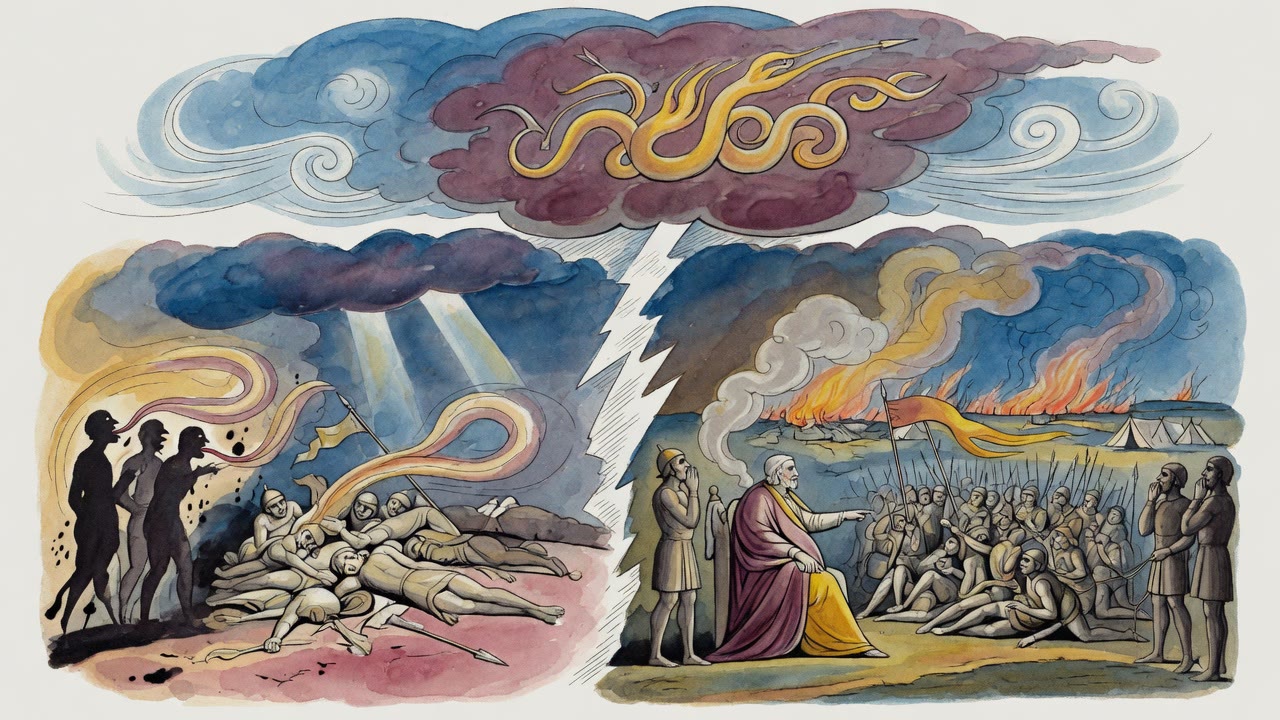
David longed to build God's house and was refused. Informers like Doeg turned tongues into spears, Nov burned, and justice still outweighed every offering.
Table of Contents
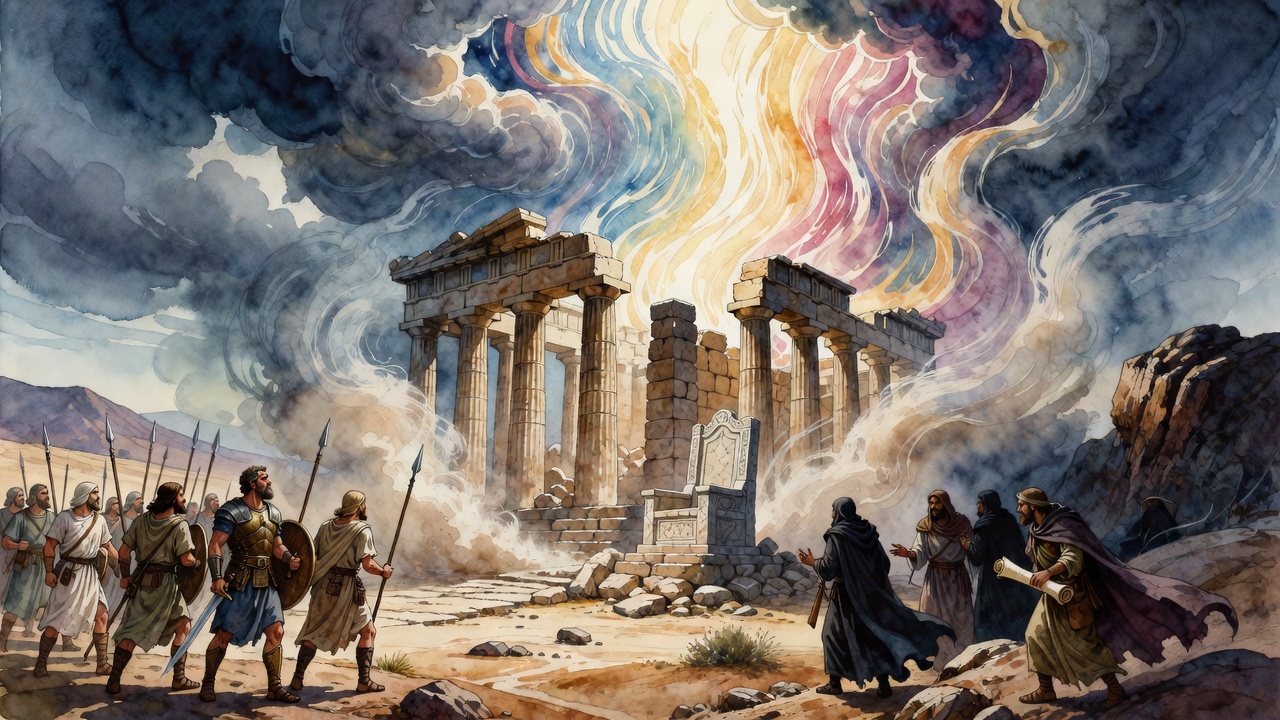
David stood under an open sky with stone dust on his palms and a house in his mind that Heaven would not let him raise.
 Click for full size
He had carried the Ark. He had danced until his dignity tore. He had stacked cedar plans the way other kings stack trophies. Then the word came through Nathan and did not soften. "It will not be you who will build for Me a house in which to dwell, for I have not dwelled in a house since the day that I brought up Israel to this day" (I Chronicles 17:4-5).
David's jaw set. The refusal was not a small delay. It was a door closed on the work he wanted most. Some in the court may have smiled in private at the king's demotion from builder to mere dreamer. He heard the decree and kept his feet. Wanting a Temple is not the same as being allowed to set its first course of stone. He wiped dust on his cloak and left the measuring line where it lay.
Justice Walked When the Altar Could Not
Offerings need walls, priests, and a fire that is allowed to burn. Righteousness and justice need only a living hand and a day that has not ended.
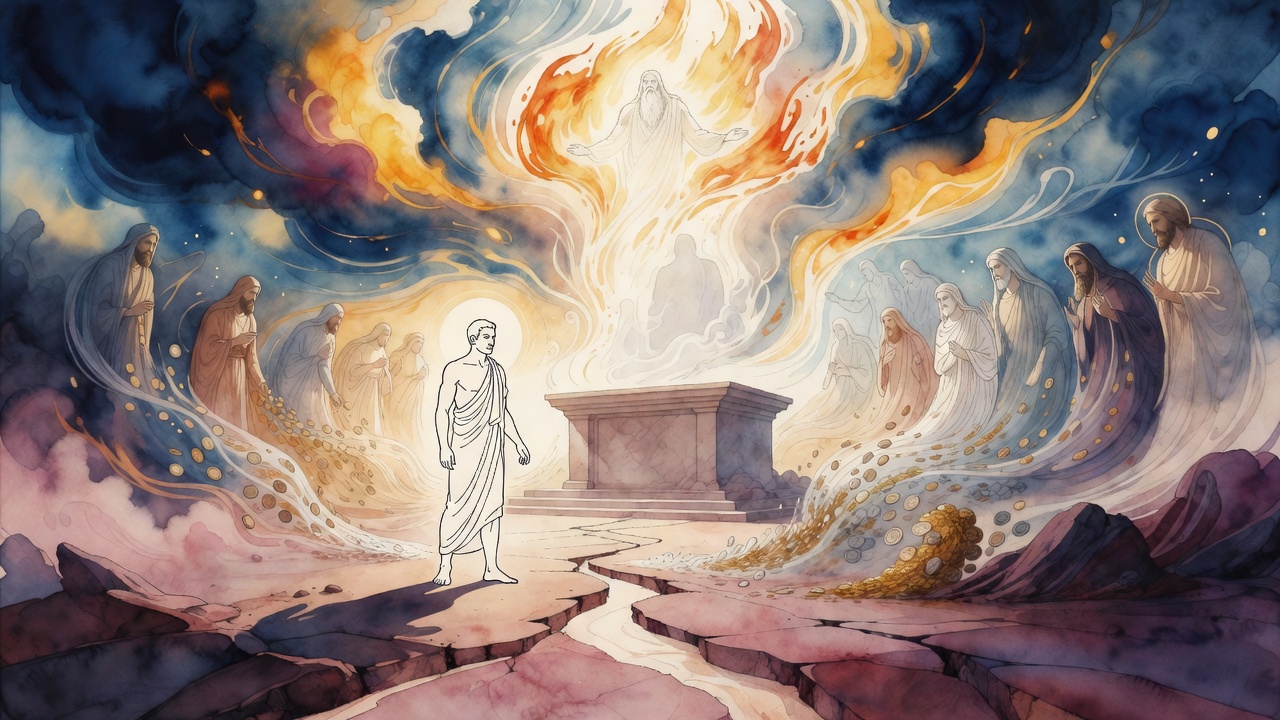
"Acting with righteousness and justice is preferable to the Lord, more than an offering" (Proverbs 21:3). Not equal to an offering. More. A korban waited on the standing House in Jerusalem. Tzedek and mishpat did not wait. They atoned for the unintentional miss and for the sin done with open eyes. They reached the upper worlds while smoke from a single altar stayed bound to one courtyard's air. They mattered in this life and in the life that follows, when no knife is left on any table of stone.
David, denied the grand ritual he craved, still held the older work. Judge the case. Protect the weak. Refuse the bribe. The house he could not build did not cancel the justice he could still do before nightfall. God preferred that walking law to the most carefully stacked wood on an altar that, in David's day, still had no permanent roof.
He sat in the gate with the taste of refusal still in his mouth and heard a dispute over a field boundary. Two men shouted. A third held a frayed rope as evidence. David asked questions until the noise thinned, then ruled. The ruling stood. No beam of cedar moved, and Heaven was not poorer for the lack of beams. A widow left with her portion secured. The king's hands, empty of temple plans, still closed a case.
Informers Kept the Presence from Settling
Three charges met Israel at the threshold of the land: wipe out the memory of Amalek, appoint a king, and build the Temple. The first two found hands. The third stalled, and the stall was not only timber and gold.
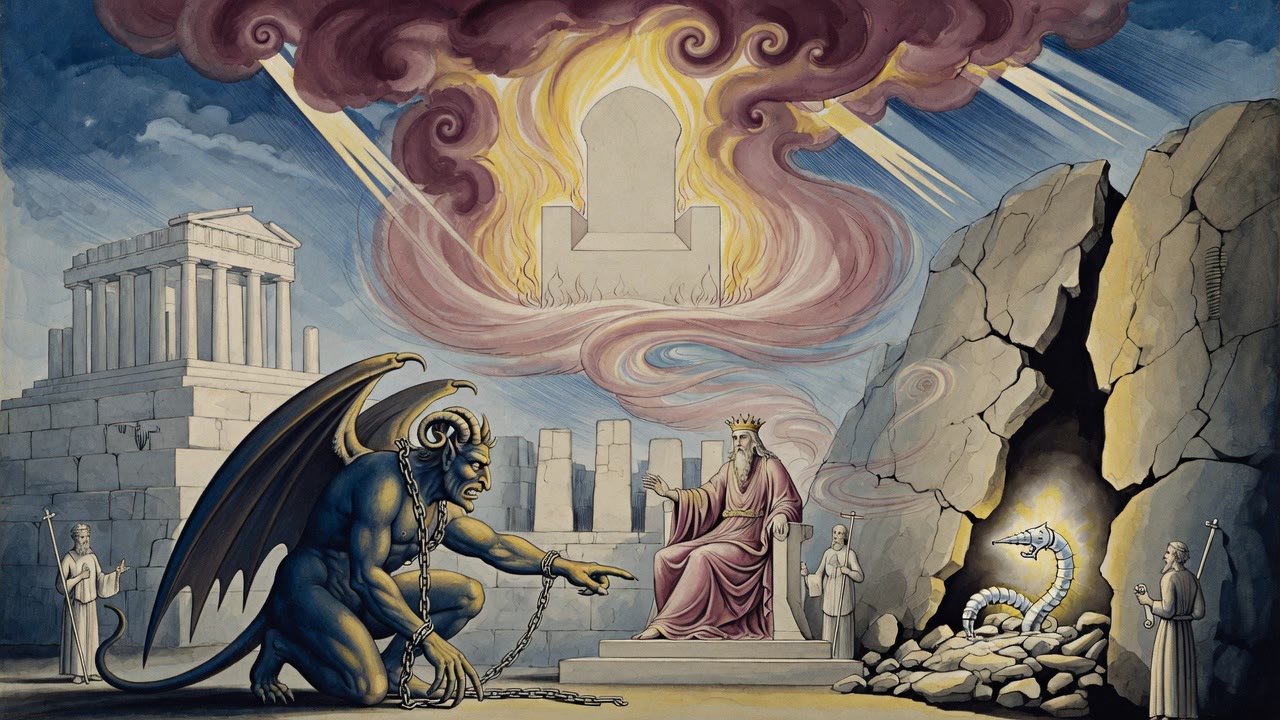
Informers filled the cracks. Mosrim carried reports the way other men carry water, from mouth to ear to ruin. A whisper in a courtyard became a charge in a throne room by nightfall. Where malicious speech ran free, the Shechinah (שכינה), the Divine Presence, would not settle into boards and curtains as if gossip were only weather. A sacred space cannot rest on a foundation of whispered knives.
In the days of Ahab, idolatry stained the streets, and still the army won, because the camp did not feed on betrayal from within. Men who bowed to wrong gods somehow kept faith with one another's lives. In the days of Saul, the people looked cleaner on the surface, and defeat found them, because Doeg the Edomite and the Zifites worked their tongues against David without rest. Victory followed silence that refused to sell a brother. Defeat followed the report that turns a man into prey.
David learned that grammar in caves and on roads where every footfall might be a sold step. He slept lightly. He moved camp when a look lasted too long. He could plan a Temple in his head on cold stone. He could not force the Presence to sit among a people who made speech into a weapon sharper than the spear he once refused to throw at Saul.
Doeg's Tongue Emptied a Priestly City
Doeg stood before Saul with information polished until it shone like loyalty.
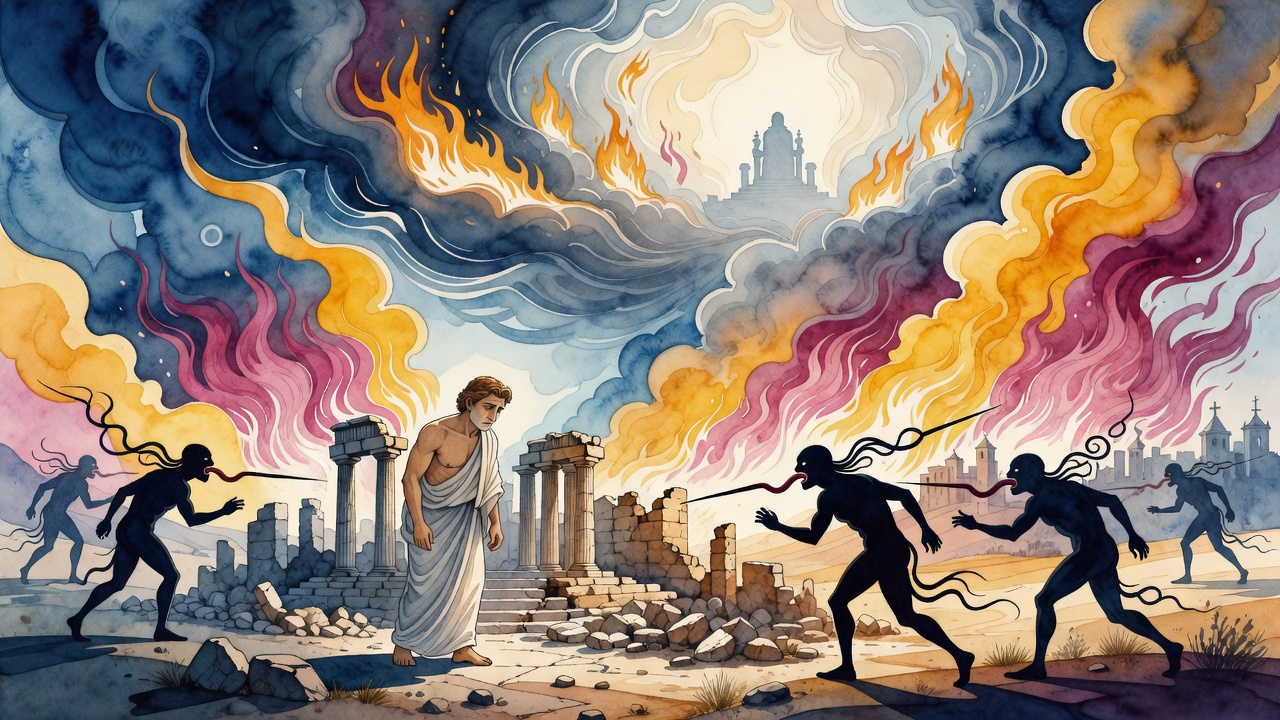
He named Ahimelech. He named the bread. He named the sword of Goliath given into David's hand. He did not name mercy. He did not name the hunger of a fleeing servant of the king. Saul's fear took the report and turned it into a sentence. The city of Nov, city of priests, fell under the sword that follows a tongue (I Samuel 22). Men who handled holy bread died because a mouth had made them enemies of the crown. Smoke rose where study and sacrifice had shared the same air.
Three die from malicious speech: the speaker, the listener who drinks it in, and the one who is named. Doeg spoke. Saul heard. Nov burned in blood. Teachers later named that ruin the third speech, because one act of language finishes three lives at once. The serpent in the first garden had already proven that a sentence can unmake a world. Doeg only proved it again with a court for a stage and a king for an audience.
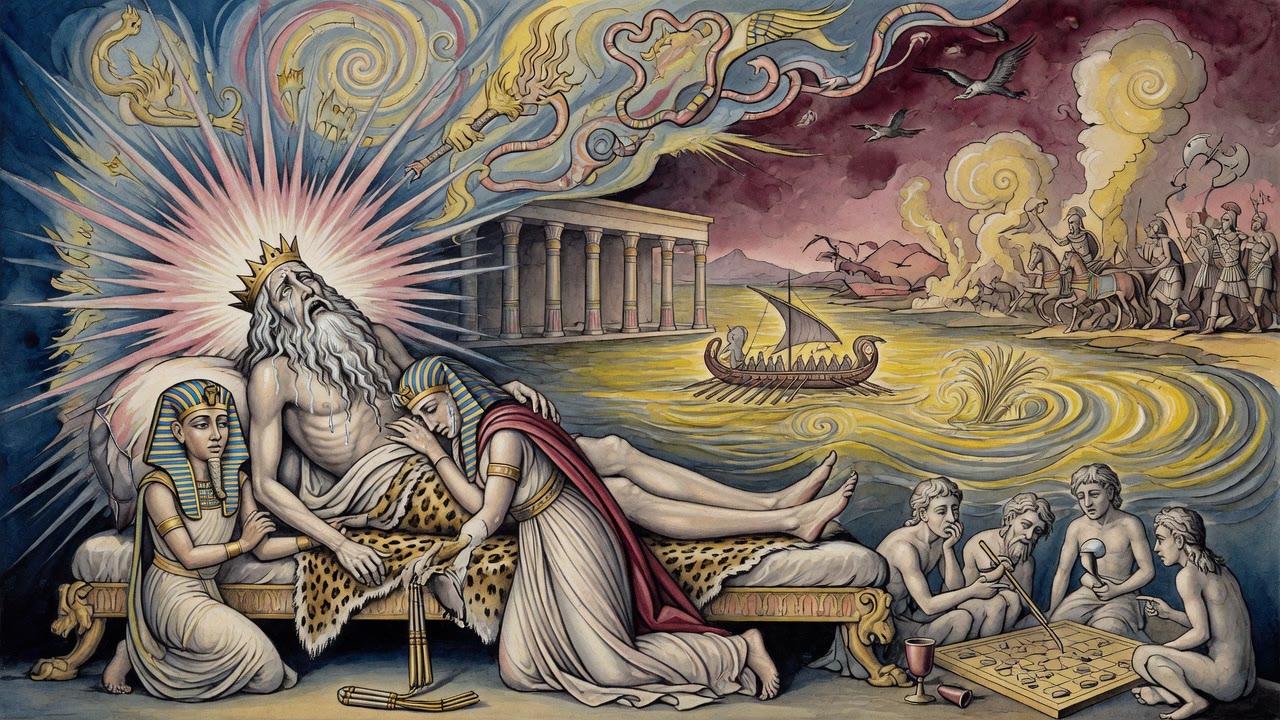
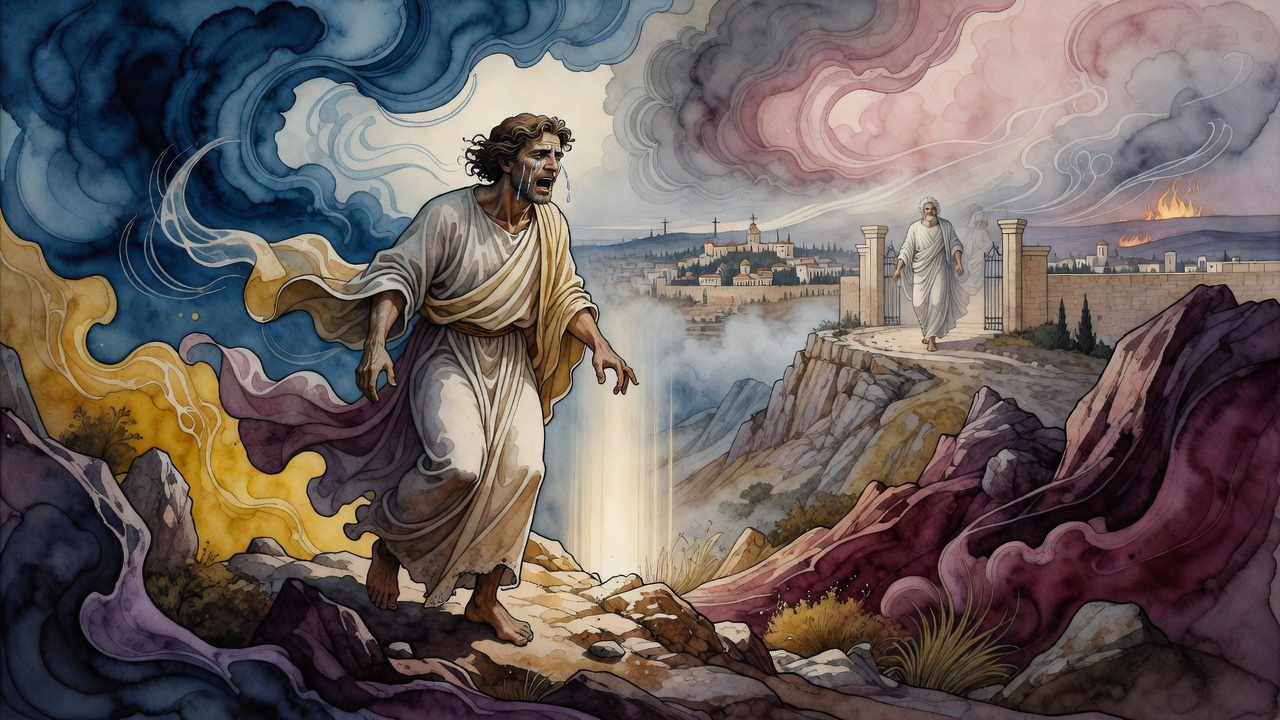
David, when he heard, tore cloth and carried the weight of priests who had helped him and paid for the help with their city's life. Ash might as well have been on his own head. The Temple he wanted would one day need priests. The informer's hour had already taught him how easily a priesthood can be emptied by a single accurate, merciless report.
Spears and Arrows of the Mouth
Hunted, David put the shape of his terror into a psalm that still cuts.
He lay among men whose tongues were spears and arrows, whose words were a sharpened sword (Psalm 57). The danger was not only the army on the ridge. The danger was the sentence that would travel faster than feet and arrive at Saul's ear before David could move camp. He looked up and cried for God to rise above the heavens, to lift the Presence out of a lower air poisoned by speech, as if the Divine Presence had no business remaining among mouths that kill without drawing a blade.
Anyone who deals in lashon hara drives that Presence away. A house for God cannot rest on walls built of other people's secrets sold for favor. David knew that law in his bones long before any architect drew a court plan. Every sold report was a brick pulled from a future wall.
David never raised the House. Solomon would set the stones later under a quieter political sky. What David raised instead was a life that kept choosing justice when ritual grandeur was denied, and a memory of Nov that would not let speech pretend it is harmless air. He walked from the closed door of the Temple he would not build into the open work of mishpat, with Doeg's report still smoking in the rear of history and the psalm's spears still flying in the dark over his head.
Night came down on Jerusalem's future site with no cedar yet cut for beams. David washed his hands of other men's blood where he could, judged the case in front of him, and left the permanent roof to a son. The tongues that had emptied Nov did not get to write the last line. Justice, which needs no standing House, kept moving through his days when the altar he dreamed of still had nowhere to stand.
← All myths