5 min read

David Sees the Wicked Flourish Like a Green Tree

Nebuchadnezzar burned the House, then ate grass in the field until his mind came back. When he praised God as just, David's throat tightened.

Curated by Arthur · Told by Maggid ·
Table of Contents
  1. The Names That Had No Share
  2. The Tree That Should Have Burned
  3. Yesterday and Today in One Mouth
  4. The Seat God Would Not Let Him Leave
  5. Praise That Makes a Throne

David set the names down like stones on a scale. Doeg. Ahithophel. Workers of iniquity who could speak a true sentence with a crooked heart. He hated them not for loud lies, but for truth bent toward ruin. When he sang of the wicked, the song did not stop at Saul's court. It ran forward until it found a man flourishing like a native tree, green where ash should have been.

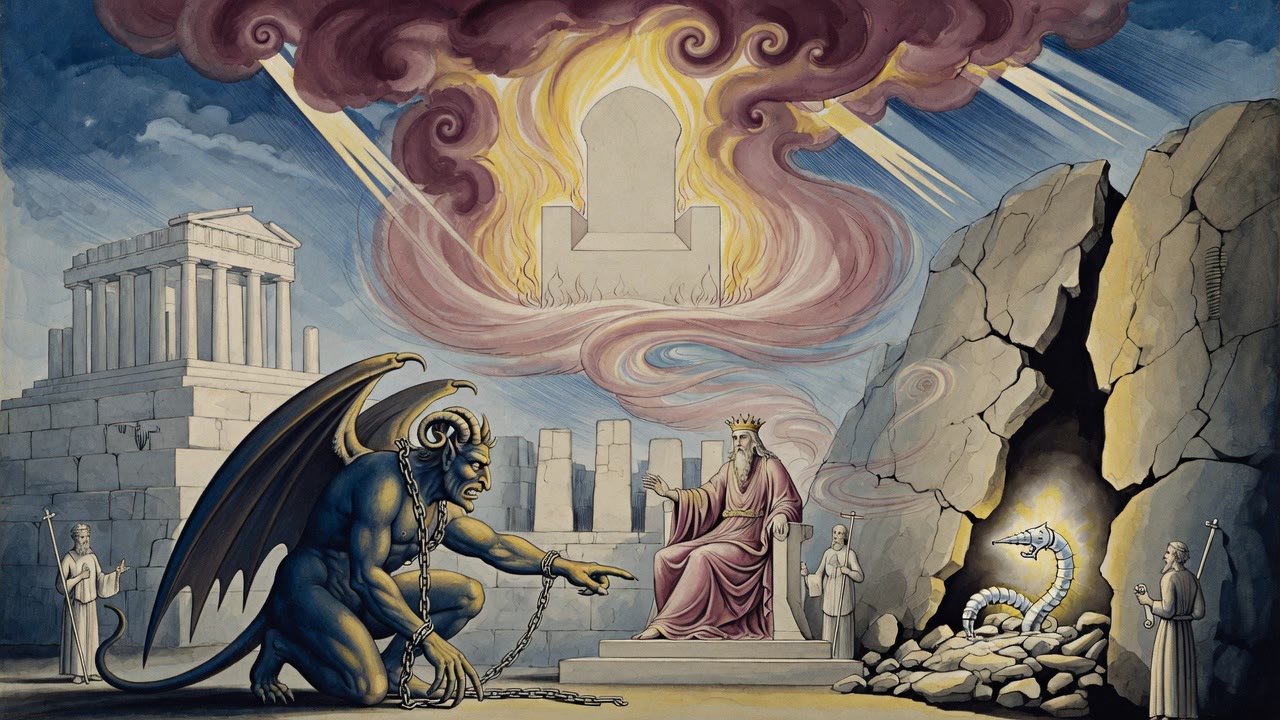
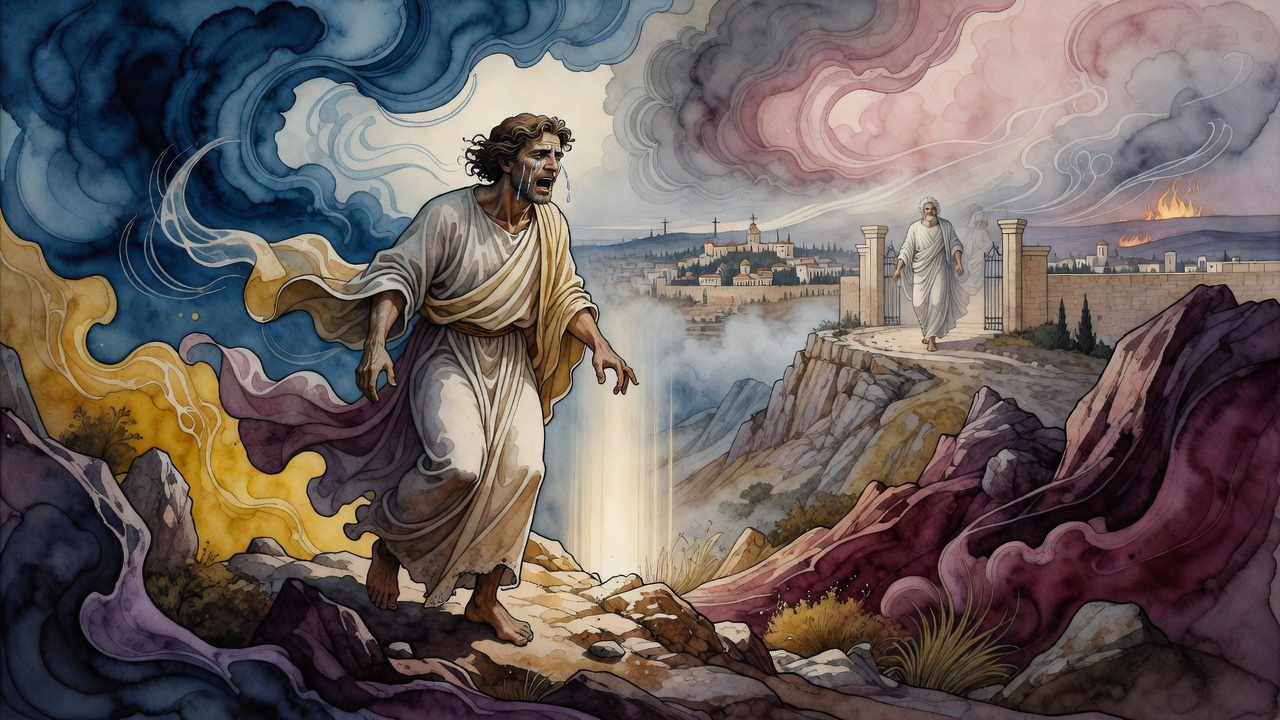
David Sees the Wicked Flourish Like a Green Tree Click for full size

That man was Nebuchadnezzar.

The Names That Had No Share

In the court stories David still carried in his bones, Doeg had reported on the priests of Nob with accurate words and murderous aim. Ahithophel had given counsel that cut clean and cut wrong. Their speech was not empty. It was sharp enough to kill. The tradition later placed them with Balaam and Gehazi among those who had no share in the World to Come. David did not need the later list. He already knew the taste of a sentence that was fact and still poison.

He wrote, "I hate all workers of iniquity," and meant the ones who serve heaven's vocabulary while emptying it. He wanted God to rise. He wanted enemies to scatter the way smoke scatters when a wind finally turns. He waited for the green tree to wither.

The tree did not wither on schedule.

The Tree That Should Have Burned

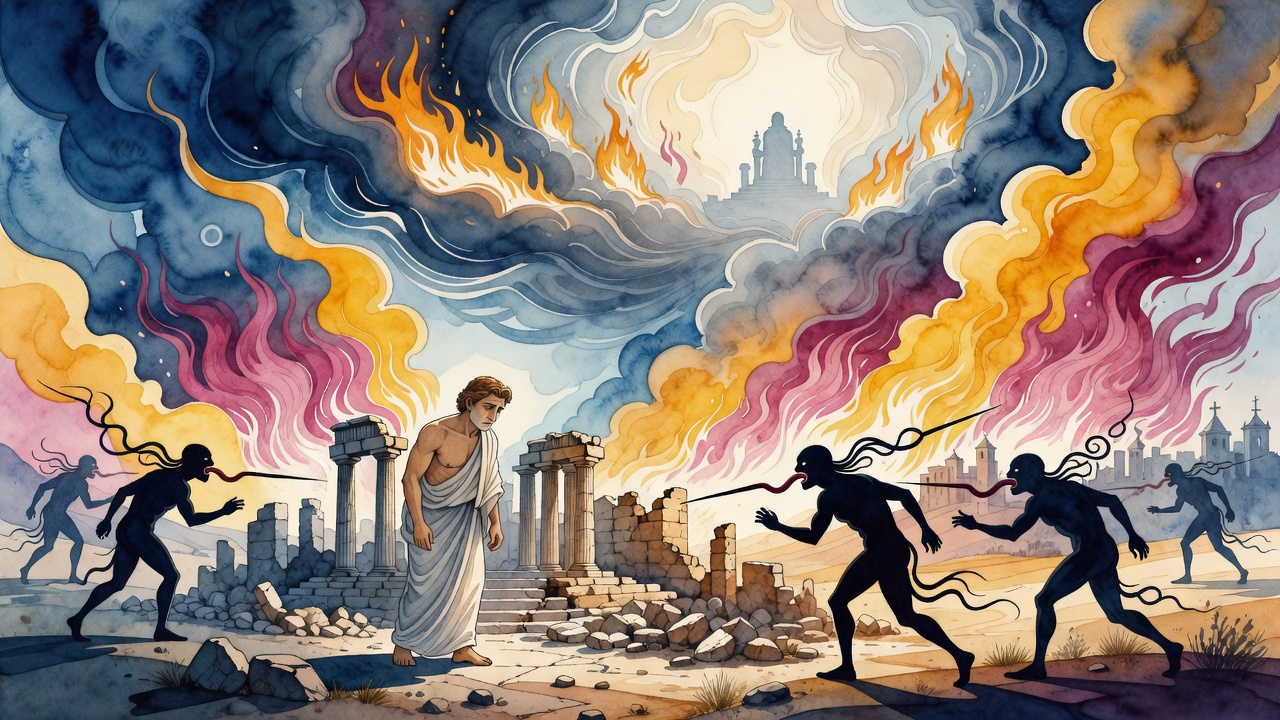
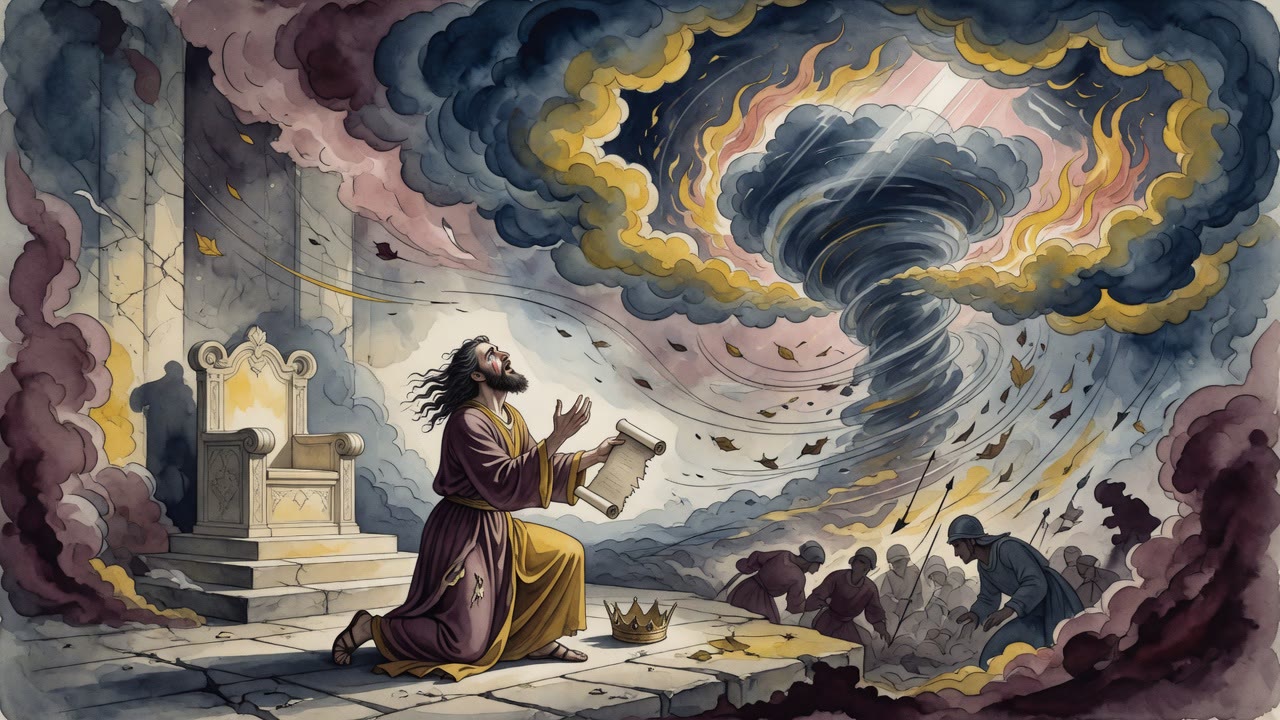
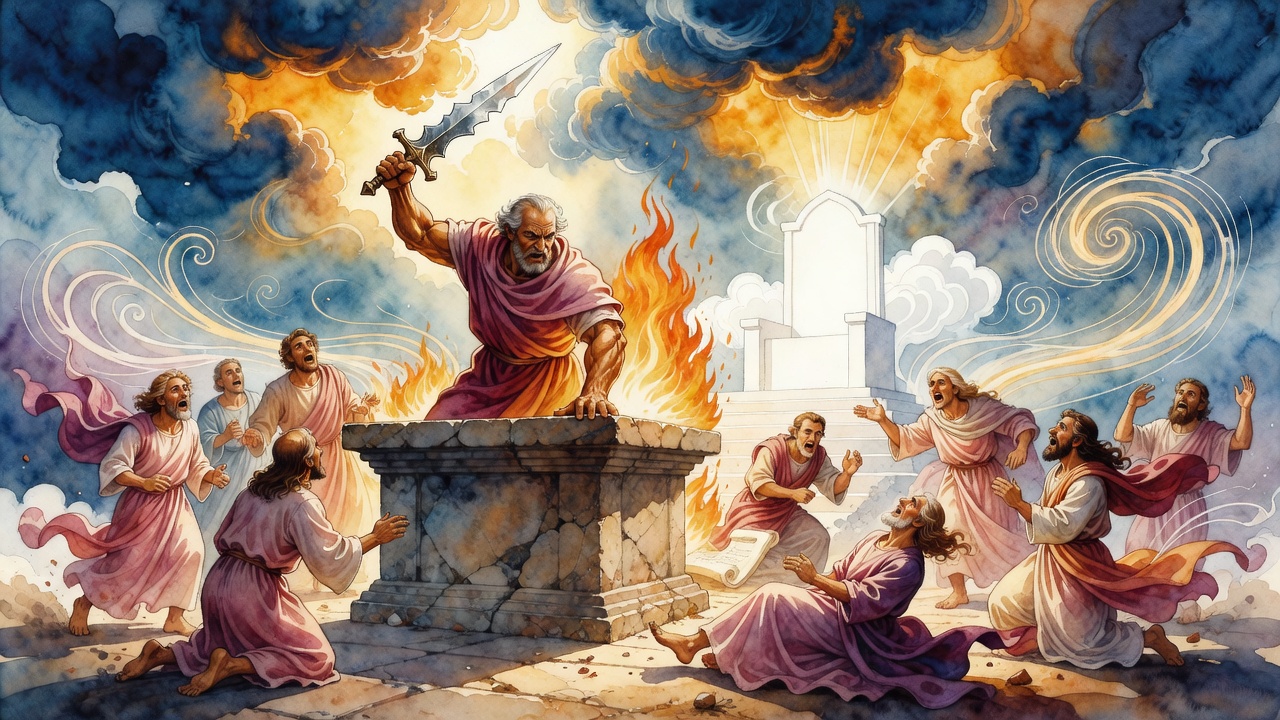
Nebuchadnezzar smashed the Temple. He dragged vessels into a foreign hall. He stood over the remnant and asked who could deliver them from his hand. Pride filled the room like heat. Then the years of madness came, dew on his body, grass for bread, and when his mind returned he lifted his eyes to heaven and declared that all the Most High's acts are just and his ways are right.

David heard that confession across the generations of his own psalms. It was the worst kind of late music. The destroyer had learned the language of justice after the stones of Jerusalem were already cold. Moses had said the Rock's work is perfect and all his ways are justice. Now a king who had denied the Rock repeated the Rock's line.

David's throat tightened. If the man who burned the House could stand and praise, what weight remained in the old hate of false intent? What remained of the prayer that God would rise and scatter those who hate him?

Yesterday and Today in One Mouth

Heaven answered the double speech. Yesterday you asked who is the god that will deliver from my hands. Today you say you want neither me nor my punishment. Who will make me contemptible among the people I formed for myself, that they may proclaim my praise?

The rebuke did not deny that Nebuchadnezzar had been humbled. It denied that a late bow could erase the boast that had taught the nations to sneer. Praise torn from a broken pride was still praise. It was not the same as the praise of a people built for song. Hannah had already said the Lord kills and makes alive, lowers and raises. Nebuchadnezzar echoed the pattern after the furnace and the field. Echo was not covenant.

David set the green tree beside that answer and left it standing. The wicked could flourish. The wicked could even learn to speak justice. The people formed for praise still carried the ledger of the fire.

The Seat God Would Not Let Him Leave

Far earlier, under the oaks of Mamre, Abraham had felt the Presence stand before him and had tried to rise. Respect pulled his knees under him. He started up from the dust of hospitality. God told him to stay seated. It is a good sign for your children that they will sit while I stand. God stands in the congregation of the mighty. The posture was not insult. It was a promise that judgment and defense would find Israel already in place, seated as a household while the Presence stood among them.

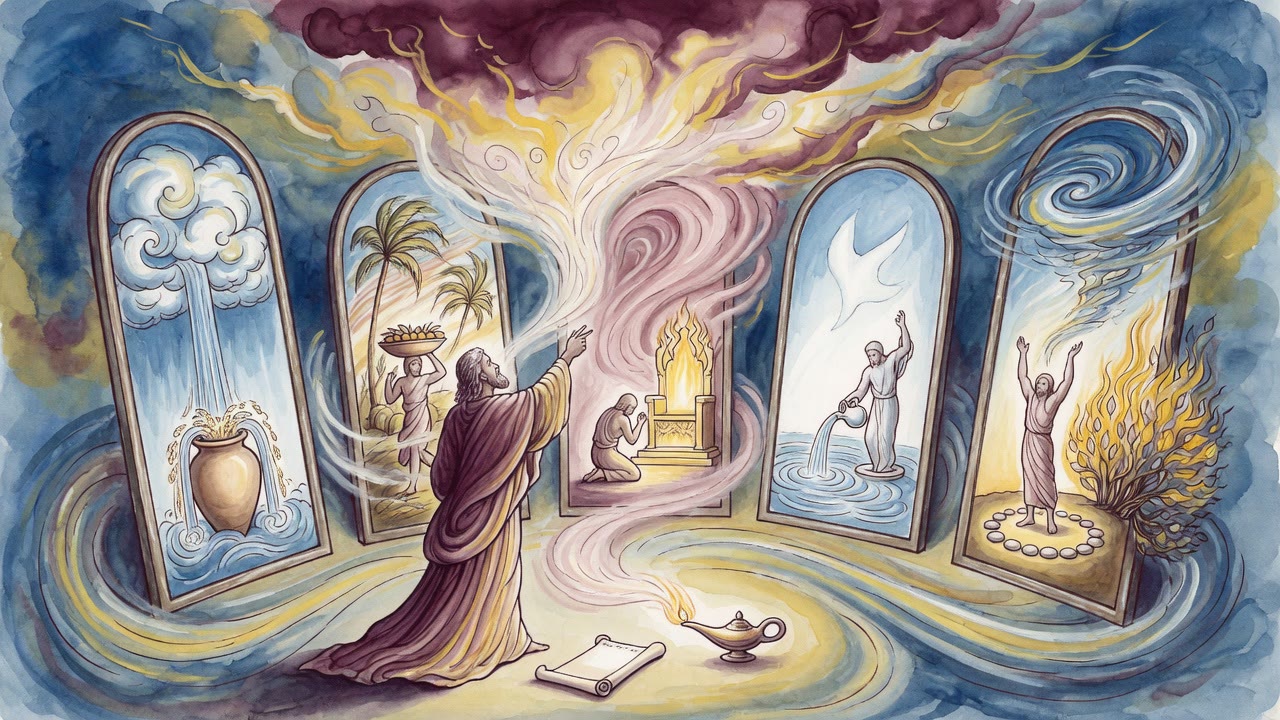
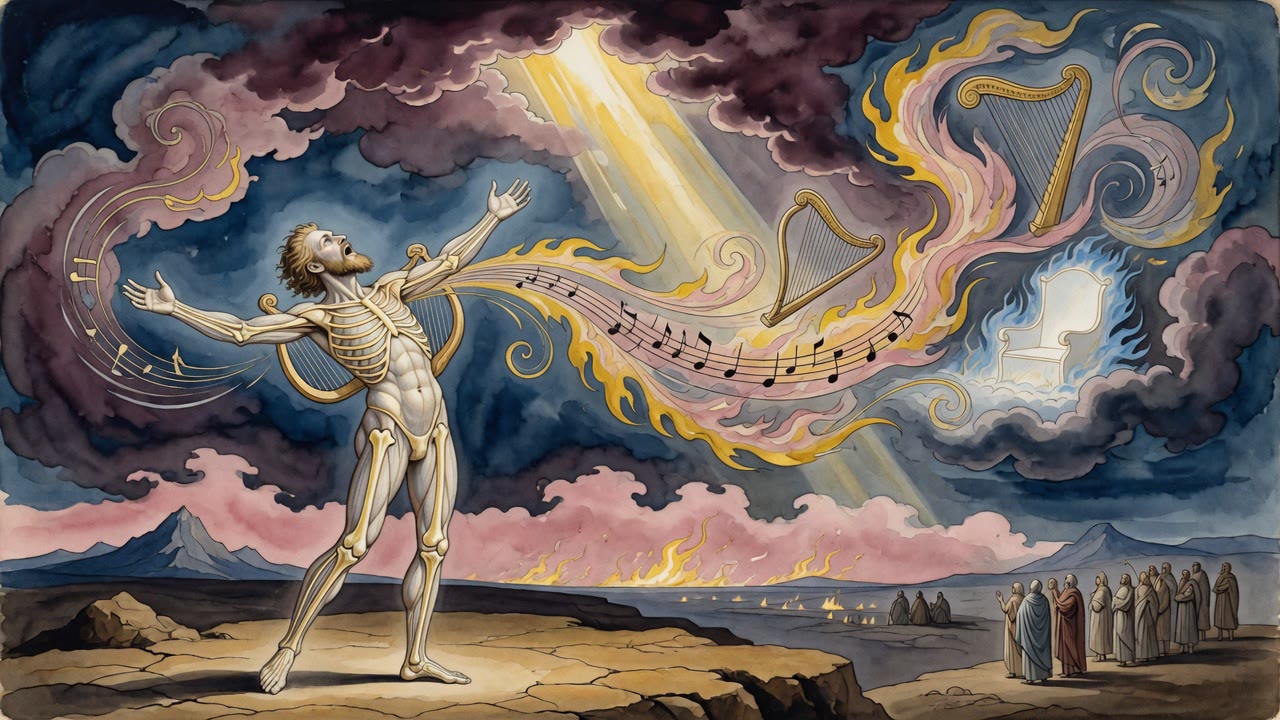
When the children of Israel open their mouths in praise, the Shechinah (שכינה), the Divine Presence, settles on that sound. God is enthroned upon the praises of Israel. Nebuchadnezzar's recovered speech could name justice. It could not become that throne. The throne needs a people still singing after the green tree has cast its long shadow over the ruins.

Abraham stayed seated. The angels turned aside. The Presence waited on a man who would not be rushed out of the tent of argument and mercy. That patience was the opposite of Babylon's late polish.

Praise That Makes a Throne

David did not stop hating the workers of iniquity. He also did not stop calling for God to arise. The two hung together. False intent still had no share. The destroyer who finally praised still owed a debt the words alone could not pay. Between those poles David kept writing, naming the green tree, naming the Rock's justice, and leaving room for a people who would sit while God stood.

The image that remained was not a king healed of dew and grass. It was Abraham's chair in the dust, and above it a Presence that refused to sit down until the children's praise made a seat of its own.


← All myths
From the tradition

Sources

2 sources

The texts behind this telling. Some cards carry a translation of the source; others are our own retelling of it, and each card says which. Every card links out to the original.

Midrash Tehillim 5:8Midrash Tehillim

Retold in our words. Read the original at the link below.Rabbi Mike Feuer, Jerusalem Anthology · CC-BY

The Book of Psalms certainly does. And the Midrash, the ancient rabbinic commentaries, dives deep into these very questions. Midrash Tehillim 5, a fascinating exploration of wickedness, justice, and even… blaming God?

The Midrash begins with a stark declaration: "I hate all workers of iniquity." It then names names: Doeg and Ahithophel, figures from the Tanakh known for their betrayals. The Midrash points out the insidious nature of their evil: they acted truthfully, but with false intent. As the Talmud (Sanhedrin 90a) teaches, there are those who have no share in the World to Come, listing Balaam, Doeg, Ahithophel, and Gehazi. Pretty harsh company. But then the Midrash takes a surprising turn. It shifts the focus to Nebuchadnezzar, the Babylonian king who destroyed the Temple in Jerusalem. The Midrash calls him wicked. But why?

Rabbi Berachiah and Rabbi Chalbo, quoting Rabbi Samuel, make a striking point: everything David said in the Book of Psalms about the wicked culminates in the description of Nebuchadnezzar in (Psalm 37:35): "I have seen a wicked, ruthless man flourishing like a luxuriant native tree." image – someone who should be punished thriving instead. It's infuriating!

The problem, according to the Midrash, is that Nebuchadnezzar, despite his actions, ultimately acknowledged God's justice. David praises God and Jerusalem in the Psalms (Psalm 147:12, Psalm 11:7), but Nebuchadnezzar himself declares (Daniel 4:34) that "All his acts are just and his ways are right."

The Midrash draws a parallel to Moses, who says in (Deuteronomy 32:4), "The Rock, his work is perfect, for all his ways are justice." The point? That even when we don't understand God's plan, we must acknowledge His justice. But why should this apply to Nebuchadnezzar, the destroyer? Was this wicked man considered righteous because "All his acts are just?”

And here’s where it gets really interesting: The Midrash interprets this situation as almost… blaming God! It cites Hannah's prayer in (1 (Samuel 2:6)-7), "The Lord brings death and makes alive; he brings down to the grave and raises up. The Lord sends poverty and wealth; he humbles and he exalts." Hannah acknowledges God's absolute power. But Nebuchadnezzar echoes this sentiment in (Daniel 4:37), saying, "And those who walk in pride he is able to humble."

God's response, according to the Midrash, is sharp: "Yesterday you said (Daniel 3:15) 'And who is the god who will deliver you from my hands?' And now you say, 'I do not want you or your punishment.' And who will make me contemptible among the people of Israel? As it is said (Isaiah 43:21) 'the people I formed for myself that they may proclaim my praise.'"

Essentially, God is saying, "You can't have it both ways! You can't deny me and then claim to understand my justice. My people are meant to praise me, and your actions make that difficult."

So, what does it all mean? Midrash Tehillim 5 isn't just about condemning the wicked. It's about confronting the complexities of divine justice, even when it seems contradictory. It invites us to question, to wrestle, and ultimately, to reaffirm our faith, even when the world around us seems to defy it.

How do we reconcile our understanding of justice with the often-unjust realities of the world? And what does it mean to praise God, even when we're struggling to understand His ways?

Full source
Midrash Tehillim 18:29Midrash Tehillim

Retold in our words. Read the original at the link below.Rabbi Mike Feuer, Jerusalem Anthology · CC-BY

Yet, praise is central to Jewish tradition. Why? to a fascinating passage from Midrash Tehillim, a collection of homiletical interpretations on the Book of Psalms, and see what we can uncover.

" It then immediately brings in the figure of Abraham, the patriarch, and a remarkable image: Abraham is sitting, while the Shechinah, the Divine Presence, is standing.

Rabbi Berechiah, citing Rabbi Levi, explains that Abraham wanted to stand out of respect, but God told him to remain seated. Why? "For it is a good sign for your children that they will sit while I stand," God says. The proof text? (Psalm 82:1): "God stands in the congregation of the mighty." This isn't about disrespect; it's about a promise, a future where God is present with and for the Jewish people.

It gets even more intimate. Rabbi Samuel bar Chiya and Rabbi Yudan, quoting Rabbi Chanina, teach that whenever the children of Israel praise God, He places His Shechinah upon them. (Psalm 22:4) seals the deal: "Yet You are holy, enthroned upon the praises of Israel." God is not just receiving our praise; God is dwelling within it!

There's a fascinating aside from Rabbi Simon. He suggests that when God revealed Himself to Abraham, He "regretted His words." The Holy One, blessed be He, then sends angels to Abraham, accompanied by the Shechinah, to delay him. This is based on a close reading of (Genesis 18:22), "And the men turned from there." Rabbi Simon calls this a "correction of the scribes," implying that the text subtly suggests the Shechinah waits for Abraham. It's a powerful image of God's patience and deference.

The Midrash (rabbinic interpretive commentary) then explores the idea that "Your answer will increase me." Rabbi Chiya uses the image of a disciple going before his teacher at night. Who lights the way? Not the disciple, but God, as (Exodus 13:21) tells us: "And the Lord went before them by day in a pillar of cloud." God leads the way.

Rabbi Lulianus, in the name of Rabbi Yishmael, contrasts earthly customs with divine ones. Usually, the teacher speaks, and the student answers. But, as (Exodus 19:19) reveals, "Moses will speak, and God will answer him with a voice." God responds to us.

Ben Azai continues this theme, noting how mortal kings list their titles before their name, while God does the opposite. In (Genesis 1:1), we read: "In the beginning God created the heavens and the earth." God's name comes first, followed by the description of His act. The Midrash then adds a stern warning: "Woe to you who does not understand this!" It's a reminder to pay close attention to the nuances of the text, to the way God reveals Himself.

Rabbi Abba contrasts a human teacher, who might tire of questions, with God, who taught the Torah to Israel for forty days, and then, according to (Deuteronomy 1:6), said, "You have wearied Me with your questions." Even in this "weariness," there's a sense of intimacy and engagement.

Rabbi Shimon draws a similar comparison. A teacher might ask a student to wait for them. But God tells Ezekiel (Ezekiel 3:22), "Arise, go to the valley, and there I will speak with you." And Ezekiel obeys (Ezekiel 3:23): "So I arose and went to the valley." Again, the Midrash ends with "Woe to you who does not understand this!"

Finally, Rabbi Yudan, quoting Rabbi Hama, presents a startling vision of the future. God will seat the Messiah King at His right hand, based on (Psalm 110:1): "The Lord said to my Lord: 'Sit at My right hand.'" But Abraham will be at God's left, confused. "The son of my son is sitting at Your right, and I am at Your left?" Abraham asks. God reassures him: "The son of your son is at My right, and you are at My right as well," echoing (Psalm 110:5), "The Lord is at your right hand." This powerful image highlights the enduring importance of Abraham, even in the messianic age. And, of course, the Midrash concludes with the familiar warning: "Woe to you who does not understand this!"

So, what do we make of all this? This passage from Midrash Tehillim paints a picture of a God who is not distant and aloof but intimately involved with humanity, particularly with the Jewish people. It's a God who listens, responds, and even seems to defer to those who praise Him. It challenges us to consider the nature of our relationship with the Divine. Is it a one-way street of supplication, or is it a dynamic, reciprocal exchange? Perhaps, the Midrash suggests, our praise is not just an offering to God, but a way of creating a space where the Shechinah can dwell among us. And that, in itself, is a truly awesome and humbling thought.

Full source