5 min read

David Taught His Soul Five Ways to Praise God

A soul fills its body the way light fills a room. David kept giving his own soul orders until it stopped pretending it had somewhere better to be.

Curated by Arthur · Told by Maggid ·
Table of Contents
  1. Bless, O My Soul
  2. Five Mirrors
  3. Intention Before the Seam Is Sewn
  4. Bad Things Worth Having
  5. The Order Stands
David Taught His Soul Five Ways to Praise God Click for full size

Bless, O My Soul

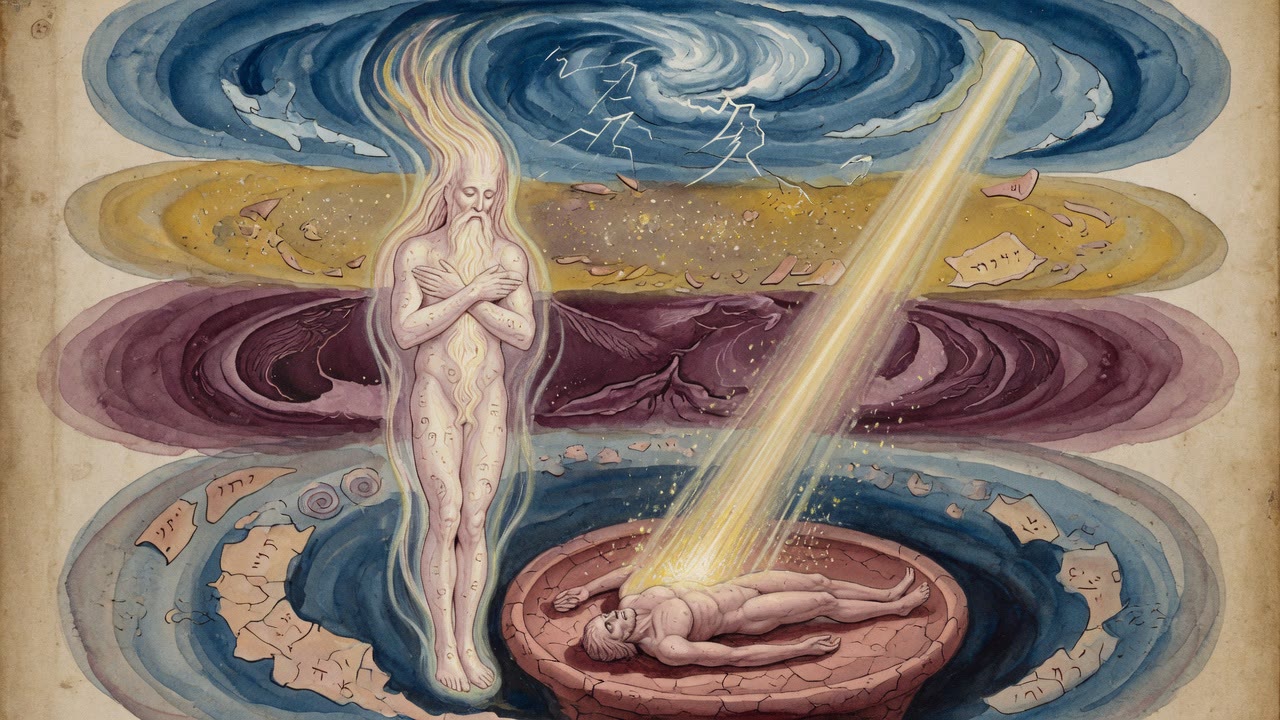
David spoke to the part of himself that could leave. "Bless the Lord, O my soul." Not a choir cue for hired singers. An order from a king to the breath that would outlive his crown and his wars and the nights he had spent counting enemies. He had walked courts and caves. He knew the body could be counted in ten workings, mouth to esophagus to liver to lung, anger seated in one organ and song in another, a machine that could bless or curse with the same tongue.

"I will give thanks to You, for I am awesomely and wondrously made" (Psalm 139:14). Wonder was not enough to keep the soul at its post. Parallel was the argument he needed, a structure the soul could not shrug off as flattery of the flesh.

He said it again until the soul stopped pretending it had somewhere better to be.

Five Mirrors

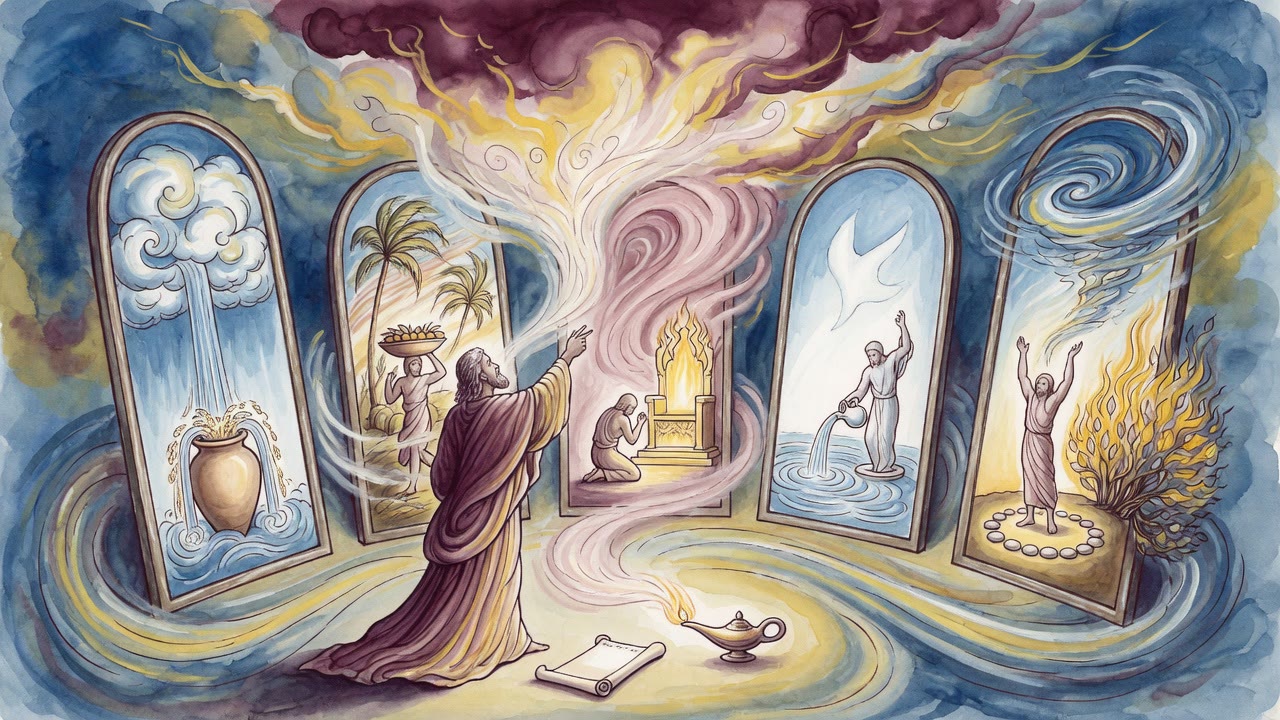
The soul fills the body the way light fills a room without asking permission. The Holy One fills the world. "Do I not fill the heavens and the earth?" (Jeremiah 23:24). Therefore the full thing should praise the Fuller, not as a hobby but as like answering like.

The soul bears the body through years that bend the spine. God bears the world without setting it down. "I made, and I will carry, I will bear" (Isaiah 46:4). The bearer should praise the Bearer, especially on mornings when the bearing feels like a tax.

The soul outlasts flesh that will wear like a garment. God outlasts the cosmos. "Even they will perish, but You will endure" (Psalm 102:27). What is built for forever should address Forever before the garment frays completely.

The soul stays pure while the body takes stains from food, fear, and bad decisions. God remains pure above a stained age. Like answers like across that difference without pretending the difference is small.

No one sees the soul's place, not with a knife, not with a map. No creature, not even those who bear the Throne of Glory, knows God's place. They still cry, "Blessed is the Presence of the Lord in His place" (Ezekiel 3:12). Unknown addresses Unknown with praise, not with charts. David liked that honesty. He had spent enough years pretending he knew where safety lived.

Intention Before the Seam Is Sewn

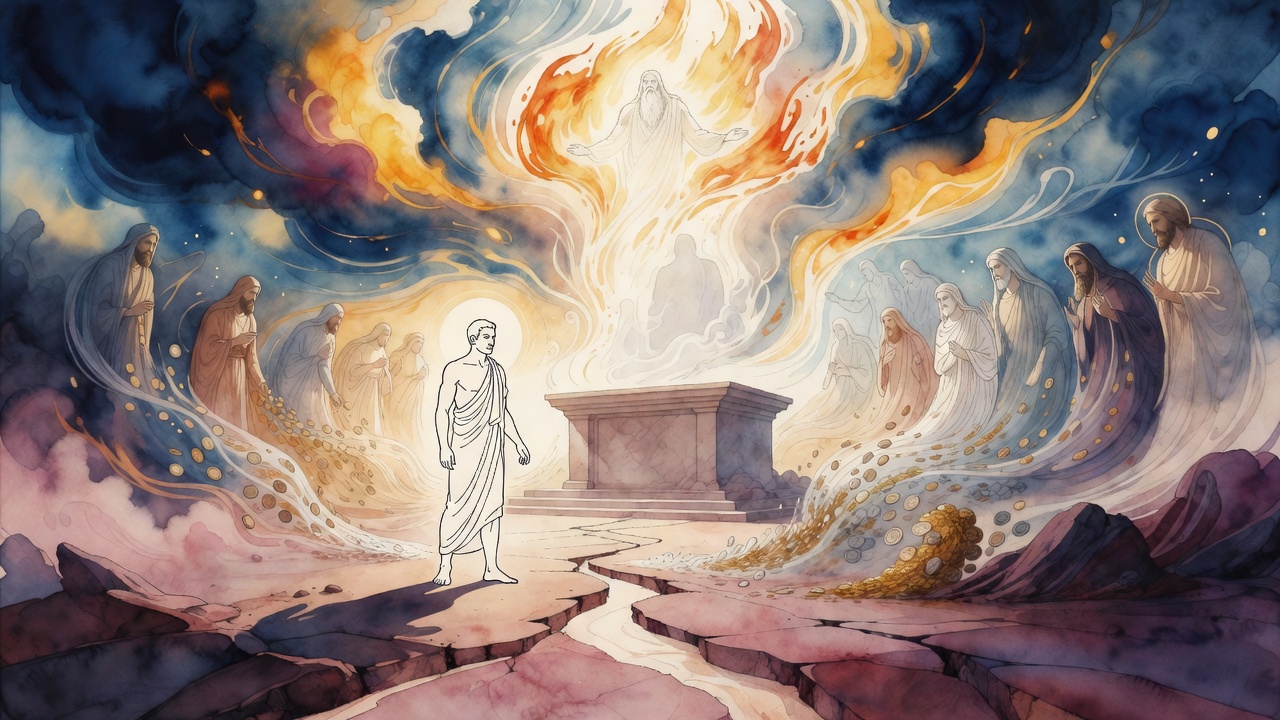
"Who preceded Me, that I should repay?" (Job 41:3). The question opened a ledger of beginnings that heaven keeps more carefully than earth. Who thought to make tzitzit and was not rewarded before the garment was finished and the fringes swung at the walk? Who planned a roof fence so a fall would not become a death, and was not paid before the house stood complete under the sun? Who opened a hand for tzedakah and was not met before the coin left the palm and rang in another person's day?

God rewards the turn of the heart when the turn is real, not when the paperwork of the mitzvah (a commandment) has been stamped by neighbors. David's song for the dedication of the house rose from a king who was not allowed to build in stone, yet intention still collected its wage in a currency that does not rust. The Temple could wait for a son. The will to house God did not wait unpaid in a father's chest.

He sang as if the beams were already up. Heaven treated the song as a foundation stone.

Bad Things Worth Having

Rabbi Avdimi heard a paradox in the body's design that kept easy moralists honest: a bad thing good to acquire, a good thing bad to acquire. Anger in the liver can guard a boundary that sweetness would surrender. Sweetness wrongly seated can rot a will until it cannot say no. David blessed the whole machine anyway, ten parts in uneasy harmony, because the soul's job was not to flatter the parts but to aim them toward a Name larger than any organ's agenda.

Healing of body and healing of soul arrived in the same grammar of praise. A man who only blesses when the fever breaks has already missed the wonder of being made, the strange mercy of a vessel that fails and still sings.

David had failed enough to know the grammar was not theoretical.

The Order Stands

David did not wait to locate God's place on a chart before he gave the order. He ordered the soul that fills him to bless the One who fills all. He ordered the soul that bears him to bless the One who bears all. He ordered the soul that will outlast him to bless the One who outlasts worlds. Intention ran ahead of stone and timber like a scout. The body, wondrous and troubled, came along under the command without needing a map of heaven's corridors.

"Bless the Lord, O my soul," he said again in a room that may have been a cave, and the five mirrors held. Filling. Bearing. Lasting. Purity. Unseen place. The soul had no good counterargument left, only the work of praise.


← All myths
From the tradition

Sources

4 sources

The texts behind this telling. Some cards carry a translation of the source; others are our own retelling of it, and each card says which. Every card links out to the original.

Vayikra Rabbah 4:8Vayikra Rabbah

Retold in our words. Read the original at the link below.The Sefaria Midrash Rabbah, 2022 · CC-BY

The Midrash (rabbinic interpretive commentary), specifically Vayikra Rabbah 4, offers a powerful, poetic answer. It's not just about rote praise, but about a deep understanding of the relationship between the human soul and the Divine.

David, according to this Midrash, saw profound parallels. He understood that the soul and God, in their own ways, mirror each other's existence. It’s a beautiful and deeply moving idea. The soul fills the body, giving it life and animation. And the Holy One, blessed be He, fills the entire world. As the prophet Jeremiah (23:24) proclaims, "Do I not fill the heavens and the earth…?" So, the Midrash asks, shouldn’t the soul, which fills the body, praise the Holy One who fills everything? It's a call for recognition, for acknowledging the Source of all being.

The soul bears the body – it carries us through life. And the Holy One bears His world, sustaining it, upholding it. "I made, and I will carry, I will bear," says God in (Isaiah 46:4). The soul should praise the One who bears the universe, just as it bears the individual.

Here’s another layer: the soul outlasts the body. When our physical form fades, the soul endures. Similarly, the Holy One outlasts His world. "Even they will perish, but You will endure. All of them will wear out like a garment," we read in (Psalm 102:27). The soul, destined for eternity, should praise the Eternal One.

There's a sense of solitude, too. The soul is, in a way, solitary within the body, a unique essence contained within a physical shell. And the Holy One is solitary in His world, utterly unique and indivisible. This echoes the central declaration of Jewish faith, the Shema (Deuteronomy 6:4): "Hear, O Israel: The Lord is our God, the Lord is one." The soul, alone in its vessel, can uniquely appreciate the Solitary God.

The Midrash continues to build this elegant comparison. The soul doesn't eat within the body; it's not sustained by physical nourishment. And before the Holy One, there is no eating – God is beyond such material needs. "Do I eat the flesh of bulls?" (Psalm 50:13), God asks. The soul, free from bodily appetites, can offer pure praise to the One who transcends all physical limitations.

The soul sees, but it is not seen. It perceives the world through the body's senses, but its essence remains invisible. And the Holy One sees, but is not seen. "The eyes of the Lord, roving throughout the earth" (Zechariah 4:10), yet God remains beyond our direct perception. The unseen soul honors the unseen God.

The soul is pure within the body, untainted by the body's corruption. And the Holy One is pure in His world, utterly free from any imperfection. "You that has eyes too pure to see evil" (Habakkuk 1:13). The pure soul is best suited to praise the Pure God.

Finally, the soul doesn't sleep in the body – even when we are unconscious, something within us remains alert. And there is no sleep for the Holy One. "Behold, the Guardian of Israel neither slumbers nor sleeps" (Psalm 121:4). The ever-vigilant soul praises the ever-watchful God.

What does this Midrash ultimately tell us? It's an invitation to look inward, to recognize the divine spark within each of us. By understanding the nature of our own souls, we can gain a deeper appreciation for the nature of God. And in that understanding, we find the truest form of praise. It's not just words, but a recognition of shared essence, a mirror reflecting the Divine.

Full source
Midrash Tehillim 103:3Midrash Tehillim

Retold in our words. Read the original at the link below.Rabbi Mike Feuer, Jerusalem Anthology · CC-BY

Midrash Tehillim, a collection of rabbinic commentaries on the Book of Psalms, offers a breathtaking insight into the unknowability of God’s presence. It begins with King David's heartfelt plea in Psalm 103: "Bless the Lord, O my soul." But what does it truly mean to bless God?

The Midrash (rabbinic interpretive commentary) suggests a profound parallel: "Just as no person knows where the place of this soul is, so too with the Holy One, Blessed be He: no creature knows where His place is.” Where is your soul? Is it in your heart? Your mind? Everywhere at once?

So, according to this interpretation, is God’s presence.

It goes even further, stating that not even the celestial beings, the ones responsible for upholding the very Throne of Glory, know where God dwells. Their response? A humble acknowledgement: "Blessed is the Presence of the Lord in His place" (Ezekiel 3:12). They recognize and bless the presence, even without fully comprehending its location or essence.

But there's another beautiful way to understand David's call to bless the Lord with his soul. It's a comparison, a mirroring of qualities. The Midrash asks, why specifically the soul?

Because, it answers, just as the soul fills the entire body, so too does God fill the entire world. God’s presence isn't confined; it permeates everything. And just as the soul suffers when the body suffers, so too does God, in a way we can barely fathom, experience the suffering of the world.

The soul is unique within the body, unlike any other part. Similarly, God is utterly unique in the world, beyond comparison. The soul needs neither food nor drink to sustain it, and neither does God. The soul is pure, untouched by the physical world, and so too is God, elevated above creation. And perhaps most poignantly, the soul sees everything within the body, but it remains unseen itself. Just so, God sees all, but remains ultimately unseen by mortal eyes.

David, recognizing these shared attributes, declares: let the soul, possessing all these qualities, come and praise God, who possesses them infinitely. It’s an invitation to connect with the divine through the very essence of our being.

Perhaps it’s a reminder that we don’t need to fully understand God to connect with God. Maybe it's an invitation to recognize the divine spark within ourselves, that elusive "soul," and to use it to offer praise, gratitude, and connection to something far greater than ourselves. Perhaps the mystery itself is the point.

Full source
Midrash Tehillim 30:2Midrash Tehillim

Retold in our words. Read the original at the link below.Rabbi Mike Feuer, Jerusalem Anthology · CC-BY

The ancient rabbis grappled with this too. And they found a beautiful answer in a seemingly simple verse from Job: “Who preceded Me, that I should repay?” (Job 41:3). This verse, explored in Midrash Tehillim, a collection of rabbinic interpretations on the Book of Psalms, opens a window into a profound understanding of divine reward.

The midrash (rabbinic interpretive commentary) on Psalm 30, “A Psalm, a Song of Dedication of the House, for David,” (Shir HaMaalot Chanukat HaBayit in Hebrew) uses this verse from Job to ask a powerful question: Who thought in their heart to do a mitzvah – a good deed or commandment – before God, that God did not reward them for it? It's not just about the act itself, but the thought behind it.

The Midrash Tehillim continues with a series of vivid examples. Who made tzitzit (the ritual fringes on a garment) and didn’t receive their reward even before the garment was finished? Who built a fence for their roof, fulfilling the commandment to protect others from harm, and didn’t receive their reward before the house was even complete? Who gave tzedakah (charity) and didn’t receive their reward before the coins even left their hand?

The message is clear: God anticipates our good intentions and rewards them accordingly. The very act of intending to do good sets the wheels of divine reward in motion.

And here’s the really part: the midrash says that even if you only think about doing a mitzvah, and for whatever reason don’t actually do it, God credits you as if you did perform it!

This brings us back to David, the shepherd-king. David yearned to build the Beit HaMikdash, the Holy Temple in Jerusalem. He envisioned it, planned it, poured his heart into the idea. But ultimately, he wasn’t the one chosen to build it. His son, Solomon, would have that honor.

Yet, the psalm dedicating the Temple is attributed to David: “A Psalm, a Song of Dedication of the House, for David.” Why? Because, according to the midrash, his intention, his heartfelt desire to build the Temple, was so powerful that it was as if he had built it himself.

So, what does this all mean for us? Maybe it's this: our intentions matter. The spark of goodness within us, the desire to make the world a better place, is seen and valued, even if we can't always bring those intentions to fruition. That the universe recognizes and rewards the good we aspire to do, even before we do it.

Full source
Midrash Tehillim 103:1Midrash Tehillim

Retold in our words. Read the original at the link below.Rabbi Mike Feuer, Jerusalem Anthology · CC-BY

A reader can take it all for granted, this amazing vessel that carries us through life. But maybe King David was onto something when he sang, "Bless the Lord, O my soul."

That line, the opening of Psalm 103, echoes a sentiment found in (Psalm 139:14): "I will give thanks to You, for I am awesomely and wondrously made; Your works are wonderful, and my soul knows it well." It’s a powerful acknowledgement of the sheer miracle of existence. And the Midrash Tehillim, a collection of rabbinic commentaries on the Book of Psalms, dives deep into what makes us so "awesomely and wondrously made."

Rabbi Avdimi, son of Rabbi Nahman, offers a fascinating, almost paradoxical idea: "There is a bad thing that is good to acquire and a good thing that is bad to acquire." It challenges our easy assumptions about what is beneficial and what is detrimental. But it sets the stage for what comes next.

The Midrash (rabbinic interpretive commentary) then breaks down the human being into ten distinct parts, each with its own function, its own role in the grand harmony of the self. It’s not just about anatomy; it's about the spiritual significance embedded within our physical forms.Think of all the words that flow from it – blessings, curses, stories, songs. Then, the esophagus, the pathway for nourishment. Next comes the liver, the seat of anger. And then the lungs, vital for the breath of life.

The list continues: the bile, associated with jealousy; the stomach, linked to sleep; the intestines, responsible for grinding and processing; the spleen, believed to be the source of laughter; the kidneys, connected to counsel and advice; and finally, the heart, the center of understanding.

Each organ, according to this ancient understanding, is not merely a biological component but a reflection of a specific human trait, a specific aspect of our inner lives. Some of these connections are intuitive, others perhaps less so. But the overall picture is one of profound interconnectedness.

It’s a holistic view of the human being, where the physical and the spiritual are intertwined. Each part, even those associated with negative emotions like anger or jealousy, plays a crucial role in the complete picture.

And that brings us back to David's praise. Realizing the complexity, the sheer improbable miracle of our existence, how could we not give thanks? "I will give thanks to You, for I am awesomely and wondrously made."

Acknowledge the incredible machine that is your body, the interplay of emotions and functions that make you uniquely you. And maybe, just maybe, you’ll find yourself echoing David’s words: "Bless the Lord, O my soul."

Full source