The Child Ran From School Toward Cheap Sweets
A boy bolted from school toward sugar and games. Years later the same hunger chased larger vanities, until growing light began to change what he wanted most.
Table of Contents
 Click for full size
The Door and the Street
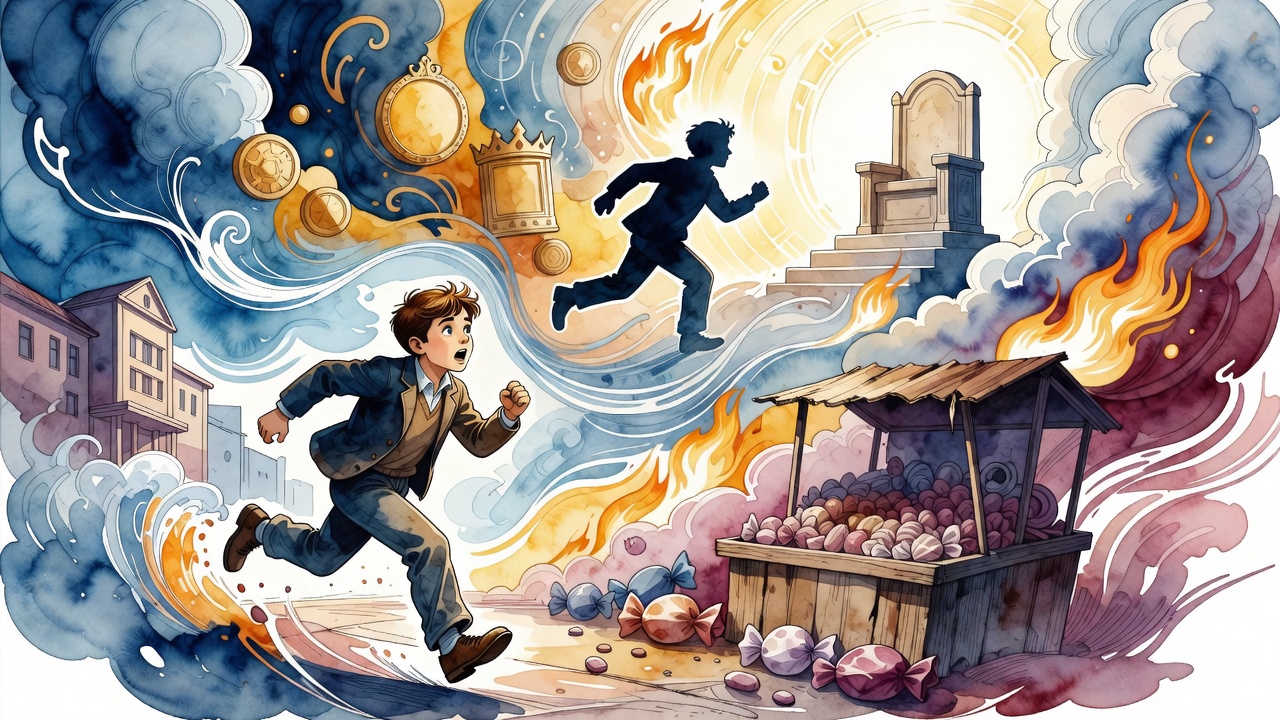
The boy hit the school door with both palms and ran. Behind him, letters waited on a board, still chalk-white and unforgiving. Ahead of him, a stall sold sweets that dyed the tongue and stuck to the teeth. He wanted the stall. He did not want the board. Wisdom, to him, was a room with no air and a voice that never laughed. Pleasure was a coin he could taste before he even paid.
No one called him wicked. He was a child with fast legs and a small map of the good. What he could not yet understand, he could not yet desire. The street won because the street fit the size of his knowing. The teacher called after him. The stall did not need to call. It only had to shine in the sun.
He bought the cheap sugar and felt, for ten minutes, like a king. Then the sweetness soured and he wanted another. That was the whole curriculum of the body without a larger light: more, then more, then a vague anger when more did not restore the first rush.
When the Mind Grows, Hunger Changes
Years thickened his bones and stretched his sight. The sweets still tempted, but they no longer filled the whole sky. He began to want what the text calls more proper things. Honor that lasts past a joke. Skill that outlives a season. A word of Torah that rearranges a week. A friendship that does not collapse when money moves. Desire followed understanding the way a shadow follows a lamp. Move the lamp, and the shadow moves. Leave the room dark, and the shadow has no honest shape at all.
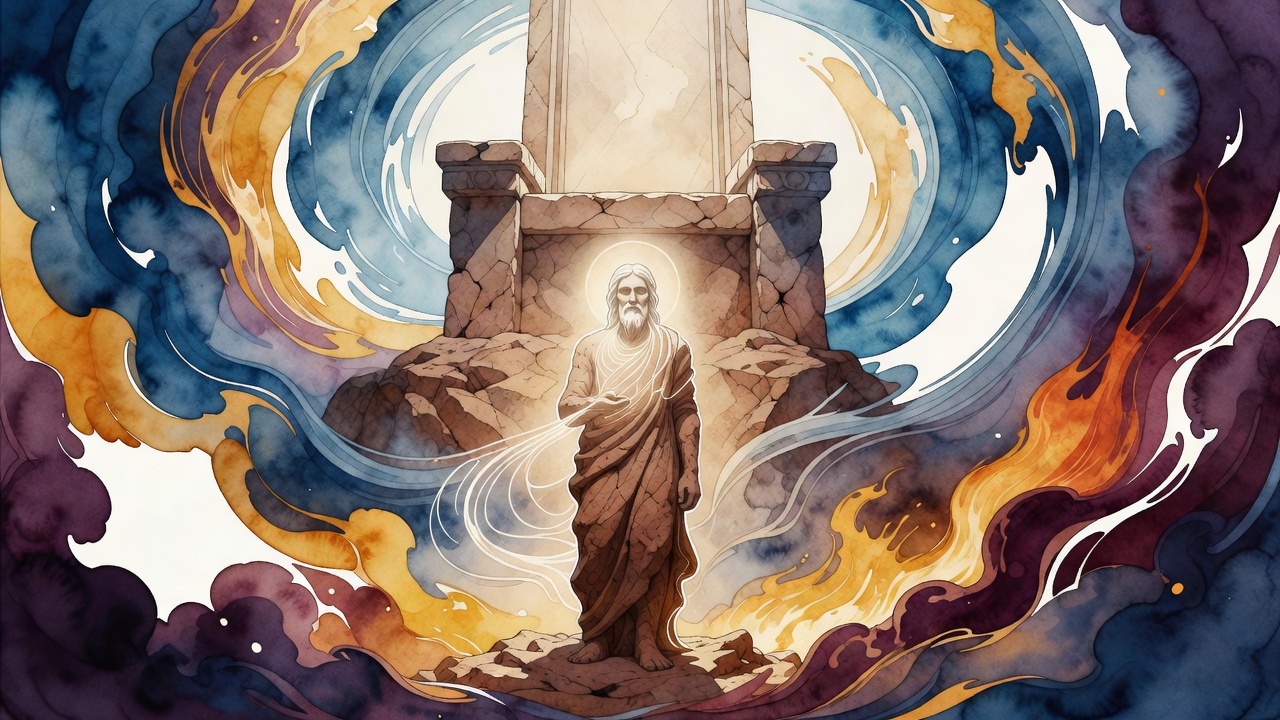
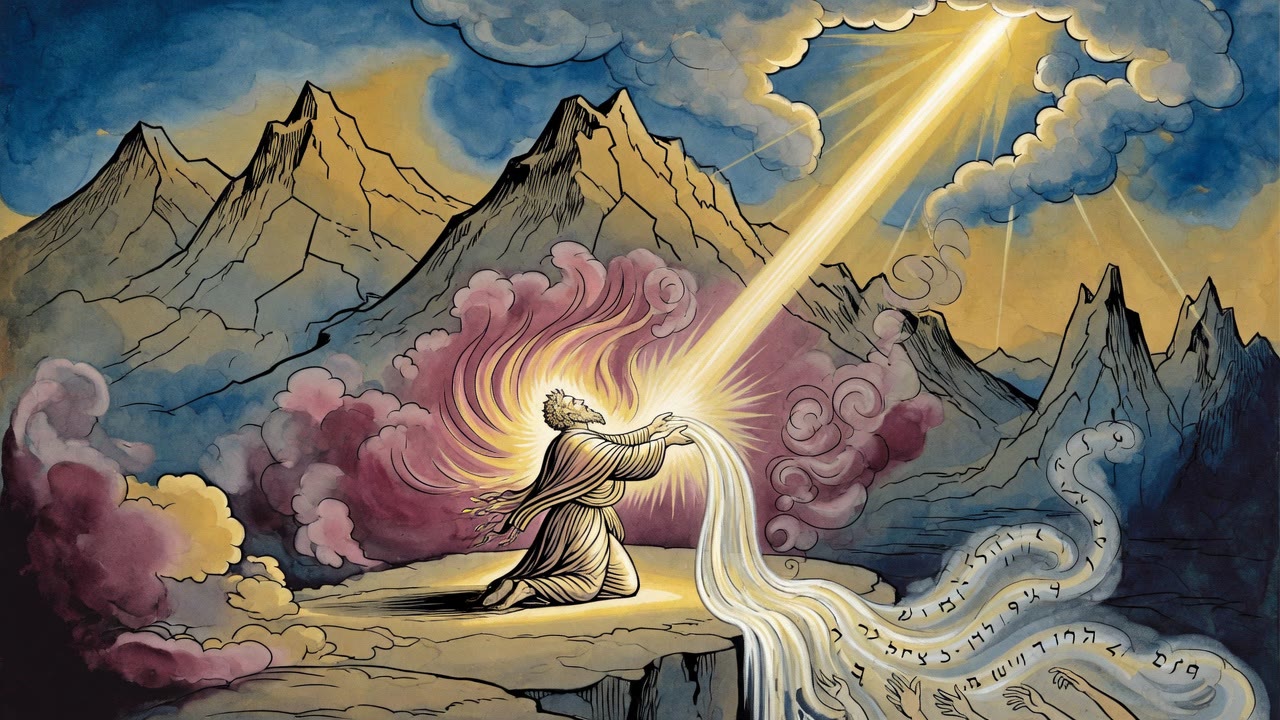
The same law scaled to whole generations. When a strong emanation of light reached human minds, people found their greatest satisfaction in wisdom and in what is truly good. Tables still needed bread. Trade still ran. But the deep hunger pointed upward, and vanity felt thin even while it glittered. When that light thinned, appetites sank into coarse physical matters as if the coarse were the only real food left on earth.
God did not need to plant a second god of trash in the heart. Hide the face of holiness enough, and murky creations rush to fill the gap the way cold air rushes into a house when a door opens in winter. The body itself was shaped under hester panim (הסתר פנים), the hiding of the countenance. The soul was shaped under illumination. Two births, one person, forever arguing about what is worth the day and what is only noise dressed as urgency.
Energy Poured Into Dust
Watch a market at full cry. Men strain for food, drink, houses, deals that will be forgotten by the next owner of the same courtyard. Ecclesiastes named it long ago: vanity of vanities (Ecclesiastes 1:2). The wonder is not that dust crumbles. The wonder is how much force people spend stacking it, then mourning the collapse as if collapse were a surprise invented last Tuesday.
They were not created for that cycle alone. Intellect, chochmah (חכמה), was given so a human being could grasp the glory of the Creator. That work was meant to be the primary occupation, the spine of the week. Later generations drifted. Business thickened. The hereafter thinned in the mind until it became a rumor reserved for funerals. The body, born under hiddenness, felt more solid than the soul born under light, and solidity won the vote of every tired evening.
The boy who once ran from school now ran from silence. He filled every quiet hour with noise that left no residue. He called it living. It was only speed without direction, a longer version of the sugar rush, with better clothes and worse sleep.
The Fall Inside Desire
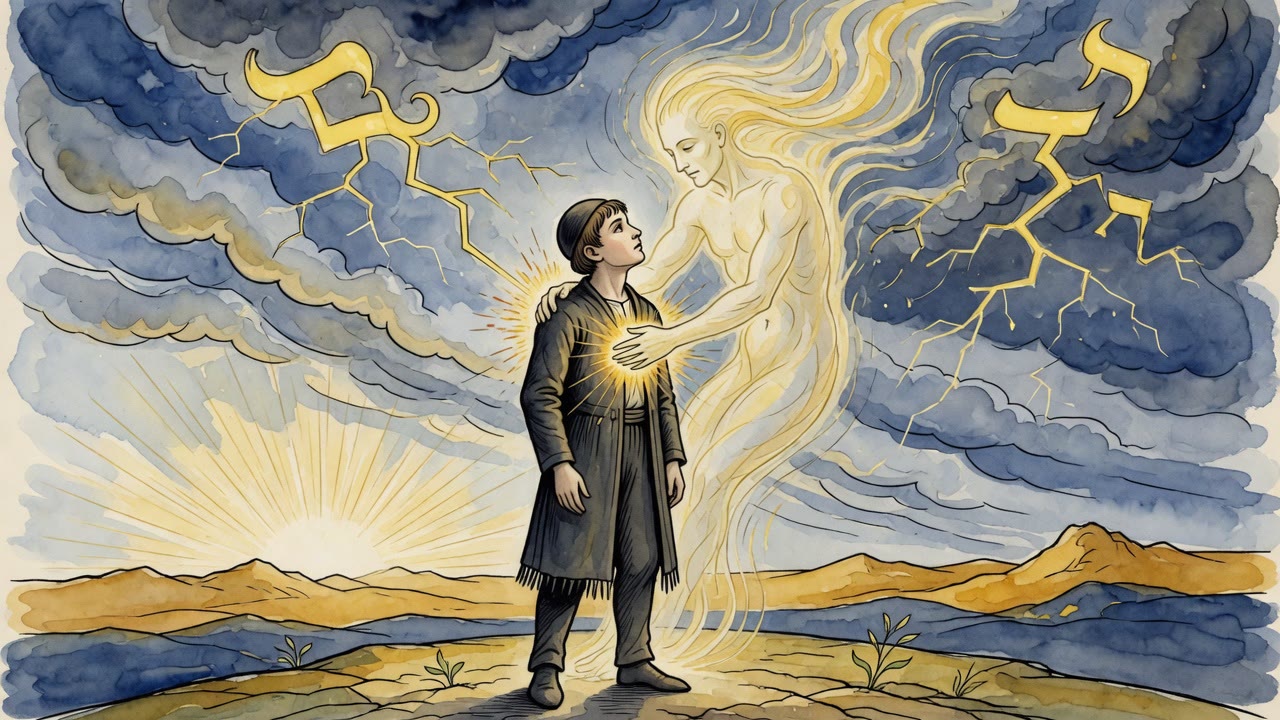
When divine light diminishes, a negativity cuts the old connection. People stop recognizing the true good and chase what glitters for an hour. The desire itself is not free-floating wickedness. It is tuned to the light the person can currently hold. Starve the mind of wisdom, and the palate for wisdom dies the way a muscle dies from disuse. Feed it carefully, and the palate wakes, slow and stubborn, complaining at first that the new food has no taste.
This is why a teacher can hand a student a book and watch nothing happen. The student still has a child's map of pleasure, only the candy has become status, screens, or the next purchase. The map must grow before the road of wisdom looks worth walking. Force alone does not invent yearning. Light invents yearning. Without light, force only breeds resentment and secret stalls behind the schoolyard of adult life.
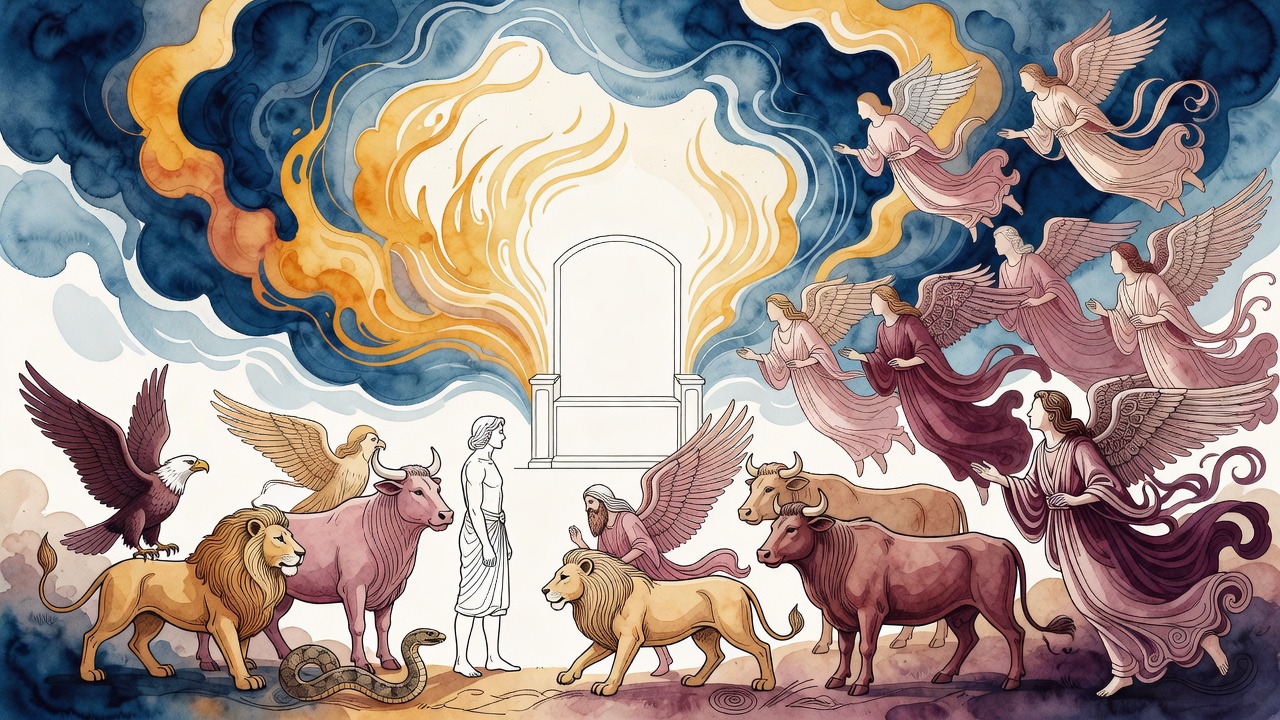
Creation itself depends on degrees of hiding. Coarse and murky things come into being because full radiance is veiled. Honorable spiritual ones bathe in more open countenance. A human life braids both, and the braid can slip toward either side depending on what the person feeds.
One Breath Toward a Better Hunger
One evening the man stopped in the street where the candy stall used to stand. The wood was gone. A different shop sold something else that would also not last. The memory of dye on his tongue remained, childish and exact. He felt, without drama, that he wanted something no stall could sell. Not a sermon from a stranger. A clarity he could live inside for more than ten minutes.
He did not become an angel. He opened a page. He sat with it longer than comfort preferred. The hunger shifted half a degree. Half a degree is how a life turns when no miracle arrives on schedule. The child who fled school still lived in him, still loved easy sweetness, but the grown mind could finally want what the child could not see. Wisdom does not scold desire out of existence. It raises the quality of what desire reaches for, until vanity starts to taste like dust in the mouth, and something better starts to taste like bread after a long walk home.
← All myths