5 min read

He Ruled His Soul and Stood Like a Seraph

When the body screamed for the easy path, one man forced his soul to take the reins. Heaven answered by lifting his face until angels looked twice.

Curated by Arthur · Told by Maggid ·
Table of Contents
  1. The Hour the Body Grabbed the Reins
  2. Eyes That See and Ears That Refuse
  3. Perfection Is Not a Committee
  4. Like One of the Seraphs
He Ruled His Soul and Stood Like a Seraph Click for full size

The Hour the Body Grabbed the Reins

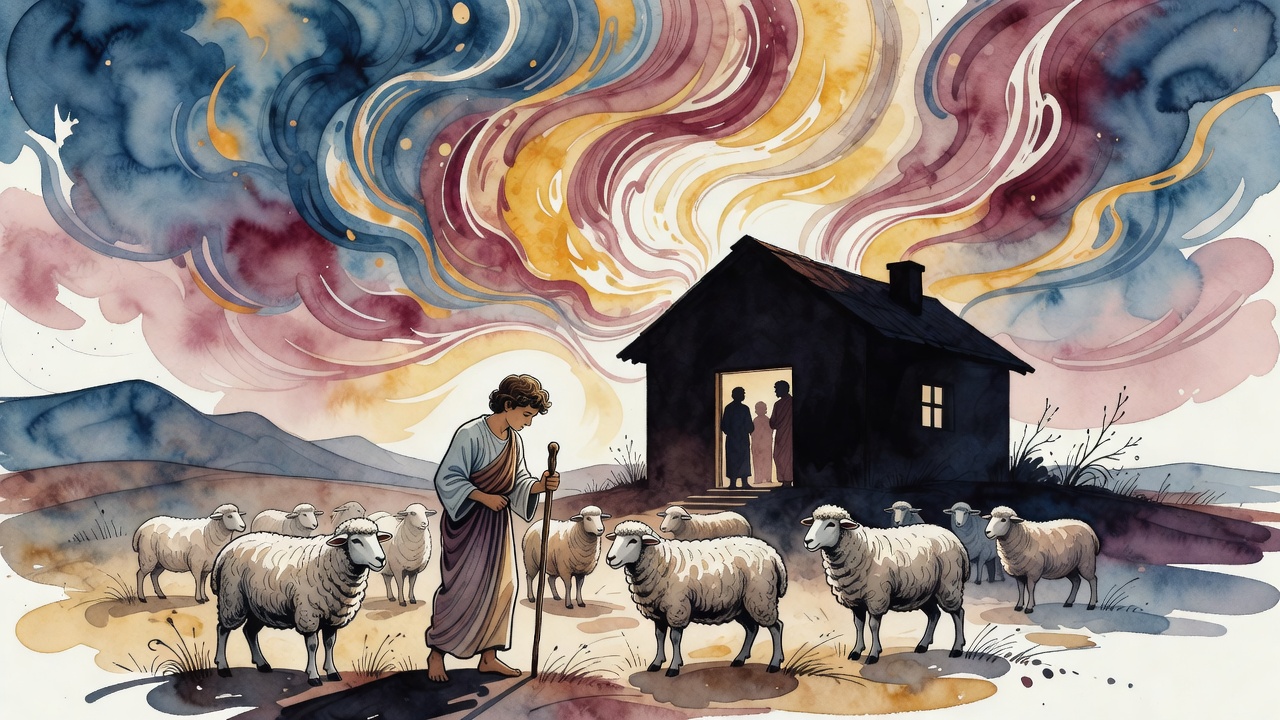
Ezra woke already angry. The day had not begun and his body had filed three demands: more sleep, soft bread, a harsh word ready for the neighbor who borrowed tools and returned them dull. He lay still and felt the old split. The body wanted the short road. Something else in him wanted a road that could still be walked in ten years without shame.

He sat up before the anger finished its speech. "I am not your horse," he told his own pulse. The pulse did not care. It only beat. Rule would have to come from higher than blood. He washed in cold water until the anger had to share the room with a decision.

Outside, the neighbor waved with the dull tools in plain sight. The short road opened its mouth. Ezra closed his own, walked over, and sharpened the tools himself without a sermon. The body called it humiliation. The soul called it the first victory of the morning.

Eyes That See and Ears That Refuse

Ezra knew the teaching in his bones even before he had language for it. The body divides labor. The eye sees and does not hear. The ear hears and does not see. Each organ is a specialist, limited, honest in its limit. The soul is not built that way. All its powers are present in every part. It is not a committee. It is a single seeing.

When the body rules, the world becomes a set of separate crises: hunger here, insult there, lust in a third room. When the soul rules, the crises show themselves as one field under one light. Ezra practiced the second view on small things first. He heard an insult and refused to answer until he could see the fear under the other man's mouth. He felt hunger and waited one measure before eating so that the meal would be chosen, not seized.

The body hated the delays. The soul grew taller inside the delays. On market days he practiced hearing without grabbing every rumor with his eyes, and seeing without inventing a story for every silence. The specialists in his skull learned to report to a captain instead of declaring private wars.

Perfection Is Not a Committee

Perfection, the intellect of the tradition said to the soul, is one. It is not split into departments that vote. It governs deficiency in order to complete it. The soul is created through the illumination of God's countenance. The body is shaped under a measure of concealment, suited to a world of parts, rewards, and punishments.

Ezra felt both maps in one skin. On days the body ruled, concealment thickened. Friends became means. Prayer became noise. On days the soul ruled, he felt a single force move through many tasks without shredding him into specialties. He could teach a child, fix a latch, and refuse a bribe with the same interior face.

That interior face began to show. People who used to talk over him paused. Not because he grew louder. Because something in him had stopped leaking. A man who leaks is easy to steer. A man who holds is harder to buy. The short road still advertised. Ezra's feet began to recognize the billboard and walk past it.

Like One of the Seraphs

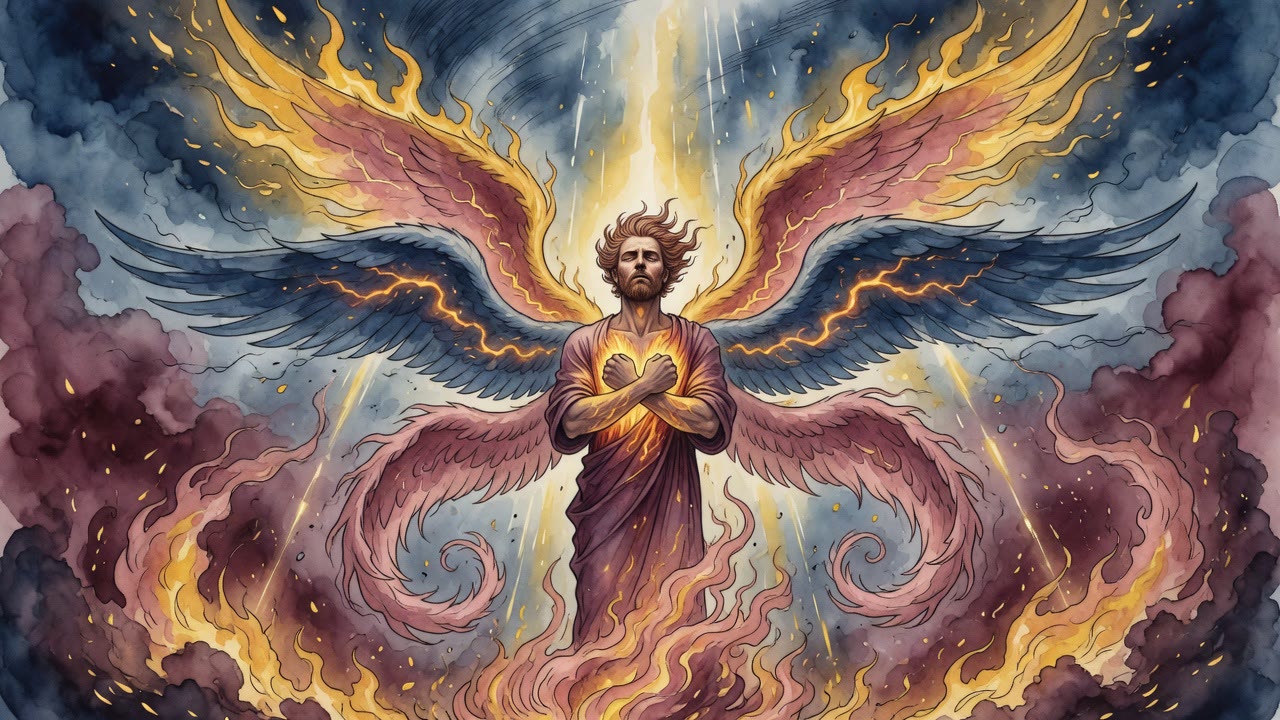
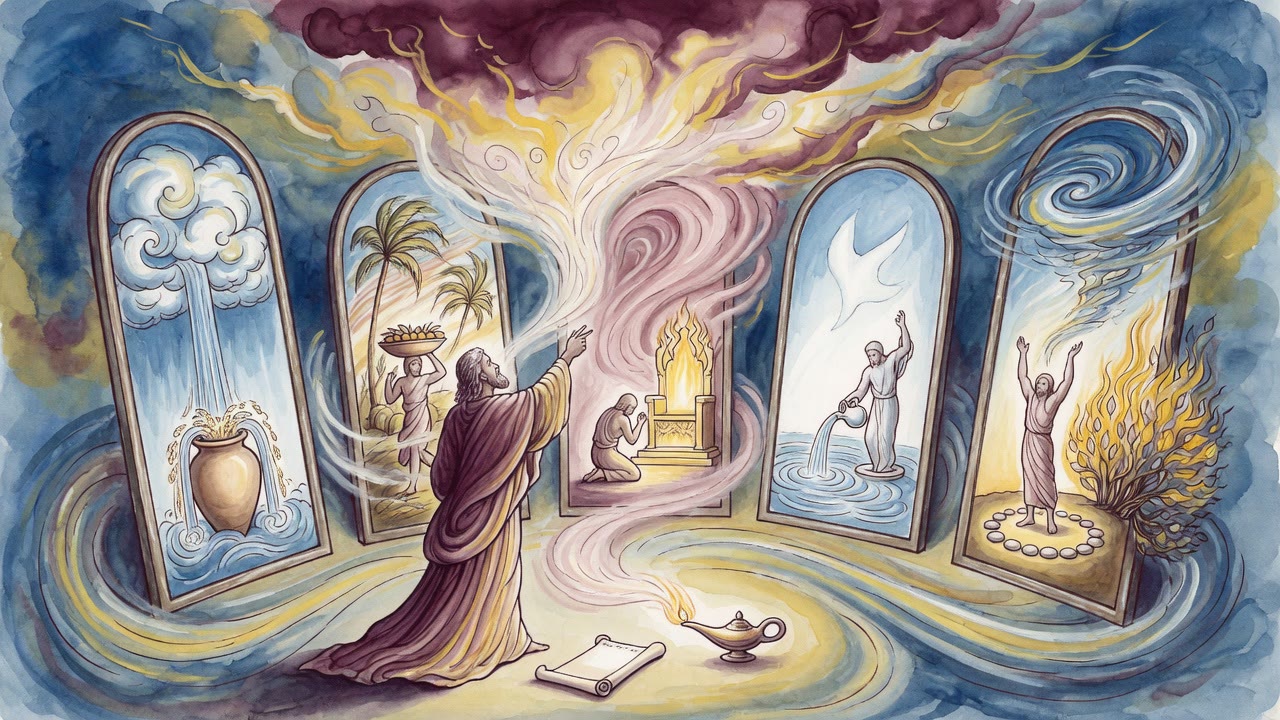
The promise is outrageous and exact. When a man rules his soul, the Holy One illuminates His countenance upon him and elevates him to a great level, to be like one of the Seraphs, for the righteous are greater than the ministering angels. Ezra never claimed the rank. He noticed the heat.

One evening, after a day of refused shortcuts, he stood to pray and felt his face warm as if a near fire had turned toward him. No vision of wings. No theater. Only a clarity that made the words of the Amidah (the central standing prayer) stand up inside him like living things. He thought of Sinai's generation of knowledge, of days when flesh held more spirit than flesh usually holds, of the future word that God would pour spirit on all flesh (Joel 3:1). He was not that generation. He was one man in an ordinary town. The heat was still real.

The body tried a late rebellion after prayer, a mean thought about a rival. Ezra caught it, named it, set it down. Mastery is not a single coronation. It is a thousand small dethronings of the short road. He slept that night without the old grind of unfinished angers.

When he died, the people said his face looked younger than his years. A child asked if he had become an angel. An old woman who knew better said, "He became a person the angels could recognize." That was close enough. They buried him with the dull tools of the neighbor, now sharp, laid beside the grave for a moment as a private joke between the living and the man who had refused to stay a horse.


← All myths

From the tradition

Sources

3 sources

The texts behind this telling. Some cards carry a translation of the source; others are our own retelling of it, and each card says which. Every card links out to the original.

Da'at Tevunot 78:7Da'at Tevunot

Retold in our words. Read the original at the link below.Sefaria Community Translation · CC-BY

It all comes down to mastering our soul, ruling over our inner world. Da'at (Knowledge) Tevunot, a Kabbalistic text focused on understanding and wisdom, teaches that when we truly control our nefesh (the vital soul) – our soul – something remarkable happens. The Holy One, blessed be He, illuminates his countenance upon us.

What does that even mean?

It means we're elevated, raised to a higher spiritual plane. The text suggests we can become almost like a seraph, one of the fiery, powerful angels that surround God’s throne. In fact, the righteous are even greater than the ministering angels, a concept echoed in many Jewish teachings. We, as human beings, have the potential to surpass even angels in our spiritual attainment.

This isn't a new idea, either. Think back to the generation at Mount Sinai, when the Torah was given. Da'at Tevunot draws a direct parallel, suggesting they experienced a similar illumination, a profound connection to the Divine. And it won't just be a thing of the past. The prophet Joel (3:1) foretells a future time when, “I shall pour my spirit upon all flesh..." a time of widespread spiritual awakening. That feeling of connection, of Divine illumination, it's something we can strive for now, and something we're promised in the future.

But here's the thing: this "good," this Divine illumination, it's not a one-size-fits-all kind of deal. It comes in gradations. Different generations, different individuals, have merited more or less of this light. Da'at Tevunot offers examples. The generation of Moses. The time of David. The reign of Solomon. Each of these periods was marked by a unique level of spiritual awareness and connection.

And what determined those levels? Our deeds! According to Da'at Tevunot, it all boils down to the elevation of our souls, which is achieved through the power of our actions. The more we strive to live righteously, the more we elevate our souls, the more we draw down that Divine illumination.

So, the question becomes, what are we doing to elevate our souls? What actions are we taking to merit that illumination? This isn’t about grand gestures or impossible feats. It's about the small, consistent choices we make every day. Are we choosing kindness over cruelty? Are we striving for justice? Are we working to repair the world, to engage in tikkun (spiritual repair) olam? (That’s the beautiful concept of repairing the world, making it whole again, one action at a time.)

Maybe the secret to unlocking our full potential isn't some hidden mystical formula. Maybe it's simply about striving to be better, to do better, and to connect more deeply with the Divine spark within ourselves and within the world around us. And maybe, just maybe, that's how we begin to truly shine.

Full source
Da'at Tevunot 80:3Da'at Tevunot

Retold in our words. Read the original at the link below.Sefaria Community Translation · CC-BY

Da'at Tevunot turns to The Body Divides Labor but the Soul Sees All.

The text draws a sharp contrast between the body and the soul. The body is all about division of labor. The eye sees, but can't hear; the ear hears, but can't see. Each organ has its specific task. But the soul? Ah, the soul is different. All of its powers are present in every part, without that same kind of compartmentalization. It’s a unified whole. And this difference, Perfection, in its purest form, is singular, unified. There’s no room for “too much” or “not enough.” But when God chooses not to act through that pure, undifferentiated perfection, then there are countless ways for "The Place" (a common substitute for God's name) to reward or punish, to interact with us based on our actions. The text suggests that the very structure of the physical world, with its myriad parts and functions, arises from this "hiding" – from God choosing to interact with creation in a less direct, more mediated way.

The text suggests that the human body, in all its differentiated glory, is a parallel to God's attributes. Remember the verse, “Let us make man in our form, like our image”? (Genesis 1:26) It’s not just about physical resemblance, but about mirroring the ways in which God interacts with the world. As we read in (Genesis 18:21), “I shall descend and will see." This teaches, according to the Talmud (Sanhedrin 6b), that a judge must see with their own eyes. Thus, our eyes correspond to God’s “eye,” which oversees all of creation, judging our actions.

Similarly, our ears correspond to God listening to the prayers and praises of humankind. As (Exodus 2:24) says, “And the Lord heard their cry…” And as our Sages taught in Avot 2:1, "Know what is above you - a watchful eye and a listening ear.” The mouth, likewise, relates to how haShem speaks through visions to prophets and the splendor of His voice is heard by His angels.

The Da'at Tevunot goes on to explain that all the other parts of the body can be similarly understood as reflections of God's attributes, prepared to activate His creations. Even the fact that we have two of everything – two eyes, two ears, two hands – mirrors the duality in God’s characteristics: benevolence and sternness, reward and punishment. God’s characteristics are also double - whether for benevolence or for His rod, to the right for merit or to the left for obligation. Isn’t that a powerful idea?

So, the next time you marvel at the complexity of the human body, remember that it’s not just a collection of organs working in isolation. It’s a reflection of something much grander, a map of the divine attributes, evidence of the intricate ways in which God interacts with the world. And maybe, just maybe, understanding this connection can help us see ourselves, and our place in the universe, in a whole new light.

Full source
Da'at Tevunot 80:4Da'at Tevunot

Retold in our words. Read the original at the link below.Sefaria Community Translation · CC-BY

In Da'at (Knowledge) Tevunot, a profound work of Jewish thought, we find a fascinating perspective on this inner struggle. The text suggests that perfection itself is singular, a force that governs all imperfection, striving to make it whole. It’s not fractured, but unified.

This idea extends to the soul. According to Da'at Tevunot, the soul is created with the light of divine perfection. But what's the point of this radiant soul within us? It's not just for show. It's meant to empower the soul to rise above the physical desires of the body, to refine itself. Why? So that God can reward it according to its actions. So the soul can reflect God’s own perfection and, crucially, rectify the falsehood and imperfections we find in the world – a concept we’ve explored before.

The body… that's another story. When the body dominates, Da'at Tevunot tells us, it invites instability. It’s as if God conceals His perfect face, leaving the world and the individual at the mercy of the ever-changing world – a world governed by the cyclical nature of time, like the shifting fortunes of those little ephemerals, insects that live for only a day. The body, in this state, reflects that chaotic order, that concealment of goodness. It stirs up all kinds of trouble.

Here's the key: God’s monarchy, His Kingship, is meant to reside within each of us. We are meant to rule over our own bodies, not the other way around.

The soul, on the other hand, is oriented toward completion. It possesses the potential to fill every void, to elevate us. It all hinges on our merit. If we are worthy, we can be crowned with kingship, allowing the soul to reign through its wisdom and reason. Because, ultimately, it's a good thing when the soul is in charge.

Perhaps it's a reminder to pay attention to that inner tug-of-war. Are we letting our bodies dictate our actions, or are we striving to elevate our souls? Are we succumbing to the chaotic whims of the world, or are we striving for the completion and perfection that our souls are capable of? It's a question worth pondering. Perhaps the answer lies in finding that balance, that inner monarchy, where the soul guides us toward a more complete and meaningful existence.

Full source