David Was Born a Stranger in His Father's House
Jesse thought he was sinning with a slave that night. The boy born from it was sent to the hills, because nobody at the table would say whose he was.
Table of Contents
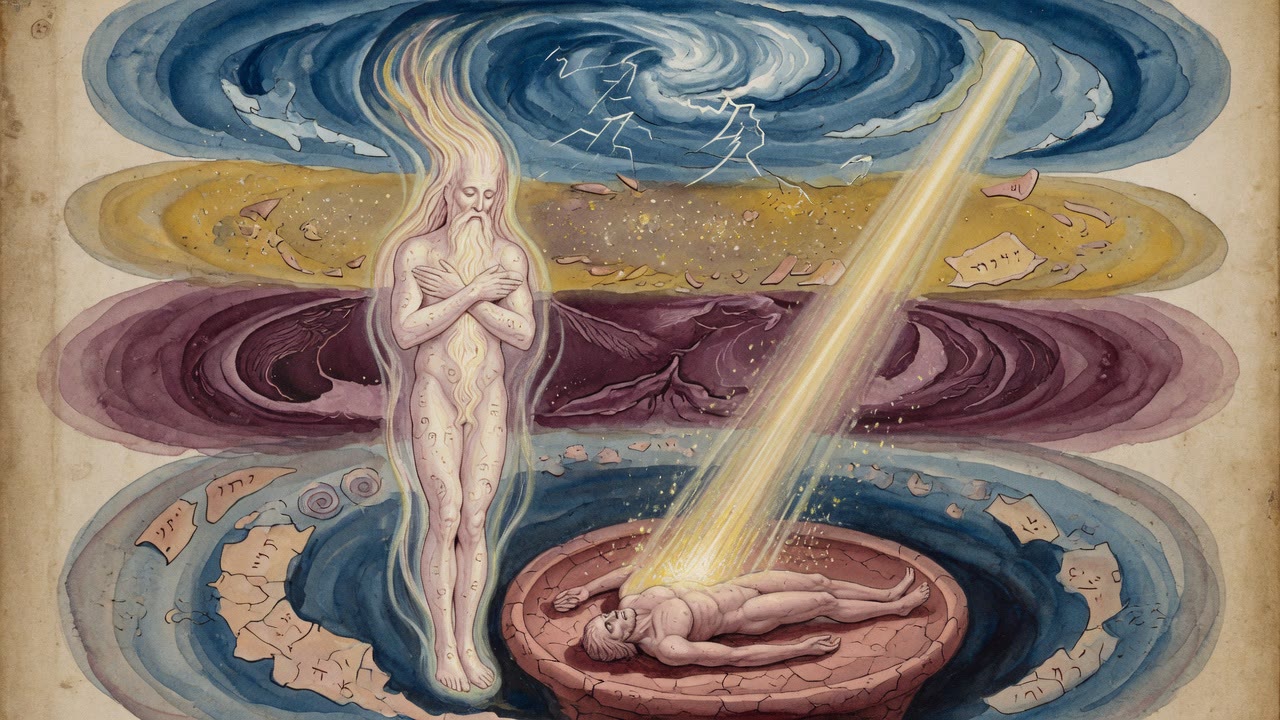
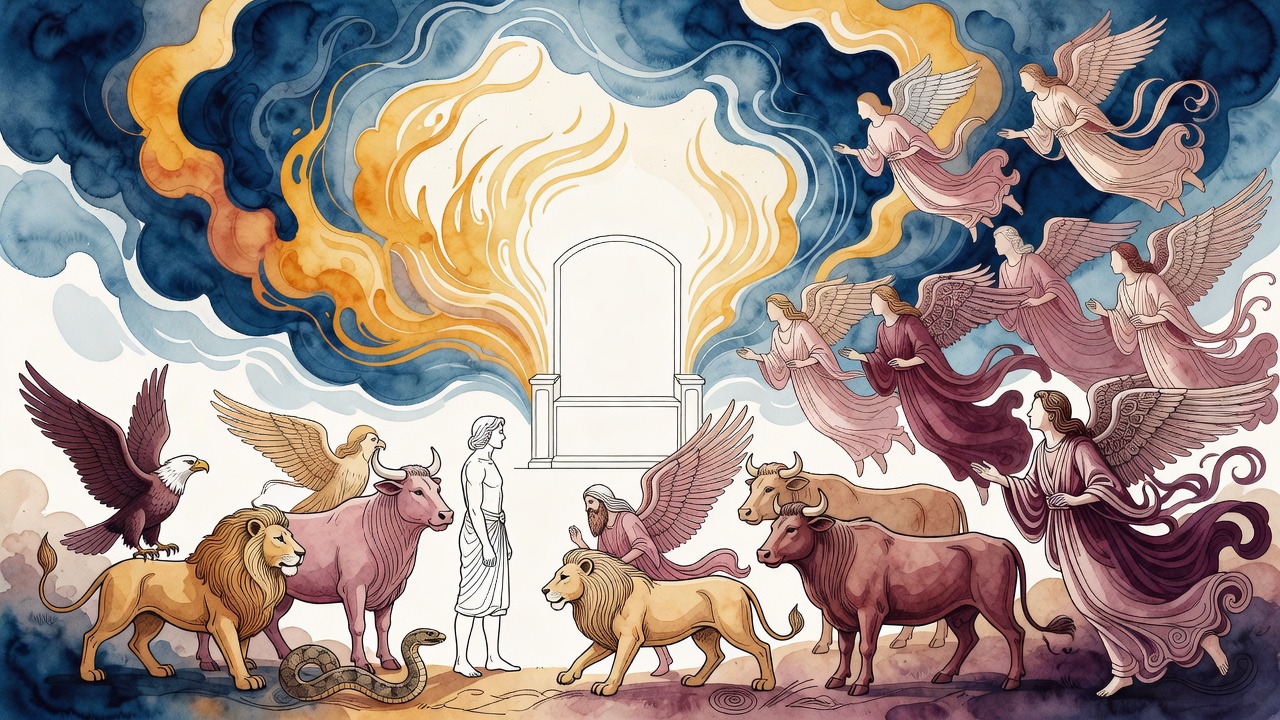
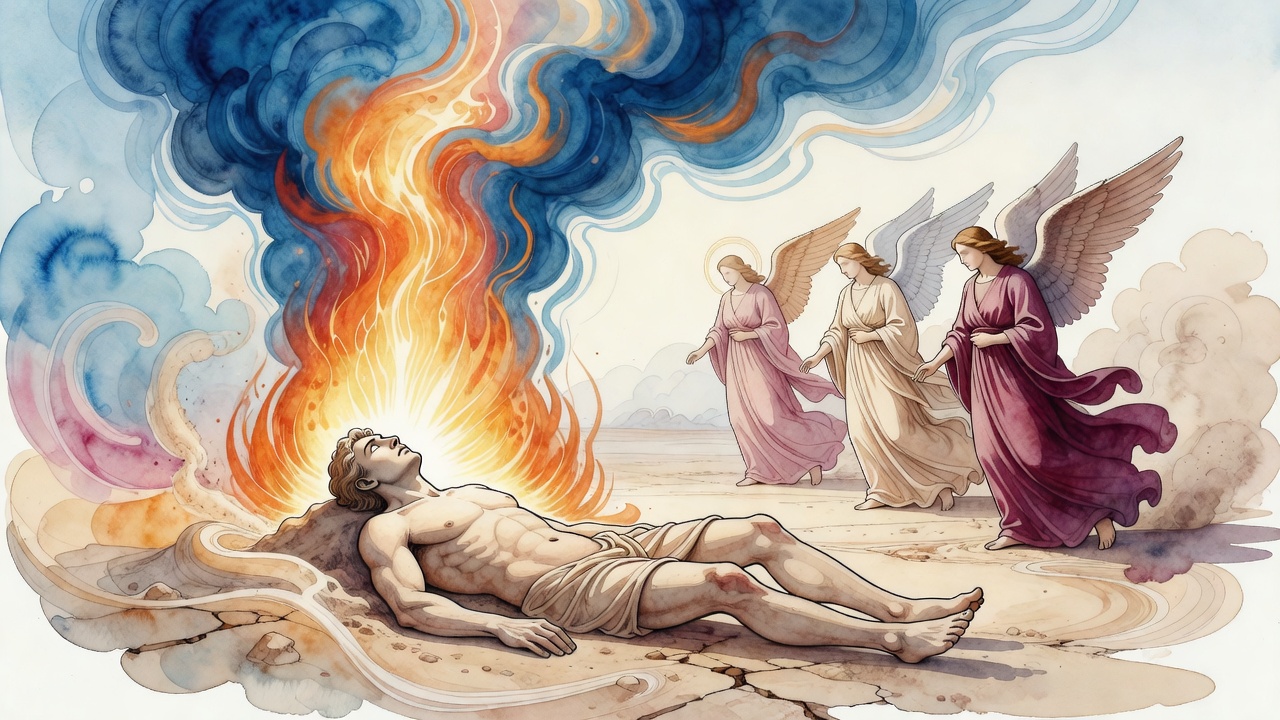
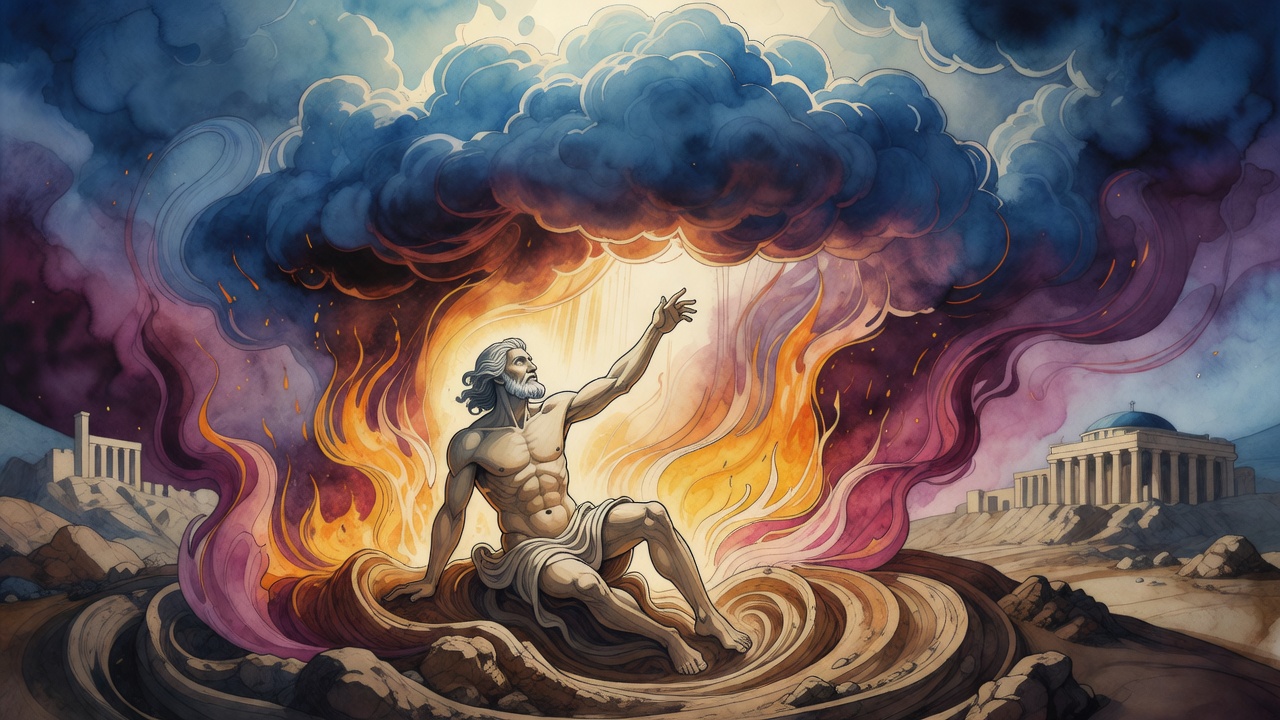
Before Adam had a face he had a size. God made him unfinished and enormous, a body stretched from one end of the earth to the other, east to west and north to south, filling even the empty air, lying there like a landscape while the work of making him went on.
 Click for full size
While he lay there, God walked the future past him.
Every generation that would ever live came by in order. Their scholars. Their judges. The men who would argue for a lifetime over one letter. The leaders. The ones who would be remembered and the ones who would not. Adam watched them file across his own unfinished body, and every one of them had already been written down in the book.
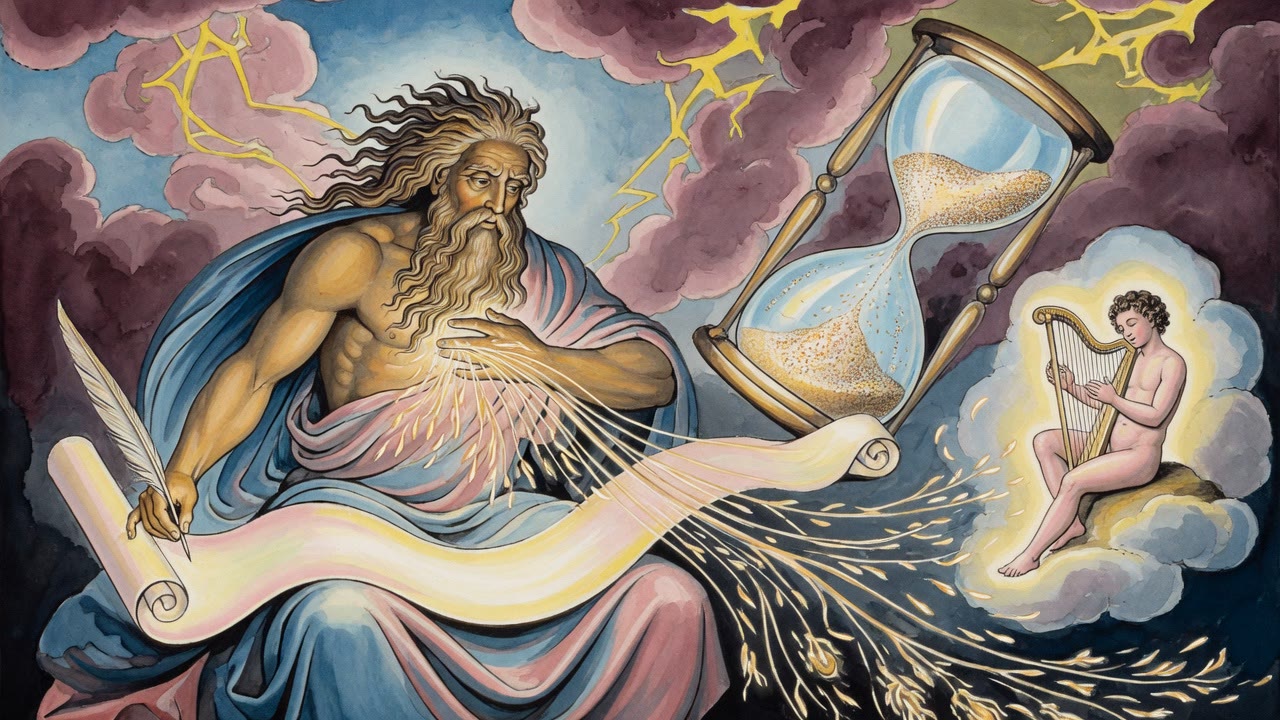
Then a small one came past with almost nothing next to his name. Three hours. That was the whole allotment.
A man who has been promised a thousand years does not usually stop over three hours. Adam stopped.
Three Hours Walked Across Adam
He was still golem (גלם), the unformed mass. "Your eyes saw my unformed parts, and in Your book they were all written" (Psalms 139:16). The book was open on him. He could not sit up, and he could still refuse what the book had given a child.
"Give him seventy of mine," Adam said.
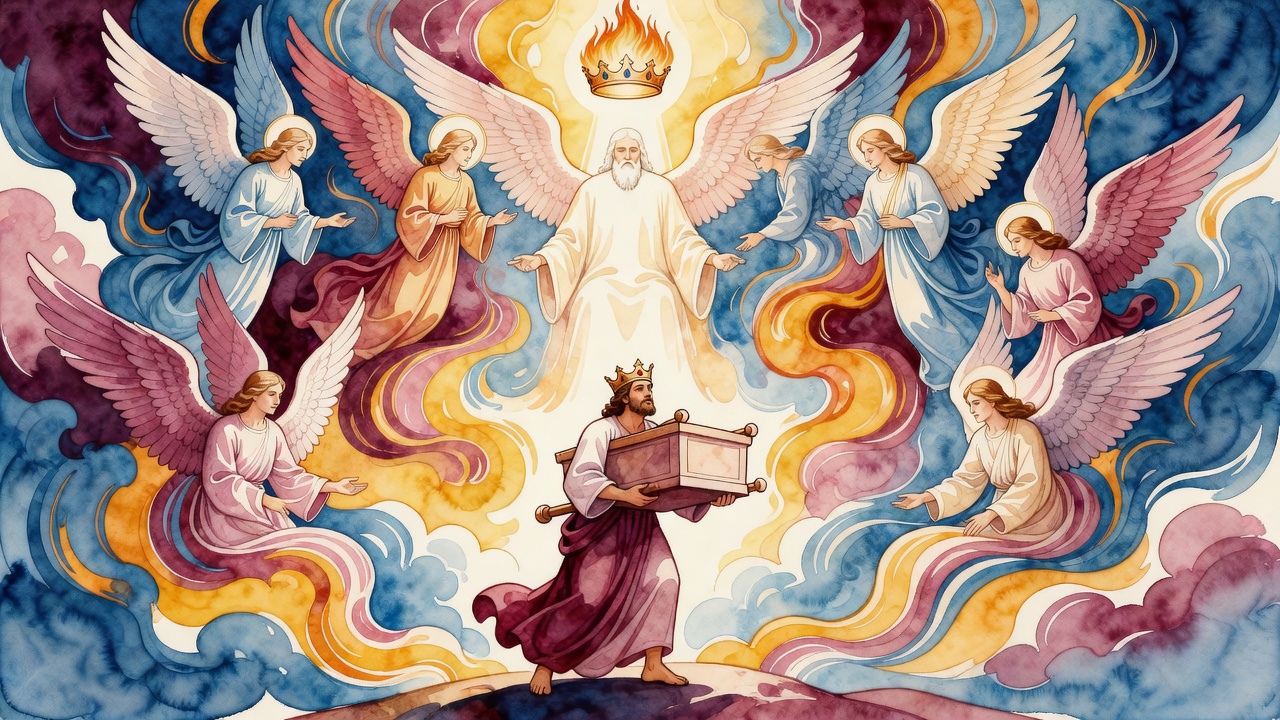
God did not do it as a kindness between friends. A deed of gift was drawn up. The second signature on it belonged to the angel Metatron. Seventy years left one account and entered another, in writing, witnessed. Adam attached conditions, the way a man does when he hands over something he cannot get back. The years were to arrive with beauty. With rule over other men. And with the gift of song.
The boy's name was David.
The Deed Metatron Signed
The ink dried before the world had finished shaping the man who had given the years away. Adam would live nine hundred and thirty. David would live seventy. The arithmetic sat in heaven like a loan no court on earth would ever see.
Beauty. Dominion. Song. Those were the clauses. A shepherd's throat would have to grow into them in a house that did not want him.
The deed did not say how the boy would enter the world. That work was left to a night in Bethlehem, and to a woman who understood her husband faster than he understood himself.
Nazbat Went in the Dark
Jesse was a righteous man, and one night his own household beat him. A slave girl in the house caught his eye, and he made up his mind to have her.
Nazbat, his wife, the daughter of Adiel, worked it out before he did. She did not confront him. She dressed herself as the slave and went to him in the dark, and Jesse, certain of who he was sinning with, spent the night with his own wife.
She conceived. Then she had to decide what to tell him.
The truth would mean telling her husband that she had caught him mid-sin and tricked him out of it, and leaving him to live with what he had intended to do. So she said nothing. The child was announced as the son of the slave, who was set free, and the household believed it, and Jesse believed it. That is how the boy grew up in his father's house: born a stranger inside it, counted as a servant's son.
Seven Brothers at the Table
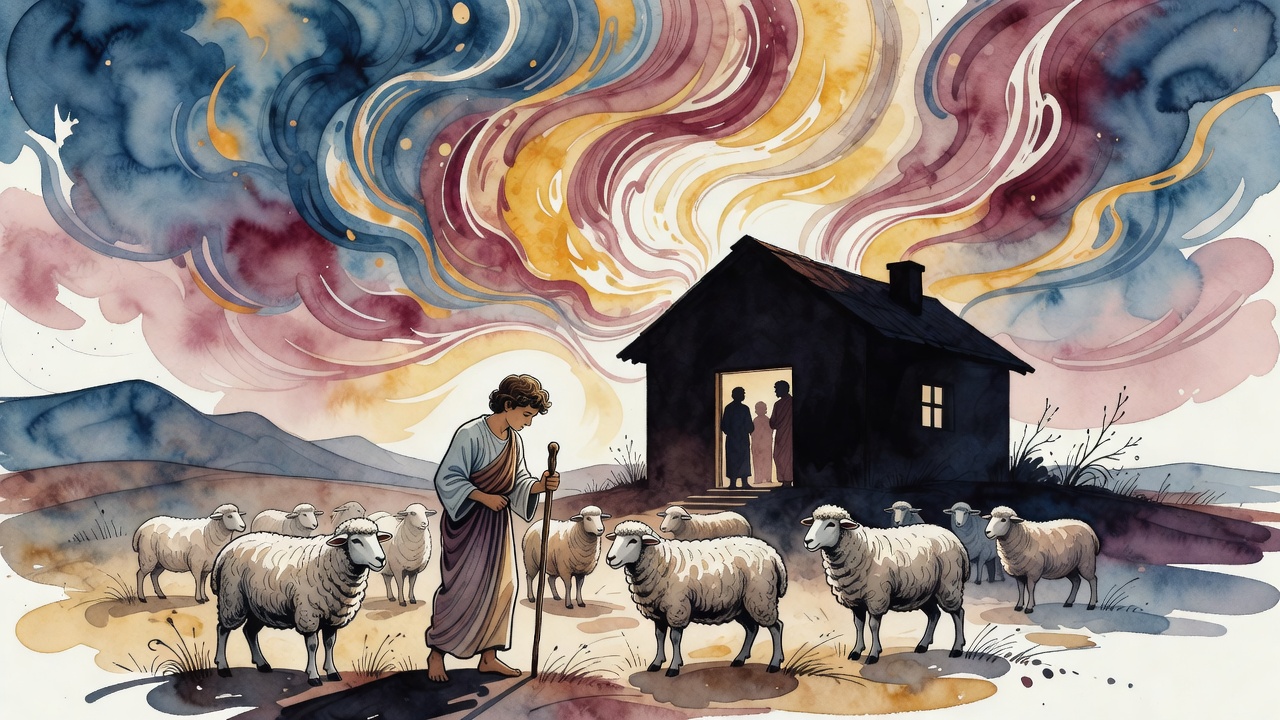
Seven brothers ate inside. The eighth was the one they sent out with the flock, and he stayed out with it, in the hills above Bethlehem, weeks at a stretch, because nobody in that house could say for certain whose he was and nobody wanted the question asked out loud at the table.
He had a harp. He had the seventy years sitting in him like a loan he had not signed. He sang to sheep because the house did not ask him to sing. The clauses Adam had attached, beauty and rule and song, looked like nothing in a boy smelling of animals, kept off the benches where Jesse's named sons sat.
The slave who had been freed did not claim him. Nazbat did not claim him. Jesse did not know there was anything to claim. The deed in heaven had a name on it. The household had a gap.
The Horn Would Not Sit Down
Years later the prophet Samuel came to Bethlehem with a horn of oil and told Jesse to bring out his sons.
Jesse brought them. Eliab first, the tall one, and Samuel looked at him and was certain. Abinadab next. Then Shammah. Seven sons walked past the prophet and the answer each time was no.
Samuel asked whether that was all of them.
There was a pause before Jesse answered. Then he said there was one more, the youngest, out with the sheep. Samuel refused to sit down to the meal until somebody went and fetched him. They brought him in from the field, flushed from the run and smelling of animals, the son of the servant woman, and God told Samuel to get up and pour the oil, because this was the one (1 Samuel 16:11-13).
He had seventy years to spend, and a voice, and a face men followed, all of it signed over to him before the world had finished making the man who gave them away. The horn tipped. Oil ran. The stranger at the table became the name the house had refused to say.
← All myths