Parshat Bereshit5 min read

Adam's Soul Descended Before His Body Was Formed

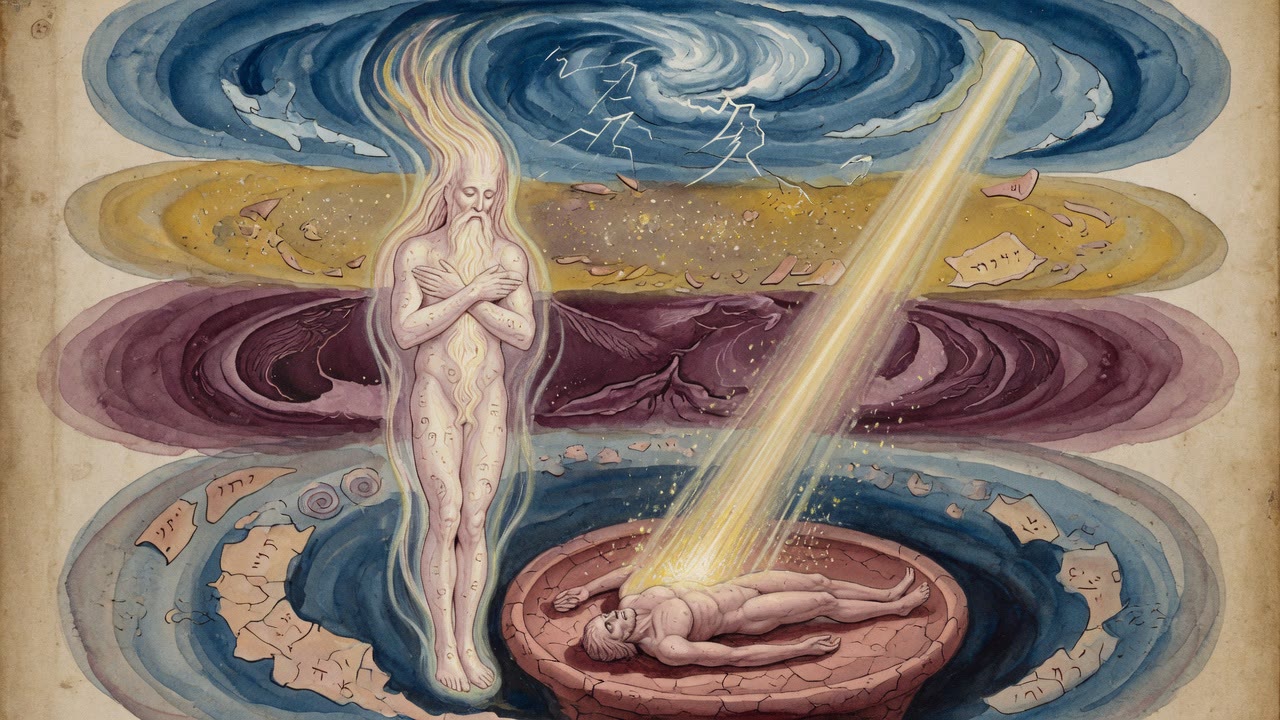
Adam's soul was older than the dust of his body. It descended through worlds before breath entered the form at earth's center.

Curated by Arthur · Told by Maggid ·
Table of Contents
  1. The Dust at the World's Center
  2. The Soul Came From Higher Worlds
  3. The Body Almost Became Transparent
  4. Chava Was Named Life
  5. All Souls Hidden in the First

The dust was waiting.

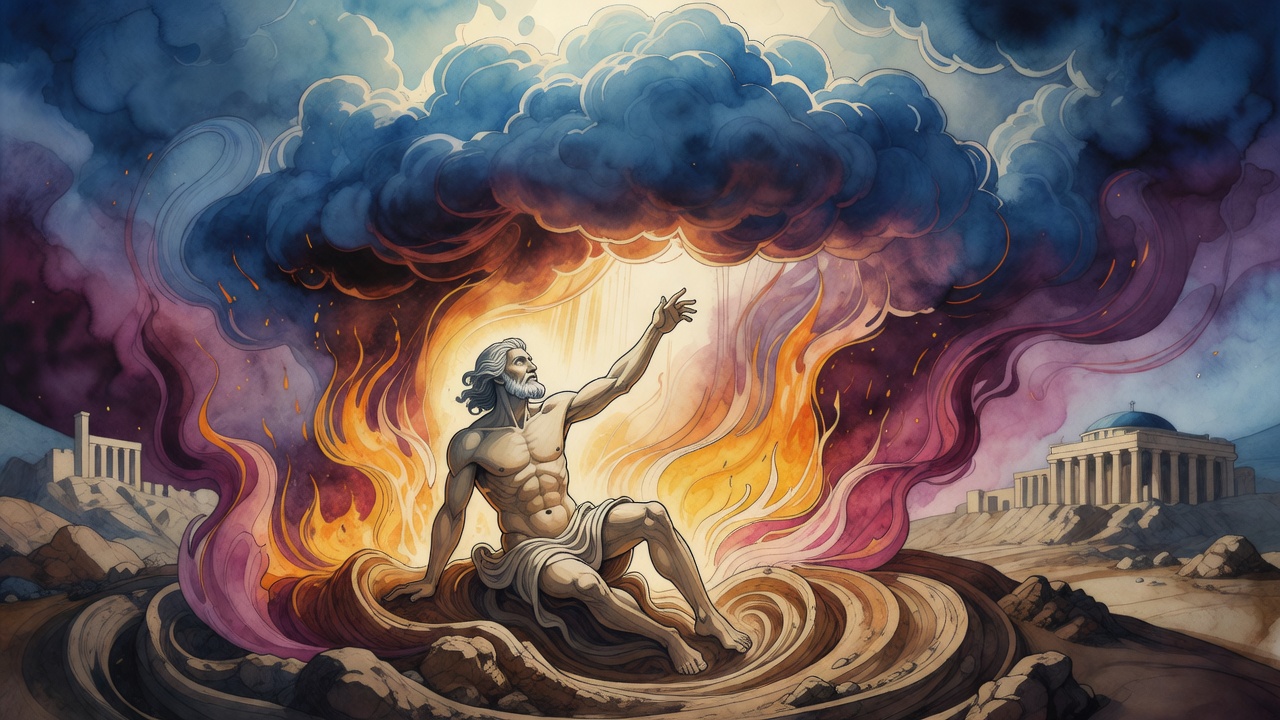
At the center of the earth, at the pure place where the first body would be shaped, the ground held still. No ribs, no breath, no opened eyes. Only earth with a future hidden inside it.

Adam did not begin as clay alone. Long before the body rose from the dust, the soul that would enter it had already descended through worlds. The form came from below. The life that would make it speak came from above.

The Dust at the World's Center

God gathered Adam's dust from the navel of the earth.

Not from a random field. Not from a ditch beyond the garden. From the center, the place where holiness could touch matter without losing itself. The body was shaped with care, limb joined to limb, face prepared for breath, hands formed before they had anything to hold.

For a moment, the first human was a perfect absence. A body ready for life and still without it. The eyes did not see. The mouth did not name. The hands did not reach. Earth had been lifted into the shape of a person, but the person had not yet arrived.

Then breath entered.

The Soul Came From Higher Worlds

The soul did not arrive empty.

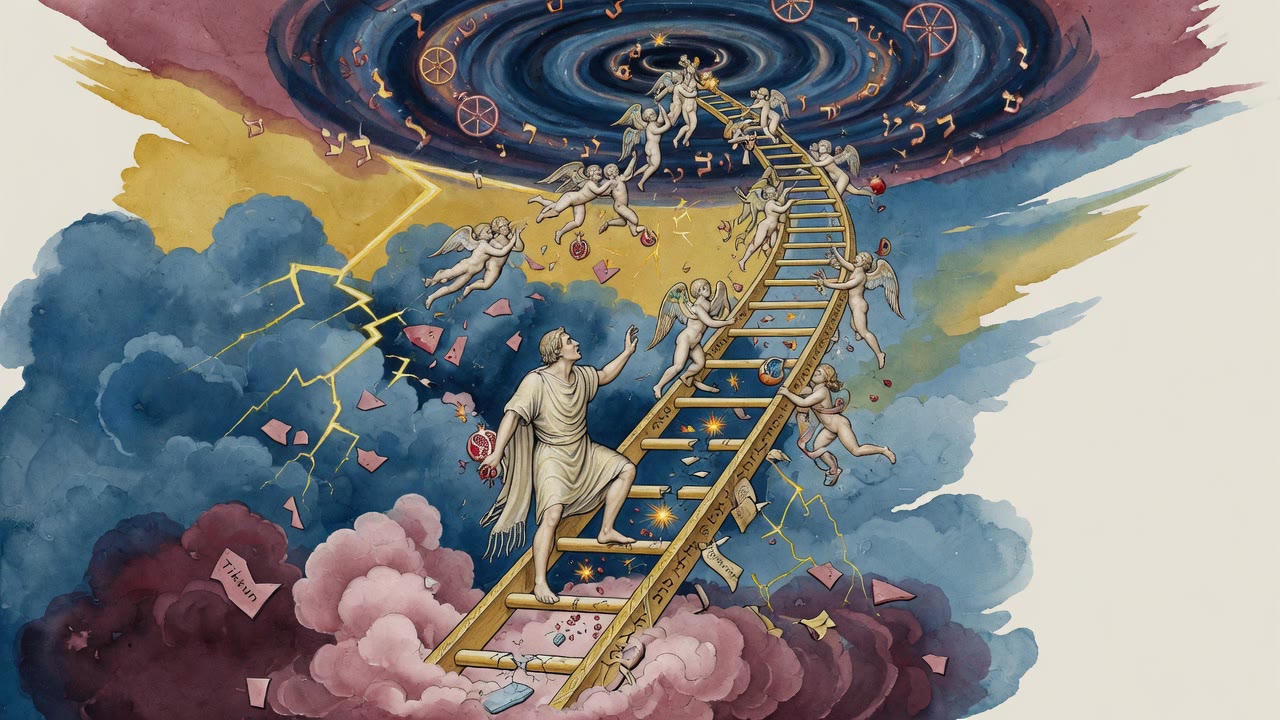
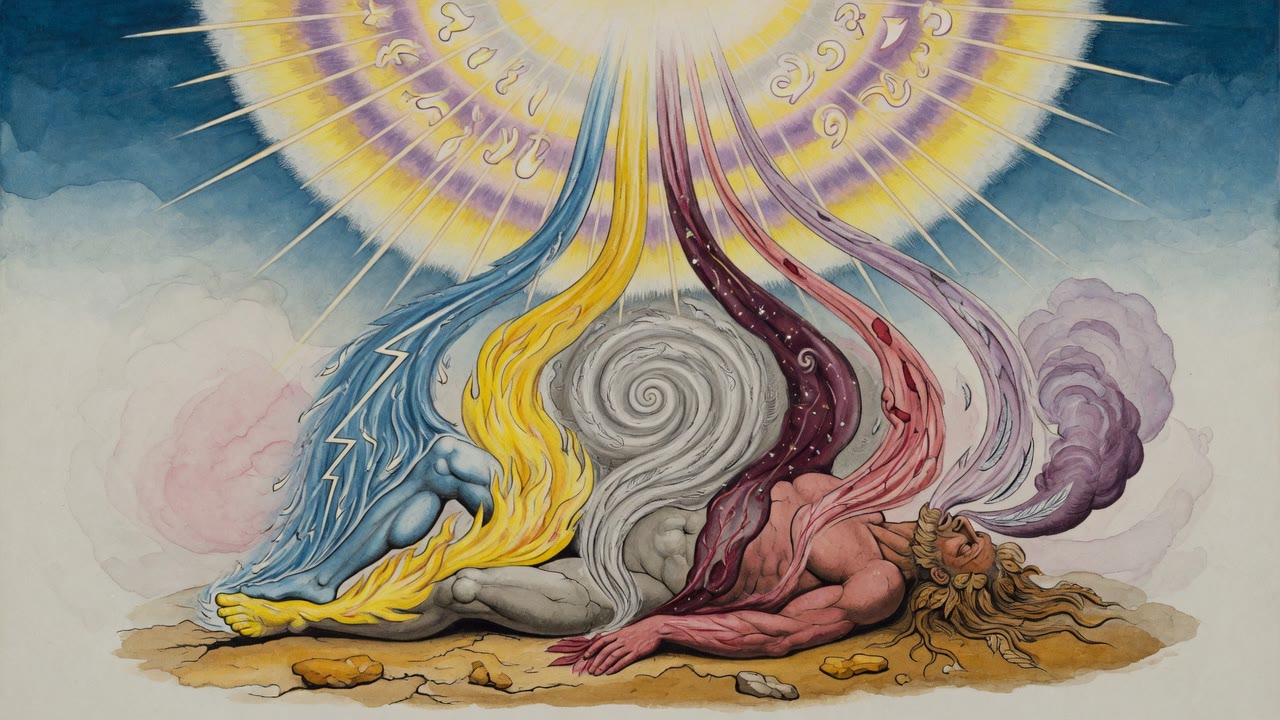
It carried order from worlds too bright for soil. In the hidden architecture of creation, the human being began above the human body. Light descended through levels, each one narrowing what came before it until life could enter a creature made from dust and not shatter it.

The first breath joined distances that had no natural bridge. Above and below met inside one body. Adam opened his eyes as a creature of earth with a soul old enough to remember light it could no longer fully name.

That is the danger of being human. The body is made from ground that pulls downward. The soul carries a memory of height. Adam's life began with both truths held in one chest.

The Body Almost Became Transparent

The first body was meant to become clear.

If Adam had stood firm, the lower would have answered the upper without resistance. Flesh would not have been an enemy of soul. Desire would not have become confusion. The body would have carried the soul the way clear water carries light, visible because nothing in it fights the shining.

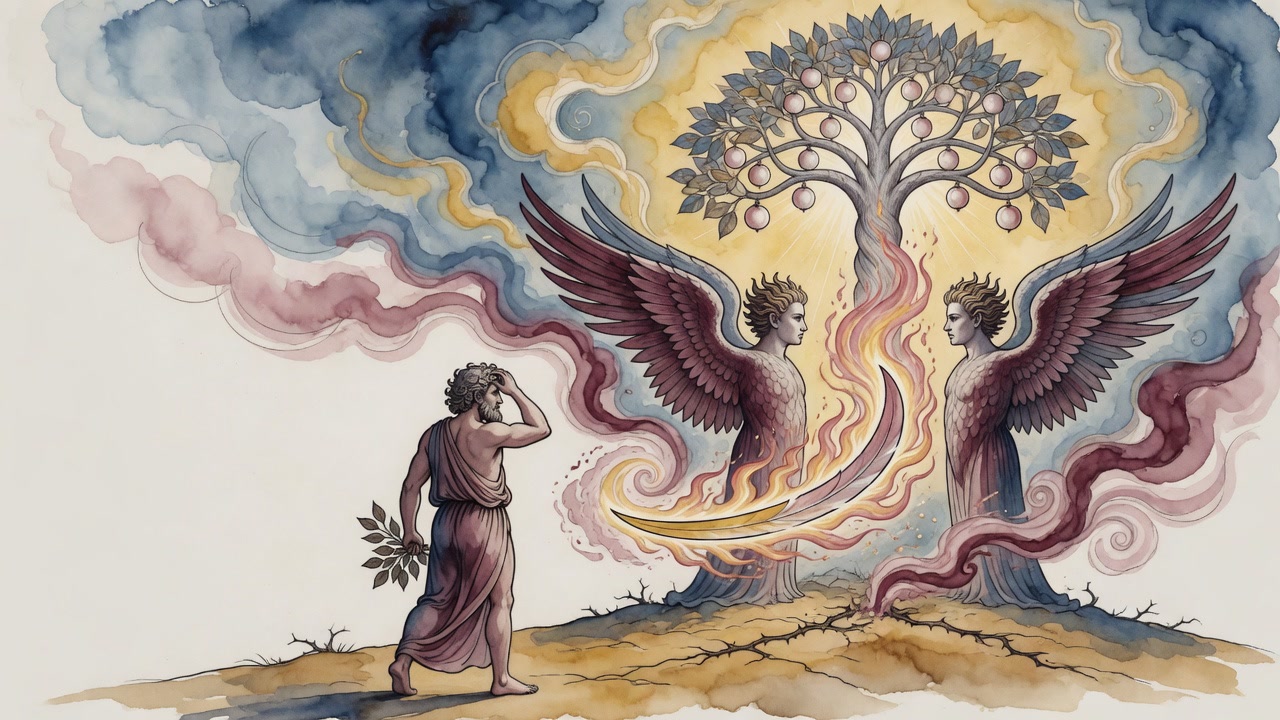
Then the command came. Then the tree stood in the garden with its fruit and its border. The test was not only about obedience. It was about whether earth could remain aligned with the breath inside it.

Adam failed, and the body became heavier. The soul still lived there, but now it had to struggle through opacity, appetite, fear, and death. The first human remained alive, but the intended transparency cracked.

Chava Was Named Life

Even after the crack, Adam could still name truly.

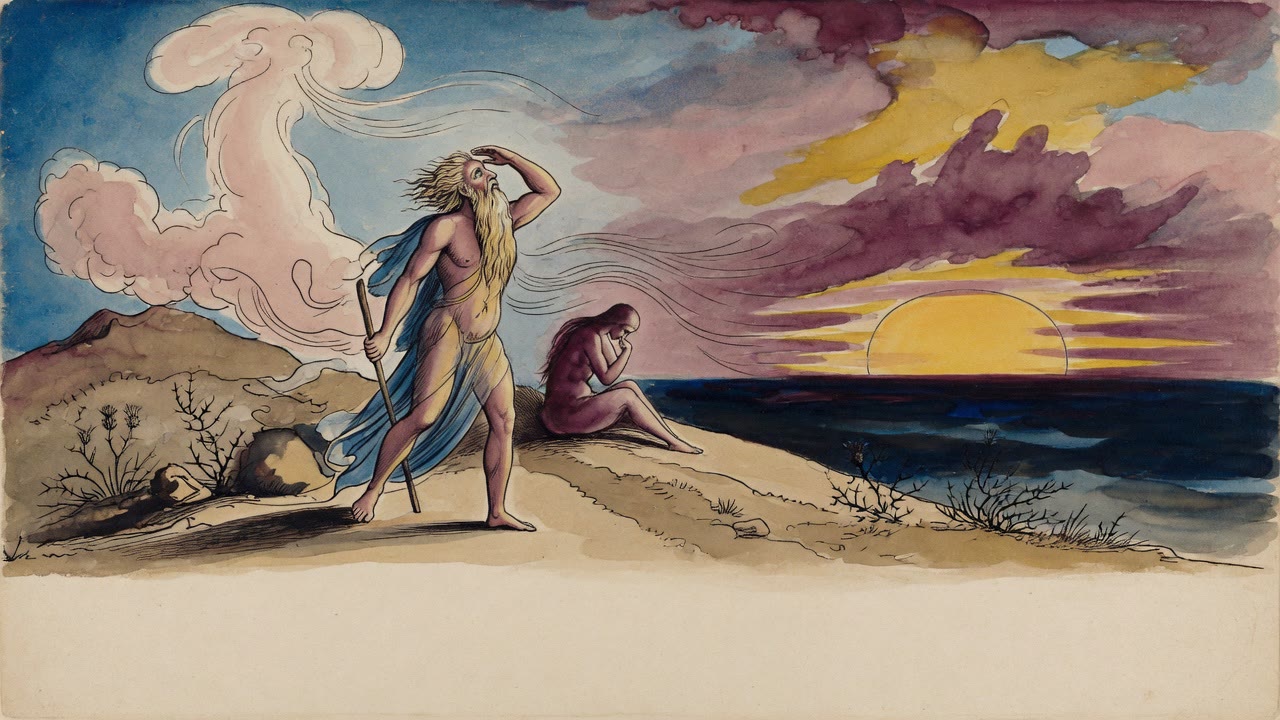
He looked at the woman beside him and called her Chava, Life. The name was not flattery. It was recognition. Through her, living generations would come. Through her, the human future would not end with exile from the garden. Adam had lost innocence, but not perception entirely.

To name is to see the inner shape of a thing. Adam had named animals before the fall, each according to what it was. Now he named Chava while standing east of his own failure. "Life," he said. Not because death had vanished, but because life would continue in its presence.

All Souls Hidden in the First

Adam's soul was not solitary.

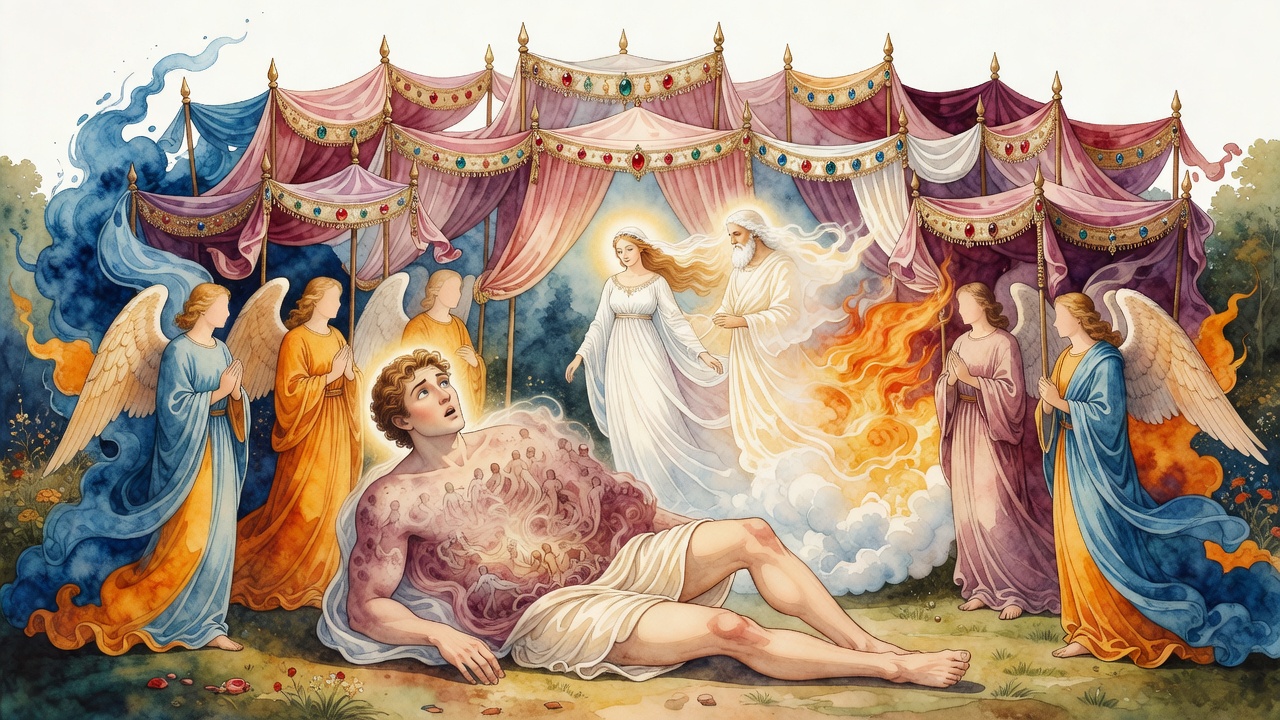
It held generations folded inside it like seeds packed into one fruit. Every future cry, prayer, song, argument, child, king, exile, and return existed in potential when breath first entered the dust. The first person was not only first in sequence. He was the chamber in which all later souls waited for their hour.

That makes the first breath enormous. It was not one man waking up. It was humanity entering matter at a single point. The dust at the center of the world received a soul that had descended from height and carried multitudes within it.

Adam opened his eyes, and the struggle of every human life began: earth and breath, heaviness and memory, body and soul trying to become clear to one another again.


← All myths
From the tradition

Sources

3 sources

The texts this telling draws on, in full. Open a card to read inline, or expand it for a wider, quieter read.

Pirkei DeRabbi Eliezer 11:9Pirkei DeRabbi Eliezer

The ancient text, Pirkei DeRabbi Eliezer (chapter 11, to be exact), gives us a stunningly vivid picture. It describes how God formed the first human from a clod of dust. Not just any dust, but dust gathered from a pure place, precisely "on the navel of the earth", the very center of the world. Can you

He shaped Adam, prepared him meticulously, but there was something missing. He was a form, but not yet alive. No breath, no neshama (soul). So, what did the Holy One, blessed be He, do? He breathed into him "the breath of the soul of His mouth," and a soul was cast into him, just as (Genesis 2:7) tells us, "And He breathed into his nostrils the breath of life."

Then, Adam stood. moment. From inert clay to conscious being in a single breath. He began to gaze around, upwards and downwards, taking in everything. Imagine the sheer wonder of seeing creation for the first time! He saw all the creatures God had made, and, overwhelmed, he began to praise and glorify his Creator, exclaiming, "O Lord, how manifold are Thy works!" words taken directly from (Psalm 104:24). It's a powerful moment of pure, unadulterated awe.

Here's where the story takes another fascinating turn. Pirkei DeRabbi Eliezer continues by telling us that Adam stood on his feet, "adorned with the Divine Image." He was immense, his height stretching from east to west! As it says in (Psalm 139:5), "Thou hast beset me behind and before," with "behind" referring to the west and "before" to the east.

And the creatures? They saw him, this giant figure, and were afraid. They mistook him for their Creator and came to prostrate themselves before him. What a profound statement about the power and majesty inherent in humanity, even at its very beginning!

It's a powerful image, isn't it? It speaks to the potential within each of us, the tzelem Elohim, the Divine Image, that we carry. Perhaps the next time we look around at the world, we can try to recapture some of that original wonder, that sense of awe and gratitude that Adam felt in his first moments of life. And maybe, just maybe, we can remember that we, too, are part of something much larger than ourselves.

Full source
Kalach Pitchei Chokhmah 41:11Kalach Pitchei Chokhmah

It explores the intricate relationship between the soul and the body, especially in the context of sin, death, and ultimately, resurrection.

This teaching paints a picture of what could have been. Imagine, if you will, that Adam hadn't succumbed to temptation. What would our existence be like then? The Kalach Pitchei Chokhmah (Wisdom) suggests that Adam's body would have been pure, instantly perfected. The soul and body would have been in complete, harmonious union.

As we know, that's not the story we live. The sin introduced impurity into Adam's body, creating a barrier to that perfect connection. And what happens when the soul can't fully connect? Death. The soul departs, leaving the body to its own devices.

Here's where it gets interesting. The text describes the body, now separated from the soul, as releasing all the evil within it. This evil reigns until the body has purged itself, working through all its inherent flaws. It's a rather stark image, isn't it? A body alone, consumed by its own imperfections.

But it's not the end of the story. The promise of resurrection, the rebuilding of the body in purity, offers a path to renewal. It’s a core tenet of Jewish belief, this idea that the dead will rise again.: a purified body, ready to receive the soul once more. This time, the connection is permanent, flawless, eternal. The soul enters and remains, radiating light upon light, elevating the body to its highest potential. The Kalach Pitchei Chokhmah describes an ascent, a journey toward ultimate spiritual fulfillment.

Even before death, while the soul resided in the body, it imparted a certain light. It's not as though the body was entirely without spiritual influence. The light the soul bestows after the resurrection, however, is directly linked to the light it gave during life. This is a profound idea: that our actions, our deeds, directly impact the degree of purification and radiance we experience in the afterlife. We are, in a sense, crafting our own spiritual future.

So, what does this all mean for us? Perhaps it's a call to consider the choices we make in this life, to strive for purity of intention and action. Because, according to this ancient wisdom, the light we cultivate within ourselves now is the same light that will illuminate our path in the world to come. It's a powerful thought, isn't it?

Full source
The Midrash of Philo 20:2The Midrash of Philo

Take the very first name ever given to a woman: Chava, or as we know her, Eve.

Philo, the great Jewish philosopher from Alexandria, Egypt, writing around the first century CE, gives us a fascinating midrash – an interpretation – on this very name. According to the Midrash of Philo 20, Adam didn't just randomly pick a name. He called her "Life," Chava, for profound reasons.

First, Philo tells us that Adam recognized in her the potential for all future generations. She was destined to be the "fountain of all the generations," the wellspring from which humanity would flow. – a name imbued with the weight of the future!

There's more. Philo delves deeper, exploring the very substance of her being. Eve wasn't formed from the earth, like Adam, but “out of a living creature, namely, out of one part of the man, that is to say, out of his rib.” Because she originated from something already alive, she was called "Life." She was life born from life, the first being from whom all other rational beings would descend.

Now, Philo being Philo, he offers a more metaphorical interpretation, too. He asks, "Is not the outward sense, which is a figurative emblem of the woman, called with peculiar propriety 'life'?" In other words, perhaps "Life" refers to the senses. After all, it's through our senses that we experience the world, that we distinguish ourselves from the inanimate. The senses are what set our souls in motion.

Philo takes this idea even further. He proclaims that "the outward sense is the mother of all living creatures." A bold statement. But his reasoning is simple: just as there can be no generation without a mother, there can be no living creature without sense. The ability to perceive, to experience, is fundamental to life itself.

So, when Adam named her Chava, Life, he wasn't just giving her a label. He was acknowledging her role as the source of generations, celebrating her unique creation from living flesh, and recognizing the vital connection between woman and the very essence of life itself – our ability to sense, to feel, to be alive. It makes you wonder, doesn't it, what kind of world we might create if we truly honored the life-giving power within each other.

Full source