Parshat Bereshit5 min read

Raziel Brought Adam a Book From God's Throne

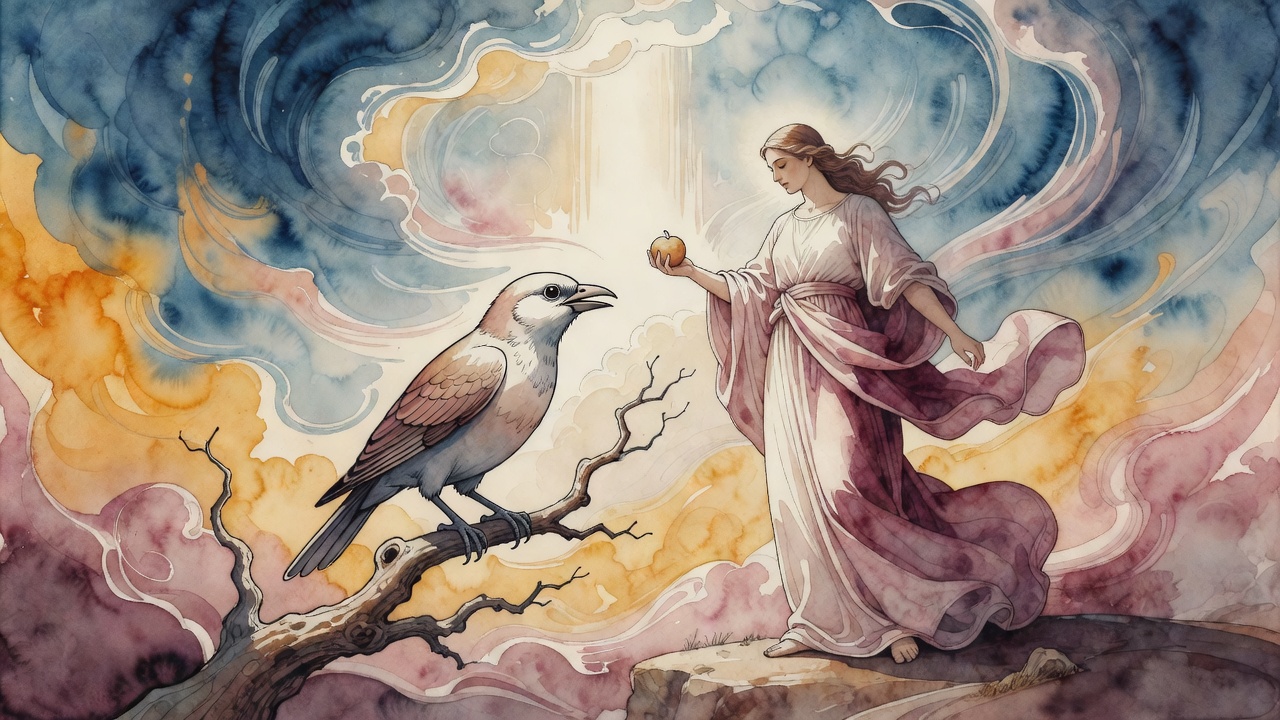
After Eden, an angel came to Adam with a book containing every secret of the world. The angels stole it. God returned it from the sea.

Curated by Arthur · Told by Maggid ·
Table of Contents
  1. The First Morning Outside Eden
  2. Raziel Comes Down
  3. The Angels Steal the Book
  4. The Book's Journey Through History
  5. What the Book Contained

The First Morning Outside Eden

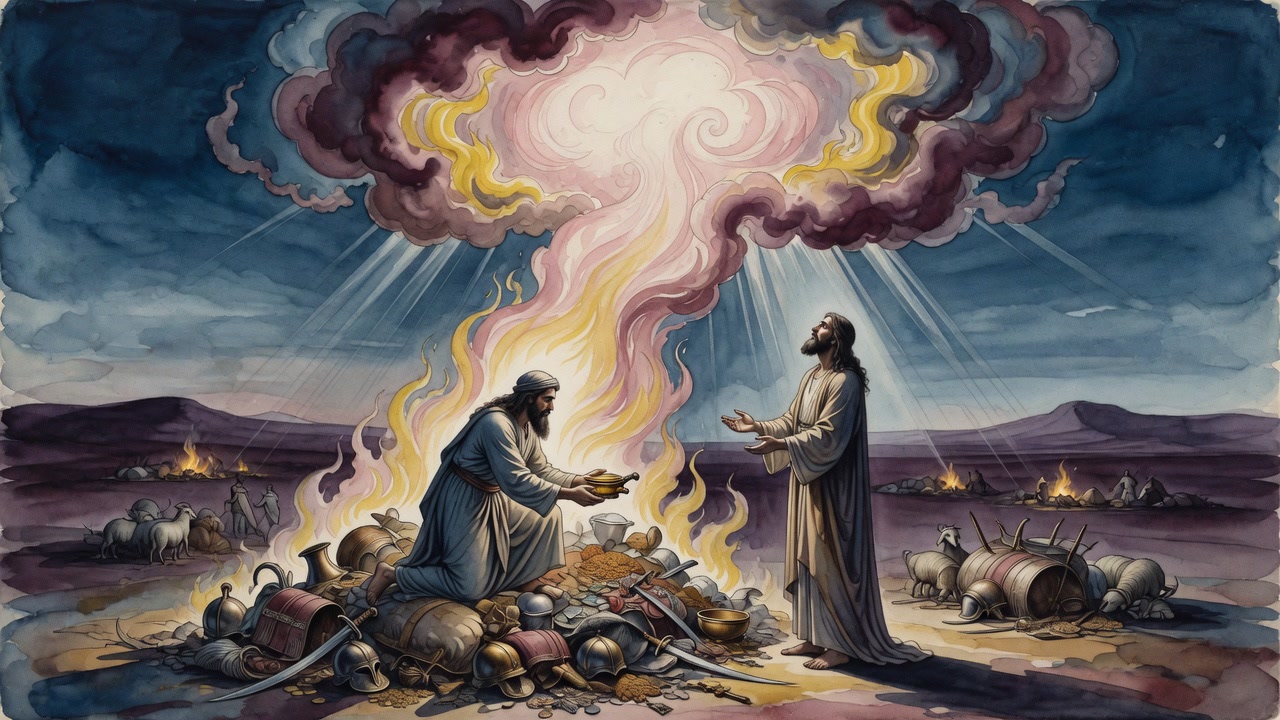
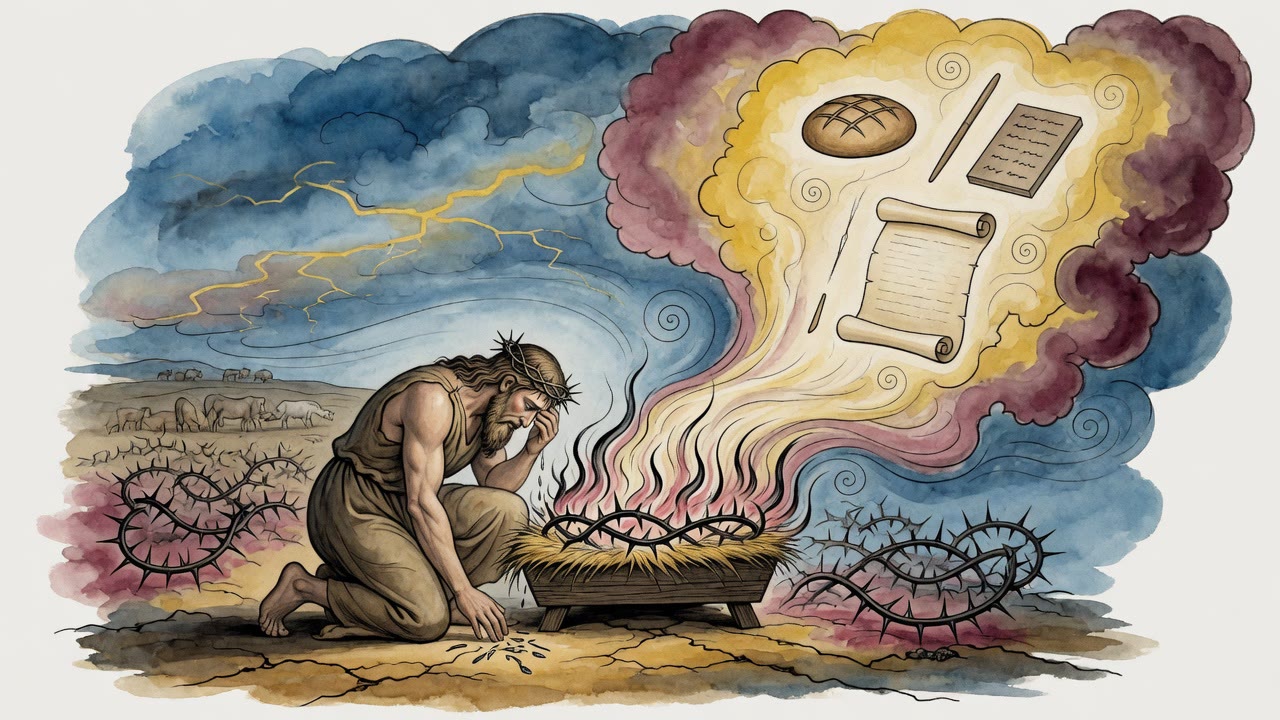
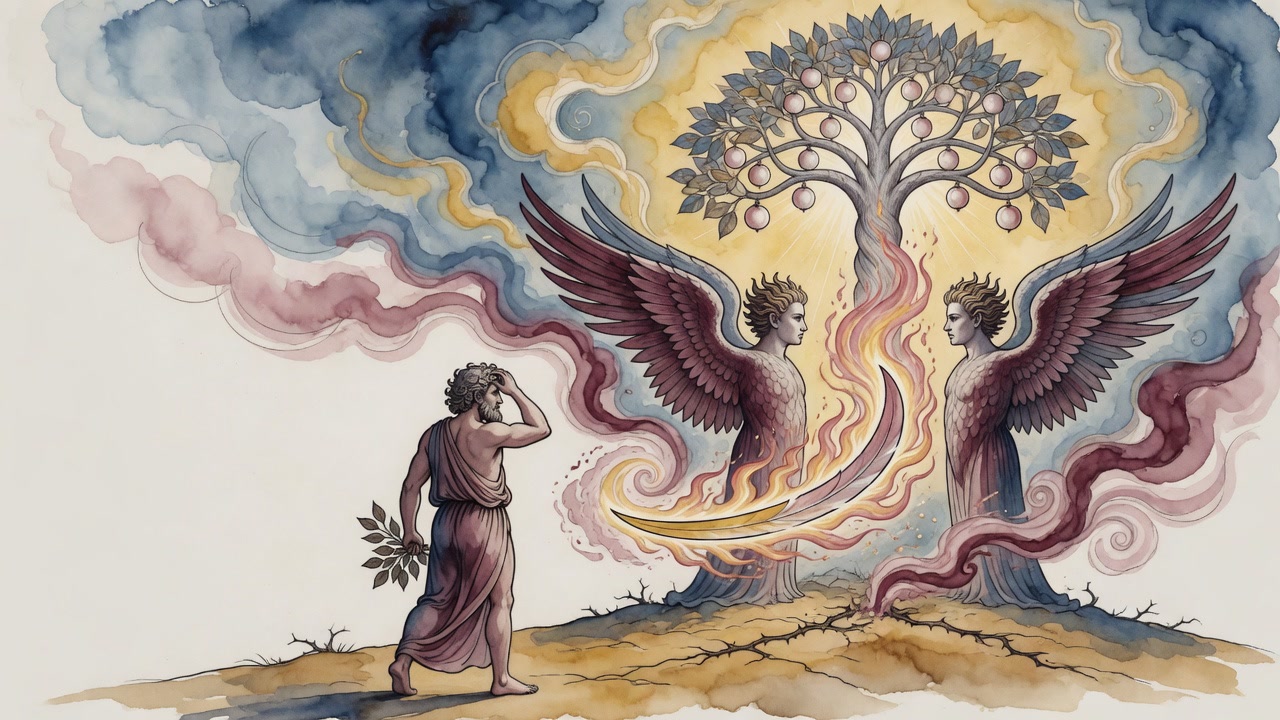
Adam stood in the ungardenized world and understood several things immediately. The ground under his feet was the same ground from which God had made him, but it no longer recognized him the way it had before. In Eden, the plants had bent toward his hand. Out here they would require persuasion, effort, the kind of relationship built through labor rather than given at creation. The sun had already gone down once, and he had believed it was dying. He had sat next to Eve in the darkness convinced that the first night was the permanent end of light.

The morning told him otherwise. The light returned. But the morning also told him that he was in a world he did not understand, with a body that would eventually stop working, in a story whose future he could not read.

Raziel Comes Down

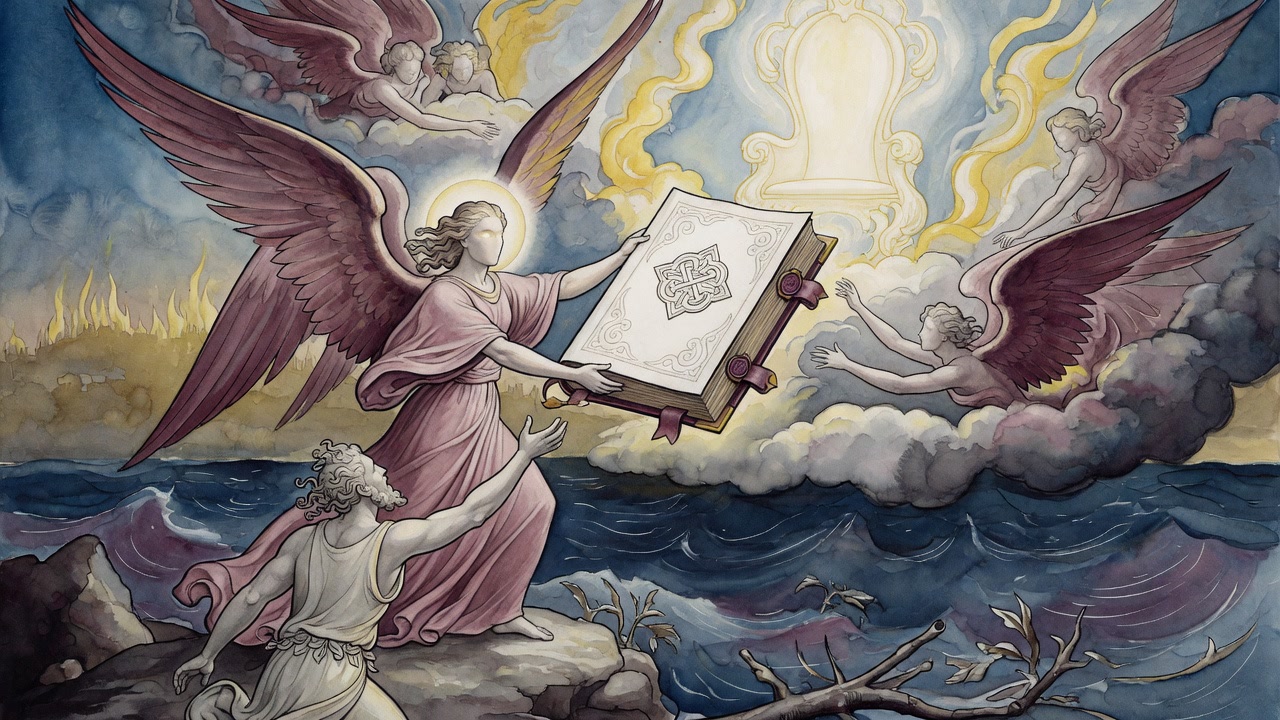
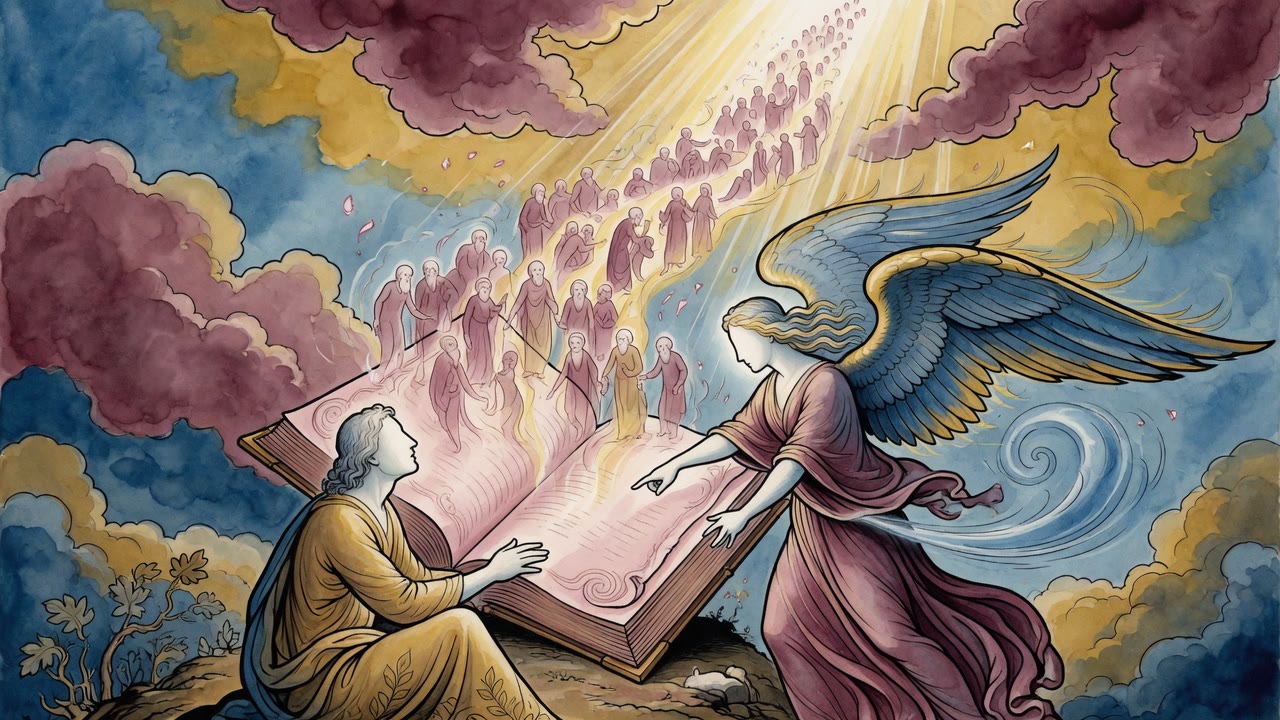
God sent Raziel. The name means secret of God, and the angel carried a book whose contents matched the name. The Zohar preserves the tradition: God wanted to show Adam all the generations that would descend from him, all the events that would unfold in human history, the names and acts of every soul that would be born into the world Adam was now responsible for continuing.

Raziel descended to where Adam sat and gave him the book. It had been held at the divine throne before the world was made. Its leaves were sapphire. Its letters were written in fire. When Adam opened it, a light came out that could be seen from one end of the world to the other, and the angels gathered at the edge of the firmament to look down at what was happening.

The Angels Steal the Book

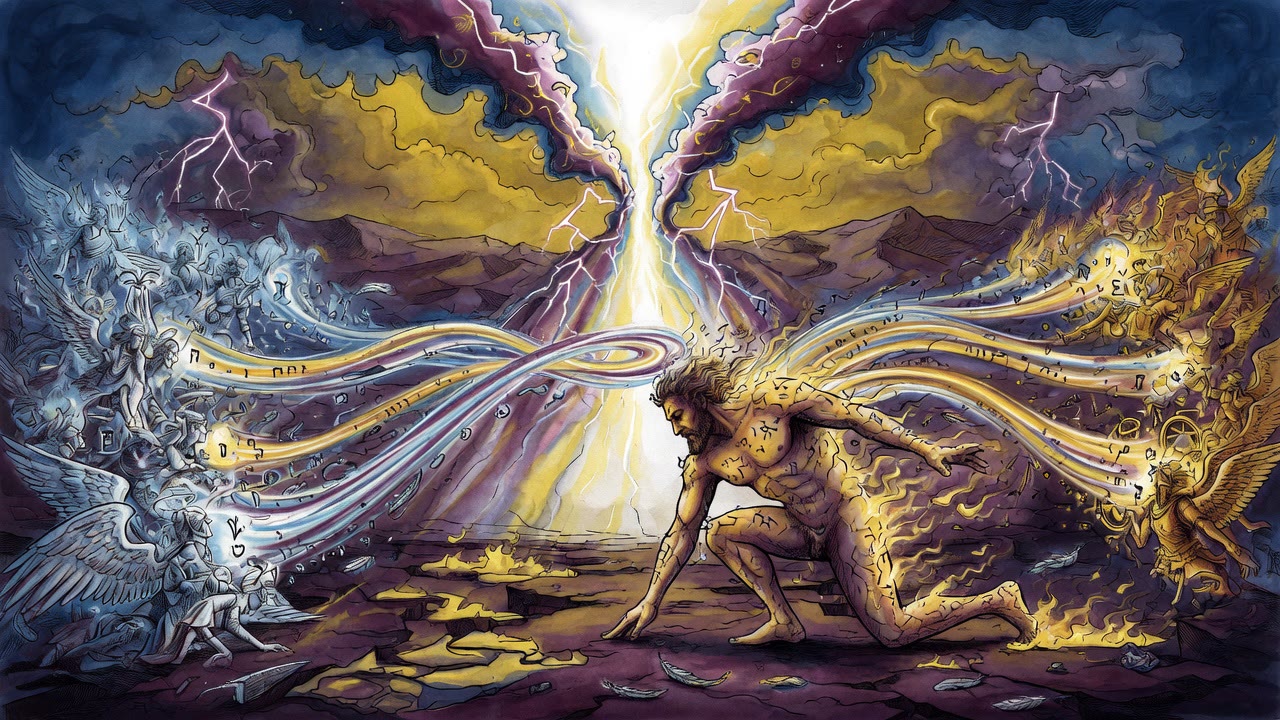
The angels had objections to what they saw. A man who had already failed the first test of his existence, who had listened to a serpent and eaten the fruit that cost him Paradise, was being given access to all knowledge, all futures, all secrets. It seemed backwards. If Adam with the limited information of Eden had made the choices that led to his expulsion, what would he do with everything?

Two of the angels, the tradition names Azza and Aza'el, took the book from Adam while he slept and threw it into the sea.

God retrieved it. He sent the angel of the sea to bring it back from the depths. The book was returned to Adam. He studied it for the remainder of his life. When he felt death approaching, he passed it to his son Seth.

The Book's Journey Through History

Seth passed it down. Enoch received it and from it drew the knowledge that allowed him to walk with God without dying, the only human in the genealogies of Genesis to exit history without death. Noah received the book and from it learned what to build and how to read the signs of what was coming. Abraham received it and from it understood the nature of the God he had found without instruction. Joseph kept it with him in Egypt. Moses had it on Sinai and from it received what no ordinary human reading could have produced.

Solomon received it and from it built the Temple, the healing practices, the knowledge of plants and stones and the nature of created things. The tradition held that the Book of Raziel was the source behind every significant human achievement in the history of Israel: not magic in the debased sense but gnosis in the original sense, the knowledge of what things are and how they fit together.

What the Book Contained

The tradition is specific about the contents. Every secret of the world, but structured. The movements of the sun, moon, and stars, the names and natures of the angels, the structure of the divine throne, the seals that govern the years and the seasons and the days, the prayers that open what is closed and the names that have power over what is otherwise resistant. And the futures: the line of every generation, their actions and their consequences, the shapes of history before history made those shapes.

What Adam could not do with this knowledge was undo what he had done. The exile stood. The knowledge came after the expulsion, not before it. The mercy was real: God did not leave Adam in total darkness about the world he had entered. But the mercy came after the consequence, not instead of it.


← All myths
From the tradition

Sources

3 sources

The texts this telling draws on, in full. Open a card to read inline, or expand it for a wider, quieter read.

Zohar I:55bSefer haZohar

Some say they're locked away in a book, a very special book called the Book of Raziel.

This isn't your ordinary paperback. According to tradition, this book was revealed to Adam himself, back in the Garden of Eden. God wanted to show Adam all the generations to come, each with its wise sages and powerful leaders. But how do you show someone generations that don't even exist yet?

Well, some say God put Adam into a deep sleep and showed him everything in a dream. Others say Adam saw it all with his own eyes, as if reading a movie reel of the future. After all, the souls of everyone who would ever be born were already standing before God, in the forms they would eventually take on Earth.

That's where the angel Raziel, the Angel of Secrets, comes in. God sent Raziel to read the book to Adam. But when Adam heard the angel's words, he was overwhelmed with fear! So, God allowed Raziel to leave the book with Adam, so he could read it at his own pace. In this way, Adam gained knowledge of the future and became wise in all things.

What was this book even made of? Some say it was written on parchment, while others believe it was engraved on a sapphire stone. And how could Adam read a sapphire? The tradition tells us that he held it up to his eyes, and a flame burning inside the sapphire transformed into the shapes of letters. Amazing. There are even those who believe the true text of the Book of Raziel was actually the Torah itself! The Zohar tells us that the Torah was one of the seven things created before the rest of Creation. So, in a way, its wisdom was transmitted to Adam from the very beginning. The book contained secret writings that explained seventy-two branches of wisdom, mysteries even the angels didn't know! It held the entire history of humankind, past and future.

According to Ginzberg's retelling in Legends of the Jews, whenever Adam opened the book, angels would gather around, hoping to glean some of its mystical secrets. But the angels got jealous! They pleaded with God, "Impart the mystery of Your glory to the angels, not to men!" But God had other plans. The angel Hadamiel was secretly sent to Adam, warning him, "Adam, Adam, do not reveal the glory of your Master, for to you alone and not to the angels is the privilege given to know these mysteries."

So Adam kept the book hidden, reading it in secret. But the angels' envy grew so intense that they stole the book and threw it into the sea! Can you imagine? Adam searched everywhere, fasting for days, until a heavenly voice announced, "Fear not, Adam, I will give the Book back to you." God then commanded Rahab, the angel of the sea, to retrieve the book and return it to Adam.

But the story doesn't end there. When Adam sinned, the book flew away from him! He begged God for its return, beating his chest and wading into the river Gihon until he was haggard and worn. God, seeing his remorse, sent Raphael, the Angel of Healing, to heal Adam and bring back the book.

After that, Adam studied the book intently and passed it down to his son Seth. As we find in (Genesis 5:1), "This is the book of the generations of Adam." The book was handed down from Seth to Enosh, to Kenan, to Jared, and eventually to Enoch. It was from this book that Enoch gained his vast knowledge of the Mysteries of Creation, and before he was transformed into the angel Metatron, he entrusted the book to his son, Methuselah.

Methuselah passed it to his son Lamech, and from there it reached Noah, Lamech's son, who used its instructions to build the ark! Some traditions even say the angel Raziel revealed the book directly to Noah and wrote it down for him on a sapphire stone. By reading it, Noah could understand the secrets of life and death, good and evil, and foresee the future. He could gaze at the destinies of the stars, the course of the sun, and even understand dreams and visions.

Happy was the eye that beheld that book, and happy the ear that listened to its wisdom, for in it were revealed all the secrets of heaven and earth. Noah placed the book in a golden box and brought it onto the ark. Later, it was revealed to Abraham, whose knowledge of it allowed him to gaze upon the glory of God. And from Abraham, it was passed down to Isaac, Jacob, and Joseph, who used it to interpret dreams.

The story continues! The book was buried with Joseph, preserved when Moses raised his coffin from the Nile and carried it alongside the Tabernacle. Eventually, it came into the possession of King Solomon, who used its wisdom to build the Temple.

What happened to it then? Some say it was lost when the Temple was destroyed, its letters soaring away as flames consumed the Sanctuary. But others believe it was saved and secretly passed down through the generations. According to tradition, it reached Rabbi Adam and then the Ba'al Shem Tov, who learned supernal mysteries from it and became the Tzaddik, the righteous one, of his generation.

This story of the Book of Raziel is a chain midrash, a linked set of myths, attempting to explain (Genesis 5:1). Raziel ha-Malakh, first published in Amsterdam in 1701, claimed to be the book given to Adam. It's filled with names of God and angels, and texts for amulets. The book itself was believed to have talismanic powers, especially the ability to ward off fires and other disasters, which is why it was often found in Jewish homes.

The Maharal offers an interesting perspective: perhaps Adam had all future events revealed to him in a vision, and later they were recorded in this book. The fact that the angel leaves the book for Adam to read highlights the importance of books in Jewish tradition, even the first man could read!

So, what do you think? Is there a real Book of Raziel hidden somewhere, waiting to be discovered? Or is it a powerful metaphor for the endless quest for knowledge and wisdom that drives us all? Whatever the answer, the story of the Book of Raziel continues to inspire awe and wonder, reminding us that the pursuit of knowledge is a journey that can lead to the deepest secrets of the universe.

Full source
Otzar Midrashim, The Garden of Eden; Gehinnom, The Book of GehinnomOtzar Midrashim, Book of Gehinnom

At the gate of Gehinnom, two walls of angels do not whisper. They cry, "Give! Give!" Otzar Midrashim's Book of Gehinnom opens with Rabbi Zeira reading the leech's daughters in (Proverbs 30:15) as the voice of judgment itself. Every soul brought near the fire has to answer for a life that can no longer be edited.

The text gives the place many names. Gehinnom groans from one end of the world to the other. Tofteh is the pit reached through the yetzer hara, the evil inclination that lured a person step by step. Rabbi Yochanan reads (Psalms 84:7) as the confession of the wicked passing through the valley of weeping, naming themselves, their father's house, and the sin that brought them there.

Then the vision turns physical. The angel Dumah receives the soul. Angels of destruction beat it, expose its deeds, and lead it through chambers of fire, snow, darkness, and shame. Gehinnom is not random cruelty in this midrash. It is memory made unbearable. The soul sees what it did, feels what it damaged, and cannot pretend innocence.

Even here, the text leaves a crack of mercy. The point of confession is not spectacle. It is truth. Gehinnom forces the soul to say aloud what it hid in life, and the first step out of judgment is no longer lying.

Full source
Otzar Midrashim, Book of Rezial the AngelOtzar Midrashim, Book of Rezial the Angel

Sefer Raziel, or Raziel the Angel, is a very ancient book about theoretical and practical Kabbalah: the arrangements of the host of heaven, the names of the angels, the work of creation, prayers, amulet formulae, adjurations of angels, spirits, and demons, and some material from Sefer ha-Komah, or Shiur Komah, attributed to Rabbi Ishmael ben Elisha, the High Priest.

It is written on the title page of the book that the angel Raziel handed this book to Adam the first man after 130 years of Adam's repentance. Adam handed it to Noah, to Shem, to Abraham, and so on, until King Solomon arose and the Book of Secrets was revealed to him. Many books were handed into his possession, and this one was found precious and honored above all of them (Amsterdam edition, folio 34a).

Sefer Raziel was known to Rabbi Abraham ibn Ezra, who mentions it in his commentary on the Torah (Exodus 14:19), saying: "In Sefer Raziel, one who wants to make a dream inquiry should read at the beginning of the night the verse, 'And it came to pass in the thirtieth year,' because it has seventy-two letters." But in the book before us, in the matter of a dream inquiry, Ibn Ezra's wording is not found (see folio 40), and it seems that he had another version.

Rabbi Yaakov Emden wrote that Sefer Raziel is forged (Torat ha-Kenaot, folio 49a, gloss). According to Zunz, it was composed in the time of the Geonim, but many things from a later time were included in it. In his opinion, the body of Sefer Raziel includes only the whole of Sefer ha-Malbush at its beginning and most of Sefer ha-Razim, or Sefer Noah, at its end. The larger Sefer Raziel inside it, which is like a commentary on Sefer Yetzirah, the work of creation, the seventy-two-letter Name, and so on, is from a later period, and he tends to attribute that part to the author of the Rokeach.

According to Fürst, it is Sefer Sodei Raza of the Rokeach. Some attribute it to Rabbi Abraham Abulafia, the known visionary, who called himself by the name Raziel.

Sefer Raziel was first printed in Amsterdam in 1701 with illustrations, including the first printed illustration of the Star of David. It was later printed in Horodna in 1793, Kapust in 1820, Ostroh in 1827, Lviv in 1840, and Warsaw in 1812, with corrections and glosses.

Full source