Raziel Showed Adam Every Generation Before Birth
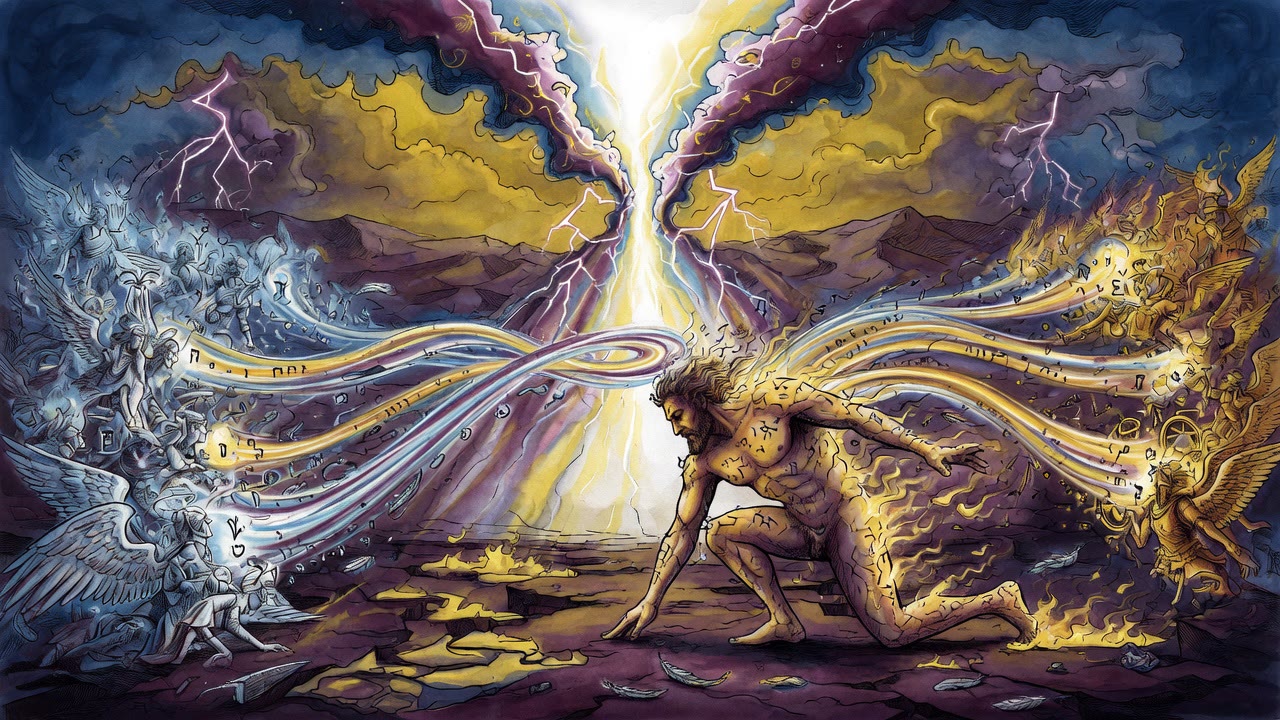
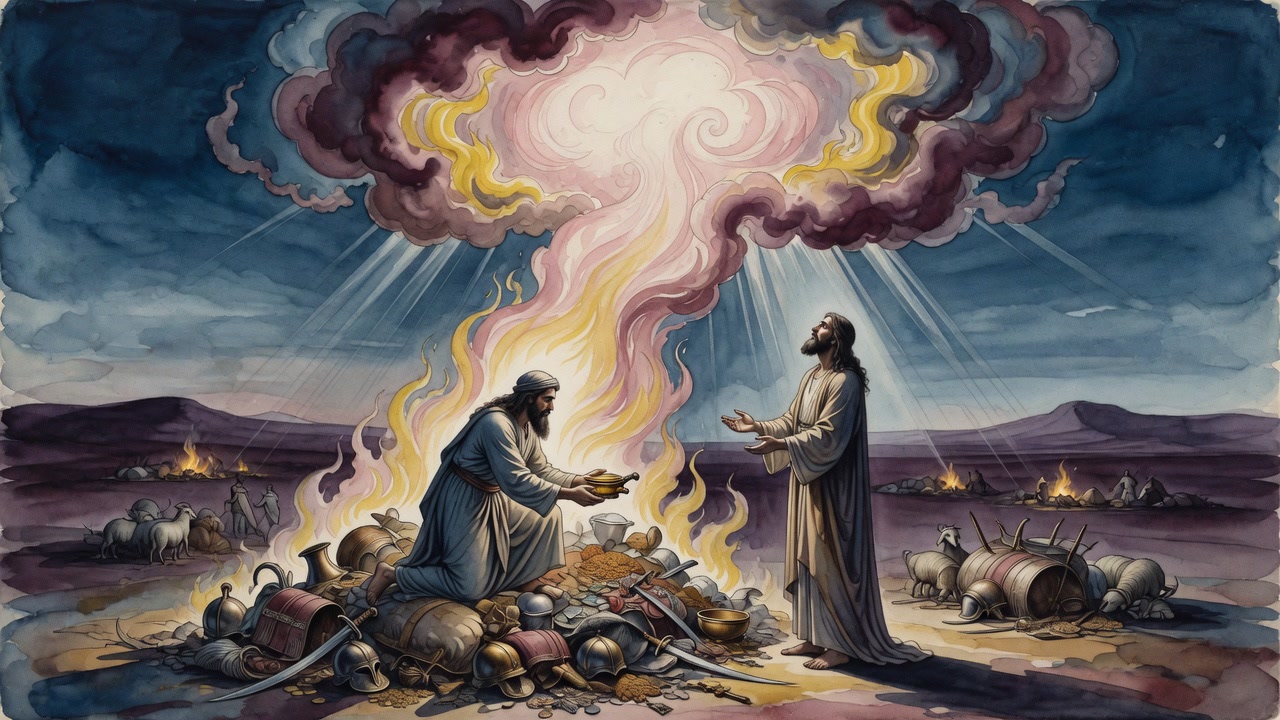
The plough stuck. The ox looked at him as at any other animal. Adam put his face in the dust and asked for his children's future.
Table of Contents
 Click for full size
The Plough in the Dust
Adam put the blade into the earth he had been taken from, and the earth did not yield the way it had in the Garden. The beasts that once stepped aside now looked at him as at any other animal. He had eaten from the tree of knowledge, and knowledge had gone out of him. He was a fool who knew nothing, and he said so out loud, to the dust.
He had no mouth, he told God, and no eye. The serpent had seduced the wife of his bosom. He had been driven forth. He could plough. He could not see what would befall his children.
"Grant me knowledge and understanding," he prayed, "that I may know what shall befall me, and my posterity, and all the generations that come after me." He asked for every day and every month. He asked that the help of angels not be withheld from the work of God's hands.
The Heat Beside the River
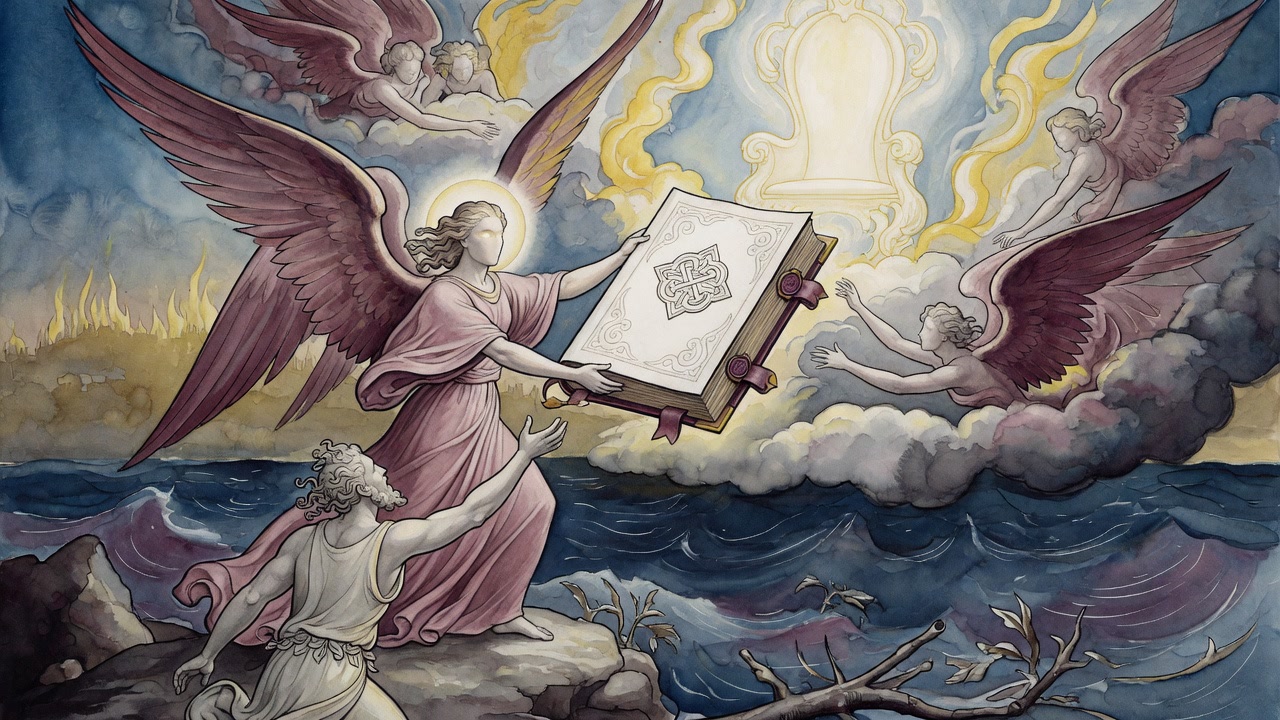
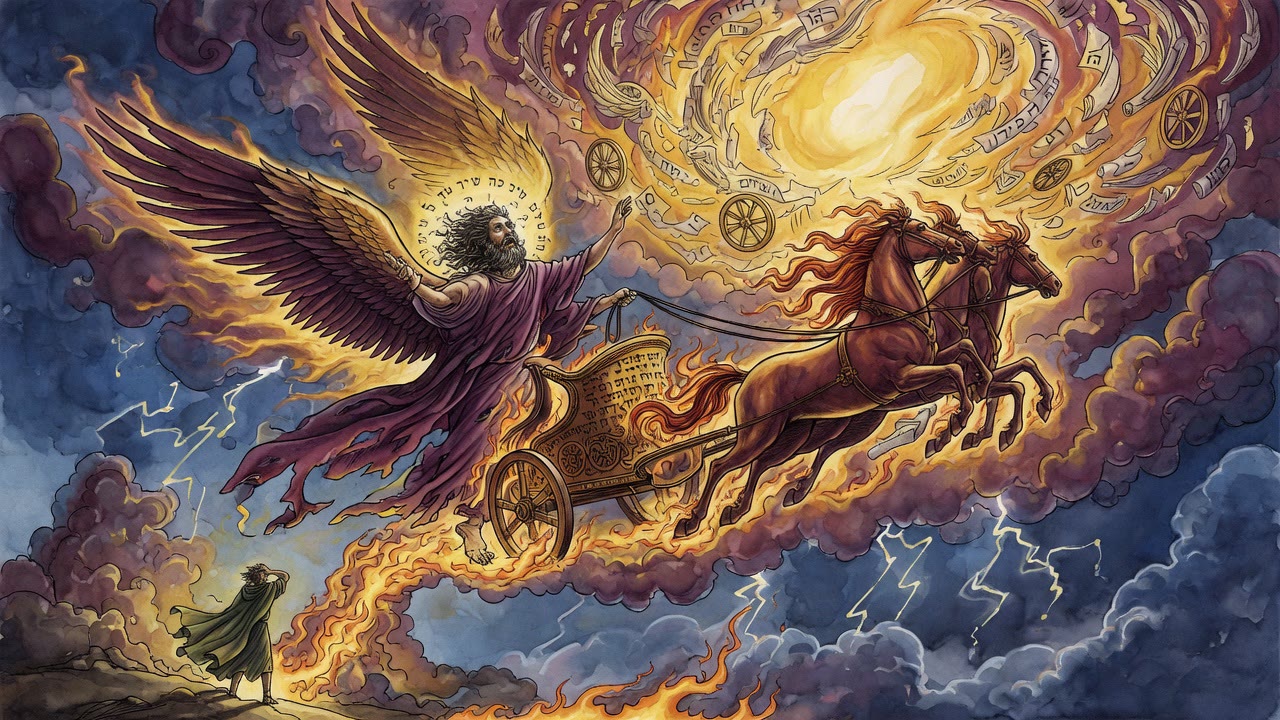
On the third day, in the heat, he sat on the bank of the river that still ran out of Paradise. An angel of radiant light stood there with a book in his hand. His name was Raziel (רזיאל), secrets of God, and the name was the errand.
"O Adam, why are you so faint-hearted?" the angel said. "Why are you distressed and anxious? Your words were heard at the moment you uttered them."
Adam did not rise at once. The light hurt. The book was closed. The river kept moving as if the gates behind it had never shut.
The Book Opens
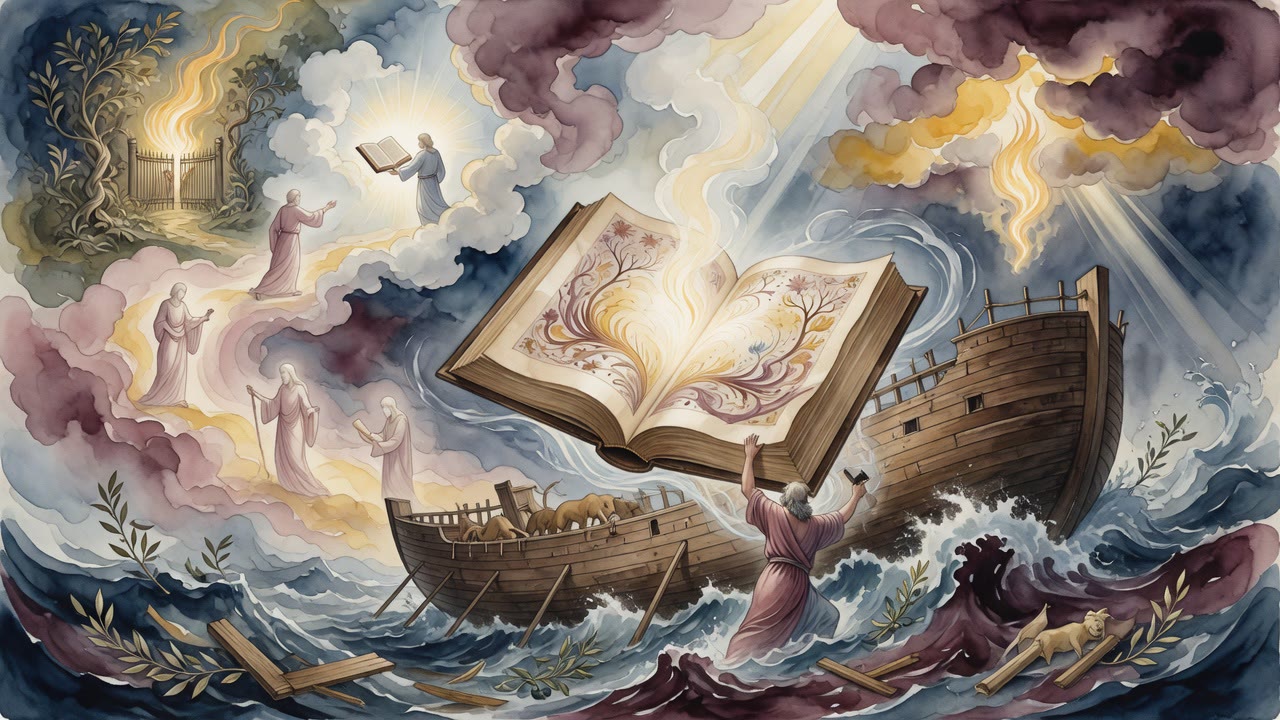
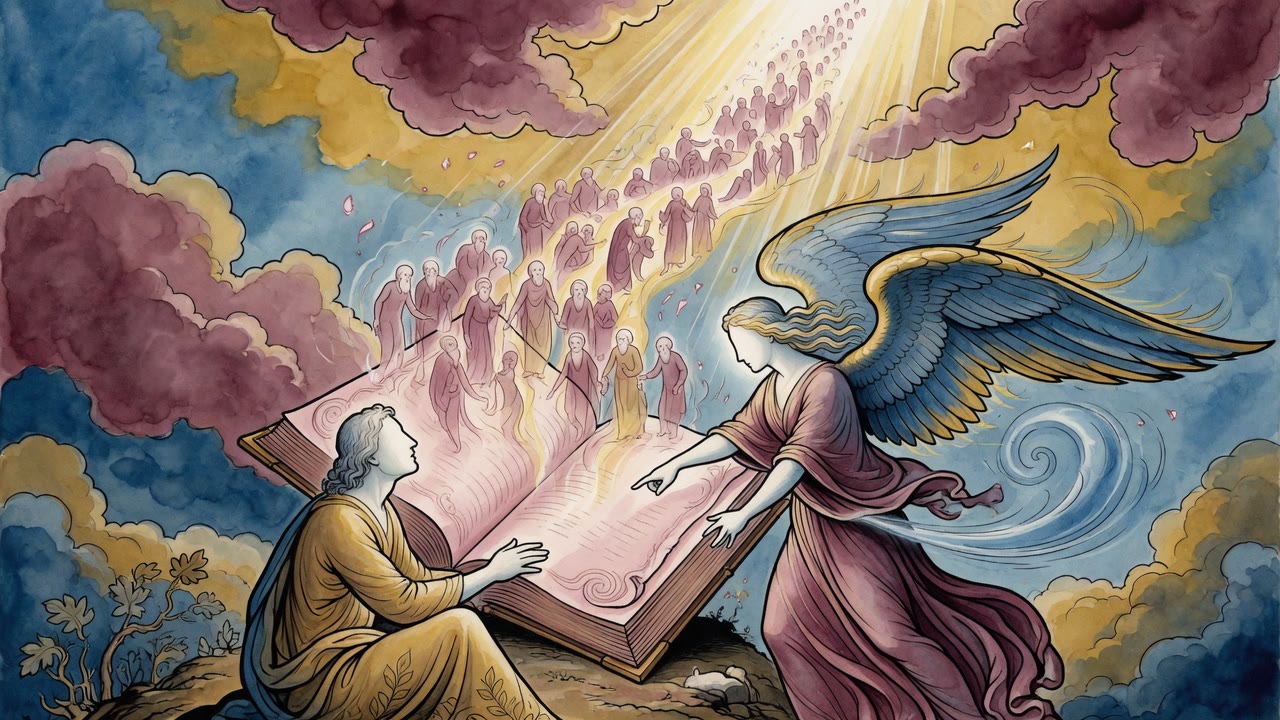
Raziel opened what he had carried. God had put into it the generations that would descend from Adam: their sages, their leaders, their faces, their names, the forms their souls would take when they entered the world.
The pages did not stay pages. A child who had not been conceived yet had a face. A sage who would argue in a courtyard not yet built already had a mouth. The last of them stood as clearly as the first. Whether Adam slept or sat awake, the souls stood. He had started a story he could not finish. Heaven made him read it anyway.
He had asked for understanding because the Garden's wisdom had left him. What arrived was not the easy knowing of evening walks. It was the hard knowing of a man who has already failed and has been shown the length of the failure.
Famine, Locusts, Blood
The book was not comfort. Raziel told him what it would teach, if he read it in purity, with a devout heart and a humble mind. He would know until the day of his death whether a calamity would come, a famine or wild beasts, floods or drought. Whether grain would be plenty or scarce. Whether the wicked would rule. Whether locusts would eat the land. Whether fruit would drop unripe. Whether boils would afflict men. Whether war would prevail, or plague among men and cattle. Whether good was resolved in heaven, or evil. Whether blood would flow, and the death-rattle of the slain be heard in the city.
Adam's hands shook on the pages. He had asked to see. Seeing had teeth.
"Come," Raziel said, "and give heed to the manner of this book and its holiness." The angel did not take the book back. Fear had been the first answer. God let the book stay so Adam could read it at his own pace.
He Read Until Night
He did not return to the plough that afternoon. He sat by the water that still remembered Eden and turned the pages. Names passed. Faces passed. A generation rose and fell while his thumb held a leaf. The beasts still did not fear him. The gates still did not open. The river still ran one way.
When the heat broke, the angel was gone. The book remained. Adam closed it on his knees and looked at the water until the light failed. He was still the man who had been driven out. He was no longer blind about the line he had begun. He held the history of the world before the world had done any of it.
Night came. He carried the book away from the bank. The ox in the field did not step aside. Adam went past it anyway, with the unborn generations under his arm.
← All myths