God Destroyed Two Angel Armies to Create One Human
Two whole companies were gone before Boel's turn came. He pulled his own host aside and told them exactly what to say when the question reached them.
Table of Contents
 Click for full size
The Question That Emptied the First Company
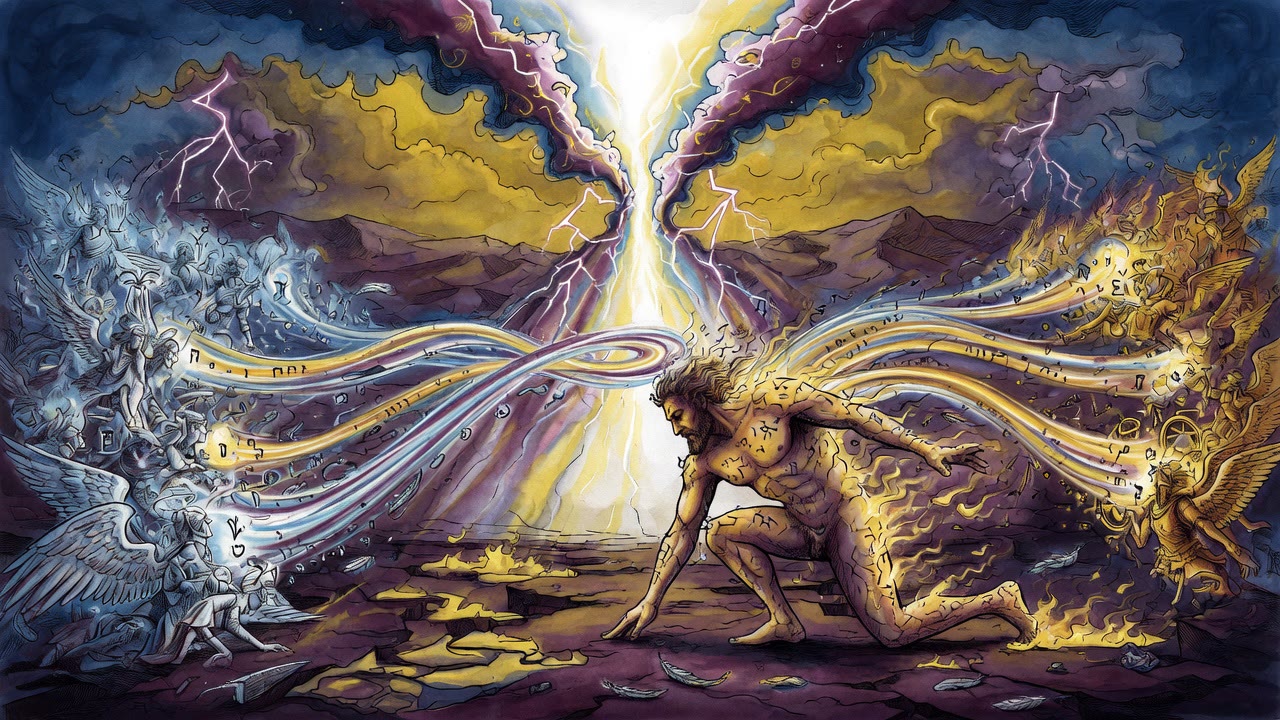
God called in the company of angels under Michael and told them what He intended. "Let us make man in our image, after our likeness."
They answered with a line out of the Psalms, and they meant it as a question. "What is man, that You should remember him? What is a son of man, that You should give him a thought?"
God put out His little finger among them, and there was nothing left of that company. Michael stood by himself in the space where his host had been.
Then God called in the company under Gabriel and said the same words to them. "Let us make man in our image."
They gave the same answer. "What is man, that You should remember him?"
The finger came out again. Gabriel stood alone.
Boel Turned Around and Talked to His Own Host
God called Boel and his company next, and said it a third time.
Boel did not answer straight away. He turned his back on the throne and spoke to his own angels first, quickly and quietly, like a commander who can see the ground.
"Look at what happened to the ones who said what is man that You should remember him. He destroyed both armies. There is nothing left of either one. If we repeat it, He will do the same to us, and at the end of it He will create the man anyway. Better we agree with Him."
So they turned around together and said it. "Master of the world, it is good that You have thought to make man. Make him however You want him. We will wait on him and serve him, and we will hand over every secret we have."
God said to Boel, "From today your name is not Boel. Your name is Raphael, because by your counsel you healed what the others tore down, and your whole host is standing here instead of burned." And He put every kind of healing in the world into that angel's hands.
The Earth Would Not Give Up the Dust
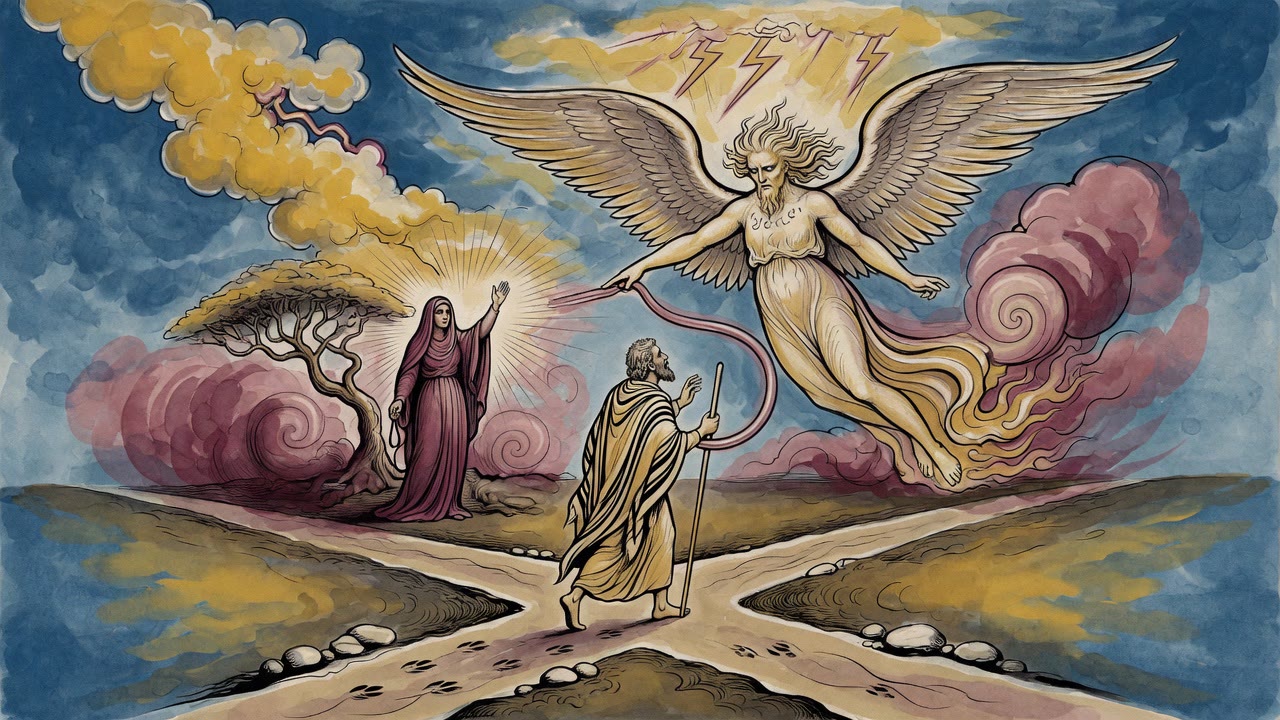
Then God sent Gabriel to bring dust from the four corners of the earth.
Gabriel went down for it and the ground drove him off. He came back at it. "Why will you not listen to the voice of your Lord, who set you on the waters with no props under you and no pillars holding you up?"
The earth answered him. "I am going to be a curse. I am going to be cursed through this man of yours. If God does not come and take the dust out of me with His own hand, nobody is ever taking it."
So God reached down and took it Himself, and made the first human being out of it on the sixth day, on the eve of Shabbat, last of everything, so that nobody could ever say He had help.
The stuff of him came out in four colors. White for the bones and the sinews. Black for the intestines. Red for the blood. A livid green for the skin over all of it.
They Were Still Arguing When He Opened His Eyes
The ministering angels had broken into parties over him and were still going.
Kindness said, "Make him, he performs acts of kindness." Truth said, "Do not make him, the creature is nothing but lies." Righteousness said, "Make him, he performs acts of righteousness." Peace said, "Do not make him, he is nothing but quarreling."
God took hold of Truth and threw it down to the ground.
The angels cried out at that. "Master of the universe, why are You throwing down Your own seal? Let truth come back up out of the earth."
While they were arguing with each other about it, He made him. "What exactly are you deliberating?" He said to them. "The man is already here."
The Book on the Riverbank
Adam came out of the garden with nothing and sat on the bank of the river that runs out of Eden.
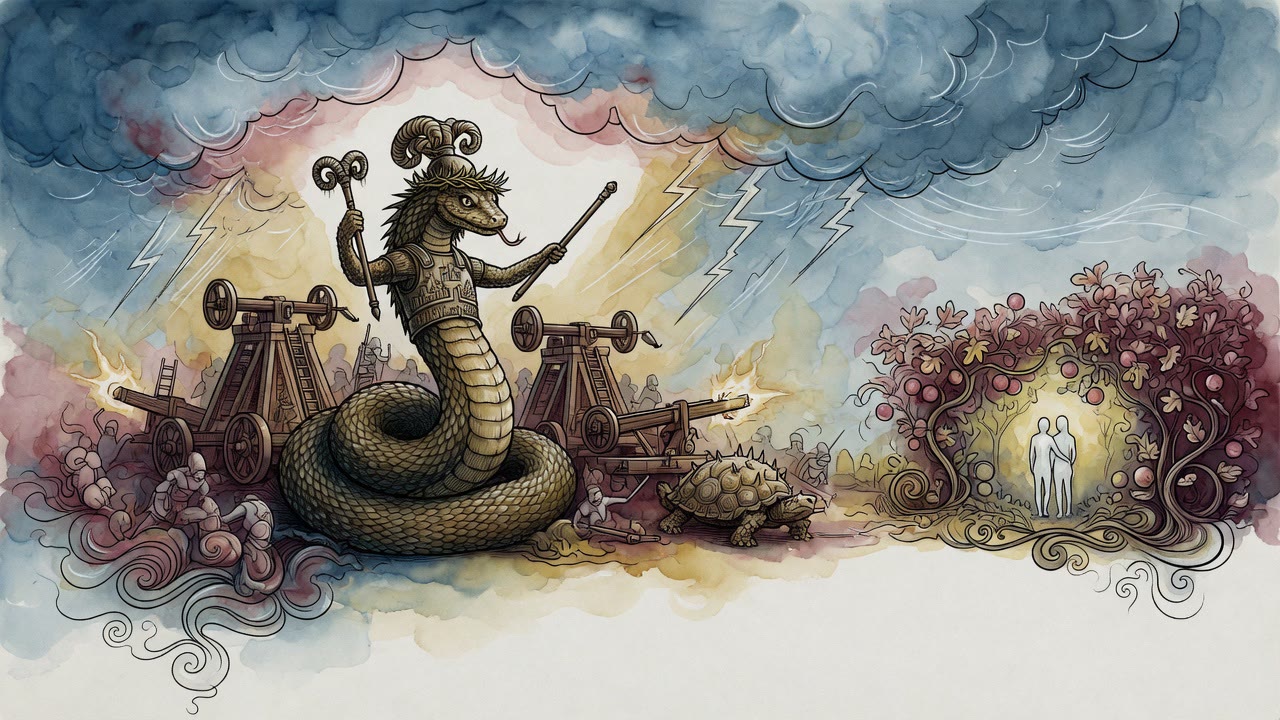
He prayed there, and it was not a dignified prayer. The serpent got me, and got my wife, and I have to break the ground I was taken out of, and the animals do not fear me any more. Since I ate, whatever wisdom I had has gone out of me and I am an ignorant man who understands nothing. Tell me what happens to me. Tell me what happens to the ones who come after me.
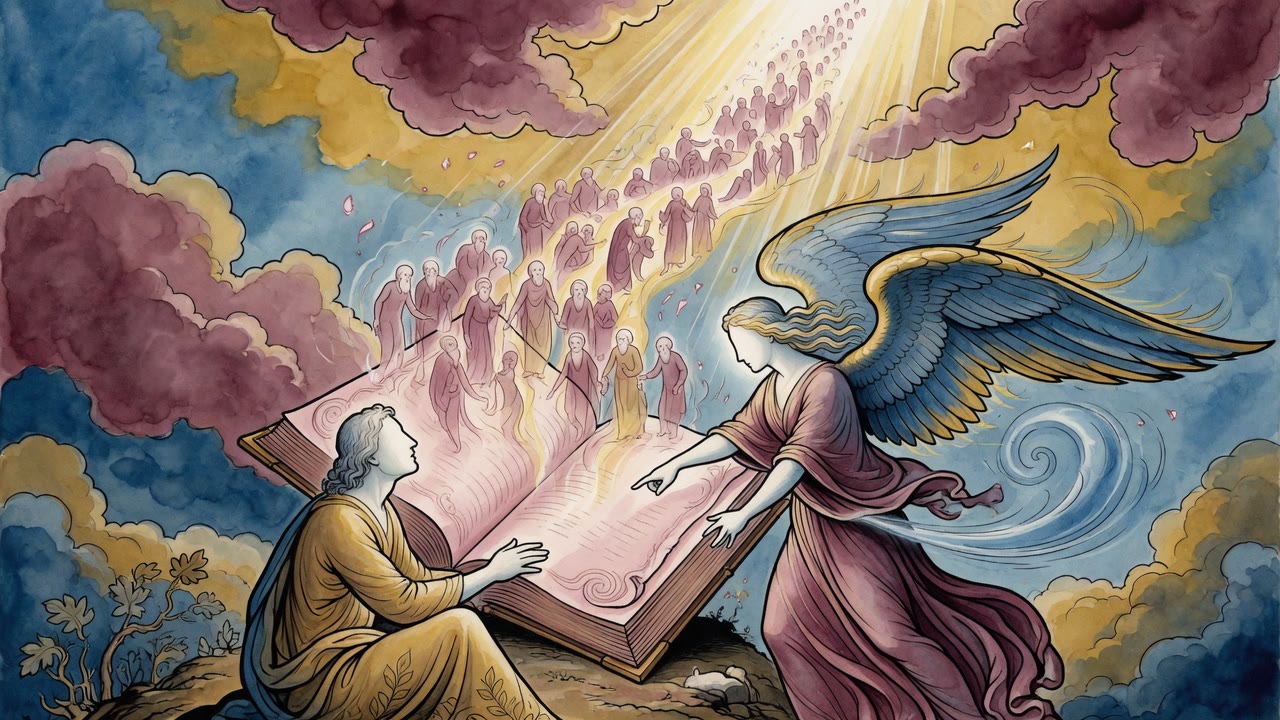
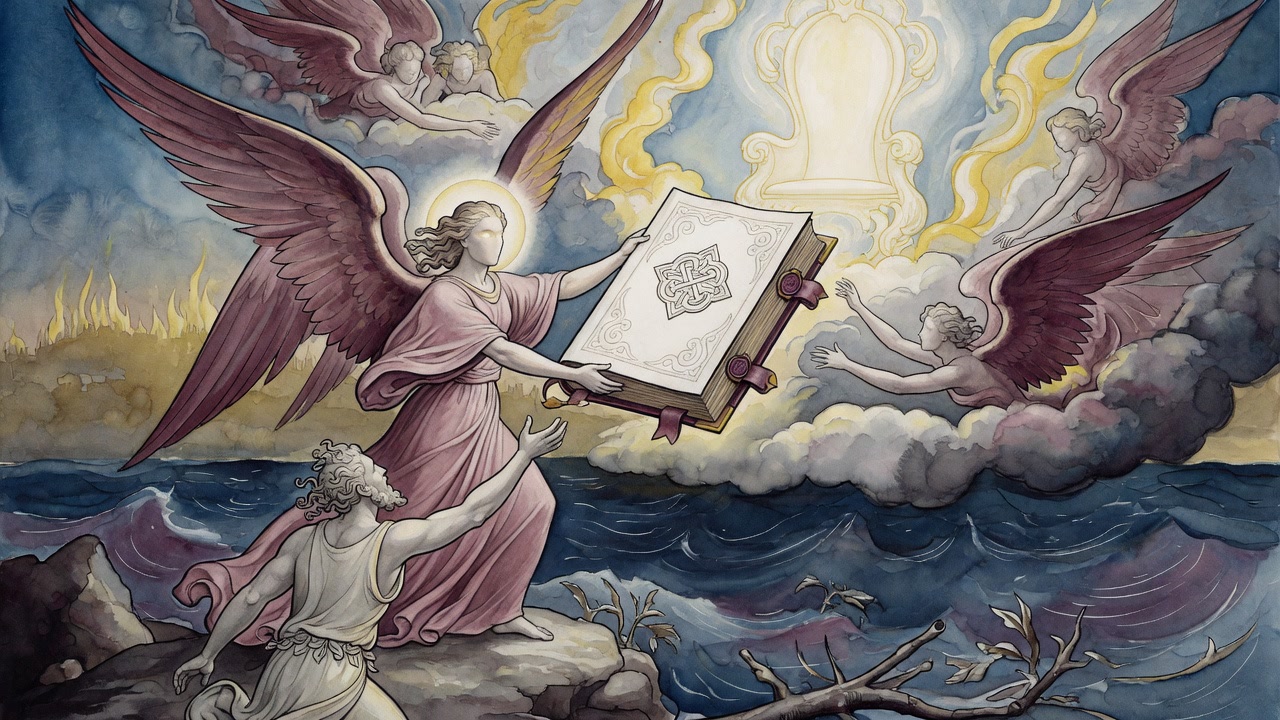
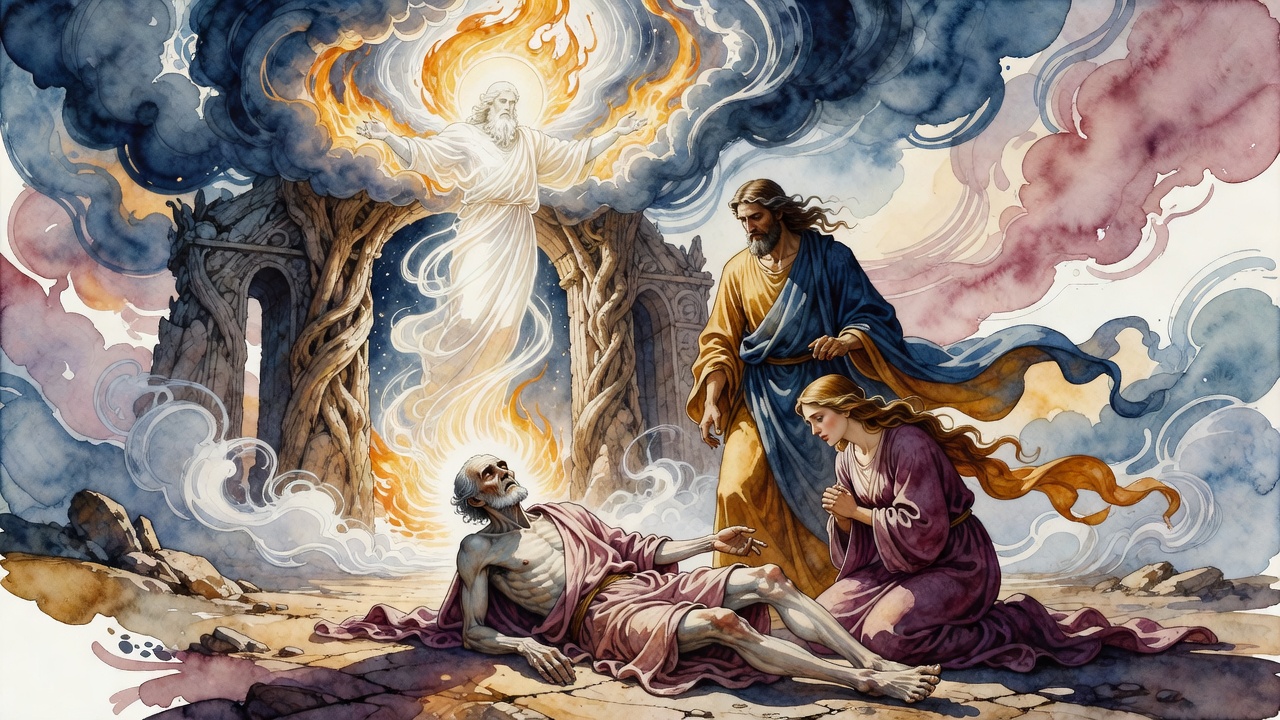
On the third day, in the heat of the afternoon, an angel came and stood in front of him with a book in his hand.
"Adam, what are you so faint about? Your words were heard the moment you said them." Raziel opened the book and read a few lines of it out loud, and Adam went down on the ground in terror at what he heard. "Get up. Take it. Keep it, and you will draw knowledge out of it yourself."
Adam put his hands on the book. A flame went up out of the river beside him and the angel went up in it and was gone.
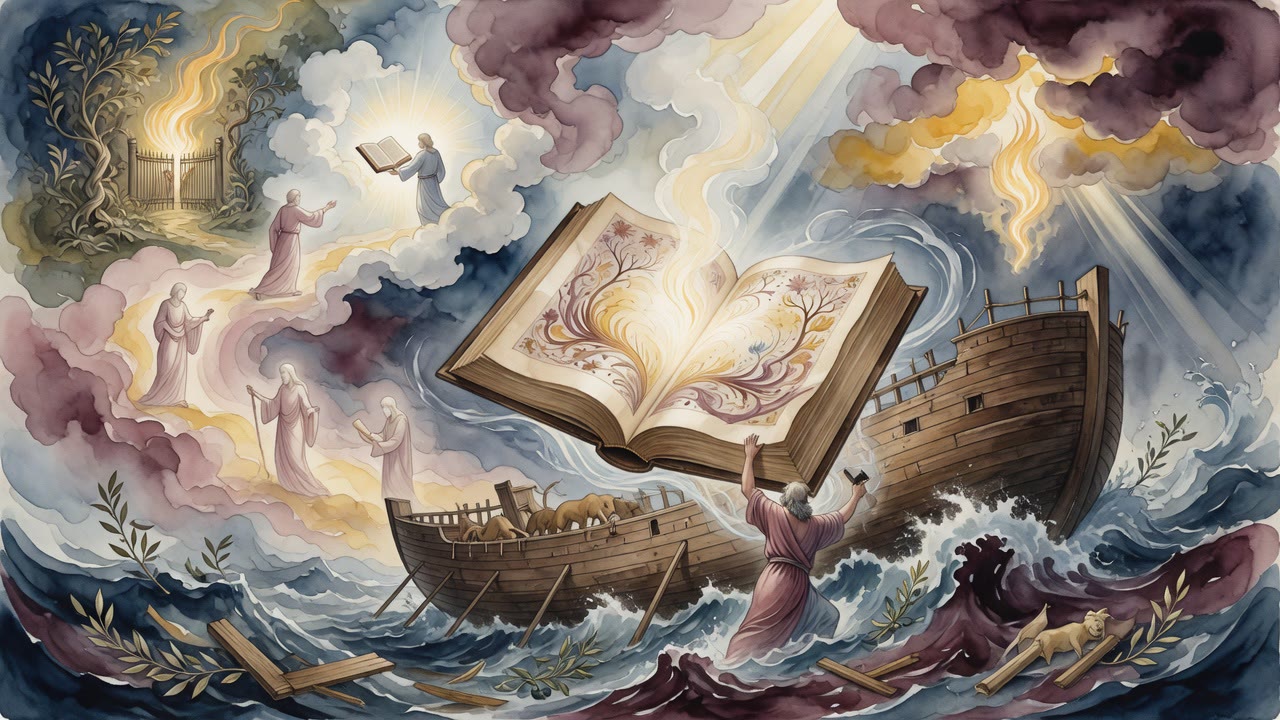
So he sat there on the bank with it open across his knees, a man three days out of the garden, reading forward through every generation that would come out of him and what would happen in each of them, in what month, on what night, and how it would end.
← All myths