The Book That Crossed the Flood in Jewish Legend
God gave Adam a book before leaving Eden. It passed through every righteous hand until Noah used it to build the ark. A book of secrets crossed the flood.
Table of Contents
 Click for full size
Adam on the Riverbank
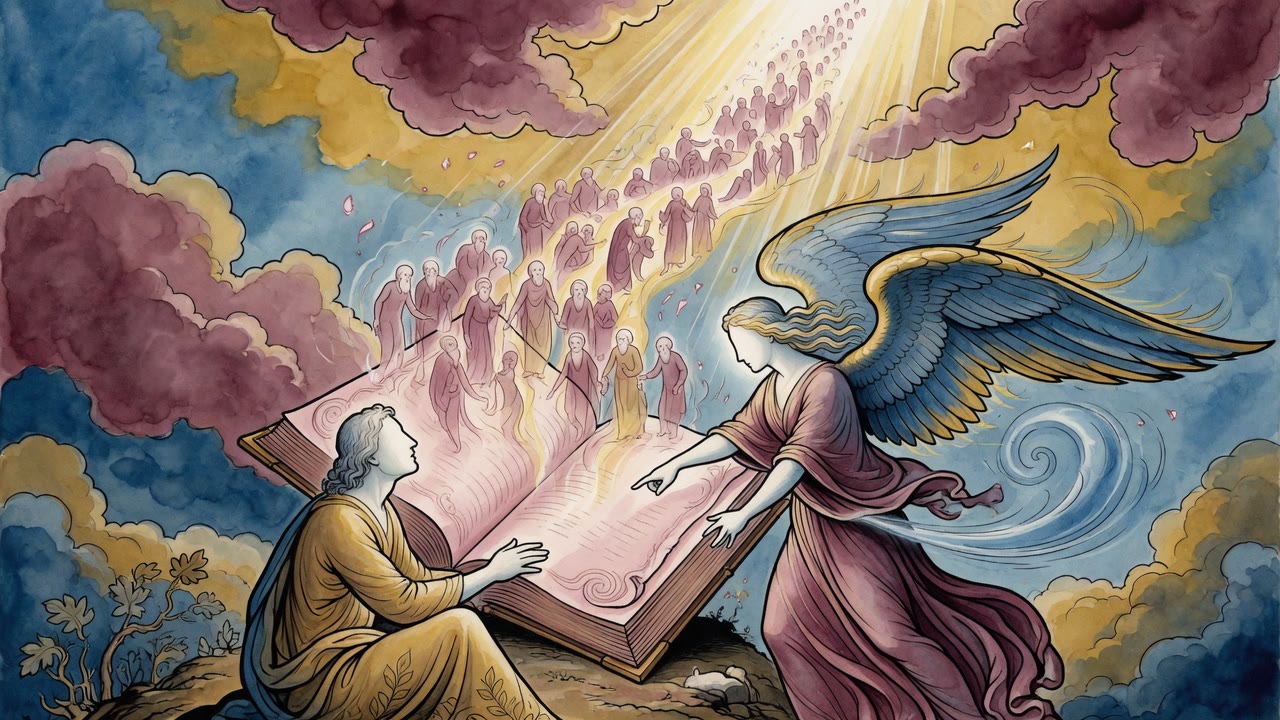
After the expulsion from Eden, Adam sat on the bank of the river that flowed out of Paradise. He was in the full heat of the day, bereft in the specific way of someone who understood exactly what had been lost. He prayed. He asked God to tell him what would become of his children and all the generations that followed. He wanted to know the shape of the future. He wanted back even a fragment of the knowledge he had possessed in the garden.
On the third day, an angel appeared on the riverbank with a book in his hand. The angel was Raziel, who stands behind the divine curtain and hears everything decreed in heaven, and the book he carried contained the knowledge of all things past and future. Adam received it, opened it, and was overcome. He had asked for a fragment, and what he held was complete.
The Angels Who Wanted It Back
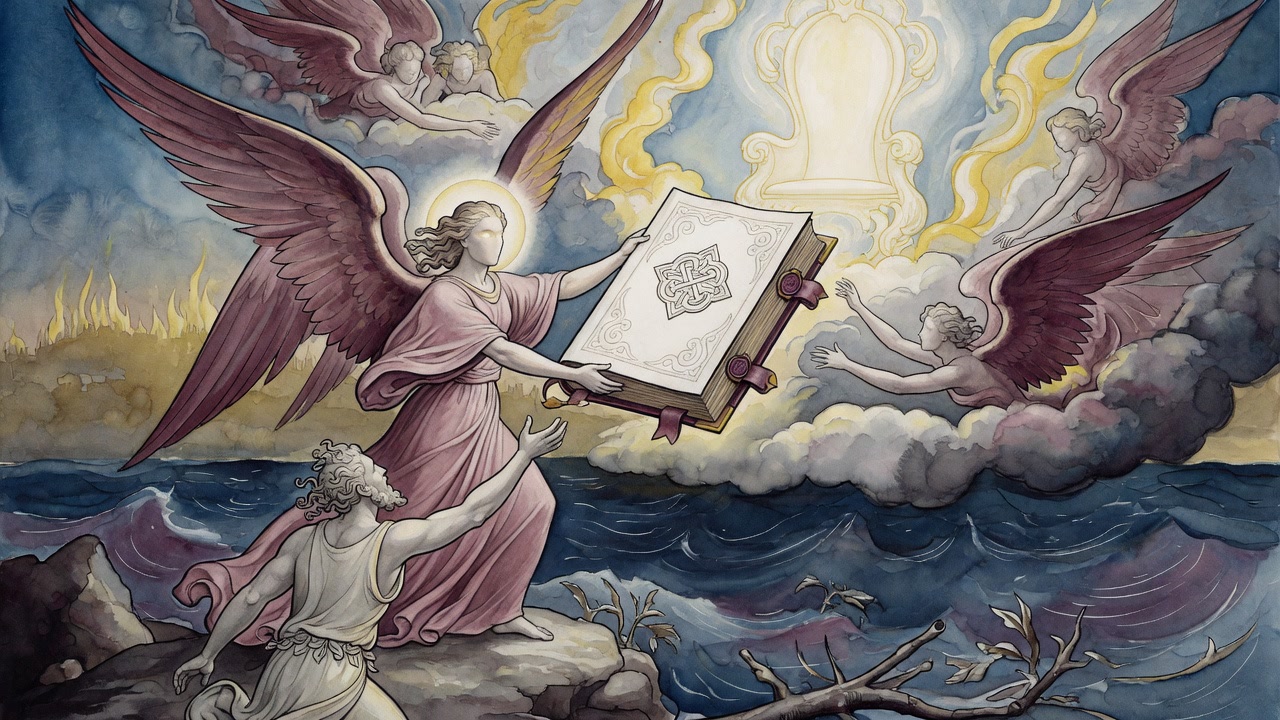
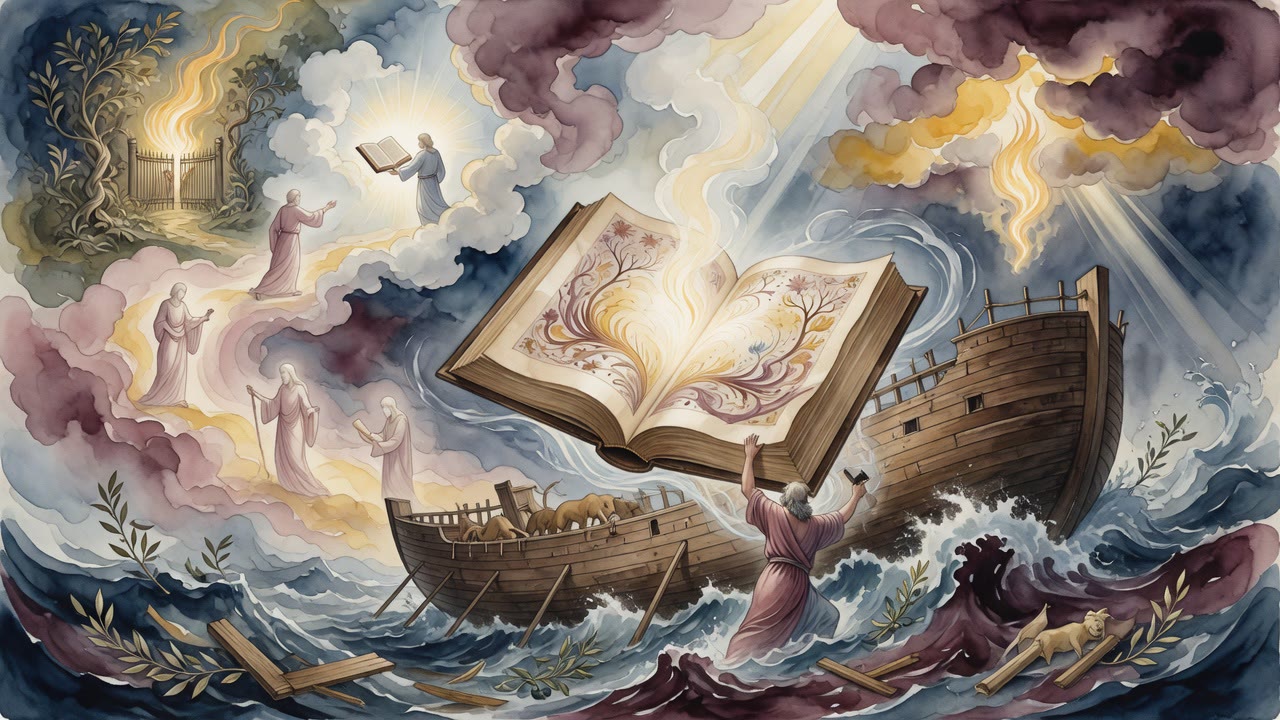
Raziel is not a common figure in the celestial hierarchy, and his gift to Adam did not go uncontested. The other angels were not pleased that a human being was now carrying knowledge that had been kept above. They gathered while Adam slept, took the book from his hands, and threw it into the sea.
God ordered the sea to return it. The sea gave it back. The book came to Adam again, and this time it stayed with him until the end of his life, when it passed to his son Seth. Seth gave it to Enoch. Enoch, who walked with God and did not die in the ordinary way, used what was in the book to understand the movements of the heavens and the cycles of time. Methuselah received it after Enoch. Then Noah.
What Noah Read in the Book
Noah needed the book because what he had been told to build had never been built before. A vessel large enough to shelter every species on earth, including the spirits, who also required shelter from the flood. The fish did not need saving. Everything else did. The dimensions of the ark, the materials, the structure, the arrangement of the animals, what to bring and how to bring it, all of this was in the book Raziel had carried to Adam on the riverbank before the world had had time to accumulate a single generation of wickedness.
He studied it and built from what he understood. The tradition credits the book not merely with the ark's dimensions but with the wisdom that made Noah capable of the task at all. Without it, he would have been a righteous man facing an impossible problem. With it, he was a righteous man holding the instructions.
The Book After the Flood
The book survived the flood. Noah carried it with him onto dry land and it passed again through the generations, coming eventually to Abraham, who used it to read the stars and understand the movements of heaven, and from Abraham to his descendants. The tradition traces it as far as Solomon, who drew on it for the wisdom of his building projects, the Temple among them.
The book did not make the people who held it safe or powerful. Methuselah lived nine hundred and sixty-nine years and then died, in the week before the flood, so that his death would not be mixed into the punishment of his generation. Enoch disappeared into heaven. Noah, for all his knowledge, still hesitated at the ark's door when the water rose to his knees. The book was not a shield. It was a set of instructions for how to act inside a world that was going to do what it was going to do.
← All myths