Parshat Bereshit4 min read

The Serpent in Eden Was a General With Siege Engines

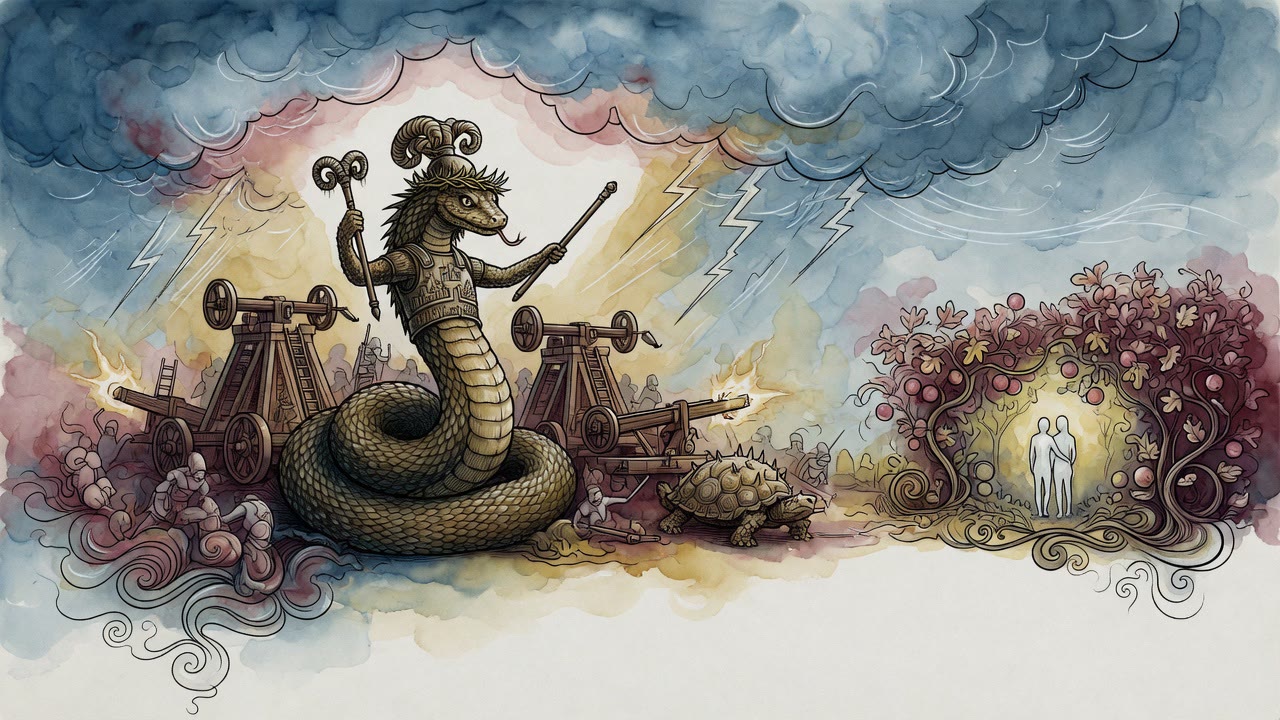
A tenth-century midrash read a parable in Ecclesiastes as an allegory for Eden. The great king outside the walls is the serpent. The poor wise man is Adam.

Curated by Arthur · Told by Maggid ·
Table of Contents
  1. A Parable That Hurries Past Itself
  2. Adam at the End of His Naming
  3. Wisdom Departs and Adam Grieves
  4. The Poor Wise Man Nobody Remembered

A Parable That Hurries Past Itself

Ecclesiastes drops a strange, small parable into the middle of its wisdom: a small city, few people inside, a great king outside building siege works, and a poor wise man whose wisdom could have delivered the city if anyone had remembered him (Ecclesiastes 9:14). The book rushes past the image without explaining it. The rabbis slowed down on it.

The Aggadat Bereshit, a tenth-century homiletical midrash compiled in Byzantine-era Palestine or southern Italy, recognized the parable as a description of Eden. The small city is Eden. The few people are Adam and Eve. The great king with the siege engines is the serpent. The poor wise man whose wisdom was ignored is Adam himself, who had been given the commandment, who knew the boundary of the tree, and whose wisdom went unheeded in the crisis.

Adam at the End of His Naming

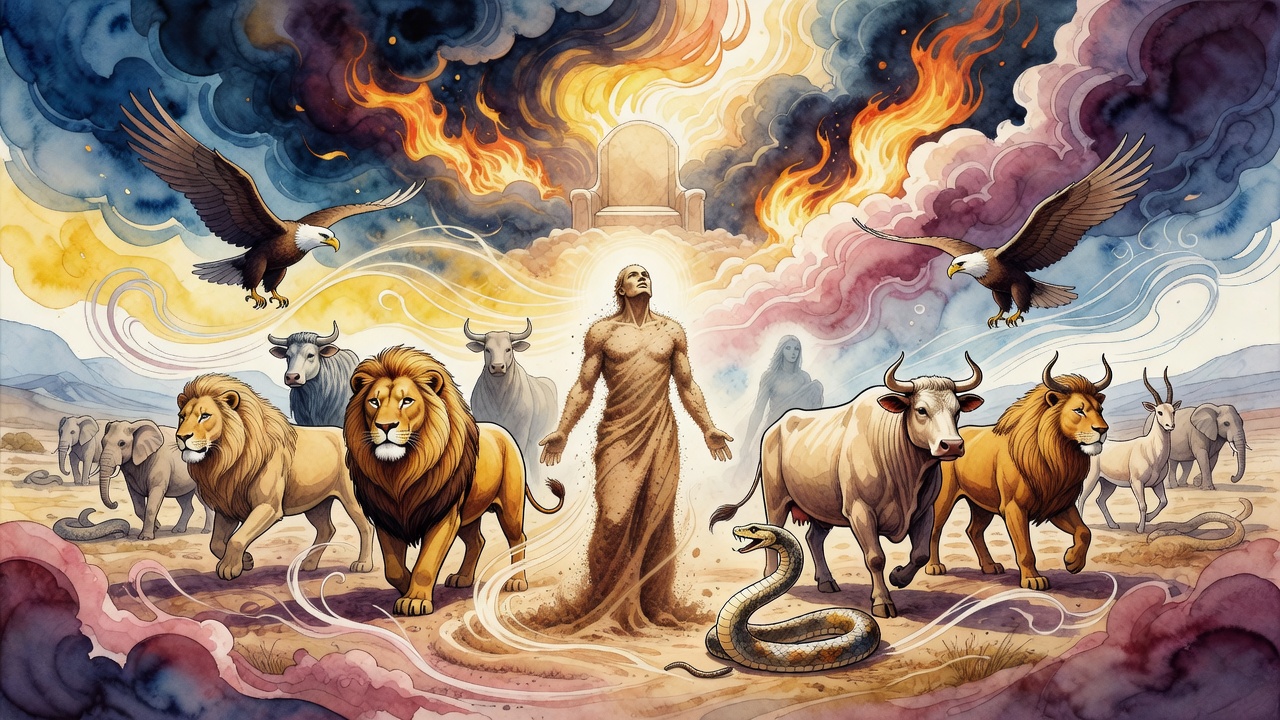
The Midrash of Philo, a collection of interpretations associated with the Hellenistic Jewish tradition of Alexandria, sits with a quieter moment before the siege begins. God paraded every creature before Adam so that Adam could name them. Adam looked at each one and found what it was. He named them categorizing, understanding, seeing the essence of every creature that passed before him.

And then came the line that stopped the commentators: but for Adam there was not found a helper like to him (Genesis 2:20). What was Adam looking for? The question is not simply about loneliness. It is about the depth of what Adam could perceive. He had seen the inside of every animal. He had given them names from that seeing. He had looked through the parade of creation with complete comprehension and had found nothing that matched what he carried in himself.

Wisdom Departs and Adam Grieves

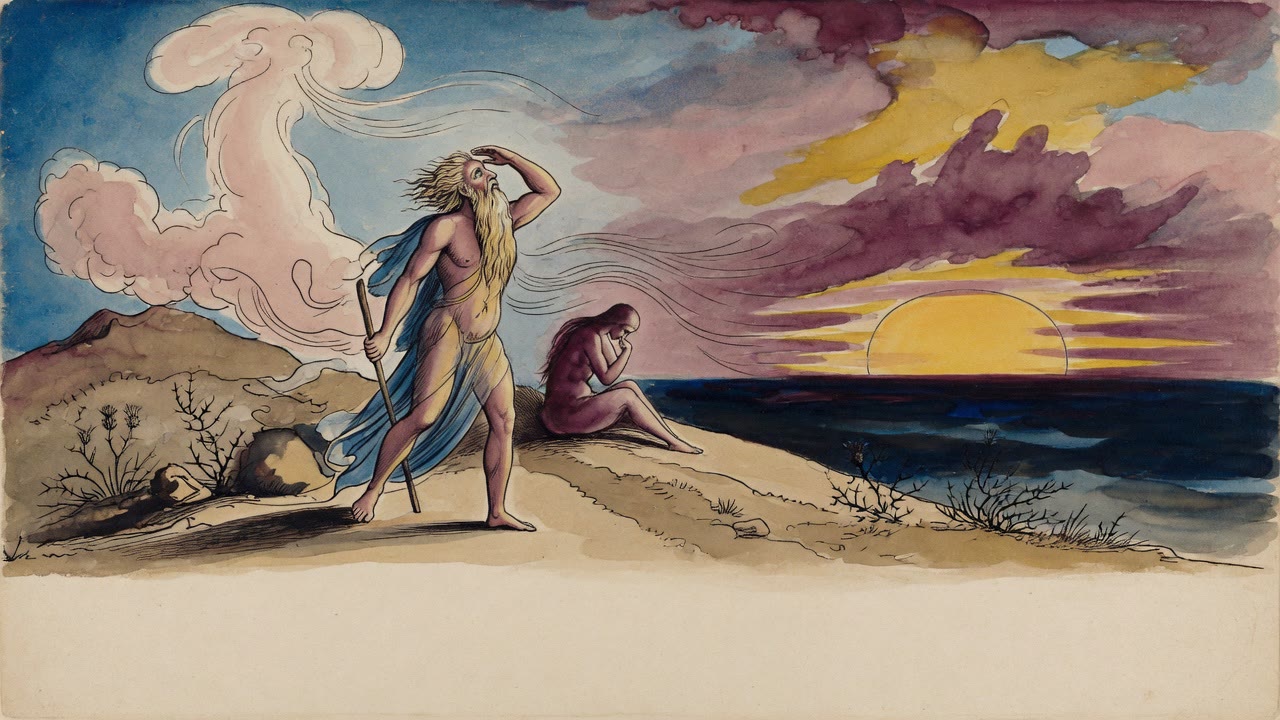
After the transgression, Adam did not simply feel shame. He experienced the loss of something specific. From the time I ate of the tree, he is recorded saying in the Legends of the Jews, wisdom departed from me, and I am a fool that knows nothing, an ignorant man that understands nothing. What he had at the moment of naming was gone. The capacity that had let him see through every animal to its essence had been taken from him, and he knew it because he could feel the absence where it had been.

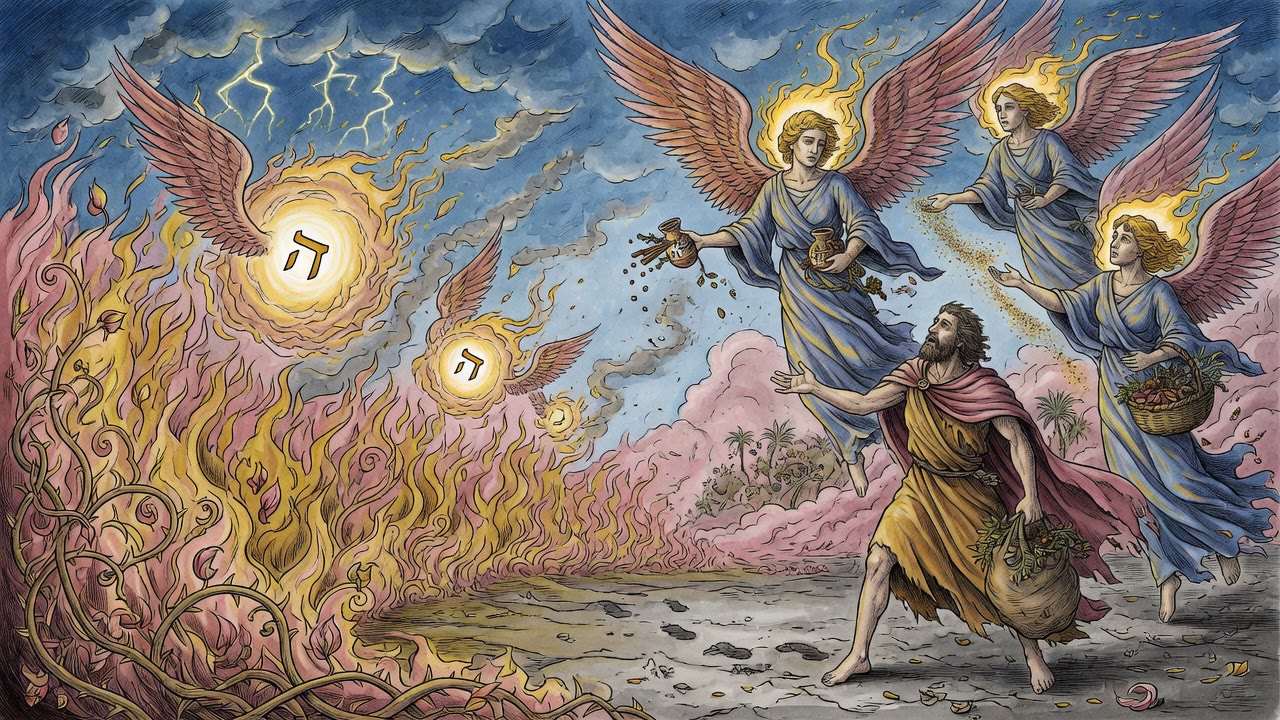
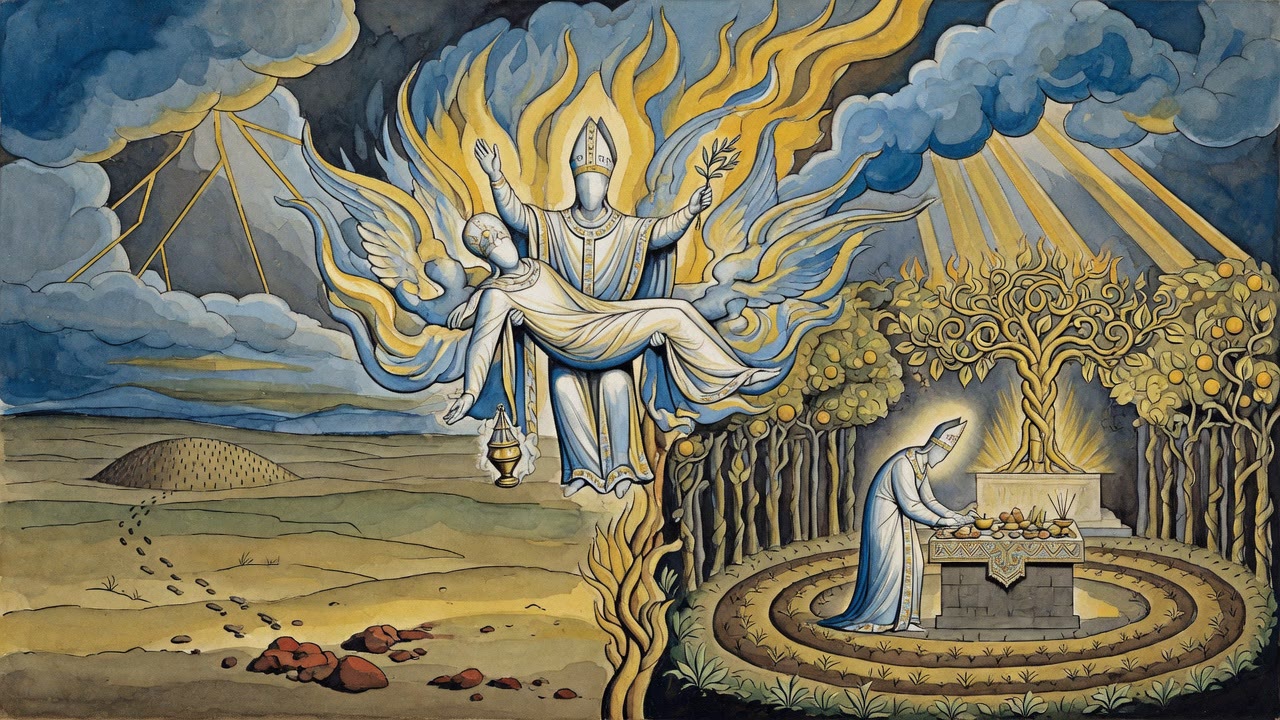
He poured out his heart to God. He acknowledged the weight of what he had done, its reach into the future, the children he could not yet protect because he could no longer see what was coming. He begged for knowledge, for understanding, for a glimpse into what lay ahead for him and his descendants. And God sent the Book of Raziel, the angel bringing a text that could carry something of what had been lost.

The Poor Wise Man Nobody Remembered

Ecclesiastes does not identify the poor wise man, only notes that his wisdom was not remembered. The Aggadat Bereshit's identification of this figure with Adam carries a particular sting. Adam had possessed the deepest form of knowledge the tradition had a name for: the wisdom that could see into the nature of things and give them their true names. He had looked at the entire created order and found his way through it. And in the moment of siege, when the serpent came with its argument and its strategy, the city fell.

The parable is not a condemnation of Adam. It is a mourning of what was lost when wisdom went unheeded. The great king with the siege engines did not win because he was stronger. He won because the poor wise man who could have answered him was somehow not in the room where the decision was made. The tree stood in the center of the garden. The commandment had been given. The knowledge of what not to touch was there. And the city fell anyway.


← All myths
From the tradition

Sources

3 sources

The texts this telling draws on, in full. Open a card to read inline, or expand it for a wider, quieter read.

The Midrash of Philo 20:1The Midrash of Philo

Even Adam, the first human, apparently felt that way.

The Torah tells us that God paraded all the animals before Adam (Genesis 2:19-20). Adam named them, categorizing them, understanding their essence. But then comes this little head-scratcher of a verse: "But for Adam there was not found a helper like to him?" (Genesis 2:20).

What does that mean?

It’s a question that’s puzzled commentators for centuries. What kind of "helper" was Adam looking for, anyway?

The Midrash of Philo, a collection of interpretations and expansions on the Torah attributed to the Hellenistic Jewish philosopher Philo of Alexandria, wrestles with this very verse. It isn't saying that Adam needed someone to help him build a house or till the garden. The question goes much deeper.

According to the Midrash of Philo, Adam was searching for a being who could truly understand him, a companion who mirrored his own intellectual and spiritual depth. The animals, magnificent as they were, simply didn't cut it. They lacked the capacity for abstract thought, for philosophical inquiry, for the kind of soul-to-soul connection Adam craved. They could be companions, perhaps even friends, but not true partners in existence. Adam was just created. He was raw potential, standing at the dawn of consciousness. The Midrash of Philo suggests he yearned for someone with whom he could explore the mysteries of creation, someone to share the wonder and the weight of being human.

So, what does this tell us?

Perhaps it's a reminder that our deepest needs aren't always practical. Sometimes, what we truly long for is connection – a meeting of minds and hearts that transcends the everyday. And maybe, just maybe, that longing is a reflection of our own divine spark, our inherent desire to connect with something greater than ourselves.

Isn't it comforting to know that even Adam, in his perfect, pristine world, felt that same human need for a true companion? A reminder that the search for connection is a fundamental part of what it means to be alive.

Full source
Legends of the Jews, II. Adam, Adam Laments and God Sends the Book of RazielLegends of the Jews

Adam wasn't just picking apples and feeling sorry for himself. He was wrestling with the big stuff – the future, his children, and the whole darn world.

Adam poured out his heart to God. Imagine him there, lamenting: "O God, Lord of the world! Thou didst create the whole world unto the honor and glory of the Mighty One..". He acknowledged God's power, his own failings, and the heavy weight of the unknown. He knew he messed up, big time. As he says, according to this ancient account, "From the time I ate of the tree of knowledge of good and evil, wisdom departed from me, and I am a fool that knoweth naught, an ignorant man that understandeth not." He begged for knowledge, for understanding, for a glimpse into what lay ahead for him and his descendants. "Grant me knowledge and understanding, that I may know what shall befall me, and my posterity, and all the generations that come after me.."

Then, on the third day of this intense prayer, something incredible happened.

While sitting by a river flowing out of Paradise (can you even imagine?), the angel Raziel appeared to Adam. And Raziel wasn't empty-handed. He carried a book. The Book of Raziel.

"O Adam, why art thou so fainthearted?" Raziel asked, according to Ginzberg's telling. He explained that Adam's prayers had been heard, and he, Raziel, was tasked with sharing profound wisdom. This wasn't just any book. This was a sacred text, containing the secrets of the future, knowledge of calamities, famines, wars. everything! Think of it as the ultimate cosmic almanac.

Raziel tells Adam that all of his descendants can be wise too, "if they will but read this book in purity, with a devout heart and an humble mind, and obey its precepts, will become like unto thee."

As Raziel read from the book, Adam was overwhelmed. But the angel reassured him, urging him to take the book and learn from it, to share its wisdom with those worthy. And in that moment, as Adam accepted the book, a flame shot up, and Raziel ascended back to heaven. Adam knew then that this book was a gift from God, a source of profound knowledge and holiness.

The text emphasizes the power and potential of the book, stating that "It is the book out of which all things worth knowing can be learnt, and all mysteries, and it teaches also how to call upon the angels and make them appear before men, and answer all their questions."

But here's the catch: not everyone can just pick it up and become a sage. The Zohar, that foundational text of Jewish mysticism, speaks of the importance of purity and devotion in accessing divine wisdom. Only the wise and God-fearing, those who approach it with holiness, can truly unlock its secrets. Such a person, the text assures us, will be protected from evil and find peace in this life and the next.

So, what do we make of this story? Is it a literal account? A metaphor? Perhaps it's both. It's a powerful reminder of our innate desire to understand the world around us, to confront the unknown, and to seek wisdom from a higher source. It also speaks to the importance of intention and purity of heart in our pursuit of knowledge. Maybe, just maybe, the Book of Raziel isn't a physical object, but a symbol of the wisdom available to us all, if we approach it with the right mindset.

Full source
Aggadat Bereshit 79Aggadat Bereshit

A small city, few people, a great king who comes and builds fortifications, (Ecclesiastes 9:14) describes something small being threatened by something enormous. The rabbis identified the small city as the Garden of Eden, the few people as Adam and Eve, the great king as the serpent.

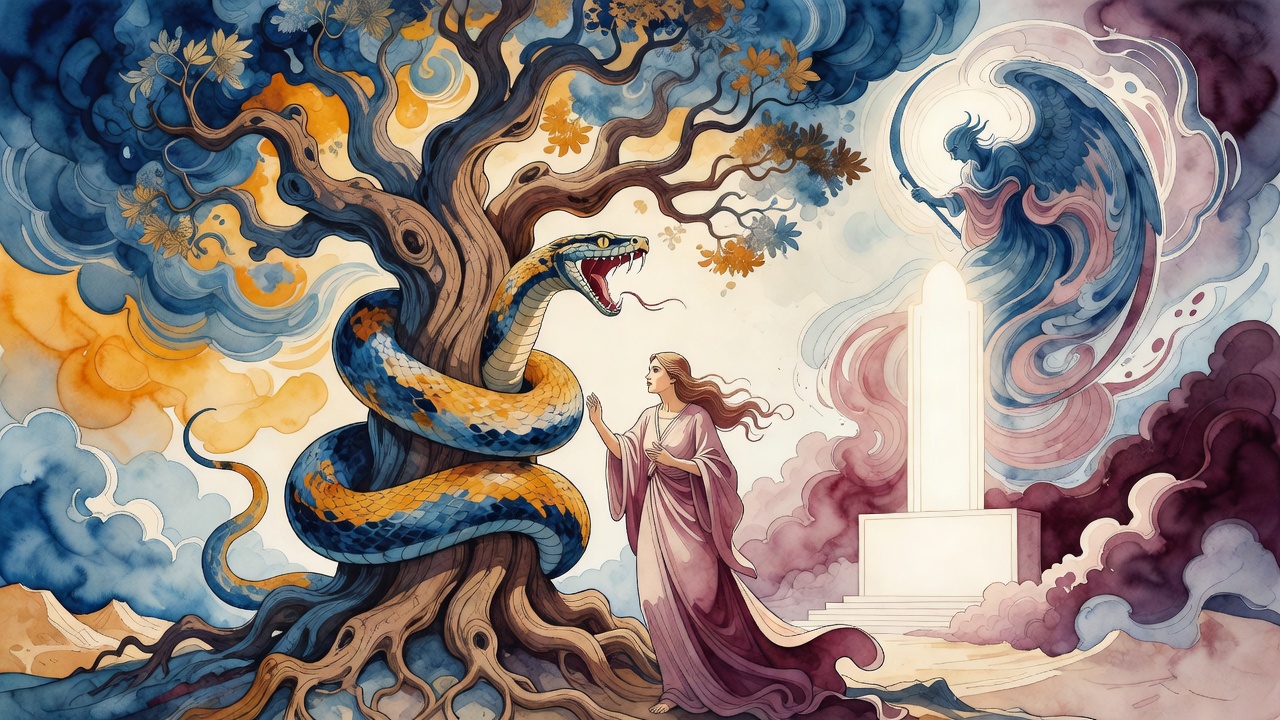
The serpent built his fortifications by telling Adam and Eve that God had a reason to keep them from the tree: "For God knows that in the day you eat of it your eyes will be opened, and you will be like God, knowing good and evil" (Genesis 3:5). This was not a lie exactly, it was a truth used to sow distrust. The serpent's strategy was to make God's prohibition look like self-protection, as if God were guarding something for Himself rather than protecting Adam and Eve from something dangerous.

The "poor and wise man" who could have saved the city is Adam himself (Ecclesiastes 9:15). He had the wisdom, he had been given dominion over every creature, including the serpent. He had the counsel. But he did not use it. He stood beside his wife and ate. The midrash does not explain why, that silence is the silence of the text itself, which offers no psychological account of Adam's compliance. He had the resources to refuse. He did not refuse. And the small city of Eden was overtaken by its single enemy, not by armies but by a question.

Full source