The First Human Wore Two Faces and Spoke One Tongue
The companion was always there, warm against the back. Neither face could turn. God called that solitude, and reached for a rib.
Table of Contents
 Click for full size
One Body Looked Both Ways
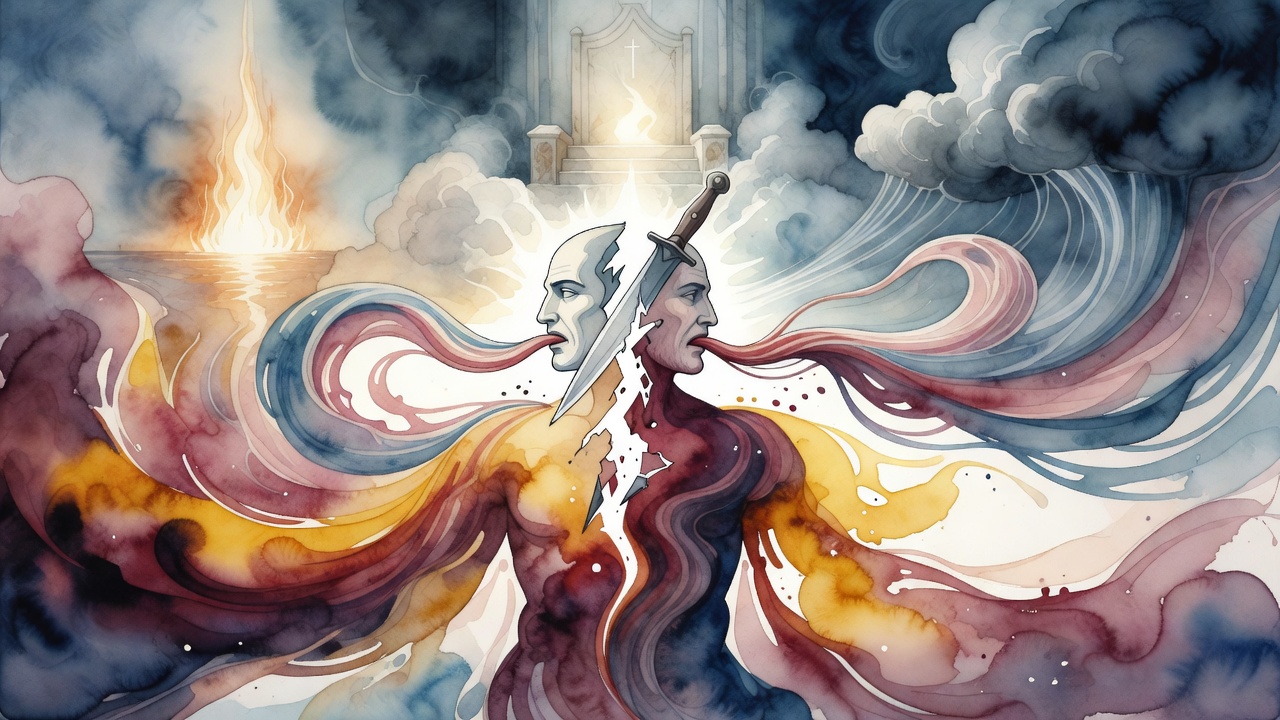
Before there was a man and before there was a woman, there was one creature that faced two ways at once. It stood in the new garden under a sky still wet with the first light. When it turned its head to the right it saw the world with the eyes of a man. When it turned to the left it saw the same world with the eyes of a woman. One spine. Two faces. A single breath moving through both.
Adam was not lonely, because Adam was not yet one. Adam was two halves grown back to back, a body that carried its own companion inside the seam of itself, and it walked the garden as a single shadow that any low sun would have split into a pair. The right side was male. The left side was female. Joined along one ridge of bone. Neither could look the other in the eye. Each forever felt the warmth of a face it could not turn to see.
Scripture had already said the Holy One made the human "male and female," and then it said He created them (Genesis 1:27). Them. One being, and the word counted two. The creature lived inside that grammar before anyone later stumbled on it.
Both Mouths Spoke One Tongue
The undivided creature spoke. It opened both mouths and out came a single tongue, the one tongue, the speech the heavens themselves used. These were not ordinary sounds. They were the letters by which the world had been laid down, the alef and the bet and all their kin, each shape ringing against the thing it named. To say a word in that language was to brush the edge of the act that had made the word's object stand up out of nothing.
The angels spoke it. The garden answered to it. When the creature named the beasts, it did not guess at names. It read them, the way one reads what is already written, because in that tongue the name and the thing were not two. There was no gap to leap. The world and its speech were one piece, the way the body was one piece, the way the right face and the left face shared one column of bone. Later generations would call that speech lashon ha-kodesh (לשון הקודש), the sacred tongue. In the garden it did not need a name. It was simply how a mouth worked.
The Seam Opened at the Thirteenth Rib
Then the Holy One looked at the creature and said it was not good for it to be alone, which was a strange thing to say of a being that already carried its other half. But the half could not be seen. The half could not be answered. A companion a body cannot turn to face is a kind of solitude with a heartbeat against the back.
So the work began that no creature had felt before. The seam that had held the two faces together was opened. The female side was drawn out of the male, lifted from the curve of the body like a beam pulled clean from a wall. The bone that gave way was a rib, and not the first one. It was the thirteenth rib on the right, the one set deepest and closest to the heart.
Why a rib. Why not the head, so that she might stand higher than him? Because then she would have been proud. Why not the eye? Then she would have wandered after everything she saw. Why not the mouth, the ear? Then a gossip, then an eavesdropper. So the Holy One took her from the quietest, most hidden place in the body, the bone that no one sees, the bone that guards the heart, and out of that modest dark He drew Eve into her own separate skin. A few later tellings said the first human had ended in a tail, and that the whole of the woman had waited folded inside that hidden length, not yet drawn out into the air. The rib is the telling that stayed.
Two Shadows Where One Had Walked
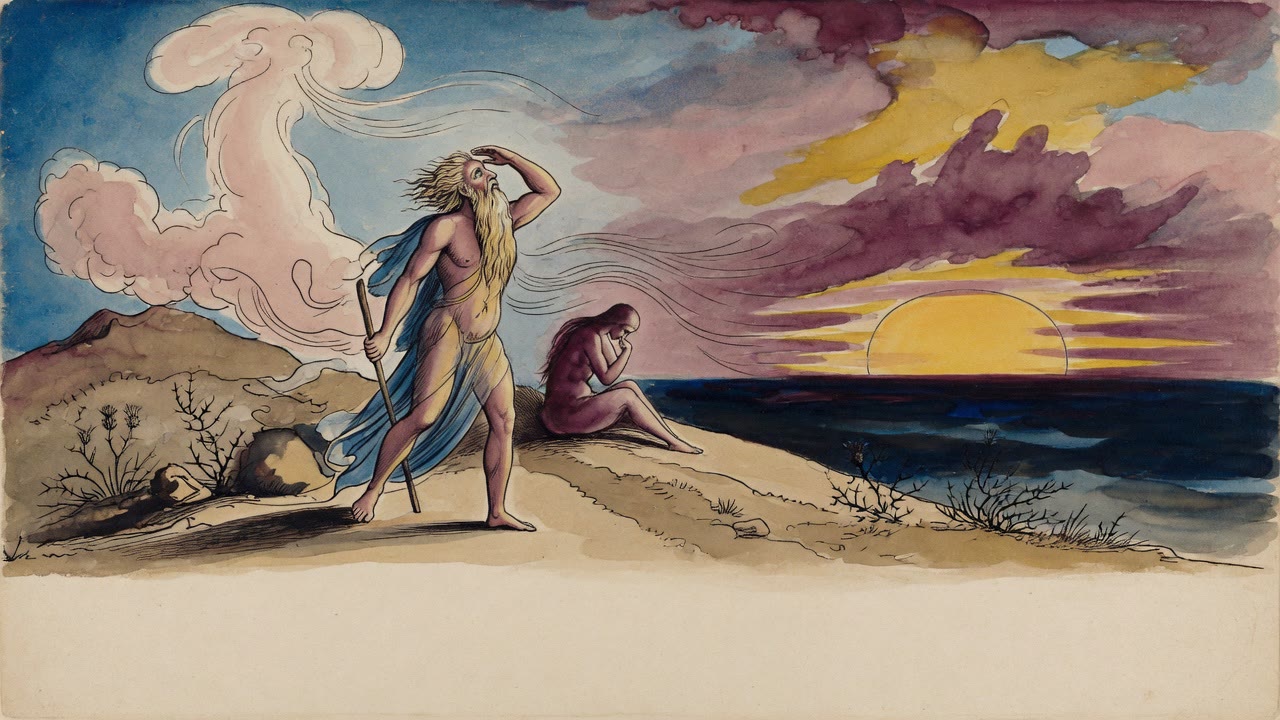
The creature that had looked both ways now looked only one. Where there had been a single shadow, the low sun threw two. The man turned, and for the first time in the history of the world he saw the face that had always been pressed against his own, and it was a stranger, and it was himself, and he knew both things in the same instant.
He had no word yet for wife. He had the shock of air on a side of him that had never felt weather. She stood in her own skin and breathed without his lungs. The garden, which had answered one voice, now had to hear two.
The tongue began its own long fracture, though that wound came slower and reached its end far down the road at a tower on a plain. The first cut was here, in the garden, in the body. One creature became two. The wholeness that had spoken the letters of creation now had a seam running through it. Every marriage after would be two halves walking the length of the earth, trying to find the other side of one original bone.
← All myths