Parshat Acharei Mot6 min read

The Angels Voted Against Humanity and God Overruled Them

The angels voted. Love said yes, Truth and Peace said no. God overruled them, threw Truth to the ground, and created humanity anyway.

Curated by Arthur · Told by Maggid ·
Table of Contents
  1. The Council Before the First Human
  2. What God Did With the Argument
  3. The Earth That Refused and the Angel Who Could Not Deliver
  4. The Storm Before Everything

The Council Before the First Human

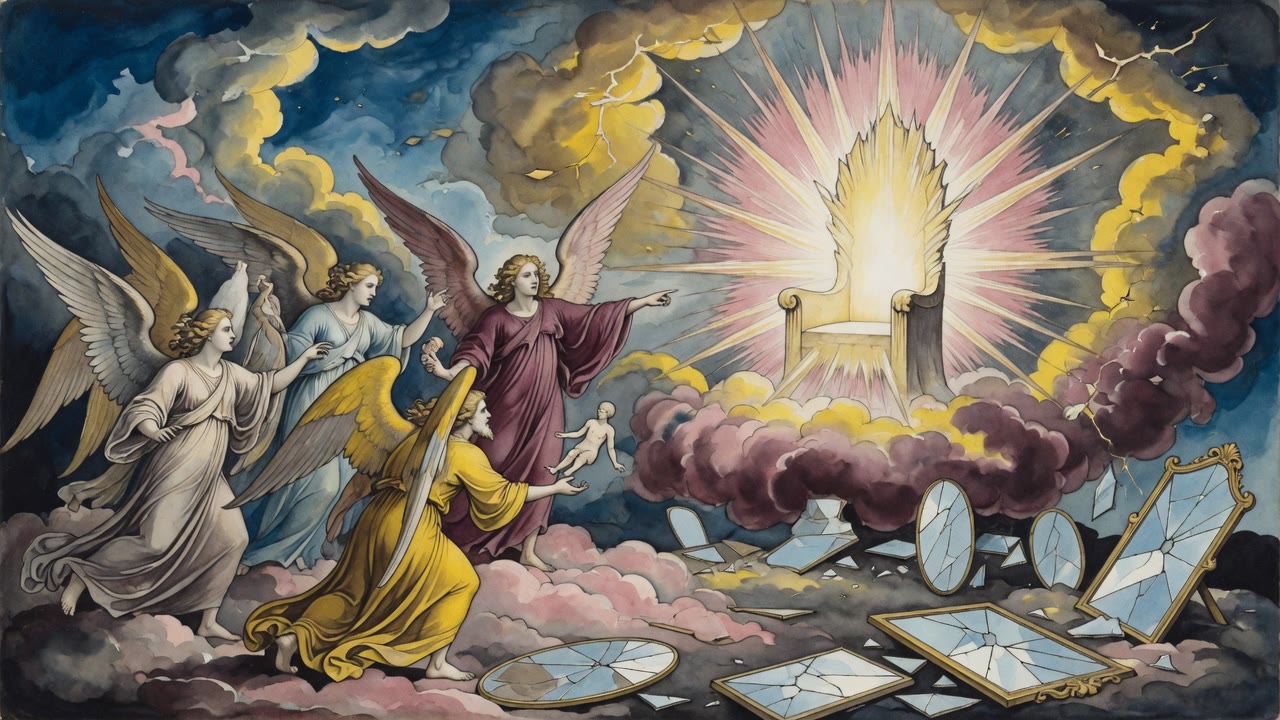
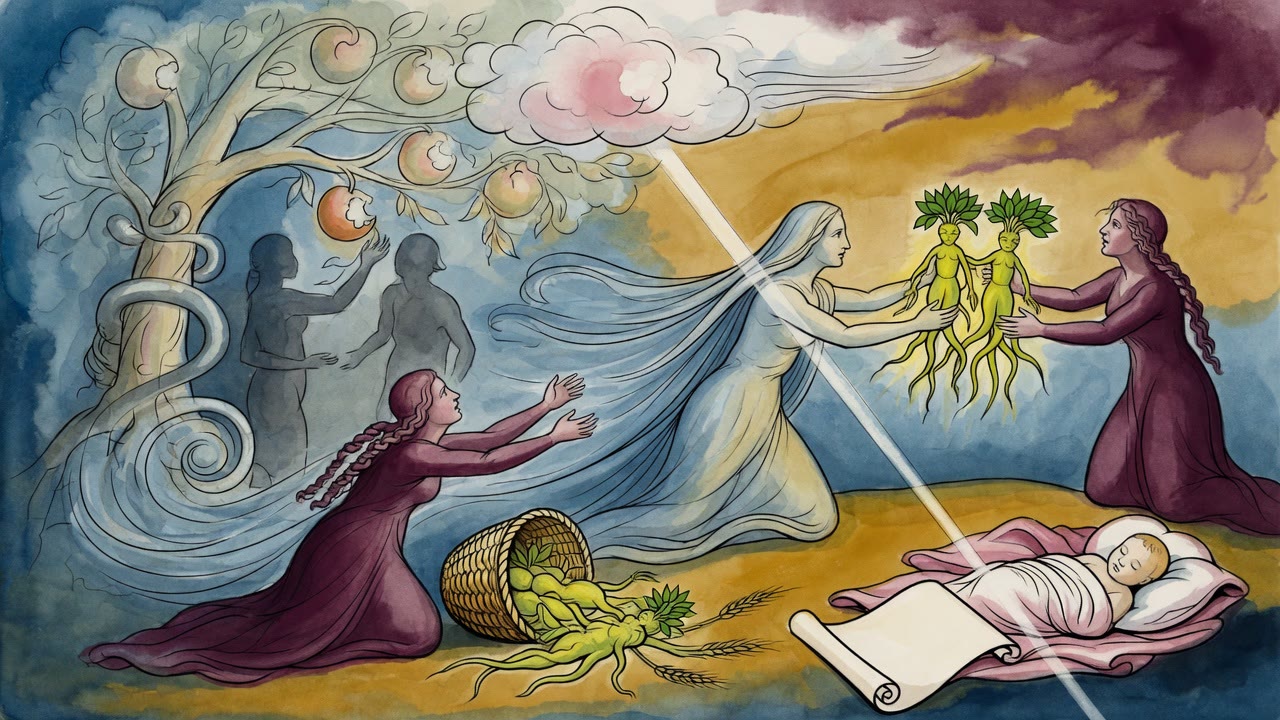
God did not create humanity without consultation. The traditions are clear on this: before Adam was formed from the dust, God sought counsel. He consulted the heavens and the earth. He consulted the angels who stood before Him, the ones who had been in existence since the second day of creation, the beings who understood what the world was before humanity entered it. It was the largest decision that had been made since the decision to create anything at all, and God handled it by asking what those closest to the throne thought about it.

What they thought was divided. The Angel of Love argued in favor. Humans would love. They would be capable of devotion and affection toward each other and toward their Creator, and that capacity was worth the risk of everything else that came with it. The Angel of Truth argued against. Humans would be liars from the beginning. The very matter of their nature would tend toward deception, and to create beings whose essence inclined toward falsehood was to introduce something into creation that should not be there. The Angel of Peace argued against as well. Humans would make war on each other, constantly, without end, and the world would never know the peace it had before they arrived.

What God Did With the Argument

The debate continued. God's response to it was not to wait for consensus. He took the Angel of Truth and threw it to the ground. While Truth was on the ground and the debate among the remaining angels was still unresolved, God created the first human being. The action was not a dismissal of Truth's concern. The human world would in fact be full of lies. Truth had predicted accurately. But God created humanity anyway, before Truth could rise and resume the argument, because if the decision had waited for the argument to be won it would never have been made.

The other angels were not pleased with this method. They asked God: why are you disrespecting your own attribute of Truth? He answered that Truth would rise from the ground eventually, that he had not destroyed it but only temporarily removed it from the debate. The verse in Psalm 85 that says Truth will spring from the earth was read as the moment Truth finally rose again, after humanity already existed and the decision was already irreversible.

The Earth That Refused and the Angel Who Could Not Deliver

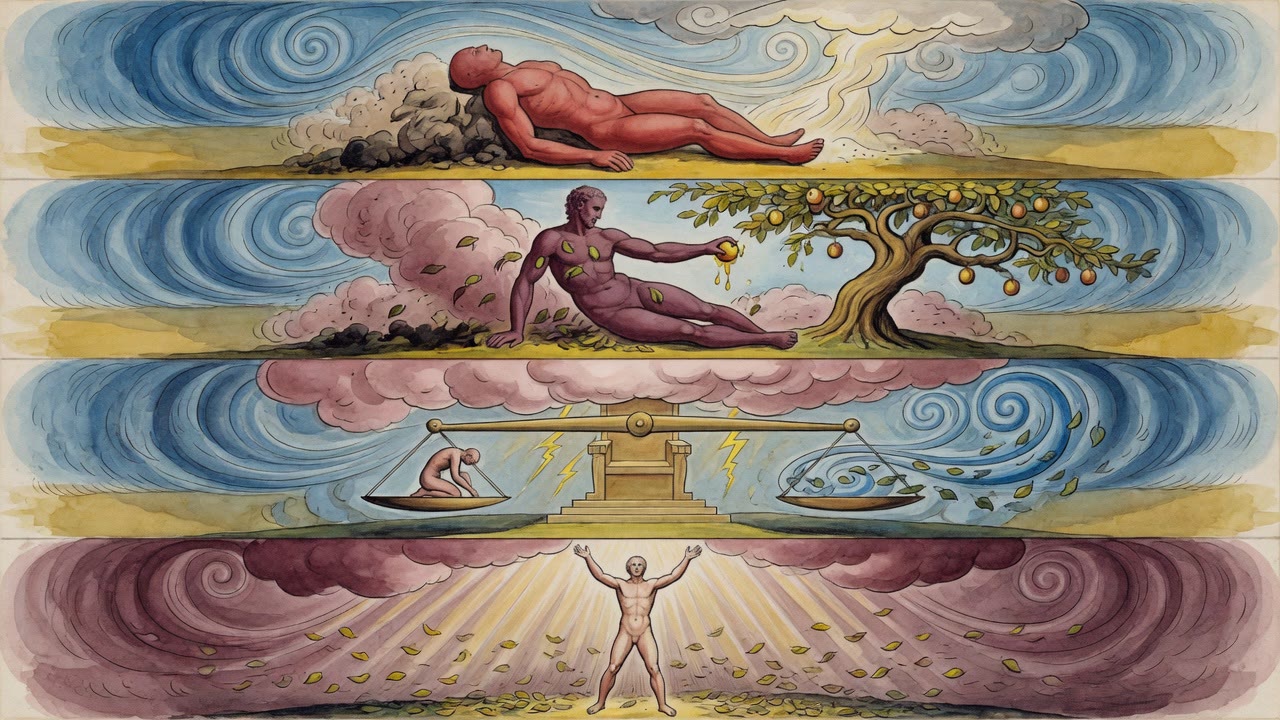
When the angels had, however reluctantly, accepted the creation of humanity, God turned to the practical matter of making the first human being. He sent Gabriel to collect dust from the four corners of the earth, because Adam was to be formed from all of it, not from any single region, so that no people could claim his particular soil as the origin of the human race and no corner of the earth could refuse to receive the bodies of the dead.

The earth refused. It told Gabriel: I have been told I am destined to become a curse when God punishes human sin. I do not want to be the material of a creature whose existence will lead to my own degradation. Gabriel returned without the dust. God sent Michael. Michael returned without the dust for the same reason. God sent Azriel. Azriel returned without the dust. Finally God collected the dust Himself, from all four corners of the earth simultaneously, and from that dust formed Adam. The earth had correctly predicted its own future and the creation happened anyway, over its objection, for the same reason it happened over the angels' objection. The decision to create humanity was made despite the valid concerns, not because those concerns were wrong.

The Storm Before Everything

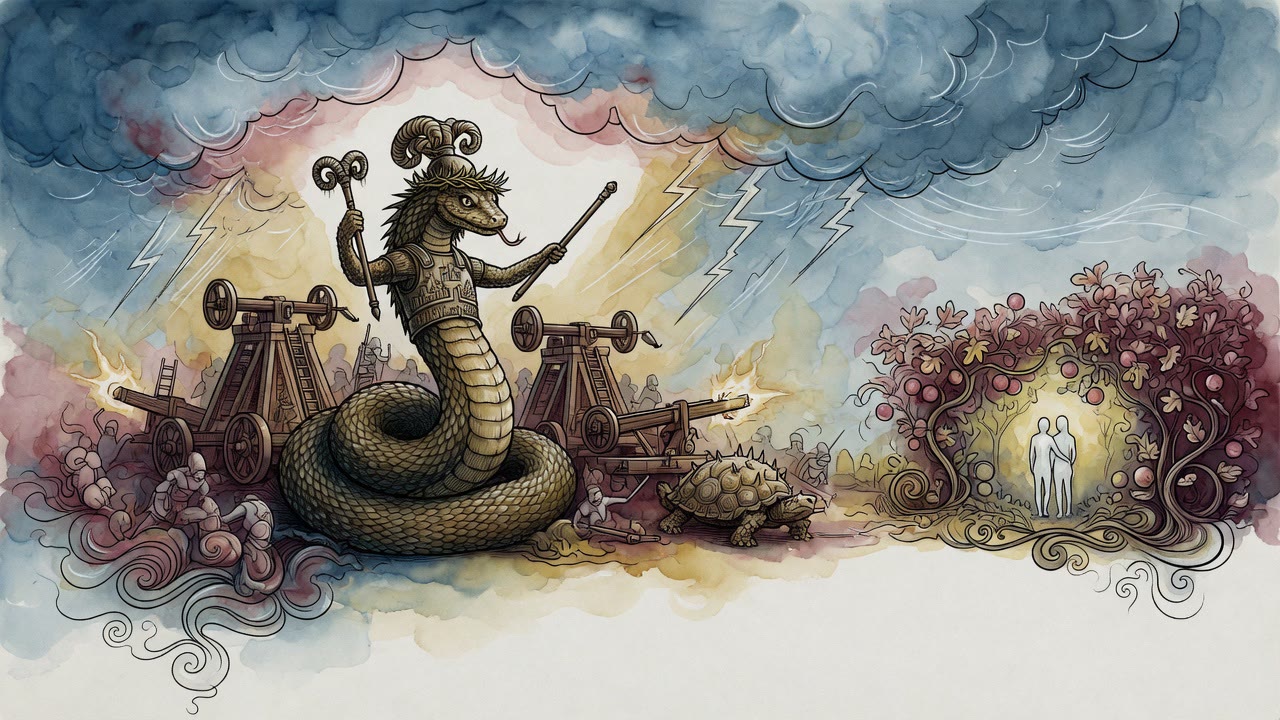
What existed before the first word of creation is described in images that have no proper referent. God rode on the wings of wind. Fiery lights blazed in every direction, crimson fire swirling without any consuming surface. Four enormous storm-winds circled a tempest that served as His chariot. The world before creation was not empty in the way an empty room is empty. It was full of undirected energy, water upon water, wave upon wave, storm-wind within storm-wind, a clamor without source or object, and then the voice of God moved across it and everything that followed began.

Into that particular universe of controlled chaos, God introduced humanity. The angels who had said no were still present. The earth that had refused to give its dust was still present. Truth was rising from the ground. The whole project was already shadowed by the foreknowledge that the beings being created would lie and fight and fail, and God went ahead not because failure did not matter but because the capacity for love and devotion and righteousness that also existed in these creatures was worth whatever the truth about their nature cost.


← All myths
From the tradition

Sources

8 sources

The texts this telling draws on, in full. Open a card to read inline, or expand it for a wider, quieter read.

Legends of the Jews, II. Adam, The Angels And The Creation Of ManLegends of the Jews

In Legends of the Jews, which draws on a vast ocean of midrashic (rabbinic interpretive commentary) and Talmudic sources, God, in His infinite wisdom, didn't just snap his fingers and create humanity. No, He sought counsel. He consulted with everything around Him – heaven, earth, and yes, even the angels. It’s a powerful lesson for us all: even the greatest among us shouldn't dismiss the advice of those who seem humble or insignificant.

The angels? They weren't exactly thrilled with the idea of humanity. Imagine the divine council, a celestial board meeting if you will. The Angel of Love championed humankind, envisioning beings capable of affection and devotion. But the Angel of Truth? Not so much. He foresaw the lies and deceit that would plague human existence. Similarly, the Angel of Justice saw potential, while the Angel of Peace predicted endless conflict.

The Talmud (Sanhedrin 38b) tells us of this debate. To silence the Angel of Truth, God cast him down to earth. And when the other angels protested what they saw as unfair treatment, God declared, "Truth will spring back out of the earth" (Psalm 85:12). It's a powerful image, suggesting that even when suppressed, truth has an inherent resilience, a way of resurfacing.

Here’s the kicker: God hadn’t revealed the whole truth about humanity to the angels. He only spoke of the righteous, concealing the existence of the wicked. Even with this limited knowledge, the angels questioned God’s plan, crying out, "What is man, that Thou art mindful of him? And the son of man, that Thou visitest him?" (Psalm 8:5).

God, in His infinite patience, responded with a question of His own: "The fowl of the air and the fish of the sea, what were they created for? Of what avail a larder full of appetizing dainties, and no guest to enjoy them?" In other words, what good is a beautiful world without someone to appreciate and cultivate it? This argument resonated, and the angels relented, exclaiming, "O Lord, our Lord, how excellent is Thy name in all the earth! Do as is pleasing in Thy sight."

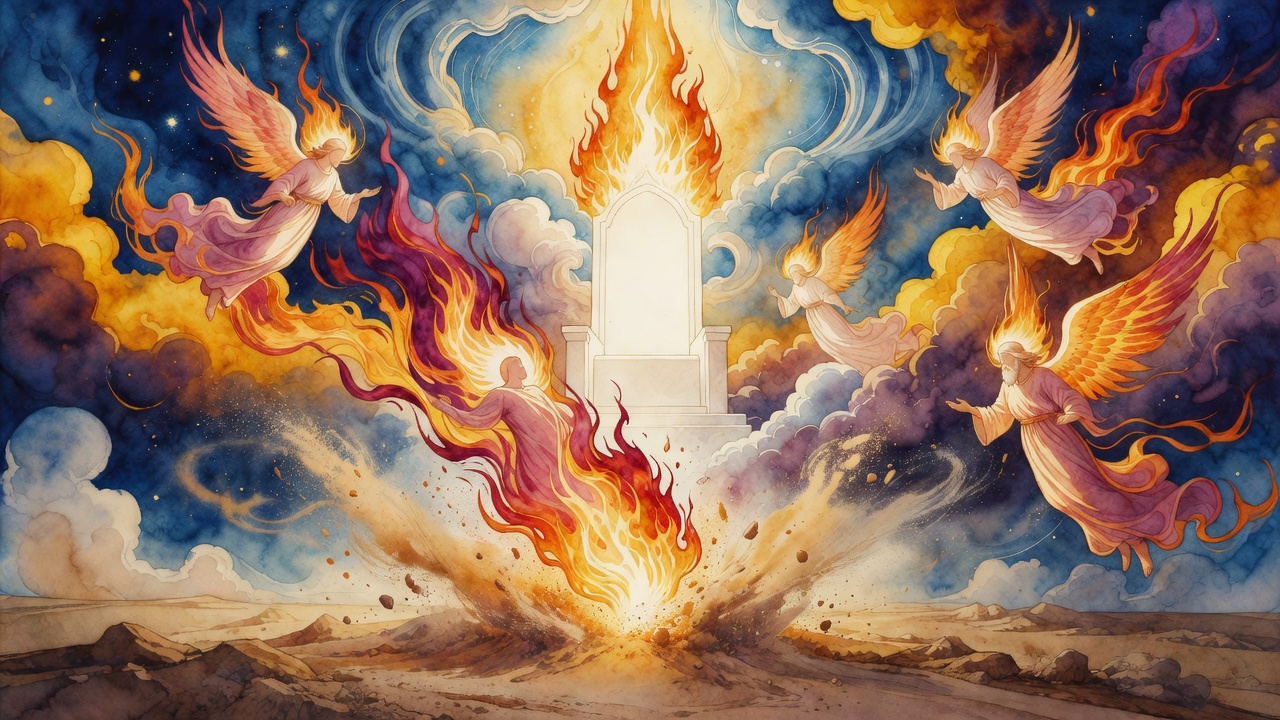
But not all the angels got on board so easily. According to Ginzberg's retelling, some faced dire consequences for their opposition. When God asked the angels under the archangel Michael for their opinion, they echoed the earlier sentiment: "What is man, that Thou art mindful of him?" God, displeased by their scorn, consumed them with fire, sparing only Michael. The same fate befell the angels led by Gabriel.

Finally, the archangel Labbiel, leading the third band of angels, learned from the mistakes of his predecessors. He warned his troop, "You have seen what misfortune overtook the angels who said 'What is man, that Thou art mindful of him?' Let us have a care not to do likewise, lest we suffer the same dire punishment." Labbiel understood that God was determined to create humanity, and resistance was futile.

So, Labbiel and his angels wisely chose cooperation. They declared, "Lord of the world, it is well that Thou hast thought of creating man. Do Thou create him according to Thy will. And as for us, we will be his attendants and his ministers, and reveal unto him all our secrets."

As a reward for his wisdom and foresight, God changed Labbiel's name to Raphael, meaning "God heals," and appointed him as the Angel of Healing. As we learn in texts such as the Sefer Raziel HaMalakh, Raphael became the guardian of celestial remedies, the prototypes for the medicines used on Earth.

What does this all mean for us? This story, woven from threads of biblical verses and rabbinic interpretations, offers a powerful commentary on the nature of humanity, divine will, and the importance of perspective. It reminds us that even the angels, beings of pure spirit, struggled to comprehend God's vision for humanity. It suggests that humanity, with all its flaws and contradictions, holds a unique place in creation. Perhaps, like Raphael, we are all called to be healers, to mend the brokenness we see in the world and in ourselves. And maybe, just maybe, that's what makes us worthy of God's attention.

Full source
Pirkei DeRabbi Eliezer 4Pirkei DeRabbi Eliezer

On the second day the Holy One, blessed be He, created the firmament, the angels, the fire of flesh and blood, and the fire of Gehinnom. But were not the heavens and the earth created on the first day, as it is said: "In the beginning God created the heavens and the earth" (Genesis 1:1)? Then which firmament did He create on the second day? Rabbi Eliezer says: The firmament that is over the heads of the four living creatures.

And the angels that were created on the second day, when they are sent by His word they become winds, and when they minister before Him they become of fire, as it is said: "He makes His angels winds, His ministers a flaming fire" (Psalms 104:4).

Four companies of ministering angels offer praise before the Holy One, blessed be He. The first camp, that of Michael, is at His right. The second camp, that of Gabriel, is at His left. The third camp, that of Uriel, is before Him. The fourth camp, that of Raphael, is behind Him. And the Presence of the Holy One, blessed be He, is in the middle. And He sits upon a high and lofty throne, raised up and suspended above in the air.

And when He speaks toward the east, He speaks from between the two cherubim with the face of a man. And when He speaks toward the south, He speaks from between the two cherubim with the face of a lion. And when He speaks toward the west, He speaks from between the two cherubim with the face of an ox. And when He speaks toward the north, He speaks from between the two cherubim with the face of an eagle.

And the living creatures stand beside the throne of His glory, yet they do not know the place of His glory. They stand in fear and dread, in trembling and quaking, and from the sweat of their faces a river of fire flows forth and goes out before Him, as it is said: "A river of fire streamed and went out from before Him" (Daniel 7:10). And Israel is one nation on the earth who declare His unity continually; every day they answer and say: "Hear, O Israel, the LORD is our God, the LORD is One" (Deuteronomy 6:4).

Full source
Genesis 2:4-7Torah (Masoretic Text)

These are the generations of the heavens and the earth when they were created, on the day that the LORD God made earth and heaven.

Now no shrub of the field was yet on the earth, and no herb of the field had yet sprung up, for the LORD God had not caused it to rain upon the earth, and there was no man to till the ground.

But a mist would go up from the earth and water the whole face of the ground.

And the LORD God formed the man, dust from the ground, and breathed into his nostrils the breath of life, and the man became a living soul.

Full source
Legends of the Jews, II. Adam, The Creation Of AdamLegends of the Jews

The story of Adam's creation, as told in Jewish tradition, is not just about clay and divine breath; it's about reluctance, divine compassion, and the very fabric of the earth itself.

In Legends of the Jews, that incredible compilation by Rabbi Louis Ginzberg, once the angels finally agreed to the creation of humankind. And that's a whole other story!, God turned to Gabriel and gave him a task: "Go and fetch Me dust from the four corners of the earth, and I will create man therewith."

Gabriel, obedient as ever, went to collect the dust, but the earth refused. Can you imagine? The Earth, this massive, ancient being, digging in its heels (so to speak). "I am destined to become a curse, and to be cursed through man," the Earth argued, "and if God Himself does not take the dust from me, no one else shall ever do it." The Earth knew what was coming! It knew the potential for both greatness and destruction that humanity held.

Why the four corners of the Earth, though? The story continues that God deliberately chose dust from all four corners. The reason? So that no matter where a person dies, east or west, north or south, the earth cannot refuse to accept them. It's a beautiful idea, isn't it? That we all return to the same source, no matter where our lives take us. Wherever we are buried, we return to the earth from which we sprang.

And get this: the dust wasn't just plain old dirt. According to tradition, it was a vibrant mix of colors: red for the blood, black for the bowels, white for the bones and veins, and green for the pale skin. Talk about a detailed blueprint!

But wait, there's more!

Even as the creation was underway, the Torah itself, wisdom personified, intervened! "O Lord of the world!" she cried out. "The world is Thine, Thou canst do with it as seemeth good in Thine eyes. But the man Thou art now creating will be few of days and full of trouble and sin. If it be not Thy purpose to have forbearance and patience with him, it were better not to call him into being."

The Torah, knowing the potential for human failing, questioned the whole endeavor. It's a powerful moment, highlighting the inherent risk in creating beings with free will. Would God have the patience and mercy needed to deal with humanity's inevitable flaws?

God's response is equally profound: "Is it for naught I am called long-suffering and merciful?" It's a rhetorical question, of course, but it speaks volumes about the divine attribute of rachamim (compassion).

And here's the most tender detail of all: God, in His grace, took one spoonful of dust from the very spot where, in the future, the altar in the Temple would stand. "I shall take man from the place of atonement," He said, "that he may endure."

Wow. Humanity was created from the very place of forgiveness, of reconciliation, of teshuvah (repentance). It's as if God built in the possibility of redemption from the very beginning. This act foreshadows the entire history of humanity, a history marked by both sin and the constant opportunity for atonement. It suggests that even in our darkest moments, the potential for return, for healing, is always present.

So, next time you look around and see the incredible, messy, beautiful pattern of humanity, remember this story. Remember the reluctant earth, the questioning Torah, and the compassionate God who created us from dust, imbued with the potential for both great failure and even greater redemption. It’s a story that reminds us that we are all connected – to the earth, to each other, and to something far greater than ourselves.

Full source
Bereshit Rabbah 5:1Bereshit Rabbah

"And God said, Let the waters be gathered together" (Genesis 1:9). It is written, "At Your rebuke they flee, at the sound of Your thunder they hasten away" (Psalms 104:7). Rabbi Berekhiah in the name of Rabbi Abba bar Ami said: a measure shall be made for the waters, as you say, "and a measuring line shall be stretched out over Jerusalem" (Zechariah 1:16). Rabbi Abba bar Kahana in the name of Rabbi Levi said: the Holy One, blessed be He, said: Let the waters be gathered for Me, in expectation of what I am destined to do with them. A parable: like a king who built a palace and settled mute people within it, and they would rise early and inquire after the king's welfare by gesture, by finger, and by signs. The king said: If these were articulate, how much more so would they praise Me! This is a wonder. The king settled in it articulate dwellers. They rose up and seized hold of the palace, saying: This palace is not the king's, it is ours. The king said: Let the palace return to what it was.

So too, from the beginning of the world's creation the praise of the Holy One, blessed be He, ascended only from the waters. This is what is written, "More than the voices of many waters, mighty breakers of the sea" (Psalms 93:4). And what were they saying? "The LORD on high is mighty" (Psalms 93:4). The Holy One, blessed be He, said: If these, which have neither mouth nor utterance nor speech, yet behold they praise Me, when I create man, how much more so! The generation of the Flood arose and rebelled against Him; the generation of Enosh arose and rebelled against Him; the generation of the Dispersion rebelled against Him.

Full source
Legends of the Jews 2:11Legends of the Jews

Spoiler alert: it wasn't. In fact, a heavenly debate raged, with the angels themselves deeply divided about whether creating humankind was a good idea.

The scene. The Angel of Love, brimming with optimism, championed humanity's potential for affection and connection. "Think of all the love they will share!" this angel might have exclaimed. But the Angel of Truth, ever vigilant, countered with a stark warning: humans would be "full of lies." A pretty harsh assessment. Then came the Angel of Justice, who saw the possibility of fairness and righteousness in humankind. "They will practice justice!" this angel argued, hopeful for a world governed by ethical principles. But the Angel of Peace immediately threw cold water on that idea, predicting endless squabbles and conflict. Ouch.

So, what was God's solution to this heavenly impasse? Well, according to Legends of the Jews, as retold by Rabbi Louis Ginzberg, it was rather… decisive. To silence the dissenting voice, God cast the Angel of Truth down from heaven to earth!

Can you imagine the uproar that caused? The other angels, appalled by this treatment of their colleague, protested vehemently. "How can you treat Truth with such contempt?" they must have cried.

And here's where it gets really interesting. God responded with a powerful, almost poetic, statement. "Truth will spring back out of the earth," He declared.

What does that mean, exactly? Is it a promise that truth, though suppressed, will always find a way to resurface? Is it a challenge to humanity to unearth truth from the often-muddy ground of human existence?

It's a potent image, isn't it? This idea that truth isn't something handed down from on high, but something that must be actively sought, discovered, and nurtured from the very earth we inhabit. Perhaps that’s why it’s so precious.

Full source
Bereshit Rabbah 8:3Bereshit Rabbah

Rabbi Yehoshua, speaking in the name of Rabbi Levi, offers a beautiful image. He suggests that God consulted with the "works of the heavens and the earth." It's like a king who has two trusted advisors, wouldn’t undertake any major decision without their input. God, in this view, is considering the delicate balance of creation, consulting with the very fabric of existence before bringing humanity into being. It's a vision of profound interconnectedness.

Then we have Rabbi Shmuel bar Naḥman, who proposes that God consulted with what was made on each and every day of creation. Another analogy of a king and his advisor. So, God is reviewing the blueprints, making sure the new creation of humanity harmonizes with everything that came before.

Rabbi Ami offers a strikingly different, and perhaps more human, perspective. He says that God consulted with His own heart. Now, this gets interesting. It's like a king who hires an architect to build a palace, but then isn't happy with the result. Who does the king blame? The architect, of course! So, if God created something that ultimately brought sorrow, who is to blame? Rabbi Ami points us towards the idea that God was saddened in His heart (Genesis 6:6). God, in this view, is confronting the potential consequences of creation, understanding the risks involved.

Rav Asi offers another variation on this theme, comparing it to a king who suffers a loss in a business transaction due to an intermediary's actions. Who does the king hold responsible? The intermediary. Again, the verse "He was saddened in His heart" (Genesis 6:6) is invoked, suggesting that God experienced regret or sorrow related to His own creation.

What are we to make of all this? It's not about finding one "right" answer, but about appreciating the richness and complexity of the rabbinic imagination. These interpretations, rooted in Bereshit Rabbah, offer us glimpses into the inner workings of the divine, portraying God not as a solitary, all-powerful being, but as one who considers, consults, and even feels the weight of His own decisions.

Full source
Legends of the Jews 2:12Legends of the Jews

The universe is a vast, seemingly endless expanse, and yet, here we are, tiny humans on a small planet, contemplating our existence. It’s a question that has plagued philosophers and theologians for millennia. And wouldn't you know it, Jewish tradition has some pretty amazing answers.

One fascinating story, found in Ginzberg's Legends of the Jews, explores the very moment of humanity's creation and the celestial debate that preceded it. It paints a picture of angels, initially resistant to the idea of humankind. Can you imagine? The angels, beings of pure light and spirit, questioning God's plan!

The story goes that God, in His infinite wisdom, only revealed part of the picture to the angels. He showed them the potential for piety, for goodness, for the incredible acts of kindness and compassion that humans are capable of. But, crucially, He kept the other half hidden: the potential for evil, for wrongdoing, for the darkness that can also reside within the human heart.

Even with only half the story, the angels were hesitant. They cried out, "What is man, that Thou art mindful of him? And the son of man, that Thou visitest him?" (Psalm 8:5). It's a powerful question, isn't it? What makes us so special? Why would the Creator of the universe pay attention to these fragile, flawed beings?

God's response is equally profound. He points out the inherent purpose in creation. "The fowl of the air and the fish of the sea, what were they created for? Of what avail a larder full of appetizing dainties, and no guest to enjoy them?" In other words, what good is a beautiful, bountiful world if there's no one to appreciate it, to experience it, to learn from it? A world without eyes to see its beauty, without hands to till its soil, without minds to ponder its mysteries.

The angels, upon hearing this, relented. They exclaimed, "O Lord, our Lord, how excellent is Thy name in all the earth! Do as is pleasing in Thy sight." They recognized the divine wisdom, the inherent value in creating beings capable of appreciating and interacting with the world.

It's a story about perspective, isn’t it? The angels only saw the potential for imperfection, for deviation from the divine. God saw something more: the potential for growth, for connection, for a unique relationship with creation.

And it makes you wonder, what do we see when we look at ourselves and each other? Do we focus on the flaws, the shortcomings, the potential for failure? Or do we see the spark of the divine, the capacity for love, for creativity, for making the world a better place? Maybe, just maybe, understanding our purpose is about embracing both sides of the story – the light and the dark – and striving to live up to the potential that God saw in us from the very beginning.

Full source