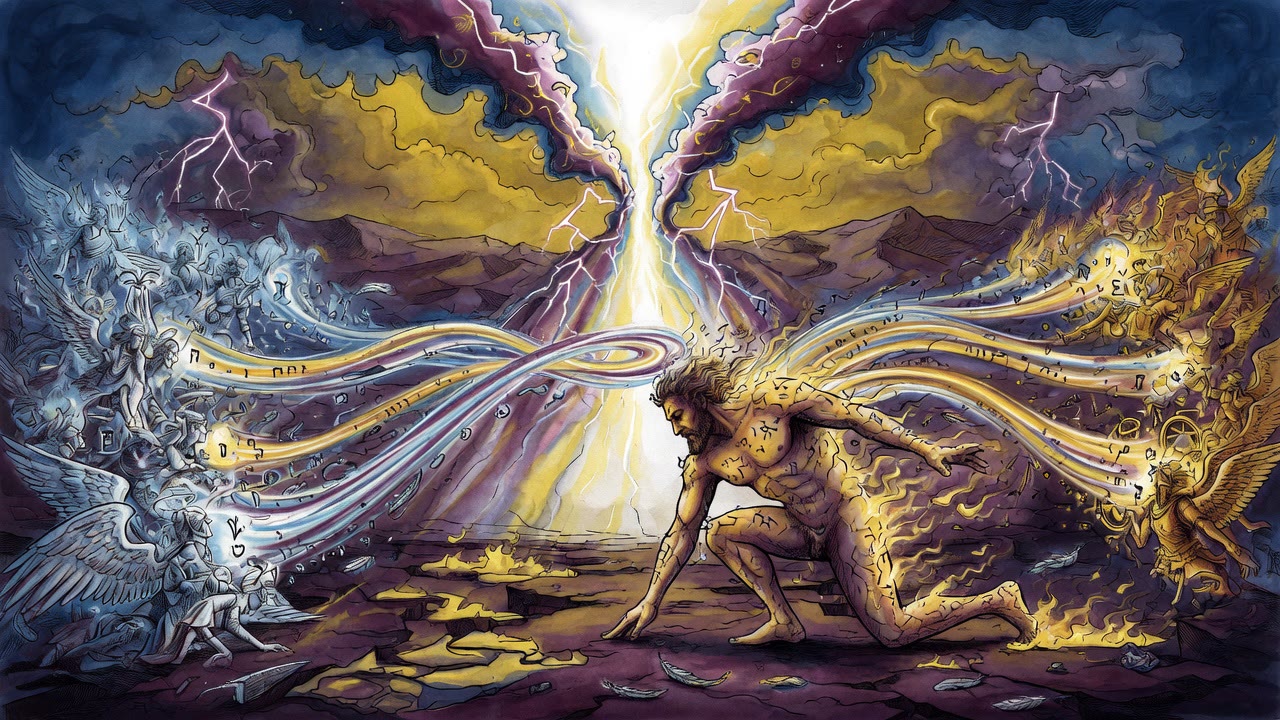
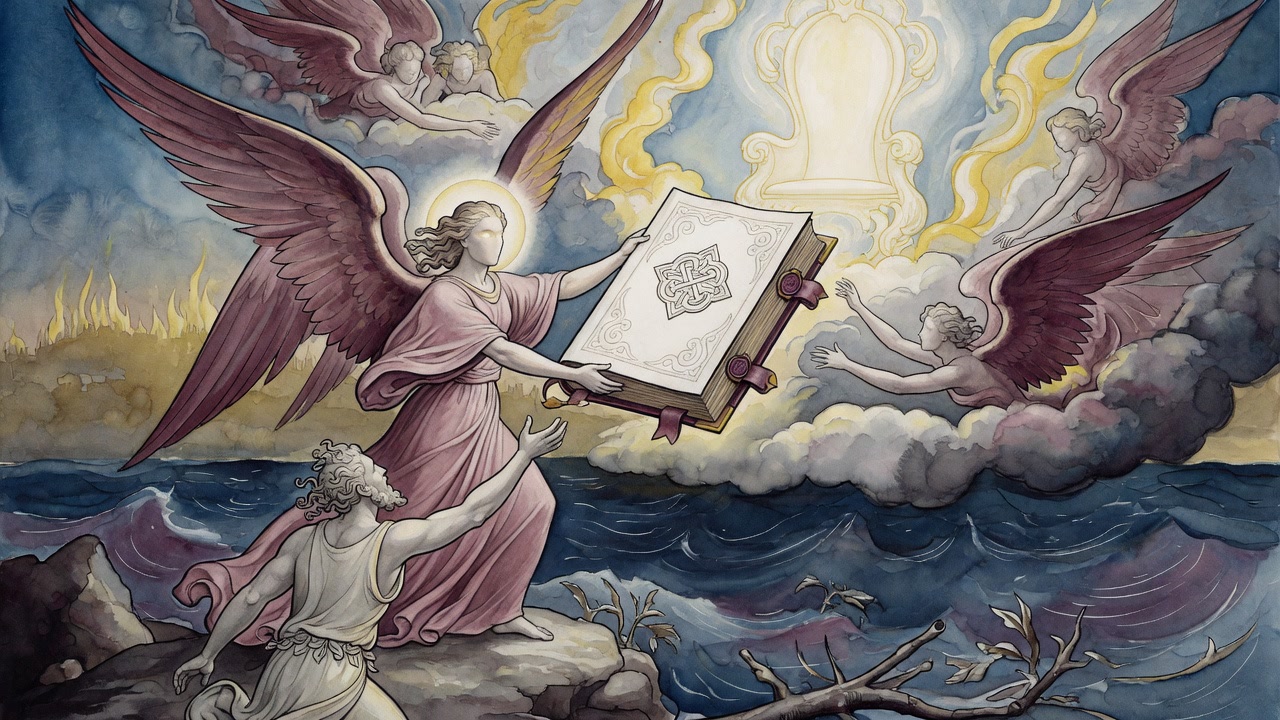
God Sent an Angel to Turn Judah Around on the Road to Timnah
Judah looked at the covered woman sitting by the road, decided she was nothing to do with him, and walked on. Then Tamar lifted her eyes.
Table of Contents
 Click for full size
The Face He Had Never Seen
All the time Tamar lived in her father-in-law's house, she kept her face covered.
She came in as Er's wife and stayed on as Onan's, and through both marriages and both funerals the cloth stayed up. It was modesty and it was ordinary, and no one in the household thought about it, least of all Judah, who had a shearing to run and two graves to visit and a third son he was quietly keeping away from her. She went back to her father's house a widow twice over and Judah did not send for her, and Shelah grew up, and no message came.
In all those years Judah had never once looked at her face long enough to carry a picture of it.
What He Said as He Walked Past
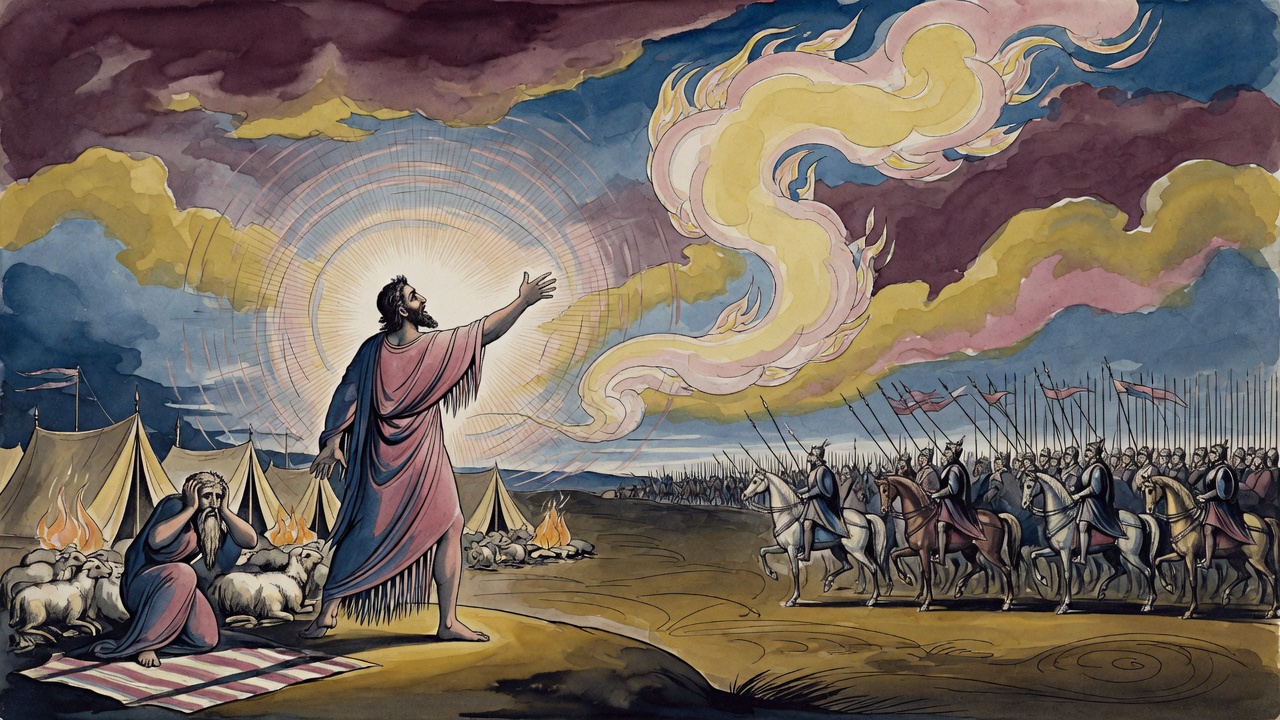
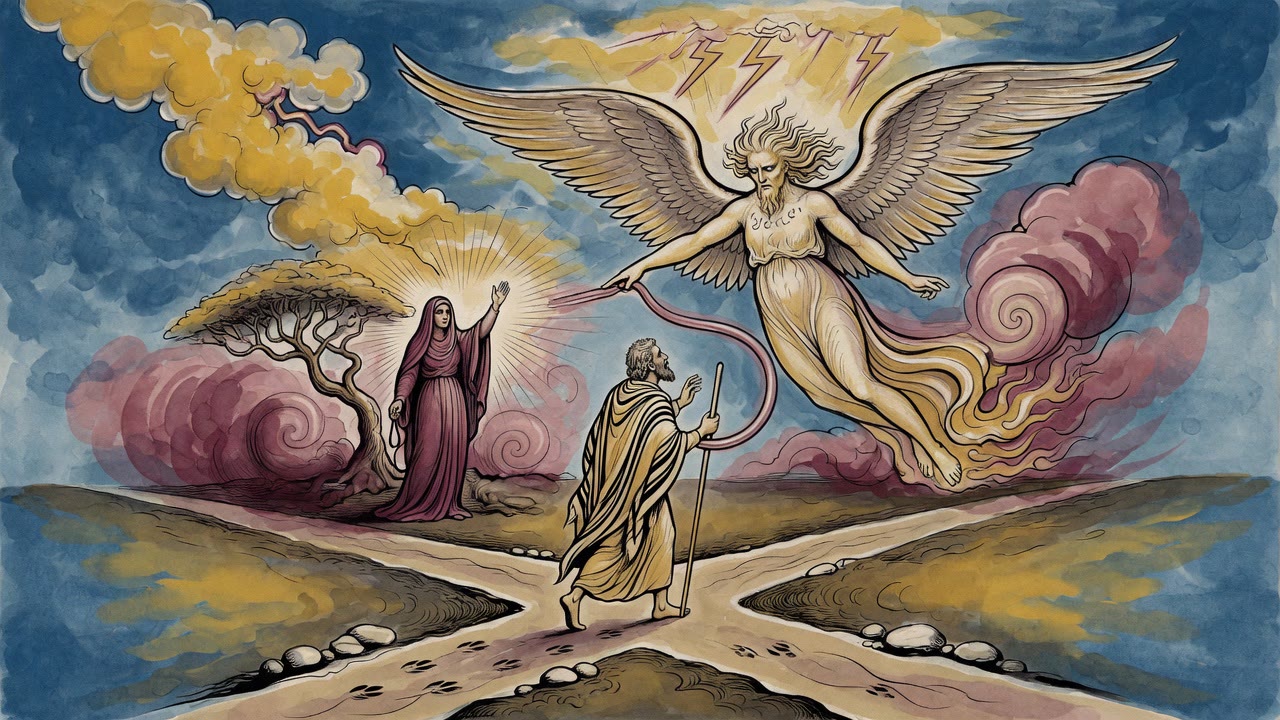
He went up to Timnah for the sheep-shearing with his friend Hirah beside him, and at the fork in the road there was a woman sitting with her head covered.
He did not stop. He barely turned his head. He worked out what she was in the time it took to pass her, and what he worked out was that she was a prostitute waiting at a crossroads for the shearing traffic.
"That is a harlot. What do I care about her?"
And he kept walking, and the road went on toward the shearers, and behind him the woman with the covered face watched the back of the man who owed her a husband get smaller.
The Prayer and the Angel
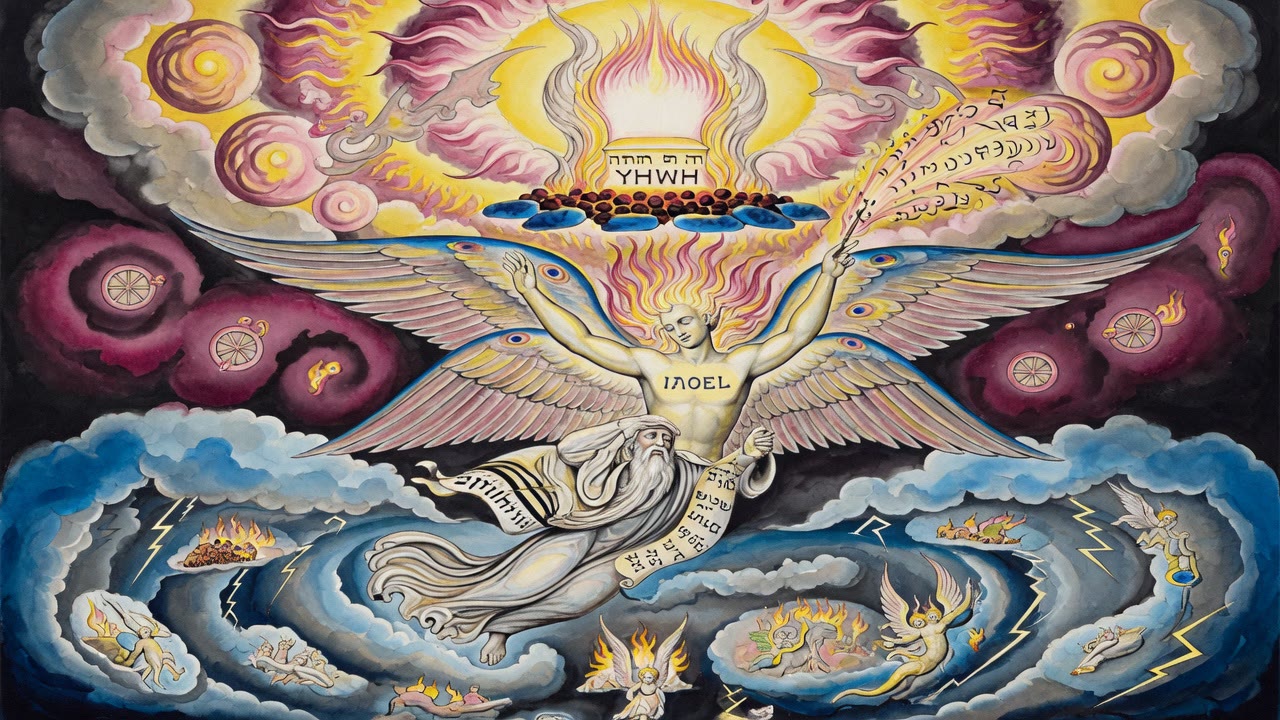
Tamar lifted her eyes.
"Master of the world. Am I to go out empty from the body of this righteous man?"
She did not ask for a husband and she did not ask for justice. She asked not to leave that family with nothing in her. Every legitimate door had shut in order: Er dead, Onan dead, Shelah withheld, and now the man himself walking up the road with his back to her. She had run out of every way in that the law allowed, and the line she had married into was about to close over her head as if she had never entered it.
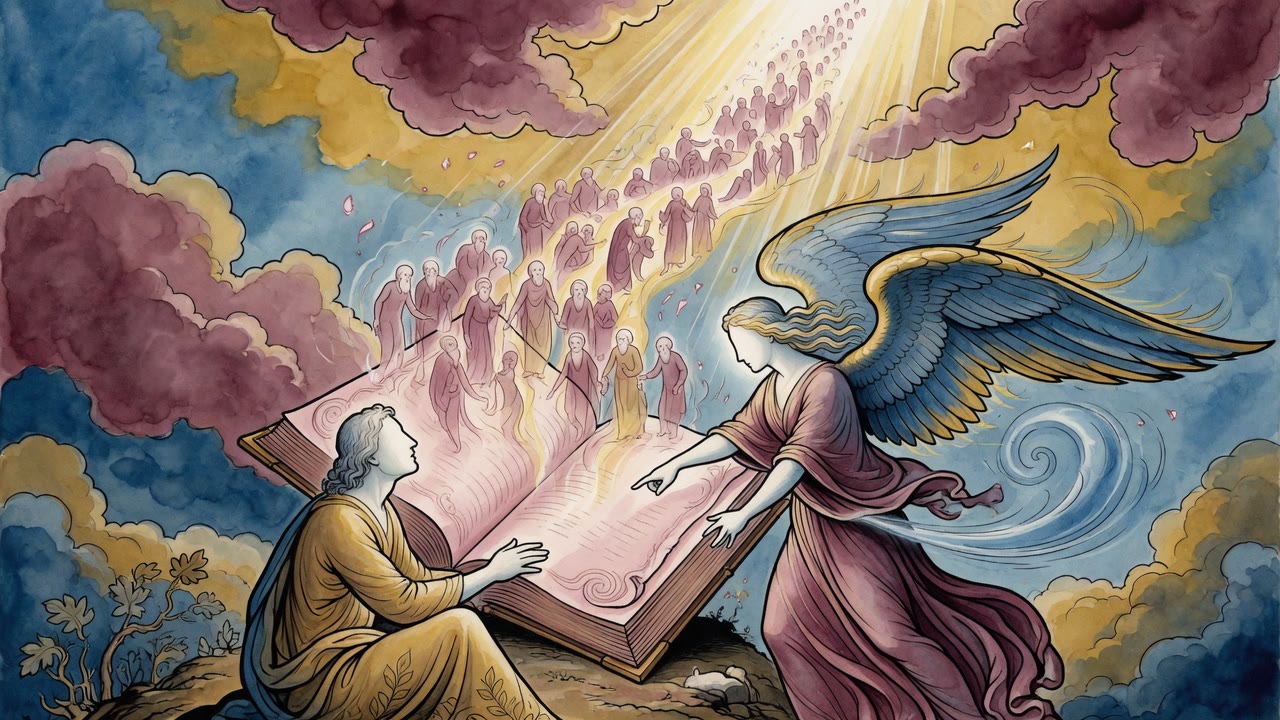
God sent Michael.
Judah, halfway up the road to Timnah with his mind on wool prices, turned aside. He could not have said why. Balaam's donkey once saw an angel standing in the path with a sword and swerved off the road while the man on her back felt nothing at all, and Judah came off his road the same way, moved by something planted directly in front of him that he never saw.
The Three Things She Asked to Hold
He offered her a kid from the flock. He had no kid with him, so he offered to send one.
"What pledge will you give me until you send it?"
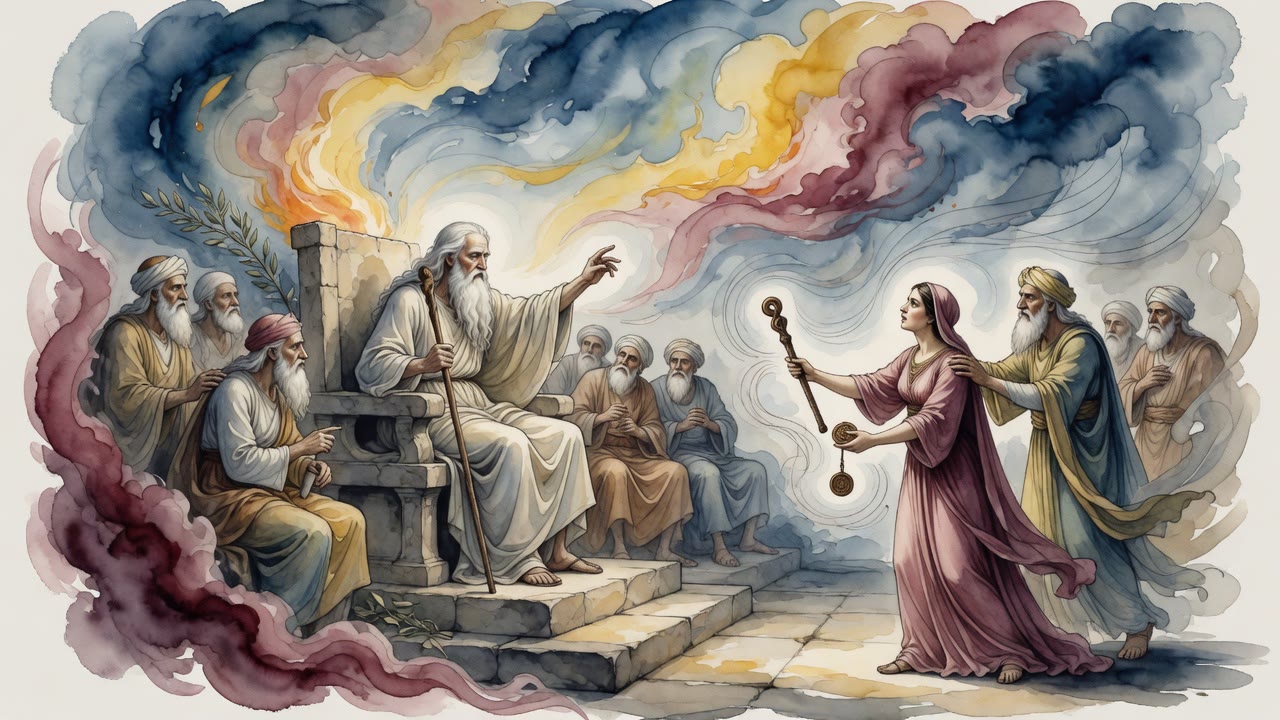
She could have asked for silver. Anyone at a crossroads asks for silver. She named three objects instead: his signet, the cord and mantle he wore, and the staff in his hand.
The signet was the seal a king presses into wax. The mantle was what a judge wears when he sits. The staff was the ruler's rod that Jacob had promised would not depart from between Judah's feet until the one it belonged to came. Royalty, judgeship, and the redeemer, and she asked for all three by name from a man who thought he was settling a bill.
He handed them over without looking at them twice. They were only what he happened to have on him.
The Goat That Came Back Unpaid
Judah sent Hirah up the road with the kid to collect the pledges. Hirah asked at the crossroads. He asked in the town. There was no such woman there, and nobody had seen one, and he came back leading the goat.
Judah let it go. He could have gone himself, could have widened the search, could have asked louder. He did none of it, because a man of his standing hunting a roadside prostitute through a strange town to recover his own seal would be a story that outran him, and he would rather lose the seal than be laughed at.
So the signet stayed where it was. And the staff, and the mantle.
Tamar went home and put her widow's clothes back on. Within three months her body told her what she was carrying, and she was not frightened and she was not ashamed. She was proud. She had come out of that house with kings in her.
← All myths