Adam and Eve's First Days After Leaving Eden
The sun dropped. Adam told Eve the world was going void. They sat in the dark and did not know morning existed.
Table of Contents
 Click for full size
The Sky Went Dark
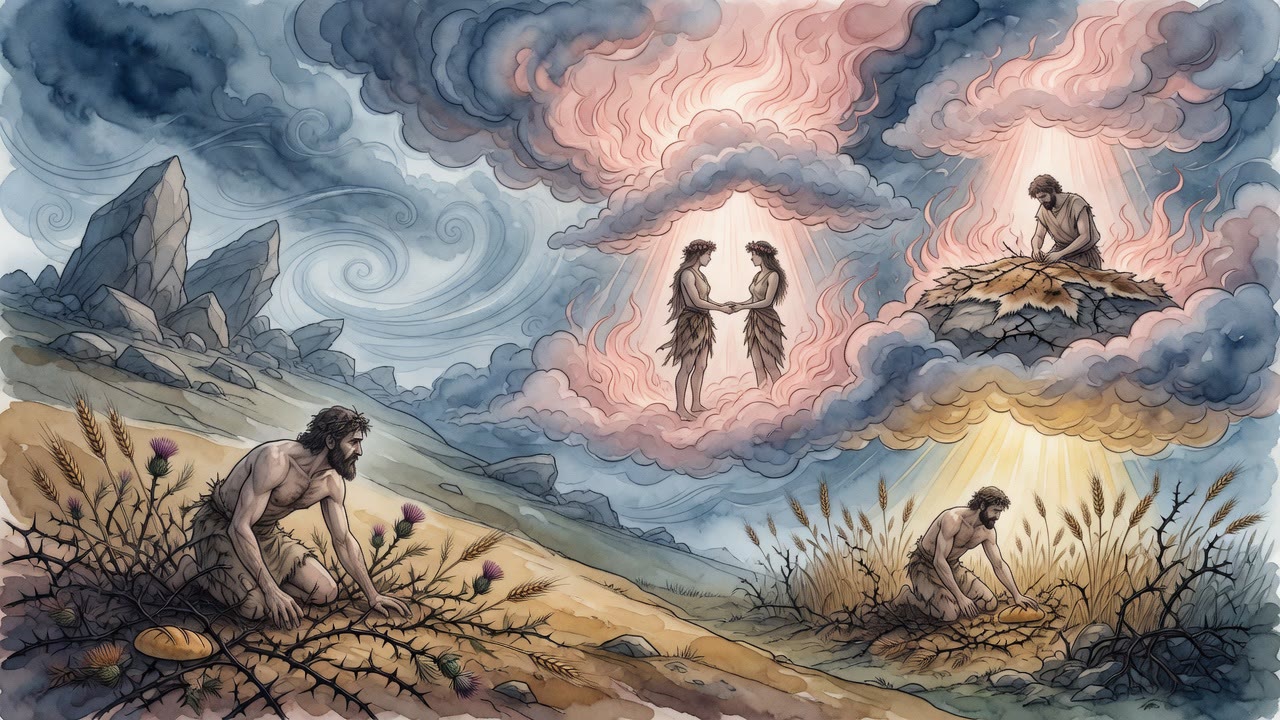
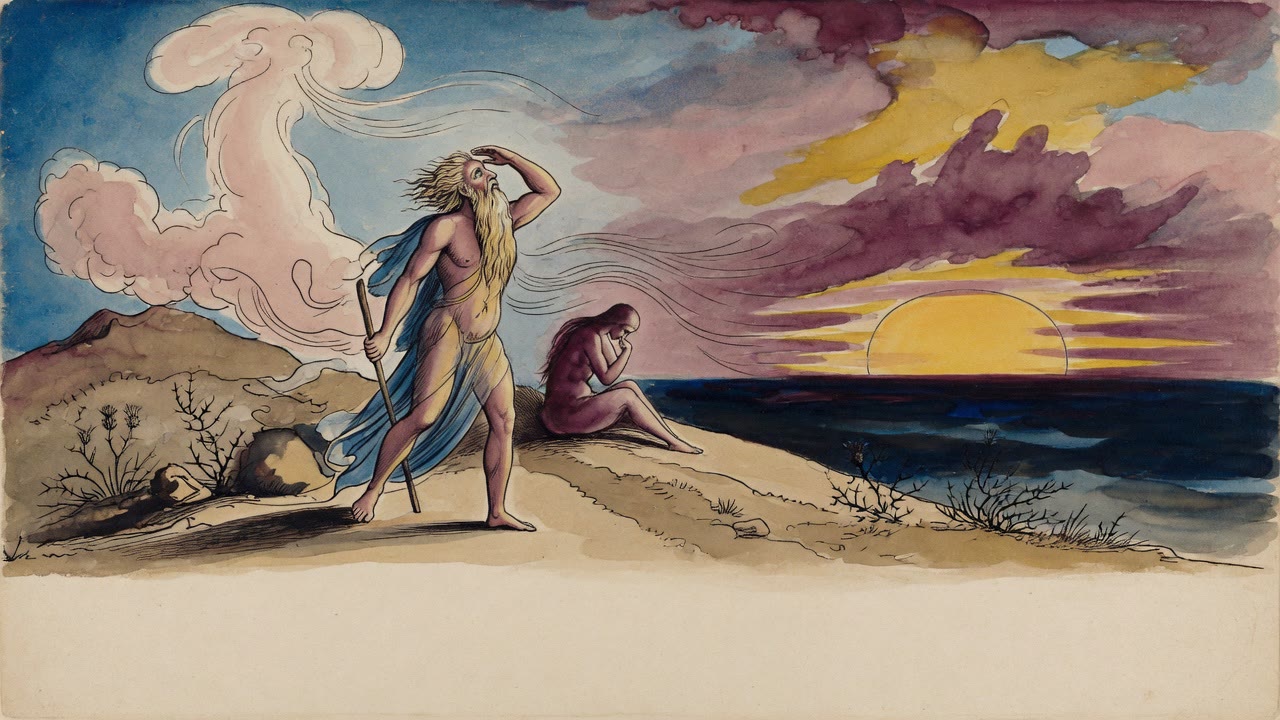
Adam stood on dirt that had never been Eden. The light went thin. Shadows stretched across rocks he had no names for. The air turned sharp against his teeth. Eve stood beside him and pulled the new garment tighter around her shoulders.
He had known one kind of sky. Warm. Steady. The sun moved, but it never threatened. Now the colors sank toward a hue he had not learned. He turned to her, and his voice carried a weight she had not heard in it before.
"Because we have sinned," he said, "the world around us is growing dark. Soon the universe will become void and without form, as it was before the beginning. This must mean we have been sentenced to death."
He believed it. No sun had ever set in their living memory. The dimming looked like the end of everything. They sat on the unfamiliar ground and waited for the world to come apart.
They did not know about morning.
What God Wrapped Around Them
Before the gate had fully closed, God had already made clothes. The Torah calls them garments of skin (Genesis 3:21). The skin was the serpent's.
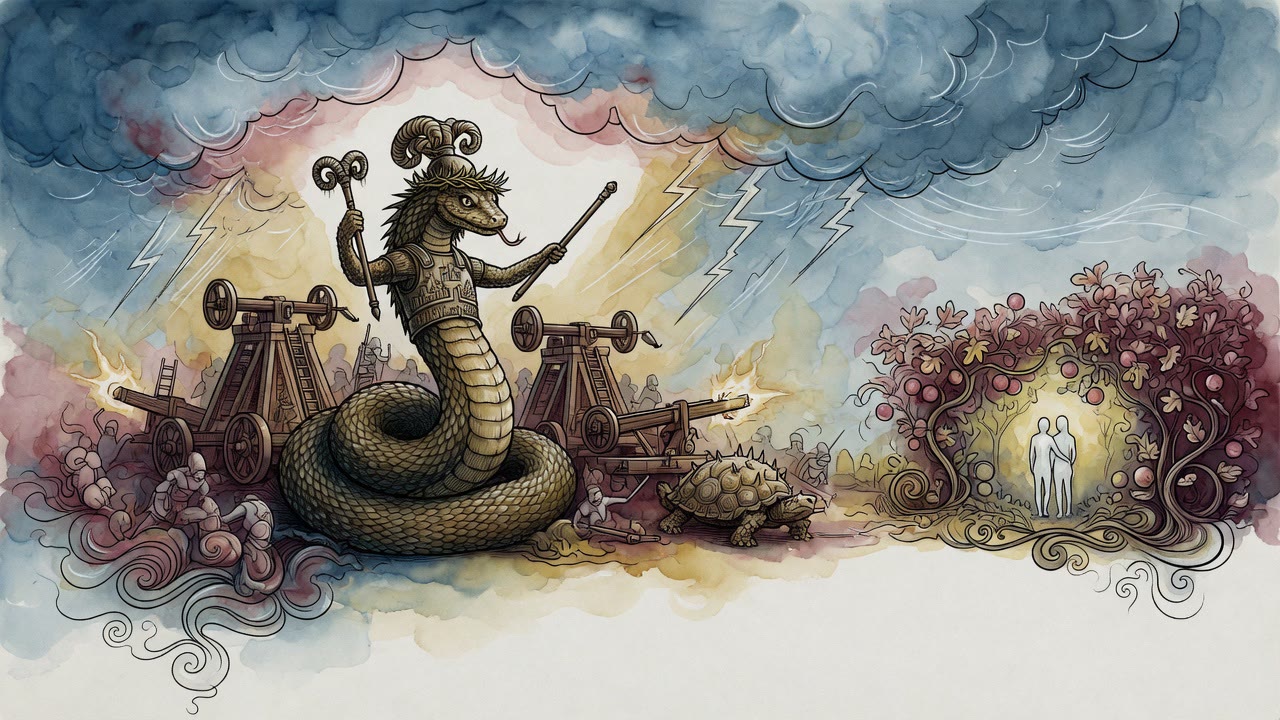
God had sentenced the creature to shed every seven years. The first shedding happened then, at the moment of the curse. From that cast skin God fashioned vestures of honor and laid them on Adam and Eve, on the flesh that had just lost its first covering.
They wore the thing that had undone them. The serpent crawled away thinner, duller, stripped of the shine it had used to speak. They walked out dressed in its glory. The covering sat against their skin as proof. Every step outside the garden rubbed that proof into them.
Eve pressed her palm to the new hide. It was warm from the making. It was not the purple they had worn in the garden. It was honor of a harder kind, stitched out of the deceiver's first loss.
The Night They Thought Was Forever
They sat through the dark and wept. They fasted because they thought fasting was the last thing a body could do before it stopped. Adam listened for the serpent in the new blackness and heard only wind on stone.
The hours did not behave. There was no clock. There was only the cold and the idea that the world had been unmade because they had eaten. Eve put her head against his shoulder and then took it away, as if even comfort were a food they no longer deserved.
A line of light cut the east. The sun climbed. The rocks took color again. Adam stood up so fast he staggered. He lifted both hands toward the returning fire as if it might change its mind.
"There is a course the sun follows," he said. The sentence came out like a laugh he did not trust yet. Eve rose beside him. The gate of Eden did not open. The cherubim stayed at their post with the turning sword. The world, against his night-speech, had not gone void.
The Ox on the First Altar
He offered a sacrifice. He brought an ox whose horns had grown before its hooves, a beast of the first world, and he laid cedar and myrrh and cinnamon on the fire. He put on the garments God had given him, the ones that would later pass to Seth, and he burned the offering because they were still alive.
Smoke went up. The smell of spice mixed with the smell of the new dirt. It was not a pardon. It was a body saying the morning had returned, and that he had something to do with the day that was not eating from a forbidden tree.
Eve stood near the smoke and did not speak. She watched the ox burn. She watched Adam's hands, which had taken fruit, now taking fire. The cherubim did not look over. The sword kept turning. The first altar was a pile of stones a few hundred steps from a closed gate.
One Hundred and Thirty Years
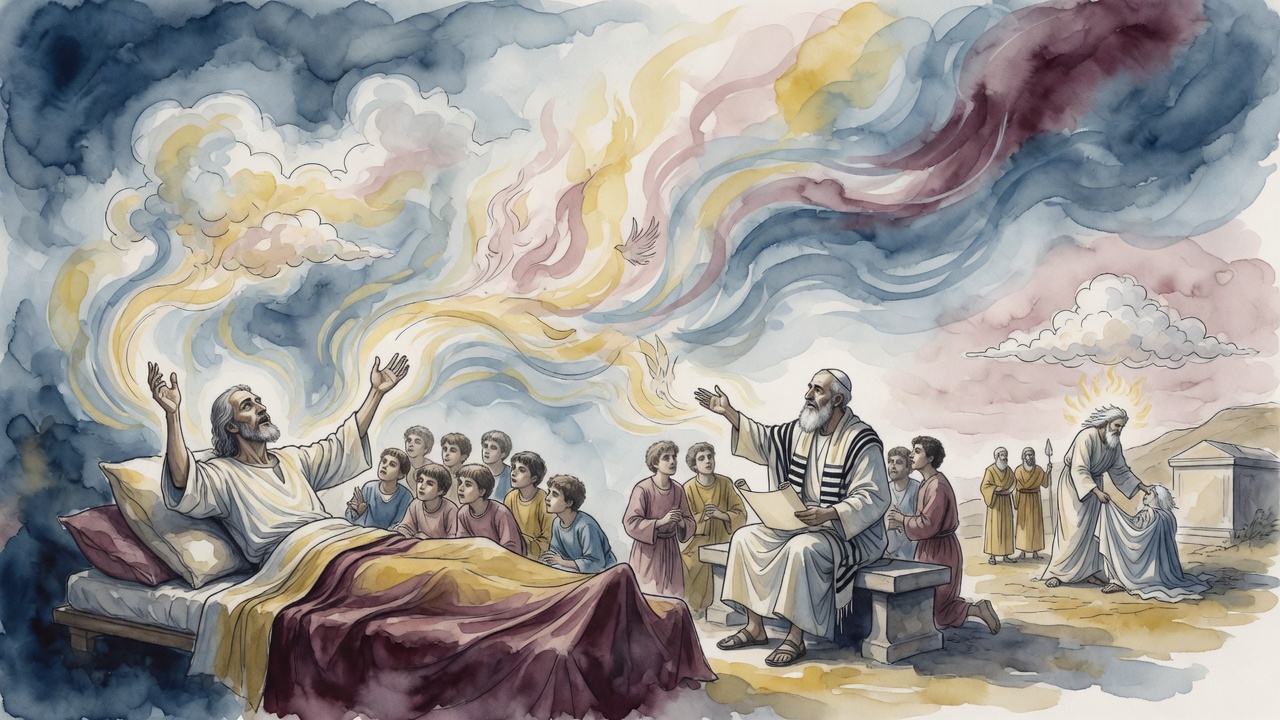
Adam was not done. He fasted one hundred and thirty years. He separated from Eve for that same span. He wrapped girdles of fig leaves around his loins and wore them as a sign no one had asked him to wear.
Death had not stopped with him. It would keep entering through children who had not been consulted. Every grave that would ever be dug sat downstream of one morning under the tree. He could not think of anything else adequate to the size of that.
In those years he was not empty. From a man cut off from his wife came shedim (שדים), demons, spectres, creatures of half-sleep. They were not sons in his likeness. They were the noise of a broken time, born of a body that would not go back to the partner it had been given.
When the fast closed, he returned to Eve. Then he begat Seth, a son in his own image (Genesis 5:3). Only then does the verse bother to say likeness. Eden could not be put back. A child could still look like his father, if the father mourned long enough to come back to himself.
Every morning the sun came up. Every time it did, they both knew it was not a promise they had earned. They had learned that much from the first night, when they were sure it would not.
← All myths