6 min read

The First Shabbat Was Adam's Wedding Night

God finished creation on the sixth day. Then He adorned Eve as a bride, walked her to Adam, and the first Shabbat began with a wedding feast in Eden.

Curated by Arthur · Told by Maggid ·
Table of Contents
  1. The Sixth Day's Last Hours
  2. God Dressed the Bride
  3. The First Sunset
  4. Pillars of Fire and Cloud
  5. What the First Shabbat Preserved

The Sixth Day's Last Hours

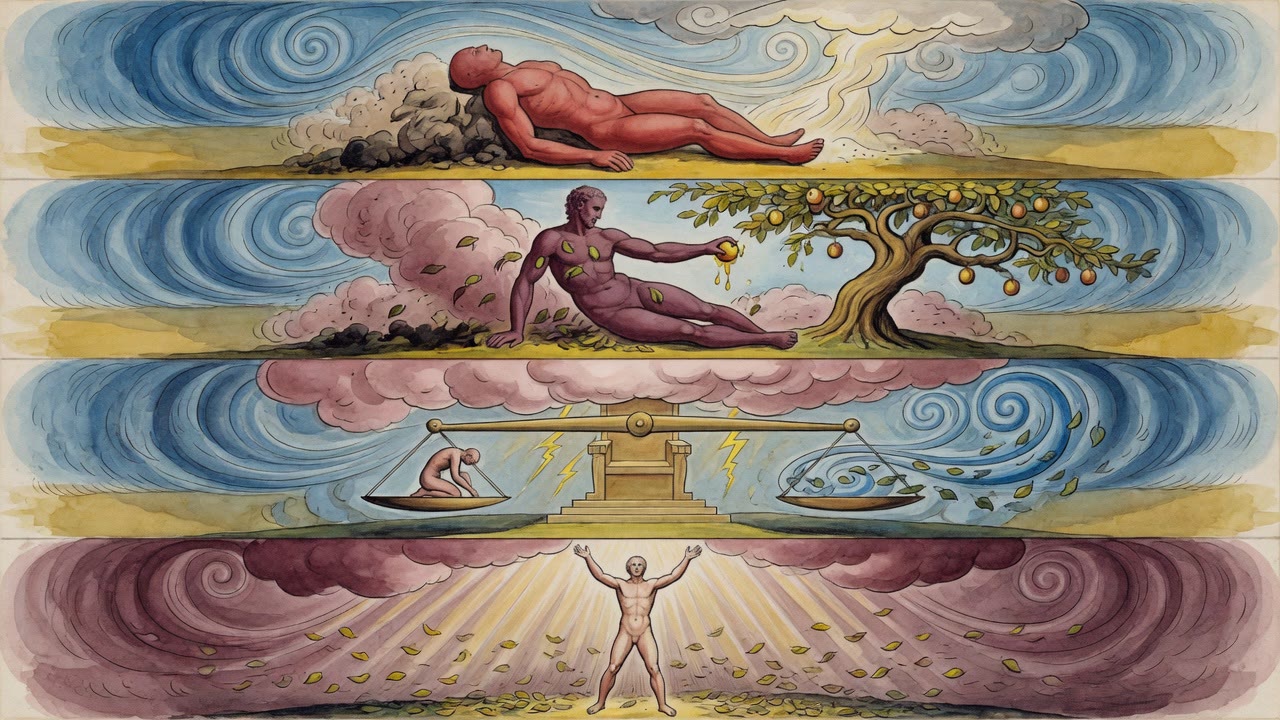
Creation ended. The animals had been named. The garden was planted. The rivers were running. The trees were bearing fruit. Adam was alone in a garden complete in every respect except the one that mattered, because none of the named animals was a partner for him, and God said: it is not good for man to be alone.

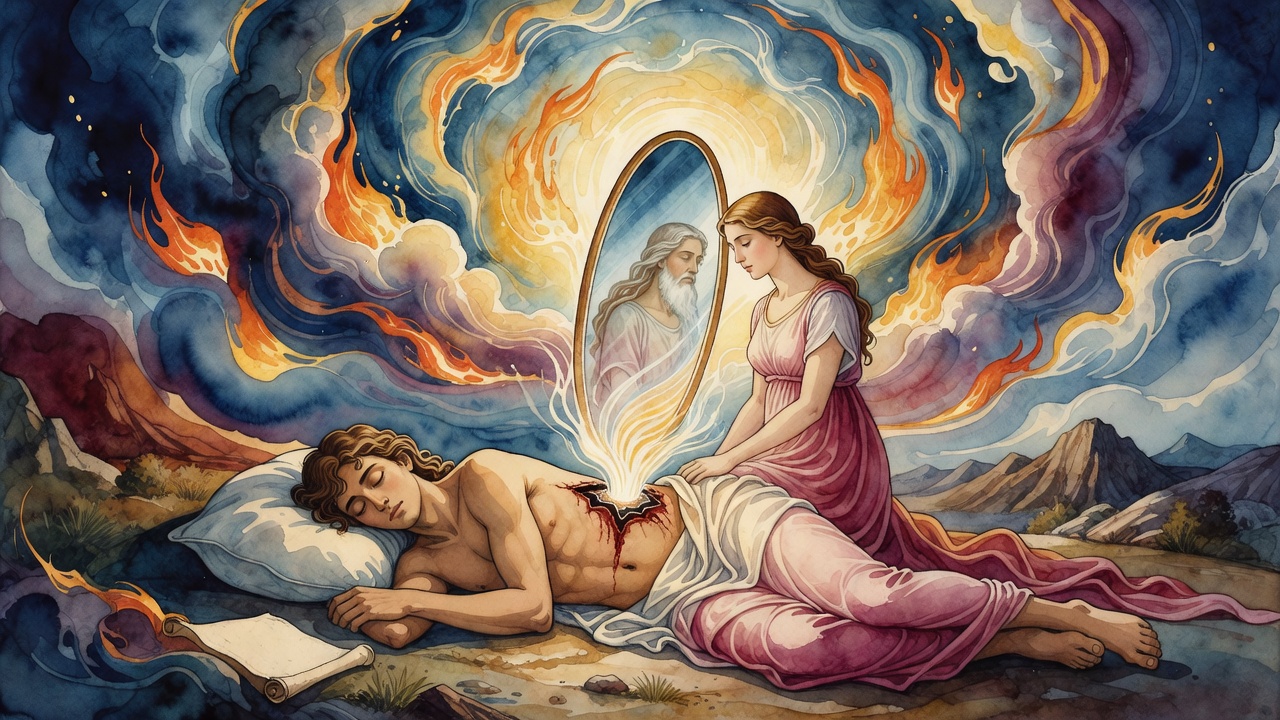
The preparation for what came next was not hurried. God formed Eve from Adam's side while Adam slept, and when Adam woke and saw her, he said: this one, at last, bone of my bone and flesh of my flesh. This one shall be called Woman because from Man she was taken. The first poem, uttered by the first man, on seeing the first woman.

But the tradition does not let the story rest there. What happened in the hours before Shabbat arrived?

God Dressed the Bride

The Legends of the Jews preserves the tradition that God did not simply present Eve to Adam unadorned. God served as the bridegroom's attendant, preparing Eve as a bride. The divine attention that had been applied to making the world was now applied to a bride's preparation.

The angels were arranged in two rows. The ministering angels stood on both sides of the path. Adam was waiting. God walked Eve down to him between the two rows of angels, and the angels sang before them, and the presence of God was the canopy over both of them, because there was no one else in the world to serve as the wedding party, and so God was everything: the one who made them, the one who brought them together, the one who sang over them, the one who blessed them.

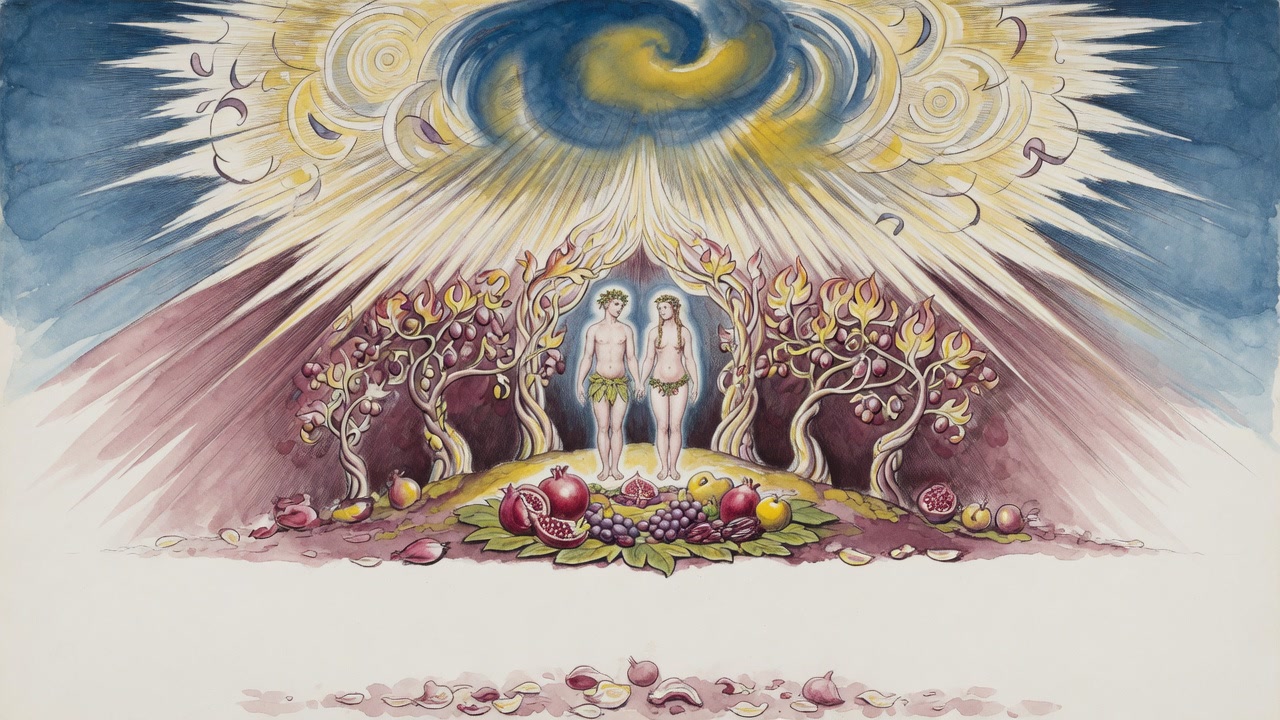
The feast that followed was what the first Shabbat was. Not a quiet day of rest in the sense of a day with nothing in it. A day of celebration in a garden that was still perfect, with two people who had not yet made the choice that would end this version of things.

The First Sunset

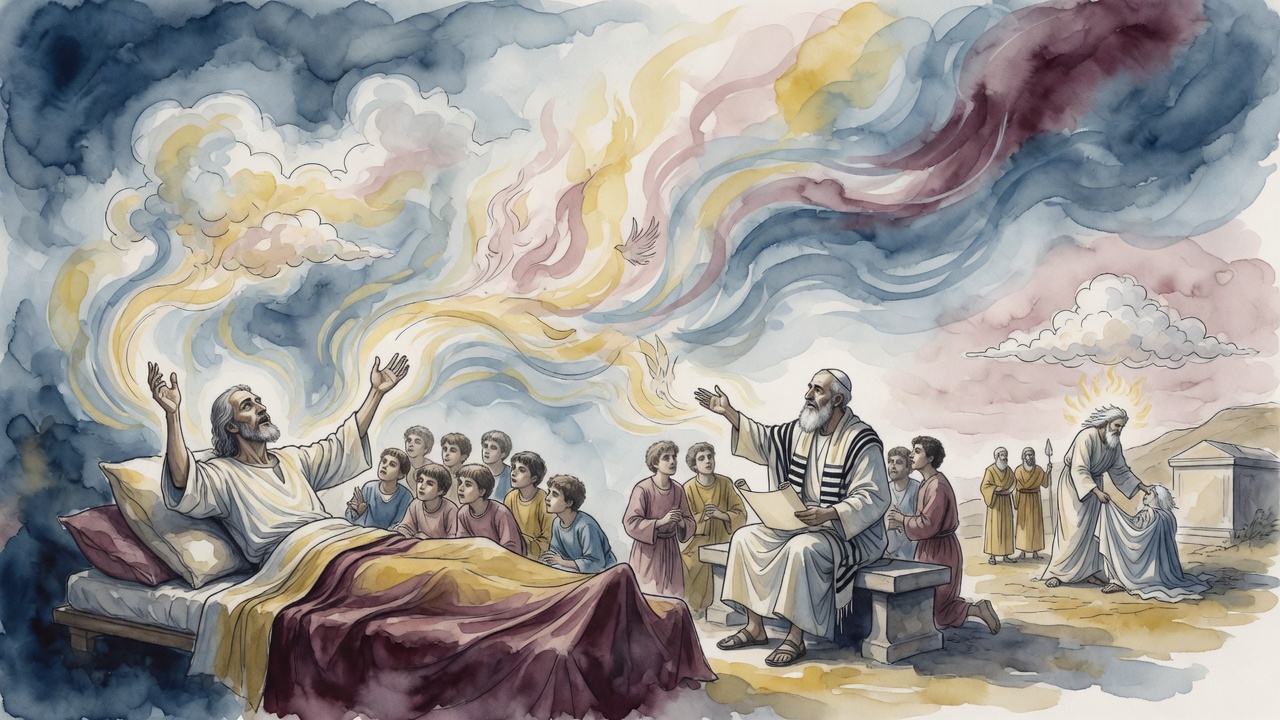
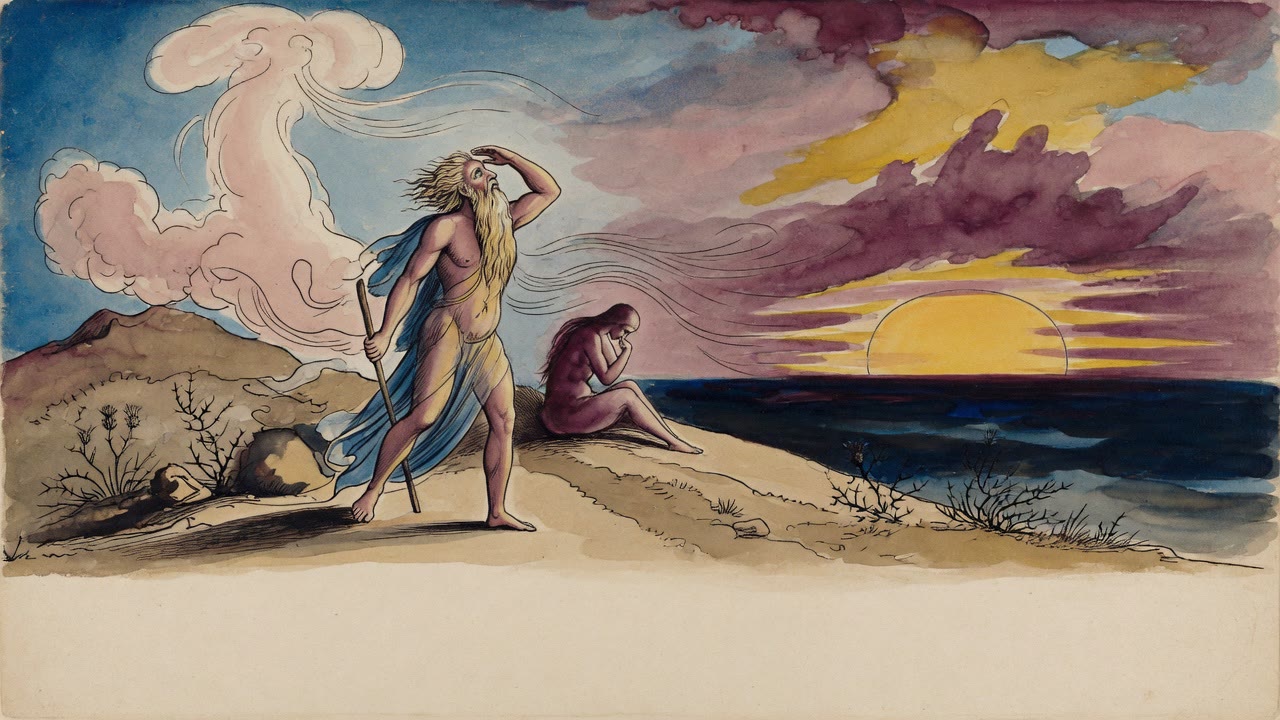
When the sun began to set, Adam panicked. Talmud Bavli in tractate Avodah Zarah preserves this detail with precision. Adam watched the sky darken and turned to Eve and said: because we sinned, the world is being taken back. The light that made this day is going away and it will not return.

He did not yet know what night was. He sat through the first dark. He waited.

When the morning came and the light returned, he understood: this is the natural order. The world does not end at sunset. The world rests at sunset, and then continues. Adam prepared sacrifices and praised God for the morning that had always been coming. The prayer tradition that later developed the morning service traces itself back to this first act of praise for a sunrise that had been feared and then received with relief.

Pillars of Fire and Cloud

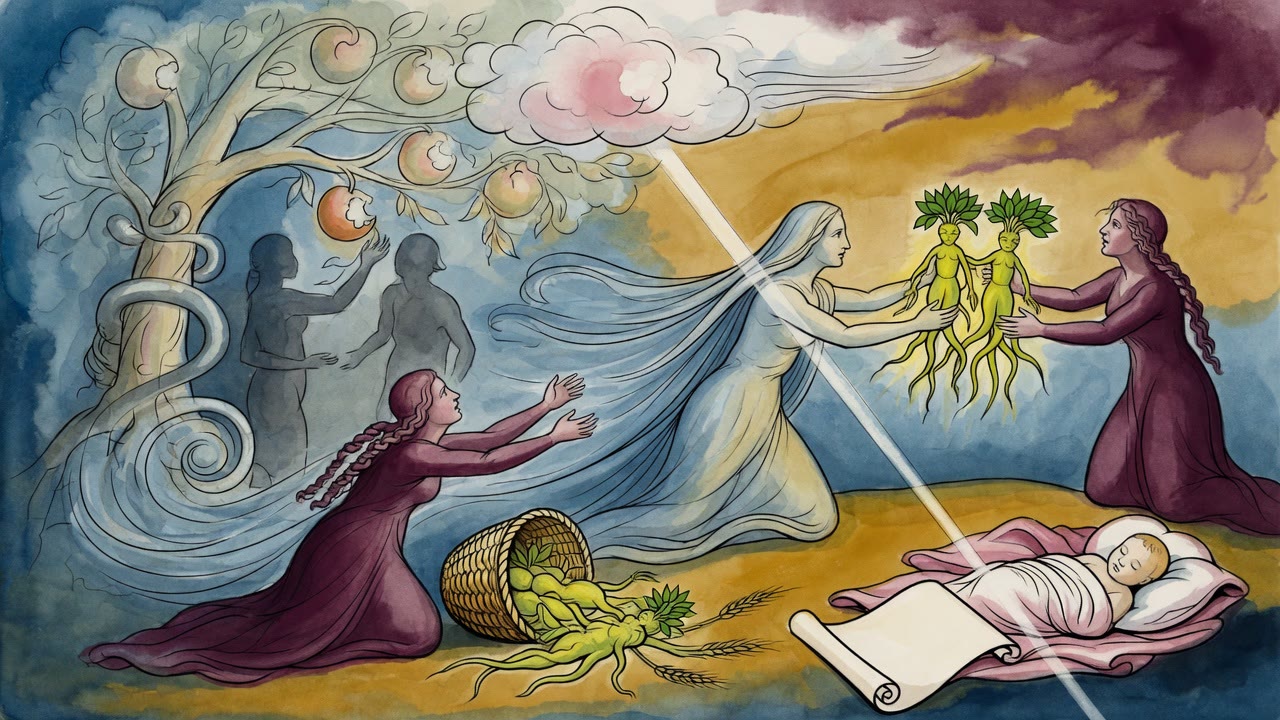
On that first night, Adam was afraid not only of the darkness but of the serpent. He had met the serpent in the garden and knew what it was. He sat in the dark, Eve beside him, and was afraid it would come back while he could not see.

Pirkei DeRabbi Eliezer records what happened. A pillar of fire came and a pillar of cloud came and stood on either side of them through the night. The same formations that would later accompany Israel through the wilderness for forty years made their first appearance in Eden, standing guard over the first human beings on the first night of human history. Adam and Eve slept in a ring of fire and cloud, protected by formations that had not yet been given names or functions in the story of Israel, because that story had not yet begun.

What the First Shabbat Preserved

The Zohar and related texts see in the first Shabbat a template that every subsequent Shabbat partially recovers. The day Adam sat in the garden with Eve, with the angels singing and the divine presence as a canopy over them, was the day the world was newest. Nothing had been broken yet. The relationship between the human and the divine was not yet mediated through commandment and consequence and covenant and exile and return. It was immediate, the way the first garden was immediate, the way the first fire and cloud was immediate.

Every Shabbat, the tradition says, restores a fragment of what that first day was. The table becomes the altar. The candles become the fire and cloud. The two challahs become the double portion of manna that would fall every sixth day, pointing back to the wilderness and the wedding night in Eden alike. The blessing over wine, the kiddush, sanctifies not just this day but the memory of the first sanctification, when God finished making everything and sat down with two people in a garden and blessed the seventh day and called it holy.


← All myths
From the tradition

Sources

7 sources

The texts this telling draws on, in full. Open a card to read inline, or expand it for a wider, quieter read.

Legends of the Jews 2:80Legends of the Jews

Forget the Friday night dinners we know and love. Imagine the cosmic version, the original blueprint laid out in the heavens!

The Legends of the Jews gives us a glimpse, a peek behind the curtain at this incredible moment. Ginzberg, drawing from ancient sources, paints a picture of God and the angels celebrating together. It wasn't just a day of rest; it was a celestial party!

It was more than just a celebration. According to this tradition, it was also a declaration. A divine announcement to the angels themselves. God revealed that one day, a special people, Israel, would also keep the Sabbath.

"I will set aside for Myself a people from among all the peoples," God proclaims, "This people will observe the Sabbath, and I will sanctify it to be My people, and I will be God unto it." Pretty powerful stuff. And it gets even more personal. "From all that I have seen, I have chosen the seed of Israel wholly, and I have inscribed him as My first-born son, and I sanctified him unto Myself unto all eternity, him and the Sabbath, that he keep the Sabbath and hallow it from all work." It’s a moment of choosing, of consecration. A bond is forged between God, the people of Israel, and the holy day of rest. The Sabbath isn't just a day off; it's part of a covenant, a sacred agreement stretching back to the very beginning. It's a connection to something ancient, something profound. Every time we light those candles, every time we say those prayers, we're participating in a tradition that echoes the very first Shabbat (the Sabbath) celebrated in the heavens. It’s a pretty awesome thought, isn’t it?

Full source
Legends of the Jews 2:48Legends of the Jews

Forget the Pinterest boards and the seating charts – imagine a celebration orchestrated by God Himself!

It’s a thought, isn't it?

The Legends of the Jews, that amazing collection of rabbinic stories compiled by Louis Ginzberg, paints a picture of Adam and Eve’s wedding that puts every modern extravaganza to shame. It wasn't just a ceremony; it was a cosmic event.

Before introducing Eve to Adam, God personally adorned her, preparing her as a bride. Picture that for a moment. The Divine hand carefully arranging her garments, ensuring she looked radiant for her husband.

But it gets even better. God then turned to the angels and said, "Come, let us perform services of friendship for Adam and his helpmate, for the world rests upon friendly services, and they are more pleasing in My sight than the sacrifices Israel will offer upon the altar." for a second. Gemilut chasadim (גמילות חסדים), acts of loving kindness, are presented as the very foundation of the world, even more significant than ritual sacrifices. According to this legend, that’s what God values most.

So, the angels, being the dutiful celestial beings they are, formed the wedding party. They surrounded the huppah (חופה), the marriage canopy, as God Himself recited the blessings – acting as the hazzan (חזן), the cantor, at this ultimate wedding ceremony.

Can you imagine the scene?

But the party didn't stop there. The angels, overcome with joy, danced and played musical instruments before Adam and Eve. And where did this all take place? In not one, but ten bridal chambers, each constructed of gold, pearls, and precious stones. Talk about a honeymoon suite!

The sheer opulence and divine involvement in this first wedding are staggering. It highlights the sacredness of marriage right from the very beginning. It emphasizes the importance of kindness and friendship as the bedrock of a lasting relationship.

This ancient story reminds us that every marriage, in its own way, is a reflection of that original, divinely-ordained union. While we may not have angels dancing at our weddings, the essence of love, commitment, and kindness remains the same. And maybe, just maybe, that's a little piece of heaven right here on Earth.

Full source
Book of Jubilees 3:9Book of Jubilees

Book of Jubilees turns to How Eve Was Brought Into the Garden of Eden.

A lesser-known text stands behind this version: The Book of Jubilees. It's considered apocryphal by some, but it offers a unique and often captivating perspective on biblical narratives. It is considered canonical in the Ethiopian Orthodox Church.

It starts pretty much where you expect. God, seeing Adam alone, decides it’s not good for him to be that way. What happens next is where Jubilees adds its own flavor. "And the Lord our God caused a deep sleep to fall upon him, and he slept..."

The familiar version gives us the feeling of a really deep sleep. That feeling of being completely out. Imagine how profoundly Adam must have slept! While he was out, God takes a rib from Adam's side. But here's where it gets interesting: "...and this rib was the origin of the woman from amongst his ribs, and He built up the flesh in its stead, and built the woman."

The text emphasizes that this rib wasn't just any rib. It was the very origin of woman. It also highlights the building, the crafting, almost like God is an artisan meticulously shaping clay. It’s not just a removal and replacement, but a purposeful act of creation.

Then comes the awakening. "And He awaked Adam out of his sleep and on awaking he rose on the sixth day, and He brought her to him, and he knew her..."

Imagine waking up from that deep, dreamless sleep and seeing Eve for the very first time. A being of your being, yet wholly new. The text then gives us Adam’s immediate reaction, echoing the familiar words we find elsewhere in Jewish tradition: "This is now bone of my bones and flesh of my flesh; she will be called [my] wife; because she was taken from her husband."

It's a powerful moment of recognition, of connection. And it establishes a fundamental relationship, the very first marriage.

So, what does this alternative account offer us? It emphasizes the deliberate, thoughtful nature of Eve’s creation. It’s not just a quick fix to Adam’s loneliness, but a carefully planned and executed act of divine artistry. It also emphasizes the deep connection between man and woman, a connection rooted in their very origins.

And perhaps that's the enduring message of this passage from Jubilees. A reminder that relationships, especially the bond between partners, are something sacred, something built with intention and care, something that reflects the divine artistry within us all.

Full source
Pirkei DeRabbi Eliezer 20:4Pirkei DeRabbi Eliezer

Adam, the first human, is sitting there, maybe a little anxious. He's thinking about that serpent, the one who tricked him. "Maybe," he worries, "that snake will come back tonight and get me." (Pirkei DeRabbi Eliezer 20)

Then, something amazing happens. A pillar of fire appears, lighting up the darkness around him, protecting him from… well, from everything, really. It's a beacon of hope in the fading light.

Adam, understandably, is relieved and overjoyed. He reaches out to the light, feeling its warmth, and says a blessing: "Blessed art Thou, O Lord our God, King of the universe, who creates the flames of fire." It’s a moment of pure gratitude, a recognition of the divine in the everyday miracle of fire.

Then, a realization dawns on him. He takes his hands away from the fire, and it hits him: "Now I know that the holy day has been separated from the work day here below (on earth), for fire may not be kindled on the Sabbath day." (Pirkei DeRabbi Eliezer 20) for a second. He figures it out. There was no iPhone reminder, no calendar notification. Just observation, reflection, and a connection to something bigger than himself.

In that moment, Adam utters another blessing, the one we still say every Havdalah, the ceremony that marks the end of Shabbat (the Sabbath): "Blessed art Thou, O Lord our God, King of the universe, who divides the holy from the profane, the light from the darkness."

It's such a simple story, isn't it? But it speaks to something profound. It tells us that even in the earliest moments of human experience, there was a yearning for order, for meaning, for a way to mark the passage of time and the transition between the sacred and the everyday.

And it reminds us that sometimes, the most profound insights come not from grand pronouncements, but from quiet moments of reflection, illuminated by a spark of divine light. So, the next time you make Havdalah, remember Adam, sitting in the twilight, and the fire that helped him understand the rhythm of the week. It’s a beautiful reminder that even the simplest rituals can connect us to the deepest truths.

Full source
Avodah Zarah 8aTalmud Bavli, Avodah

Our Rabbis taught: On the day that Adam, the first man, was created, once the sun set upon him, he said: Woe is me, that because I sinned the world is darkening around me, and the world will return to chaos and void, and this is the death that has been decreed upon me from Heaven.

He sat fasting and weeping all the night, and Eve was weeping opposite him. Once the dawn rose, he said: This is the way of the world. He arose and offered an ox whose horns preceded its hooves, as it is said, "And it shall please the LORD better than an ox or a bullock that has horns and hooves" (Psalm 69:32).

Full source
Targum Pseudo-Jonathan on Genesis 2:23Targum Pseudo-Jonathan on Genesis

Adam wakes up and speaks. The Targum Pseudo-Jonathan, an expansive Aramaic rendering of the Torah that weaves midrashic comment into its translation, gives him a line with an unusual opening on the verse "This time, and not again, is woman created from man" (Genesis 2:23). The Targumist is closing a door. Every woman after this one will be born in the ordinary way, from another woman. This is the single instance in all of history where a woman comes directly from a man's body, and so Eve's origin is unrepeatable, a one time event that will never recur.

Then comes the line the Torah itself gives us. Because she was taken from him, Adam declares her "bone of my bone, and flesh of my flesh," and says, "This it is fit to call Woman, because from man she was taken" (Genesis 2:23). In the Hebrew the pun is audible, the word ishah, woman, drawn from ish, man, so that the very name carries the story of her making. Adam is continuing the task he was given earlier, when he named every living creature that passed before him. But this naming is different in kind. For the first time he names someone who is not a beast beneath him but a being like himself, one who can answer, who can name him in return, a partner rather than a creature to be labeled.

Full source
Yalkut Shimoni on Torah 24:1Yalkut Shimoni on Torah

"And He built." He adorned her like a bride and brought her to him. Do you suppose He brought her to him from beneath a single carob or a single sycamore tree? Rather, after He adorned her with twenty-four kinds of ornaments, He then brought her to him. This is what is written, "In Eden, the garden of God, you were, every precious stone" and so on. And He made for them walls of gold and chairs of precious stones and pearls.

"And He built." He considered from where to create her. He did not create her from the head, lest she be frivolous; nor from the eye, lest she be a starer; nor from the ear, lest she be an eavesdropper; nor from the mouth, lest she be a chatterer; nor from the heart, lest she be jealous; nor from the hand, lest she be light-fingered; nor from the foot, lest she be a gadabout; but from a modest place on the man, for even when he is naked that place is covered. And over each and every limb that He created He said to her, "Be a modest woman."

Yet even so, "you spurned all my counsel" (Proverbs 1:25). I did not create her from the head, yet she carries her head high, "and they walk with outstretched necks"; nor from the eye, yet she is a starer, as it is said, "with wanton eyes"; nor from the ear, yet she is an eavesdropper, as it is said, "and Sarah was listening" (Genesis 18:10); nor from the heart, yet she is jealous, as it is said, "and Rachel envied her sister"; nor from the hand, yet she is light-fingered, as it is said, "and Rachel stole" (Genesis 31:19); nor from the foot, yet she is a gadabout, as it is said, "and Dinah daughter of Leah went out" (Genesis 34:1); nor from the mouth, yet she is a chatterer, as it is said, "and Miriam spoke" (Numbers 12:1).

"And He brought her to the man." Happy is the citizen whose groomsman is the King. "And the man said, this time" (Genesis 2:23). At first He created her for him, and he saw her full of fluids and blood, and removed her; then He created her for him a second time. This is why he said, "This time."

Full source