6 min read

Clay Body Rose to Earn Its Share of Holiness

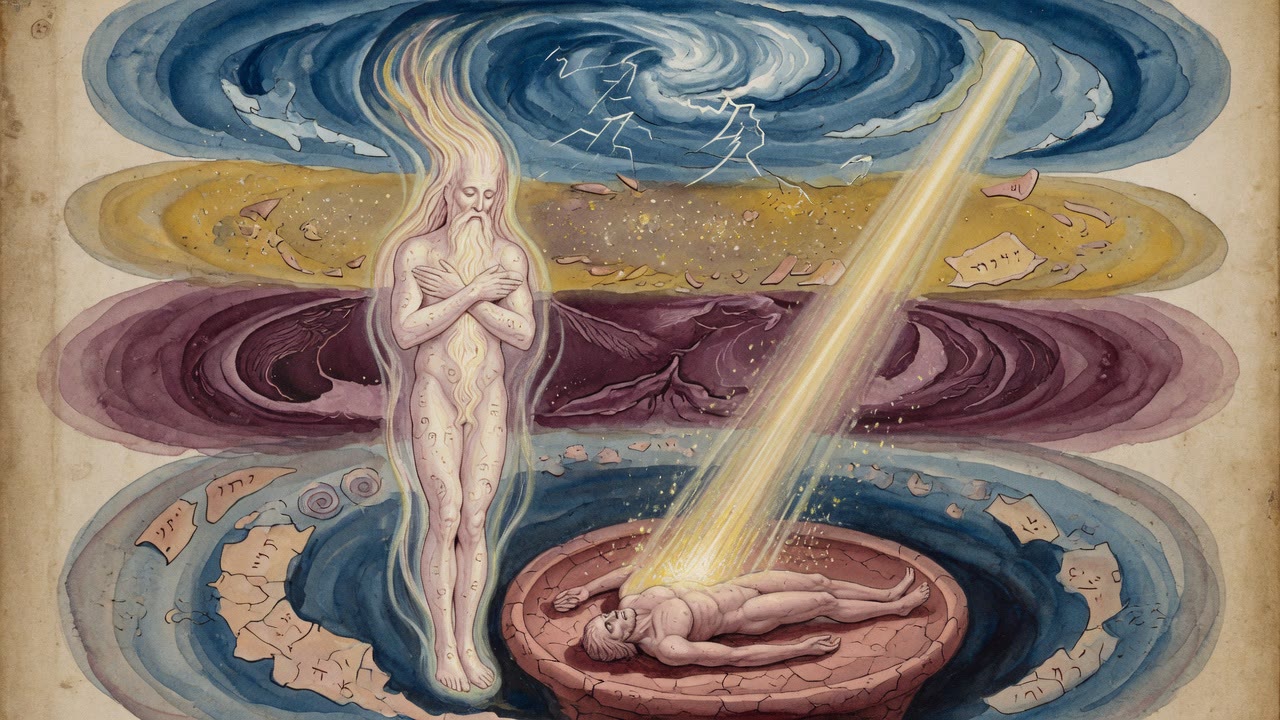
Dense clay stood upright under the throne. A pure soul was carved and blown into it, not for comfort, but so merit could be earned one deed at a time.

Curated by Arthur · Told by Maggid ·
Table of Contents
  1. Clay Stands Up in the Dark
  2. Purpose Points at One Creature
  3. Darkness That Can Seize a Man
  4. Merit Is Not a Mood
  5. What the Clay Remembers
Clay Body Rose to Earn Its Share of Holiness Click for full size

Clay Stands Up in the Dark

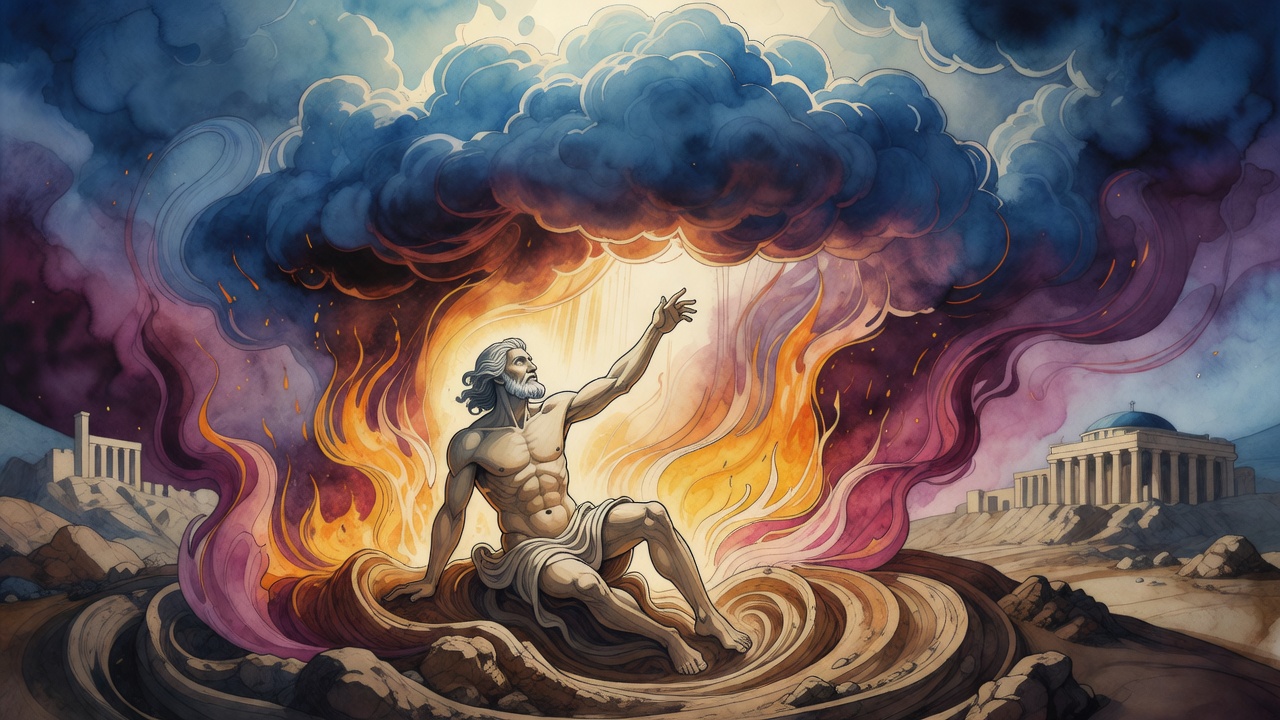
The clay did not ask to stand. It was pressed, shaped, and lifted until a mouth could open. Dense clay. Dark clay. Fit for labor, not for a throne room. When the breath came, it came from under the throne of glory, pure as a cut gem, and it did not settle into the clay like a guest into a soft bed. It entered like a craftsman who finds the workshop unfinished and already hears the client at the gate.
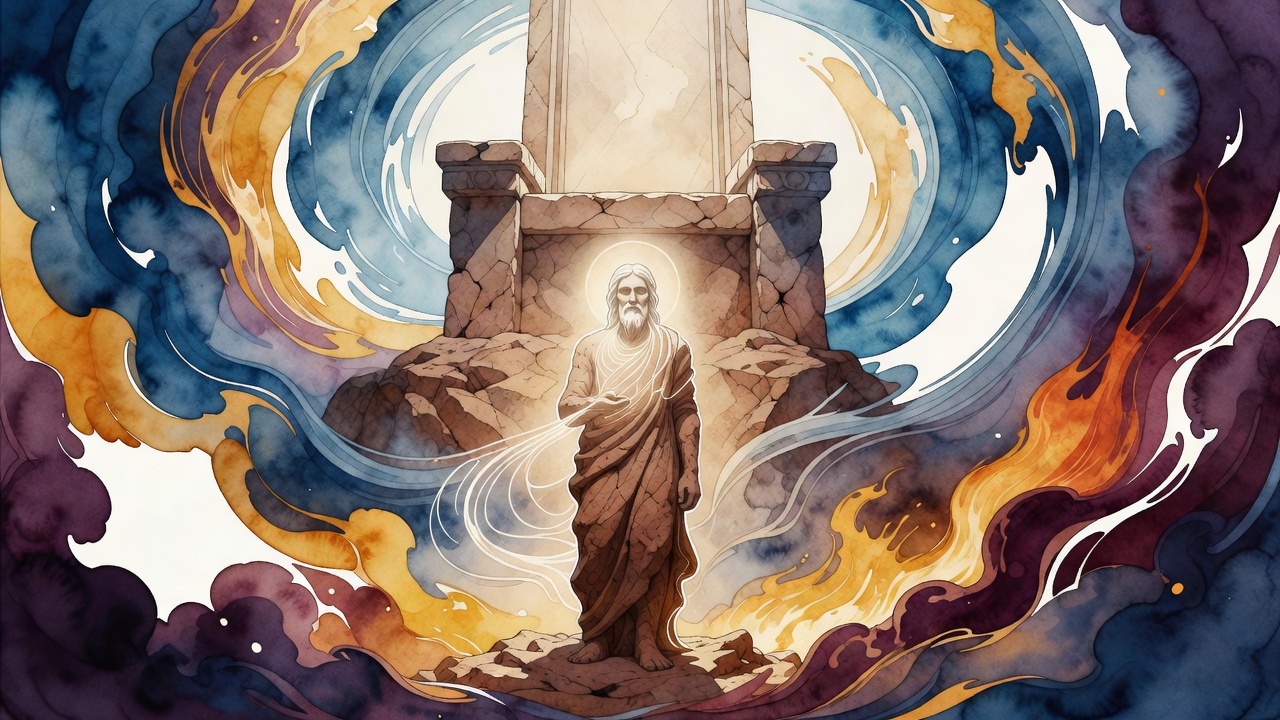
Adam took his first full breath and felt the weight of himself. Arms, belly, hunger already waiting. Dirt still lined the creases of his palms. The soul inside him was clean. The vessel was not. He was not yet ready to stand in light without shielding his eyes. He was ready to work until the vessel could bear more light without cracking.

Heaven's intent was not decoration. Pure goodness wanted a creature who could earn merit, who could fix what was deficient and complete its own making. The clay was the assignment. The soul was the tool. No other creature received both in this ratio of mud and fire.

Purpose Points at One Creature

Before the dust settled, the Intellect spoke as if the whole of creation had been listening for a verdict. Man is the intended purpose of all of His actions, may His name be blessed. Not because clay outranks stars. Because only a being who can understand, choose, and turn can gather the meaning of what came before and answer it with a deed that changes the next hour.

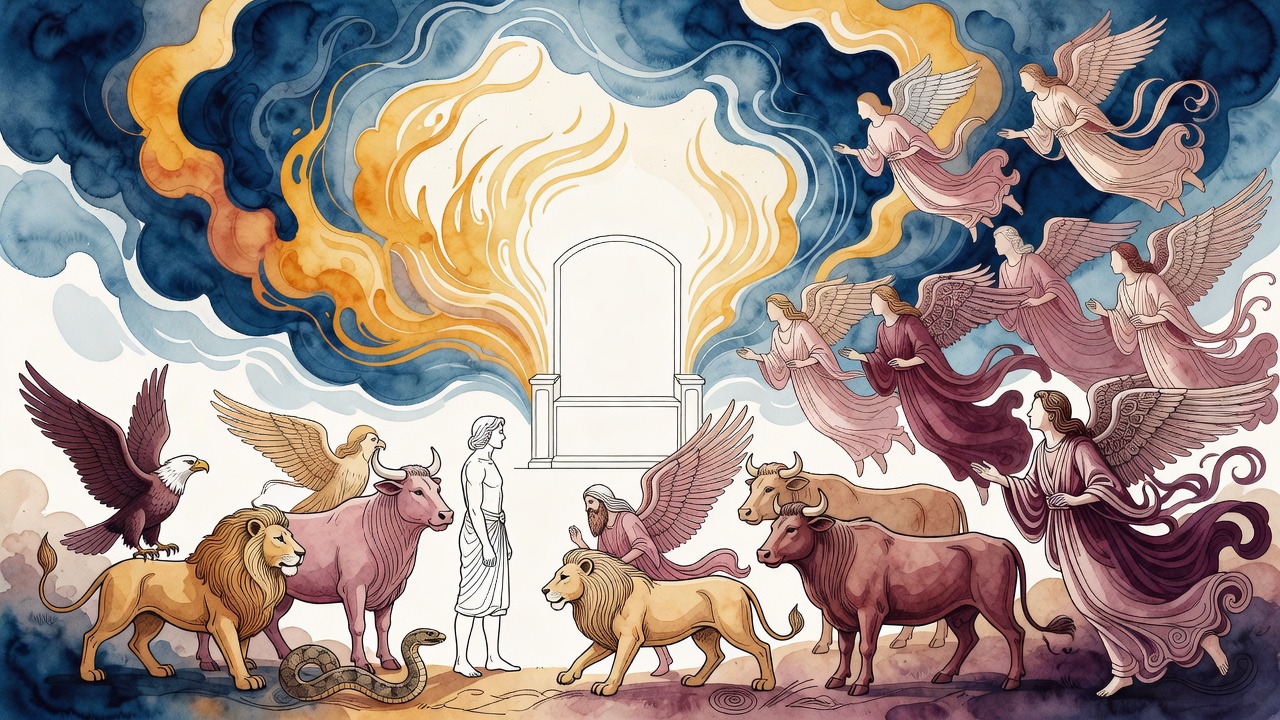
Stars burn without deciding. Rivers run without repenting. Angels serve without the mud of appetite pulling their sleeves. Human beings alone can read the story and refuse a line, or accept it. Purpose is not flattery. Purpose is pressure. If the aim of the whole is a mind that can grasp it, then every wasted hour is a missed page, and every repair is a paragraph restored.

Adam looked at his own hands and saw the plot laid out in three blunt terms. Existence. Action. Fruit of action. Three legs of one stool. Kick one away and the whole seat collapses under the sitter. He was not put here to admire the furniture of the cosmos. He was put here to stand on it, move it, and leave it less broken than he found it.

Darkness That Can Seize a Man

The body's darkness was not poetry. It was a set of pulls that could run a life if left alone. Food first. Sleep first. Anger first. Status first. The clay wanted what clay wants, and it wanted it now. Left to itself, it would never raise its eyes to holiness. It would show up to a royal audience in its working clothes and call that honesty, while the smell of the field still clung to the hem.

So the soul was not breathed in for pleasure. It was breathed in to purify. Its work was to lift the clay until the man could stand nearer the angels without lying about what he still was. Elevation was not a slogan hung on a wall. It was a long scrape of grit against light, day after day, until some of the grit learned to shine.

Moses later refined his clay so far that the tradition speaks of him as nearly angelic, a mouth God used and a body that learned to step back when speech from above needed room. That is the extreme of the same task Adam received at the first breath. Most people never reach that thinness of self. The task remains on every desk, in every kitchen, in every quarrel that could go either way before nightfall.

Merit Is Not a Mood

Merit arrives through acts that rectify deficiency. A word withheld when the tongue itched. A truth spoken when silence would be cheaper. A hunger delayed for a prayer. A hand that opens when the fist feels safer. Each act chips at the dense places. Each refusal of the dark desire loosens the clay's grip by a hair's width that only heaven measures fully.

The soul does not earn its own purity. It was carved pure beneath the throne. The body earns its share of holiness the way a field earns a harvest, by season and sweat and weather the farmer does not control. Without the chance to fail and repair, goodness would be a gift that never becomes character. Heaven wanted character that could stand inspection.

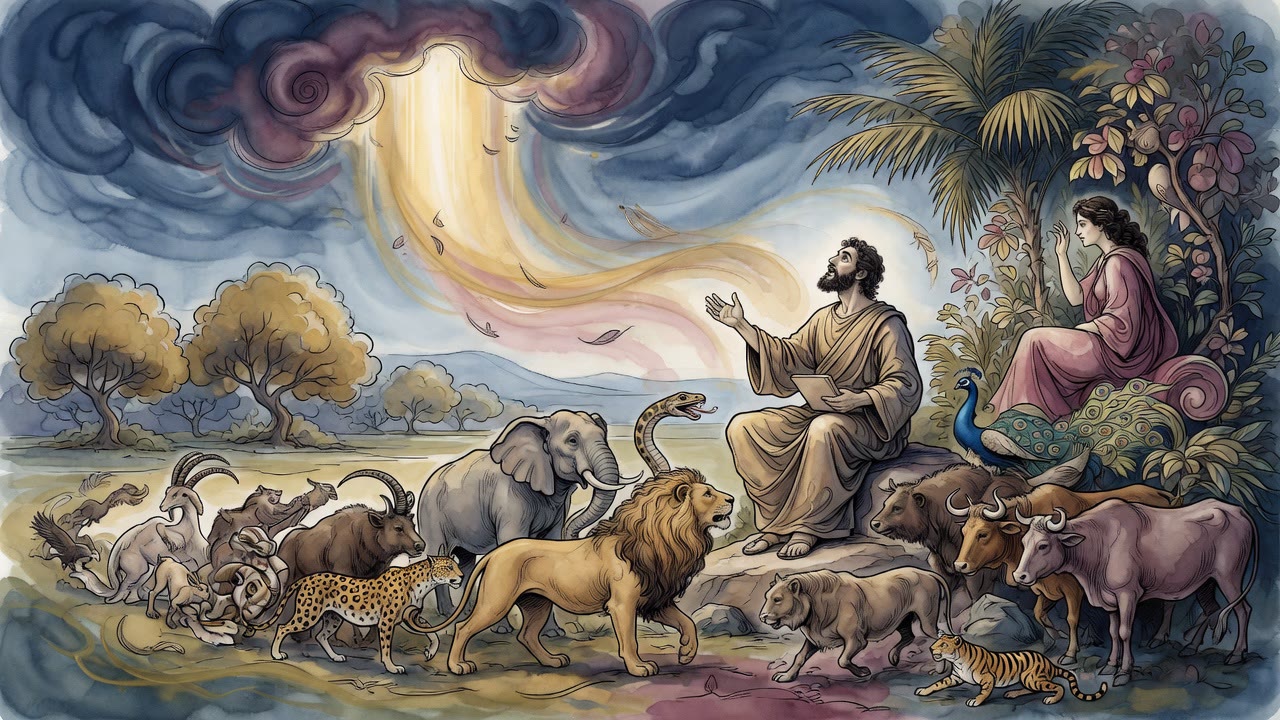
Adam's first days already held the split. He could name animals with a clear tongue and still reach for the wrong fruit with a shaking hand. Purpose does not cancel appetite. Purpose puts appetite on trial every morning, and the verdict is written in what the hands actually do before the sun is high.

What the Clay Remembers

At night the body pulls downward into sleep and old fear. At dawn the soul tries again, sometimes with less strength than yesterday, sometimes with more. The man who knows he is the aim of creation does not swagger through the market. He feels the weight of the assignment in his shoulders. The world was arranged so that a creature of dense clay could, by choice, become fit for light that once would have burned him on contact.

That is the strange mercy of the dark vessel. If he had been made already perfect, there would be nothing to earn and no story worth telling. If he had been made only clay, there would be no earner and no one to care about the story. The joining is the story. The merit is the plot. The clay stands up again, knees complaining, because standing is the whole point, and falling is only the tuition.

Somewhere above the first garden, the Intellect is still counting. Existence. Action. Fruit. The clay that rose keeps answering with another step, another repair, another day of unfinished holiness that is nonetheless real.


← All myths
From the tradition

Sources

3 sources

The texts behind this telling. Some cards carry a translation of the source; others are our own retelling of it, and each card says which. Every card links out to the original.

Da'at Tevunot 70:1Da'at Tevunot

Retold in our words. Read the original at the link below.Sefaria Community Translation · CC-BY

Da'at (Knowledge) Tevunot, a profound work of Jewish thought, offers a compelling answer. It tells us that the ultimate heavenly intent is pure goodness, a desire to give us, humanity, the opportunity to earn merit. We do this, the text explains, through our actions, by rectifying what's deficient within ourselves and completing our own creation. we're born into this world with a body described as "dense clay and dark," not exactly fit to bask in the light of holiness. It's a bit like showing up to a royal audience in your pajamas. You need to prepare, to refine yourself. This "darkness," as Da'at Tevunot calls it, is the very set of negative desires that can control us, making us vulnerable to all sorts of negative experiences.

Here's the beautiful part. Along with this earthly vessel, we're also given a pure soul, "carved from beneath the throne of glory." It’s breathed into this very body, not just to give us life, but to purify us. The soul's mission, its raison d'être, isn't simply to enjoy the fleeting pleasures of this world. It's to elevate us, to transform us from that lowly, clay-like state into something akin to the heavenly angels.

This isn't just abstract philosophy. We see examples of this very process throughout our tradition. Think of Moshe (Moses), our teacher. He so refined his "clay," his earthly nature, that he practically became an angel. Remember when all of Israel saw the radiance emanating from his face? (Exodus 34:29-35). And what about Enoch and Elijah, who, after immense refinement, ascended to heaven with their bodies intact!

So, how do we achieve this refinement? How do we transform our own "dense clay"? The answer, according to Da'at Tevunot, lies in performing the mitzvot (commandments) and fulfilling the teachings of the Torah. "For a commandment is a lamp and the Torah is light," as Proverbs (6:23) tells us. The more we engage with Torah and mitzvot, the more we refine our bodies and earn merit for ourselves, fulfilling the will of our Creator.

The journey of life, with all its struggles and temptations, is an opportunity. It's a chance to take that initial spark of the divine within us and use it to illuminate and elevate our entire being. It's a lifelong process of becoming, of refining, of striving to be just a little bit closer to the light. What a powerful and inspiring thought!

Full source
Da'at Tevunot 60:1Da'at Tevunot

Retold in our words. Read the original at the link below.Sefaria Community Translation · CC-BY

What is the intended purpose of creation, anyway?

In this section of Da'at Tevunot, the voice of "the Intellect" – a concept representing divine wisdom – speaks directly to this question. And what it says is The Intellect declares, "Behold you are correct in your words, man is the intended purpose of all of His actions may His name be blessed."

Humanity, we are the reason for it all? It sounds almost…arrogant. But The source unfolds it.

The text doesn’t mean that we’re somehow superior or more important than the rest of creation. Instead, it suggests that humanity, with our capacity for understanding, for making conscious choices, and for connecting with the Divine, plays a crucial role in the grand scheme of things. WE are the lens through which creation can truly be appreciated and understood.

The Intellect continues, "Therefore, only he who understands this and that in clarity, understands the content of all that preceded it, for the purpose of all is only to come to this aim."

You might enjoy the individual chapters, the beautiful descriptions, the exciting plot twists. But it's only when you reach the final page, when you understand the overarching theme and the author's intention, that the entire story truly comes into focus. According to Da'at Tevunot, humanity has the potential to be that reader, to grasp the "final page" of creation’s story.

This understanding, however, isn’t just about intellectual knowledge. It's about clarity, about seeing things as they truly are, without distortion or illusion. It's about recognizing the divine spark within ourselves and within all of creation.

Perhaps it’s an invitation to approach the world with a greater sense of responsibility and purpose. To recognize that our actions, our choices, and our understanding have far-reaching consequences. To strive for that clarity, that deeper understanding of our role in the universe.

Maybe the point isn’t just to exist but to understand. To be conscious participants in the unfolding story of creation. To appreciate the gift of existence and to use our unique abilities to bring more light, more understanding, and more goodness into the world.

What if, by striving to understand the world around us, we are also fulfilling the very purpose of creation itself?

Full source
Da'at Tevunot 62:1Da'at Tevunot

Retold in our words. Read the original at the link below.Sefaria Community Translation · CC-BY

1: Said the Intellect - Regarding three things we need to speak, regarding the existence of man, his actions and the fruit of his actions:

Full source