5 min read

Adam Names Living Things That Will Not Hold Still

Adam could name a stone in a breath. Living beasts moved, hungered, and changed, so each name had to catch a soul in motion before it stuck.

Curated by Arthur · Told by Maggid ·
Table of Contents
  1. Stones Took Names Without a Fight
  2. Beasts Moved Faster Than a Single Word
  3. The Name Locked When the Soul Agreed
  4. Seven Clean Parts Held Steady Under Reason
  5. The Garden Wore Its Vocabulary

A rock sat at Adam's feet and asked nothing of him. He touched its cool face, spoke a short word, and the rock stayed rock. No hunger. No bolt of fear. No sudden leap that would make the name lie by evening.

Adam Names Living Things That Will Not Hold Still Click for full size

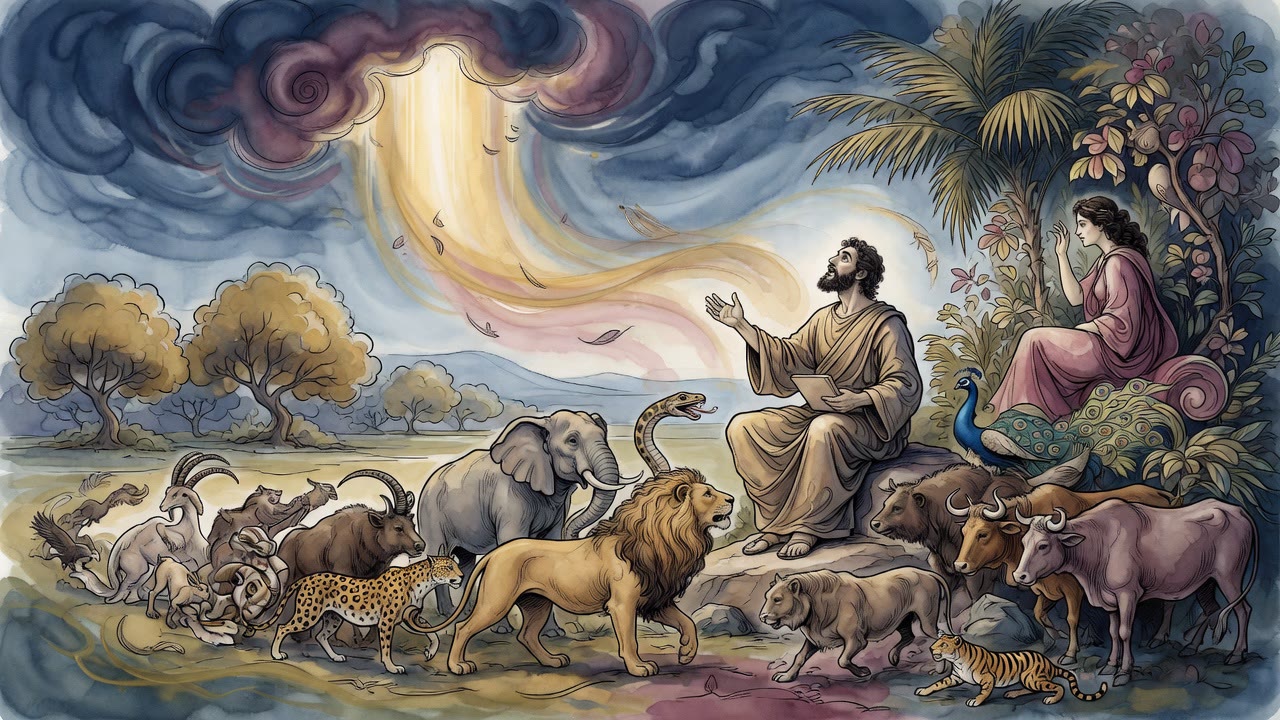
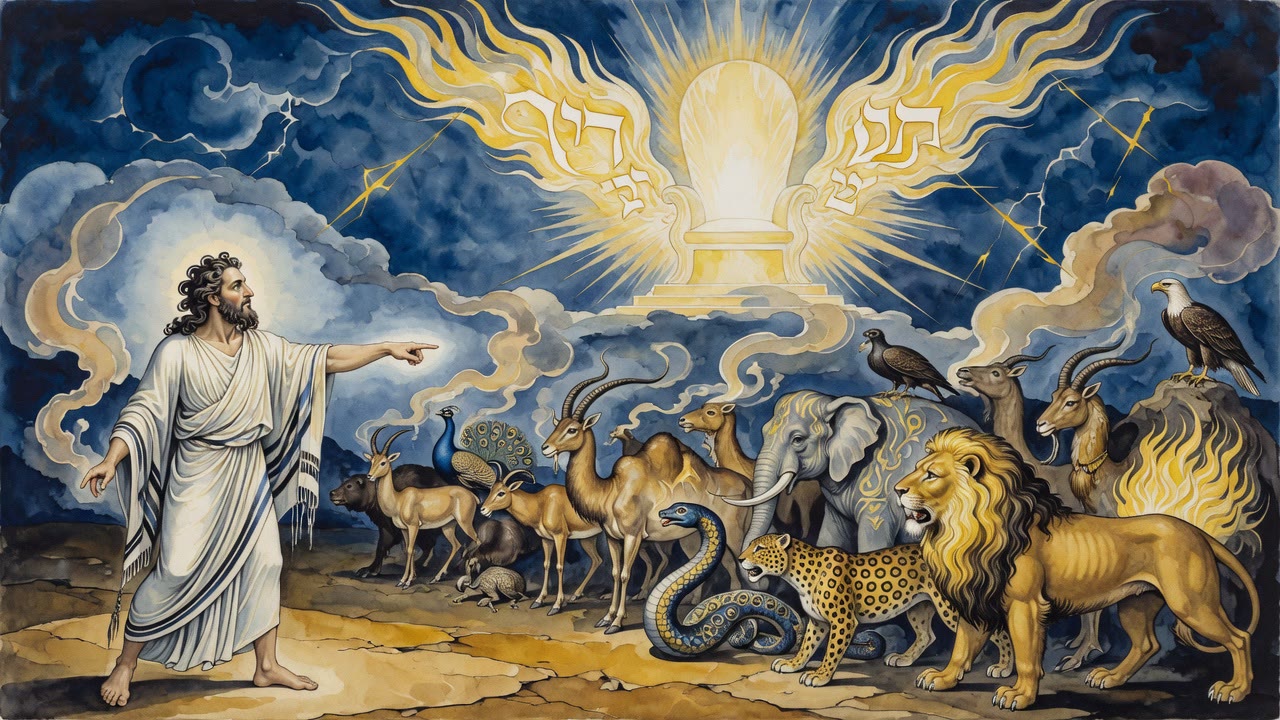
Then a living thing ran past his shin, stopped, stared, and ran again. The easy work was over. Whatever he called each living thing, that would be its name (Genesis 2:19). The verse sounds simple until the creature refuses to hold still long enough for the mind to finish its sentence.

Stones Took Names Without a Fight

Adam named plants and still things first, or so the harder labor forces him to remember. A tree does not bolt. A river keeps one temper. Inanimate shapes have no passions of the soul to exercise, no imagination flipping them from calm to rage between one breath and the next. Fixing a name on them is almost courtesy.

He walked the quiet half of creation and left words behind him like markers on a path. The work felt clean. His voice did not crack. When he looked back, the still world wore its labels without complaint.

The living half waited, and it would not be so polite.

Beasts Moved Faster Than a Single Word

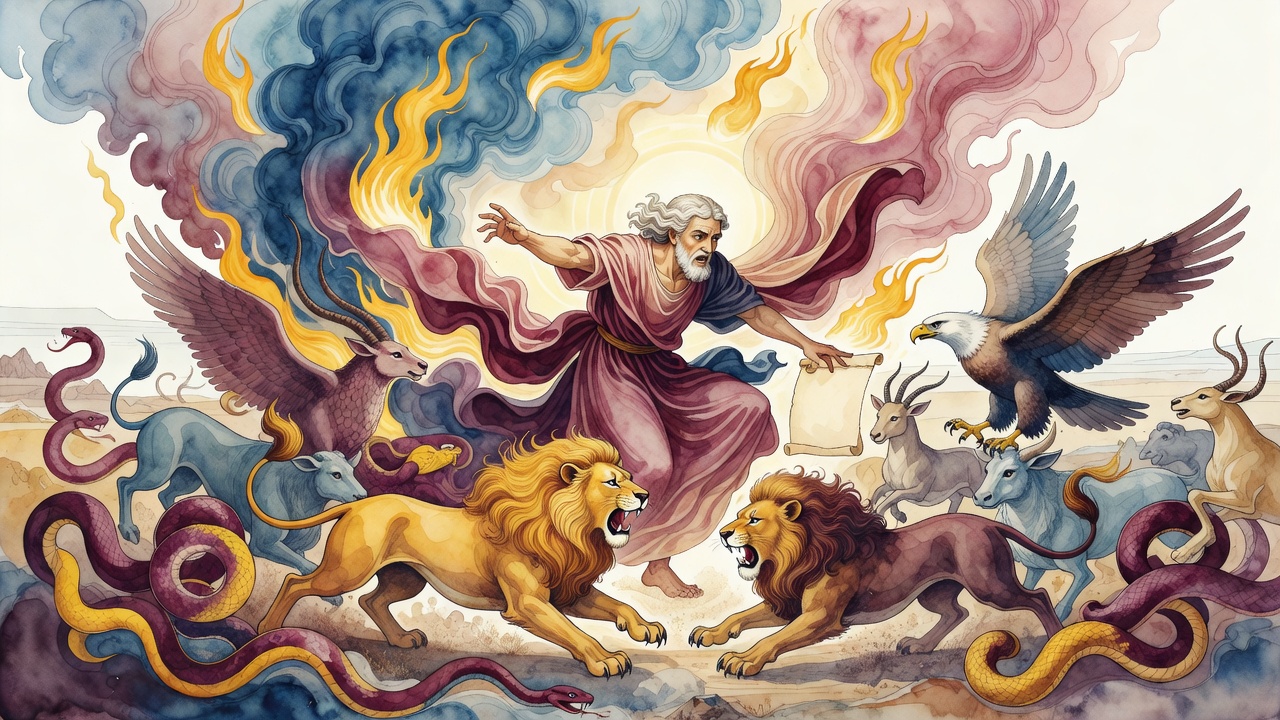
A bird cut the air in three directions before Adam could finish a sound. A beast with heavy shoulders lowered its head, then lifted it with a different light in the eye. Living creatures carry motions of the body and various impulses of the soul. Outward senses drag them. Imagination shoves them. The mind inside the fur agitates, and from that agitation their works pour out.

Adam chased a name the way a man chases a spark on dry grass. He watched longer. He let the creature show its hunger, its fear, its habit of turning left when startled. Only then did he speak. A wrong name would have been a permanent wound on the world. A right name had to fit the pulse under the hide, not only the shape of the hide.

Sweat ran into his eyes. He wiped it with the back of his wrist and kept looking. This was the more excellent class, superior to what has no life, and therefore the more difficult class. Scripture mentions the harder work and trusts the hearer to understand that he named everything else as well.

The Name Locked When the Soul Agreed

When the fit was true, something in the creature seemed to settle. Not obedience like a servant's bow. More like a seal pressed into warm wax. Whatever he called it, that was the name thereof. The phrase is final. No committee. No second draft after the beast has worn the word for a year.

Adam felt the finality in his teeth. He slowed. He refused the first easy label that rose from vanity or fear. He waited for the impulse to declare itself: the one that would return tomorrow, and the day after, when the garden was no longer new.

His own mind had to stay near the creatures, close enough to read them. Distance would have produced pretty lies. Nearness produced names that could bear weight.

Seven Clean Parts Held Steady Under Reason

While he worked, the irrational furniture of his own soul had to stay clean. Sight, hearing, smell, taste, touch, the voice that spoke the names, the life-seed that would one day people the earth: seven parts without intellect of their own, ready to muddy a judgment if left unruled. In a man set on virtue they can be held clean, ordered, not mixed into the twofold stain that breeds doubt and a leprous soul.

The number seven stands, in this telling, as the clean measure: complete, unmixed, a virgin count that does not lean on a parent and does not spawn a crooked double. Two is the empty twin, the start of sprawl and inequality. Adam's labor needed the clean count. If his senses split against his reason, a living name would come out crooked, and the beast would wear the crook forever.

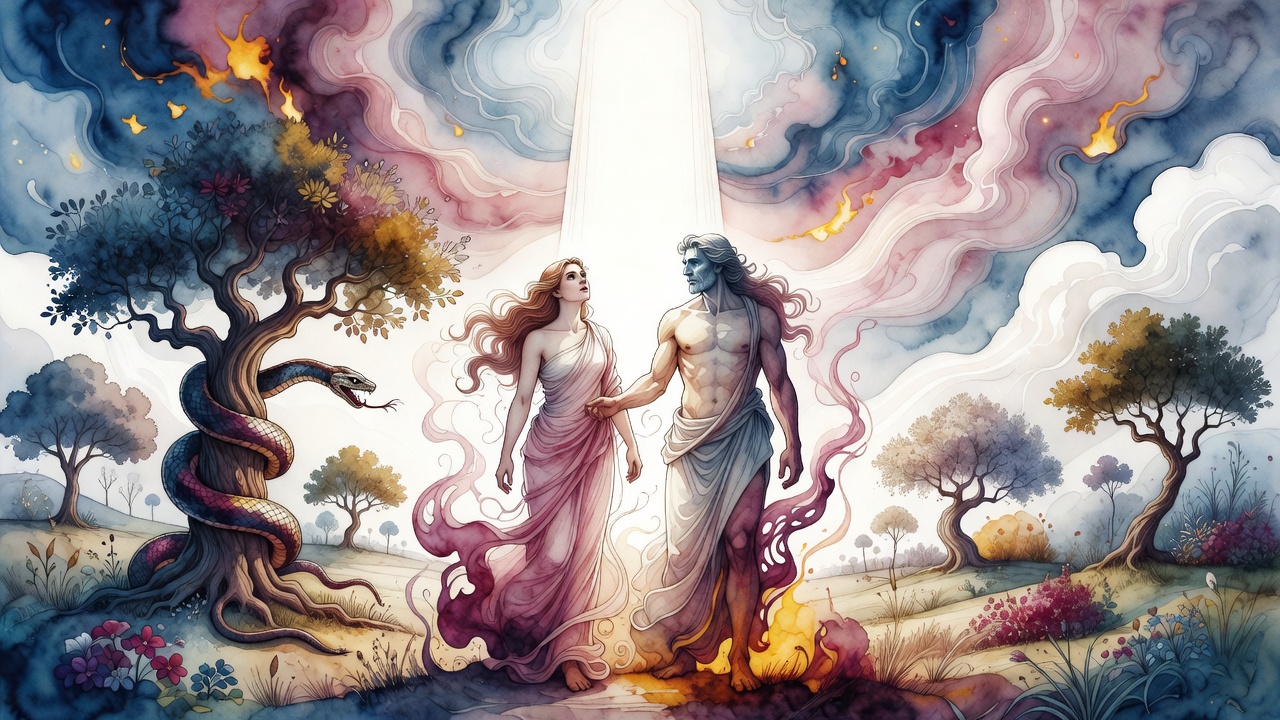
So he named with his body quiet and his intellect in charge. Good, in that moral map, leans toward the clean seven. Evil brothers itself to the split of two. The Tree of Knowledge of Good and Evil already waited somewhere in the same world, but on this day the task was simpler and harder at once: catch a living soul in a single word without letting his own soul divide.

The Garden Wore Its Vocabulary

By the time the living line thinned, Adam's voice was rough and the air was full of lasting words. Stones kept their easy names. Beasts kept the hard ones. He had begun with the more excellent class and finished a world that could be called, summoned, feared, loved, and later saved in an ark by a man who would know which creature was which.

He sat. The rock at his feet said nothing. A bird above him answered to the name he had given it and did not ask for another. That silence was the seal. The difficult work had stuck.


← All myths
From the tradition

Sources

2 sources

The texts behind this telling. Some cards carry a translation of the source; others are our own retelling of it, and each card says which. Every card links out to the original.

The Midrash of Philo 19:18The Midrash of Philo

Retold in our words. Read the original at the link below.The Works of Philo Judaeus, trans. C. D. Yonge, London, H. G. Bohn, 1854-1890 · Public Domain

What does it mean to name something?

The book of Genesis gives us a glimpse into this very idea. In (Genesis 2:19), it says, "And whatever Adam called each living thing, that was the name thereof." Simple enough. But the ancient sages saw a whole universe of meaning packed into that one little verse.

One fascinating take comes from Philo of Alexandria, the 1st-century Jewish philosopher. He dives deep into the implications of Adam naming all the creatures. It wasn't just a matter of slapping labels on things, according to Philo. It was a profound act of understanding and connection.

Philo poses a question: Did Adam only name the living creatures? What about the plants, the rocks, all the inanimate objects? Philo argues that, of course, Adam named everything. The Torah, in its elegant brevity, simply highlights the more challenging task. After all, naming a rock is relatively straightforward. It sits there, quiet and still. But naming a living creature, with its constant movement and complex inner life? That's a whole different story. A creature's name had to capture its essence, its behavior, its very soul. It had to account for the "motions of their bodies and the various impulses of their souls," as Philo puts it. Their passions, their imaginations, the way they experience the world through their senses.

Naming the animals, therefore, was evidence of Adam's incredible intellect and his intimate understanding of creation. Philo emphasizes the difficulty of this task. It wasn't just about pointing and saying, "That's a…dog!" It was about grasping the inner workings of each creature and finding the perfect word to encapsulate it.

This also speaks to humanity's unique role in the cosmos. We’re not just passive observers. We have the capacity, even the responsibility, to understand and name the world around us. And in doing so, we participate in the very act of creation. Adam's ability to name the creatures signifies his profound connection to them. The names were "easy to name because they were near," suggesting that he didn’t just see them, he knew them.

Perhaps it's a reminder to pay attention to the names we give things, both literally and metaphorically. Are we truly seeing and understanding the world around us, or are we just slapping on labels without thinking? Are we honoring the essence of things with our words? The power of a name, it turns out, is far deeper than we might imagine.

Full source
The Midrash of Philo 2:2The Midrash of Philo

Retold in our words. Read the original at the link below.The Works of Philo Judaeus, trans. C. D. Yonge, London, H. G. Bohn, 1854-1890 · Public Domain

Philo, deeply influenced by both Greek philosophy and Jewish tradition, offers a unique perspective.

He sees the number seven as "clean," a virgin number, untouched and complete. Philo argues that seven is "free from all admixture, and without any parent." It doesn't generate anything, nor is it generated. He sees it as akin to the unit, the number one, which is uncreated and the cause of creation itself. Seven, in Philo's view, awakens the virtues needed for creating beings.

Then there's two. Poor number two. Philo considers it "unclean." Why? Because it's "empty, not solid." He says it's the beginning of "infinite immensity" due to its materiality, and it's unequal. Now, Philo doesn't just leave it at that. He connects these numerical ideas to morality and the human soul.

He divides the irrational parts of our soul – the parts without intellect – into seven categories: the five senses, the vocal organ, and the seminal organ. In a virtuous person, these are "clean," feminine aspects, held in check by reason. But in a wicked person? There's a "twofold wickedness," a mixing of things that shouldn't be mixed. This leads to doubt, perplexity, and a soul stained like a body with leprosy. Ouch.

Philo then brings in the idea of nourishing seed, drawing from scripture. On a literal level, it means preserving the races of creatures. But on a deeper, moral level, it speaks to the need for clean motions within the irrational parts of the soul. Even if the "animals" – the passions – themselves aren't clean, they can still contain the seeds of virtue.

Now, this idea of contrarieties within us is key. Philo says human nature is capable of both virtue and wickedness. He connects this to the Tree of Knowledge of Good and Evil. Our intellect, with its knowledge and intelligence, comprehends both good and evil. Good, Philo says, is akin to the number seven. Evil? The brother of duality.

He even touches on the importance of nourishing seed "in all the earth," both literally and morally. It’s God’s nature to fill empty places with life, not to abandon our earthly bodies as if they were devoid of life.

Philo warns that indulging in excessive pleasures – drinking, eating, lust – turns us into bearers of a corpse. But if God has compassion and turns away the overflow of vices, He can "make the body living," animating it with a purer soul guided by wisdom.

So, what does all this mean for us today? Philo's ideas, while steeped in ancient numerology and philosophy, offer a powerful message about the importance of balance, reason, and cultivating virtue within ourselves. It's a reminder that we have the capacity for both good and evil, and it's up to us to choose which path to follow, to strive for that completeness represented by the number seven, and to avoid the pitfalls of duality and excess. Are we actively tending to the "seed" of virtue within ourselves, or are we letting the "corpse" of indulgence take over? It's a question worth pondering.

Full source