6 min read

Adam Chooses Names and Proves His Will Is Free

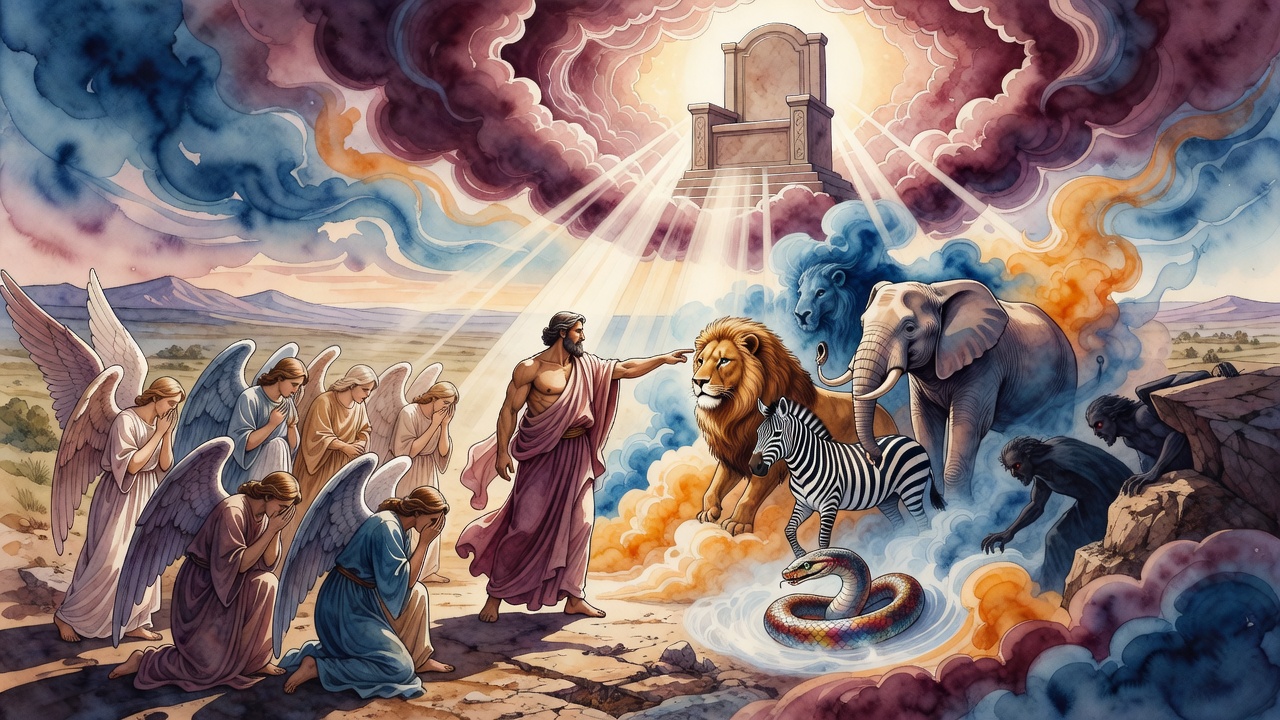
God brought every living creature to Adam, not from doubt, but to watch his mind choose. The names held, and free will stood on the ground.

Curated by Arthur · Told by Maggid ·
Table of Contents
  1. The Animals Stopped and Waited for a Word
  2. God Was Not Guessing the Labels
  3. The Names Proved a Will That Could Choose
  4. Hope Walked On When Cain Fell Out of the Line
  5. The Dust Remembered Who Spoke First

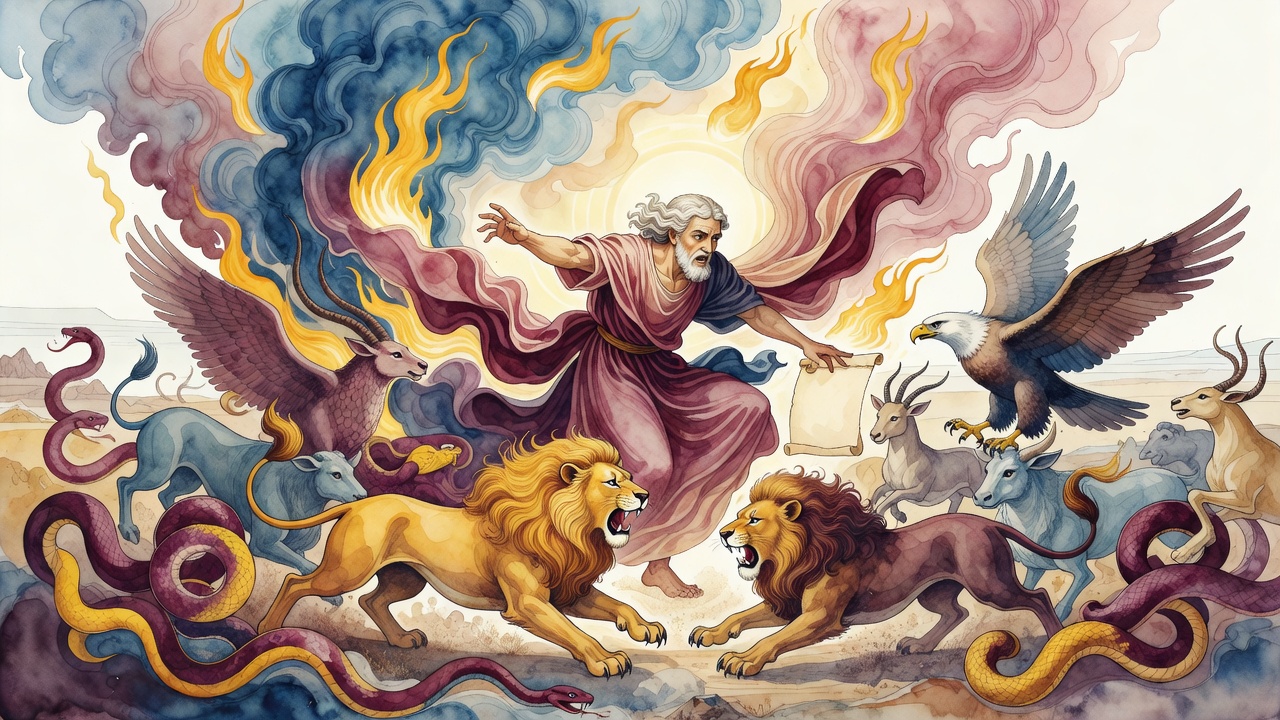
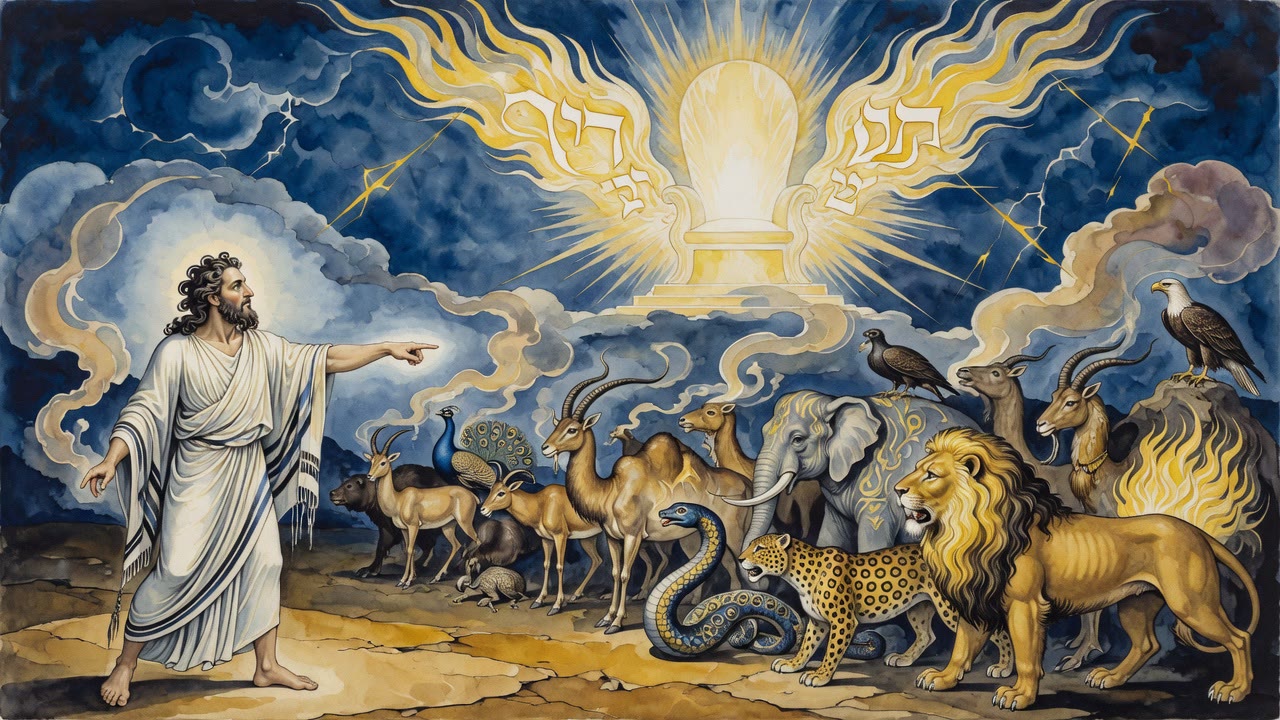
Adam stood in new dust while the beasts walked toward him in a line that would not end. A lion paused. A deer flicked its ear. Something small and quick darted under his heel and waited, as if the whole earth had become a court and he alone had to speak the first verdict.
Adam Chooses Names and Proves His Will Is Free Click for full size

God had brought them. That was the pressure. Not a catalog to copy, not a whisper of the right label. The verse says God brought the animals so that he might see what Adam would call them (Genesis 2:19). The man who had just drawn breath now had to open his mouth.

The Animals Stopped and Waited for a Word

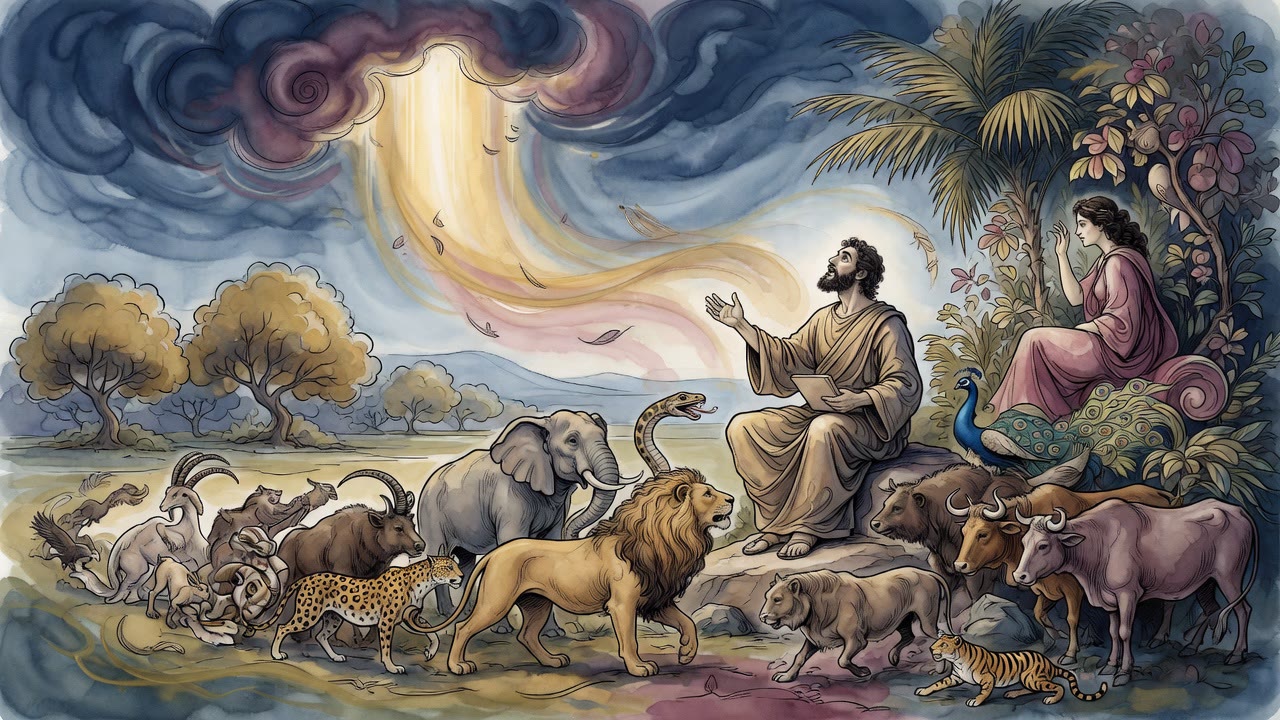
Adam did not know the word taxonomy. He knew heat on his skin, the smell of fur, the sound of claws on soil. Each creature stopped in front of him long enough for his mind to seize its shape. He looked until the looking hurt. Then he spoke a name, and the air kept it.

A name is a small thing until it sticks. After he said it, the beast wore it. The next creature came. The line did not thin. His throat dried. His hands shook once, then stilled. He was the first man born out of the earth, and the task kept asking him to prove he was more than clay with a pulse.

He wanted to govern what he would later use. He wanted the world to answer when he called. Wanting that, he kept naming.

God Was Not Guessing the Labels

Heaven was not puzzled. Doubt does not sit well on the nature of God. The bringing of the animals was not a divine shrug. It was a stage set for a mind freshly given, a mind already hungry for virtue, a mind made wise as if wisdom had been poured into him with the first breath.

God watched for the most excellent point of that mind. Not the loudest roar. Not the prettiest coat. The clean cut of judgment. The way Adam sorted motion from motion, danger from gentleness, the creature that would pull a plow from the creature that would never bow.

Adam felt the watching the way a worker feels a master at the door of the shop. He did not perform for applause. He performed because the creatures kept coming and silence would have left the world half-made.

The Names Proved a Will That Could Choose

Every name he spoke was a choice. No chain yanked his tongue. No necessity wrote the words for him. He could have called the fierce one soft, and the soft one fierce, and the world would have warped around a bad judgment. He did not. Adam chooses under open sky, and the choice stood.

That is the second weight under the scene. Free will is not a lecture in the dust. It is a man refusing to be a puppet while heaven hands him authority over what he will employ. Those who say everything exists by a certain necessity lose the argument the moment Adam's mouth opens and a name lands that no force compelled. Each correct name proves the gift is real. Each refusal of a lazy label proves the will can turn.

God had given intellect. God had given desire for virtue. Then God stood back far enough for the gift to move. The animals received names. Adam received proof that he was not a gear in a sealed machine. He proves it again with the next creature, and the next, until the line thins and his throat burns with spoken law.

A jackal waited longer than the rest. Adam almost borrowed a name from fear. He shut his mouth, watched the animal pace, and only then chose the word that fit the true habit, not the panic in his own chest. That small delay was free will made visible: the power to hold a wrong speech and release a right one.

Hope Walked On When Cain Fell Out of the Line

What sets the human apart from the beasts that waited in that line is not only speech. It is a copious and wonderful portion of hope, inscribed on human nature as if carved into the bone. The intellect hopes by its own nature. It leans forward. It expects a tomorrow that is not a copy of today.

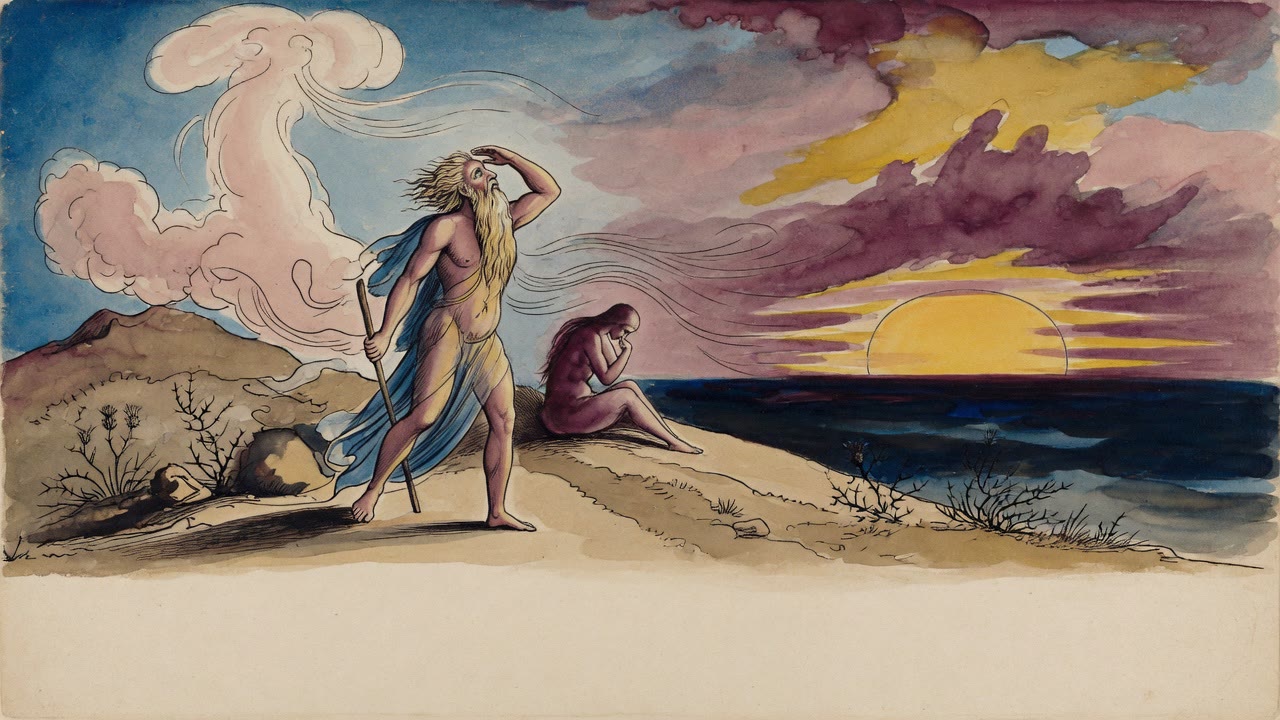
Later the genealogy tightens. Moses traces Adam's line and no longer names Cain. He names Seth, born according to Adam's appearance and form (Genesis 5:3). The ledger keeps the face that still carries the spark. Cain's chapter ends in a silence that feels like a slammed door. Hope did not die with Abel, but the line that would bear Adam's image stepped around the brother who had drained hope into blood.

Seth stands where the naming mind continues. The same nature that could choose a right name can choose a right heir. Animals keep their names. Humans keep, or lose, the hope written into them.

The Dust Remembered Who Spoke First

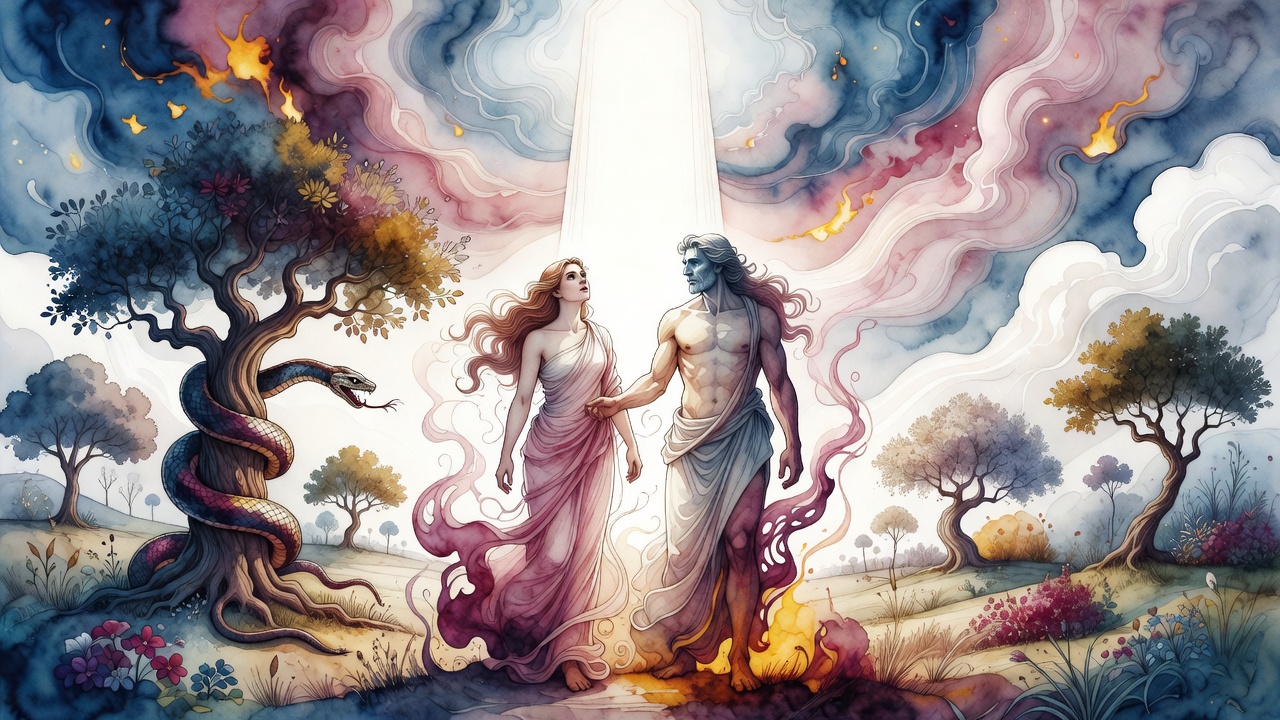
When the last creature turned away wearing its word, Adam's shoulders dropped. The court of beasts dissolved into ordinary grazing. He still had no partner. He still had no death behind him. He had a vocabulary for a living world, and a will that had moved without a chain. Dust clung to his knees where he had knelt to meet a smaller beast eye to eye. He brushed it off and kept the names.

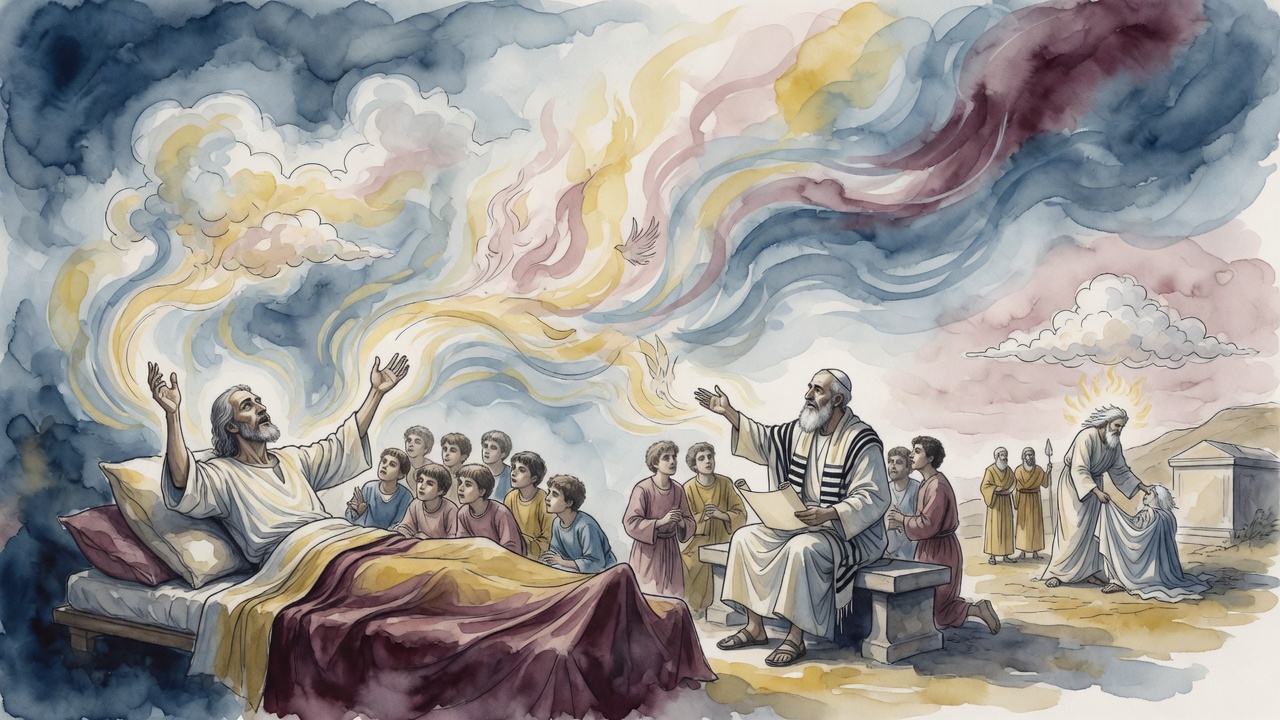
Somewhere in that first afternoon, hope stayed louder than fear. The names held. The free will held. What Adam chooses in the open becomes the measure of the mind God came to see. What that choosing proves outlasts the afternoon: a human line that can still lean toward virtue after blood and silence. The image that would pass through Seth still burned under the skin of a man who had only just learned how heavy a single word can be.


← All myths
From the tradition

Sources

2 sources

The texts behind this telling. Some cards carry a translation of the source; others are our own retelling of it, and each card says which. Every card links out to the original.

The Midrash of Philo 19:13The Midrash of Philo

Retold in our words. Read the original at the link below.The Works of Philo Judaeus, trans. C. D. Yonge, London, H. G. Bohn, 1854-1890 · Public Domain

After all, this is God Surely, the Almighty doesn't need Adam's help with a little taxonomy. (Genesis 2:19) tells us "He brought the animals to Adam, that he might see what he would call them." But… why?

That's the question posed by Philo of Alexandria, a Jewish philosopher who lived way back in the first century. And his answer, recorded in The Midrash of Philo, gets to the heart of some pretty profound ideas about humanity, free will, and even God's own nature.

Philo basically says it's absurd to think God was actually unsure what the animals should be called. Doubt? That's not exactly a divine attribute! So what's really going on here?

Well, Philo suggests that God, in his infinite wisdom, wanted to showcase the incredible intellect he bestowed upon Adam. Adam was the first human, fresh from the earth, and brimming with potential. God gave him intellect and an innate desire for virtue. It's like Adam was born with a natural wisdom, ready to understand and govern the world around him.

So, bringing the animals before Adam wasn't about God needing help. It was about God giving Adam a chance to shine, to demonstrate his wisdom, to show what he could do with the gifts he’d been given. It was, as Philo puts it, about God seeing "what was really the most excellent point of his mind." But Philo doesn't stop there. He sees something even deeper in this little verse. He argues that it's also a powerful statement about free will. God gave Adam the power to choose the names of the animals, and that choice reflects something essential about human nature. We aren’t just puppets dancing on divine strings. We have agency. We have the ability to make decisions and shape our world.

Philo is pushing back against those who believe everything is predetermined, that everything exists by "a certain necessity." No, he says. This act of naming, this simple act of choosing what to call a creature, proves that we have genuine free will.

Or, Philo offers as another possibility, maybe it's simply about dominion. Humans were meant to use the animals, to interact with them, to be stewards of creation. So, God gave Adam the authority to name them, reflecting that inherent relationship. The power to name something, after all, is a form of power over it.

It's not just a story about naming animals. It's a story about God's faith in humanity, the gift of free will, and the awesome responsibility that comes with it. It's a story about our potential to understand and shape the world around us. What will we choose to do with that power?

Full source
The Midrash of Philo 3:1The Midrash of Philo

Retold in our words. Read the original at the link below.The Works of Philo Judaeus, trans. C. D. Yonge, London, H. G. Bohn, 1854-1890 · Public Domain

That very feeling, that inherent sense of hope, is woven into the very fabric of our being. What truly sets us apart? Philo argues it’s that “copious and wonderful portion of hope” that elevates us above all other creatures. It's "inscribed on his very nature," he says, evidence of the power of the human intellect to dream, to aspire, to believe in a brighter tomorrow. Isn't that a beautiful idea?

What happens when we lose sight of that inherent potential?

This brings us to another intriguing question raised in the Midrash (rabbinic interpretive commentary): Why, when tracing the lineage of Adam, does Moses seemingly skip over Cain, focusing instead on Seth? We find this shift in (Genesis 5:3), where it's written that Seth was born "according to his appearance and form" – meaning, in Adam's likeness.

So, what’s the significance of this omission? Why is Cain seemingly erased from the genealogical record? The Midrash suggests that Seth, being in Adam's image, represents a continuation of the divine spark, that inherent hope we discussed earlier. He embodies the potential for good, for growth, for connection to something larger than oneself.

Perhaps Cain, through his actions, severed that connection. Perhaps his story serves as a cautionary tale, a reminder of the consequences of losing hope, of succumbing to the darker aspects of human nature. The Torah doesn’t shy away from difficult truths, does it?

It's a fascinating idea to consider: that our lineage isn't just about bloodlines, but about the transmission of hope, of potential, of the very essence of what it means to be human. That the image we carry, the form we embody, reflects our capacity to nurture that divine spark within.

It's a birthright. It's part of what makes you, you. And it’s up to each of us to cultivate it, to nurture it, and to pass it on to the generations that follow. Because ultimately, that's what truly matters. That's what connects us to the past, and propels us toward the future.

Full source