Parshat Bereshit5 min read

Adam Named the Beasts While Eden Watched

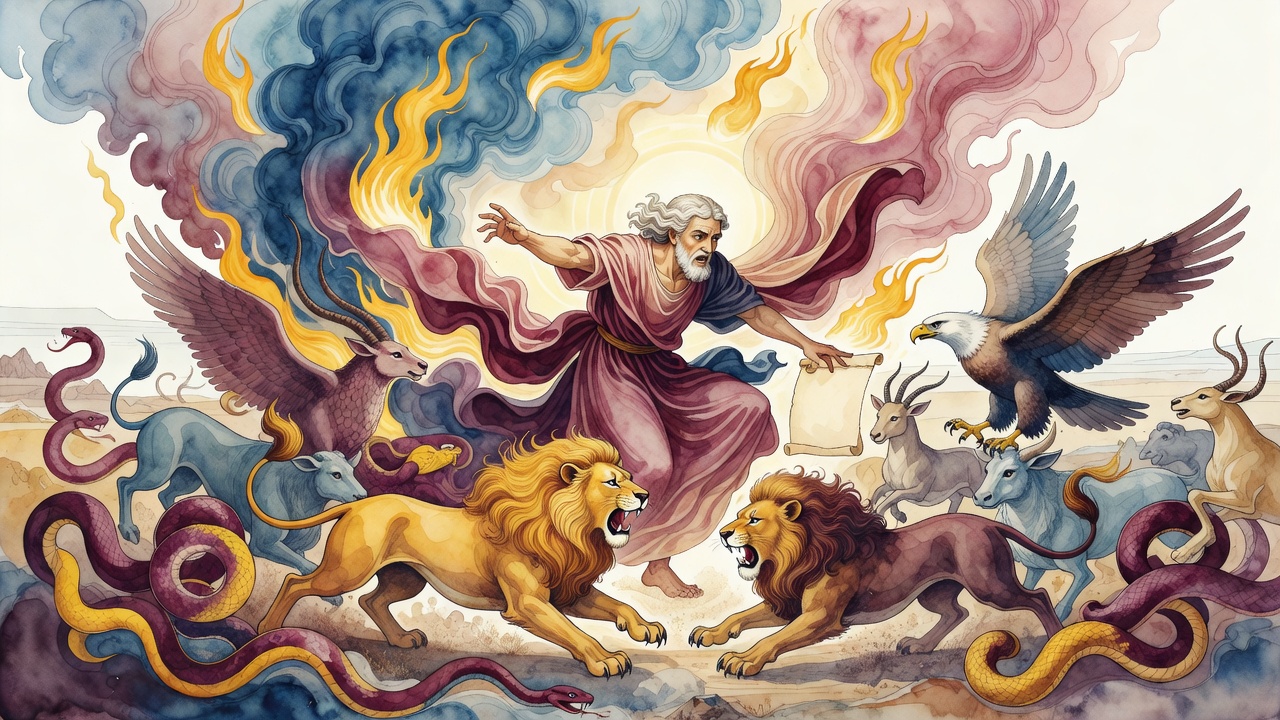
God led every living creature to Adam. The first man spoke names, proving mind and freedom before any rival walked the garden.

Curated by Arthur · Told by Maggid ·
Table of Contents
  1. Parade Before a Fresh Mouth
  2. Not Because God Doubted
  3. A Body Built Like a World
  4. Names From a Temple-Eyed Man
  5. After the Words Stuck
Adam Named the Beasts While Eden Watched Click for full size

Parade Before a Fresh Mouth

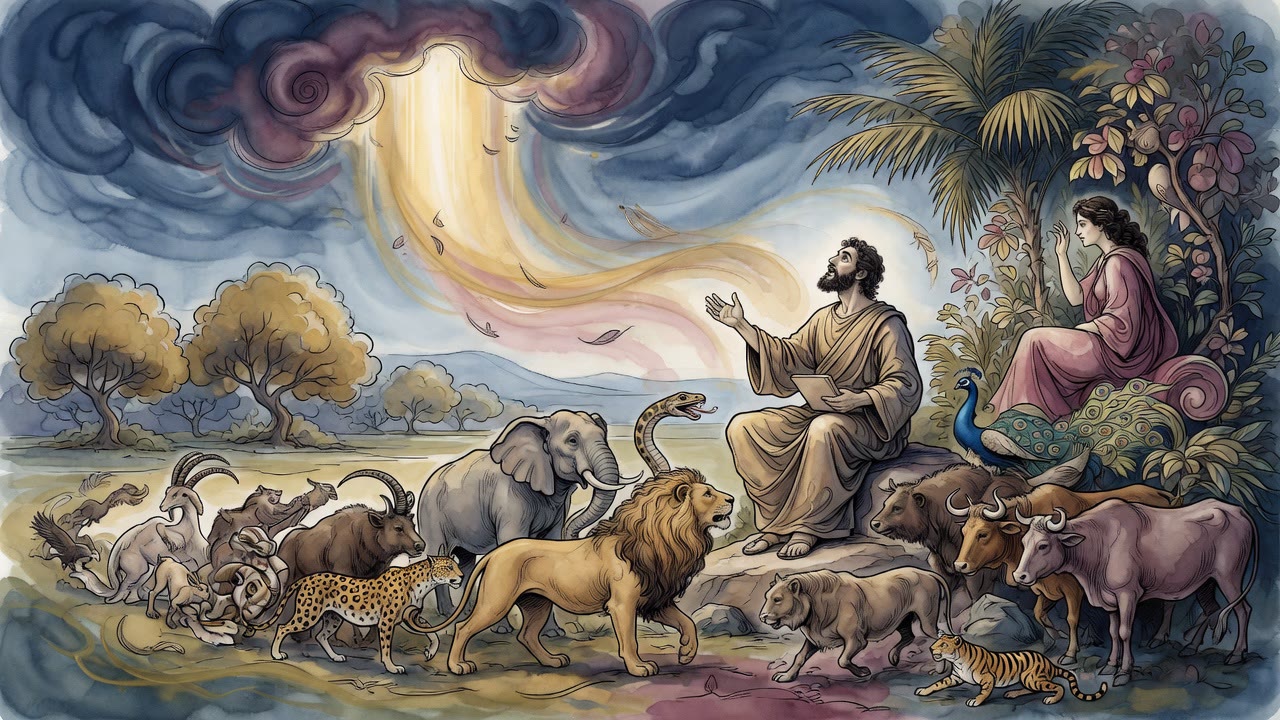
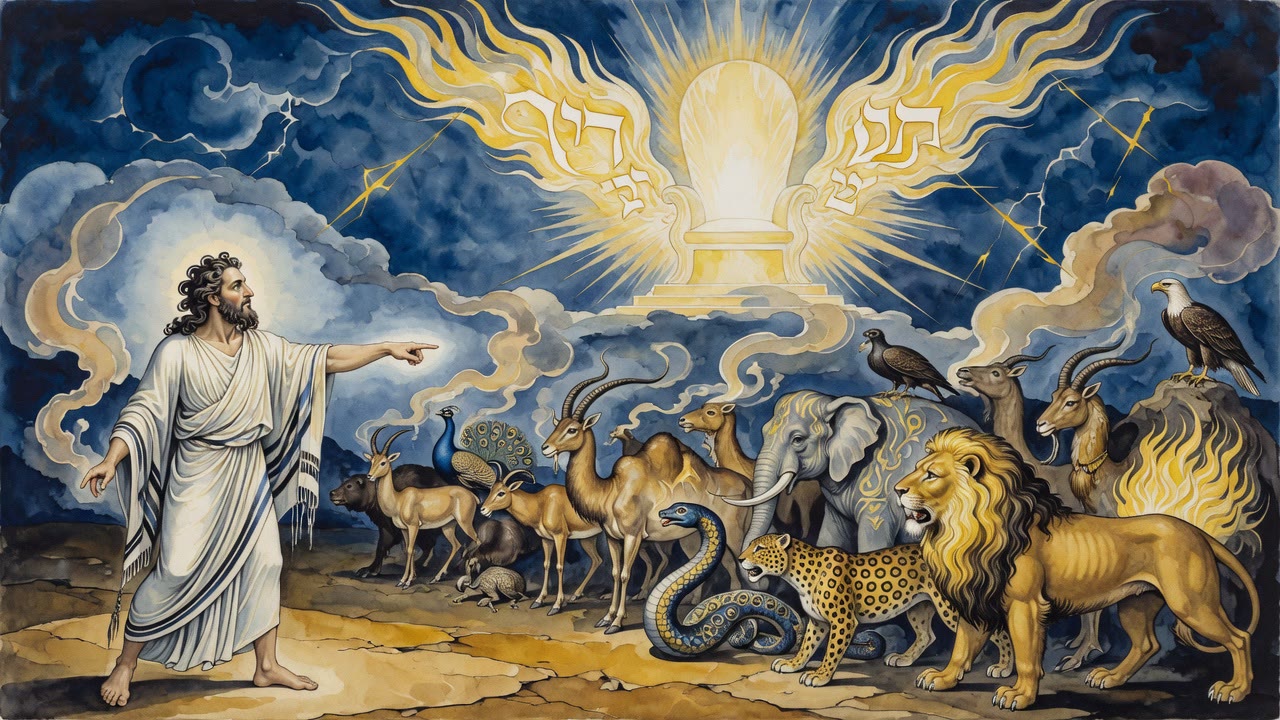
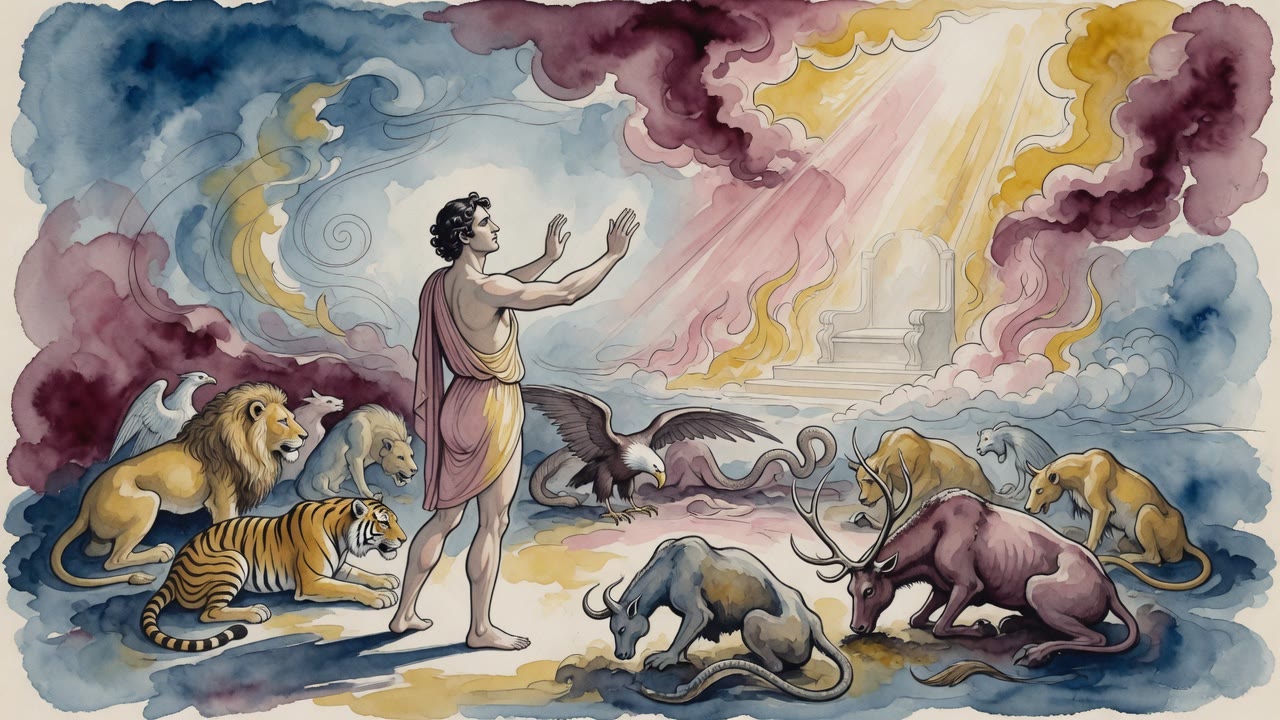
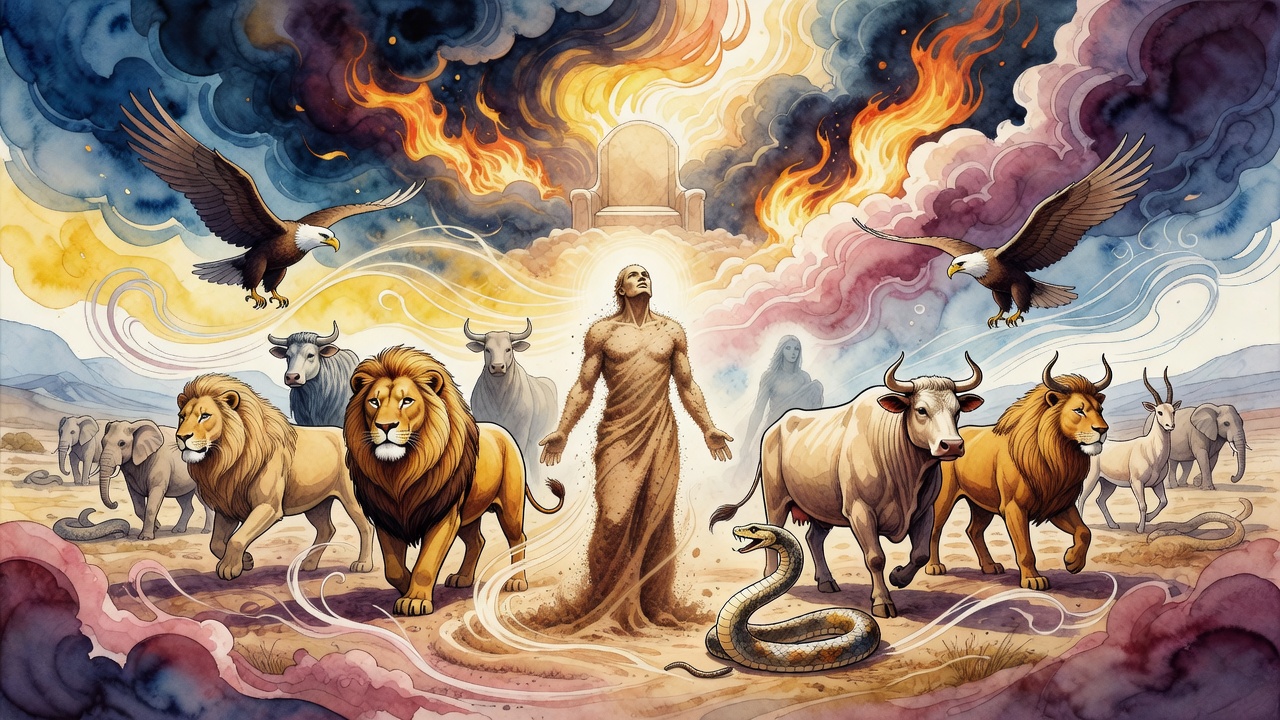
God formed beasts and birds from the ground and led them to Adam to see what he would call them (Genesis 2:19). Hooves and wings passed a man still new to breath. No dictionary waited. Adam's tongue had to invent the world one creature at a time.

He did not glance at Heaven for a cheat sheet. He watched muscle, gait, cry, and hunger, then released a sound that stuck. Whatever Adam called each living thing, that was its name. The garden held still for the verdicts of a human mouth. A heavy animal received a heavy word. A quick bird received a quick one. The fit mattered because stewardship would later ride on recognition.

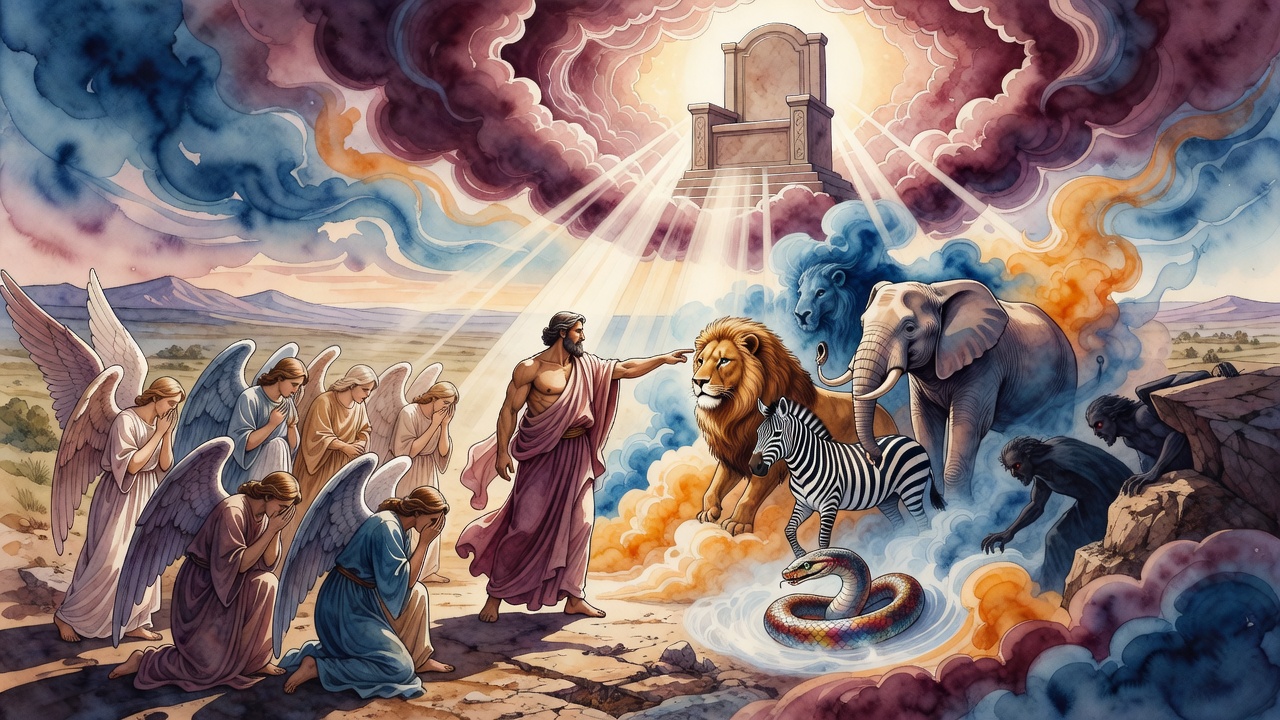
Dust that had become mind was on trial, and it passed. Angels, if they watched, saw a latecomer sort creation with authority no other earth-born thing possessed.

Not Because God Doubted

Philo refuses the cheap reading. The Holy One was not unsure of labels. Doubt is not a divine craft. The parade was for Adam's excellence to show, for the point of his mind to stand visible. Intellect and a lean toward virtue had been packed into the first body. Naming was the exam that needed no ink.

Choice sits inside the scene. Adam could have frozen or fumbled. He spoke, and speech proved that necessity does not own every human act. Free will is not a later philosophy pasted on Torah. It walks in with the first names. Those who claim all things run by fixed compulsion must still explain a man inventing words God did not dictate syllable by syllable.

Dominion is there too. To name is to take up stewardship. The animals would serve and be served under words a man chose. Use without understanding is tyranny. Understanding that begins as naming is the first soft shape of rule.

Philo piles the readings without apology. Display of mind. Proof of freedom. Seal of dominion. All three ride the same parade.

A Body Built Like a World

The same tradition that watches Adam's name also builds his flesh as a miniature earth. Hair for forests. Tears for rivers. Mouth for ocean. The eye holds a map. White as sea, iris as land, Jerusalem as pupil, and in that pupil the Temple itself. Look long enough into a human gaze and the holy city looks back.

God shaped this creature by hand, not by speech alone. The rest of creation arrived by word. Humanity arrived with fingerprints implied. Angel traits ride the frame. Upright stance. Speech. Understanding. A gaze that lifts. Beast traits ride it too. Hunger. Thirst. Mating. Death. The mix is deliberate. If he lives like a beast, mortality claims him. If he holds to the higher portion, life without end remains on the table of possibility.

Heaven and earth both contributed materials so that all beings would care whether this hybrid stood or fell. Love from every quarter was built into the recipe of his making. A creature everyone helped form is a creature everyone has a stake in saving.

Names From a Temple-Eyed Man

When Adam spoke the first word that fit the mane before him, the voice came from a throat that was already ocean and forest in small. Naming was not a clerk's job. It was a microcosm addressing other lives with the authority of a being who contains maps.

No helper had yet been cut from his side. The animals came and went, and none matched him. Names filled the air while loneliness waited for a later surgery. The mind proved itself before the heart was split into pair. That order matters. Intelligence and freedom show before romance. The garden tests speech before it tests desire.

Eden heard language begin as caretaking, not as weapon. Later, words would wound. On this afternoon they only sorted and honored.

A lion, whatever first sound claimed it, walked away wearing a human decision. So did the cattle and the small things that move in dust. The world became addressable.

After the Words Stuck

The names remained when exile later scraped the garden closed. Outside, Adam would sweat for bread, but the beasts still answered to the sounds he had given. Freedom that showed in naming would show again in harder choices under thorns. So would failure. A man who can name a world can also misname his duty.

The first afternoon of speech still stands as proof that God wanted a partner with a living mind, not a puppet mouthing preassigned syllables. Philo's Adam and the microcosm-body of the legends meet in one claim. Humanity is built to know, to choose, and to carry a map of the holy inside ordinary flesh.

Every later language is a distant grandchild of that parade. Every time a child points and asks what a creature is called, something of Eden's exam repeats in miniature.


← All myths

From the tradition

Sources

2 sources

The texts behind this telling. Some cards carry a translation of the source; others are our own retelling of it, and each card says which. Every card links out to the original.

The Midrash of Philo 19:13The Midrash of Philo

Retold in our words. Read the original at the link below.The Works of Philo Judaeus, trans. C. D. Yonge, London, H. G. Bohn, 1854-1890 · Public Domain

After all, this is God Surely, the Almighty doesn't need Adam's help with a little taxonomy. (Genesis 2:19) tells us "He brought the animals to Adam, that he might see what he would call them." But… why?

That's the question posed by Philo of Alexandria, a Jewish philosopher who lived way back in the first century. And his answer, recorded in The Midrash of Philo, gets to the heart of some pretty profound ideas about humanity, free will, and even God's own nature.

Philo basically says it's absurd to think God was actually unsure what the animals should be called. Doubt? That's not exactly a divine attribute! So what's really going on here?

Well, Philo suggests that God, in his infinite wisdom, wanted to showcase the incredible intellect he bestowed upon Adam. Adam was the first human, fresh from the earth, and brimming with potential. God gave him intellect and an innate desire for virtue. It's like Adam was born with a natural wisdom, ready to understand and govern the world around him.

So, bringing the animals before Adam wasn't about God needing help. It was about God giving Adam a chance to shine, to demonstrate his wisdom, to show what he could do with the gifts he’d been given. It was, as Philo puts it, about God seeing "what was really the most excellent point of his mind." But Philo doesn't stop there. He sees something even deeper in this little verse. He argues that it's also a powerful statement about free will. God gave Adam the power to choose the names of the animals, and that choice reflects something essential about human nature. We aren’t just puppets dancing on divine strings. We have agency. We have the ability to make decisions and shape our world.

Philo is pushing back against those who believe everything is predetermined, that everything exists by "a certain necessity." No, he says. This act of naming, this simple act of choosing what to call a creature, proves that we have genuine free will.

Or, Philo offers as another possibility, maybe it's simply about dominion. Humans were meant to use the animals, to interact with them, to be stewards of creation. So, God gave Adam the authority to name them, reflecting that inherent relationship. The power to name something, after all, is a form of power over it.

It's not just a story about naming animals. It's a story about God's faith in humanity, the gift of free will, and the awesome responsibility that comes with it. It's a story about our potential to understand and shape the world around us. What will we choose to do with that power?

Full source
Legends of the Jews 2:4Legends of the Jews

Retold in our words. Read the original at the link below.The Legends of the Jews by Louis Ginzberg (1909) · Public Domain

The very act of creating humanity was unique. Unlike the rest of creation, which sprang forth simply from God's word, man was formed by the hand of God Himself. It's a pretty powerful image.

It doesn't stop there. The human body, in its intricate design, is seen as a microcosm, a miniature version of the entire world. It’s a concept that’s both humbling and awe-inspiring. Ginzberg, in Legends of the Jews, paints a vivid picture: Our hair mirrors the forests, our tears the rivers, our mouths, the vast ocean. Even our eye is a reflection of the world; the ocean is the white, the land the iris, Jerusalem the pupil, and within that pupil, the Temple itself.

We're a meeting point, a fusion of the heavenly and the earthly. We possess qualities that elevate us, bringing us closer to the angels. As the text notes, our ability to speak, our intellect, our upright posture, the very gaze in our eyes – these are all angelic traits.

Yet, we're also firmly rooted in the earthly realm. We eat, we drink, we. well, you know. We procreate, and ultimately, we face mortality, just like the beasts of the field.

So, what's the deal? Why this seemingly contradictory nature?

The answer lies in the balance, in the choices we make. Before creating humanity, God declared, "The celestials are not propagated, but they are immortal; the beings on earth are propagated, but they die. I will create man to be the union of the two, so that when he sins, when he behaves like a beast, death shall overtake him; but if he refrains from sin, he shall live forever."

our destiny is tied to our actions. If we succumb to our baser instincts, we embrace mortality. But if we strive for righteousness, if we cultivate the angelic qualities within us, we can transcend the limitations of our physical existence.

And consider this: God didn't create humanity in isolation. He called upon all beings in heaven and earth to contribute to our creation. Why? "Thus they all will love man, and if he should sin, they will be interested in his preservation." It's a profound statement about the interconnectedness of all things and the inherent hope for our redemption. We are not alone in this journey.

You're seeing a microcosm of the universe, a being capable of both great darkness and incredible light, a fusion of the earthly and the divine. And the path you choose will determine your destiny. But also, incredibly empowering. What will you choose to reflect back to the world?

Full source