Parshat Bereshit5 min read

Adam Names Beasts the Angels Could Not Name

Envy entered heaven the day a man out-named the host. Samael went hunting for a creature cunning enough to ruin him and settled on the serpent.

Curated by Arthur · Told by Maggid ·
Table of Contents
  1. Formed Twice for a Different Reason
  2. Angels Fail the Test
  3. Speech as the Mark of a Living Soul
  4. From Names to a Shaken Tree
  5. What the Names Still Do
Adam Names Beasts the Angels Could Not Name Click for full size

Formed Twice for a Different Reason

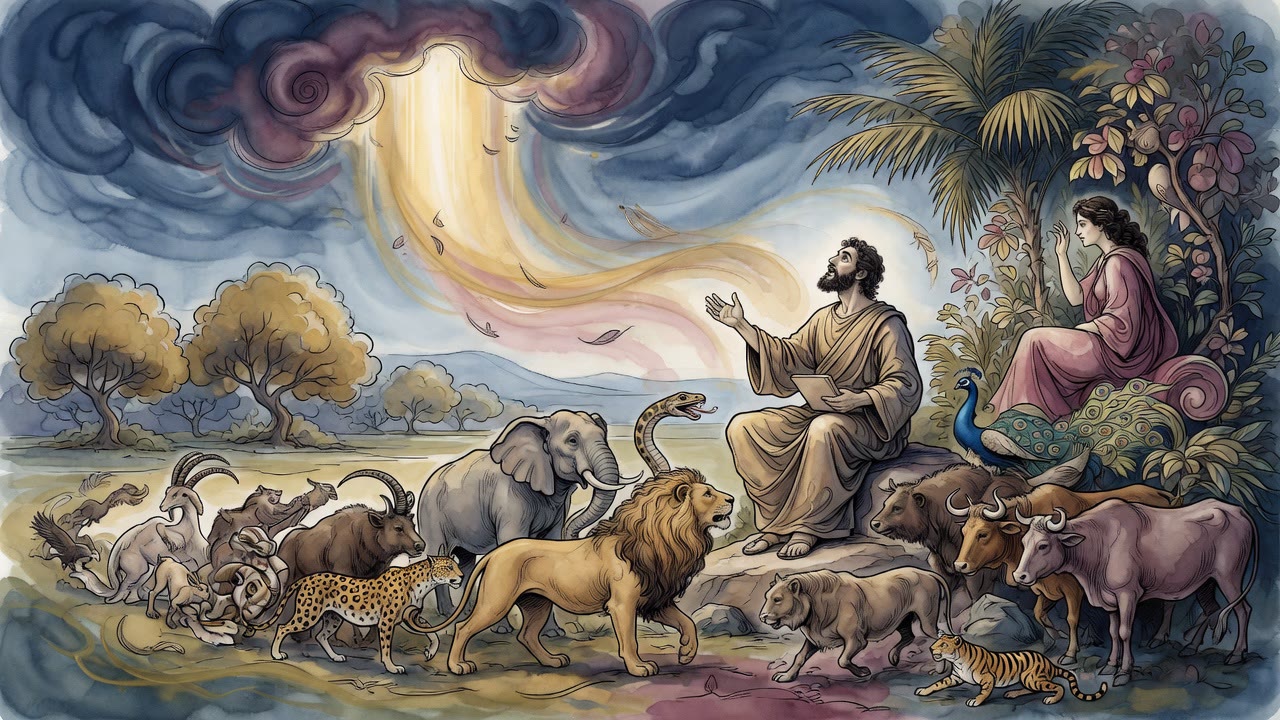
On the sixth day the earth produced living creatures after their kinds (Genesis 1:24). Later the Lord God formed from the ground every beast of the field and every bird of the heavens and brought them to the man to see what he would call them (Genesis 2:19). Two verbs. One parade.

Rabbi Yochanan ben Zakkai refused to call the second verse a clumsy repeat. The first was creation. The second, with vayitzer, was domination. God was not rebuilding animals for sport. He was placing them under Adam's authority, the way a besieging power sets a city under rule. The midrash hears tatzur, besiege, inside the forming word. Naming became the first act of ordered rule.

Whatever the man called each living creature, that was its name. Language landed like a seal.

Angels Fail the Test

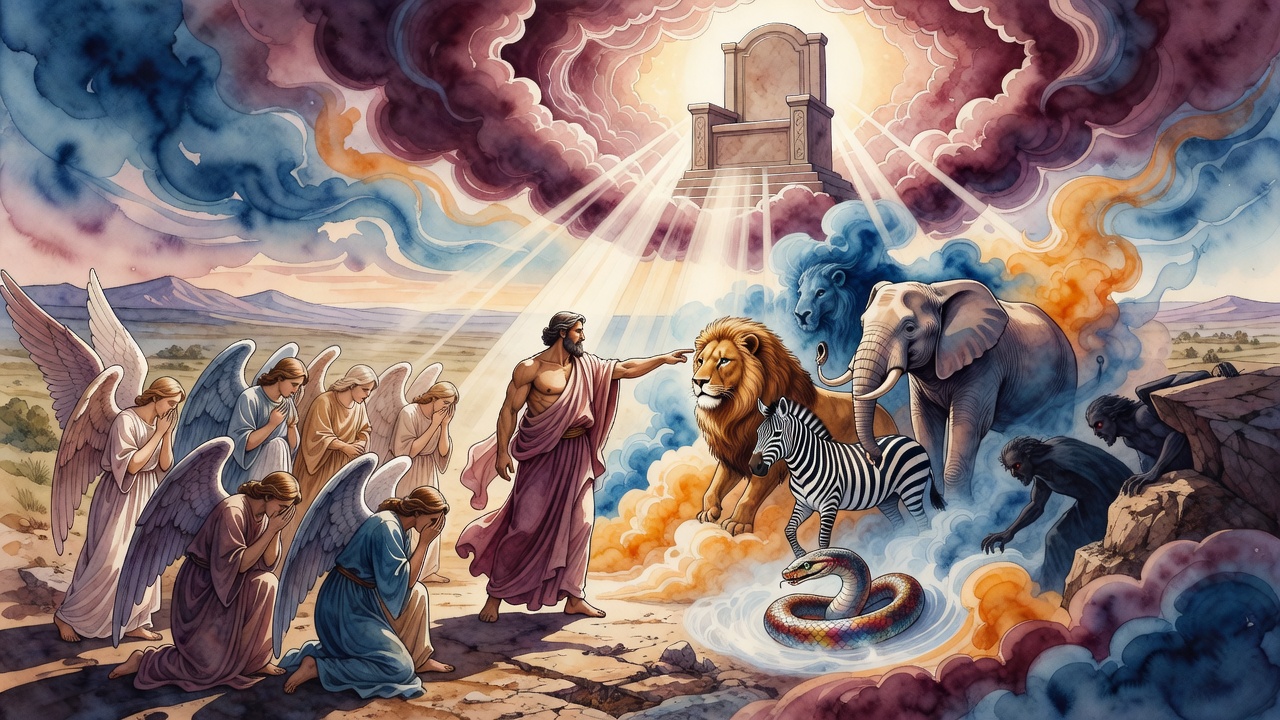
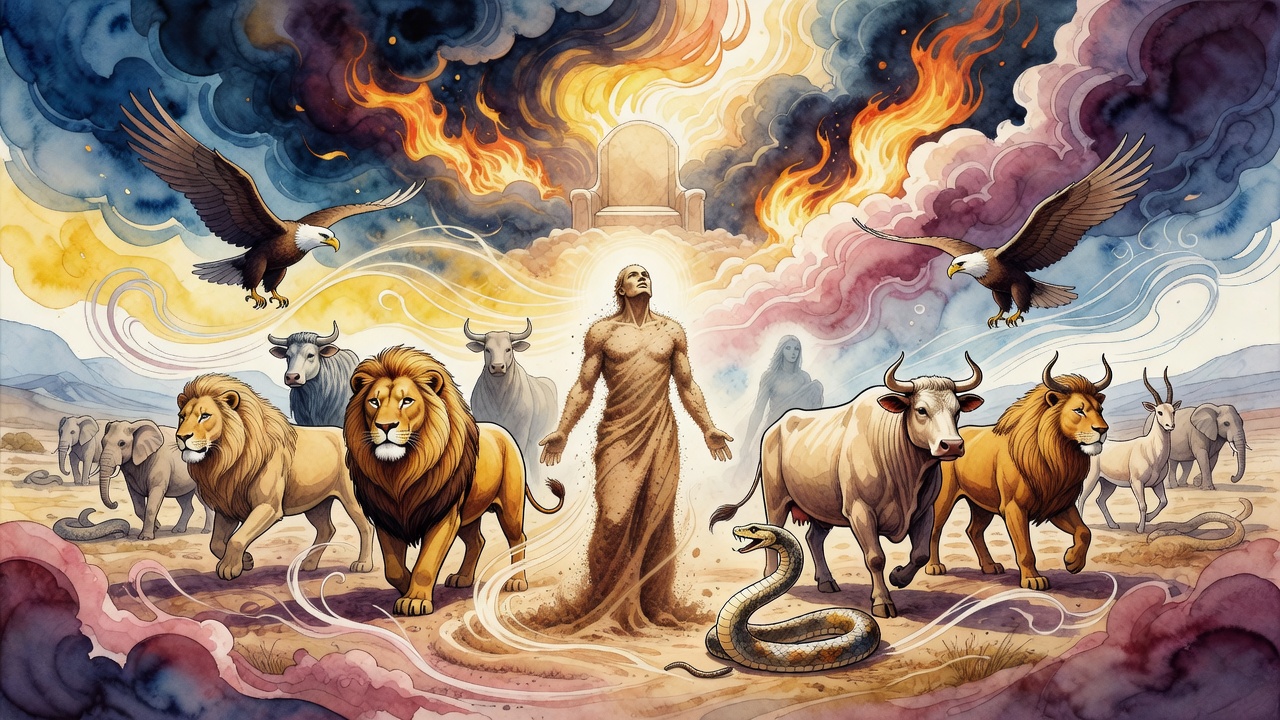
Before Adam spoke, God brought the animals before the angels and challenged them to name. They could not. Adam named every creature at once. God turned to the host and said, "Were you not asking, 'What is man, that You should remember him?' Now his wisdom is greater than yours!"

Envy entered heaven on that sentence. Angels who could sing worlds of praise could not pin a single fox with a word. Samael, angel of death, went looking for a creature cunning enough to corrupt the namer. He chose the serpent. The same world that had just heard true names would soon hear a false sales pitch about a tree.

The failure of the host was not volume. It was fit. Adam's names fit the creatures the way joints fit bones. Angelic attempts slid off. That precision is what God held up as answer to the old sneer against man. Remember him? He just out-named you.

Adam's victory in language became the opening of a war for his loyalty. Wisdom that shamed angels also painted a target on the dust-born king.

Speech as the Mark of a Living Soul

The Book of Jasher stresses that man became a living soul endowed with speech when breath entered. Naming was not a parlor game. It was the public proof that the nefesh (the life-soul) could sort the world. Woman would later be called from his bone, Eve mother of all living, but first the beasts received their titles from his mouth.

He walked the garden with a dictionary unfolding under his tongue. Lion. Ox. Hawk. Each word stuck. Creatures turned their heads as if hearing themselves become knowable. The garden was not only fruit and rivers. It was a taxonomy spoken into place by a human throat God trusted more than angelic silence.

Ben Zakkai's domination reading sits under every successful name. To call rightly is already to order. The parade was coronation by vocabulary. No crown, only nouns that held.

When Eve arrived, the namer already knew how to pin reality with sound. Marriage entered a world already half-catalogued.

From Names to a Shaken Tree

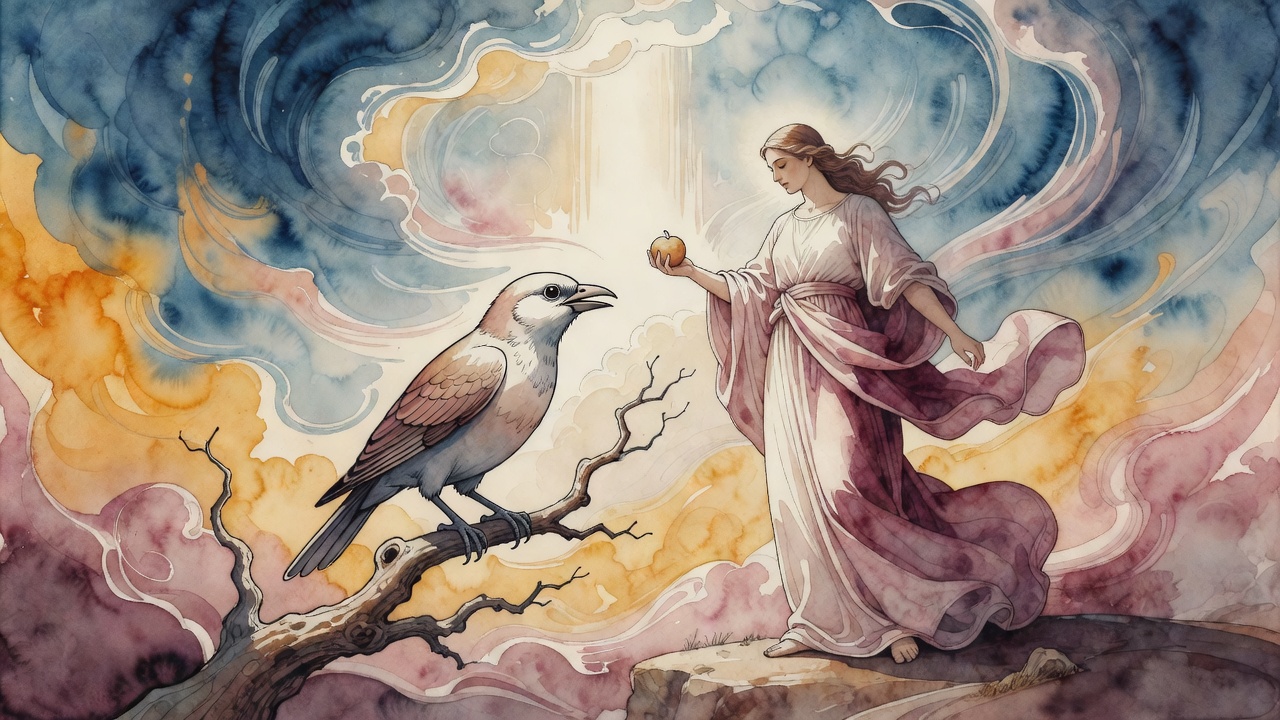
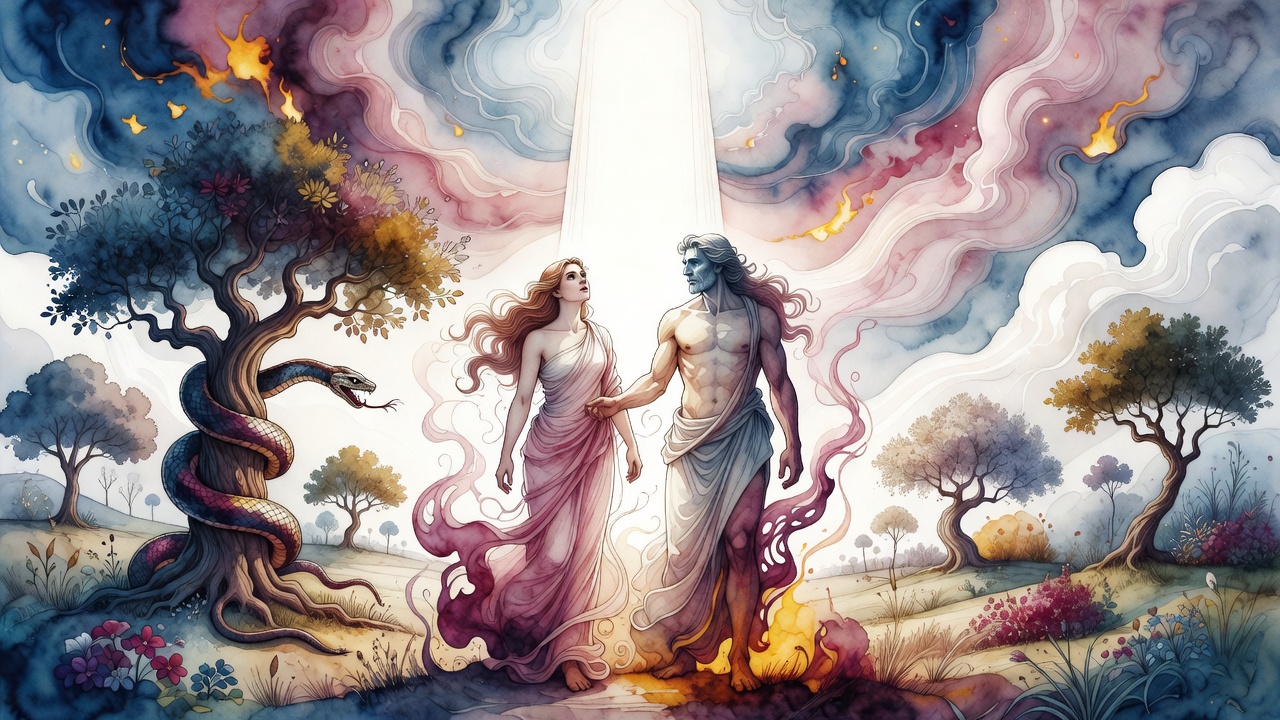
The serpent stood, shook the tree, and fruit fell. The tree cried, "Wicked one, do not touch me!" Eve saw the touch and no death, ate, saw the angel of death with a drawn sword, and decided Adam must share her sentence so no second wife would replace her. She fed beasts and birds as well. Only one bird, in that telling, refused the fruit and kept its first obedience.

The namer and the named both fell under the same theft of trust. Animals that had stood quietly for titles now swallowed rebellion. The parade of Genesis 2 inverted into a procession of shared exile.

Adam, who had shamed the angels with wisdom, now stood under a sword the angels of death did not need to envy.

What the Names Still Do

Even after exile, the names remained. Domination cracked. Language did not fully reverse. Human beings still call beasts by the words the first man fixed, as if the seal outlived the throne. Ben Zakkai's reading keeps authority inside the verb of forming. Jerahmeel's contest keeps angelic envy inside the failure to speak. Jasher keeps speech inside the definition of a living soul.

A child pointing at a dog and saying its name still walks a thin line from that first afternoon. The myth does not claim the child rules Eden. It claims the child inherits a task heaven once tested and humans once won.

Samael still prefers serpents to fair debates. The Throne still remembers who named and who could not. Between them, every true word for a living creature is a small echo of Adam's hour before the fruit, when wisdom was greater than the host and the garden had not yet learned to hide. The bird that refused the fruit kept one clean name in a world of shared guilt. Even refusal needs a word to stay itself.


← All myths

From the tradition

Sources

3 sources

The texts behind this telling. Some cards carry a translation of the source; others are our own retelling of it, and each card says which. Every card links out to the original.

Bereshit Rabbah 17:4Bereshit Rabbah

Retold in our words. Read the original at the link below.The Sefaria Midrash Rabbah, 2022 · CC-BY

Adam, the very first human, had the unique privilege of naming… well, just about everything!

We find this idea in the book of Genesis (2:19): "The Lord God formed from the ground every beast of the field and every bird of the heavens, and brought them to the man to see what he would call it; and whatever the man would call every living creature, that was its name." It sounds simple enough, but the Rabbis of old saw much more in this verse.

One question they grappled with, recorded in Bereshit Rabbah, a classic collection of rabbinic interpretations of Genesis, is this: if God already created the animals in (Genesis 1:24), where it says, “Let the earth produce living creatures after their kinds,” why does (Genesis 2:19) say that God “formed [vayitzer] from the ground every beast of the field”?

Rabbi Yoḥanan ben Zakai offers a fascinating explanation. He suggests that the first verse refers to the creation of the animals, while the second verse, with the word vayitzer, speaks to domination. God wasn’t re-creating the animals; He was placing them under Adam's authority. Think of it like this: God created the raw materials, but Adam was given the task of classifying and understanding them, bringing order to the world. Rabbi Yoḥanan ben Zakai cleverly connects the word vayitzer to a similar-sounding word, tatzur, meaning "besiege," as in "When you besiege a city" (Deuteronomy 20:19), implying a form of control or influence.

And it gets even more interesting! Rabbi Aḥa shares a wonderful story about God consulting with the angels before creating humanity. "Let us make man" (Genesis 1:26), God says. The angels, naturally, have questions. "This man," they ask, "what is his nature?" God replies that man's wisdom exceeds theirs. To prove it, God brings the animals before the angels and asks them to name them. They are stumped. But when God presents the same animals to Adam, he effortlessly names them: "This is an ox; this is a donkey; this is a horse; this is a camel."

Then, Adam turns the tables. He asks God, "And you, what is Your name?" Adam declares, "It is appropriate to call you my Lord [Adonai], as You are the Lord [Adon] over all your creatures." Rabbi Aḥa connects this to (Isaiah 42:8), "I am the Lord, that is My name," suggesting that Adam was the first to call God by that name, Adonai. Think about the intimacy and responsibility implied in that moment!

But the story doesn't end there. After naming the animals, Adam notices something crucial: "All of them have partners, but I do not have a partner" (Genesis 2:20). "And for the man, he did not find a helper to be alongside him." Why didn't God create Eve, Adam's partner, right away?

The Rabbis, in their wisdom, suggest that God foresaw Adam might complain about her later. So, God waited until Adam explicitly asked for a partner. Only then does God cast a deep slumber upon Adam and create Eve (Genesis 2:21). It’s a fascinating glimpse into the complexities of relationships and the idea that even God factors in potential future grievances!

So, what does this all mean? It speaks to the unique role humanity plays in creation – not just as inhabitants, but as active participants, as namers, as partners with God. It also illustrates that even in paradise, relationships take work, and sometimes, a little divine intervention!

Full source
Chronicles of Jerahmeel XXIIChronicles of Jerahmeel (Gaster, 1899)

Retold in our words. Read the original at the link below.The Chronicles of Jerahmeel, trans. Moses Gaster (1899) · Public Domain

Before Adam named the animals, God brought them before the angels and challenged them to do it first. They could not. Adam named every creature instantly. God turned to the angels and said, "Were you not asking, 'What is man, that You should remember him?' Now his wisdom is greater than yours!" According to the Chronicles of Jerahmeel, a 12th-century Hebrew chronicle translated by Moses Gaster in 1899, this was the moment the angels began to envy humanity.

Samael, the angel of death, descended to find a creature cunning enough to corrupt Adam. He chose the serpent. The serpent approached Eve and challenged her about the forbidden tree. When Eve said they would die if they touched it, the serpent laughed. "God is jealous," he said. "If you eat, your eyes will be opened, and you will know how to create the world just as He does." The serpent stood on his feet, shook the tree, and fruit fell to the ground. The tree itself cried out: "Wicked one, do not touch me!"

When Eve saw the serpent touch the tree and survive, she ate the fruit. Instantly she saw the angel of death with a drawn sword. Her reasoning was brutal: if she alone would die, God would give Adam another wife. Better they die together. She gave Adam the fruit. He ate, saw the same drawn sword, and was stricken with grief.

Eve did not stop with Adam. She fed the forbidden fruit to every creature on earth, beasts, animals, and birds. All ate. All became subject to death. All except one. A bird called Milham refused. "Woe unto you," the bird told Eve. "You have brought death upon yourself, your husband, and all creatures. I alone will not eat." God rewarded the bird with eternal life. Every thousand years, the Milham shrinks to the size of a chick, loses its feathers, and returns to its egg. And God sends two angels to restore it anew.

Full source
Jasher 1Book of Jasher

Retold in our words. Read the original at the link below.The Book of Jasher, J. H. Parry edition (1887) · Public Domain

One of those fascinating, lesser-known works: the Book of Jasher. Now, it's important to understand that this isn't part of the Tanakh. Its authenticity and origins are disputed by scholars. But it's still a rich source of tradition and storytelling, referenced in the Bible itself (Joshua 10:13 and (2 Samuel 1:1)8), suggesting it was once a well-known text.

So, let's open Chapter 1 and see what it has to tell us, starting right at the very beginning:

"And God said, Let us make man in our image, after our likeness, and God created man in his own image." Just like Genesis. God forms man from the ground, breathes life into his nostrils, and he becomes a "living soul endowed with speech." The nefesh (the vital soul) chayah, the living soul, has the power of language right from the start!

Then comes the famous line, "It is not good for man to be alone; I will make unto him a helpmeet." God puts Adam into a deep sleep, takes a rib, and fashions woman. Adam awakens and proclaims, "This is a bone of my bones and it shall be called woman, for this has been taken from man; and Adam called her name Eve, for she was the mother of all living." The text emphasizes their shared origin, their connection. They are called Adam and Eve, blessed, and told to "be fruitful and multiply and fill the earth."

Life in the Garden of Eden is idyllic. Adam and Eve are placed there "to dress it and to keep it." They are free to eat from any tree, except one: "the tree of the knowledge of good and evil." The consequences are clear: "for in the day that you eat thereof you shall surely die."

And then enters the serpent. The Book of Jasher tells us that the serpent was created with them on Earth, and its sole purpose was to incite them to disobey God. It succeeds. The serpent persuades Eve to eat from the forbidden tree. She does, and then gives some to Adam, who also eats.

The transgression is complete. God knows, is angered, and curses them. They are driven from the Garden "to till the ground from which they were taken." Adam and Eve then have two sons and three daughters. The firstborn is named Cain, because Eve says, "I have obtained a man from the Lord." The second is named Abel, "for she said, In vanity we came into the earth, and in vanity we shall be taken from it." A poignant reflection on mortality.

As the boys grow, Cain becomes a tiller of the ground, and Abel a keeper of sheep. After some years, they both bring offerings to God. Cain brings "from the fruit of the ground," and Abel brings "from the firstlings of his flock from the fat thereof." God favors Abel's offering. A fire comes down from heaven and consumes it. But God does not turn to Cain's offering, because he brought "from the inferior fruit of the ground."

And here’s where the story takes a dark turn.

Cain becomes jealous of his brother. He seeks a pretext to kill him. One day, they are in the field together. Cain is plowing, and Abel's flock wanders onto the ploughed land. Cain is angered by this.

An argument ensues. Cain asks Abel, "What is there between me and thee, that thou comest to dwell and bring thy flock to feed in my land?" Abel retorts, "What is there between me and thee, that thou shalt eat the flesh of my flock and clothe thyself with their wool?" He demands Cain remove the wool and compensate him for what he has eaten.

The argument escalates. Cain says, "Surely if I slay thee this day, who will require thy blood from me?" Abel responds that God will avenge his cause, "for the Lord is the judge and arbiter, and it is he who will requite man according to his evil."

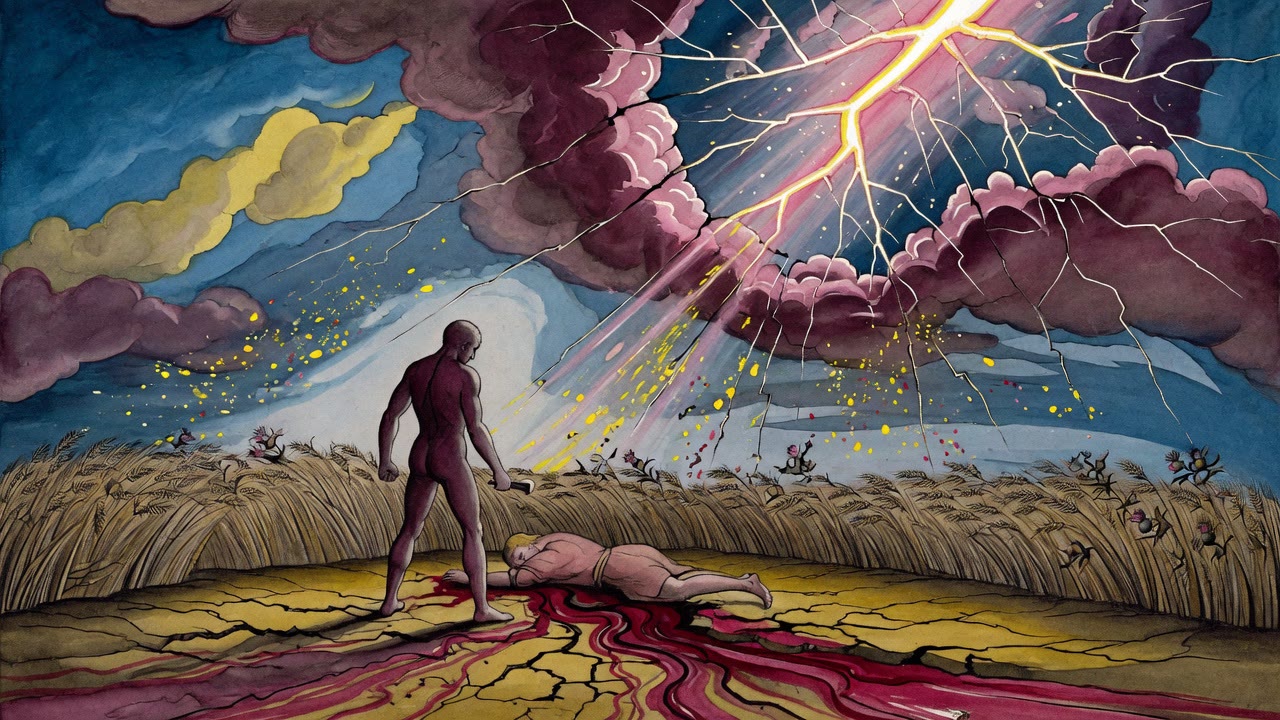
Hearing this, Cain's anger explodes. He grabs "the iron part of his ploughing instrument" and strikes Abel, killing him. Cain spills Abel’s blood upon the earth.

That Cain then repents, is grieved, and weeps. He digs a hole and buries Abel's body, covering it with dust. But God knows what Cain has done. God asks Cain, "Where is Abel thy brother that was with thee?" Cain dissembles, "I do not know, am I my brother's keeper?"

God then pronounces the consequences. Cain is cursed from the ground, which has opened its mouth to receive Abel's blood. When Cain tills the ground, it will no longer give him its strength. He will be "moving and wandering in the earth until the day of thy death."

Cain goes out from the presence of the Lord and dwells east of Eden. He has a son named Enoch and begins to build a city, which he also names Enoch. The text says that in those days, the Lord gave him rest upon the Earth, so he did not move about and wander as in the beginning.

Well, it offers a more detailed account of the events leading up to the first murder, highlighting the themes of jealousy, resentment, and the consequences of disobedience. The dialogue between Cain and Abel humanizes them, giving us a glimpse into their relationship and the tensions that ultimately led to tragedy. The immediate remorse Cain feels paints a more complex picture of him.

And the fact that Cain eventually finds rest and even builds a city raises questions about justice, forgiveness, and the enduring nature of humanity, even after the most terrible acts.

The Book of Jasher It invites us to explore the nuances of these ancient stories, to confront their complexities, and to find new meaning in their enduring messages.

Full source