One Bird Refused Eve's Fruit and Never Fully Died
Eve fed the fruit to Adam, then to every animal and bird in the garden, so she would not die alone. One bird kept its beak shut.
Table of Contents
Eve saw the Angel of Death before she had finished chewing.
 Click for full size
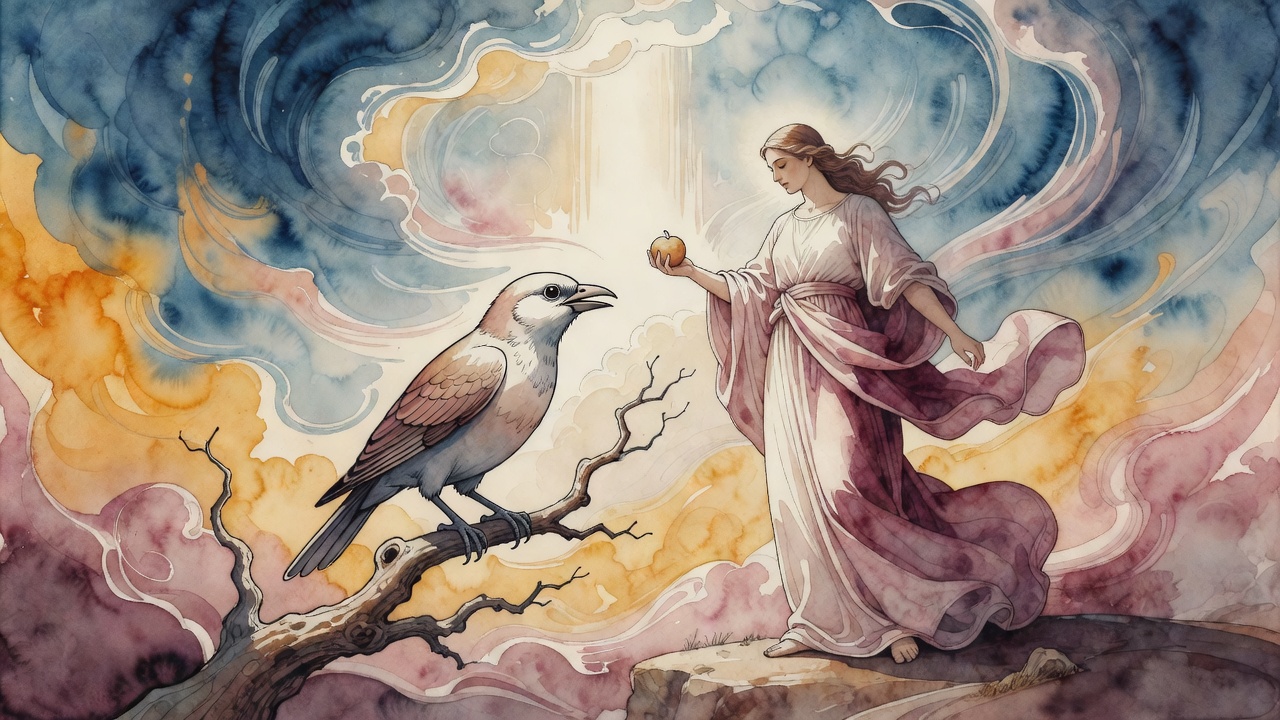
She had eaten the fruit from the tree of knowledge, and the Angel of Death stood before her with a drawn sword. In that moment she understood that she was going to die, and she understood something else: if she died alone, God might give Adam another wife and forget her entirely. She was not going to be the only one to bear this consequence.
She went to Adam. She gave him the fruit and he ate. Then she went further. She gave the fruit to the beasts of the field and the cattle and the birds. She wanted every created being to share the mortality that had just come for her. Creation was about to learn what she had already learned, whether or not it had chosen to.
Fear Spread Outward Through Creation
The Chronicles of Jerahmeel, the twelfth-century compilation translated by Moses Gaster in 1899, makes Eve's intention visible in a way that the plain biblical text does not. She is not simply disobedient or curious. She is afraid, and she is making her fear into policy. If everyone dies, then dying is not her failure alone. The universalization of mortality begins as an act of anxious solidarity.
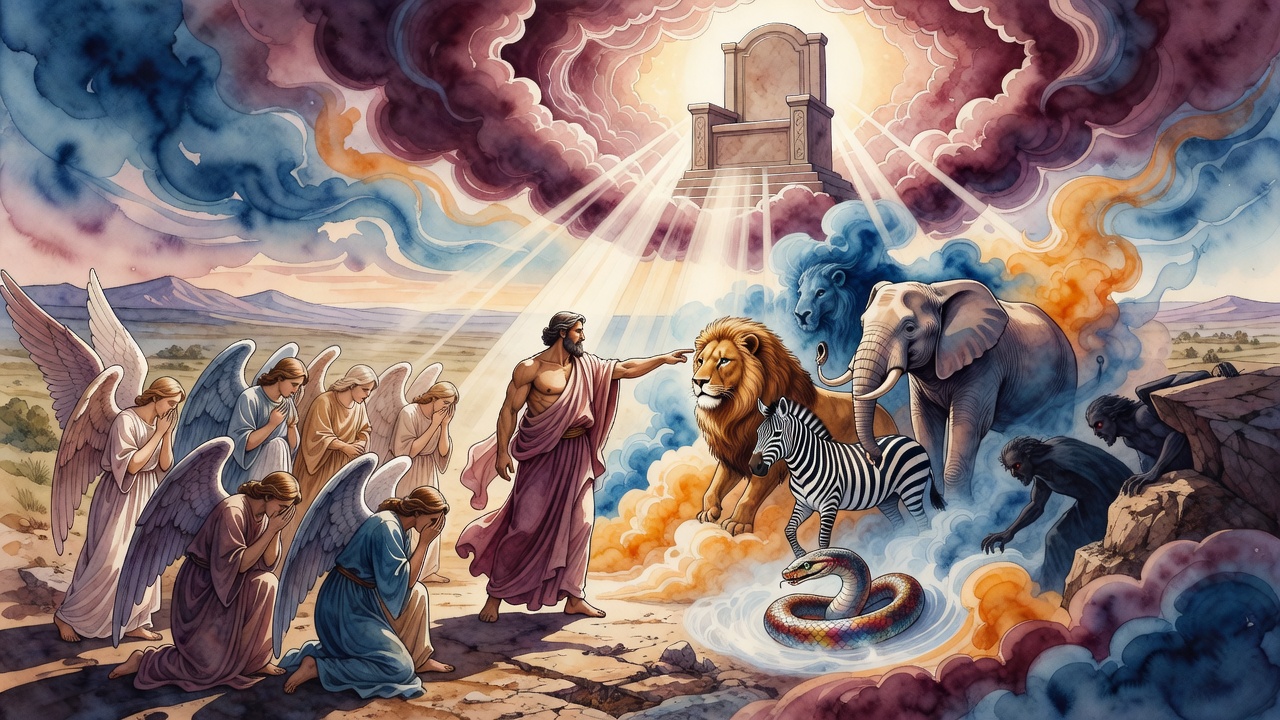
The beasts and birds ate from Eve's hand because she was still the mistress of the garden, the woman who ruled the west and the south and all the female animals. They had no reason to suspect that the food she offered them was different from any other food she had ever offered. The fall is not only human in Jerahmeel's telling. It is ecological. The world learns death through one act repeated from hand to mouth to wing to paw until the whole of creation has tasted what Eve tasted.
The Phoenix Held Its Ground
One bird refused.
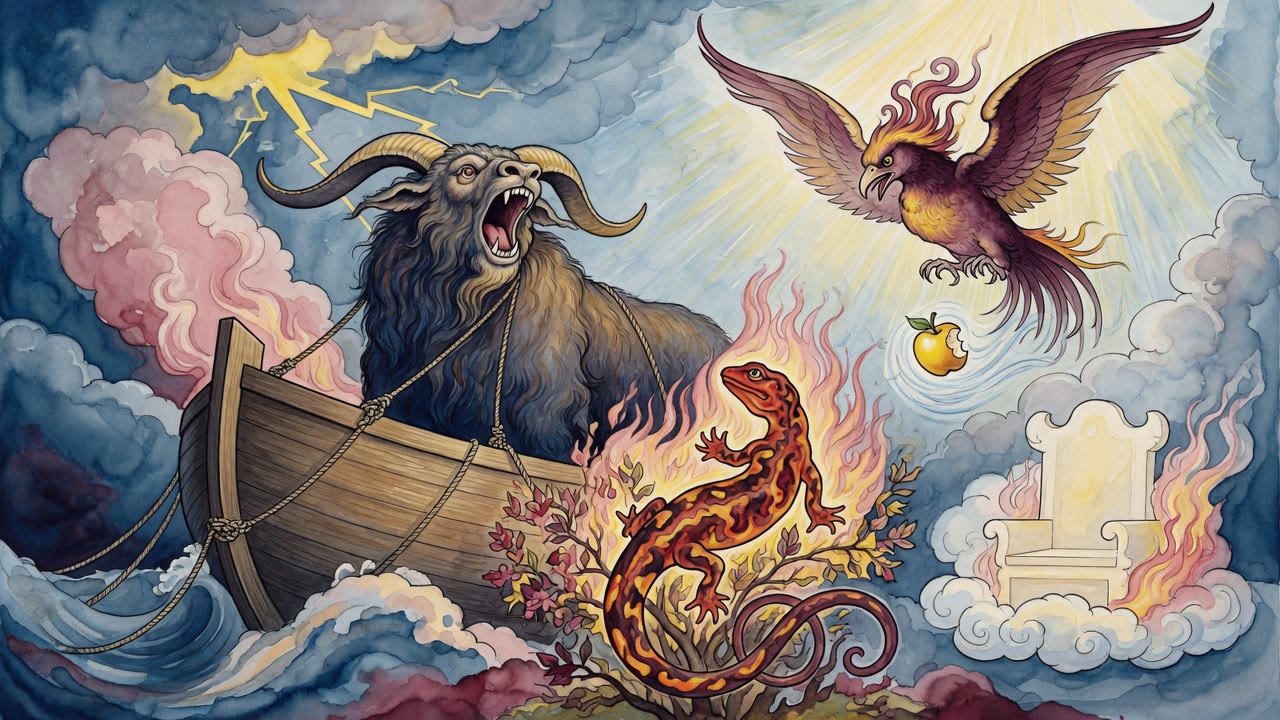
The Chronicles of Jerahmeel does not give the bird a name, but Ginzberg's synthesis in Legends of the Jews, drawing on multiple traditions published between 1909 and 1938, identifies the refusal with the bird known as the Phoenix. It looked at the fruit. It understood what was being offered. And it closed its beak.
The bird did not know it would be rewarded for refusing. It simply refused. The tradition is interested in that detail because it means the act of resistance was not self-interested calculation. It was, in some sense, a pure holding of its own nature against the pressure Eve was exerting on the whole world. Around it the hand passed from creature to creature, and still the Phoenix kept its beak shut against the fruit Eve held out.
Refusal Bought a Death It Could Outlive
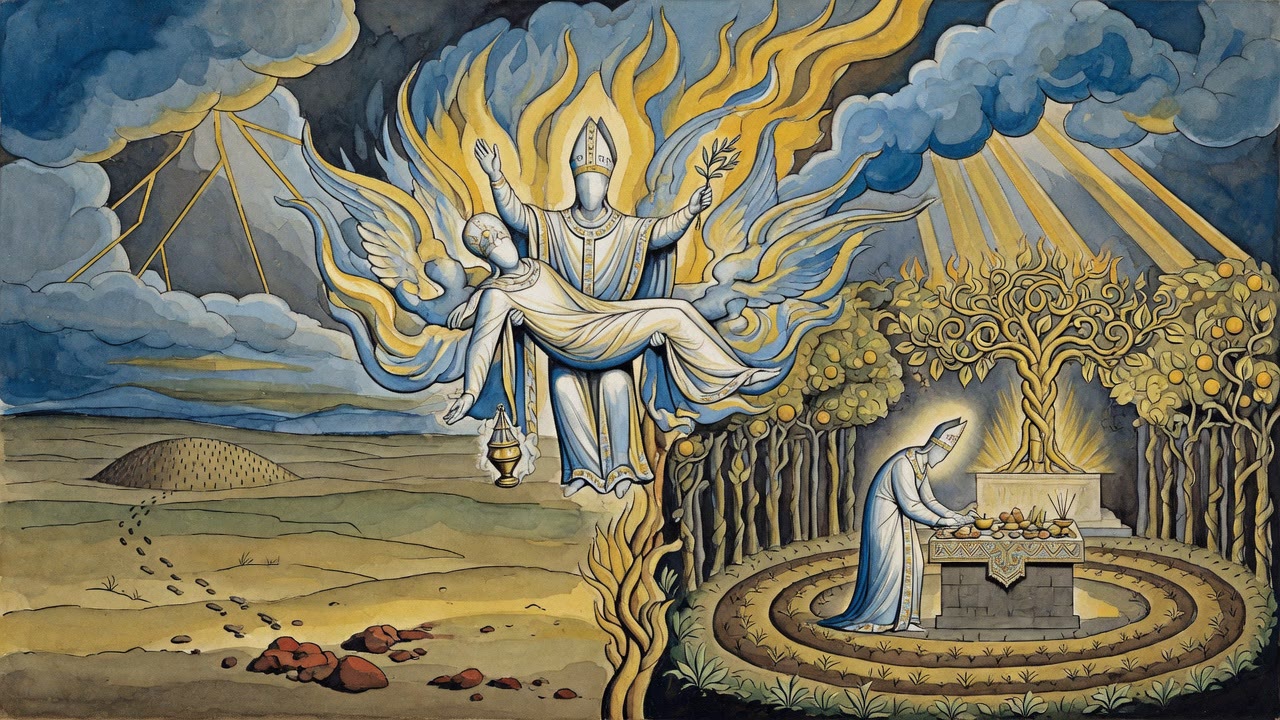
For that refusal, it received a reward the tradition describes with care. The Phoenix does not enter ordinary death in the same way as the rest of creation. Every thousand years, it reaches the end of its strength and burns to ash. Then it reconstitutes from the ash and begins again.
It participates in mortality in a minimal, cyclical way, but it does not die and stay dead the way every creature who ate the fruit dies and stays dead. The fire takes it and the ash gives it back, again and again, a death that always reverses itself because the mouth that would have made it final stayed closed in Eden. The penalty Eve spread to wing and paw and hoof found, in this one bird, a thing it could not finish.
Samael Lit the Serpent's Ambition
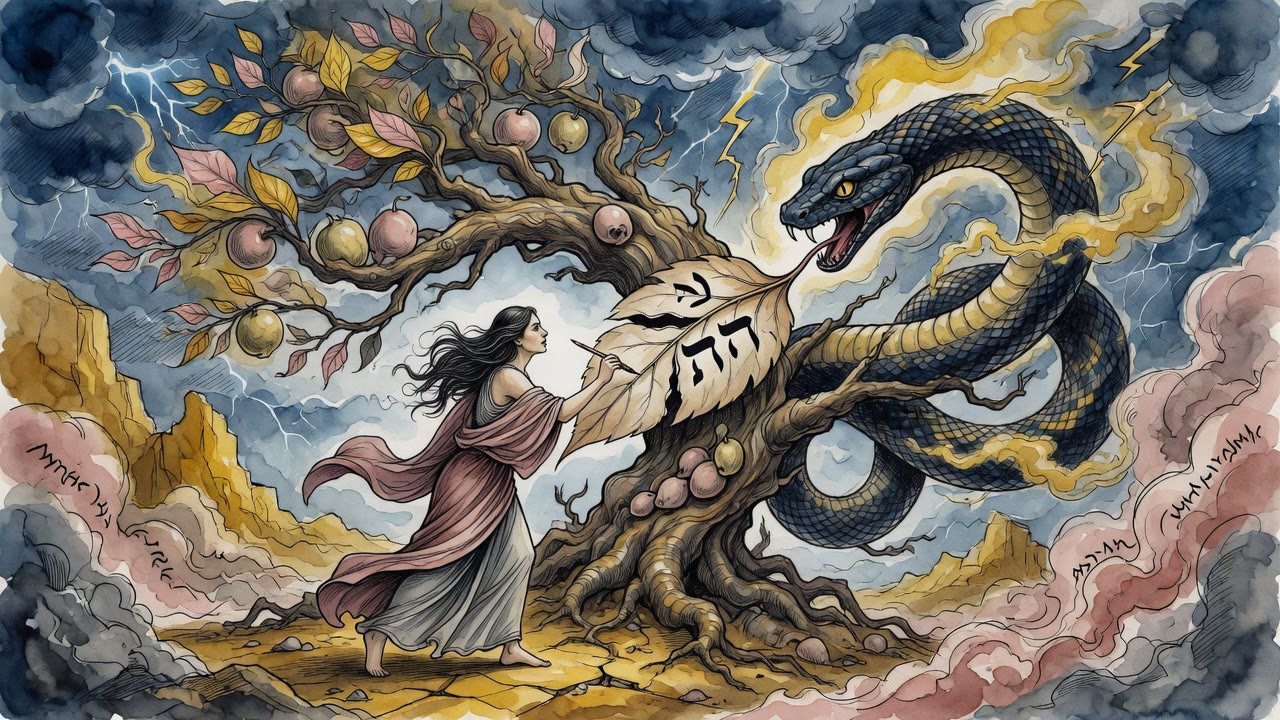
The story of how the fruit reached Eve in the first place is told differently in different sources, but the version that includes Samael, the accusing angel, puts the seduction on a cosmic scale. Samael, still burning from his own displacement in the divine hierarchy, chose the serpent as his instrument because the serpent was the most intelligent of all field creatures and the one most likely to be listened to. The serpent had its own reasons to cooperate: it wanted Adam and Eve gone so it could rule the garden itself.
Eve was not naive. She was in the wrong place at the wrong time, in conversation with the wrong creature, without Adam beside her to share the weight of the argument. The tradition does not absolve her, but it does show that she was targeted with a precision that went beyond ordinary temptation. Samael chose his moment. The serpent chose its words. Eve chose, and then carried what she had chosen to the whole of creation before the sun had moved.
← All myths