5 min read

Adam Named Eve Woman and Heard His Sentence Last

Adam had a word ready for every animal that walked past him. He woke with a rib gone, looked at her, and managed nothing but a pointing finger.

Curated by Arthur · Told by Maggid ·
Table of Contents
  1. Bone Has No Beauty in It
  2. The Branch Cut From the Vine
  3. The Serpent Went First and the Man Went Last
  4. What Eve Was Told

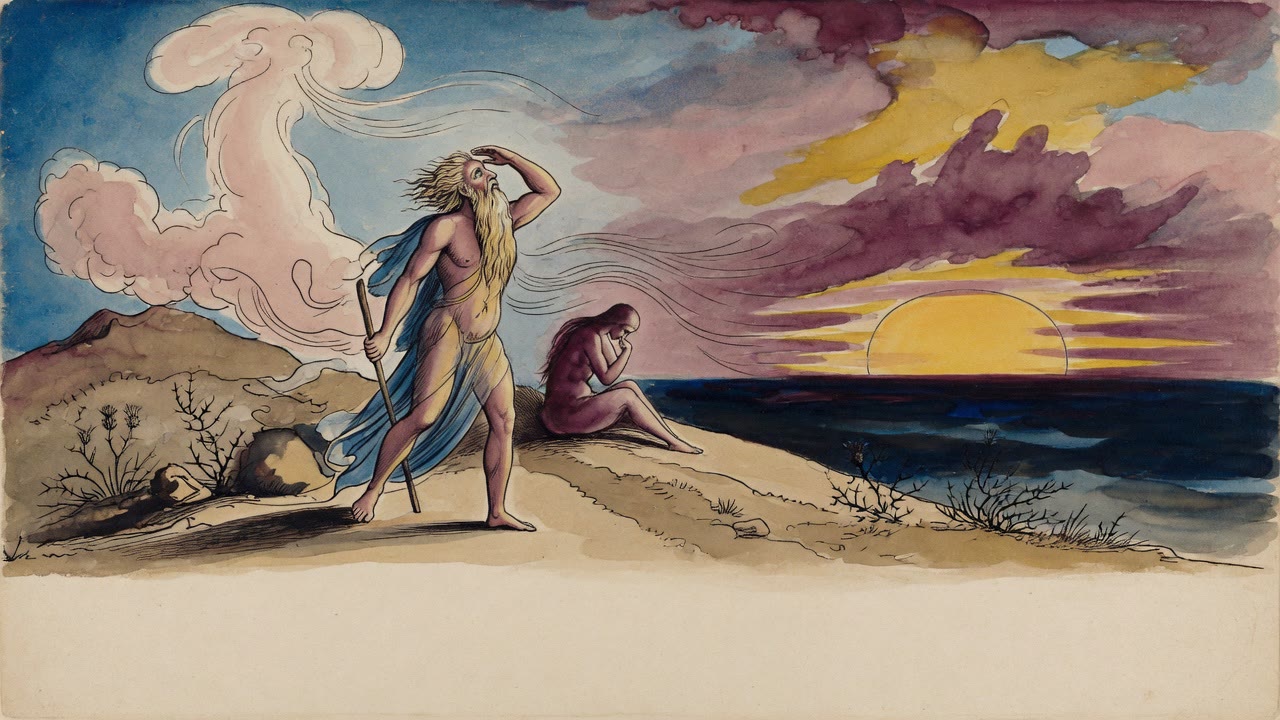
Adam came out of the sleep with a hollow along his ribs and someone standing over him.
Adam Named Eve Woman and Heard His Sentence Last Click for full size

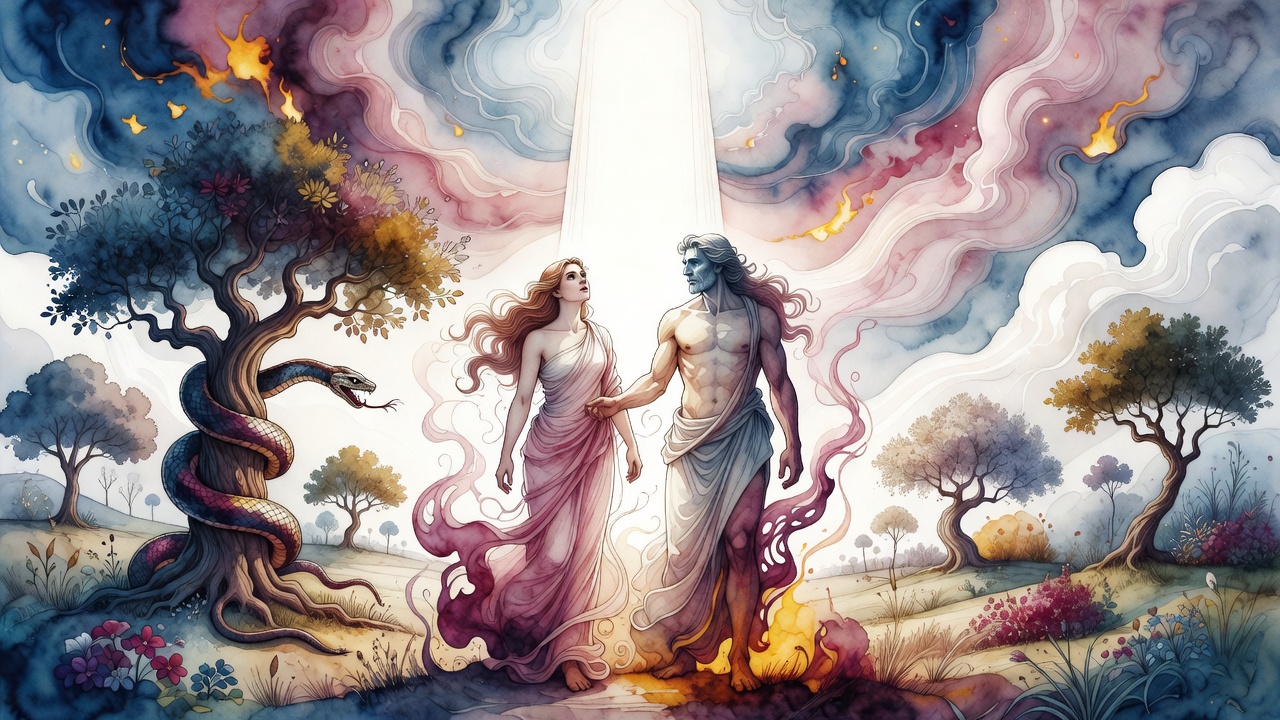
He had spent his waking life naming things. Every beast and every bird had gone past him in a slow file and he had found the word for each without effort, because the word was already inside the animal and he only had to say it aloud. Then this. He looked, and for a moment his mouth would not work, and when it did the first thing out of it was not a name at all. It was a finger pointing. "This," he said. "This one, now" (Genesis 2:23).

Bone Has No Beauty in It

What stopped him was arithmetic he could not make come out.

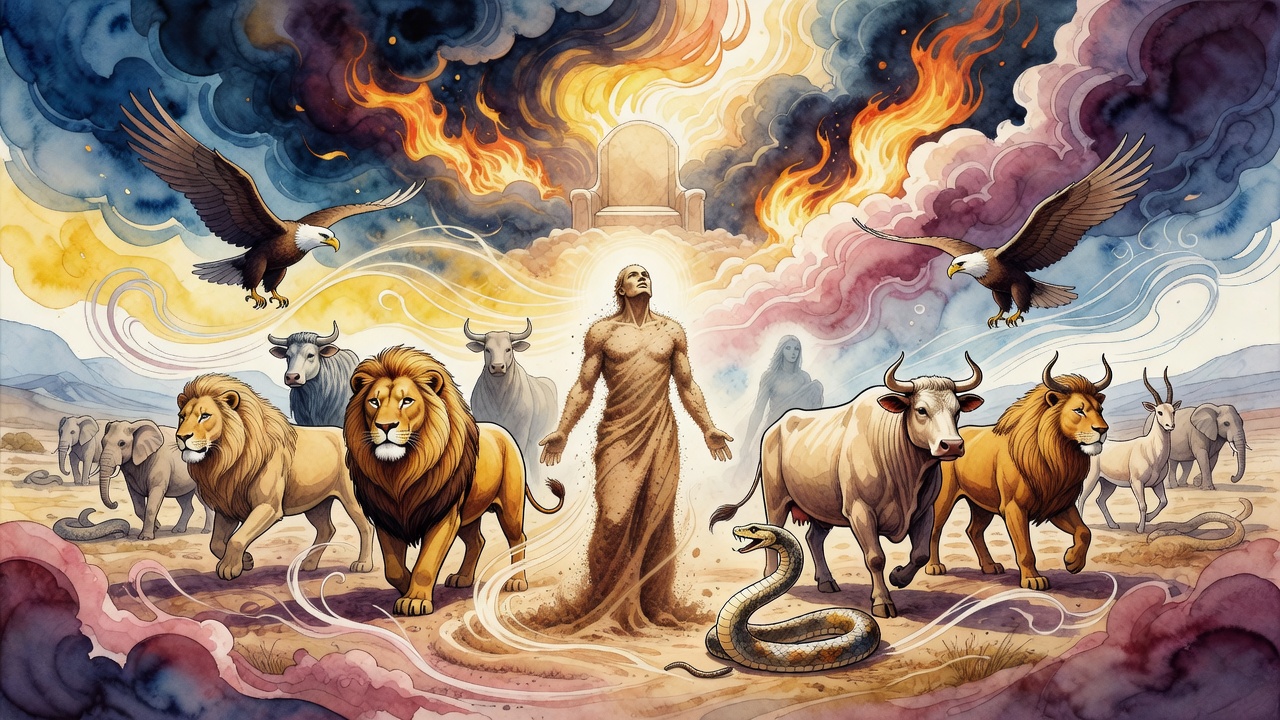
He knew what he was made of. He had cut his hand on a stone and seen what lay under the skin. Bone is not beautiful. Flesh is not elegant. Take the whole tabernacle apart, bones and meat and entrails, veins, sinews, ligaments, the vessels that carry blood and the tubes that carry breath, lay all of it out in the grass, and nothing in that heap accounts for the thing standing in front of him with the morning behind her.

She had come out of the parts he was made of and she had more life in her than the parts had, and more grace than the parts had. It could not be believed, and it could not be believed precisely because she was so like him. And it had to be believed, because only one hand could have done it. God had not merely taken the rib. God had painted her.

Adam pressed his own hand to his side where the bone was gone, and then he let it fall.

The Branch Cut From the Vine

Then the naming came, late, after the astonishment, which was the right order.

Woman, because she was taken out of man. Woman also for what she could do that he could not, which was to take in seed and bring out a living thing. She was the power of bringing forth, standing there with the power still unused.

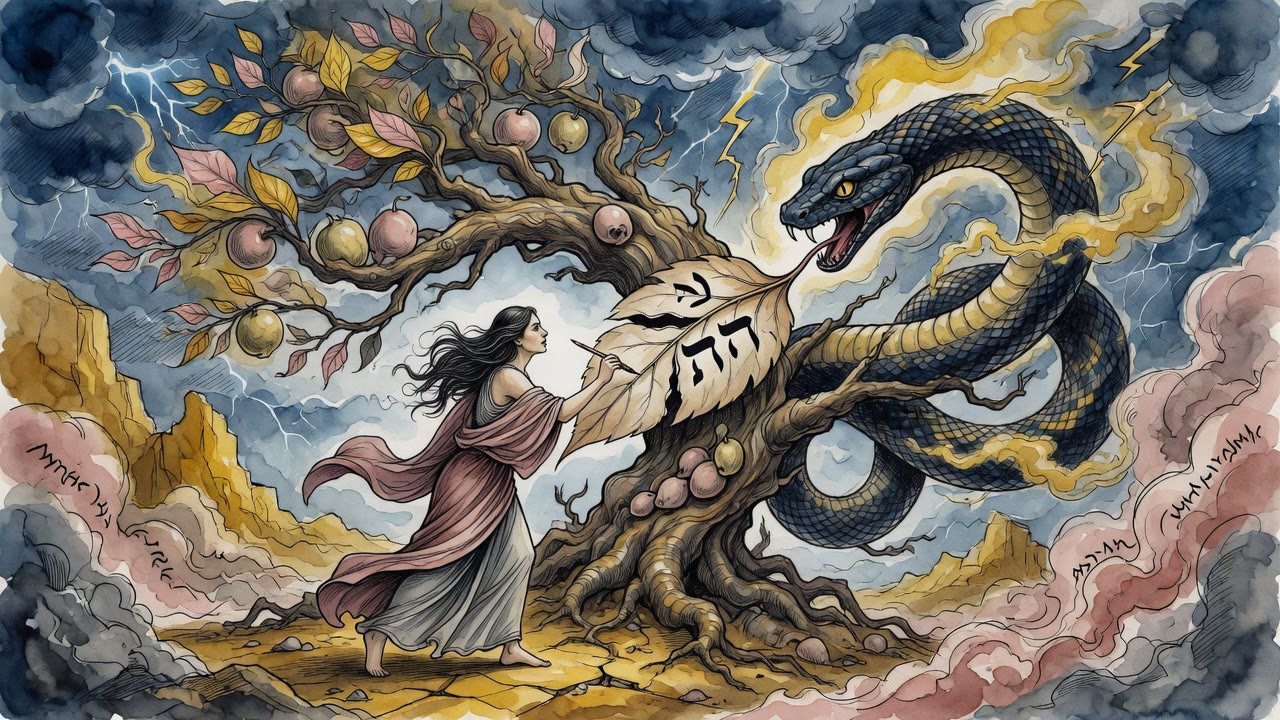
She had not come from the earth. He had come from the earth. She had not come from seed, the way every son and daughter after them would come. She had come out of a third place, out of a living body into a living body, the way a gardener cuts a branch off one vine and beds it in the ground and gets a second vine that is not the first vine and is no stranger to it either.

Nothing else in the garden had been made twice like that.

The Serpent Went First and the Man Went Last

Later came fruit, and hiding, and the sound of walking in the cool of the day, and then the sentences.

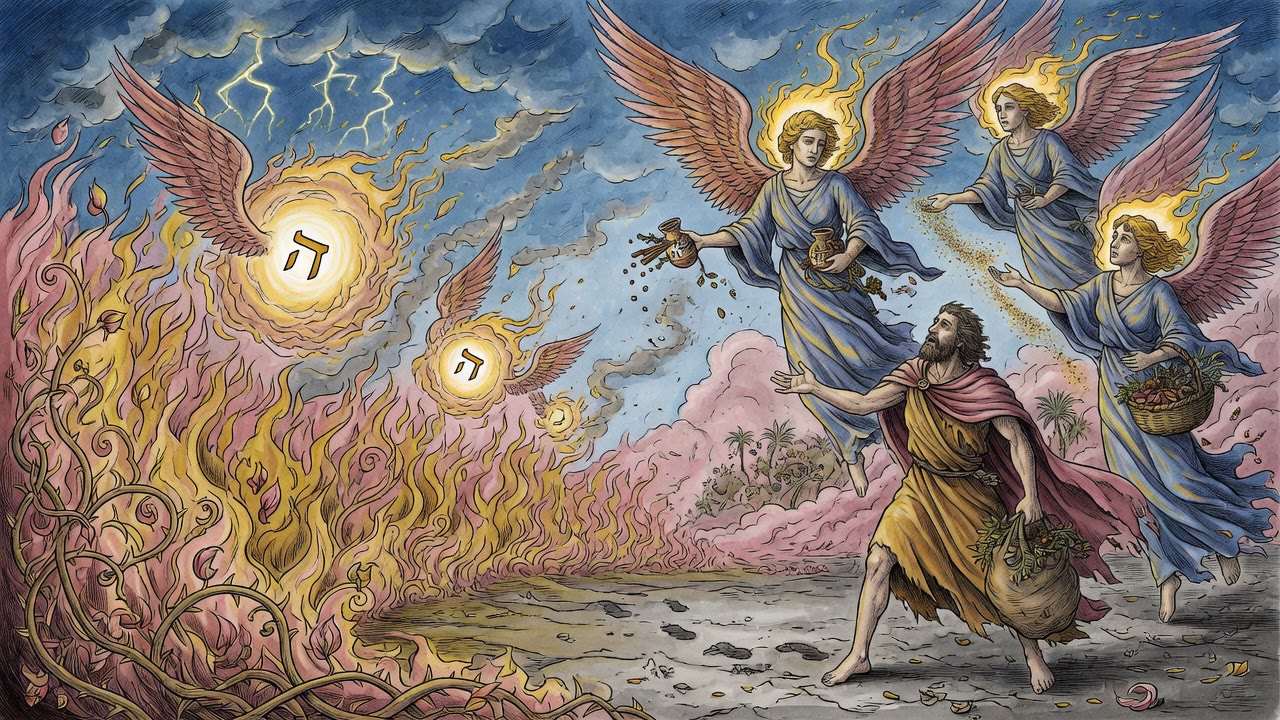
They fell in a fixed order, and the order was not arbitrary. The serpent was sentenced first and lost its going. Eve was sentenced second. Adam was sentenced last and stood through both of theirs before his own arrived.

He worked it out while he waited. The serpent had spoken first and started the whole business. Eve had listened and given way to what she was told, and eaten. He had listened to her and eaten, and the thing he had set above the commandment was his wife's leaning. Three acts, three sentences, each landing in the place its owner had taken.

Standing last in that line was not mercy. It meant his had been the final chance to stop it, and he had let it go past.

What Eve Was Told

"I will greatly multiply thy sorrow and thy conception," she heard. "In sorrow thou shalt bring forth children, and thy desire shall be to thy husband, and he shall rule over thee" (Genesis 3:16).

Adam watched her take it standing. What she had been handed was not a malediction laid on top of her nature. It was the plain freight of the life she was walking into, the labour and the sorrow and the wearing quarrels of a household, the necessary weight carried by anyone who is somebody's companion for a lifetime. Every woman after her would carry the same load, and none of them would be under a special sentence for it.

What did change was the standing between the two of them. She had walked beside him. Now she would turn toward him the way a house turns toward the one who rules it, and the reason lay in the reaching itself. She had grabbed instead of waiting for what was just, and what grabs gets governed.

They went out through the gate and the flame turned over behind them. Adam kept saying the name he had found for her. It was still accurate. She was still the branch off the vine.


← All myths
From the tradition

Sources

6 sources

The texts behind this telling. Some cards carry a translation of the source; others are our own retelling of it, and each card says which. Every card links out to the original.

The Midrash of Philo 23:1The Midrash of Philo

Retold in our words. Read the original at the link below.The Works of Philo Judaeus, trans. C. D. Yonge, London, H. G. Bohn, 1854-1890 · Public Domain

The ancient rabbis, those masters of hidden meanings, saw layers upon layers in even the simplest verses. to just one little phrase from the story of creation and see what they uncovered.

The verse It's that pivotal moment when Adam first lays eyes on Eve. “This,” he proclaims, “is now bone of my bones and flesh of my flesh; she shall be called woman, because she has been taken out of man.”

Okay, straightforward enough. But hold on. The text says "This is now.." Why the word “now”? What was she before? Midrash (מִדְרָשׁ) literally means "inquiry" or "interpretation." It's how the rabbis of old would explore the deeper meanings of the Torah.

Philo, a Jewish philosopher from Alexandria, writing way back in the first century, picks up on this very question in his own way of interpreting the Torah. According to "The Midrash of Philo," Adam says “She” (for “this,” touto in Greek). Notice that Adam doesn’t even seem to know what to call this being in front of him. It's as if he is seeing her for the first time even though something feels deeply familiar.

Philo emphasizes the Greek word touto, “this," to highlight Adam's initial reaction. There's a sense of discovery, of something new and yet intrinsically connected to himself. It's only after that recognition that he names her "woman," understanding her origin and her essence.

So, what does it all mean? Perhaps it’s about recognizing the inherent connection between men and women, a bond so profound that it transcends simple biology. Eve isn't just a separate being; she’s a part of Adam, brought forth into her own unique existence.

The rabbis loved to play with language like this, teasing out hidden meanings and expanding on the biblical narrative. They invite us to do the same. To not just read the words, but to wrestle with them, to question them, and to find our own connections within them.

What do you think? Is it just a simple explanation of a name? Or is there something deeper, something about connection, recognition, and the very nature of creation itself? Maybe the next time you read that verse, you’ll hear Adam’s surprise, his wonder, and the echo of a bond that stretches back to the very beginning.

Full source
The Midrash of Philo 23:2The Midrash of Philo

Retold in our words. Read the original at the link below.The Works of Philo Judaeus, trans. C. D. Yonge, London, H. G. Bohn, 1854-1890 · Public Domain

Stunning, vibrant, utterly unlike anything you've ever encountered. What goes through your mind?

The Midrash of Philo, a fascinating exploration of the early chapters of Genesis, wrestles with just this scenario. It imagines Adam, fresh on the scene, perhaps a little bewildered. He might have been struck dumb, overcome by the sheer improbability of it all. "How," he might have wondered, "could such exquisite beauty spring from mere bone and flesh? From something so… ordinary?"

Flesh and bone aren’t exactly known for their inherent beauty. They're the raw materials, the building blocks. How did they transform into this vision of grace and life? It almost seems impossible. But as the Midrash (rabbinic interpretive commentary) points out, it is possible, because God Himself was the architect, the artist. He’s the one who breathed life and beauty into the clay, so to speak.

Then, the Midrash suggests, Adam might have a different reaction, a more affirmative one. He might have recognized her, deep down, as "living being, my bone and my flesh." He sees her as an extension of himself, a part that was missing and now is found.

There's something incredibly human about this. He acknowledges the very physicality of their connection. The Midrash goes on to explain that when Adam mentions bone and flesh, he's referring to the whole corporeal structure – the bones, flesh, entrails, veins, the whole shebang! It's a grounded, almost anatomical understanding of their shared origin.

And then there's the question of her name. In Greek, the Midrash tells us, woman is gyne. This name, it argues, is fitting because of her power to produce, to bring forth new life. She is fertile ground, ready to receive the seed and create. Or, as the prophet says, she was made out of man, not from the earth like Adam. She’s not from seed, as all their descendants would be. Instead, she occupies this unique, "intermediate nature."

The Midrash offers a beautiful simile: "like a branch, brought out of one vine to produce another vine." Eve isn't just a copy of Adam; she's a new shoot, a continuation of life, branching out to create something new and beautiful. She's connected to the source, yet distinct and capable of bearing her own fruit.

So, what does this all mean? Maybe the Midrash is reminding us that beauty and life can emerge from the most unexpected places. Maybe it's highlighting the profound connection between man and woman, a bond that is both physical and spiritual. Or perhaps it's simply inviting us to marvel at the creative power of God, who can transform the ordinary into the extraordinary. Whatever the interpretation, it gives us so much to contemplate.

Full source
The Midrash of Philo 14:1The Midrash of Philo

Retold in our words. Read the original at the link below.The Works of Philo Judaeus, trans. C. D. Yonge, London, H. G. Bohn, 1854-1890 · Public Domain

The Midrash of Philo asks: Why does God curse the serpent first, then the woman, and the man last of all? (Genesis 3:14).

The source holds the order as a question. Motives for that sequence are not given here.

Full source
The Midrash of Philo 14:2The Midrash of Philo

Retold in our words. Read the original at the link below.The Works of Philo Judaeus, trans. C. D. Yonge, London, H. G. Bohn, 1854-1890 · Public Domain

Sometimes, it's not just about what happened, but when it happened. And that order can be brimming with meaning.

Take the story of the Garden of Eden. The familiar version gives us the tale: the serpent, Eve, Adam, the forbidden fruit. But have you ever considered the sequence of events?

Philo, a Jewish philosopher who lived in Alexandria in the first century CE, certainly did. And his interpretation, preserved in what's known as The Midrash of Philo, offers a fascinating perspective. He suggests the order of the verses in Genesis, the way the story is told, mirrors the order in which the offenses were committed.

First, there's the serpent's deceit. Then comes the woman’s sin, succumbing to the serpent's seduction. And finally, the man's transgression – yielding to the woman’s urging instead of God's commandment.

Simple enough. But Philo sees something deeper at play. He argues this order isn't just chronological; it's a profound allegory. An allegory, by the way, being a story or image that contains a hidden meaning.

According to Philo, the serpent isn't just a snake. It represents desire.: that primal urge, the craving for something forbidden. And the woman? She symbolizes the outward sense, our senses, our perceptions of the world around us. Finally, the man represents the intellect, our rational mind.

So, what does it all mean? Philo brilliantly suggests that desire, that sneaky serpent, is the instigator, the "infamous author" of sin. It first deceives our senses, tempting us with what we see, hear, taste, touch, and smell. Then, these senses, now captivated, ensnare our minds.

In other words, desire clouds our judgment, our senses amplify the temptation, and our intellect, weakened, gives in. It's a cascade, a chain reaction. This interpretation adds a layer of psychological depth to the Eden story. It's not just about breaking a rule; it's about the internal struggle between desire, perception, and reason.

How often do we fall into similar traps? How often does a fleeting desire lead us down a path we later regret? And what does it say about the power of our senses and the strength of our intellect to resist? Maybe the story of Eden isn’t just a tale from the past, but a mirror reflecting our own daily battles.

Full source
The Midrash of Philo 16:1The Midrash of Philo

Retold in our words. Read the original at the link below.The Works of Philo Judaeus, trans. C. D. Yonge, London, H. G. Bohn, 1854-1890 · Public Domain

The Midrash of Philo turns to Philo Reframes Eve's Curse as Moral Philosophy.

The verse reads, “Unto the woman He said: ‘I will greatly multiply thy pain and thy travail; in pain thou shalt bring forth children; and thy desire shall be to thy husband, and he shall rule over thee.’” (Genesis 3:16). It sounds pretty harsh, doesn’t it? Punishment for eating from the Tree of Knowledge, plain and simple.

Is it really that simple?

Philo, the 1st-century Jewish philosopher from Alexandria, offers us a fascinating way to look at this curse. Or, perhaps, it's not just a curse. Maybe there’s something deeper happening here, something more about the nature of existence itself.

The Midrash of Philo, as it’s known, asks a pointed question: "Why is the curse pronounced against the woman the multiplication of her sadness and groans, that she shall bring forth children in sorrow, and that her desire shall be to her husband, and that she shall be ruled over by him?"

He doesn't offer a simple answer. Instead, he invites us to consider the nature of creation and the role of woman within it. Childbirth is painful. That's undeniable. But is that pain purely punitive? Or is it intrinsically linked to the miracle of bringing new life into the world? The multiplication of "sadness and groans" could be interpreted not just as suffering, but as the amplification of feeling itself. A woman's capacity for joy, for love, for connection… and yes, for sorrow, is amplified through the experience of motherhood. It's a powerful, transformative process.

And what about the part where "her desire shall be to her husband, and he shall rule over her?" This is where things get tricky, and interpretations vary widely. Some see this as a straightforward declaration of male dominance. Others, however, see it as a description of the inherent dynamic within a relationship, a dance of power and desire.

Perhaps the "rule" isn’t about oppression, but about structure. In the ancient world, familial structure was essential for survival. The husband, often the provider and protector, held a certain authority. But that doesn't negate the woman's power, influence, or essential role within the family and society. It's a partnership, even if it’s an imbalanced one from our modern perspective.

Ultimately, (Genesis 3:16) is a verse that continues to spark debate and reflection. It reminds us that the story of Adam and Eve is not just a tale of ancient sin, but a mirror reflecting our own human experiences of love, loss, pain, and power. And maybe, just maybe, it also invites us to re-examine those ancient structures and create a more equitable and compassionate world for ourselves and for generations to come.

Full source
The Midrash of Philo 16:2The Midrash of Philo

Retold in our words. Read the original at the link below.The Works of Philo Judaeus, trans. C. D. Yonge, London, H. G. Bohn, 1854-1890 · Public Domain

That internal struggle... it's been a topic of contemplation for millennia. And interestingly, sometimes it's been explored through the lens of gender.

I know what you might be thinking: "Here we go.." But stick with me, because the ancient text known as The Midrash of Philo – a collection of interpretations and elaborations on the Torah – offers a really fascinating, albeit somewhat dated, perspective on this inner conflict. This particular section, simply titled "16," dives into the relationship between our senses, our minds, and the choices we make.

The passage begins by drawing an analogy: "Every woman who is the companion for life of a husband suffers all those things, not indeed as a curse but as necessary evils." Now, before we get our hackles up, it's crucial to understand the historical context. Philo, a Jewish philosopher living in Alexandria in the first century CE, was deeply influenced by Greek thought. He often used allegory to unpack complex spiritual ideas. In this case, he's not necessarily making a statement about women themselves, but rather using the marital relationship as a metaphor for something deeper within us.

He goes on to say that "the human sense is wholly subjected to severe labour and pain, being stricken and wounded by domestic agitations." Think of it this way: our senses – sight, hearing, smell, taste, touch – are constantly bombarded with information. They're servants, in a way, constantly feeding data to our minds. "The sight is the servant of the eyes, hearing of the ears, smelling of the nostrils, taste of the mouth, feeling of the touch." Each sense has its job, bringing the outside world in.

But here's where it gets interesting. Philo argues that for a "worthless and wicked man," life is "full of pain and want." And this arises because everything done in accordance with the outward senses must be "mingled with pain and fear." In other words, if we're driven purely by our senses, by immediate gratification and selfish desires, we're setting ourselves up for a life of suffering.

Then comes the really provocative part: "In respect of the mind a conversion of the outward sense takes place towards the man not as to a companion, for it, like the woman, is subject to authority as being depraved, but as to a master, because it has chosen violence rather than justice."

Whoa. Okay, let's unpack that. Philo suggests that the mind can either be a companion or a master to our senses. If the mind chooses "violence rather than justice" – meaning, if it prioritizes selfish desires over ethical considerations – it becomes a tyrant, enslaving the senses and leading us down a destructive path. The mind, like the "woman" in the initial analogy, is "subject to authority as being depraved," implying that our senses, when unchecked by reason and morality, can lead us astray.

Now, we can certainly critique Philo's use of gendered language. It reflects the patriarchal norms of his time, and it's a perspective that many find problematic today. But if we look beyond the surface, we can find a timeless message about the importance of self-control, ethical decision-making, and the need to cultivate a mind that is guided by wisdom and compassion, not just by fleeting sensory impulses.

So, what do you think? Does this ancient text offer any relevant insights into the struggles we face today? Can we learn something from Philo's allegory, even as we challenge its outdated assumptions? Maybe the key is to recognize the power of our senses without letting them dictate our every move – to strive for a balance between desire and reason, between immediate gratification and long-term well-being.

Full source