6 min read

Eve Ate First and the Sentences Fell in Order

Adam blamed the woman. She blamed the snake. The snake had no one left to accuse, and the ground it was given became its road.

Curated by Arthur · Told by Maggid ·
Table of Contents
  1. The One Who Spoke First
  2. Three Voices Called in Order
  3. Named Last
  4. A Letter Closed on Three Sides

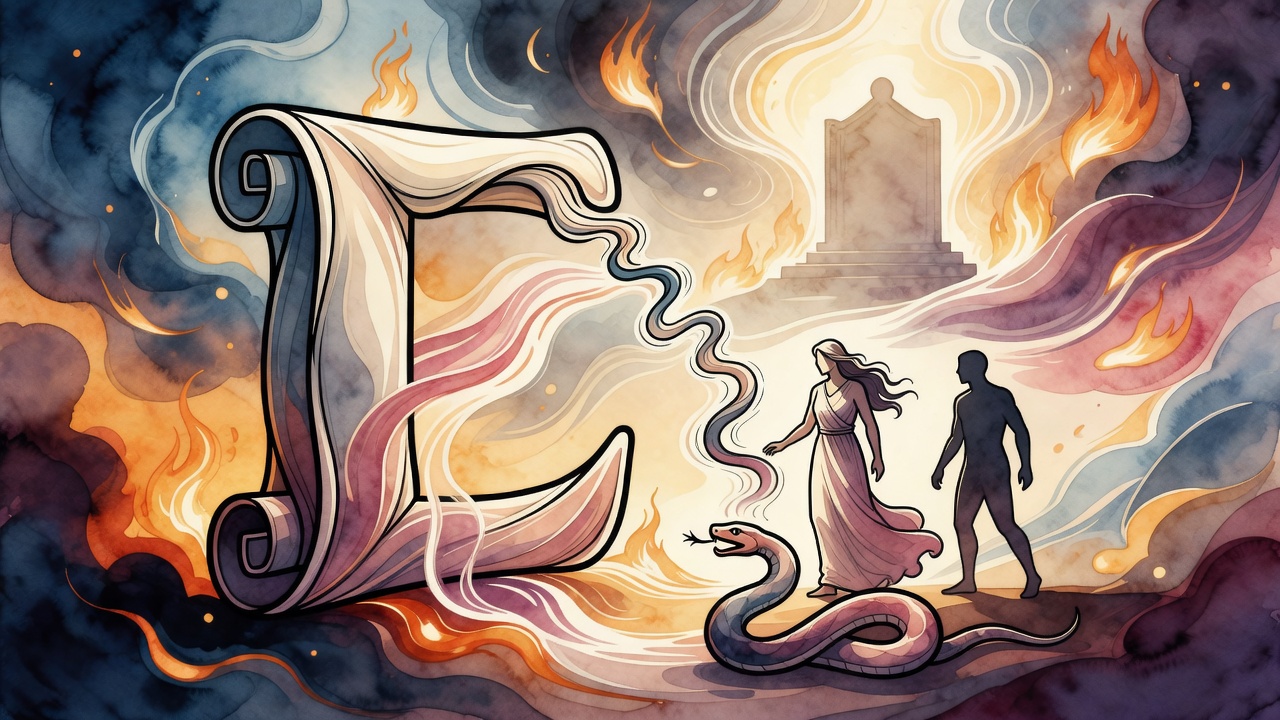
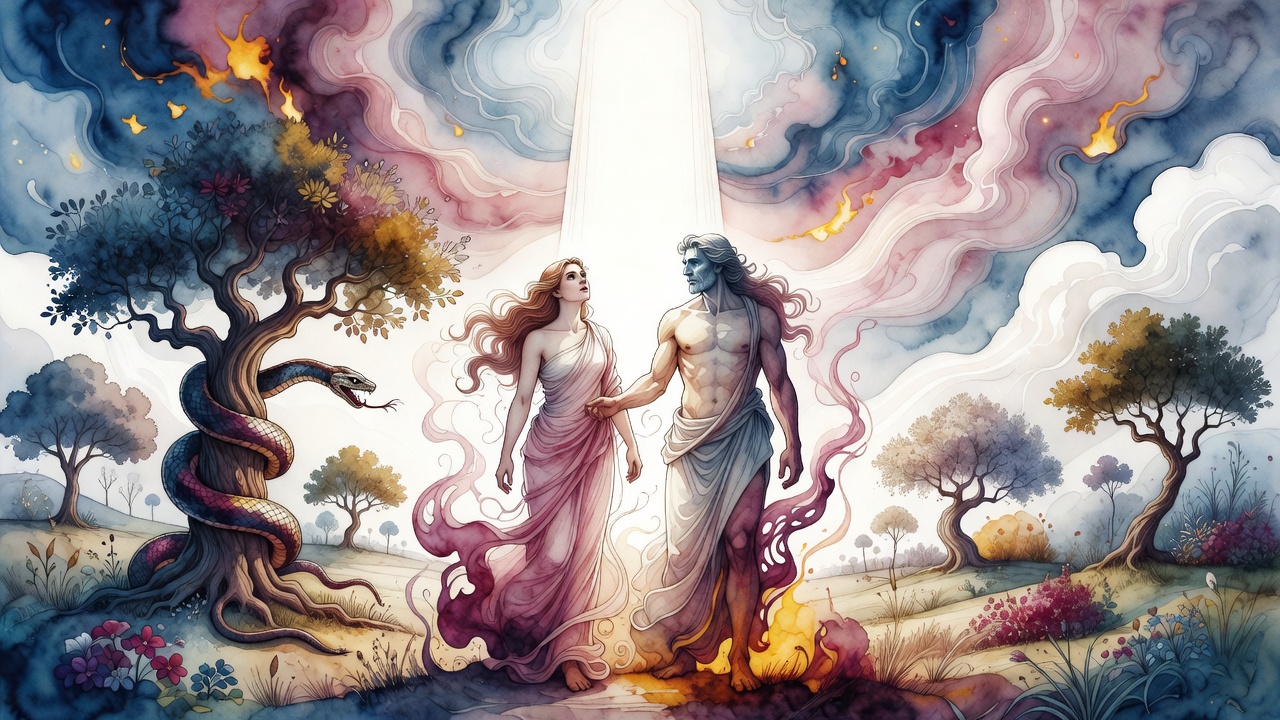
Eve ate first. She chewed and swallowed and went on standing there, and Adam watched her not die.
Eve Ate First and the Sentences Fell in Order Click for full size

That was what he could not get past. He had been told what the tree cost, and he had believed it, and here she was with the juice on her chin and her color ordinary and her breathing ordinary, holding the rest of it out toward him. The command had been one sentence long and it had been spoken to him directly, before she existed. She was alive in front of him and the sentence was only a sentence.

He reached, and the reach was less a decision than a leaning, the way a man leans toward whoever has just spoken to him. His hand closed on the fruit while the words he had been given were still perfectly legible in his memory. He took her inclination over the commandment, and the whole thing took about as long as it takes to put out an arm.

The One Who Spoke First

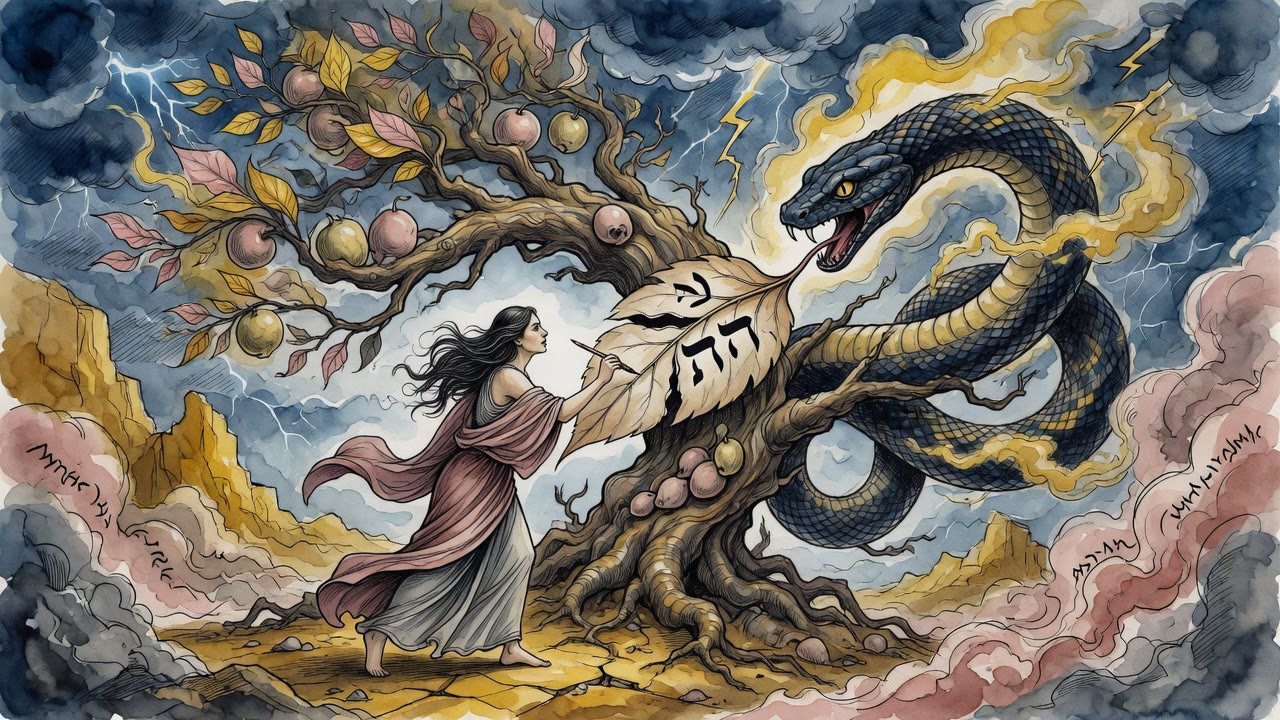
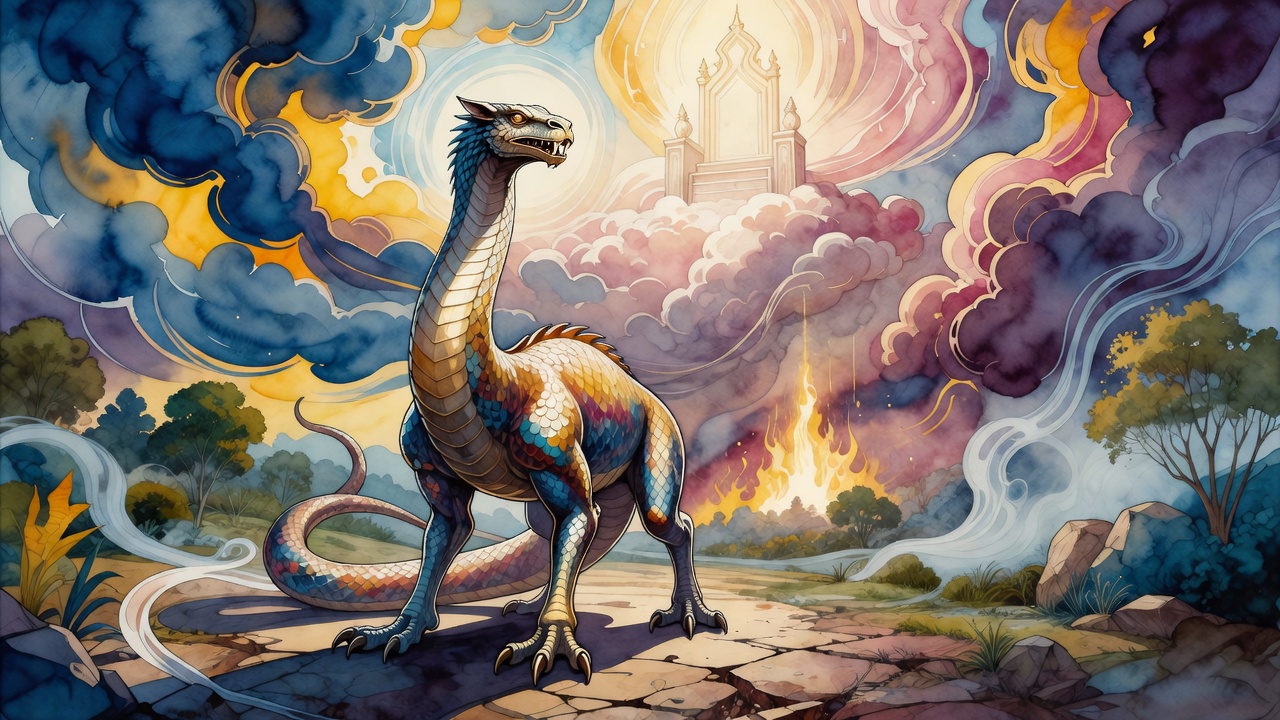
None of it had begun with either of them. The serpent had gotten there first, and the serpent had worked in the correct order, because there is an order to this and it does not start with the part of a person that argues.

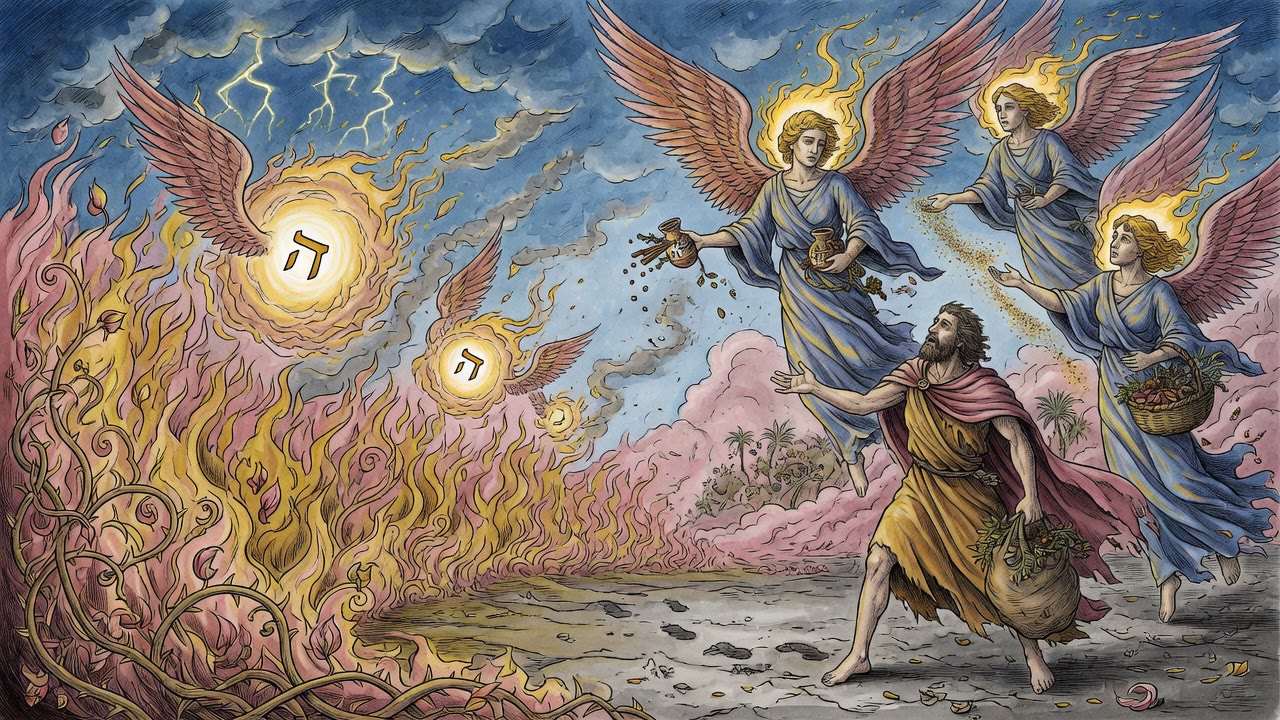
It went to the eyes. It got her looking at the tree as a thing to be looked at, and then as a thing to be wanted, and then as a thing already halfway into her hand, until by the time she was tasting it there was nothing left awake in her that was still weighing what she had been told. Desire came in through what she could see and smell and touch. Then what she could see and smell and touch carried it inward and took the part of her that reasons.

The same road ran through Adam a step behind her, though it did not have to bother with the tree at all, since by then it had her.

Three Voices Called in Order

The Voice came through the garden at the wind of the day, and it did not gather the three of them into a crowd and scold the crowd.

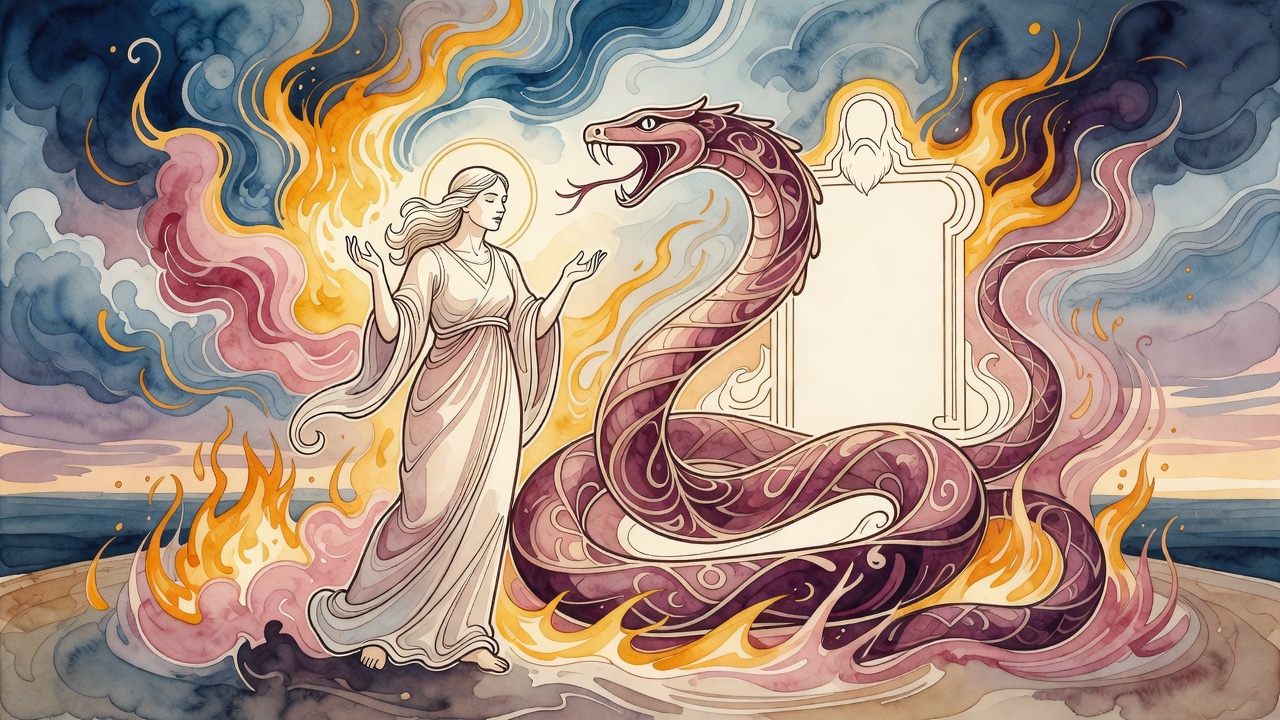
Adam answered first and handed it sideways. The woman gave it to me, he said, and then he handed it upward as well, since it was the woman You put here with me. Eve pointed at the serpent, which was the truth as far as it went. The serpent had nothing underneath it left to point at.

So the sentences fell in the order the offenses had been committed rather than the order the confessions had been made. The serpent went first, because it had gone first, and it got the belly and the dust and the enmity forever. The woman went second, because she had gone second, and she got the pain and the wanting and the being ruled over. Adam was called third.

Named Last

He had been standing there the entire time expecting to be called first.

He was the one who had heard the command with his own ears. He was the one the garden had been handed to and the one who was supposed to guard it. But when the reckoning came he had to stand through two other sentences before his own arrived, and it was not because he was being spared. He was third in the chain and the chain was being read out in the order it had actually run. Desire had opened the thing, the senses had carried it, and the mind had gone last and had gone anyway.

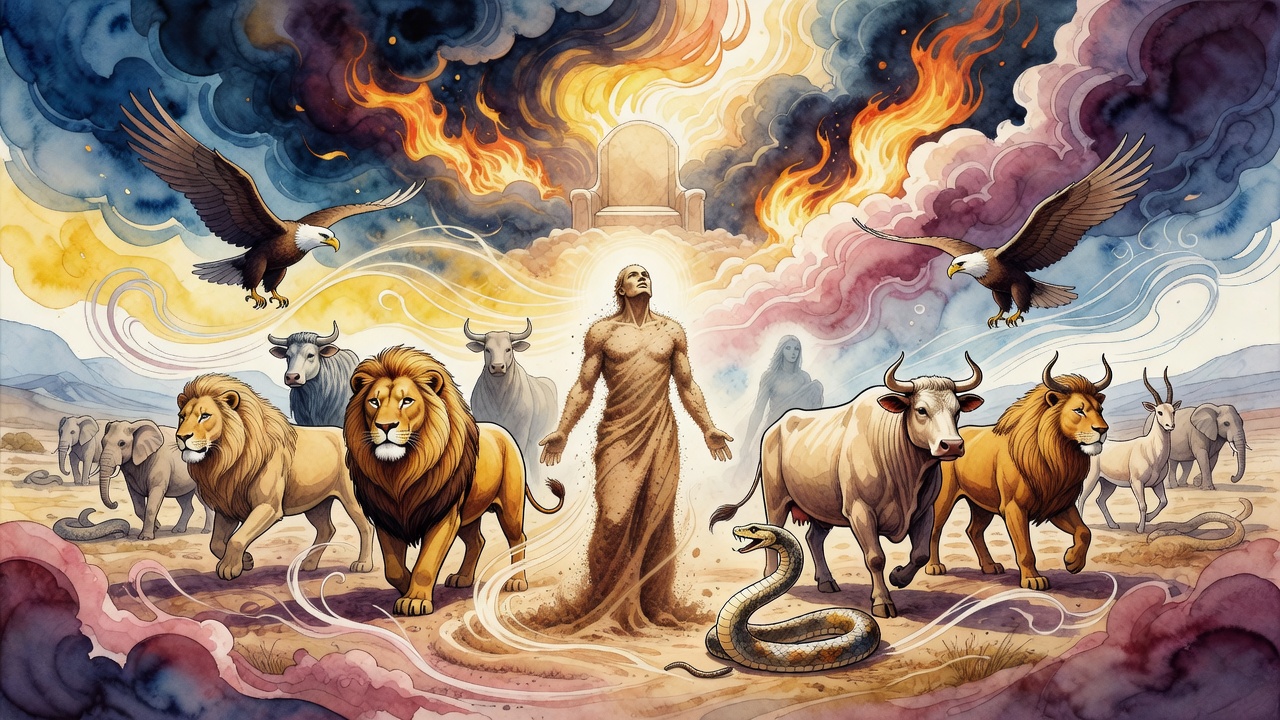
What he got was ground that would fight him, sweat on his face for his bread, and dust at the far end of it. He had not been made the way the animals were made, by a word said outward into the world. He had been made after a word said inward, "let us make," and what was set inside him was a soul in the image of the Presence, and that is the thing that had just been used to select a piece of fruit off a branch.

A Letter Closed on Three Sides

Outside the gate there was exactly one direction available.

The world had been started with a letter that is closed on three of its sides, shut above and shut below and shut behind, with only the front of it left open, and that had been the arrangement since the first word of the first verse. A man may ask about the days from the day human beings were set on the earth, and forward from there (Deuteronomy 4:32). He may not ask what is over the ceiling, or under the floor, or what was going on before the first morning. The wall is not a punishment. The wall is only the wall.

Adam turned around once. Behind him were the cherubim and the sword turning every way, and behind the sword was the tree and the shade and the hour before he put out his arm, and not one of those was a question he was permitted to put to anybody. So he faced forward, since forward was open, and the ground he would fight for the rest of his life began at his feet.

Eve walked out beside him with the taste still in her mouth. Behind them the gate made no sound whatsoever.


← All myths
From the tradition

Sources

3 sources

The texts behind this telling. Some cards carry a translation of the source; others are our own retelling of it, and each card says which. Every card links out to the original.

The Midrash of Philo 14:2The Midrash of Philo

Retold in our words. Read the original at the link below.The Works of Philo Judaeus, trans. C. D. Yonge, London, H. G. Bohn, 1854-1890 · Public Domain

Sometimes, it's not just about what happened, but when it happened. And that order can be brimming with meaning.

Take the story of the Garden of Eden. The familiar version gives us the tale: the serpent, Eve, Adam, the forbidden fruit. But have you ever considered the sequence of events?

Philo, a Jewish philosopher who lived in Alexandria in the first century CE, certainly did. And his interpretation, preserved in what's known as The Midrash of Philo, offers a fascinating perspective. He suggests the order of the verses in Genesis, the way the story is told, mirrors the order in which the offenses were committed.

First, there's the serpent's deceit. Then comes the woman’s sin, succumbing to the serpent's seduction. And finally, the man's transgression – yielding to the woman’s urging instead of God's commandment.

Simple enough. But Philo sees something deeper at play. He argues this order isn't just chronological; it's a profound allegory. An allegory, by the way, being a story or image that contains a hidden meaning.

According to Philo, the serpent isn't just a snake. It represents desire.: that primal urge, the craving for something forbidden. And the woman? She symbolizes the outward sense, our senses, our perceptions of the world around us. Finally, the man represents the intellect, our rational mind.

So, what does it all mean? Philo brilliantly suggests that desire, that sneaky serpent, is the instigator, the "infamous author" of sin. It first deceives our senses, tempting us with what we see, hear, taste, touch, and smell. Then, these senses, now captivated, ensnare our minds.

In other words, desire clouds our judgment, our senses amplify the temptation, and our intellect, weakened, gives in. It's a cascade, a chain reaction. This interpretation adds a layer of psychological depth to the Eden story. It's not just about breaking a rule; it's about the internal struggle between desire, perception, and reason.

How often do we fall into similar traps? How often does a fleeting desire lead us down a path we later regret? And what does it say about the power of our senses and the strength of our intellect to resist? Maybe the story of Eden isn’t just a tale from the past, but a mirror reflecting our own daily battles.

Full source
Bereshit Rabbah 1:10Bereshit Rabbah

Retold in our words. Read the original at the link below.The Sefaria Midrash Rabbah, 2022 · CC-BY

Jewish tradition, in its wisdom, offers a gentle, yet firm, hand on our shoulder, guiding us back to the here and now.

The very first verse of the Torah, Bereshit, "In the beginning," sparks this curiosity. But why Bereshit? Why that particular word? Rabbi Yona, quoting Rabbi Levi in Bereshit Rabbah, asks a profound question: Why was the world created with the letter beit (ב), the first letter of Bereshit?

The answer, they suggest, lies in the shape of the letter itself. The beit is closed on three sides but open in the front. This teaches us that while we can explore the world from the moment of creation onward, delving into what came before, what is above, or what is below is beyond our grasp. It's like a gentle "Do Not Enter" sign posted on the ultimate mysteries.

Bar Kapara reinforces this idea, drawing from (Deuteronomy 4:32): "For ask now of the early days that were before you..from the day that God created man upon the earth." We are invited to inquire from the day of creation, but not before. We can explore the heavens from one end to the other, but what lies beyond is not for us to investigate.

But there's more to the beit than just its shape. Rabbi Shimon ben Pazi, along with Bar Kapara, offers another interpretation. The numerical value of beit is two. This hints at the existence of two worlds: Olam HaZeh (this present world), this world, and Olam HaBa, the World to Come. The beit, therefore, is a symbol of duality, of the seen and the unseen.

The beit alludes to berakha, blessing. Why not start with the letter alef (א)? Because, they explain, alef can allude to arira, a curse. The Holy One, blessed be He, chose to create the world with a letter of blessing, hoping for its endurance. It’s as if the very act of creation was imbued with a sense of optimism.

Think about this imagery: the beit has two little protrusions. If you were to ask it, "Who created you?" it would point upwards, signifying the One above. "And what is His name?" it would then point to the alef behind it, the first letter of Adonai, one of God’s sacred names. What a beautiful, visual reminder of God's presence in creation!

Now, what about the poor, overlooked alef? Rabbi Elazar bar Hanina, citing Rabbi Aha, shares a poignant image. For twenty-six generations – from Creation to the giving of the Torah – the alef complained before God. "Master of the universe," it cried, "I am the first of the letters, yet you did not create Your world with me!"

God reassures the alef, explaining that the world was created for the sake of the Torah. And at Sinai, when the Torah is given, the first word will begin with the alef: Anochi, "I am the Lord your God" (Exodus 20:2). The alef would have its moment.

Rabbi Hoshaya adds another layer. Why is it called alef? Because God "consented concerning a thousand" (elef in Hebrew). (Psalm 105:8) states, "The word that He commanded for one thousand generations." The Torah was meant to be given to the thousandth generation, and so, the first letter of that Torah received the name alef.

So, what does all this mean for us? Perhaps it's a reminder to embrace the present, to find meaning and purpose within the world as it is, rather than getting lost in endless speculation about what was or what might be. It’s an invitation to see the blessing inherent in creation, to acknowledge the Divine presence that permeates all things. And maybe, just maybe, to give the letter alef a little extra appreciation.

Full source
Tikkunei Zohar 239:7Tikkunei Zohar

Retold in our words. Read the original at the link below.Sefaria-hosted English translation · CC-BY

The Jewish mystical tradition, especially the Kabbalah, loves to wrestle with these kinds of questions. And one of the most fascinating places to find these wrestling matches is in the Tikkunei (spiritual repair) Zohar, a collection of commentaries on the Zohar itself."

The passage begins with a curious question about the very name of God used in the creation story. Why does the Torah say "Elohim created the human"? Why not YHVH – the sacred, unpronounceable name of God? The Tikkunei Zohar suggests a powerful answer: Elohim, in this context, refers to the Shekhinah (the Divine Presence).

The Shekhinah is a many-sided concept, but It is often considered the feminine aspect of the Divine. So, the Tikkunei Zohar is telling us that when the Torah says we were created in the image of God, it's specifically referring to the image of the Shekhinah. The text connects this to the n’shamah, the soul within each person. "About this soul.that is in the human, it says ‘b’tsalmo’ – in the image of the Shekhinah."

What does it mean to be made in the image of the Divine Presence? It suggests that we, in our essence, are meant to embody qualities of compassion, empathy, and nurturing – qualities often associated with the feminine. It also implies a profound connection between our souls and the Divine.

The text then shifts to the mitzvah of b’rit milah, circumcision. It states that "One who guards/protects [circumcision], he is compared as partner to Me, in My image." The b’rit, the covenant, is a powerful symbol of commitment and connection to God. According to this passage, upholding this covenant makes us partners with God, reflecting His image. The text explicitly states that someone who guards the b’rit merits receiving Malkhut (Sovereignty), Kingship – another name for the Shekhinah.

Finally, the passage touches upon the famous phrase, "Let us make Adam/ a human." To whom was God speaking? The Tikkunei Zohar answers that the "Cause of causes" – God – spoke "to none other than Yud He’ Va’v He’, which is [drawn] from out of ten Sefirot (the divine emanations)." Yud He’ Va’v He’ is the tetragrammaton, the four-letter name of God. The ten Sefirot are the ten emanations or attributes through which God manifests in the world, according to Kabbalah.

So, in this view, the creation of humanity was a collaborative act within the Divine itself, involving all the attributes and aspects of God. It wasn't a solitary act, but a unified expression of the Divine will.

What does all this mean for us today? Perhaps it's an invitation to see ourselves not just as individuals, but as reflections of the Divine, imbued with the potential for compassion and connection. Maybe it’s a reminder that our actions, especially our commitments to covenant and community, shape our relationship with the Shekhinah. And maybe, just maybe, it’s a glimpse into the profound mystery of what it truly means to be human.

As we continue to explore these ancient texts, may we find new insights and inspiration for living more meaningful and connected lives.

Full source