Parshat Bereshit5 min read

Eve Named Cain as a Partner With the Lord

She looked at the first baby ever born and said it took three to make him. She and Adam gave the body. God gave the soul. The boy grew up to kill.

Curated by Arthur · Told by Maggid ·
Table of Contents
  1. Three Hands Over One Cradle
  2. Why One Man First
  3. Six Hours That Would Not Hold
  4. The Face That Would Not Stay Soft
  5. What the First Mother Still Teaches
Eve Named Cain as a Partner With the Lord Click for full size

Three Hands Over One Cradle

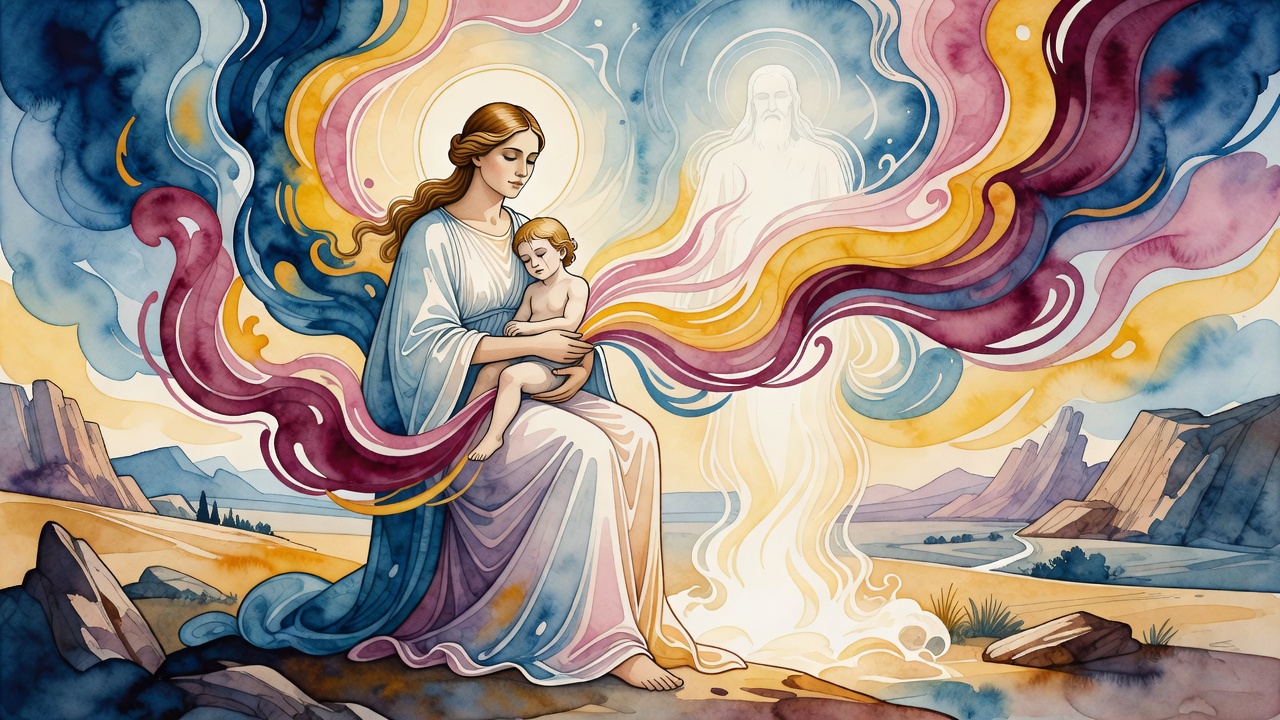
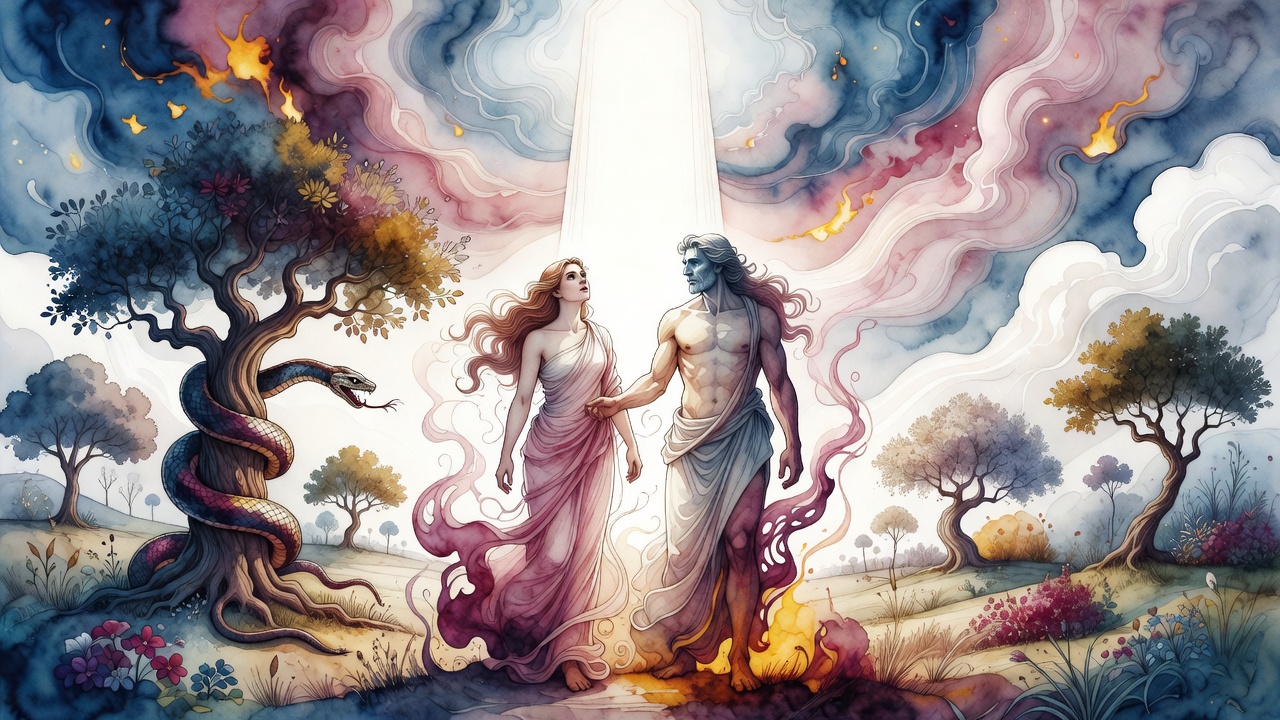
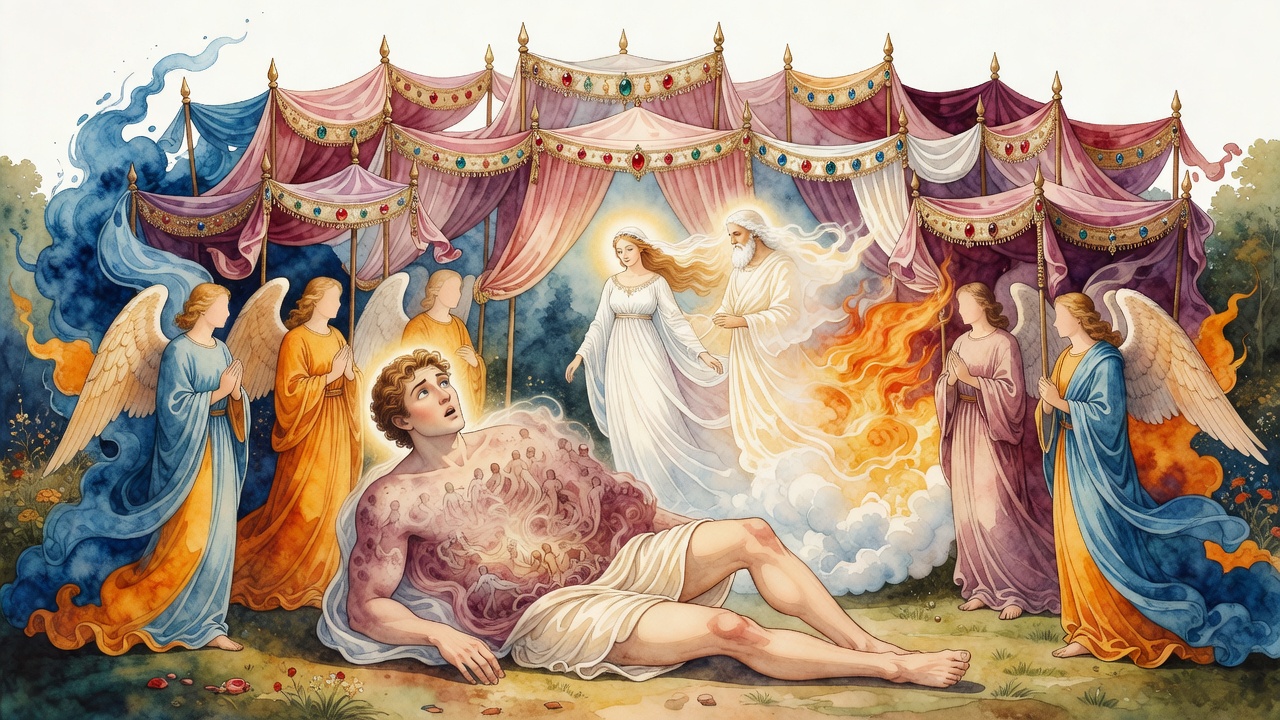
Eve looked down at the first baby ever born and said a sentence no mother after her could quite repeat. "I have acquired a man with the Lord." She meant the arithmetic of making. Until that hour, she explained, a child took three. She and her husband shaped the body, the arms and legs and frame. God supplied the soul. Flesh from the parents. Breath from heaven. So she named him Cain, from kaniti, "I acquired," not only a son but a son built in partnership with the Creator.

This child, she said, was made between Him and me. Standing over the cradle she saw only the miracle of three hands shaping one life. The same boy would later become the world's first murderer. The name did not know that yet. Names often arrive before the history that will break them.

Adam stood a little back, still learning what a father is when there has never been one. He heard her claim the third partner out loud and felt the old loneliness of being the first man ease by one small breath in a small chest.

Why One Man First

Far behind that cradle stood the reason the human race began with a single man. The rabbis taught that because Adam stood alone, a single life is worth an entire world. Whoever destroys one soul of Israel destroys a whole world. Whoever saves one soul saves a whole world. Every person carries the descendants they might ever have, humanity in miniature.

One ancestor also keeps the peace. No one can boast a nobler bloodline when every face traces to the same father. The lonely origin silences heretics who claim two rival powers shaped the world. One Creator made one man. Then comes the marvel of the seal. A human king stamps thousands of identical coins. The Holy One stamps every person with the seal of Adam, and no two faces match. Because of that uniqueness each person is commanded to say the boldest of words: for my sake the world was created.

Eve held uniqueness in her arms and felt the whole world condensed into a weight that needed feeding. She did not know she was holding a world that could be spent in a field with a stone.

Six Hours That Would Not Hold

The midrash links three who could not wait six hours before disaster. Adam fell before noon of his first day. Israel grew restless waiting for Moses and built the calf. Sisera's mother watched for a chariot that never returned. The same Hebrew root for delay ties them. Ease is a short rope. Eve, who had already tasted the fruit before noon seemed long, now watched a child sleep and tried to believe the delay would be different this time.

Beside the verse of one flesh the serpent had watched their intimacy and burned with desire. The text refuses to break the flow of his story. Desire that is not partnership becomes theft. Partnership that forgets the third partner becomes pride. Eve's naming tried to hold the third partner in the room: God still in the making of every breath.

She counted the hours of the boy's first day the way a woman counts after a near drowning. Six hours. Twelve. A night. The rope of ease held. For a while.

The Face That Would Not Stay Soft

Cain grew. His face was like Adam's seal and like no other face. He brought an offering. His brother brought a better one. The field opened its mouth for a quarrel no midwife could soothe. When blood hit the ground, the whole world that had been packed into one soul spilled outward as a charge against the killer. Destroy one life and you destroy a world. Eve's partnership sentence hung in the air like a broken vow she had not broken alone.

She had said three made him. Now one of the three, the boy's own will, had unmade another. Adam did not stamp identical coins. God does not. Cain proved the uniqueness by choosing a path no duplicate could share. The ground that had received Abel's blood refused easy speech with the man who spilled it.

Eve's hands, which had shaped a body in partnership with Heaven, now covered her mouth so the first scream would not become a second fruit of knowledge she could not swallow.

What the First Mother Still Teaches

Later law would argue Noahide marriage and the meaning of one flesh, who may marry whom, how a bond is made and dissolved among the nations before Sinai. All of that still rests on the claim Eve voiced first: human making is never only two. The soul arrives from elsewhere. The body is shared work. The name she gave tried to keep Heaven in the birth room.

Night after the murder, if a quiet is allowed, Eve might have whispered the old sentence again over empty air. I acquired a man with the Lord. The acquisition had walked away into a land of wandering. The Lord still held the account. Adam still carried the seal that makes every face a world. Between them the first mother learned that partnership with God does not cancel freedom, and freedom can spend a whole world in a single field.

She put a hand on her belly where another life might already be stirring, three hands again, and did not yet know what name she would dare to give.


← All myths
From the tradition

Sources

3 sources

The texts behind this telling. Some cards carry a translation of the source; others are our own retelling of it, and each card says which. Every card links out to the original.

Midrash Aggadah, Genesis 4:1Midrash Aggadah

Retold in our words. Read the original at the link below.Sefaria Community Translation · CC0

The first mother in history looked at the first baby ever born and made a startling claim. "I have acquired a man with the Lord."

Eve meant something precise by it. Until that moment, she explains, making a child took three. She and her husband shaped the body, the arms and legs and frame, while God supplied the soul. The flesh came from the parents. The breath came from heaven.

So she named him Cain, from the Hebrew kaniti, "I acquired." Not just a son. A son built in partnership with the Creator Himself, the limbs hers and her husband's, the living spirit God's own contribution. This child, she said, was made between Him and me.

It is a tender thought from the woman who had just watched the price of knowledge. Every birth, she is saying, is a collaboration with the divine. The same boy she so proudly named would later become the world's first murderer. But standing over the cradle, she saw only the miracle of three hands shaping one life.

Full source
Yalkut Shimoni on Torah 15:3Yalkut Shimoni on Torah

Translation of the source text.Torat Emet (Yalkut Shimoni) · CC-BY-NC

"And God created man" (Genesis 1:27). Therefore the man was created alone, to teach you that whoever destroys a single soul of Israel, Scripture accounts it to him as though he destroyed a whole world, and whoever sustains a single soul of Israel, Scripture accounts it to him as though he sustained a whole world. And for the sake of peace among the creatures, so that a person should not say to his fellow, My father is greater than your father; and so that the heretics should not say, There are two powers in heaven. And to declare the greatness of the King of kings of kings, the Holy One, blessed be He: for a person stamps many coins with a single seal, and they all resemble one another, but the Holy One, blessed be He, stamps every person with the seal of the first man, and not one of them resembles his fellow. Therefore each one is obligated to say, For my sake the world was created. It was taught: The man was created alone for the sake of the righteous, so that they should not say, We are children of the righteous, and the wicked, We are children of the wicked.

Full source
Yalkut Shimoni on Torah 25:1Yalkut Shimoni on Torah

Translation of the source text.Torat Emet (Yalkut Shimoni) · CC-BY-NC

They raised an objection: "And Amram took Yocheved his aunt" (his father's sister)? And "she is indeed my sister, the daughter of my father, but not the daughter of my mother" (Genesis 20:12) implies that the daughter of the mother is forbidden? But consider: was she his sister? She was his brother's daughter; and since this is so, it makes no difference whether from the mother or from the father, she is permitted [to a Noahide]. Rather, this is what Abraham said: I have the kinship of her father's brother with her, from the father and not from the mother.

Rav said: a gentile who came upon his fellow's wife in an unnatural manner is exempt. What is the reason? "To his wife" and not to his fellow's wife; "and he shall cleave" and not in an unnatural manner. It was taught: a convert who converted while married to his sister, whether from the father or the mother, whether before the giving of the Torah or after, must divorce her, the words of Rabbi Meir. And the Sages say: from the mother he must divorce, from the father he may keep her, for a gentile has no recognized father. They objected to him: is it not written, "she is indeed my sister, the daughter of my father"? He answered them according to their own view. Rabbi Meir objected to them: "therefore a man shall leave his father," meaning one near to his father; "his mother," one near to his mother. But is it not written, "and Amram took Yocheved his aunt"? Israel did not even observe the standard of the children of Noah before the giving of the Torah. And they resolved it for him: "therefore a man shall leave" means one near to him through his father and through his mother.

The children of Noah are liable for married women but exempt for betrothed women. A harlot standing in the marketplace whom two men came upon: the first is exempt and the second is liable. But did the first intend to acquire her by intercourse? This tells you that intercourse among the children of Noah acquires [a wife] not according to the rite, and they have no formal divorce, or else both may divorce one another. Rabbi Yohanan said: the wife divorces him and gives him a bill. Rabbi Hiyya taught: one who divorced his wife, and she went and married another, and both went and converted, I do not apply to him "her first husband who sent her away may not [take her again]" (Deuteronomy 24:4). A child of Noah who came upon his wife in an unnatural manner is liable to death; every prohibition among the children of Noah is neither a positive nor a negative commandment but carries death. And how is it derived? "And he shall cleave to his wife and they shall be one flesh," in the place where the two become one flesh.

"And the two of them were naked" (Genesis 2:25). Three did not wait in their tranquility six hours: the first man, as it is written "and they were not ashamed," before six hours came he was in his tranquility [and sinned]; Israel, "and the people saw that Moses delayed (boshesh)" (Exodus 32:1), when six hours came and Moses had not; Sisera, "why is his chariot so long in coming (boshesh)?" (Judges 5:28), he was accustomed to come at the third and fourth hour, and now six came and he did not.

"And they were not ashamed, and the serpent was cunning." It need only have said, "and the LORD God made for the man and his wife garments of skin and clothed them." Why this juxtaposition? To make known from what sin that wicked one leapt upon him: because he saw them engaged in intimacy, he desired her. Rabbi Yaakov said: so as not to interrupt the section of the serpent.

Full source