5 min read

Adam Wakes to Ten Wedding Canopies in Eden

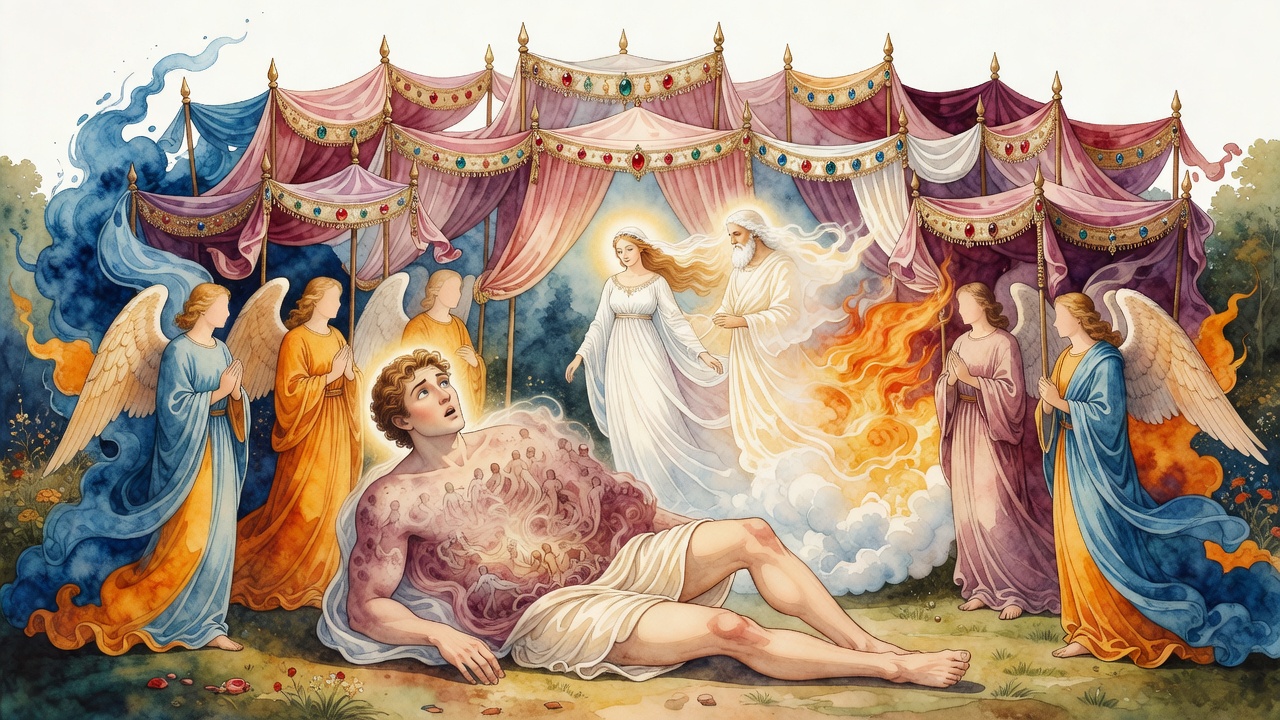
Adam woke from deep sleep to Eve under ten jeweled huppahs, angels as groomsmen, and God Himself leading the bride while all future souls waited in him.

Curated by Arthur · Told by Maggid ·
Table of Contents
  1. Clay from Four Corners
  2. Ten Huppahs and Twenty-Four Ornaments
  3. The Treasury of Souls
  4. The Day That Lasted a Thousand Years
  5. What the Canopies Still Mean

Adam woke with a missing rib and a presence standing over him that made every named animal feel like a draft of a sentence. Eve was there, bone of his bone, and the Garden had already been rearranged for a ceremony no human parent would ever plan. God had not outsourced the wedding. God had set the tables.
Adam Wakes to Ten Wedding Canopies in Eden Click for full size

Ten canopies waited, not one. Jewels threw light that had nowhere to hide.

Clay from Four Corners

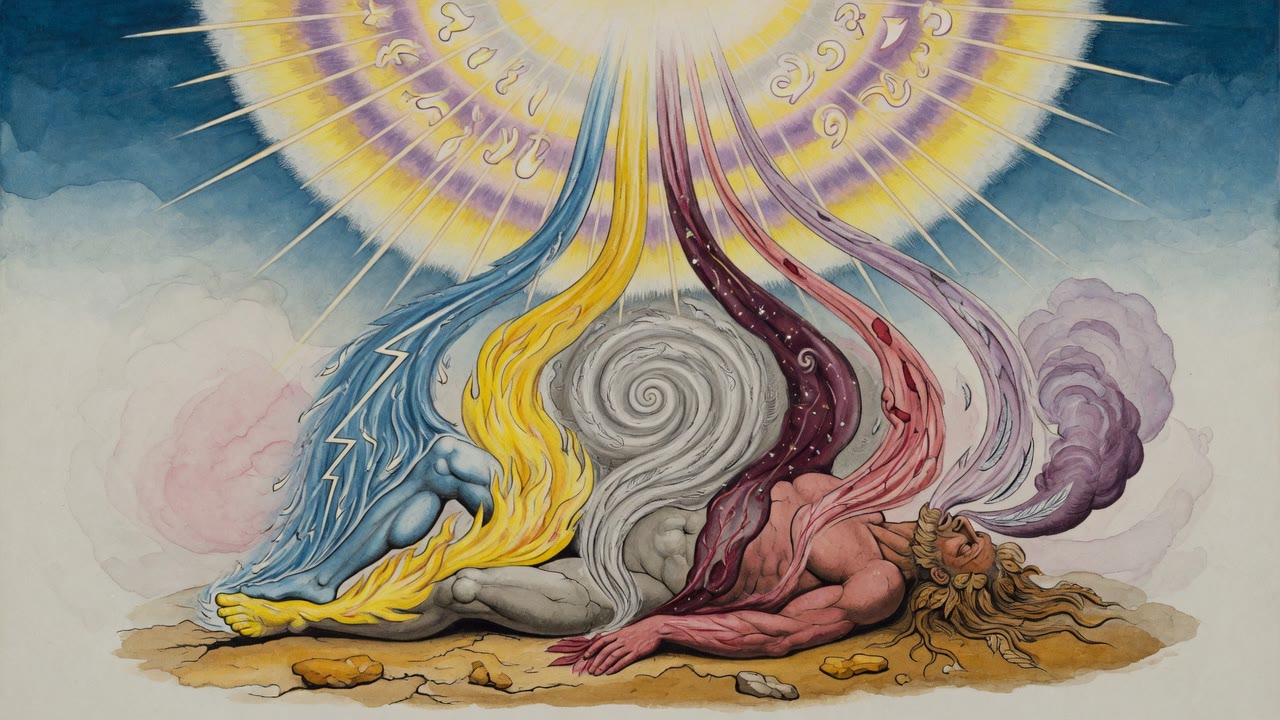
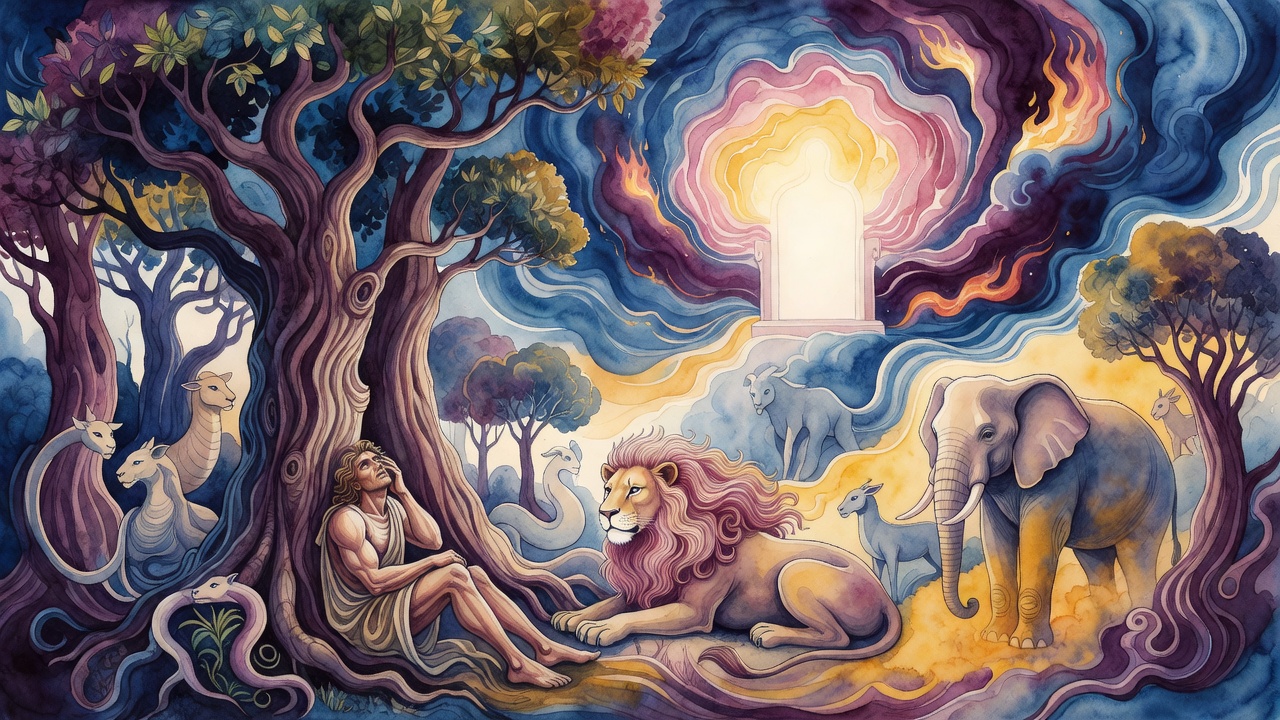
Before the canopies, there had been dust. God sent the angel Gabriel to gather clay from the four corners of the earth, north and south and east and west, so that wherever Adam's children would later die, the ground could not refuse them. Breath entered. Eyes opened. Names left Adam's mouth for every beast until the parade ended and loneliness stood in the gap where a name should have been.

Deep sleep fell. A rib became a woman. When Adam saw her, the first wedding had its first witness: a man who recognized his own life standing outside him.

Ten Huppahs and Twenty-Four Ornaments

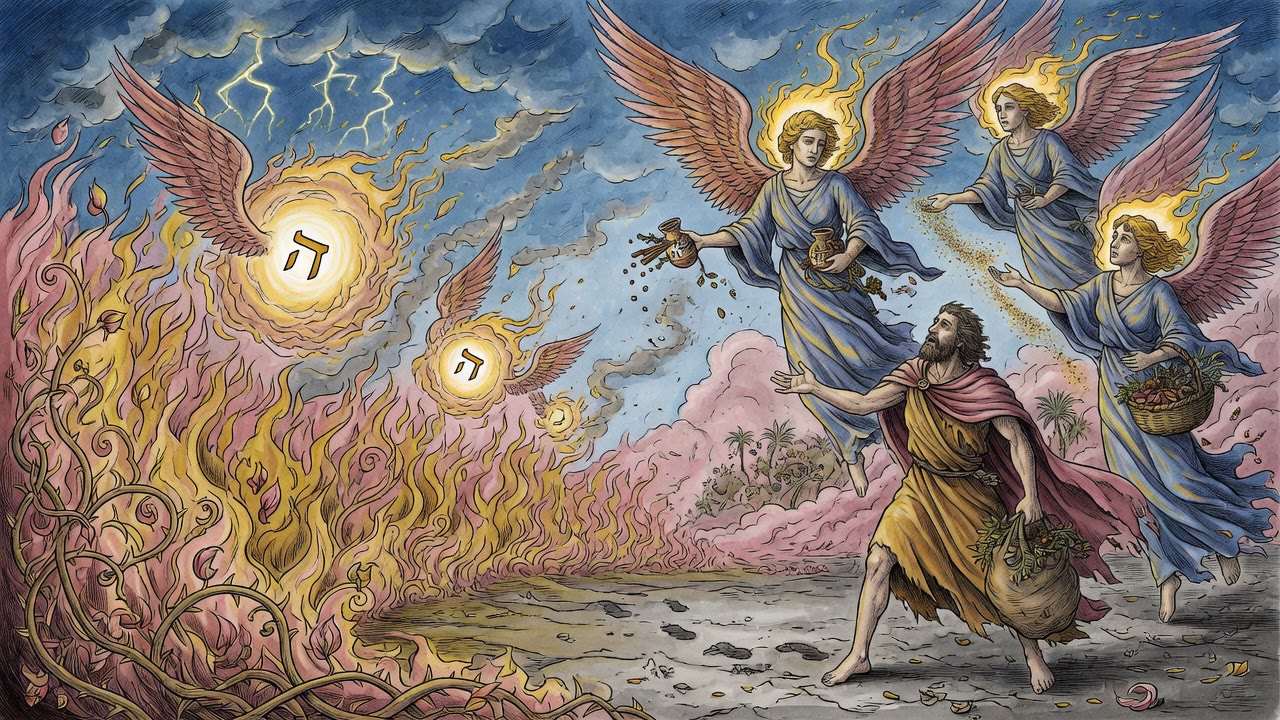
God prepared tables with pearls and delicacies. The canopies shone with chalcedony, topaz, diamond, beryl, onyx, jasper, sapphire, emerald, carbuncle, and gold, a catalog that later ears would hear echoing Ezekiel's dirge for a king who once walked among fiery stones. This was not that fall. This was the hour before any fall, when adornment was still pure gift.

God dressed Eve, braided her hair, and set on her twenty-four ornaments. Michael and Gabriel stood as groomsmen. Ministering angels led Adam under the canopies. Then, in a tenderness the midrash will not leave abstract, God Himself brought the bride to Adam and stood before them like a cantor who knows every note of the blessing.

"This one at last is bone of my bones and flesh of my flesh" (Genesis 2:23). The sentence was vow and discovery at once.

The Treasury of Souls

Inside Adam, the tradition says, waited more than one life. His soul held a vast treasury of generations, which is why Rosh Hashanah, anniversary of his making, judges the world. In one accounting, six hundred thousand "old souls" stood within him; after the first transgression they fractured into soul-roots that would keep returning to repair what broke. Angels were set to guard holy souls that would later issue from the Tree of Life.

So the wedding was never only for two. Under the ten canopies stood a man who carried unborn nations in his breath, and a woman who would be called mother of all living. The jewels overhead hung over a census not yet counted.

The Day That Lasted a Thousand Years

The patience that let the wedding matter showed later, when the decree "on the day you eat you will die" met a different clock. Adam lived nine hundred thirty years. Rabbi Yehoshua ben Levi heard in "Remember Your mercy" a practice Adam himself needed: God granted him a day like a thousand years so that offspring could come, so that the treasury of souls would have bodies to enter. Mercy stretched the day wide enough for children.

Without that stretch, the canopies would have been a ceremony over a dead line. With it, the first couple walked out of the wedding into time that could hold a species.

What the Canopies Still Mean

Every later huppah is a reduced copy of that excess: not ten jeweled roofs, but one cloth and two people and a community pretending, for a few minutes, that Heaven still leads the bride. Adam's loneliness ended under angels. Eve's ornaments were God's work. The souls in Adam's frame would scatter into history and try to come home.

The animals Adam had named watched without understanding ceremony, only that the lonely one now stood paired. Leaves moved. Rivers of Eden kept their fourfold split toward lands of gold and stone. Under the canopies, time had not yet learned shame, but it had already learned promise: this is bone, this is flesh, this is the other who ends the parade of insufficient company.

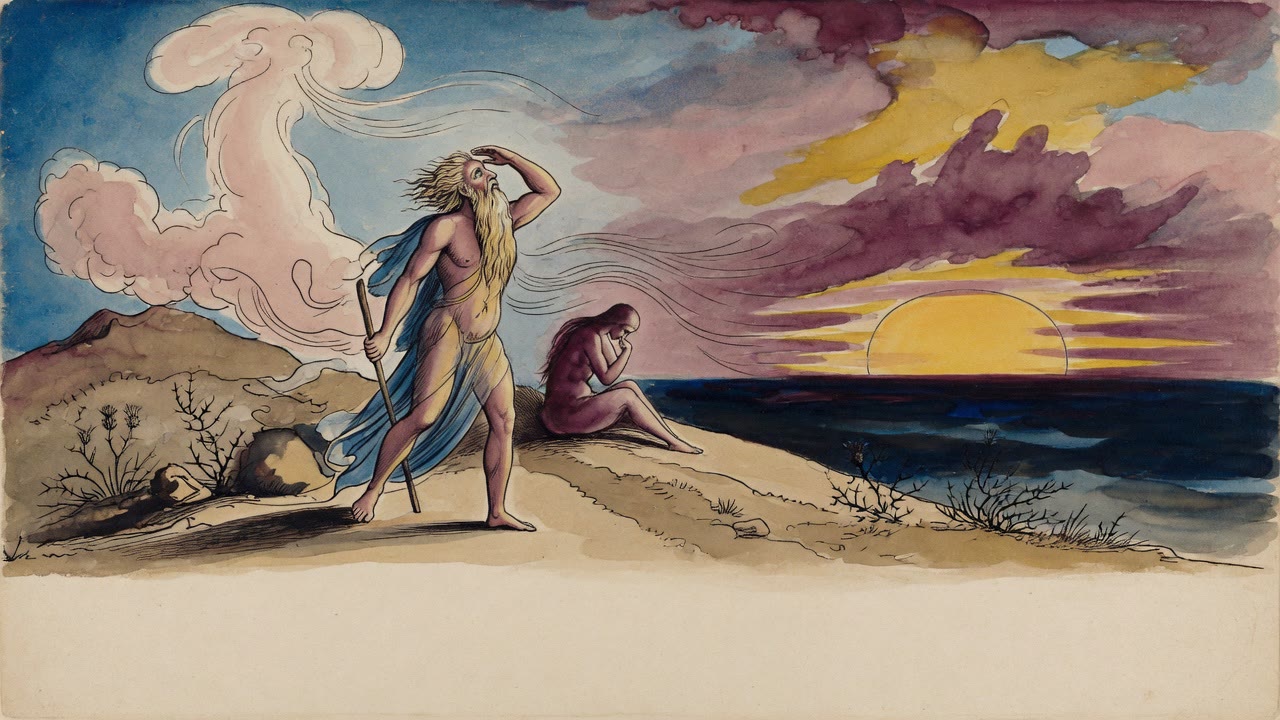
When the blessings ended, the work of dressing and keeping the Garden still waited, whatever that work would mean beyond watering a river already watered. The wedding did not cancel labor. It made labor shared. Adam and Eve stepped from jeweled shade into a world that would later break, carrying the memory of a God who once braided a bride's hair and stood as cantor over the first human vow.

He woke once to a missing bone and a completed world. She stood under light that had never yet been ashamed. Between them God held the roles of parent, jeweler, cantor, and witness, and the Garden learned what a human future sounded like when it still had no word for regret.


← All myths
From the tradition

Sources

3 sources

The texts behind this telling. Some cards carry a translation of the source; others are our own retelling of it, and each card says which. Every card links out to the original.

Eruvin 18aTalmud Bavli, Eruvin

Translation of the source text.William Davidson Edition - Vocalized Aramaic · CC-BY-NC

They said to him: They spoke of a space of two se'ah only with regard to a garden or an enclosure, but if it was a pen, or a corral, or a backyard, or a courtyard, then even an area for sowing five kor, even an area for sowing ten kor, is permitted.

Shall we say that our mishnah is not in accordance with Hananya? For it was taught: One may make upright boards around a cistern, and ropes around a caravan. But Hananya says: Ropes around a cistern, but not upright boards.

Full source
Sanhedrin 38bTalmud Bavli, Sanhedrin

Translation of the source text.William Davidson Edition - Vocalized Aramaic · CC-BY-NC

His body came from Babylonia, his head from the Land of Israel, and his limbs from the other lands. As for his hindquarters, Rav Acha said: from Akra of Agma.

Rabbi Yochanan bar Chanina said: the day consists of twelve hours. In the first hour, his dust was gathered; in the second, he was made into a shapeless mass; in the third, his limbs were extended; in the fourth, a soul was cast into him; in the fifth, he stood upon his feet; in the sixth, he called the names; in the seventh, Eve was joined to him; in the eighth, two went up to the bed and four came down; in the ninth, he was commanded not to eat from the tree; in the tenth, he sinned; in the eleventh, he was judged; in the twelfth, he was banished and went his way, as it is said: "Man does not abide in honor" (Psalms 49:13).

Rami bar Chama said: a wild beast has no power over a man unless he appears to it like an animal, as it is said: "He is compared to the beasts that perish" (Psalms 49:13).

Rav Yehuda said in the name of Rav: at the time when the Holy One, blessed be He, wished to create man, He created one company of ministering angels. He said to them: is it your will that we make a man in our image? They said before Him: Master of the universe, what will his deeds be? He said to them: such and such are his deeds.

They said before Him: Master of the universe, "What is man that You are mindful of him, and the son of man that You take account of him?" (Psalms 8:5). He stretched out His little finger among them and burned them. And so too the second company. The third company said before Him: Master of the universe, the earlier ones who spoke before You - what did they accomplish? The whole world entire is Yours. Whatever You wish to do in Your world, do.

When He reached the people of the generation of the flood and the people of the generation of the dispersion, whose deeds were corrupt, they said before Him: Master of the universe, did the earlier ones not speak well before You? He said to them: "Even to old age I am the same, and even to gray hairs I will carry you" (Isaiah 46:4).

Rav Yehuda said in the name of Rav: Adam, the first man, extended from one end of the world to the other, as it is said: "From the day that God created man upon the earth, and from one end of the heavens to the other end of the heavens" (Deuteronomy 4:32). When he sinned, the Holy One, blessed be He, placed His hand upon him and diminished him, as it is said: "Behind and before You have formed me, and You have laid Your hand upon me" (Psalms 139:5).

Rabbi Elazar said: Adam, the first man, extended from the earth up to the firmament. And Rav Yehuda said in the name of Rav: Adam, the first man, spoke in the Aramaic tongue, as it is said: "And to me how precious are Your friends, O God" (Psalms 139:17).

Full source
Midrash Tehillim 25:8Midrash Tehillim

Retold in our words. Read the original at the link below.Rabbi Mike Feuer, Jerusalem Anthology · CC-BY

Even Adam, the first human, felt that way.

Midrash Tehillim, a collection of rabbinic teachings on the Book of Psalms, explores this very feeling in Psalm 25. It opens with the plea, "Remember your mercy, Lord, and your steadfast love." And Rabbi Yehoshua ben Levi sees in this a practice begun by Adam himself. God said in Genesis (2:17), "for on the day you eat from it you will certainly die." But Adam lived for 930 years! How could he have had children if that decree had been immediately enforced? The Midrash (rabbinic interpretive commentary) suggests God granted him a day that was like a thousand years, allowing him to fulfill his purpose. "Indeed, from the beginning of time they have existed, from the days of Adam."

What about the sins of our past? Can we ever truly escape them? King David grapples with this too. "Do not remember the sins of my youth or my transgressions," he prays. Rabbi Yudan, interpreting David's words, suggests a radical idea: "May my sins and transgressions be as my sins of youth. Just as my sins of youth were not actual sins, so too all my sins will not be actual sins." That's a powerful thought! Maybe our past mistakes can be reframed, seen not as defining blemishes, but as youthful missteps on the path to something greater.

Then comes a shift. David asks, "Remember me according to your kindness." It's not about deserving, it’s about grace. Rabbi Elazar uses a parable to illustrate this. The steward, however, replies that the feast is so immense, only commoners and laborers could possibly consume it all! So too, David recognizes that God's kindness isn't reserved for the "wise" or "deserving," but extends to everyone.

Rabbi Yosei bar Hanina offers another parable. A king prepares a feast, inviting guests to arrive at staggered times. But they don't show up when expected. As the evening progresses, the guests finally arrive. The king says, "I need to hold a great feast for you, for if you had not come, I would have thrown the food to the dogs." This might seem harsh, but it highlights a crucial point. God created the world for us. The righteous, those who strive to live a life of meaning and purpose, are the reason for creation itself. "I am holding a great good for you," the Lord says to the righteous, "for I created my world for you. For if not for you, to whom would I have given all the good that I have prepared for the future?" This echoes (Psalm 31:20): "How great is your goodness, which you have laid up for those who fear you."

It all boils down to this: we are all flawed. We all make mistakes. But God's mercy, God's chesed (loving-kindness), is boundless. And sometimes, just sometimes, those very flaws might be the things that make us uniquely worthy of that boundless love. The world was created for you, with all your imperfections. Embrace it.

Full source