Adam Is Driven Out and Argues Over What He Lost
The soil inside had answered without sweat. Outside, the dust remembered it had once been him, and it would not yield easy bread.
Table of Contents
The ground changed under Adam's feet.
 Click for full size
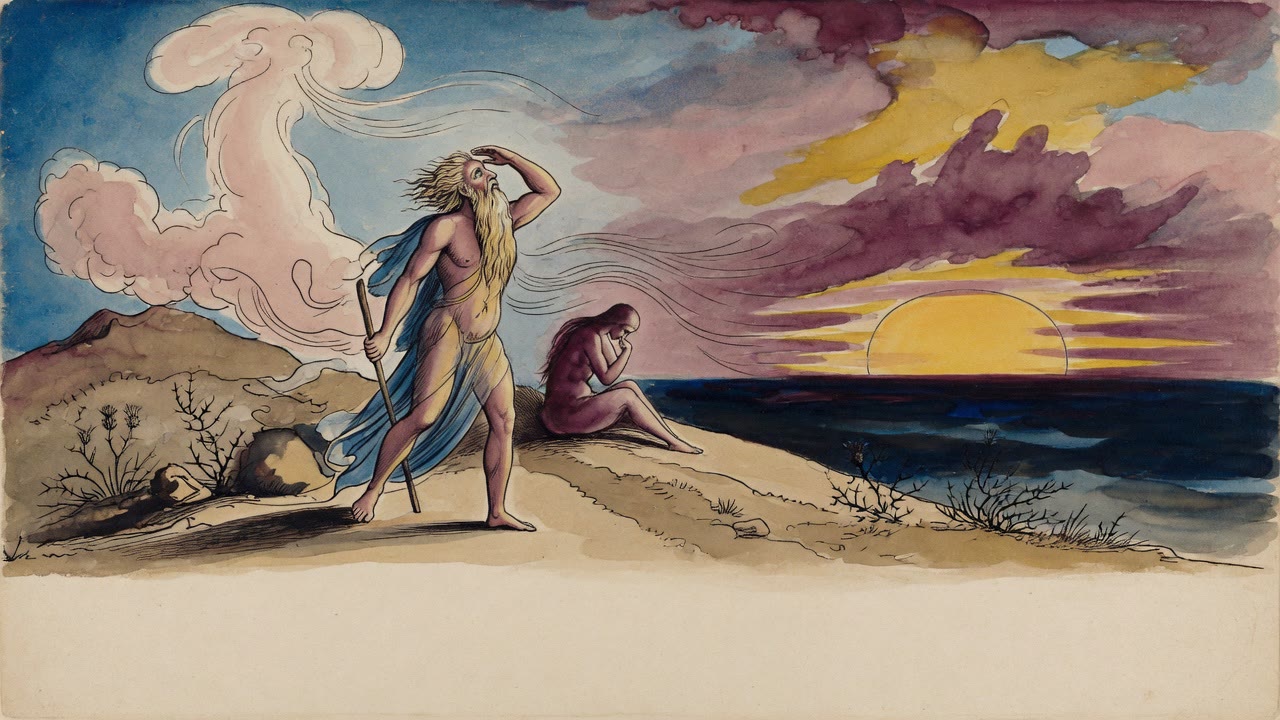
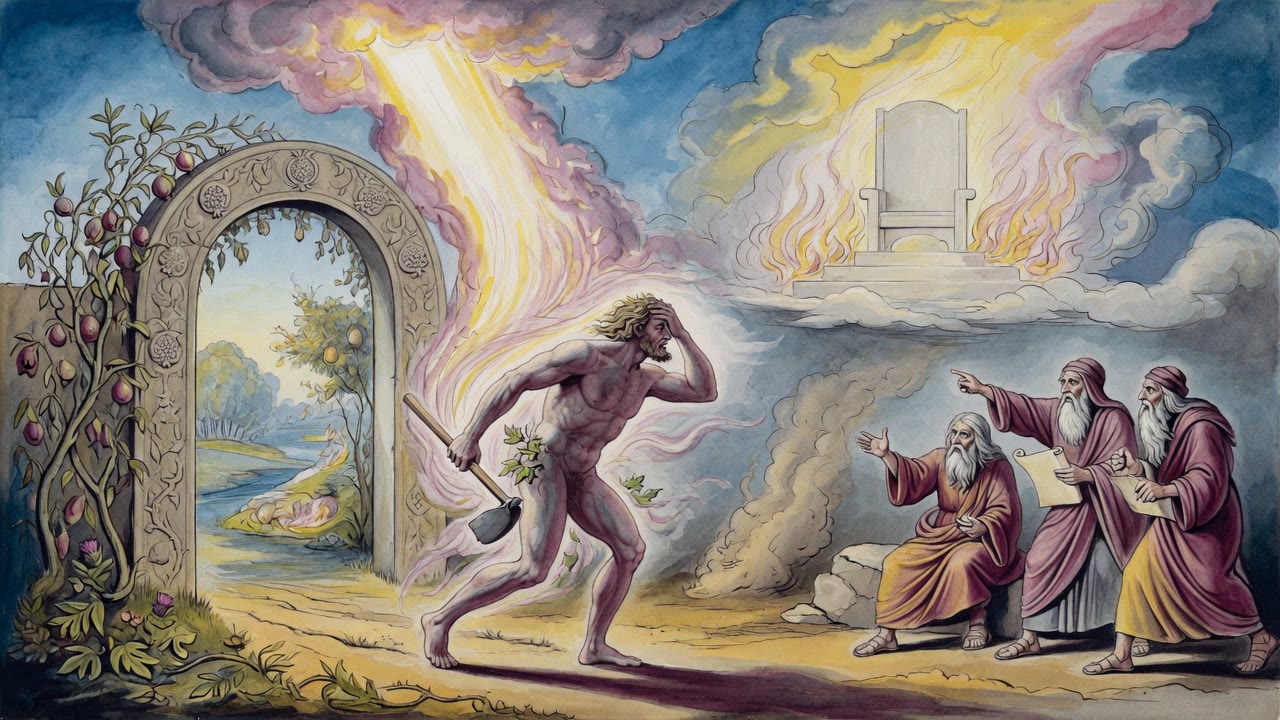
Inside the garden the soil had answered him without sweat. Outside, the dust remembered that it had once been him, and it would not yield easy bread. The Lord God had driven him out "to cultivate the ground from which he was taken" (Genesis 3:23). Exile was not only a locked gate. It was a job written in dirt.
Past the Gate
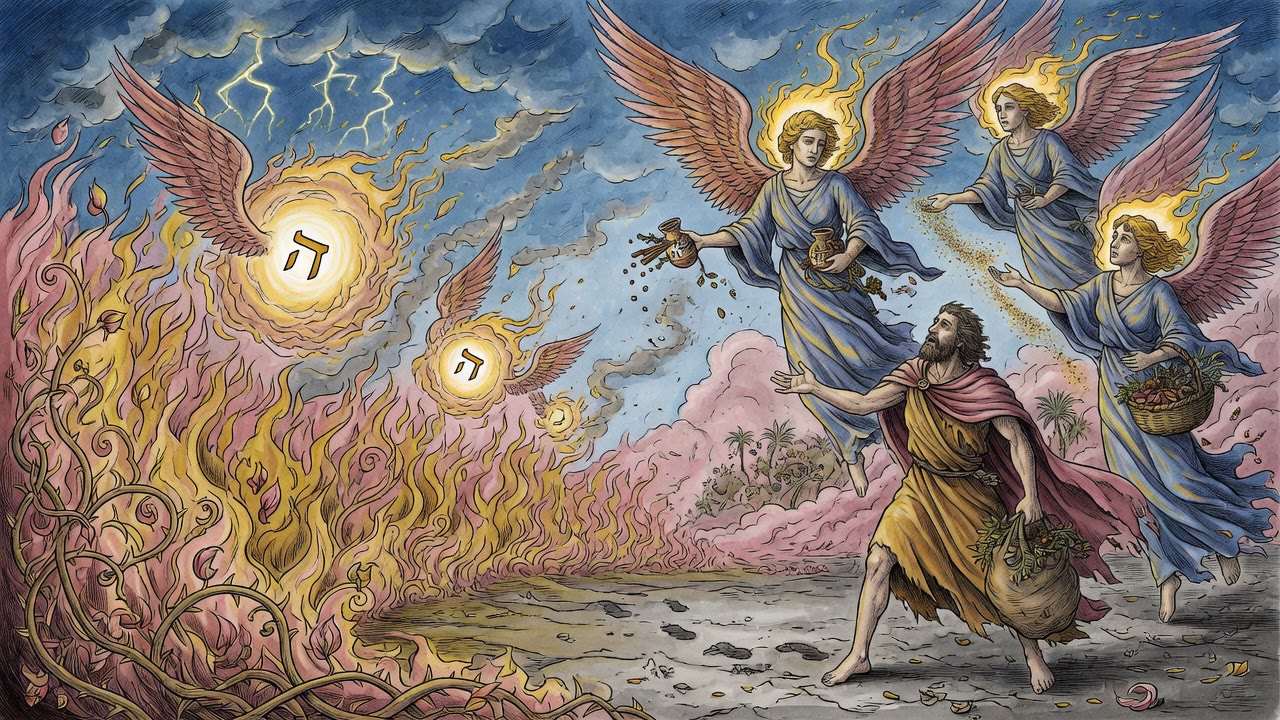
Behind him the trees still stood. A wind that used to smell of free fruit now smelled of work. The cherubim turned a sword that cut every direction at once. Adam did not test it twice. He wiped sweat that had not existed yesterday and learned the new grammar of his skin.
He looked back once. The gate did not move. He bent and took a handful of the dust that used to be his body. It ran through his fingers and did not bless him.
Trees That Did Two Jobs
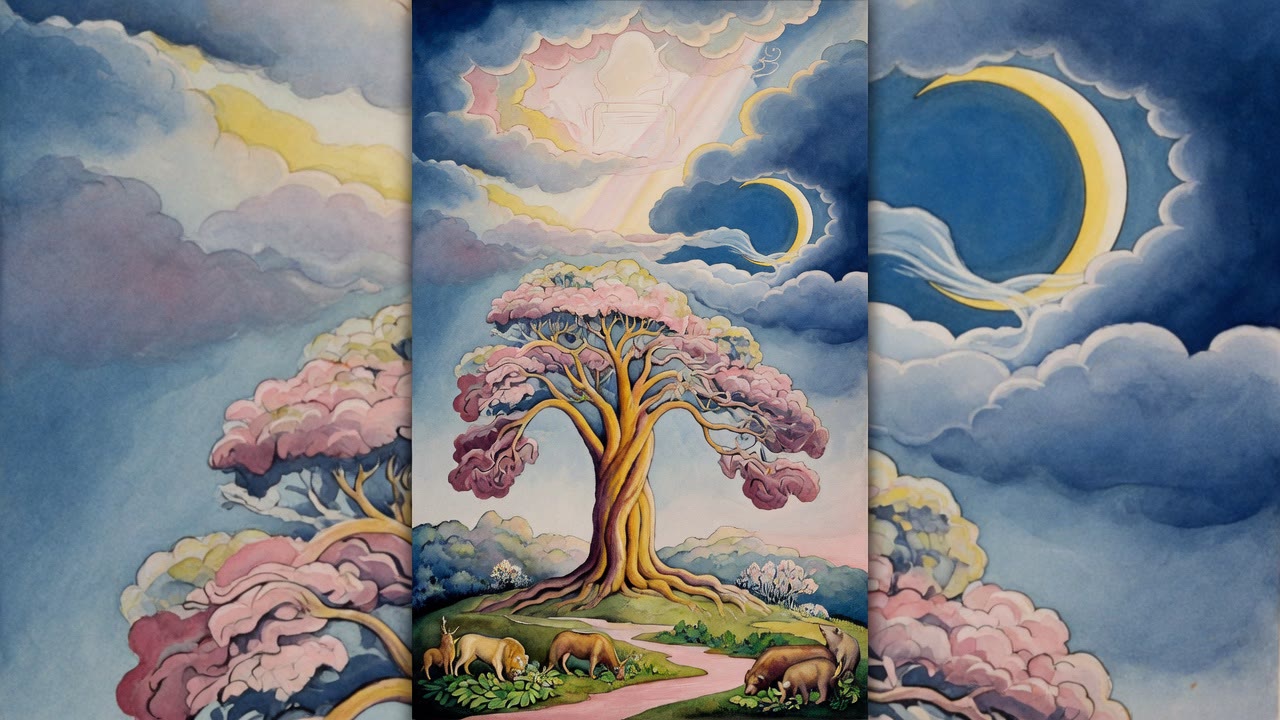
Every tree in that garden had been beautiful to the eye and good for food (Genesis 2:9). Not some trunks for looking and some for eating. Each one carried both gifts at once. Hunger and delight had shared the same bark.
Outside, that bargain was over. Adam planted a fruit tree that would feed and a flowering tree that would only please, and he felt the split in his hands. Beauty became a thing he stole between chores. Taste became a thing he waited on rain for. He remembered biting a fruit that was also a picture, and every single-purpose orchard looked like a wound.
He put his palm to a young trunk and waited for it to be both. It was not both. He went back to the row.
The Study Hall Split His Sentence
Later, in a room Adam cannot hear, Rabbi Yehuda and Rabbi Nechemya take the expulsion apart like a contract. Did Adam lose only the garden of this world, or did he also lose the Garden in the World to Come, the Olam Ha-Ba (עולם הבא)?
Yehuda hardens the sentence. Both gardens gone. Nechemya leaves a door open. Earthly paradise is forfeit. The world ahead may still receive him. Other sages line up behind each side until the study hall itself becomes a court. A student leans forward. Another shakes his head. Yehuda argues that both gardens are gone. Nechemya argues that one door remains. The first man still cannot hear them.
Adam's body already knows the ruling for this world. The dispute is whether hope has a second address. One reading deals with him harshly. One deals with him mercifully. The dust under his nails does not wait for the vote.
Eve Names a Man
After the banishing, after labor pains, Eve holds Cain and speaks a line that still unsettles the ear. "I have gotten a man from the Lord" (Genesis 4:1). The Hebrew can tilt toward partnership with God or toward grateful receipt. A mother who has just paid for knowledge with pain now claims a man as acquisition.
She stands outside the perfect trees, in a house that is not a garden, and tries to name what creation means when human hands and divine gift tangle. The first birth after Eden is already an argument about credit. Cain's fist will later settle other arguments with blood. For a moment, though, he is only a small weight proving the line continues past the gate.
Eve's arms shake. Pride and thanks fight for the same sentence. Outside paradise even language splits. Adam watches and does not correct her. He has dirt under his nails and no authority left that feels clean.
Dust That Remembers
Adam works. Eve bears. The serpent crawls. None of them returns through the gate in the old way. If Nechemya is right, the World to Come still holds a green that judgment did not burn. If Yehuda is right, the first pair spent the rest of their years farming a sentence that had no appeal.
Adam looks back once more. The trees keep their double glory without him. He bends to the dust that used to be his body and starts the long work of living after paradise. Sweat falls and the dust drinks it without pity. Somewhere ahead a son will be born who is not a garden, only a claim, a hope, and a problem.
The gate does not move. The argument over the second garden is the only soft thing left in the sentence. Night comes without a guardian fruit to make the dark kind. Adam sleeps on the wrong side of joy and dreams of a sword that still turns.
← All myths